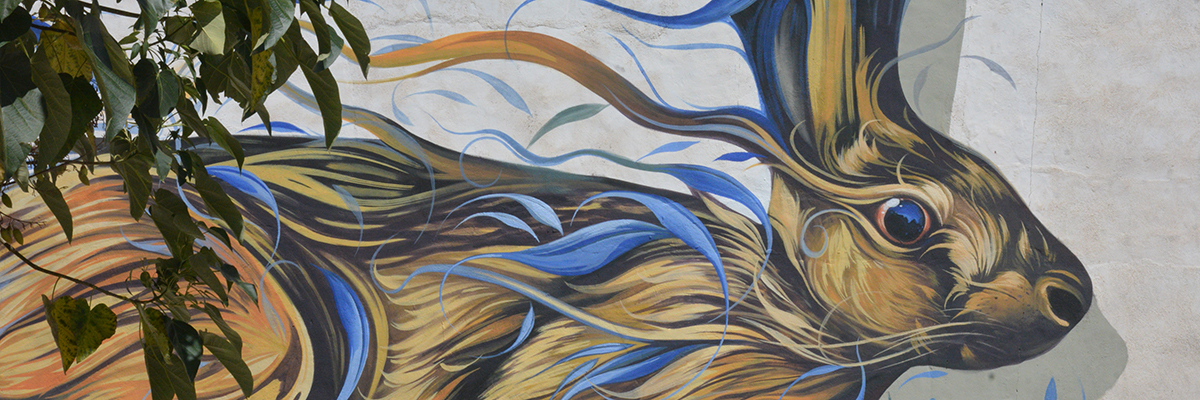
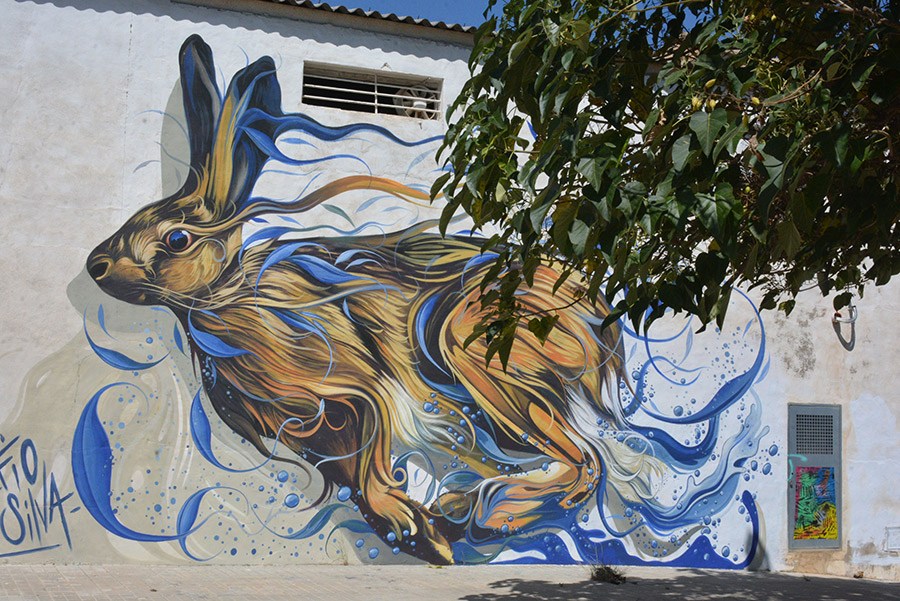
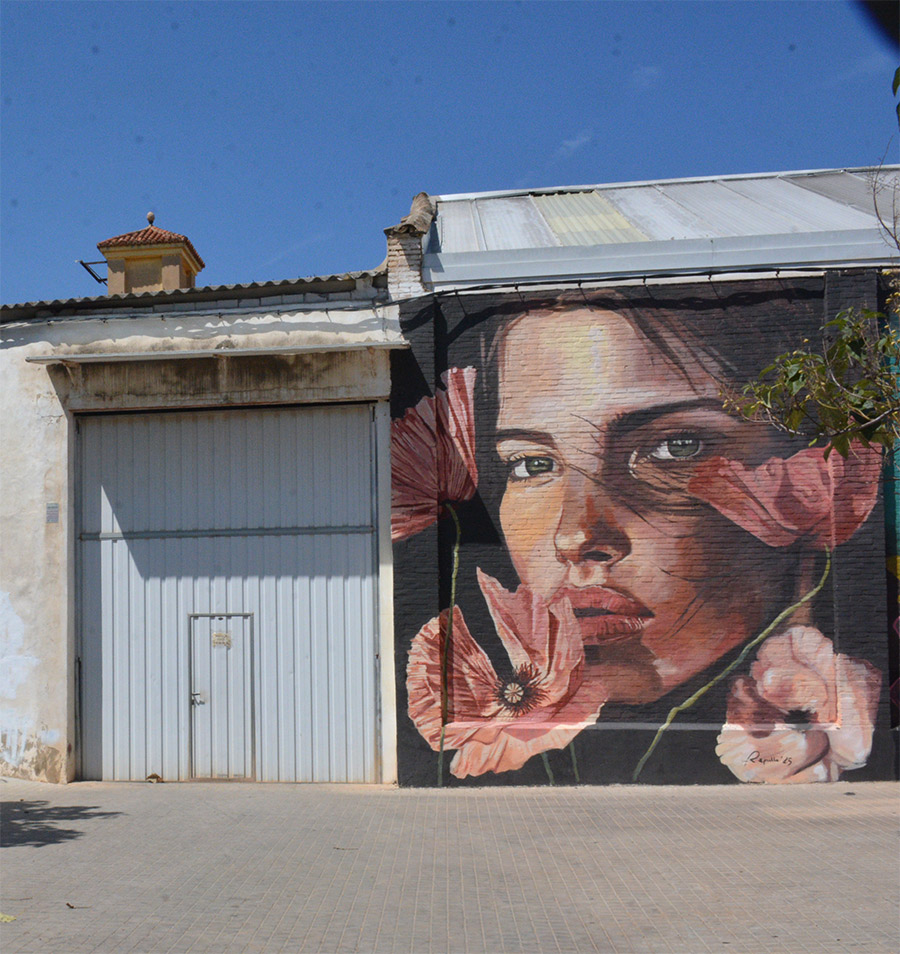
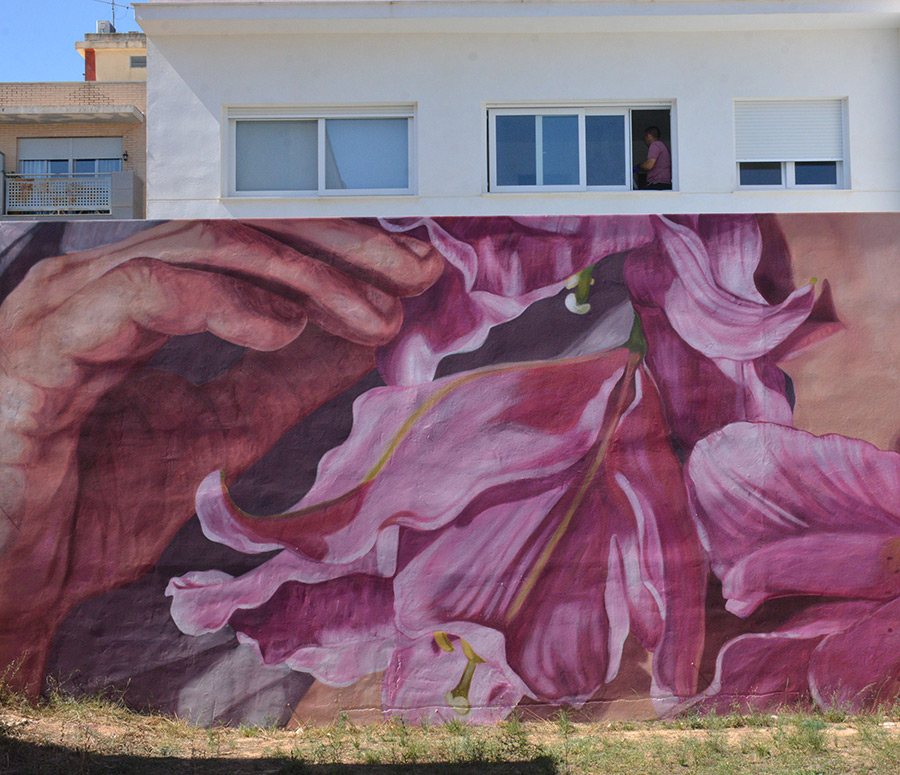
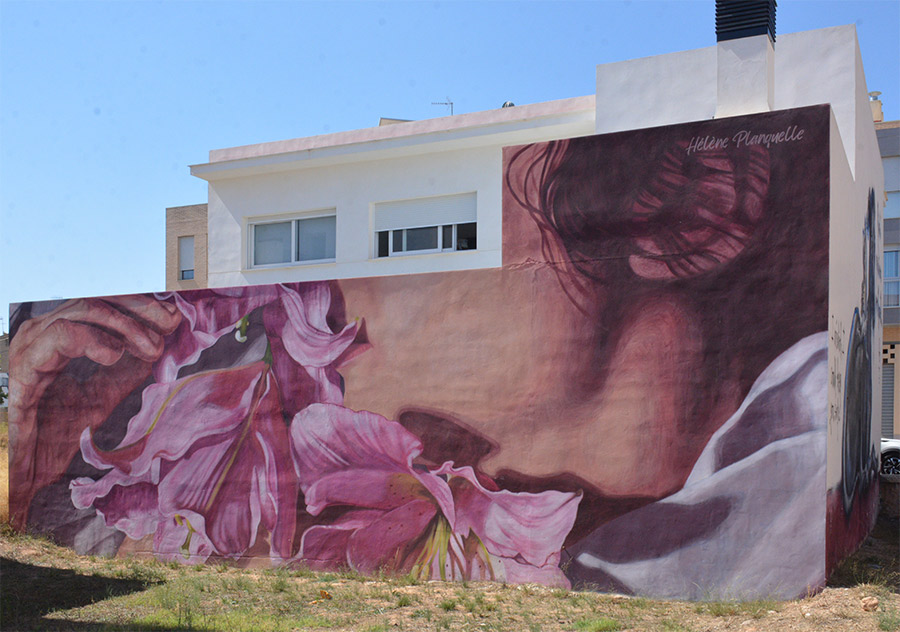
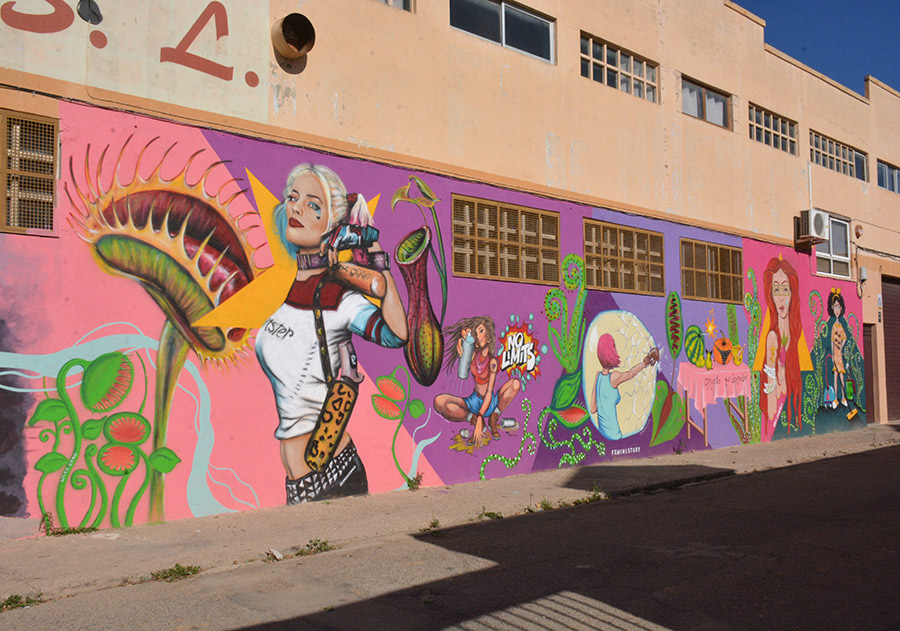
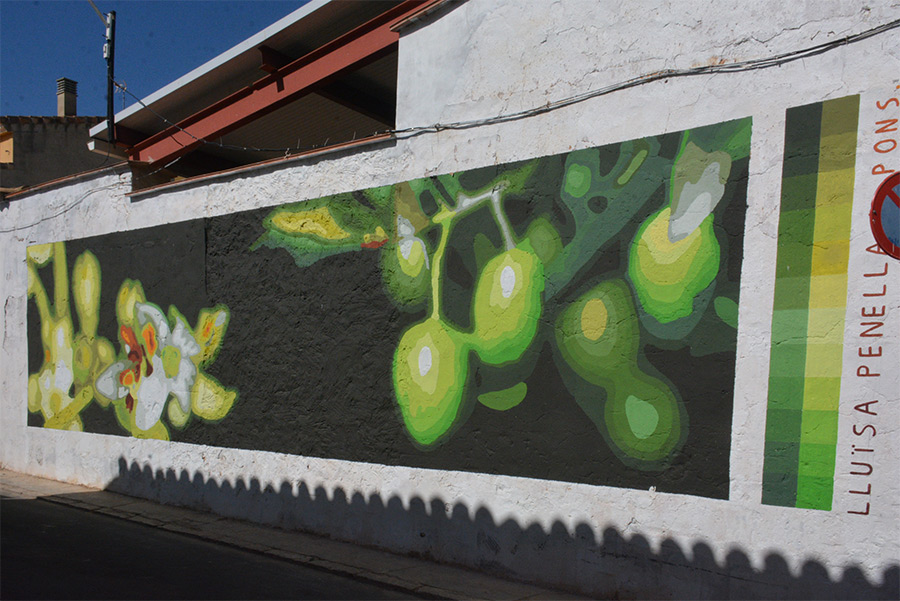
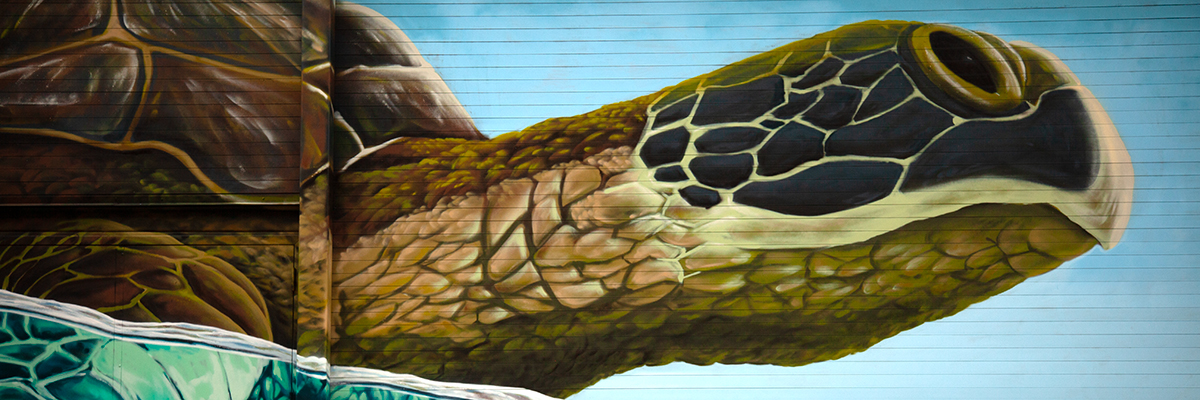
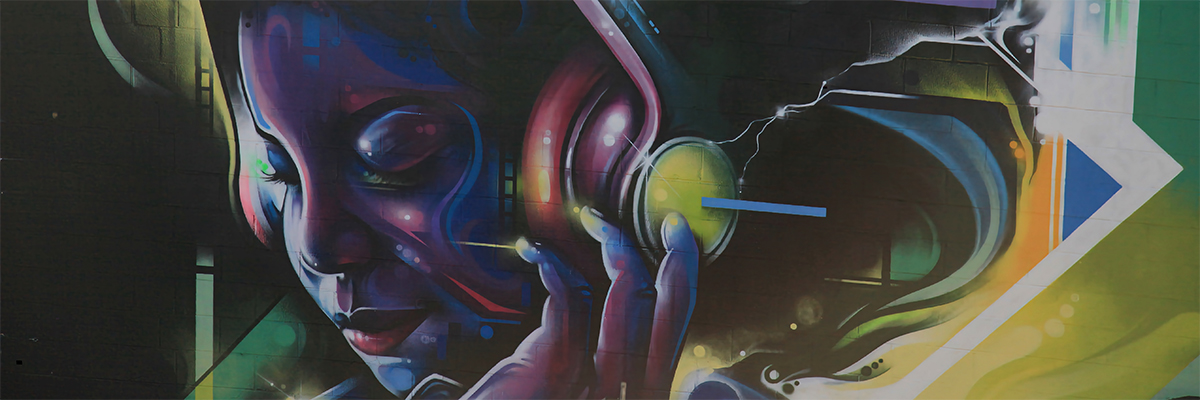
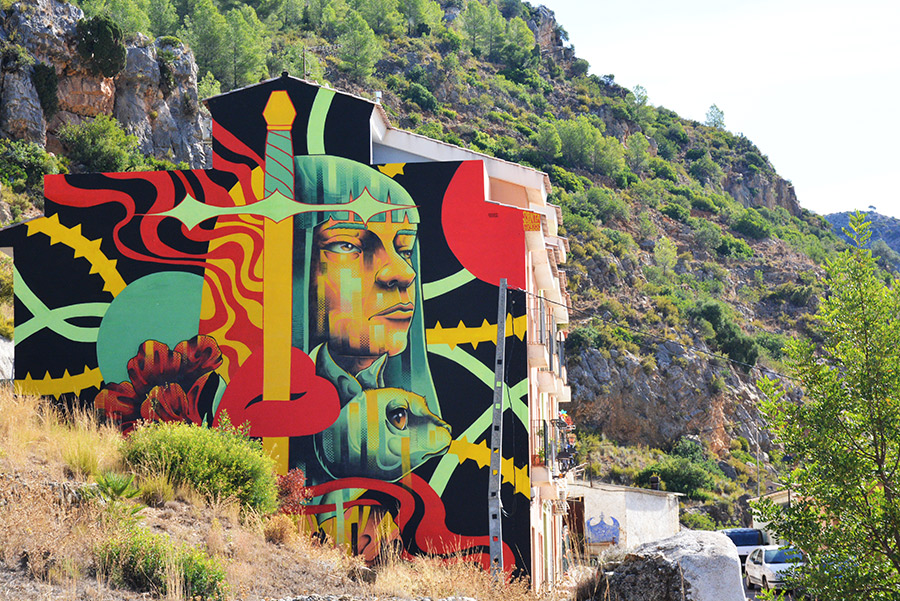
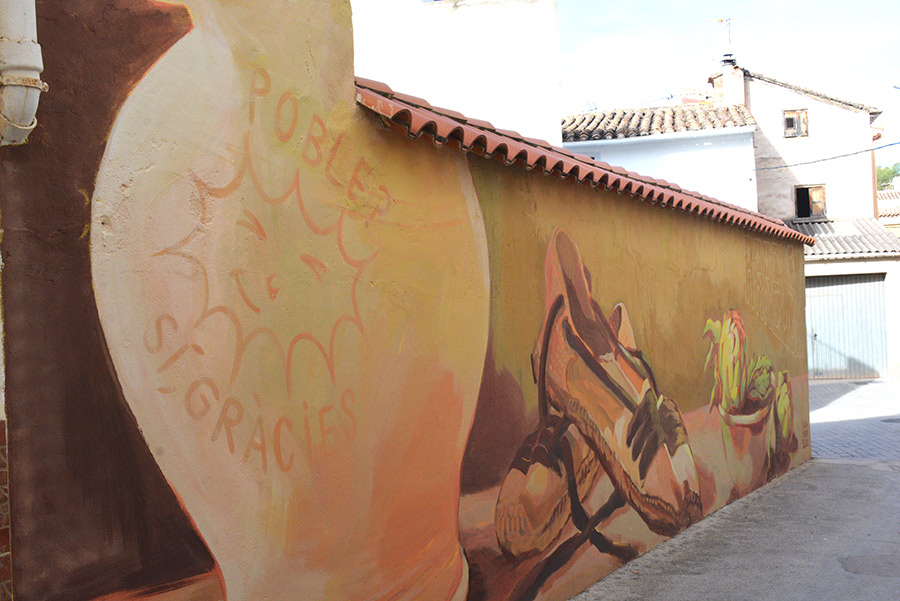
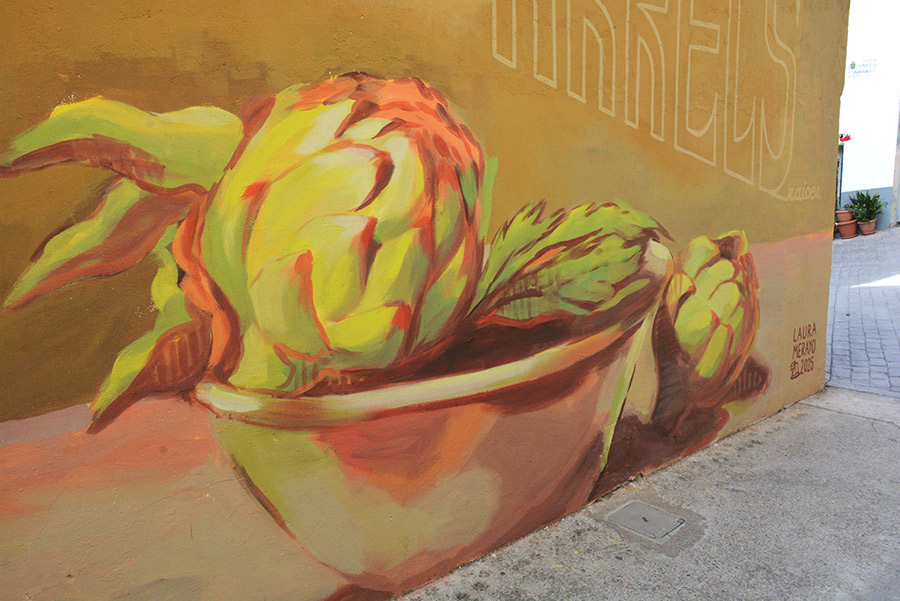
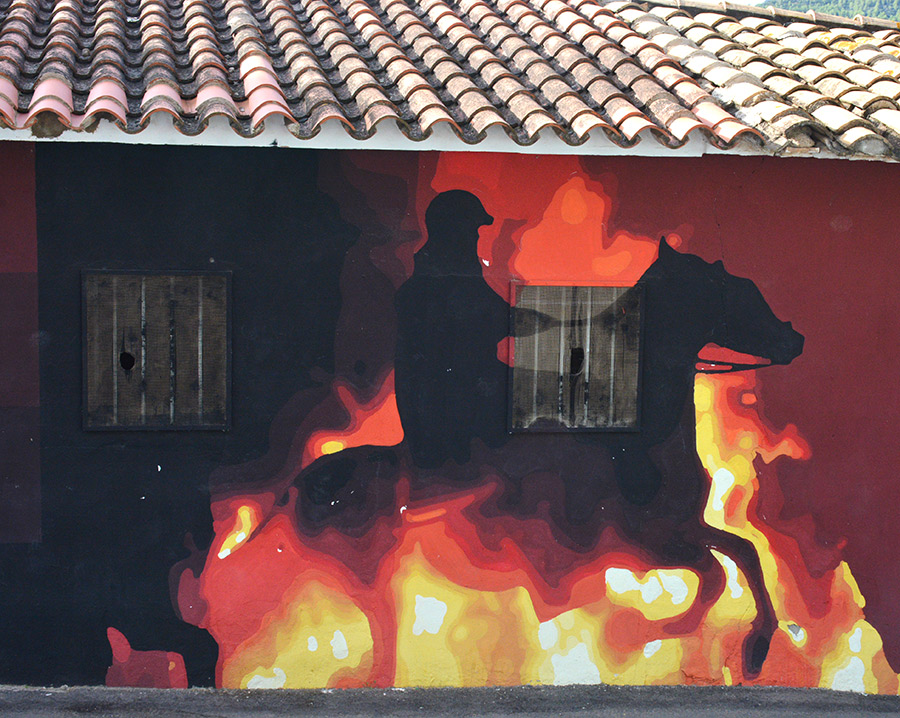
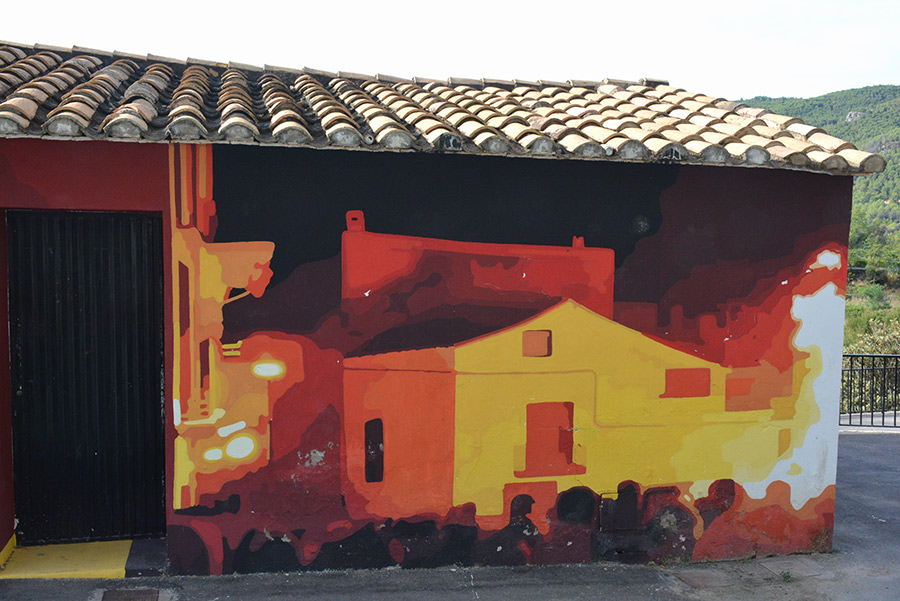
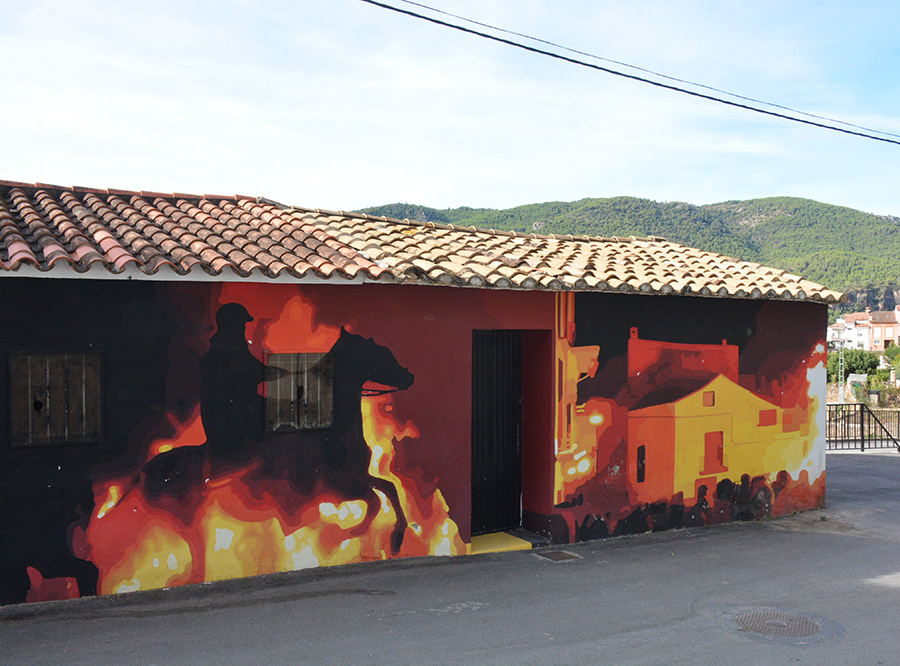
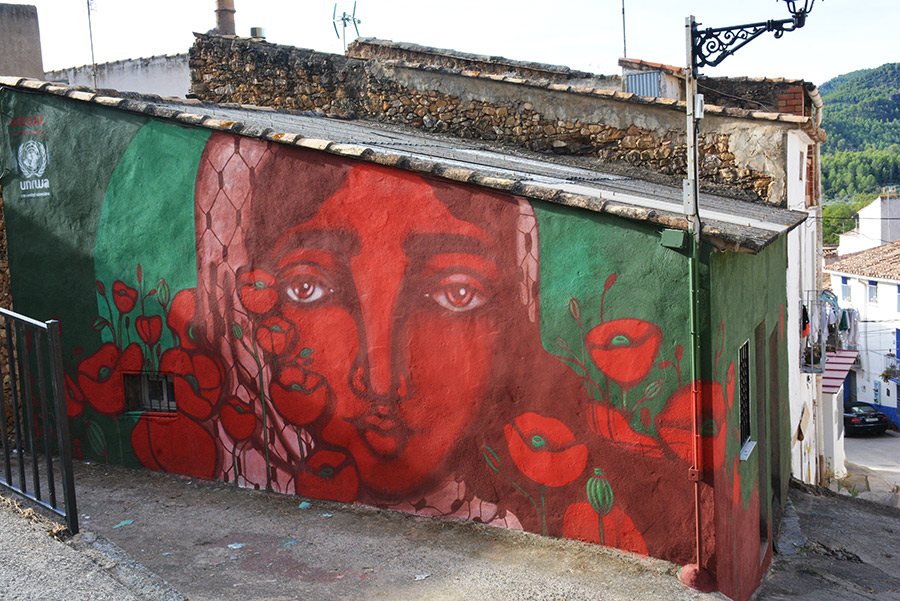
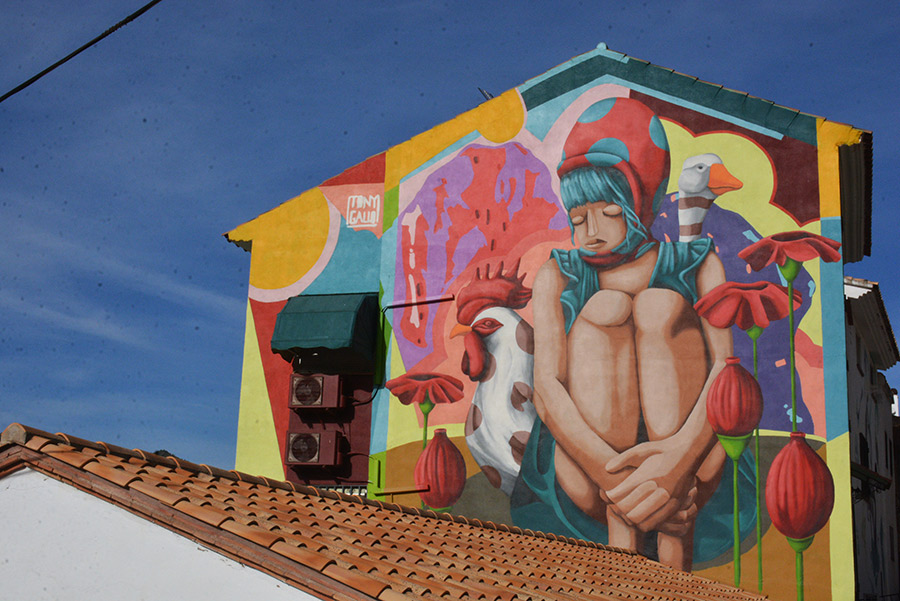
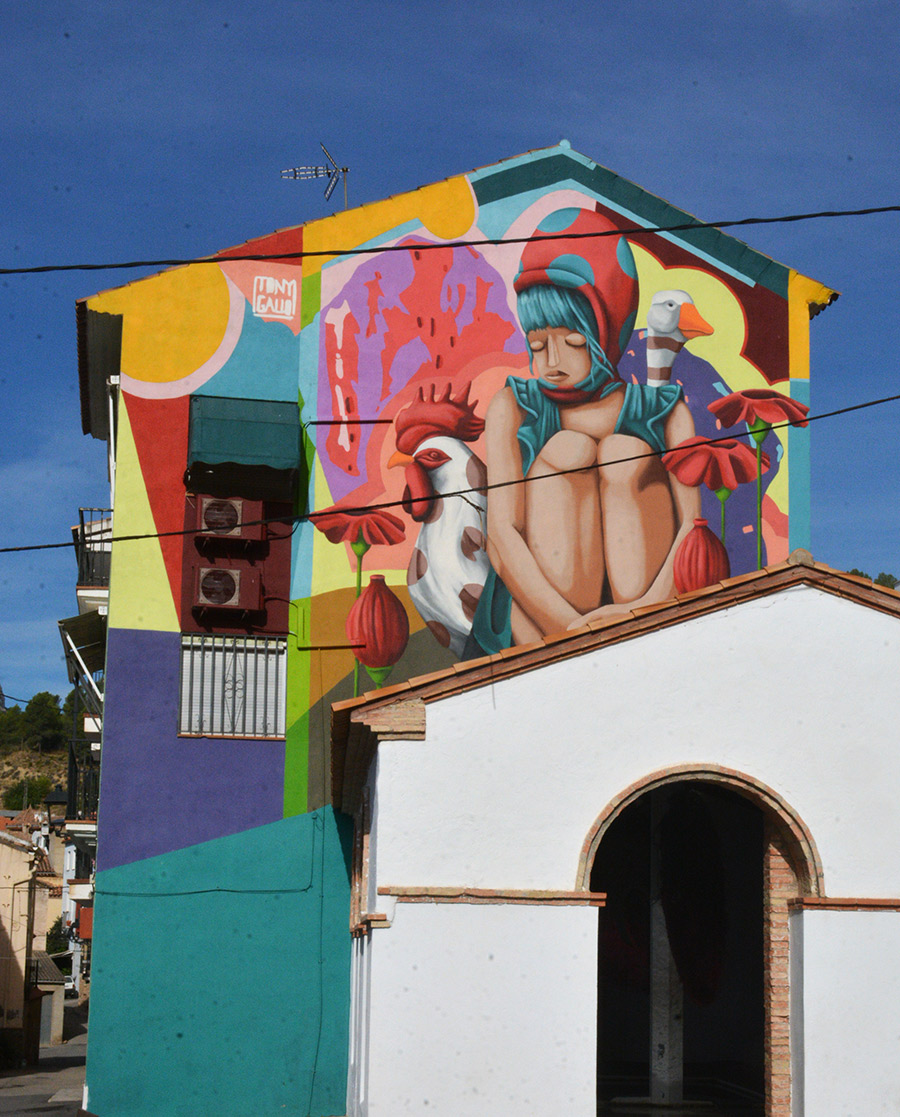
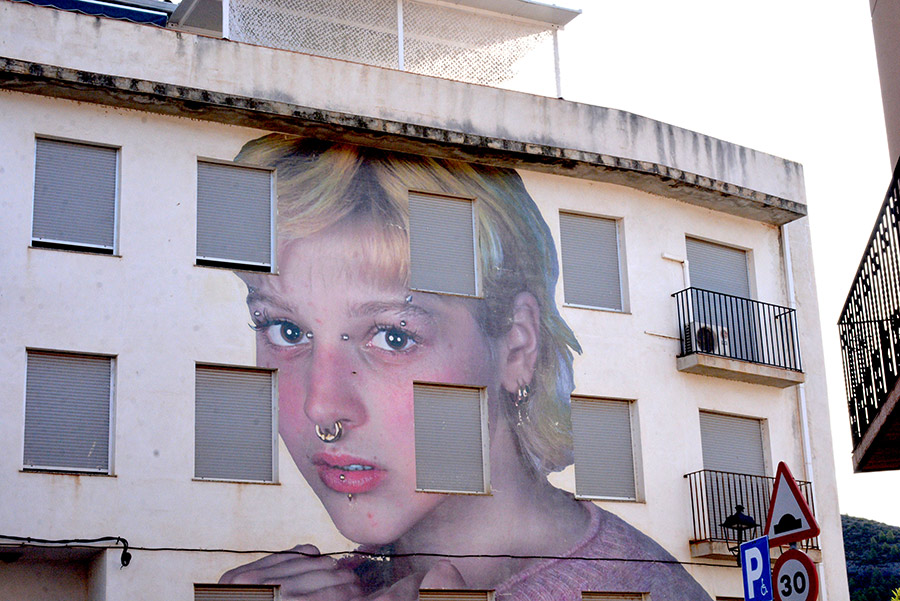
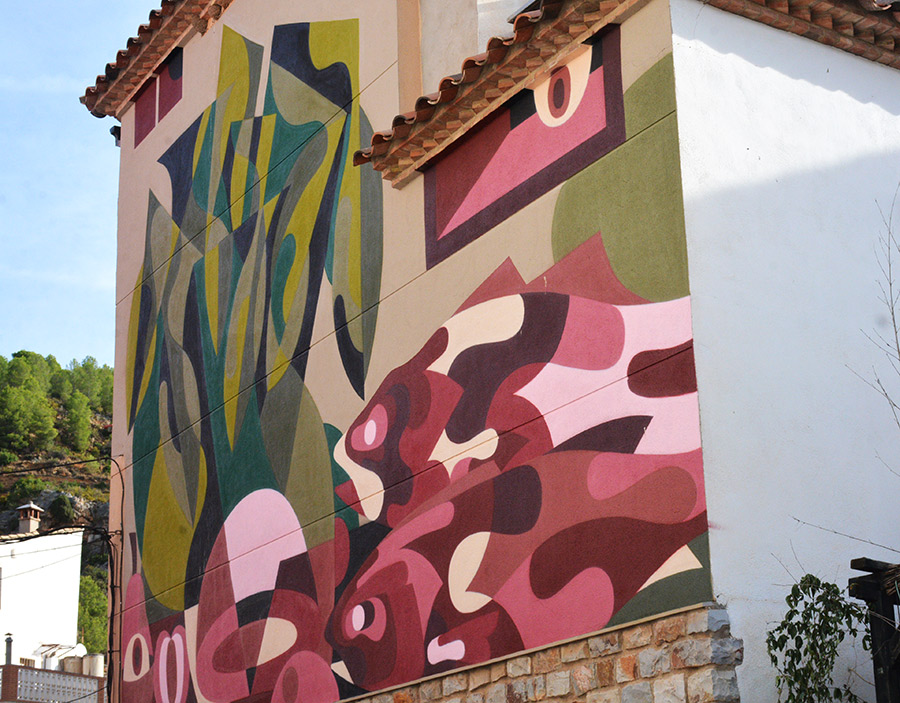
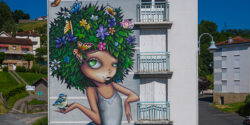
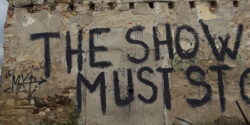
This year Graffitea 2025marked its tenth anniversary in the small Valencian town of Cheste, about 30 kilometers west of Valencia, with a new edition that reaffirmed its role as one of Spain’s most significant public art projects. Over the course of a decade, the festival has transformed this municipality, with more than 160 murals now lining its streets. The project, featuring new works by artists from Spain and around the world, is promoted by the Department of Culture of the City Council of Cheste. In communication with the community, Graffitea is both a municipal initiative and a collaborative cultural endeavor, officially sustained by a belief that mural art enriches public space and social consciousness alike.
Under the artistic direction of Toni Espinar, who also oversees its on-the-ground organization, Graffitea aims to balance curatorial vision with community participation. The festival was originally initiated in 2016 by Mª Ángeles Llorente, councillor for culture at the time, what began as a small-town experiment in civic art has become a national reference point for how local governments can embrace urban creativity as a driver of education, tourism, and pride..
The 2025 edition of Graffitea is distinguished by an eco-feminist theme, featuring 13 women muralists including Btoy, Fio Silva, Roseta FS, Anna Repullo, Hera Herakut, Margot Margay, Maríadie, Raquel Coba, Ana Corazón, Hélène Planquelle, Daniela Guerreiro, Lluïsa Penella i Pons, and Alicia Jordá de Lucas. Their walls touch on themes of care, love, memory, and respect for nature. Alongside these, projects like Graffitea con Palestina — co-organized with UNRWA — underscore the festival’s international outlook and solidarity with human rights causes. Such collaborations expand the festival’s social scope beyond visual spectacle, anchoring it in sometimes difficult conversations about themes such as gender, ecology, war, and justice.
According to the Comunitat Valenciana’s official tourism portal, Graffitea’s annual program includes conferences, round tables, screenings, practical workshops, and guided routes — a format that seeks to connect artists with audiences. Over the years, related events have also included concerts, hip-hop performances, and mural scholarships, weaving together art, education, and local participation. After a decade and 160 murals, Graffitea flexes the power of contemporary urban art and the enduring capacity of communities to welcome artists as partners in shaping the public imagination.
Our thanks to photographer Louis Olive Bulbenna for sharing these recent photos that he took with BSA readers.
Street art functions best when it is a witness, not only a declaration. “I was here, I am here” is the simplified version, and often there are clues that tell you so much more.
In the case of New York’s Appleton, that voice speaks of more than presence: it traces a life lived, marked by survival, activism, and visual urgency.
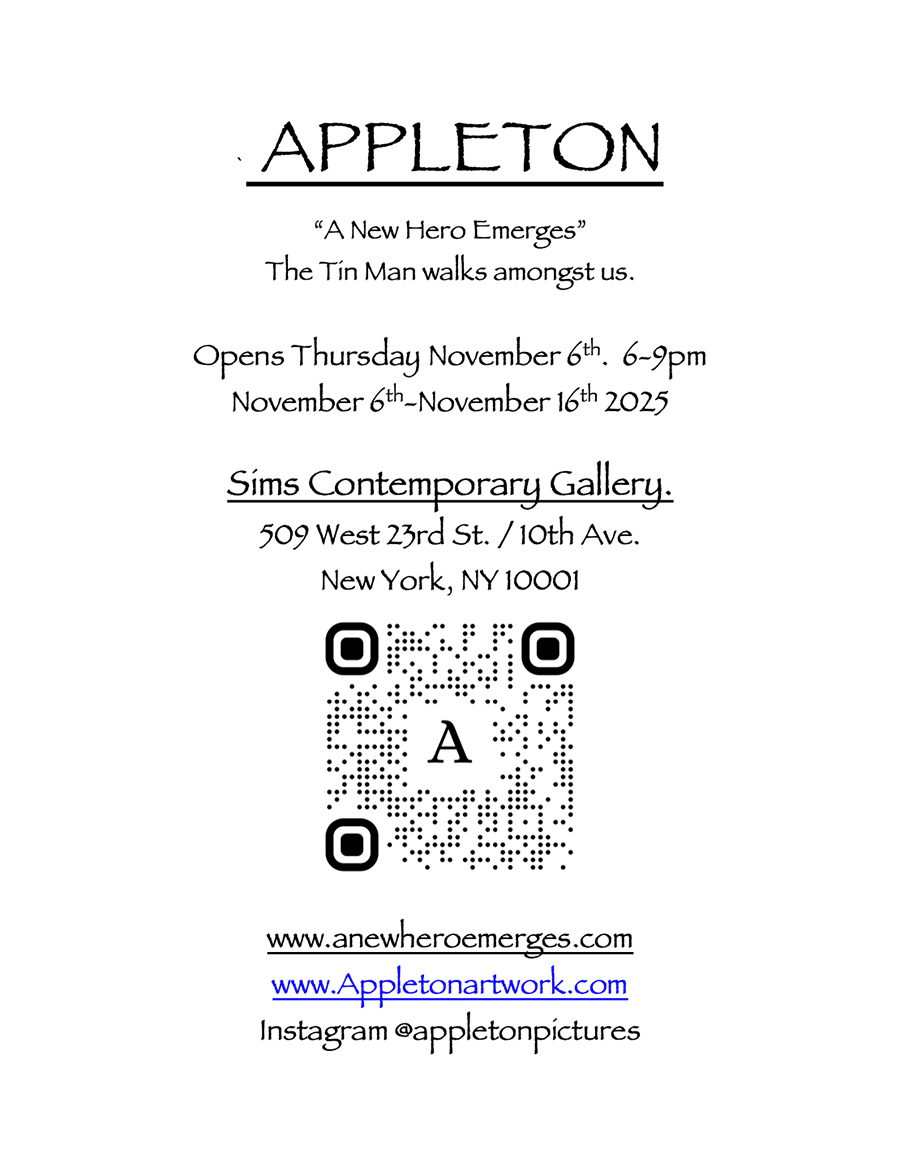
This week he returns to Chelsea with his new solo exhibition—A New Hero Emerges—to be held at Sims Contemporary, 509 W 23rd St (10th Ave), New York City, opening Thursday, November 6, 2025.
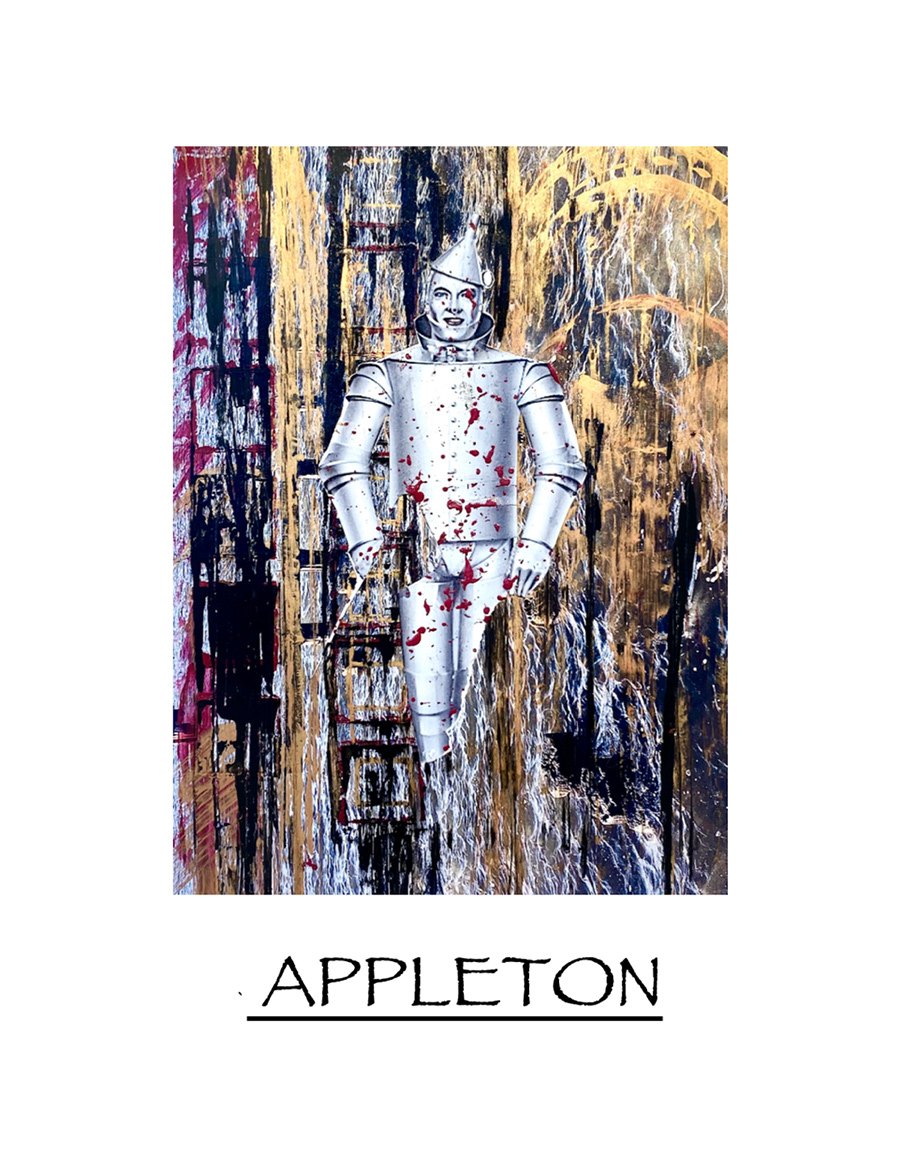
Appleton (image courtesy of the artist)
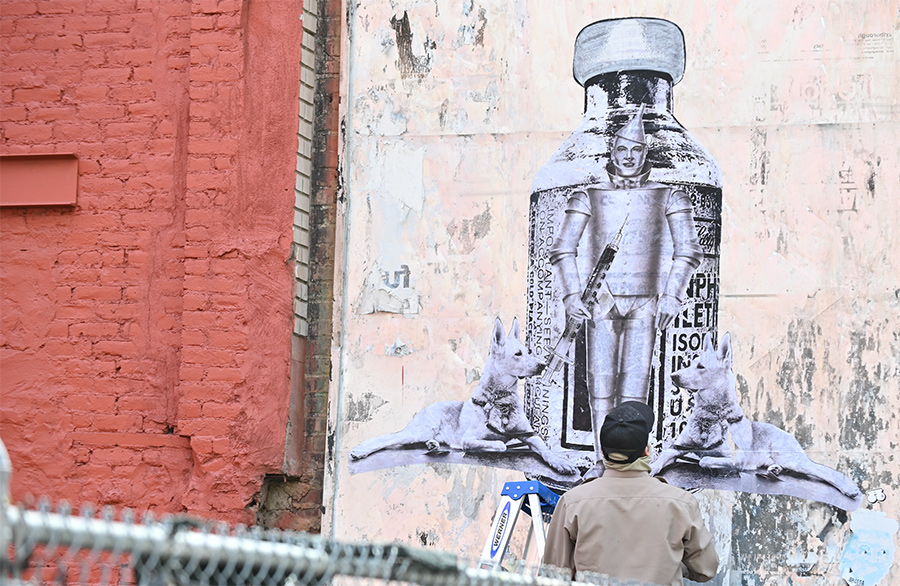
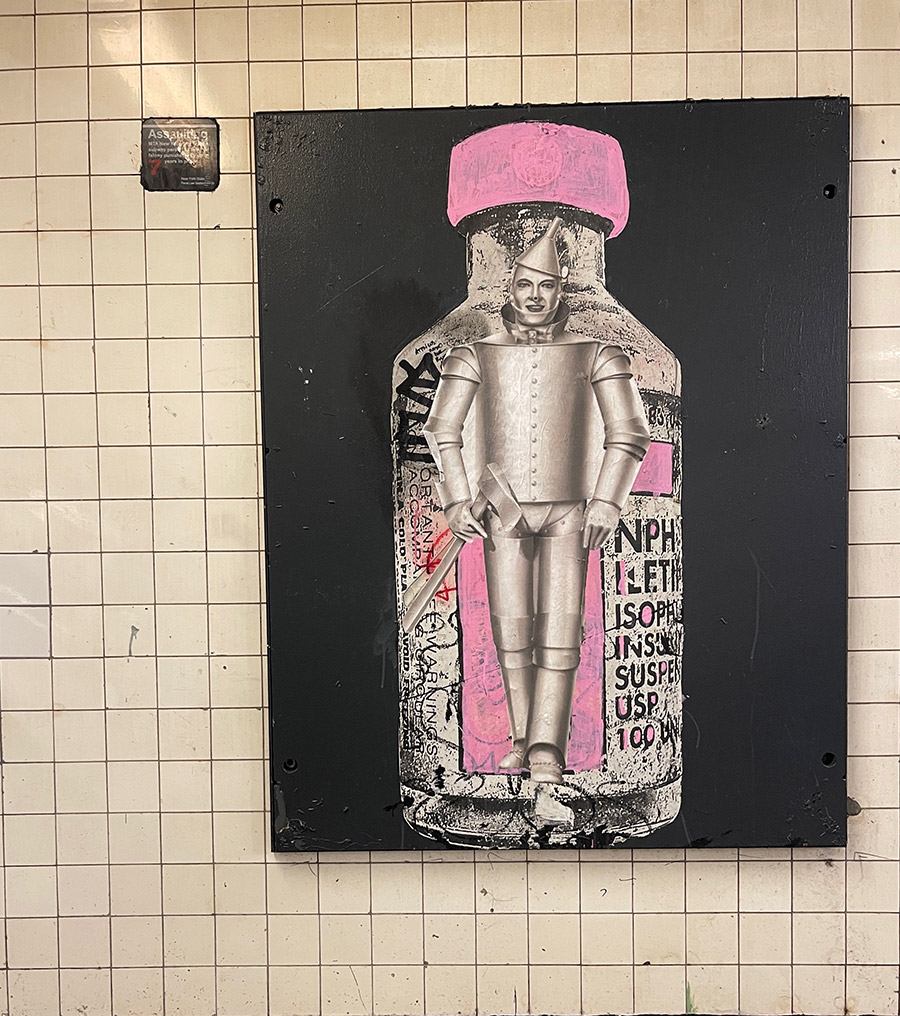
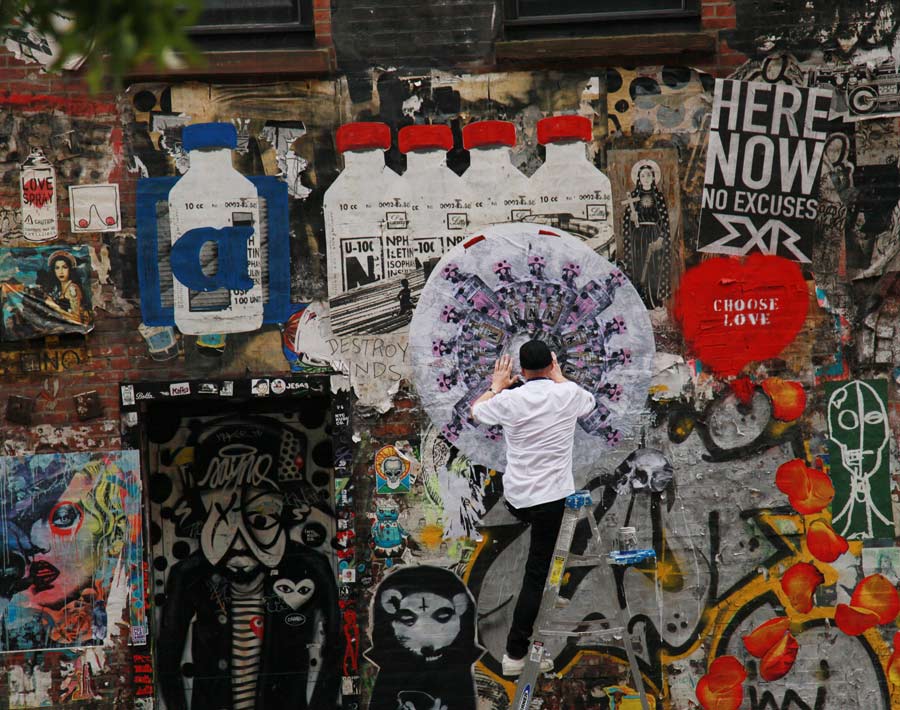
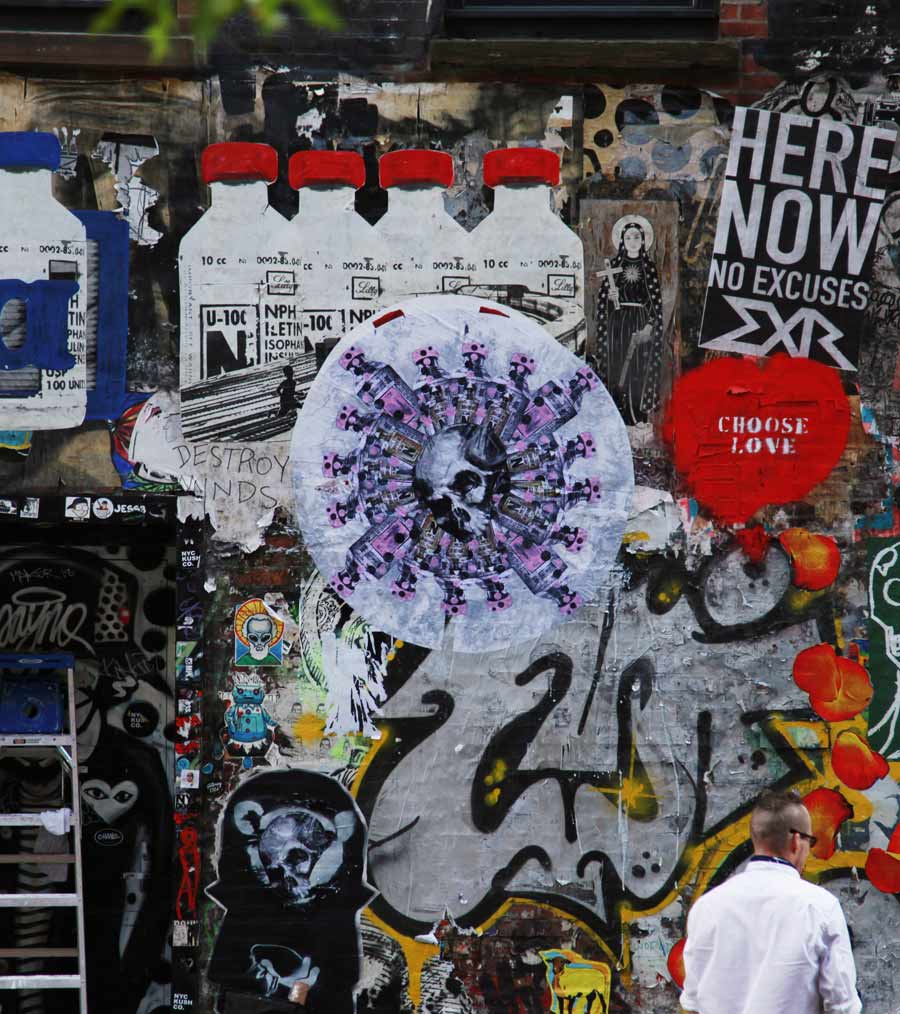
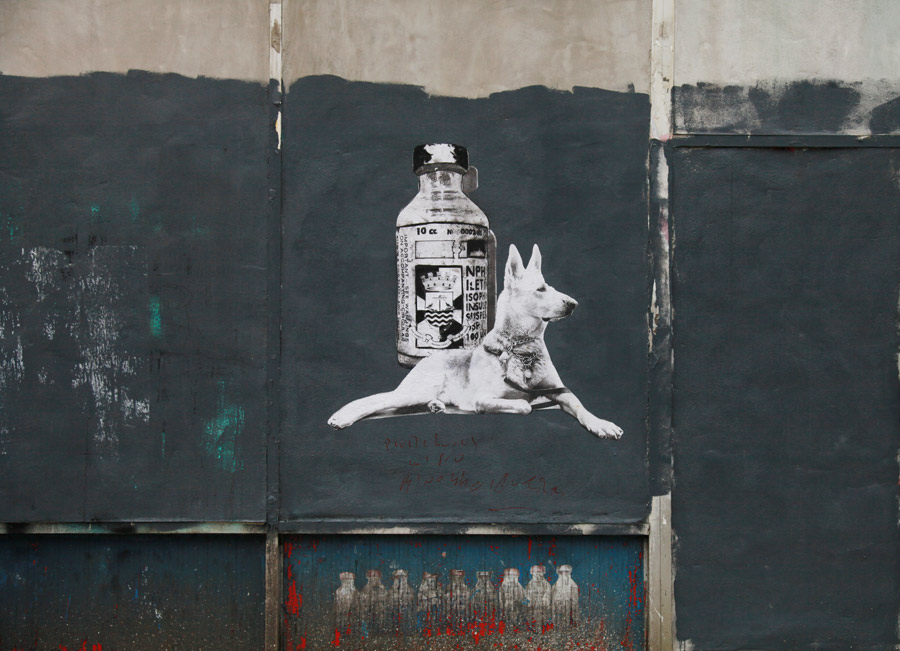
Artist, activist & speaker, he’s been developing a compelling body of work on the street over the last decade or so – with the goal of raising awareness of type 1 diabetes, which he is directly affected by. With street art, painting, photography, and sculpture, his lived experience becomes the substrate of his art: the insulin vials, the syringes, the shoes of children, the climb of street-wheatpastes from New York’s High Line to alleyways abroad.
In the new show, his metaphorical reach expands. A New Hero Emerges draws on the iconography of the Tin Man from The Wonderful Wizard of Oz—that winning figure of armor, of missing heart, of longing—as a symbol of perseverance, courage, and compassion. Although we know that Oz didn’t give anything to the Tin Man that he didn’t already have – in this example, a heart. Appleton’s motto may well be: “Oil to the Tin Man is insulin to the diabetic.” It’s street-art poetics meeting personal reality.
Over the years, Appleton has taken his message across U.S. cities and continents: gallery shows from New York to Los Angeles, Miami to San Francisco; street-walls from Busan to Barcelona, London to Lisbon, Bangkok to Berlin. His past solo exhibitions include Out of the Cold (NYC, 2016), Too Young for Type One (LA, 2017), and Too Young for Type One II (NYC, 2019). His role extends beyond the wall: he is Artist-in-Residence and speaker with $dedoc #dedocvoices, sharing in major diabetes-/health-conferences (e.g., Madrid #EASD60, Lisbon #ISPAD50, Bangkok #ADA85th).
As part of the street-art community, he uses the anonymity of the city to amplify a deeply personal voice. The “tag” Appleton is, in fact, his grandmother’s maiden name and his middle name—an intentional reclaiming of identity.
Approaching the opening of A New Hero Emerges, we spoke with Appleton thinking about his practice, empathy of strangers, survival in the city, street art presence and gallery fame.
Brooklyn Street Art: What is the message you are sending out to the world?
Appleton: That we are all one. That we are all in this together. In this daily struggle & hope for a cure.
Diabetes can really be… Forgive me, a fucking nightmare that a lot of people hide the difficulties even from their closest friends.
BSA: What is the response, if any, you’d like to receive from the public?
Appleton: A wide range of responses people describe my work as inspiring, thought-provoking, and moving.
Others are disturbing, even cynical.
I went into a coma at six years old and almost died.
An older sister died before I was born of unrecognized diabetes.
In one of my Street pieces, it says Diabetes coming to a child near you and someone wrote over a day later, “a child sees this.”
I cleaned it up and wrote back I hope so I knew what Diabetes was at when I was six so should every six year old talk to eat better and be aware of conditions that they might not recognize.
I went into a coma from unrecognized diabetes, and it still happens today.
Diabetes masquerading as the common cold as something else, and even in today’s age, doctors still miss it.
That’s pretty much my mission in a nutshell as an artist and a person with decades of lived diabetic experience.
Welcome to BSA Images of the Week, LIVE from New York! Gorgeous weather for the NYC Marathon today, where more than 50,000 runners will go through all five boroughs. Still that doesn’t beat the number of costumed freaks, monsters, fairies and K-Pop Demon Hunters at the Village Halloween Parade, where over 80,000 costumed participants (and around 2 million spectators) flooded the streets Friday Night.
On the street and on the subway, in corporate and boutique offices, in the library, and in the frozen food aisle of your grocery store, Friday was full of children and adults in costumes prancing and preening, looking for goodies, posing for pictures, and battling the autumn winds that feel like they could lift and carry some small children and dogs that were not tied down. Shout out to the hot babe in fangs and clever cleavage leaning out the window of her Escalade at the stop light on Delancy Street yesterday afternoon. Despite all of these jubilant and tempestuous personalities parading across the city, there is only one Voluptuous Horror of Karen Black, the New York punk rock band that gave a free concert at Tomkins Square Park leading up to Halloween.
In other number news, reinforcing the growing disconnect between festivity and hardship across the city, nearly 3 million New Yorkers receive food aid from the Supplemental Nutrition Assistance Program (SNAP), and the federal government shutdown is cutting off their food, as of yesterday. The New York State Governor Kathy Hochul declared a food state of emergency. It makes us all wonder who the true monsters are.
Speaking of politics, roughly 370,000 New Yorkers have already cast early ballots in this new mayoral race. As the country leadership leans hard right, it looks like New York City is going left, like the Netherlands did this week.
For a few more days this week, BlankMagBooks (17 Eldridge Street, Chinatown) — run and curated by Jun Ohki — is featuring photos by Sonny Gall from her newly launched book 99 of New York, with texts by Mila Tenaglia. The streetwise romance of this photographer’s eye draws the viewer into often overlooked streets and scenes of New York with acute observation, adoration, and a sense of possibility. With texts that contextualize and accentuate the images throughout the slim and ample hardcover, the reader comes to see everyday scenes anew. If you’ve spent any time amid the post-industrial rubble of Brooklyn and Queens—graffiti, clouds, pigeons, basketball courts, and construction cranes—you’ll recognize that Gall has captured them precisely as they are lived.
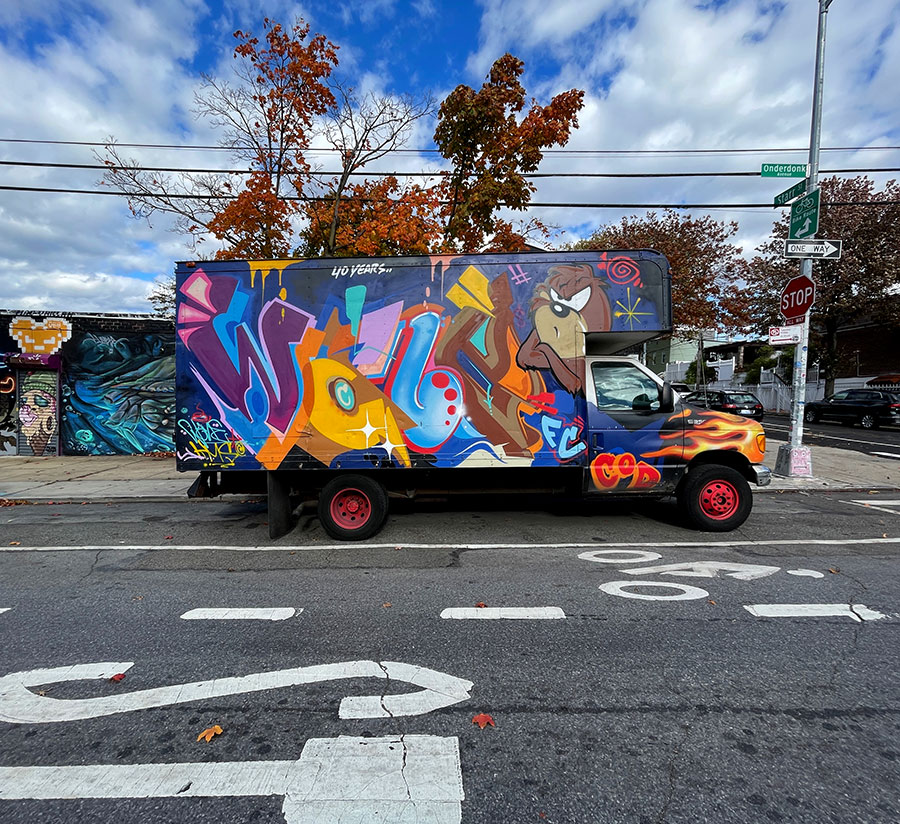
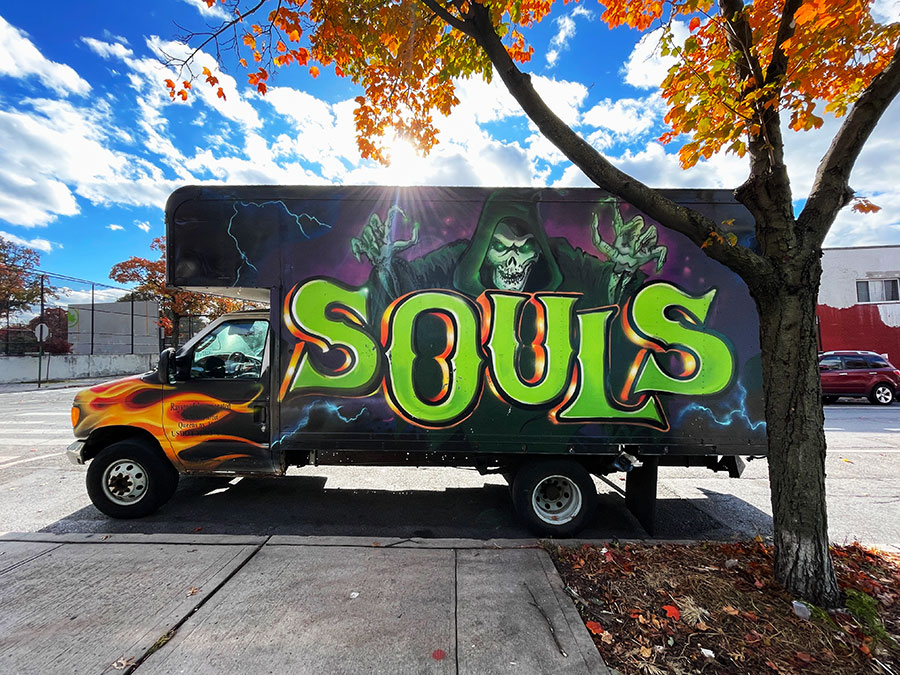
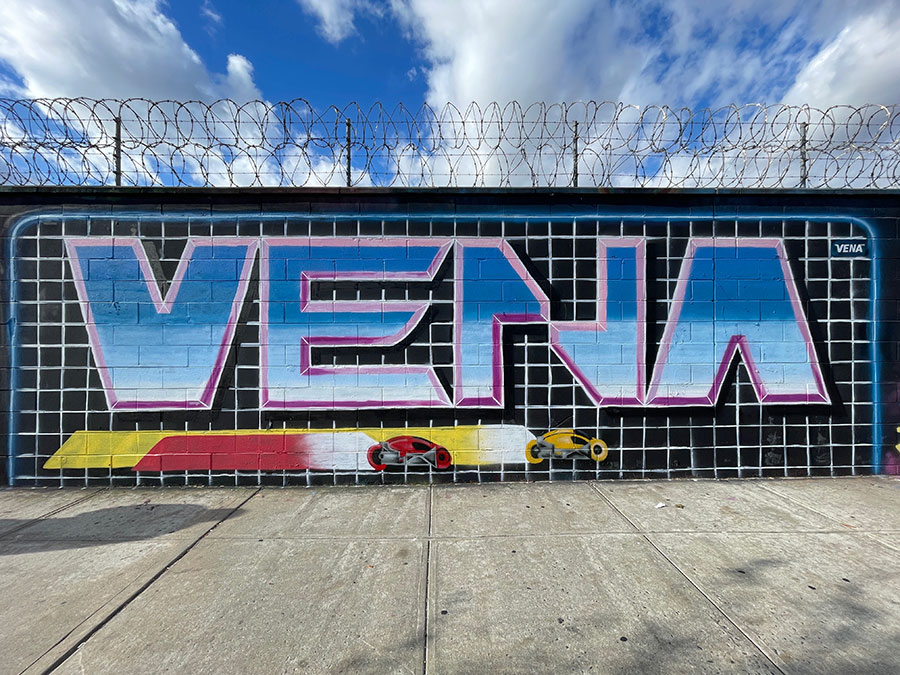
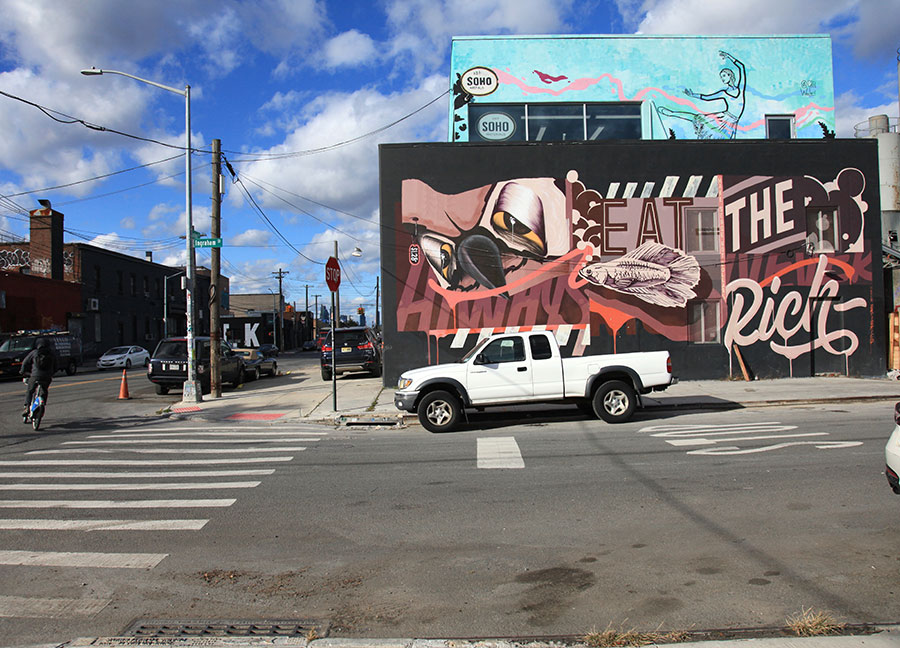
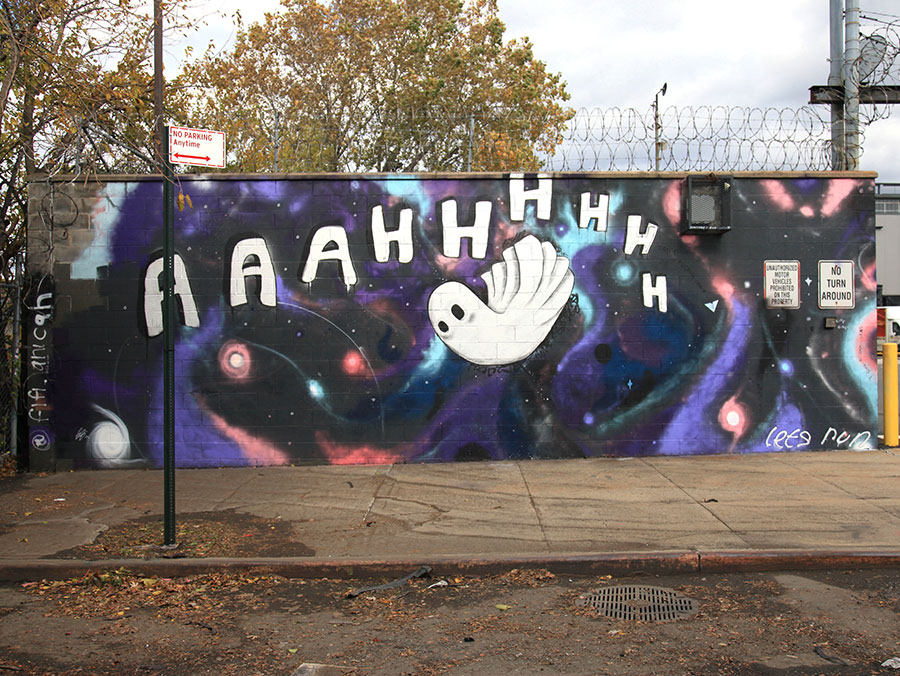
Here is our weekly interview with the street, this time featuring AKUD, BornOner, ENT, EXR, Frodrik, Humble, Never Satisfied, OPE TFP, One Mizer, SOULS, Tess, VENA, Vers 718, Zero Productivity, and Zooter.
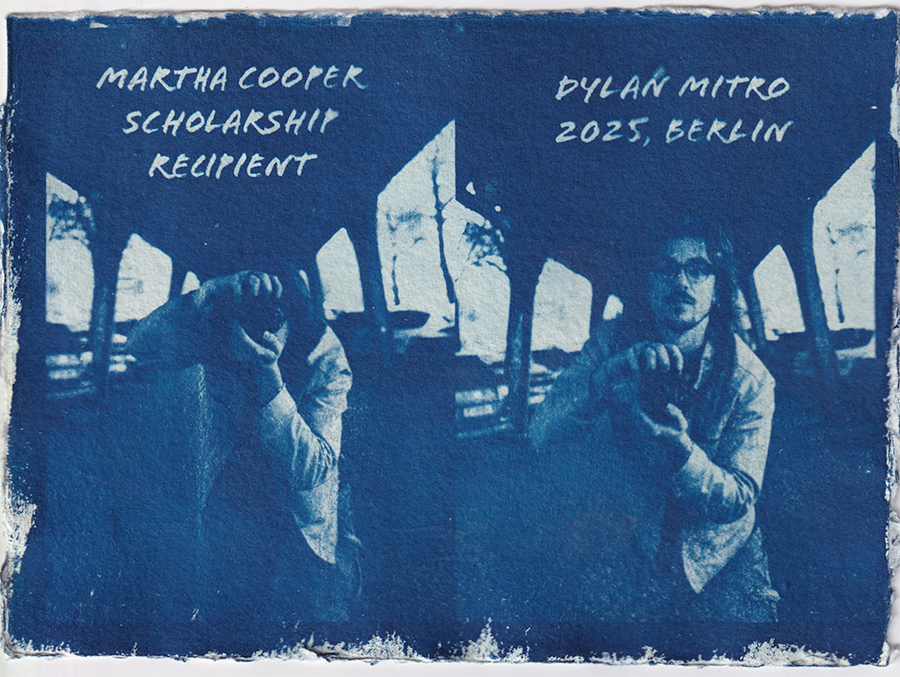
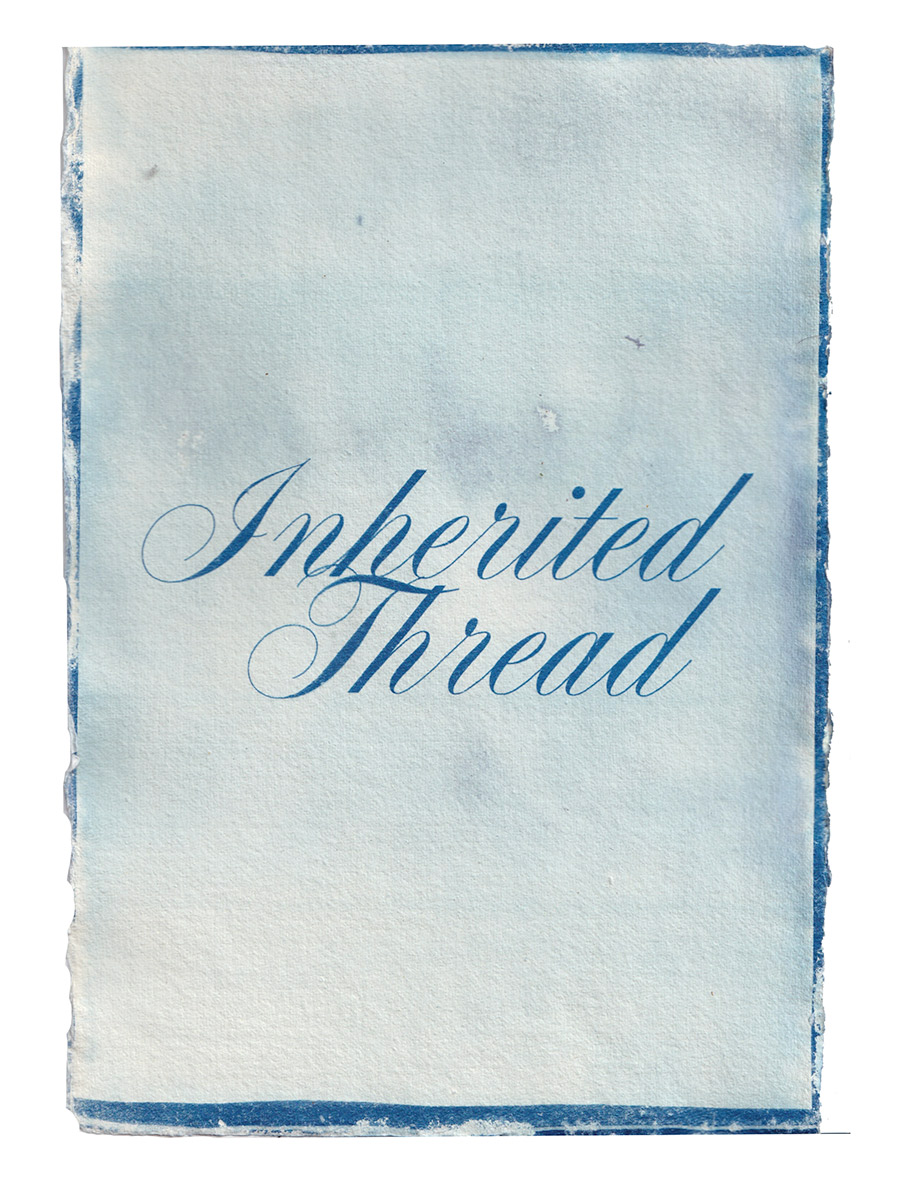
Berlin has always been a city that remembers through reinvention—a fitting place for the first recipient of a photography scholarship named in honor of a pioneering ethnographer whose seventy-year career preserved worlds in flux. The recipient of the first Martha Cooper Scholarship for Photography, the Canadian photographer and researcher Dylan Mitro, has spent recent months in the city exploring its queer memory through Inherited Thread, a project that draws together archival study, re-photography, and contemporary documentation. Their work, soon to be exhibited in Berlin, revisits Schöneberg’s queer nightlife ecology from the 1980s onward, asking how we inherit histories that were often hidden, erased, or displaced—and how we might keep them alive through art and documentation.
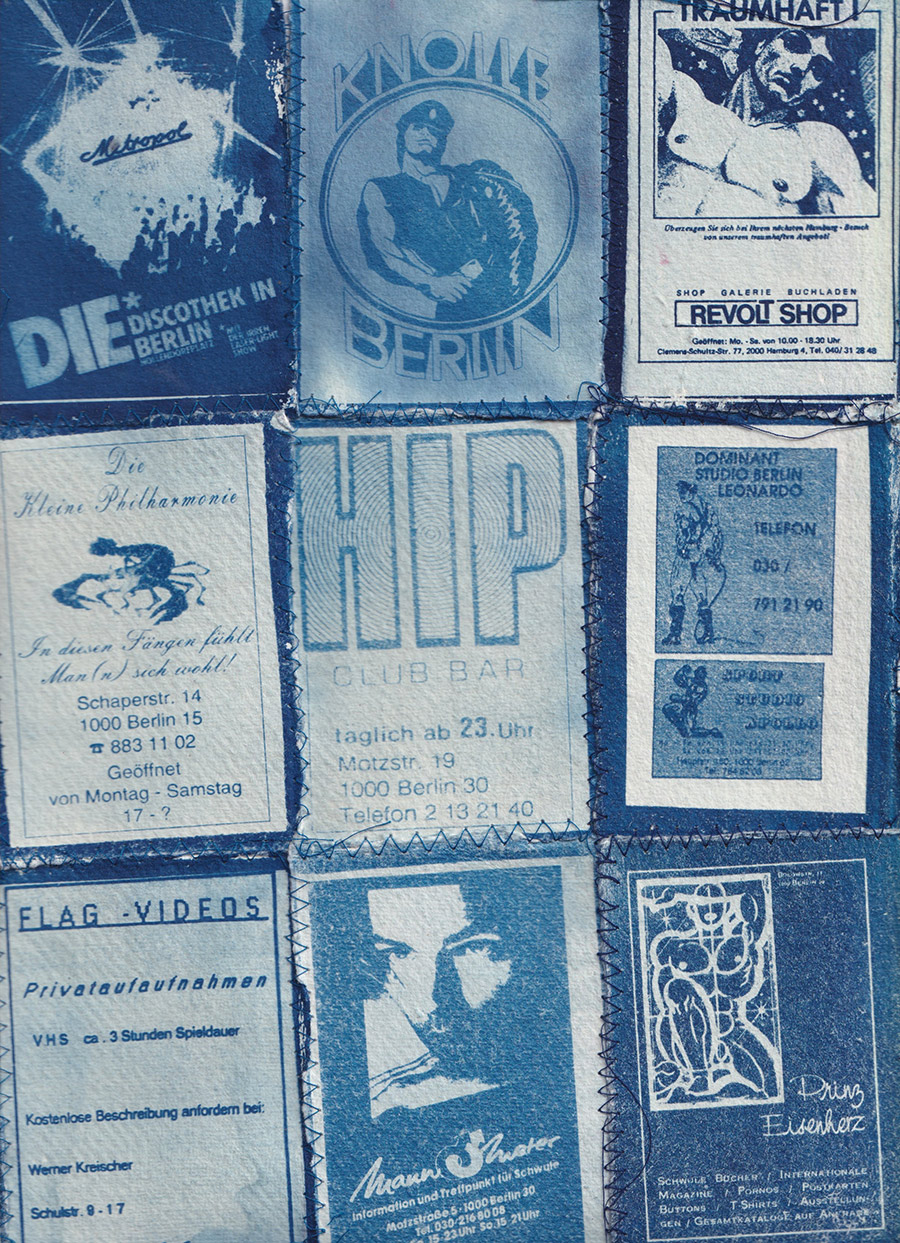
Inherited Thread takes as its starting point Berlin von Hinten, a gay tourism atlas first published in 1981 that catalogued Berlin’s bars, bookstores, and venues at a time when queer life existed largely in coded networks. From this modest guidebook, Dylan reconstructs a cultural topography: visiting surviving sites, mapping closed ones, and photographing their present forms. Their fieldwork extends into the archives of the Schwules Museum and Spinnboden, where they piece together ephemera—ads, zines, snapshots, and personal notes—that once charted a thriving but precarious social world. Each recovered address becomes a point of dialogue between past and present, what was lived, and what remains.
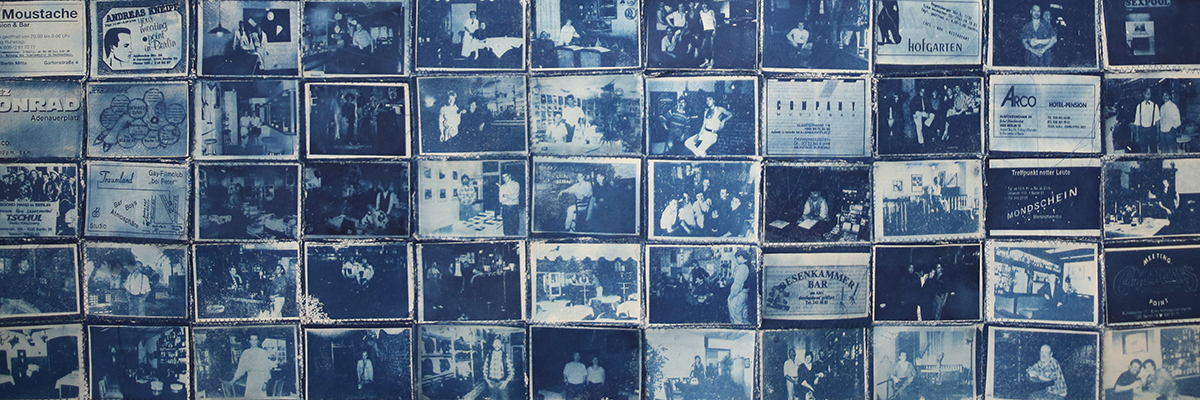
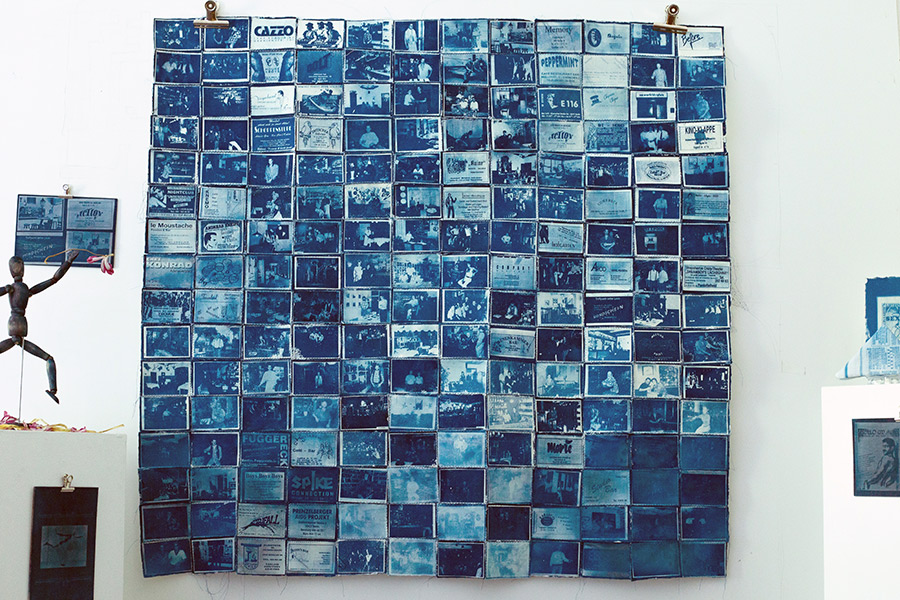
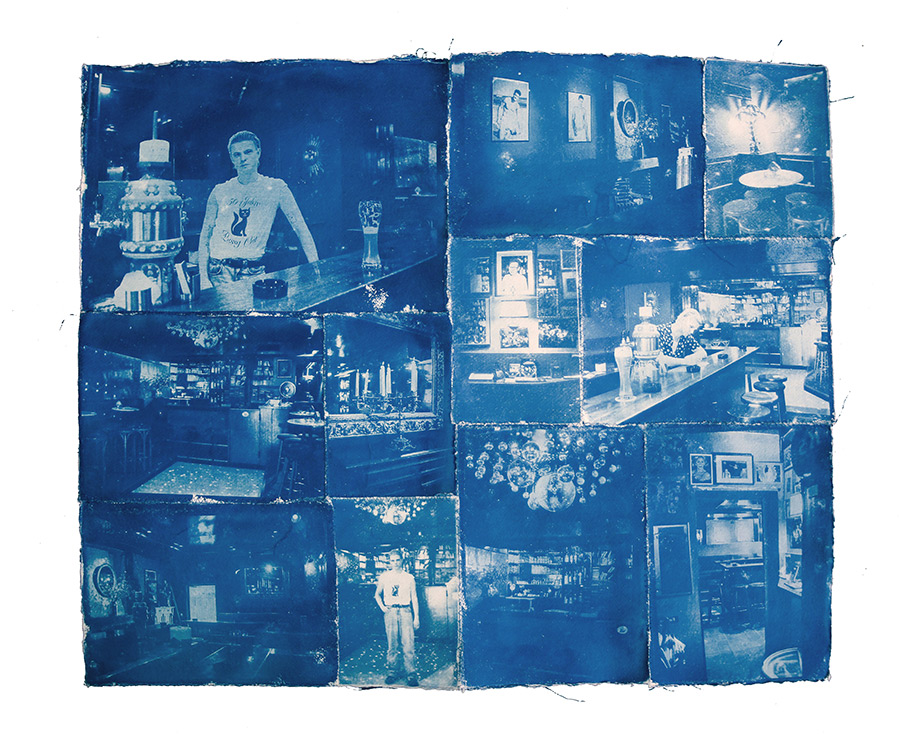
Materially, the project echoes themes of loss and persistence. Cyanotype quilts made from archival interiors fade from clarity to a certain ghostliness; resin-encased photos hold light like memory suspended, and weatherproof plaques marking the sites of vanished community. These gestures of preservation aren’t presented as nostalgia; they propose to keep history embodied and visible. Mitros’s own approach to documentation asserts that the everyday places where people gathered, danced, and organized are as vital to collective memory as any monument.
As Dylan prepares for their Berlin exhibition in November, Inherited Thread unfolds as a living, site-specific memory atlas of queer life—stitched from archival guides, re-photographed spaces, and the testimony of those who remember. It reflects a city still negotiating its relationship to memory, visibility, and belonging. And like the scholarship’s namesake, whose life’s work has championed careful observation, human imagination, and dignity, Dylan’s practice reminds us that documentation, when done with empathy and rigor, is itself an act of care.
“Inherited Thread attempts to better understand our Queer histories through archival ephemera. Dylan has conducted research in the LGBTQIA+ archives of the Schwules Museum. Focussed on the historic publication Berlin Von Hinten, a Gay tourism atlas first published in 1981, showcasing nightlife and community spaces that defined Berlin in the 1980s and 1990s. Revisiting and mapping forgotten landscapes through printmaking and photography, this project seeks to explore the inheritance of historical LGBTQIA+ spaces, and how to keep their stories alive.”
Following is our interview with the artist, researcher, and photographer.
I. Artistic Practice and Methodology
Brooklyn Street Art:For the exhibition for the Fresh A.I.R. you are using cyanotype printing on cotton-rag paper and making a quilt with some of them, positioning photography within a tactile, craft-based framework. Could you elaborate on how this interplay of image and textile informs the conceptual and affective dimensions of the project?
Dylan Mitro: My concept for this work involved printing cyanotypes on cotton rag paper and quilting them together, sourcing the material from a 1980’s and 1990’s Gay Tourist Publication titled ‘Berlin Von Hinten’ by Bruno Gmünder. This journey of research has been such a vast exploration of Berlin’s history, I felt I was having to sew together the LGBTQIA+ history that I was learning, as an attempt to retell stories of the community here in Berlin. Through the cyanotype sun printing process, the images were printed one print at a time, so it was unpredictable how they would turn out. Once I had 100s of these prints finished, it was clear that some turned out more visible than others with ghost-like qualities. This process felt very metaphorical to our LGBTQIA+ history and how a lot of these people, places and stories had been lost to time.
I decided to compose the cyanotypes like a quilt with both the photographs, advertisements and maps of Berlin’s; Gay, Lesbian Bars, Cafes, Discos, Travesti clubs, and sex shops. It felt like I was sewing back together a mere echo of these places and their stories from Berlin in the 1980s and 1990s. These two decades of the 1980s and 1990s are so poignant in the community, connected to the AIDS epidemic. As a Queer artist I try to navigate and understand further how to measure the loss the community faced in this time. With my body of work titled ‘Inherited Thread’ to both refer physically to the ways I have quilted together the cyanotype prints, but also to refer to the process this research has taken me on, in threading together the question of how, we as the next generation of the LGBTQIA+ community inherit the stories and spaces of those that came before us.
BSA: You will be drawing extensively on archival materials from Berlin Von Hinten (1981–1997). How do you approach the ethical and aesthetic considerations of working with such archives—particularly when recontextualizing them within a contemporary queer landscape?
DM: I think when dealing with any LGBTQIA+ historical material, you have to understand how personal perspective affects your lens, as the landscape within the community has changed. There was much to consider when dealing with a body of work like the ‘Berlin Von Hinten’. First, this book was mainly made for ‘Gay’ male tourists, looking to explore the homosexual life of Berlin, but was not limited to just that perspective. It shared both Trans and Lesbian spaces in its publication as well. But when dealing with the ethics of the ‘Berlin Von Hinten’ publication itself, it is necessary to acknowledge that it was made from and for a masculine, predominantly white gay male clientele.
So I had to acknowledge that, though this was a rich part of Berlin’s LGBTQIA+ history, it was certainly a limited perspective and not the full picture of the scene. Looking at any ‘Gay’ history, you have to acknowledge how prejudice and exclusionary rhetoric within the scene was certainly present and still exists in the present. I was approaching these books as a Gender Queer artist who is also a tourist trying to discover Berlin but from a contemporary lens. Approaching the research and acknowledging the influence this publication had within the Gay community is important. This work has not been intended to criticize the publication but to celebrate the way it was able to so intimately time capsule part of the 1980s and 1990s Gay scene here in Berlin through its writing, mapping and photography.
A majority of the aesthetics I was interested in were the advertisements in the publication. A lot of the focus is catered to the homoerotic, macho, masculinity. This aesthetic is not what I personally prescribe to. Still, I find the use of this homoerotic aesthetic to market sexually charged spaces for Gay tourism at a time within the peak of the AIDS epidemic very interesting. So all of this was considered as I worked through these published books.
BSA: You will be creating/presenting many of these historical photos and places re-photographed. What is the protocol for doing this?
DM: I could not have started any of this research without the support and access to the wonderful Schwules Museum Library and archive. I owe a lot of this research to their continued support. My protocol to present these historical photos was to take high-quality scans of these pages within the Berlin Von Hinten. These pages included photos of rare glimpses into the interiors of LGBTQ+ spaces in Berlin in the 1980s and 1990s. I recorded all of the accreditation of photographers that were published within the book and reprinted them within my research. As I was researching, I wasn’t only collecting photographs of these establishments but also their advertised addresses.
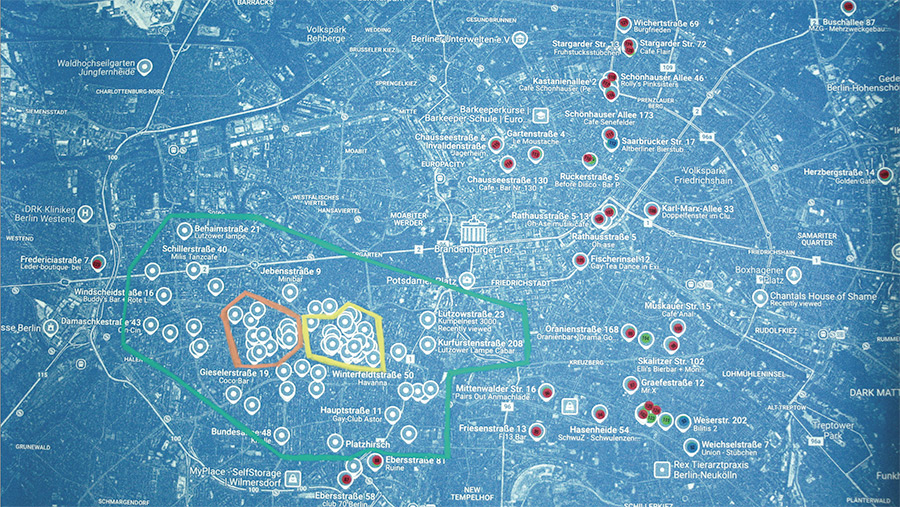
After the scans were finished, I created my own photo negatives on transparent acetate paper of the historical images. These photo negatives were made to print cyanotype copies of the images. After I digitally documented the addresses of these spaces into a Google Maps folder to create a digital map of where these places existed. From there, I was able to understand which of these places were still open and operating as the same business 40 years later. From the 200 businesses I documented, only 12 were still open; operating under the same name. So as a part of the project I visited some of those establishments and worked to photograph them the way they were in the original book 40 years later.
BSA:When you revisit surviving venues to echo the 1980s interior shots, how do you determine vantage point, focal length, framing, and lighting to balance fidelity to the historical images with your own authorial choices? What does re-photographing do in reference to history?
DM: I approached the photographs more organically, trying to document these spaces in a way that would allow for the environment’s ambience to speak for itself and for it to be understood within the photographs. I wanted to think if these photos were to be viewed in 40 years from now, how could these be a documentation of the spaces themselves, like the photos from the Berlin Von Hinten. I made sure to photograph the rooms without any customers in them, as the photos were more about the environment. I am attempting to continue the documentation and archive these current spaces as they are now, before they are lost to time. So it does feel like I am continuing the narrative of archiving to prevent the story of these places from being lost.
BSA: Provenance, description, and preservation must be a challenging process: What is your workflow for recording provenance and metadata (dates, addresses, names/roles, consent, cross-references to Berlin von Hinten) and for long-term preservation (file naming, etc)?
DM: My attempt at cataloging my findings and recording the metadata of researching was for a more artistic storytelling approach. To organize each of the places I had researched with its photograph, advertisements, and descriptions on each page. Recording when these places were established and which ones still exist. There are pages I have dedicated to crediting the authorship of these previous Berlin Von Hinten publications.
In the conversation around long-term preservation, I would consider my approach to be more artistic than technical. I still have to remind myself that this work is from the lens of an artistic practice over the short course of 10 months, and with that I feel it is still a work in progress with the intention of creating dialogue involving an open-ended question: how do we approach the idea of Inheritance of history within our LGBTQIA+ communities? – the answer is one that we each have to seek out and learn for ourselves. I have been working in LGBTQIA+ archives for years now, and it’s overwhelming how much material there is within the archives to be rediscovered. I hope others are inspired to dive into it.
II. Community, Space, and Memory
BSA:Central to the project are spaces such as Pussy Cat Bar and Eisenherz Book store, both historically significant to Berlin’s queer community. Can you talk about navigating the process of documenting these living spaces in a manner that both honors their historical legacies and engages with their present realities?
DM: The spaces I have photographed and interviewed were documented with very different approaches based on their history and contemporary positioning. Pussy Cat has been around since 1974, founded by two lesbians, and has always had its doors open to all, being very inclusive. When I photographed their space, I wanted to capture the ambience. The bar’s essence owes much to Daniela, Pussycat’s owner from 1998 until her death in November 2020; she’d worked there since 1982. Her former sidekick “Donna” (an employee since ’85) now runs the show, preserving Daniela’s legacy. I included portraits of the owner Donna and Jan, a young bartender who has been working there for just a few years. I spoke to Donna about the history of the bar, hearing stories about its legacy. While with Jan, I spoke about what it means for the next generation to be coming to a spot like Pussy Cat. I asked about the current climate, of the importance of a bar like Pussy Cat, and how it fosters intergenerational connections.
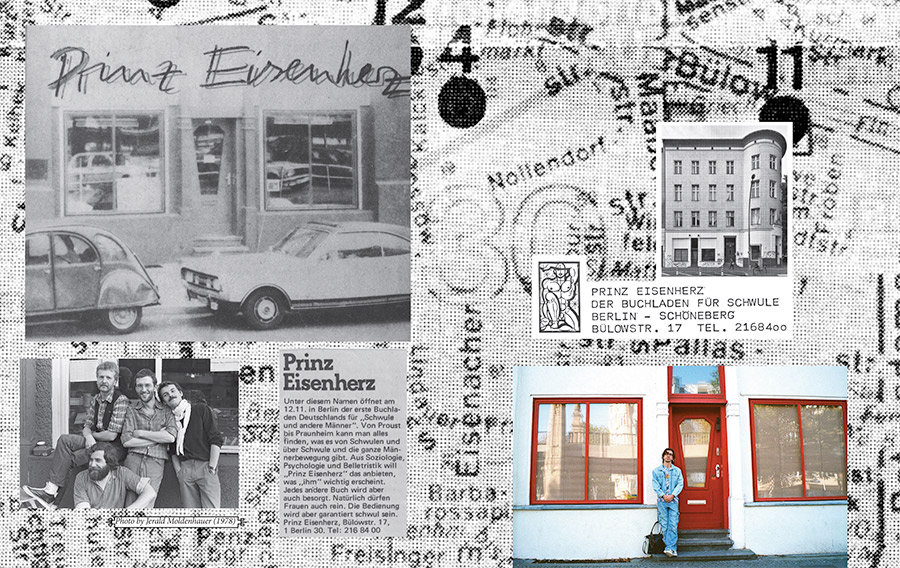
For Eisenherz Bookstore, it had a huge significance to Queer history here in Berlin. It is the longest-standing LGBTQIA+ bookstore in all of Europe. It opened in 1978, as a Gay bookstore called Prinz Eisenherz located at Bülowstraße 1, just down the street from my studio here at Fresh A.I.R. and across the street from where this project will be exhibited. Eisenherz is where the story of my research starts, as the founders of Berlin Von Hinten – Bruno Gmünder and Christian Von Maltzahn were two of the five founders of the Prinz Eisenherz bookstore.
When I photographed and interviewed the current owners of the Eisenherz, Roland Müller-Flashar and Franz Brandmeier, they talked about their involvement in the business since the 1980s. We spoke about how they changed the name and made the bookstore more inclusive over the years. They still to this day host book readings and gallery openings. As a business, I talked to them about their legacy and how vital their store is to the community. They shared with me photographs of the official opening in 1978 to contribute to the publication of the work. I photographed portraits of the owners and their colleagues to create a current time capsule of their store and the ones who keep it running. In a climate of LGBTQIA+ book bannings, it’s a significant social fabric for the community to access history and current local and international voices.
BSA:When you engage with events such as the Community Dyke March and Christopher Street Day, your work intersects with both activist and celebratory dimensions of queer visibility. How did your immersive engagement with these communities inform your visual and conceptual strategy or the outcome?
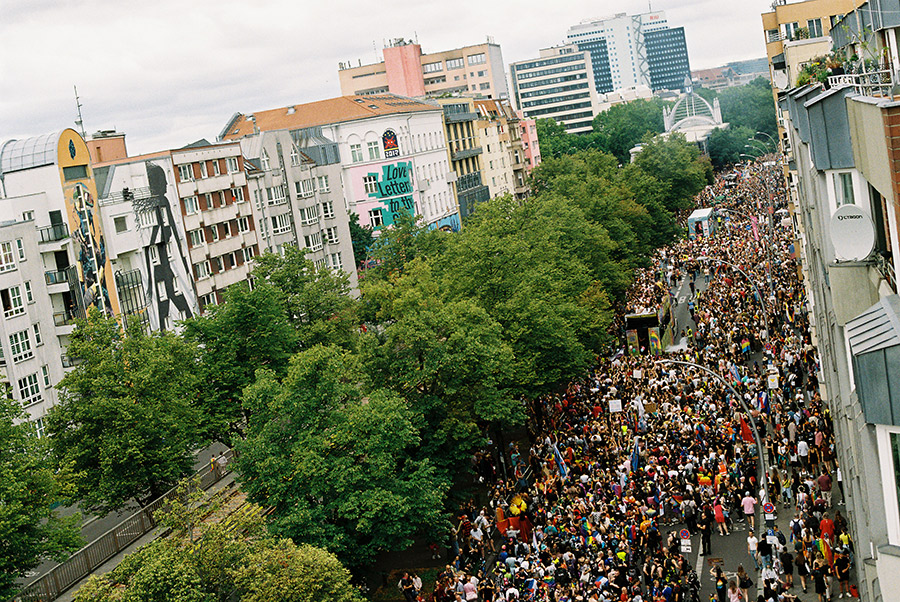
DM: I intend to document Queer history as a celebration. However, I cannot ignore that Pride is also a protest. I felt compelled to capture the ongoing struggles the community still faces and the freedoms we must continue to fight for. While in residence, there was Berlin Pride in July, and within 24 hours, there were three marches that I wanted to document. There was the Community Dyke March, the Christopher Street Day March, and the International Queer Pride for Liberation March. I think it is powerful to show those who show up in the streets, and to document their power.
Activism and celebration are not binary, and to celebrate the strength of their ability to show up in the streets and fight for rights and freedoms is important. I think it is essential to acknowledge how easy it is for us to forget the sacrifices that have given us our freedoms today. We are here today with the rights and freedoms we have because of the elders who came before us, and the activism in the streets they did. There is still so far to go, and I think it’s important to document and archive the ongoing fight for future generations to witness the brave trailblazers of today.
BSA:You’re pairing your visual works with interviews and a book, integrating oral histories with photographic documentation. What are the narratives and/or perspectives you’re most focused on to share with the public?
DM: I will have a book that will document the whole journey of my research and where it leads. This includes how many of these LGBTQIA+ spaces are on the verge of disappearing as the community shifts. I look to ask the community what it means to inherit these histories. How is the torch passed on and how can we find more intergenerational connections, threading a link to the past and finding more of a moral responsibility to them instead of just approaching them from the position as a consumer.
BSA:The inclusion of archival artifacts—such as pieces of the original mural wall outside Connection club and printed publications like Berlin Von Hinten—places in the foreground a dialogue between image, object, and place. How do these material elements shape the way people can react to your work?
DM: For the project to include archival artifacts like the Berlin Von Hinten publication and pieces of the exterior mural from Connection Club, I want to bring attention to the value and importance of these objects visually. For the Connection Club mural, it was unexpectedly demolished as I was in my residency, and I actively became a part of the project unexpectedly. The mural on the exterior of Connection Club was a large display of Gogo dancers and Drag Queens painted in 1997. The entire mural was coming down without any means of preserving it. I believe this was probably the Largest and oldest gay mural in the Schonenberg neighbourhood, and there was no relative concern about attempting to preserve it. So I decided to photograph and document the demolition and went into the dumpster of rubble to collect some of the broken pieces of the mural to exhibit as a part of the exhibition. It was an unexpected moment in the project that encapsulated the work into a physical object. We aren’t just losing the spaces for the community; we are also losing the artworks on their walls and the stories they tell. So having it in the exhibition allows the viewer to witness the continued deterioration of Queer spaces and the current climate.
BSA: Berlin’s queer history is both deeply entrenched and dynamically evolving. How do you situate your work within this broader historical continuum, and what conversations do you hope it sparks within institutional and public contexts?
DM: Berlin’s Queer history is so deep, it is why I was first drawn to this city. But I think once I arrived and started my research, I was so overwhelmed by how vast that history was. I didn’t know where to start or how to encapsulate it into a project. But I think once I familiarize myself with the context of how I am approaching Berlin, I can ask questions in my work without trying to answer them. I wanted to hopefully have people ask their own questions of how do we inherit our Queer histories, how do we memorialize not just the grief we endured, but to memorialize it.
To familiarize ourselves with how our community has come together throughout history to fight for the freedoms that can so easily be taken away—and are actively being taken away now. At a time when the digital age is isolating us further from each other, I hope this work encourages the public to find importance in our histories and actively engage with it. I wanted people to visit and support these places that are still around and respect their deep historical roots. I wanted to find the threads that link what we enjoy and consume today within the community because of what came before us. Hopefully more people will be inclined to go to places like Pussy Cat, Eisenherz bookstore, or the Schwules Museum Library Archive to find stories they are interested in finding out more about.
BSA:Did you find it difficult for the subjects you were pursuing to engage with you and to open up more with their stories and legacy? What are the challenges for an artist and researcher like you when asking people to be frank and open with you about their stories?
DM: From the beginning, I knew as an English-speaking outsider from Canada, I had to accept that I was approaching this project from that perspective. I did have some apprehensions at the beginning about approaching people to ask more about the history because I wanted to make sure I had enough knowledge of the history to ask the right questions. But I tried my best to immerse myself in the community to understand and feel what type of climate it truly is. Thankfully, the residence was located right in the heart of the historic Gay district of Schöneberg. From leather cruising bars to the Gay cafes, I visited them all, and within the context of being an outsider trying to learn more about the history of these places, I had to be patient.
As a Documentary film director, I have done many interviews in my life, so I am familiar with talking with strangers, but it was essential to gain trust with them. I do think that because I don’t speak German there was certainly a barrier to get through to get the most intimate version of the stories but there was a ‘matter of fact’ approach that most people I talked to gave. I noticed that each of the people I interviewed had a very clear understanding of ‘How things are now’. The community relies heavily on tourism, so its clientele has a transient mentality. I could really get a sense from each of them that it’s still a lot of work to keep up running a business and it’s not easy.
So for me to come in to ask questions and take up their time, I needed to be patient and work with them on their terms. Some places were more difficult than others, getting myself into some interesting situations, as some were quite closed off. In those moments, I had to respect their choices and pivot just to accept that there are countless other stories to focus on. For those who were open and invited me into their world to listen to their stories, I am eternally grateful. I hope that more Queers my age understand their responsibility to the community and become more interested in LGBTQIA+ history. It’s our obligation as the next generation to not only be consumers of the culture but to become active participants within the framework in an effort to keep these LGBTQIA+ spaces and stories alive.
Dylan is an alumnus of Class #10 of Fresh A.I.R. The project is an artist-in-residence program of the Berliner Leben Foundation. Dylan is the first recipient of the Martha Cooper Scholarship for Photography under Fresh A.I.R. They will be exhibiting their project at the Fresh A.I.R. exhibition opening on November 7th.
Fresh A.I.R. Scholarship Exhibition #10
“I AM FLUX: The Freedom of Being and the Possibilities of Becoming”
Opening Reception: Thursday, November 6, 2025, 7–10 PM Exhibition Dates: November 7, 2025 – March 29, 2026 Opening Hours: Tuesday/Wednesday: 10 AM – 6 PM Thursday to Sunday: 12 PM – 8 PM Location: Project Space of the URBAN NATION Museum, Bülowstraße 97, 10783 Berlin
Open House: Saturday, November 8, 2025, 2–8 PM, Bülowstraße 7, 10783 Berlin
For more information about Fresh A.I.R. click HERE
For more LGBTQIA+ related projects under the Fresh A.I.R. Program click the links below:
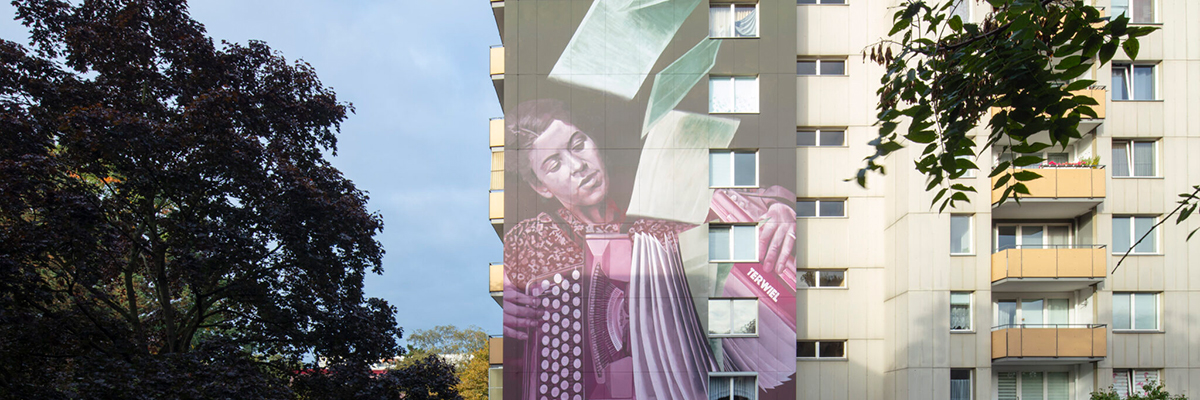
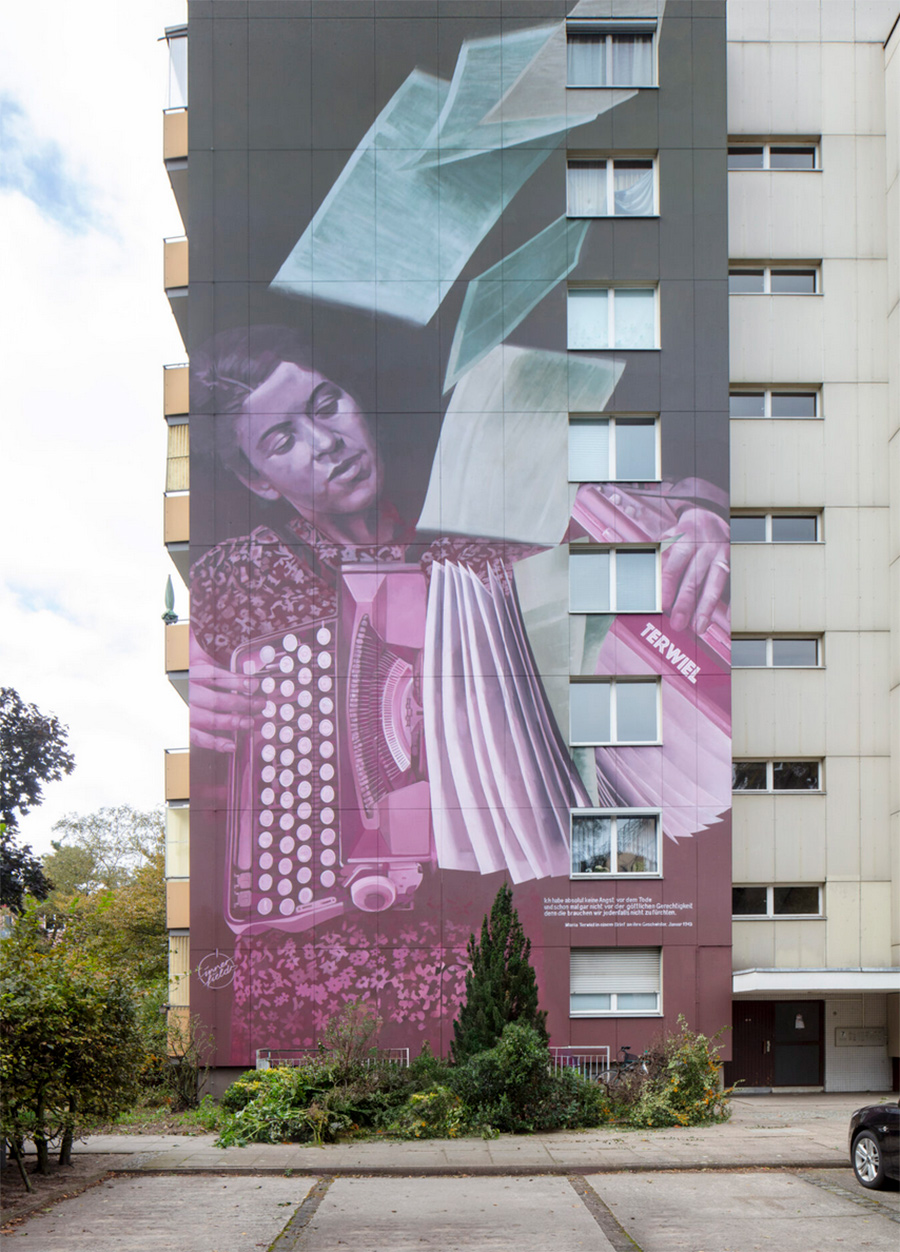
Berlin brings one of its unsung heroes to a wall this month as part of an Urban Nation mural program. On October 9, 2025, UN inaugurated “Akkord,” the newest addition to its long-running One Wall program—a series built on the premise that it is possible a single wall can carry a powerful message in a community. Created by the Berlin-based collective Innerfields, this mural rises above Schwambzeile 7 in Charlottenburg-Nord, transforming an ordinary apartment façade into a site of memory, artistry, and civic reflection. Following the One Wall charge, it’s meant to be public art with purpose: direct, accessible, and impossible to ignore.
Innerfields, who have operated at various times as a trio and a duo since forming in 1998, are well known in Berlin’s street art community for their blend of figurative realism and symbolic abstraction. Emerging from the city’s graffiti culture, they often explore the interplay between humanity, technology, and nature—our coexistence and our contradictions. Their murals are recognizable for their human subjects rendered with near-classical precision, often set against conceptual frameworks that invite reflection rather than spectacle.
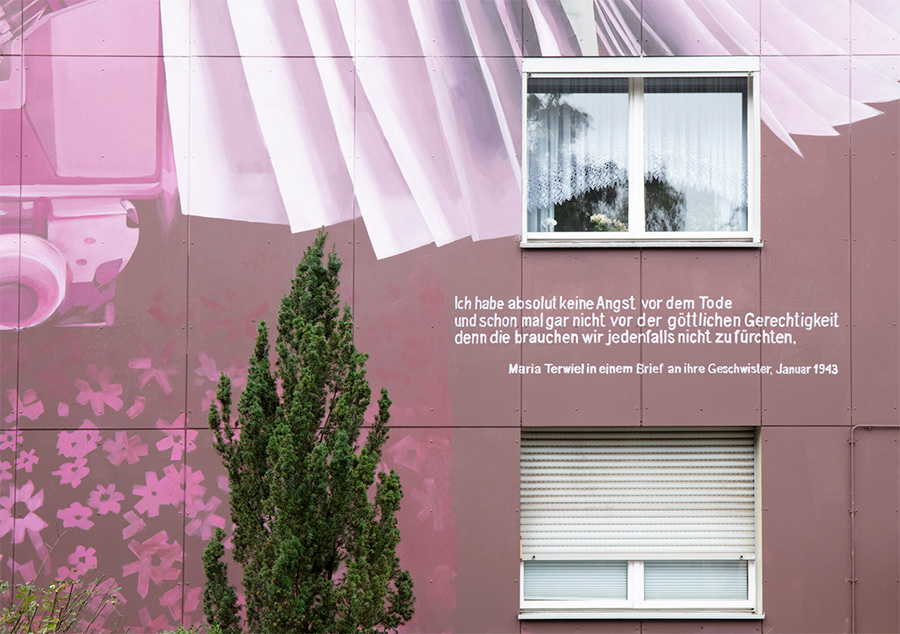
For Akkord, the artists turned their focus to Maria Terwiel, a member of the German resistance executed by the Nazis in 1943 for distributing anti-regime leaflets. The mural’s imagery—Terwiel playing an accordion whose keys morph into those of a typewriter, with the sheet music transforming into the very leaflets she once duplicated—captures the merging of art, intellect, and defiance. The work’s title plays on the dual meaning of “chord” and “accord”: harmony in music, and solidarity in human endeavor.
The concept and design was developed through a workshop with students from the Anna-Freud-Schule and Akkord intends to be as much a pedagogical project as a memorial. It engages young Berliners in reclaiming a silenced voice – and translating history into visual language. In a city that wears its past in layers of paint, Innerfields’ wall may remind us that resistance can take many forms—and that in the right hands, even an accordion can be an instrument of liberty.
GO TO URBAN NATION BERLIN TO READ MORE ABOUT “AKKORD”, INNERFIELDS, AND THE ONE WALL PROJECT
Welcome to BSA Images of the Week! The energy always builds on the streets of NYC as Halloween approaches. The night feels inky and dense, the air cold and damp, with dried leaves and bits of garbage lightly clattering across the sidewalk in sudden whirlwinds. The city’s nerves tightened this week as masked ICE agents descended on Canal Street, pursuing the sidewalk sellers of faux Chanel and Versace shades. And in a curious coincidence, the East Wing of the White House was reduced to rubble — surely a metaphor waiting to be explained.
A piece inThe Art Newspapertracks how the mayoral candidates view the arts: funding, creative-sector jobs, and affordability for artists.
In street art news, we were lucky to catch the naming of a NYC street after Jean-Michel Basquiat this week with his two sisters, step-mom, and the extended family – and an enthusiastic crowd. The City of New York dedicated the Jean-Michel Basquiat Way at The Bowery and Great Jones Street a few feet from JMB’s old studio. Some might consider it an irony that a former vandal gets his way, all these years later. Other’s recognize that these issues are not black and white, but are often GRAY.
Here’s our weekly interview with the streets, this time featuring Chusma, Dirt Cobain, JG Toonation, Mack & Frodrik, Merck, Modomatic, Outer Source, SAMO, Uncut Art, and Unfollow.
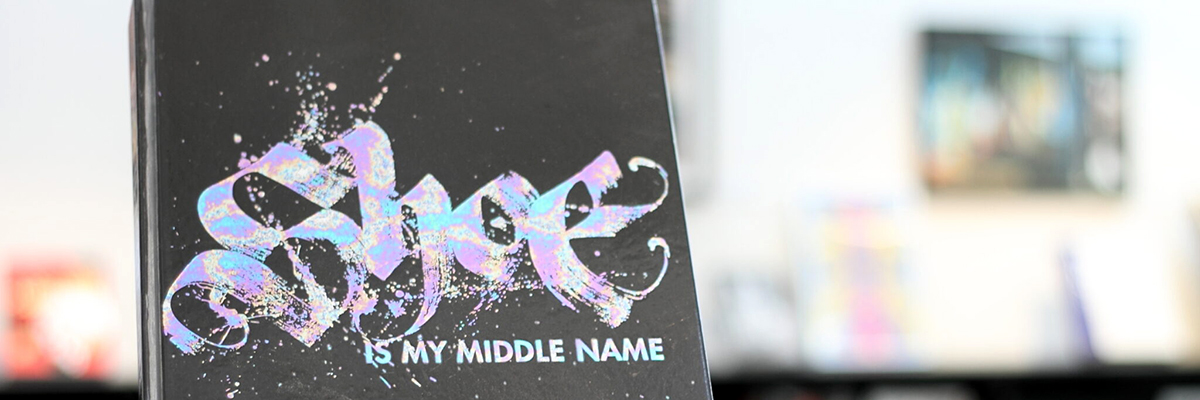
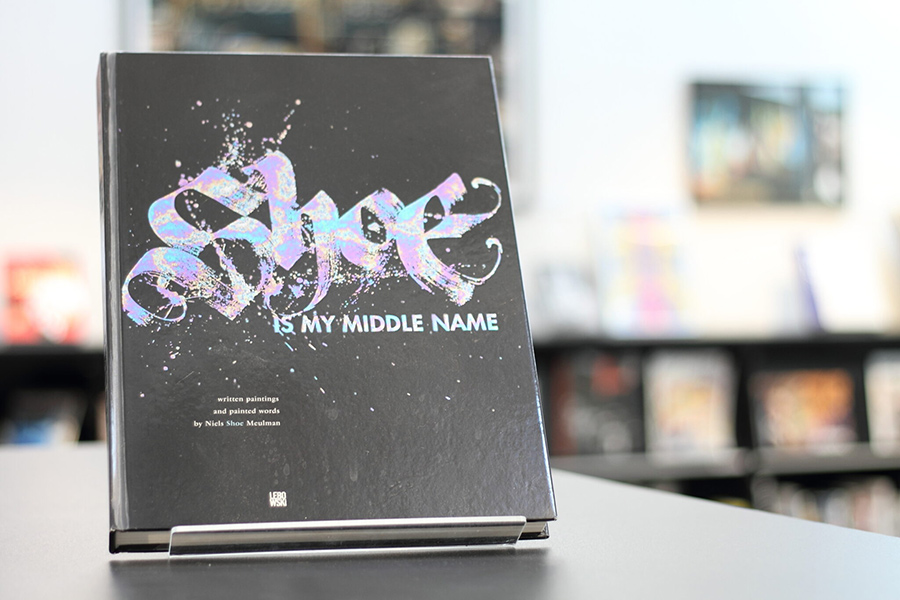
Shoe IS MY MIDDLE NAME. Niels Show Meulman 2016. (photo courtesy of MCL)
Reprinted from the original review by BSA for the Martha Cooper Library.
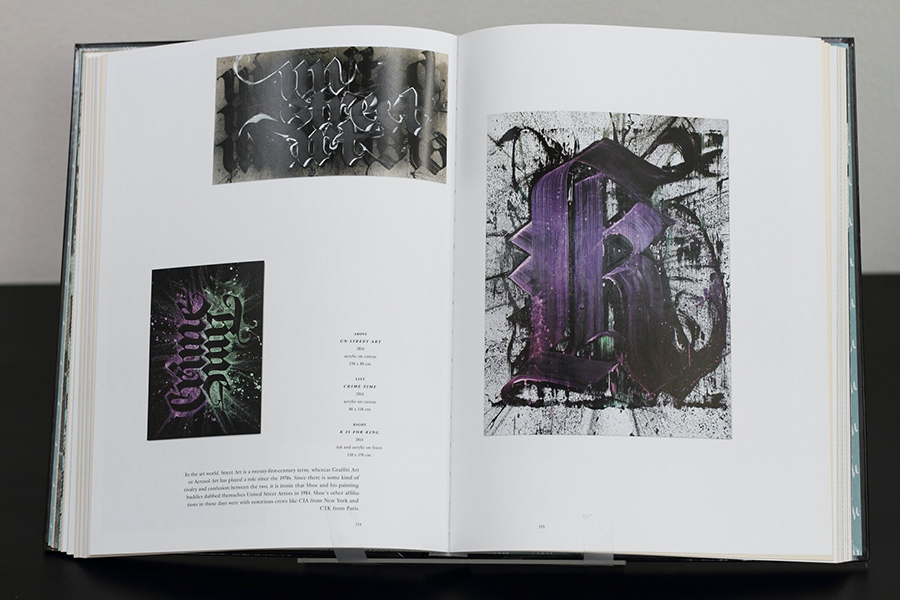
Graffiti writer, calligrapher, painter, typographer—Meulman’s professional identities have long orbited the written mark. “Shoe Is My Middle Name” gathers those decades-deep orbits into one gravitational field, presenting a mid-career survey whose scale and heft match the artist’s sweeping gestures. Photographs of murals, canvases, and poetry scrolls are sequenced chronologically yet feel rhythmic, echoing the repetitive muscle memory that turns letters into pictures.
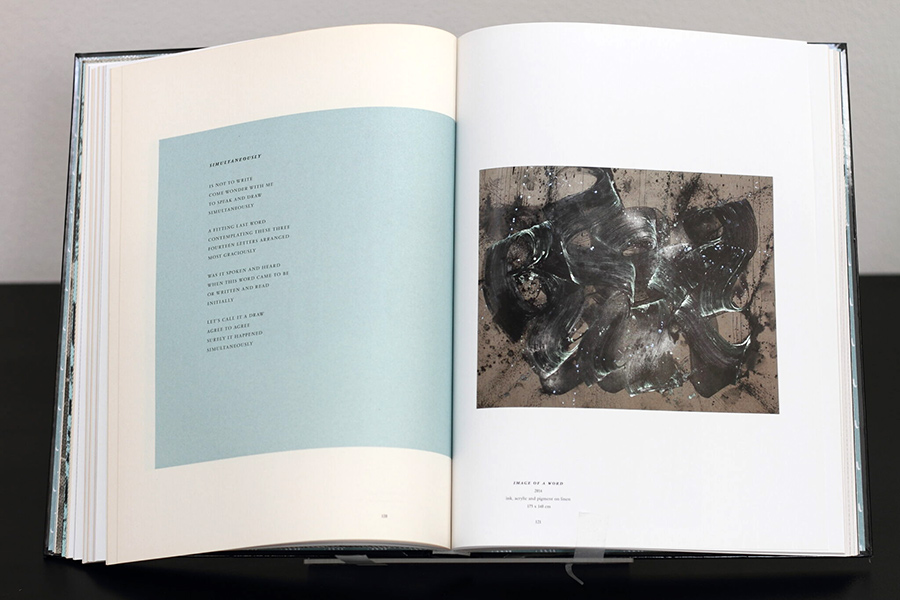
The early chapters recall a precocious Amsterdam teen who imported New YorkWild-Style back to Europe after meeting Dondi White, while later spreads document how that fluency in urban letterforms morphed into what critics dubbed “calligraffiti.” Ink splashes, broom-wide strokes, and squeegee drags demonstrate Meulman’s commitment to an all-in mark: once pigment meets surface, there are, as he writes, “no half steps.” Quotes, diary fragments, and the full-page poem “A Writer’s Song” punctuate the visuals, anchoring grand abstractions in an autobiographical voice both swaggering and reflective.
Shoe IS MY MIDDLE NAME. Niels Show Meulman 2016. (photo courtesy of MCL)Shoe IS MY MIDDLE NAME. Niels Show Meulman 2016. (photo courtesy of MCL)
Title: Shoe IS MY MIDDLE NAME Published: Lebowski Publishers / Overamstel. Amsterdam, 2016. Author: Niels Shoe Meulman Language: English
Graffiti is a living monument—an act of doing rather than keeping.
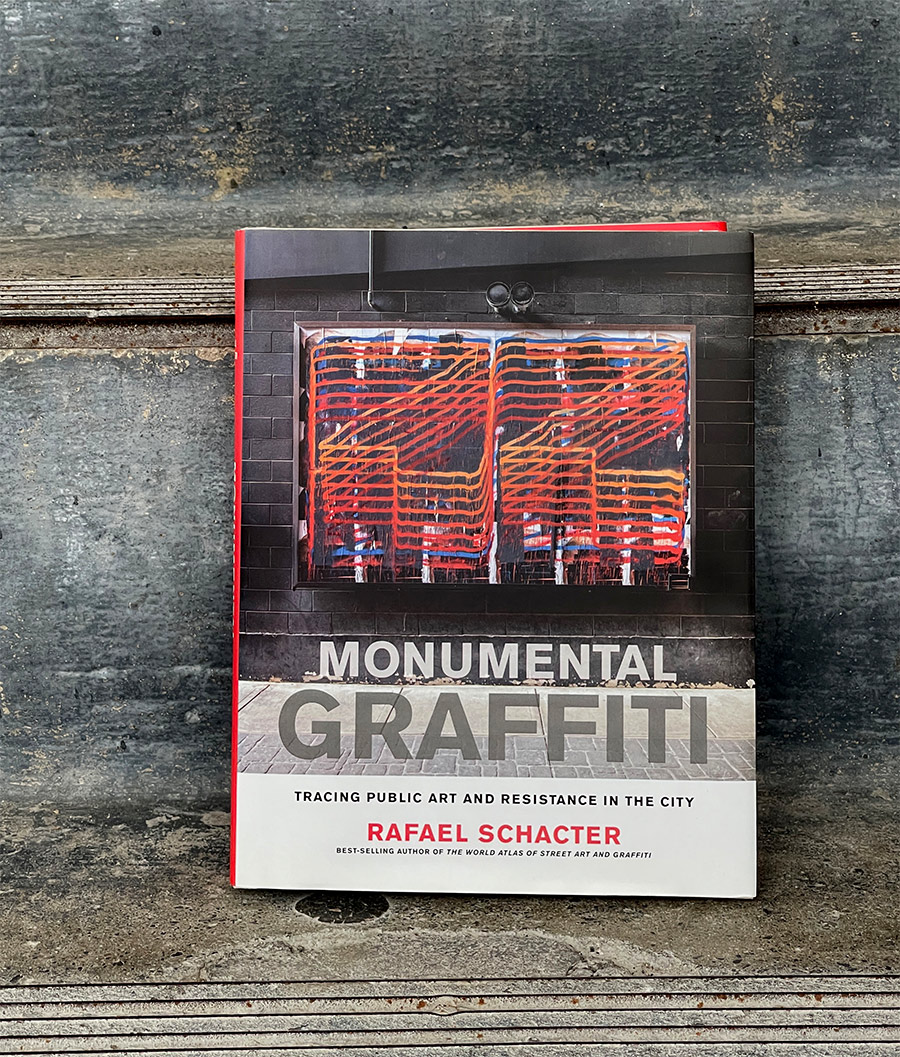
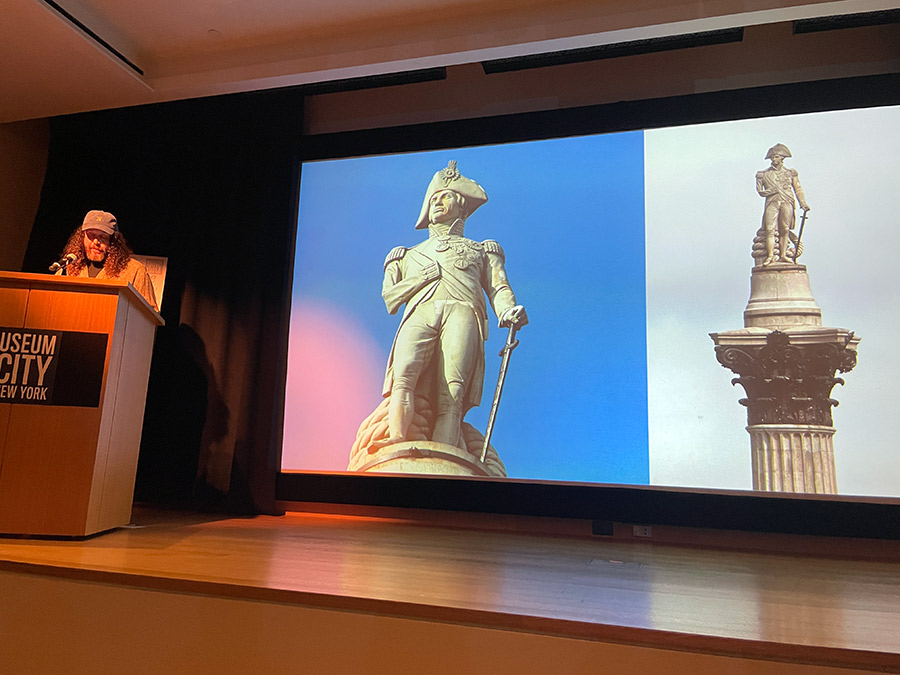
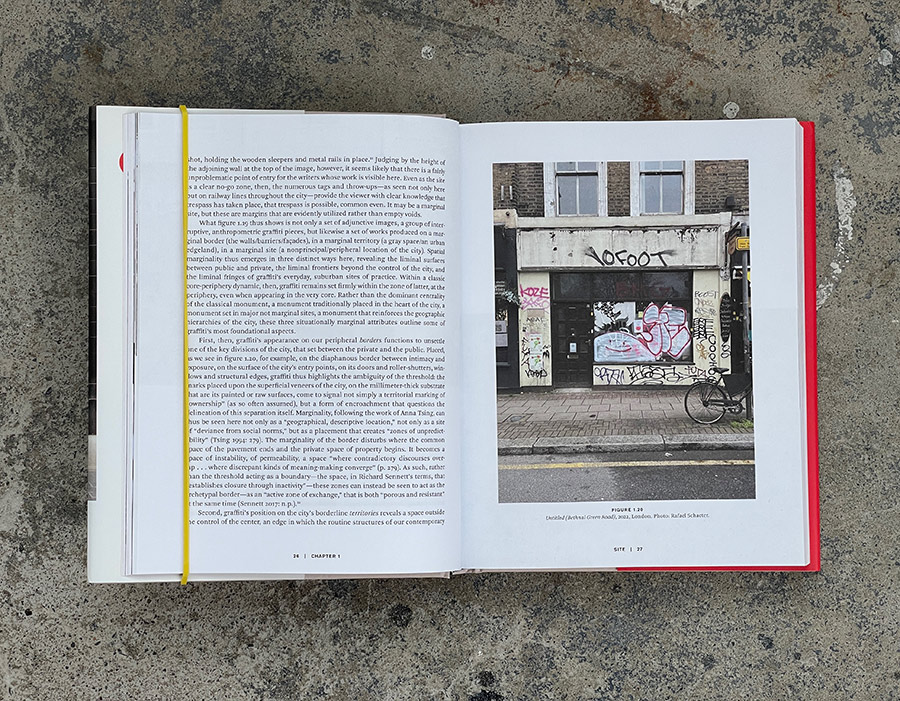
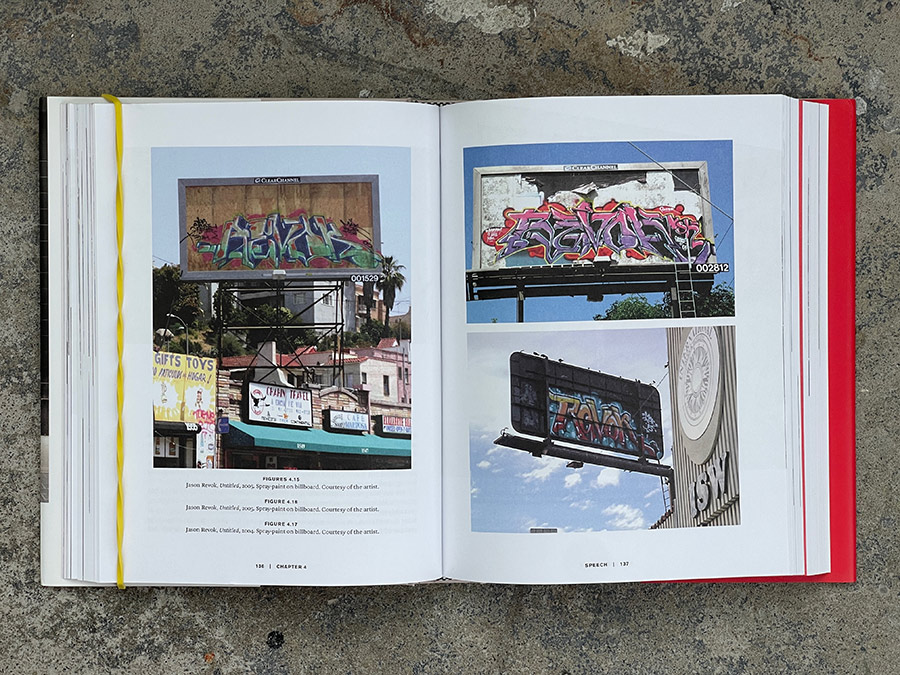
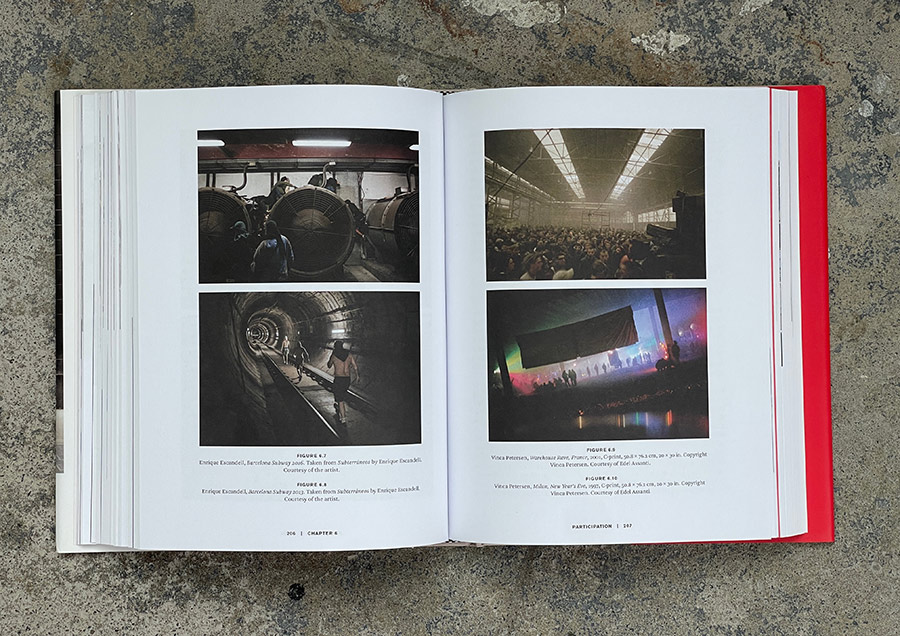
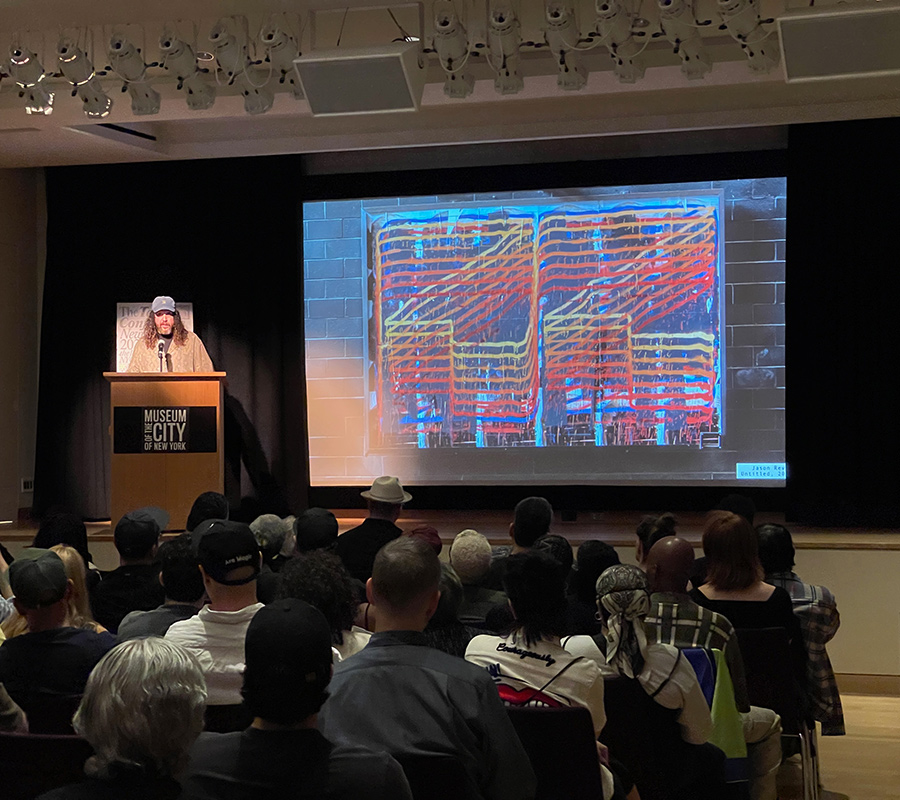
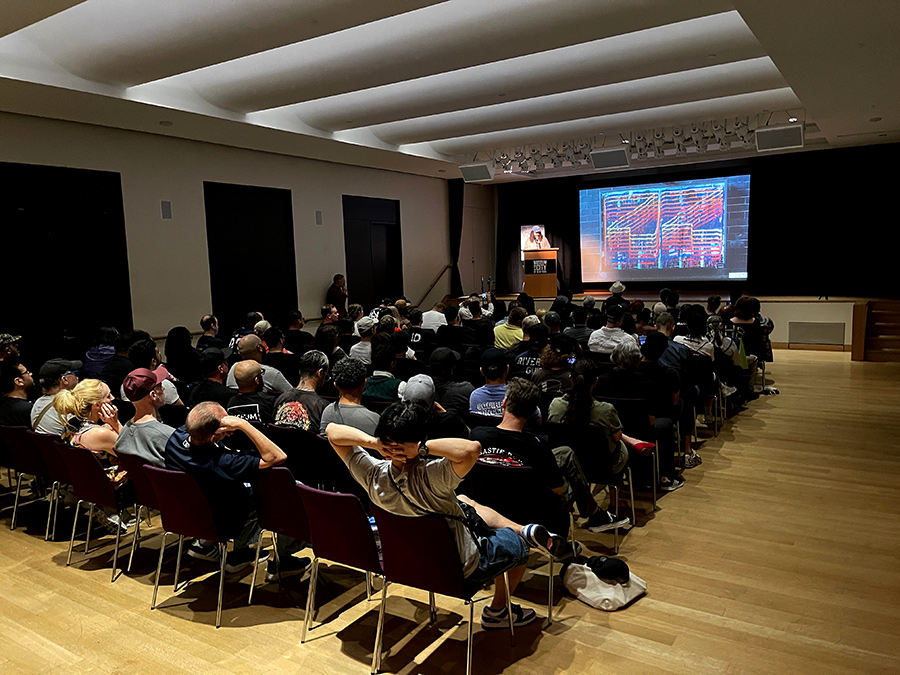
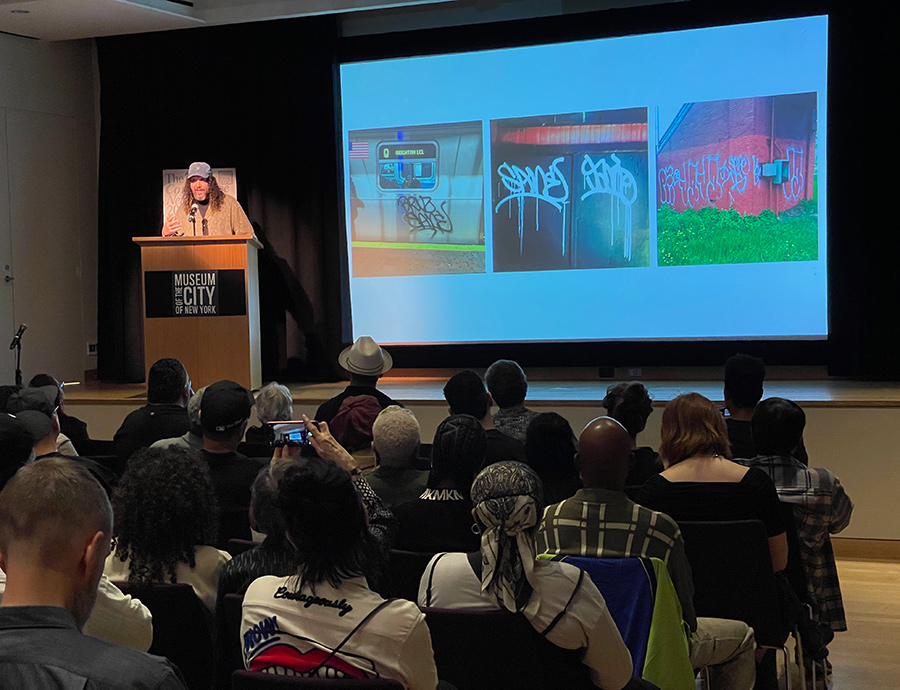
Rafael Schacter has been offering an alternative to institutional monumentality in his latest book Monumental Graffiti (2024). He buttressed his alternative view during his keynote speech for the New York 2025 Tag Conference (BSA is a sponsor). To a packed audience at the Museum of the City of New York, Schacter talked about a monumentality that is grounded in community, embodiment and the acceptance of transience as truth.
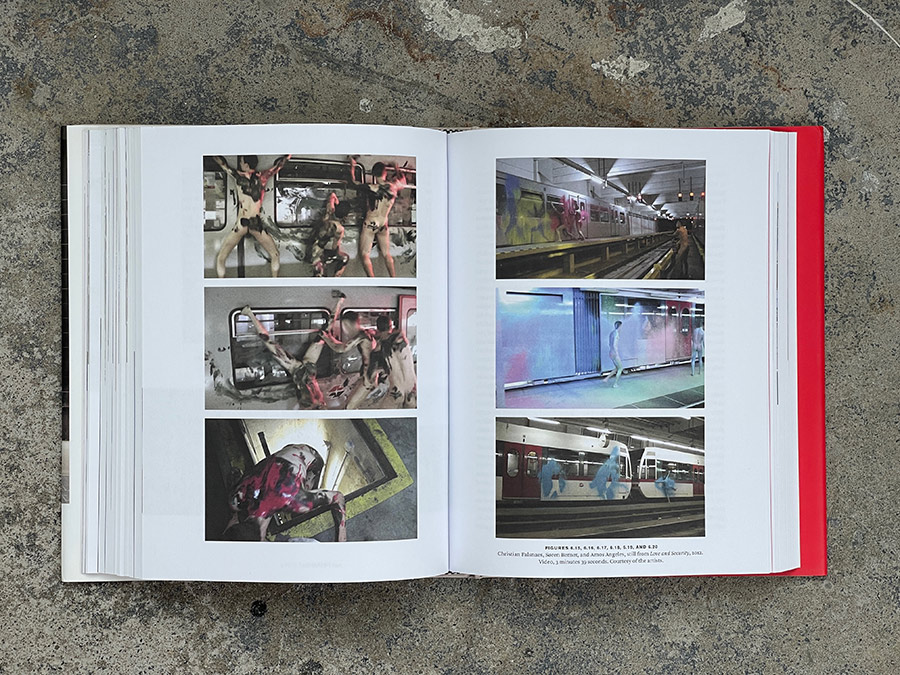
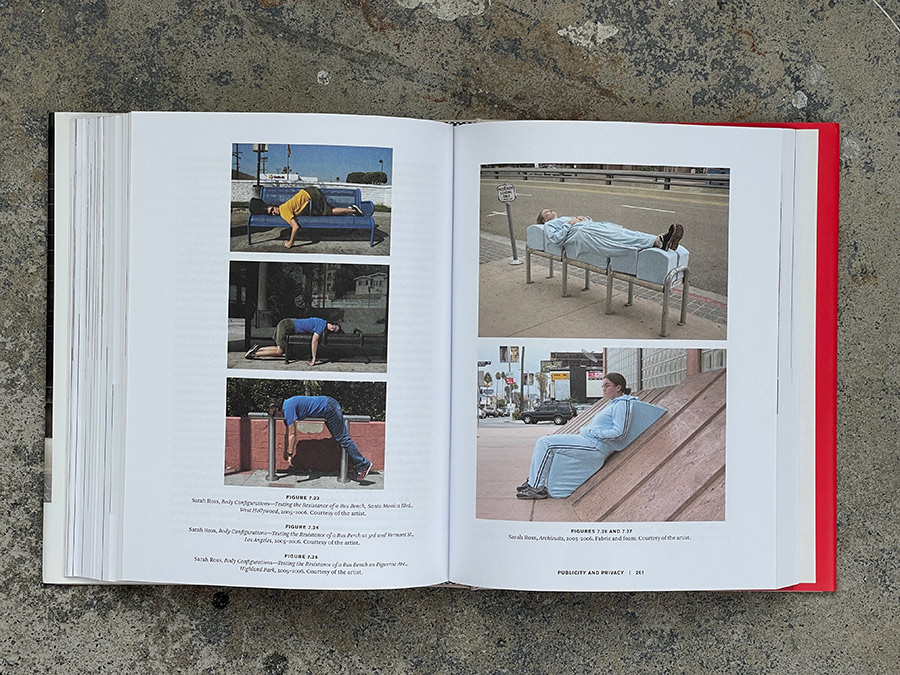
Rafael Schacter. Monumental Graffiti. Tracing Public Art and Resistance in The City. MIT Press. 2024
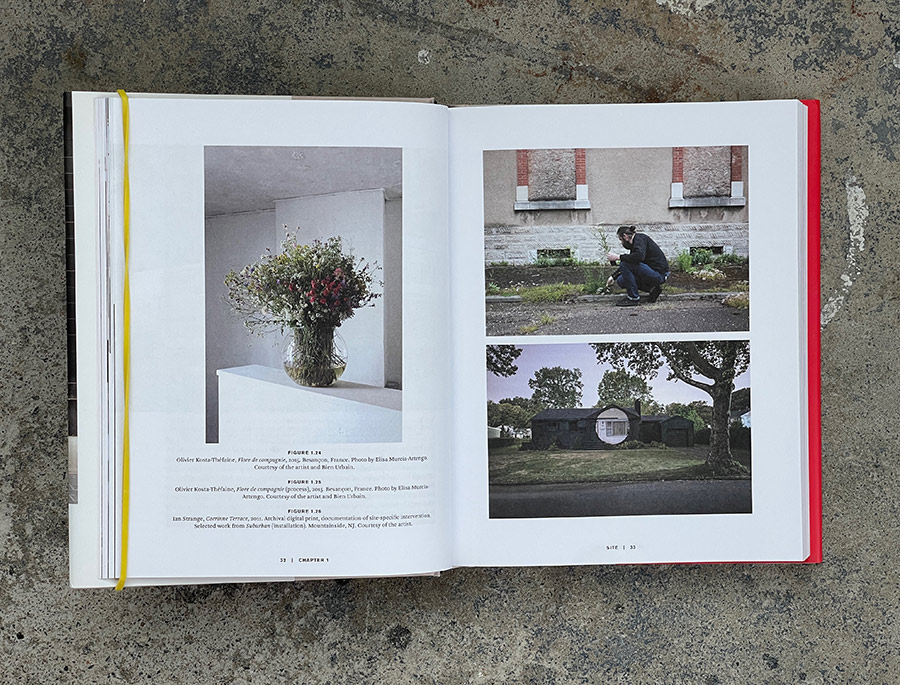
In his talk and his book, the London-based art historian argues that monuments and graffiti can illuminate each other: monuments don’t need to be grand or permanent, but can be understood—as their Latin root monere suggests—as acts that remind, advise, or warn. Drawing on counter-monuments and non-Western traditions, he would like to redefine monuments as socially and emotionally engaging public artifacts that may be ephemeral, community-driven, and conceptually monumental rather than physically imposing.
Using images and examples from streets around the world, Schacter, who is also the author of The World Atlas of Street Art and Graffiti, furthers his vision by exploring how graffiti can itself be a monumental form, demanding public attention and reframing both graffiti and monuments as cultural acts that mark and speak socially. He then examined memorial practices within graffiti culture, where community-created walls and tributes function as grassroots monuments that commemorate loss and address social issues.
A curator and theorist of urban art, Schacter expands on this, distinguishing between spraycan memorials—visible, collective, and community-respected—and memorial tags, which he describes as intimate, cryptic gestures of remembrance shared within the subculture. Schacter contrasts these living practices with the illusion of permanence accorded institutional monuments, showing how graffiti’s embrace of impermanence subverts traditional ideas of stability and authority. Finally, through his discussions of memory through disappearance and the memorial tag as embodied memory, he proposed that graffiti’s transience itself becomes a vessel for remembrance, where memory endures not in material form, but in repeated acts of writing, risk, and presence.
We asked Schacter about the nature of monuments in graffiti and street art—whether an illegal wall piece can ever transcend vandalism, what happens when a tag vanishes, who decides what deserves to be remembered, and whether a true monument is built from the ground up or imposed from above.
BSA:If graffiti can be a monument, what happens to the idea of permanence? You describe monuments as “reminders, warnings, and advice” rather than fixed objects. For people used to thinking of monuments something of bronze, stone, or concrete, how could one reconcile the beauty of graffiti’s impermanence with our instinctive desire to preserve something that we value?
Rafael Schacter: Great question! So many points I could spend hours unpacking! But, to keep myself focused, the key thing to note here is that preservation is by no means only related to permanence; i.e., the relationship between remembering and forgetting on the one hand and presence and absence on the other, is really not so straightforward:
Is it not true that things that are ever-present are often the most easy to forget?
In many cultures outside the West, for example, destruction is something that is core to techniques of commemoration – the heat of destruction burning memory into mind. And in cities crammed with institutional monuments, with thousands of bronze men on horseback, is it not the case that they often seem to, in fact, provoke amnesia!
Is it not a fact that things that become absent are often the most intensely memorable?
I totally agree that graffiti’s impermanence can be beautiful (often physically so, in terms of the way it degrades and becomes part of its surroundings), but more than just beautiful, its disappearance can lead to a heightened sense of memory; let alone push the focus towards the beauty of practice and performance and not just the beauty of the final image itself.
BSA:Who decides what’s worthy of being a monument? Normally it is the decision of institutions or governments, but this new path suggests others may decide what is worthy of monumentalizing. A monument created bottom up or top down – which is a truer monument, or is that a silly question?
RS: Ha! Not silly at all! I’m currently in the middle of teaching my lecture course on public art, and this is a critical part of what we’re discussing. So yes, in most of our cities, this is in fact a legal question – in England, for example, there is what is termed the Schedule of Monuments, a list defining and delimiting what appears under this term, and there is specific legislation surrounding what happens if an artefact is within the list. But, as you say, monuments – monuments as public artefacts or inscriptions that remind, advise, or warn us – come not just from the State but so too from the grassroots. Sometimes these non-state monuments can become formally sanctioned, but whether they do or not, they can be incredibly powerful forms that exist far beyond the necessity or even visibility of officialdom. Which form is ‘truer’ or more ‘authentic’ is always context specific, however.
But all I personally know is that I can be moved more by a spontaneous shrine than by an institutional memorial, by the handwritten note attached to a bouquet of flowers laid by the side of a monument than I could be by the monument in itself! More than anything I just want to move us away from only seeing these permanent, stoney, neo-classical public sculptures as monuments, and in fact see the way monuments can exist through diverse materials and in diverse locations outside of the confines of officialdom.
BSA:If a tag disappears, does the monument die—or does it live in memory? Certainly its disappearance and decay impacts its ability to have lasting impact.
RS: How do we remember things? Do we remember from looking at them? And how do we look at them? Do we look differently when we know something is not going to last? But what about not just looking! Can we remember things through a set of gestures? Through a movement? Through a dance? Can we remember something via lighting a candle that we know will burn out?
When things disappear, memory can often burn even brighter – the presence of absence often being more powerful than physical presence itself. So yes! Disappearance effects visibility, the ability to be co-present with an image, but the image can live on both in the person that made that image as much as in those who saw it, and saw it knowing it would at some point disappear!
BSA:Does a city full of graffiti become a city full of monuments? If we take the argument to heart, then every wall might hold a kind of public archive or memorial. Is a monument made by a vandal illegally still vandalism, or should it be honored and preserved for posterity?
RS:First, YES – when I say graffiti is a monument I mean that literally not metaphorically, and so absolutely yes, the walls of our cities are a constantly transforming archive that holds immense amount of information and history. Whether we term this vandalism or not actually makes no difference. (But is it not the overbearing monuments of the city that are themselves vandalism, themselves the destruction and the blight that damages our cities – I mean, I can think of plenty of examples of large-scale public art that are total degradations of our public sphere). Yet that doesn’t mean I think graffiti should be preserved, absolutely not. Preservation, as I talk about in the book in terms of examples of indigenous material culture, can often itself be destructive. If you preserve something, freezing that thing in time, you can often be more likely to forget what it represents than if you let it naturally degrade. Preservation, then, can be destructive, and destruction preservative!
BSA: Graffiti has turned up in unexpected corners of sacred buildings — scratched into the walls of Christian churches, carved into stone lintels of synagogues. They may be names, coats of arms, or a portrait of the parish cat. When you think about these quiet, unauthorized marks across different faiths, how might your idea of graffiti as a kind of monument apply to them?
RS: I love the idea of what you term ‘quiet’ here. Because often it is the smallest, most marginal, minor forms of graffiti that can be the most powerful. Yes, big graffiti is GREAT, and often very overtly monumental (I’m thinking of the incredible work of RAMS MSK at the moment for example). But smaller marks can be monumental in their effect too, a tiny tag at the edge of a wall containing as much style as a massive masterpiece. So yes, monument is not simply about size. Bigger is not necessarily better. And sometimes it’s the smallest marks that cut the deepest!
Rafael Schacter. Monumental Graffiti. Tracing Public Art And Resistance in The City. The MIT Press. Massachusetts Institute of Thechnology. 2024. USA.
If you were in the room Friday night at The New School, you caught Matteo Pasquinelli throwing down ideas that lit up the crowd with his keynote “AI and Madness: On the Disalienation of the General Intellect.” It kicked off the Vera List Center Forum 2025: Matter of Intelligence—a weekend asking who gets to define intelligence and what happens when machines, bodies, and institutions all start claiming a piece of it. Later, over a community dinner, we met artists, curators, journalists, researchers, and assorted brainiacs who traded stories about neural nets, algorithms, kimchee, pulled pork, and tarot card readings that were available at many tables.
The rest of the weekend unfolded in forums with titles that could’ve doubled as concept-album tracks: “Embodied Intelligence: The Art of Sensing,”“Artificial Agency and Autonomy,”“Collective Intelligence and the Politics of Data,” and “Unlearning Intelligence.” If the weekend has a takeaway, it’s that intelligence isn’t something we own; it’s something we’re swimming in. Like all the street art and graffiti that city dwellers are surrounded by daily on walls, trains, doorways, and fences – it’s not exactly organized by algorithm, but patterns do emerge if you care to decode them.
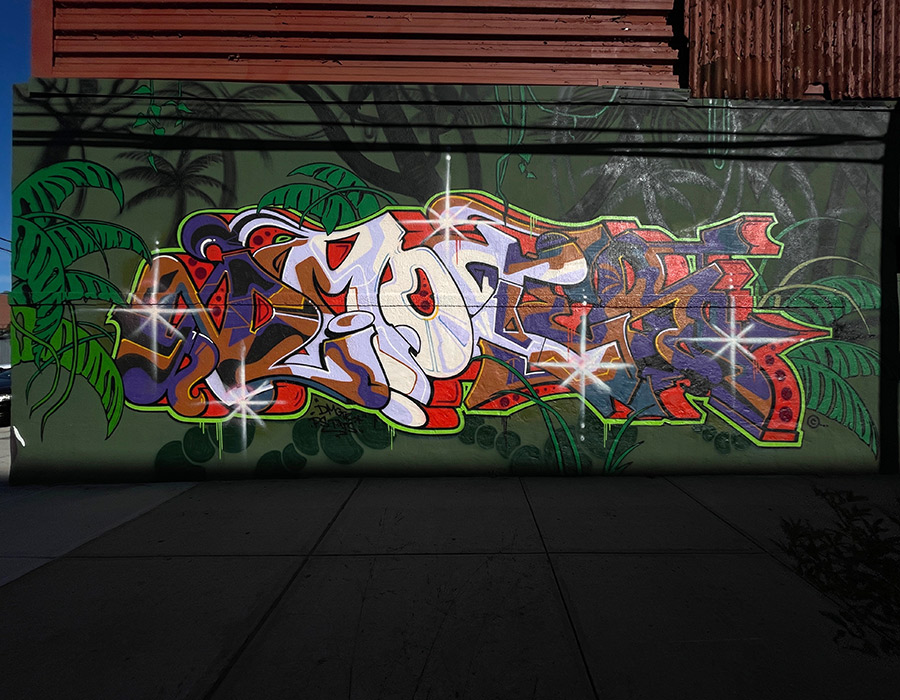
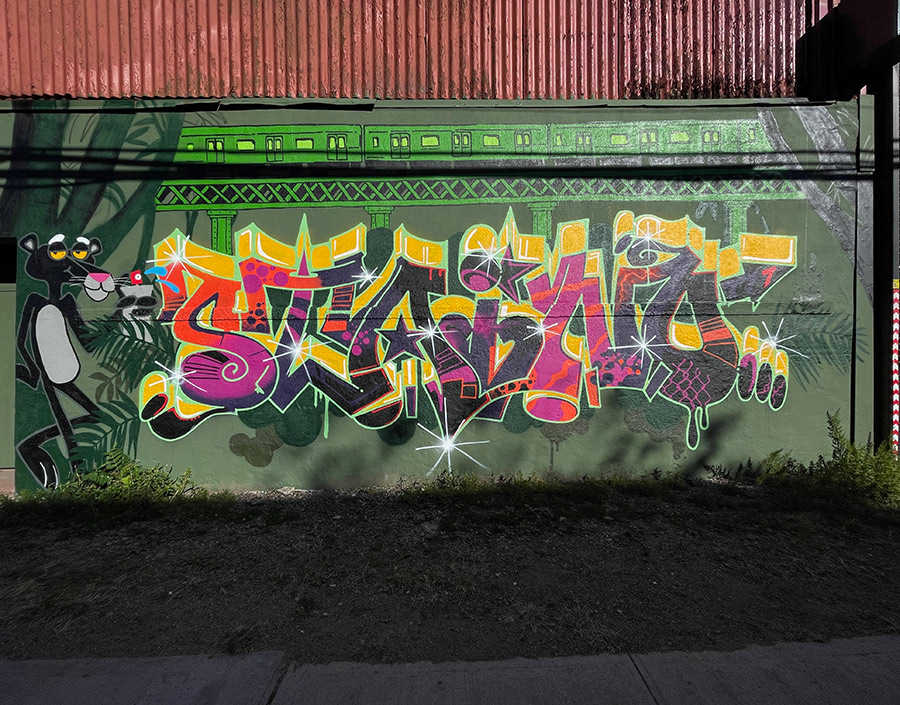
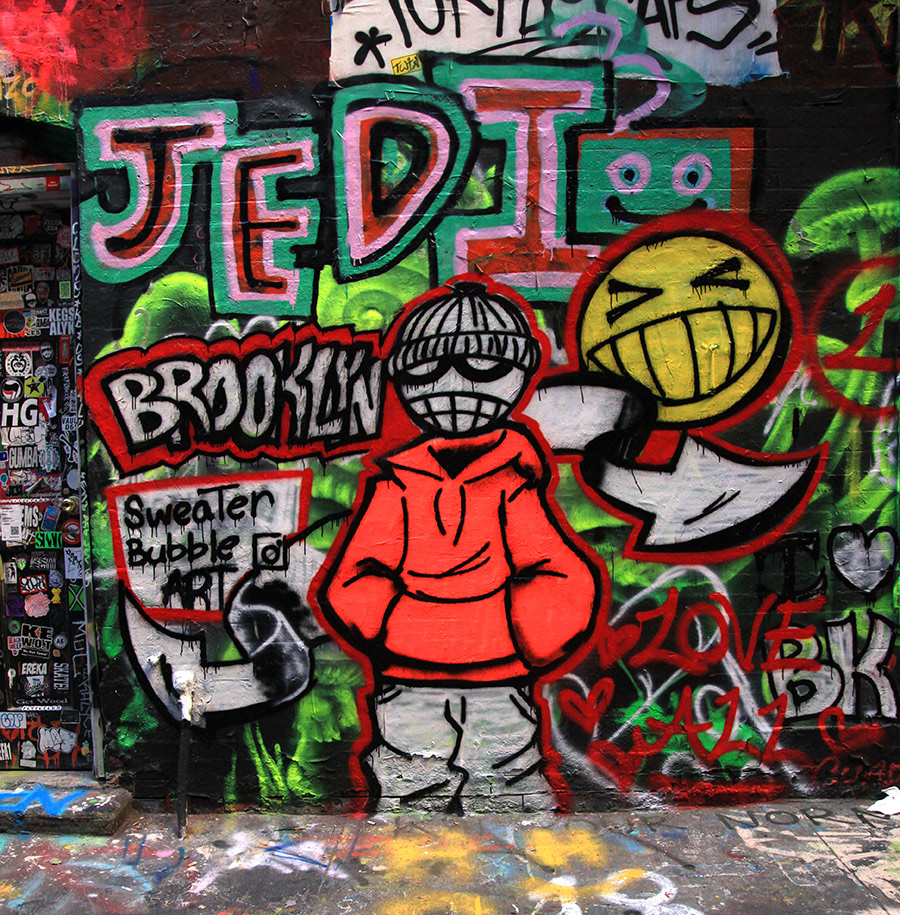
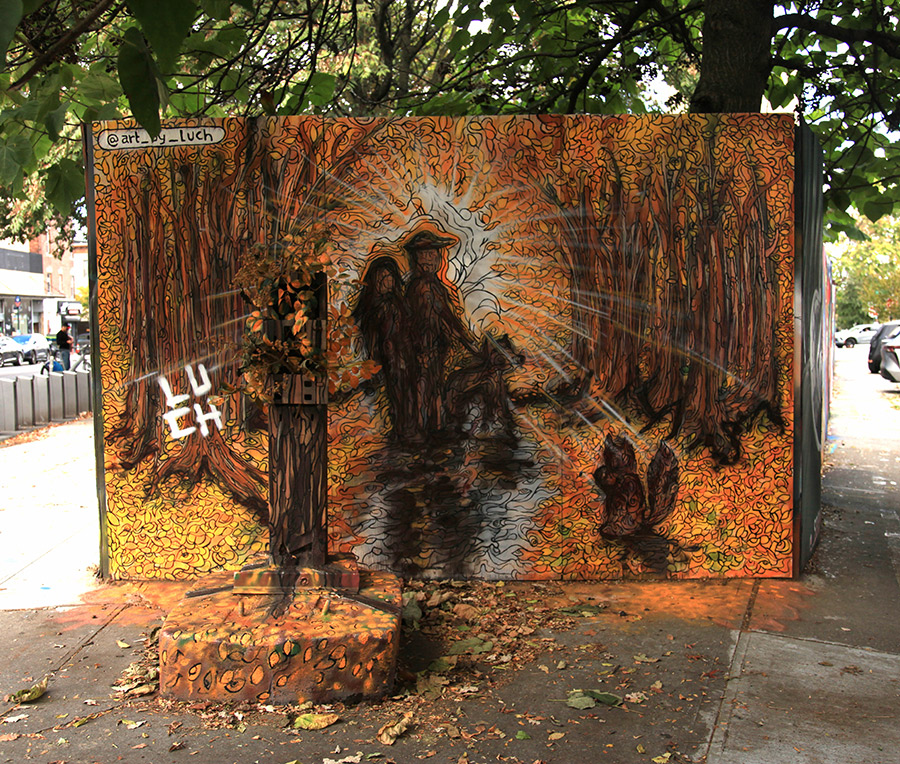
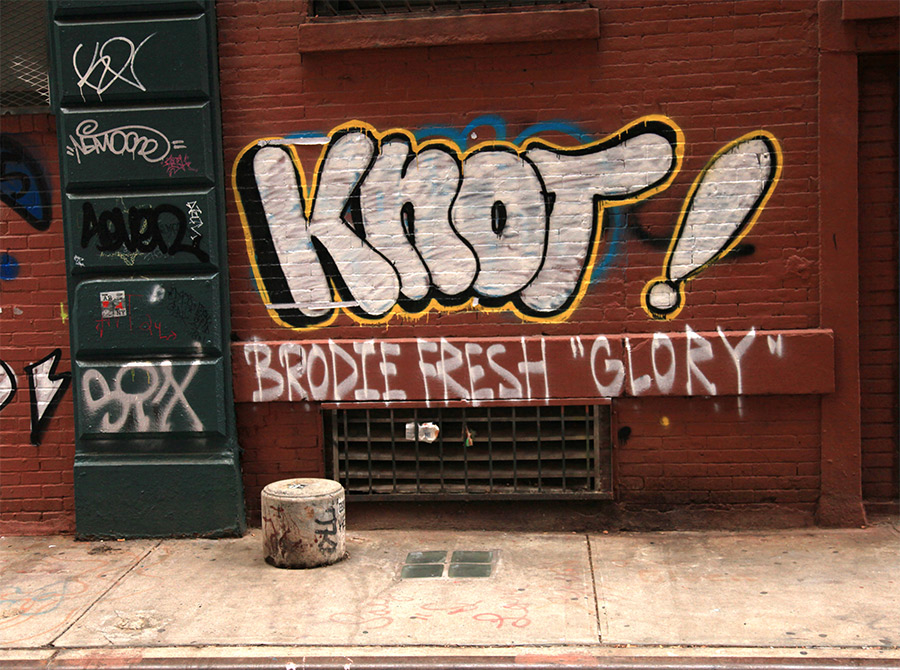
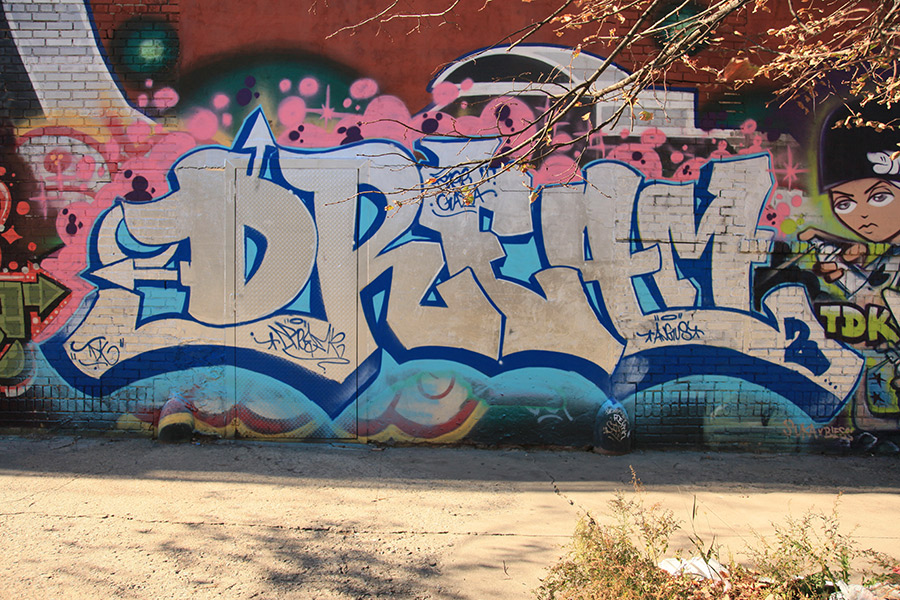
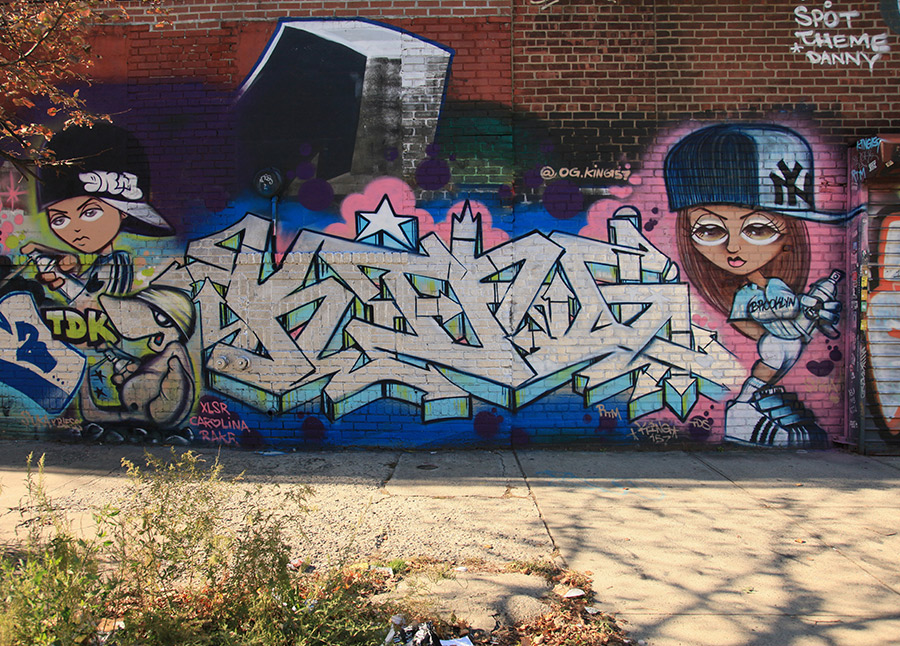
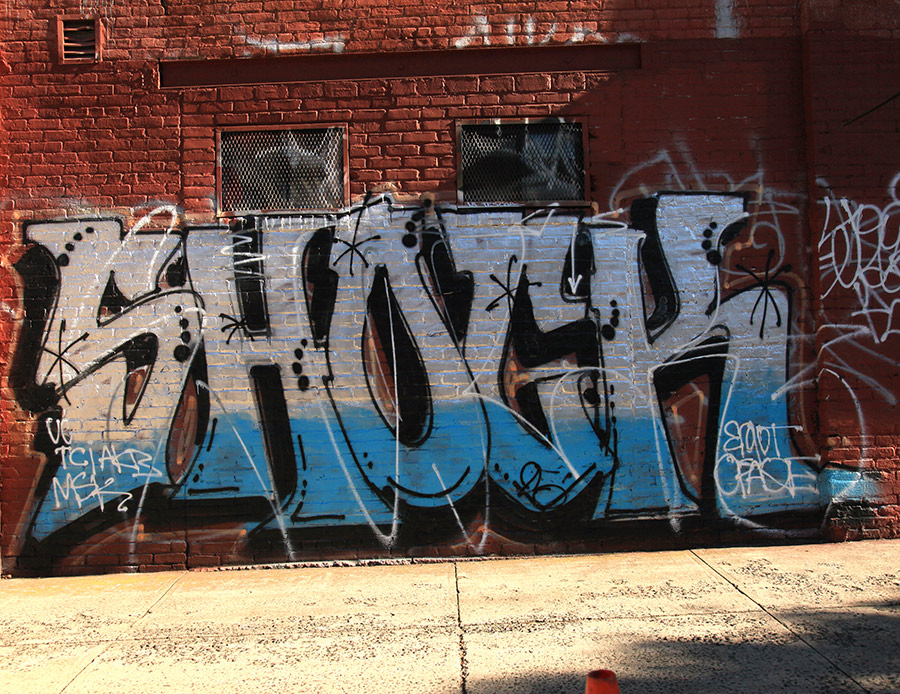
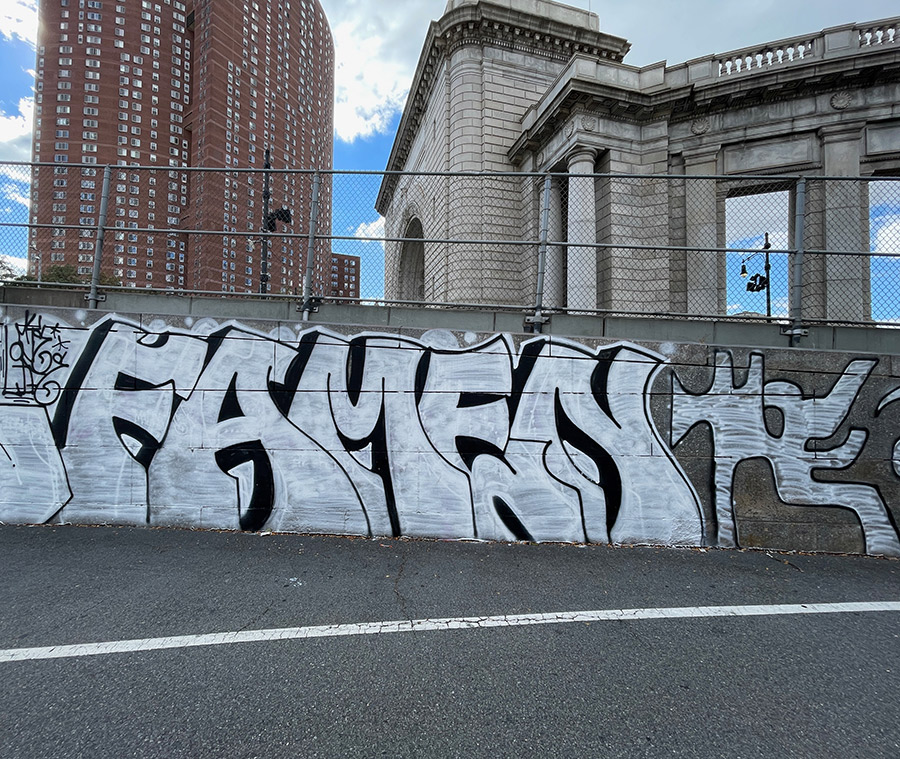
So here’s our weekly interview with the street, this week featuring CKT Crew, Dain, Dmote, Dream, Famen, King157, KNOT!, Luch, Mr. Cenz, OptimoNYC, Phetus88, SHOCK, Skulz, Staino, Stevie Dobetter, and Sweater Bubble.
Sometimes street art festivals run headlong into battles with local politics or corporate brands that believe murals should only be decorative—certainly not inclusive of certain communities or certain politics. To be clear: all art is political. If you like a mural, chances are it aligns with your worldview. Don’t make the mistake of believing otherwise.
Last year, MIAU Fanzara ran squarely into that truth. In early 2024 the local council introduced a “facades ordinance” demanding prior approval of sketches—an a priori filter on themes and imagery that organizers publicly rejected as censorship. With organizers refusing to comply, the 2024 edition was “paused.” Over the summer, it appears that the dispute widened, drawing criticism from cultural bodies and press coverage that framed the rule as a curb on artistic freedom. In September, the council rescinded the ordinance—but it also withdrew the long-standing €6,000 municipal subsidy, a small but symbolically vital line that had helped the festival function, according to new reports and locals.
This year, the money didn’t return—but the people did. In 2025, neighbors opened their walls, volunteers handled logistics, and artists worked without fees. MIAU’s ninth edition went ahead without public subsidies, sustained by community energy and a shared conviction that public space is for public voices. All of this sounds rather like the vox populi itself — unruly, creative, and unwilling to be managed by decree. The result wasn’t just a program; it was a popular mandate painted on stucco and brick.
What follows is a selection from this year’s walls: pieces that speak in bright, unvarnished tones about memory, ecology, migration, gender, and the everyday. Funding can be cut. A festival can be paused. But when the people choose color over silence, the paint somehow finds a way.
Thank you to photographer Lluis Olive for sharing new shots of MIAU 2025
To read more about the censorship battle at the Fanzara “MIAU Festival”:
“Fanzara se queda sin festival de grafiti tras 10 años por la nueva norma municipal del PP” — El País (July 6, 2024). A report on the 2024 cancellation after the facades ordinance imposed prior screening of murals. (El País)
“Fin al bloqueo del MIAU de Fanzara nueve meses después: el Ayuntamiento aprueba por unanimidad retirar la Ordenanza municipal de fachadas” — Cadena SER, Radio Castellón (September 7, 2024). On the council’s vote to withdraw the ordinance and the simultaneous end of municipal funding. (Cadena SER)
“El festival de grafitis de Fanzara sobrevive al intento de censura previa con la solidaridad de vecinos y artistas” — El País (July 5, 2025). Coverage of the 2025 edition returning without subsidies, powered by residents and volunteers. (El País)
(Additional context: El País summarized the ordinance’s withdrawal and loss of the €6,000 grant on Sept. 7, 2024; local outlets like Castellón Plaza and NMPNU documented the 2025 edition proceeding “a pecho descubierto,” without public funds. (El País))
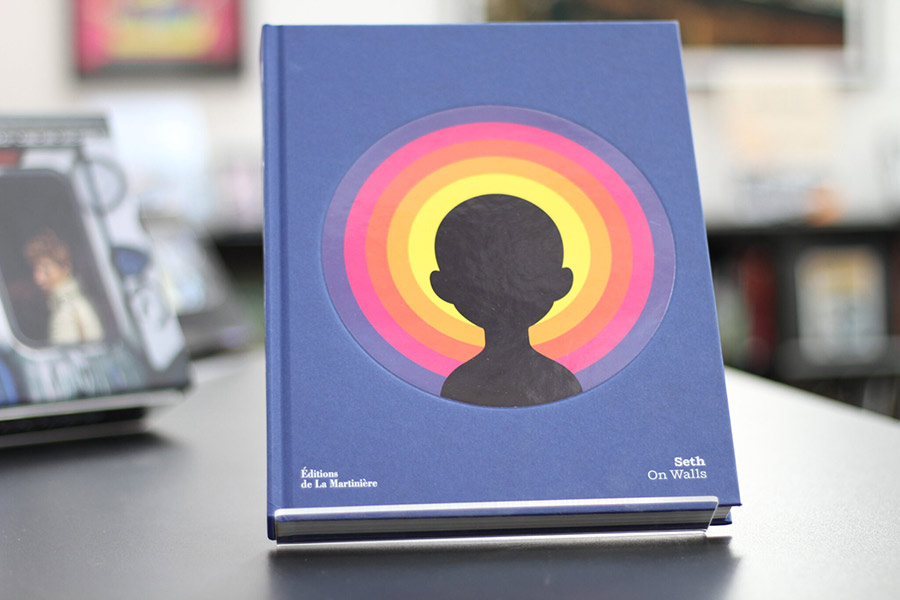
Seth: On Walls. Julien Malland. 2023. (photo courtesy of MCL)
Reprinted from the original review.
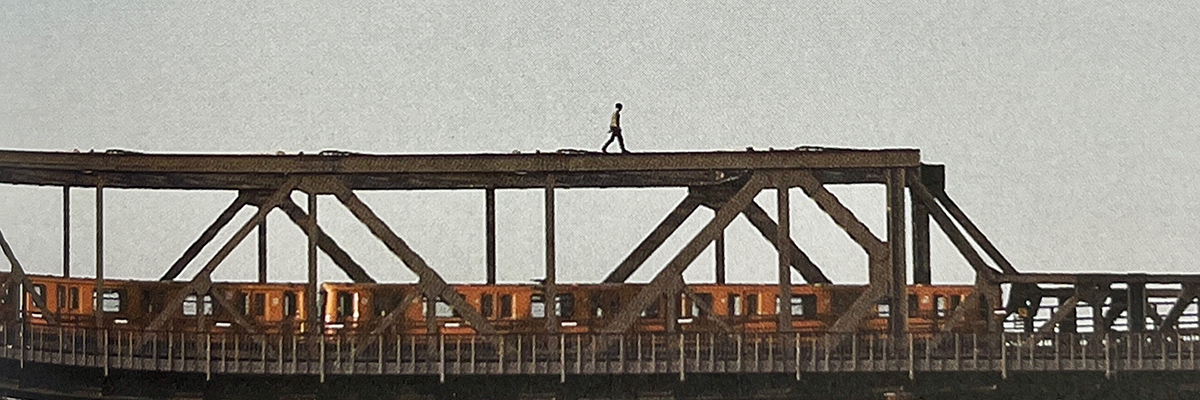
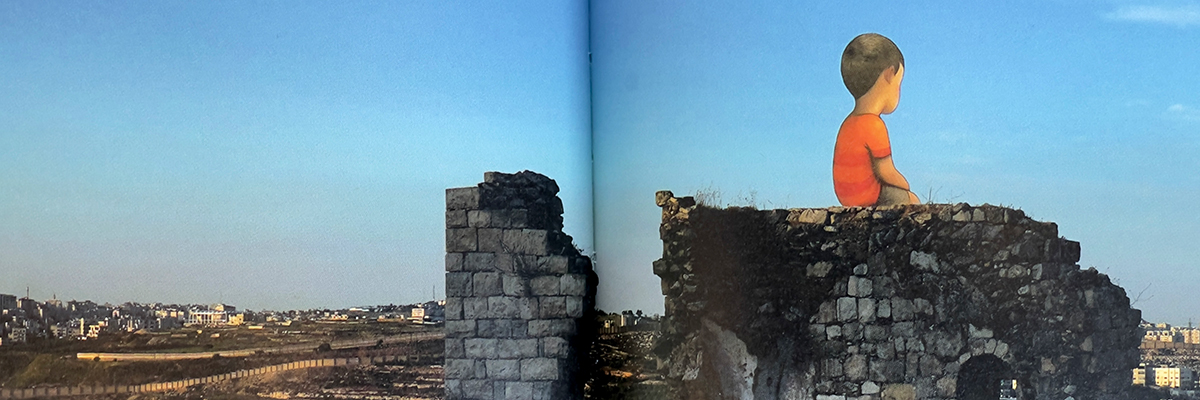
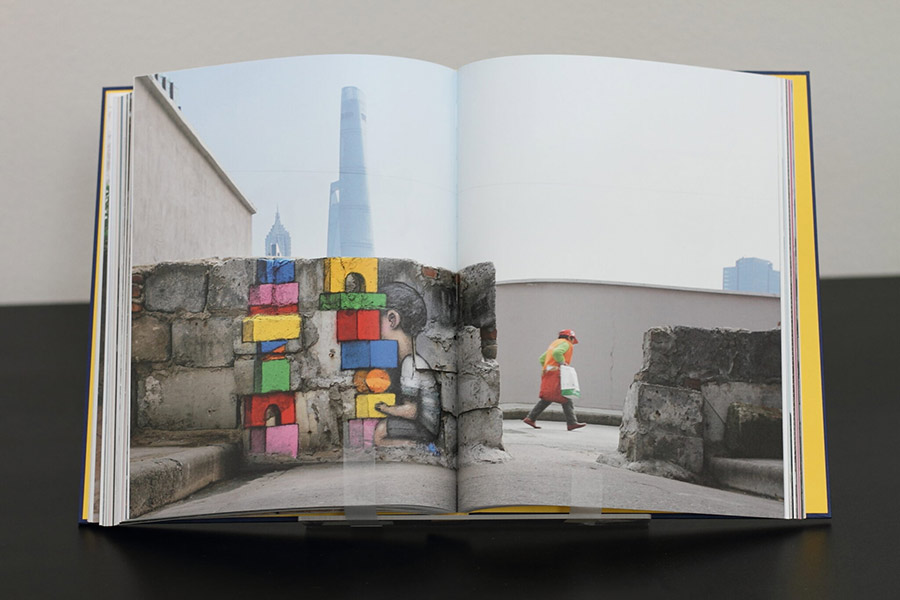
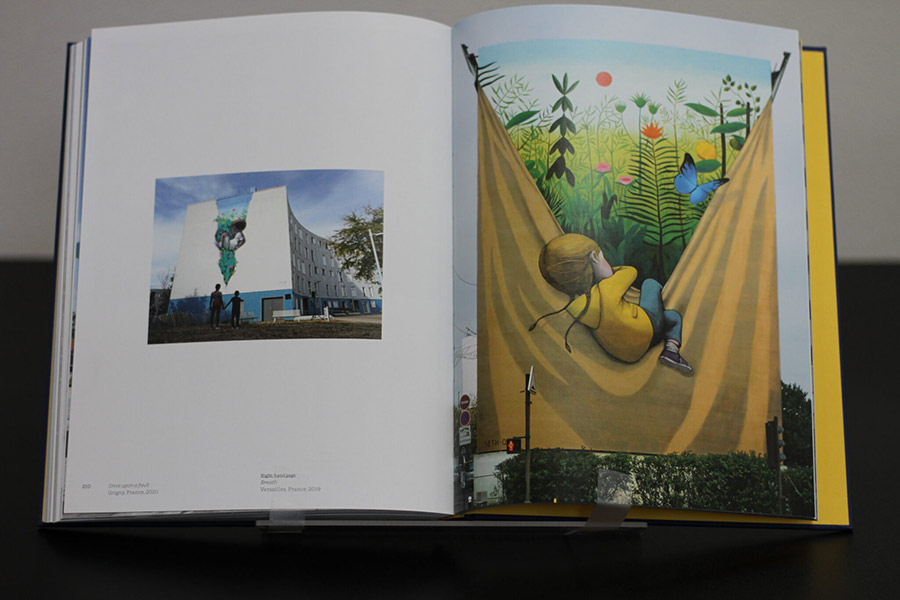
On Walls presents a decade of mural work by French street artist Julien Malland, known as Seth Globepainter. Published by Editions de La Martinière and distributed by Abrams, the book documents Seth’s travels through urban and rural communities worldwide, placing his distinct visual language into diverse local contexts shaped by history, conflict, and transition.
Seth’s imagery blends saturated palettes, geometric constructions, and elements of folklore. His recurring figures—faceless children—are staged within environments that suggest both vulnerability and resilience. Across 256 pages, On Walls traces a path from Phnom Penh to Palestine, from Haiti to Ukraine, each mural shaped by the physical and social landscapes where it was created.
Seth: On Walls. Julien Malland. 2023. (photo courtesy of MCL)Seth: On Walls. Julien Malland. 2023. (photo courtesy of MCL)
Title: SETH on Walls Published: Editions de La Martiniere. 2022. Distributed by Abrams. An imprint of ABRAMS, 2023. Author: SETH Language: English
Welcome to BSA Images of the Week. This fall in New York institutional museum offerings, people are checking out “Sixties Surreal” at the Whitney, “Robert Rauschenberg: Life Can’t Be Stopped” at the Guggenheim, “Coco Fusco: Tomorrow, I Will Become an Island” at El Museo del Barrio, Yvette Mayorga’s “PLEA$URE GARDEN$” Midnight Moment in Times Square, “Monet and Venice” and “Seydou Keïta: A Tactile Lens” at the Brooklyn Museum.
The Whitney offers all Fridays free from 5–10 p.m., every second Sunday free, and if you’re 25 or under, it’s always free. The Museum of Modern Art welcomes New York State residents free of charge every Friday from 5:30–8:30 p.m. (proof of residency required). The Solomon R. Guggenheim Museum invites visitors to pay what they wish on Mondays and Saturdays from 4–5:30 p.m., with a suggested minimum of one dollar. The New-York Historical Society follows suit with pay-as-you-wish admission on Fridays from 5–8 p.m. And for those who prefer art in the Bronx, the Bronx Museum of the Arts remains free every day of the week. And right here in Brooklyn, the Brooklyn Museum opens its doors every First Saturday of the month from 5–11 p.m. for free admission with registration, and visitors are always welcome to pay what they can at the desk.
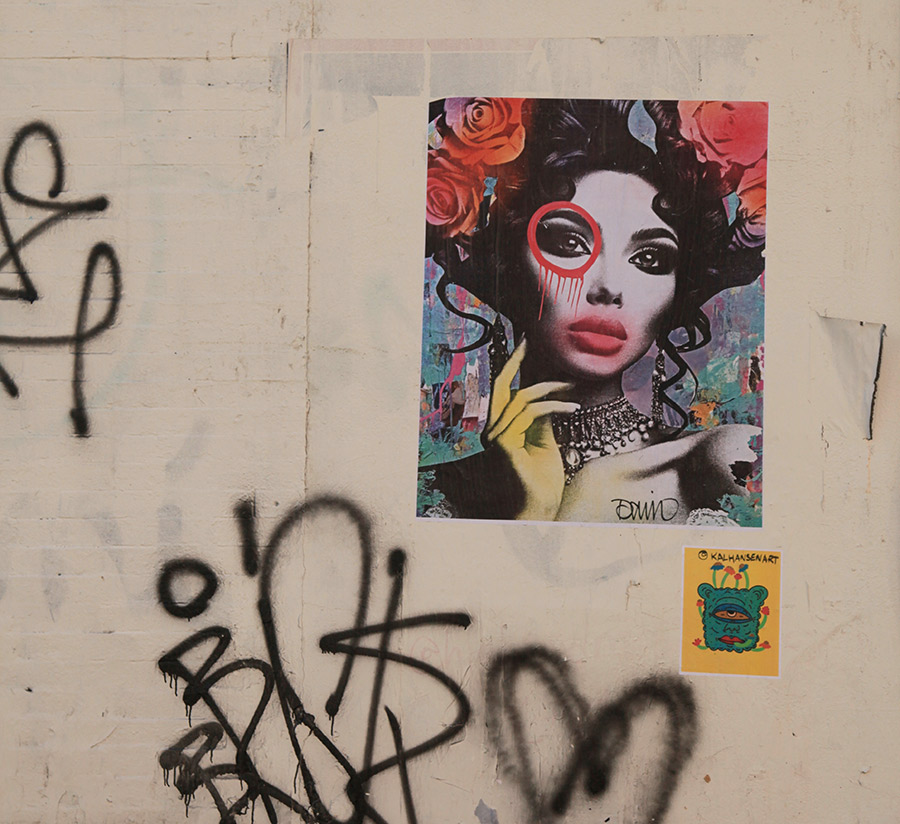
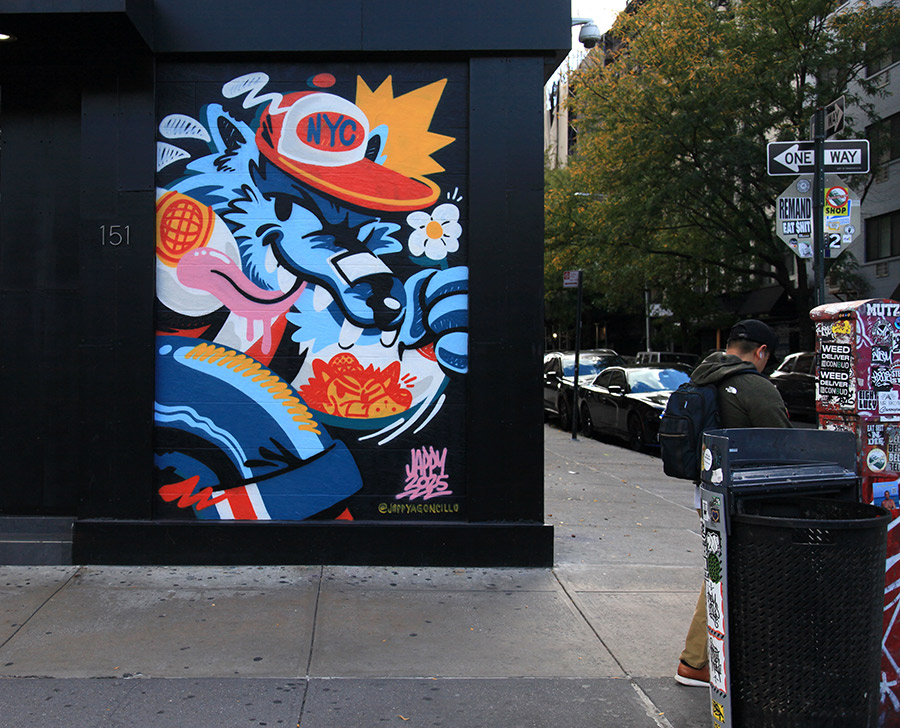
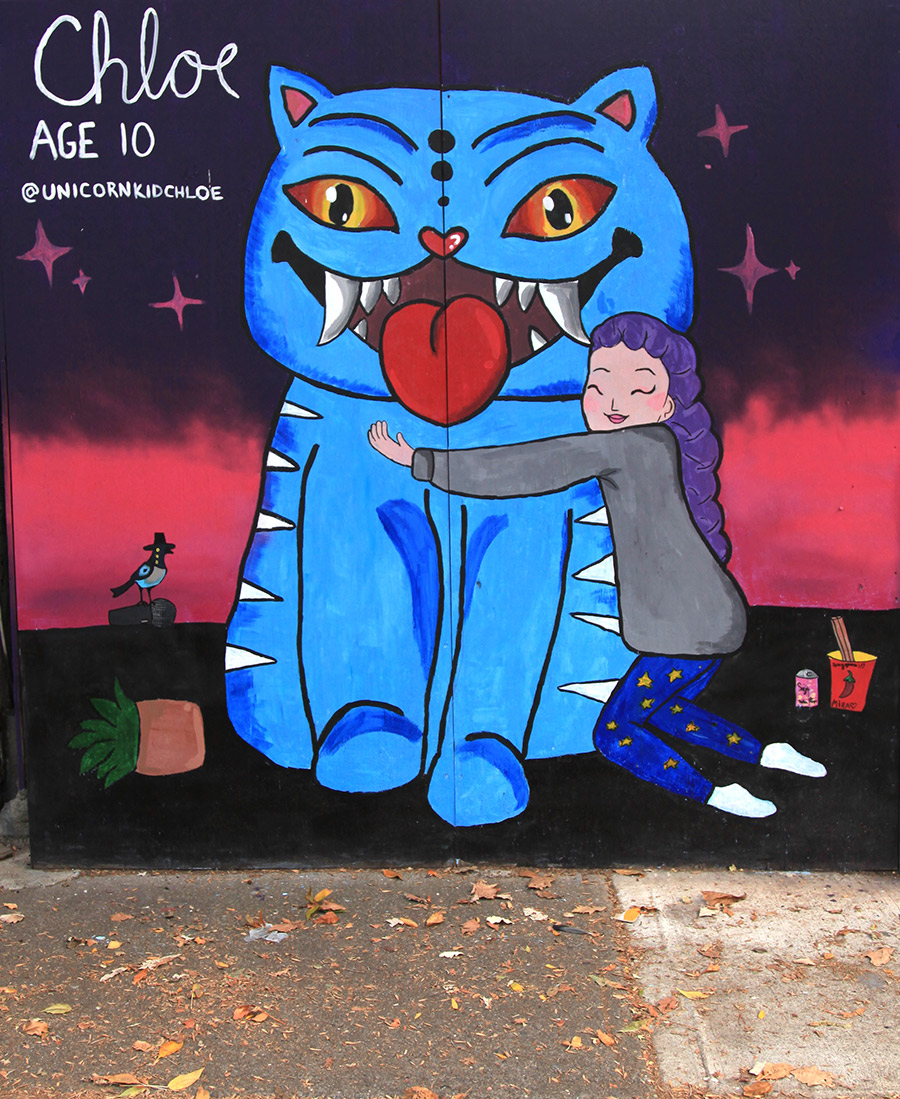
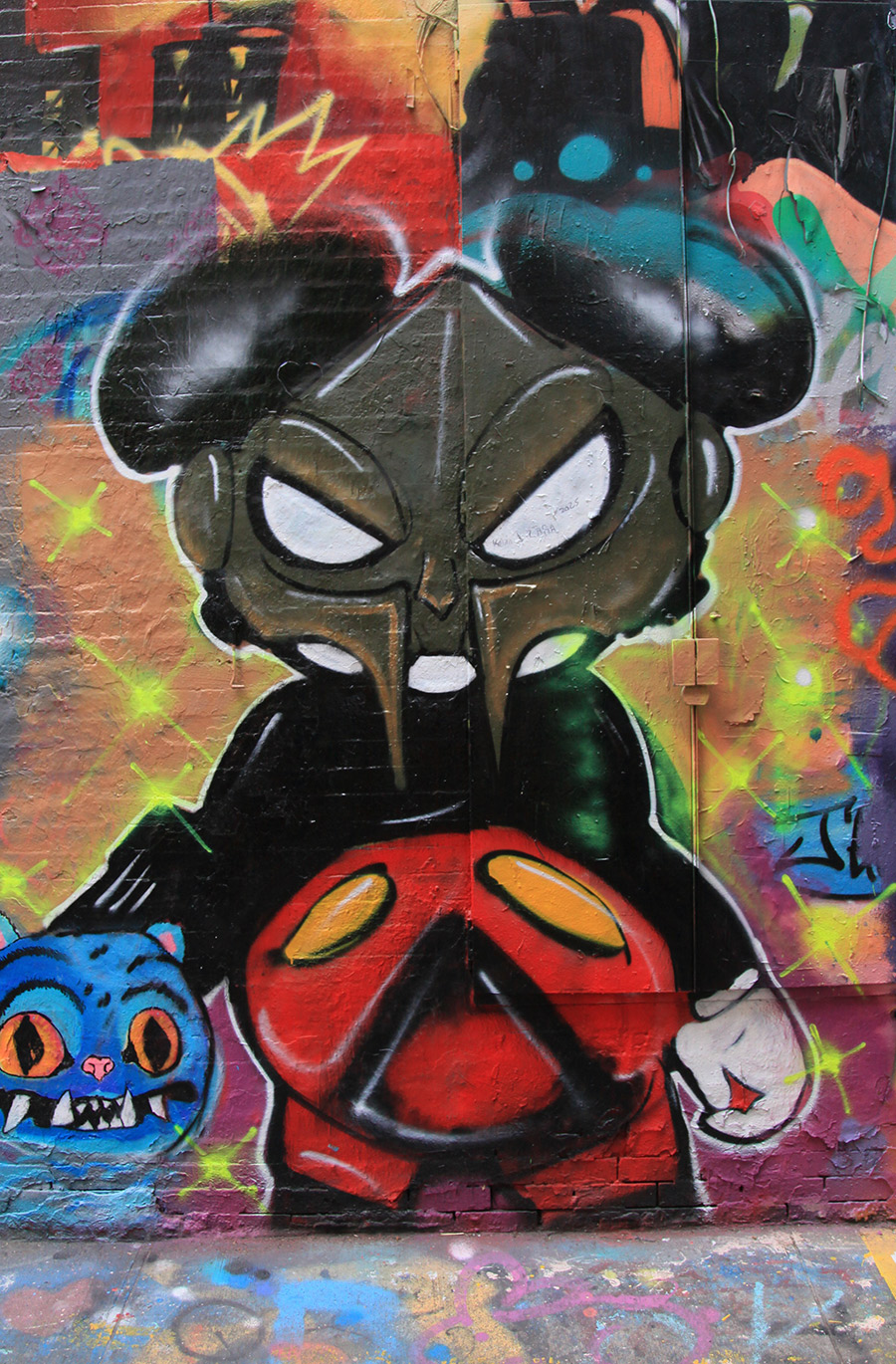
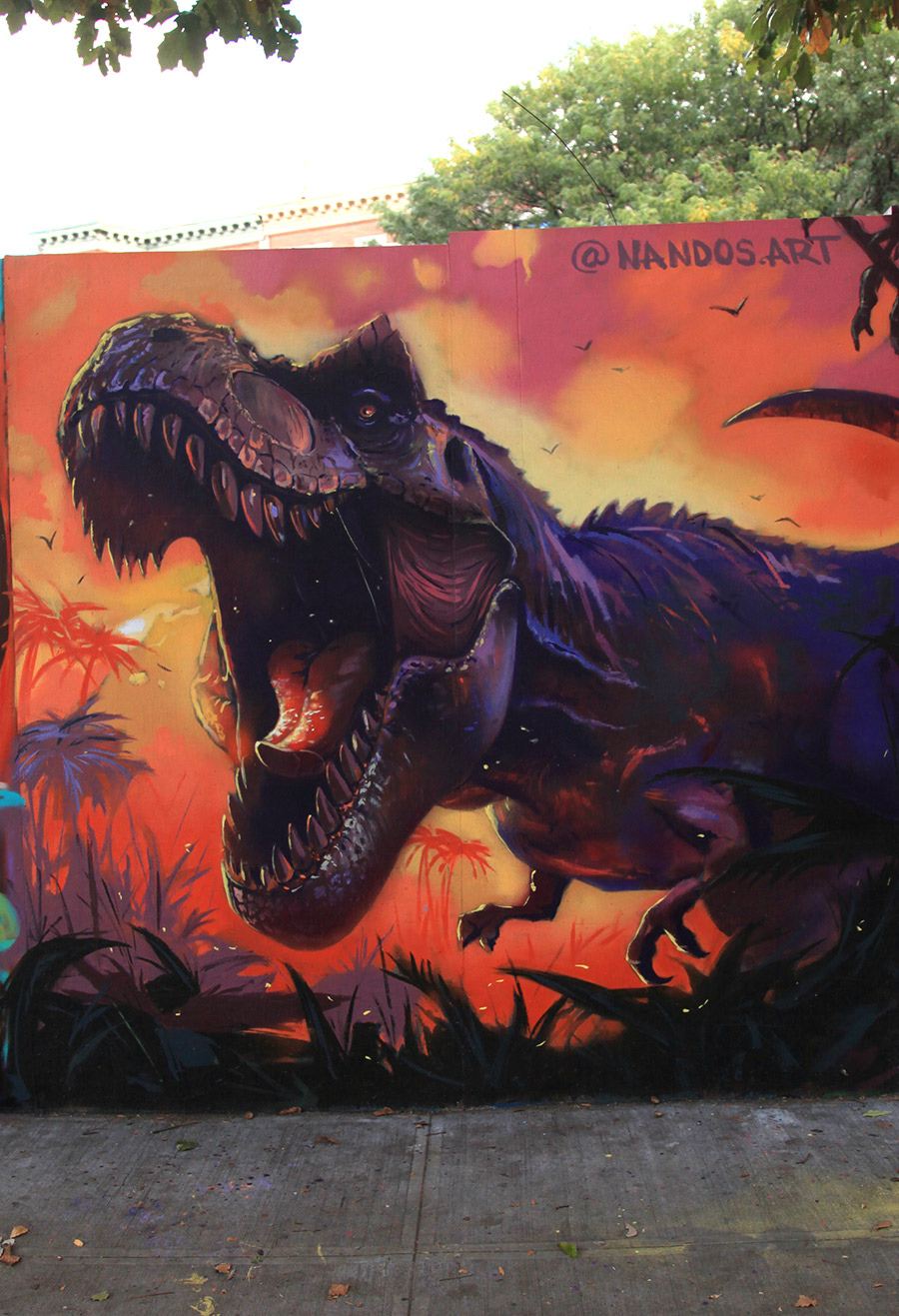
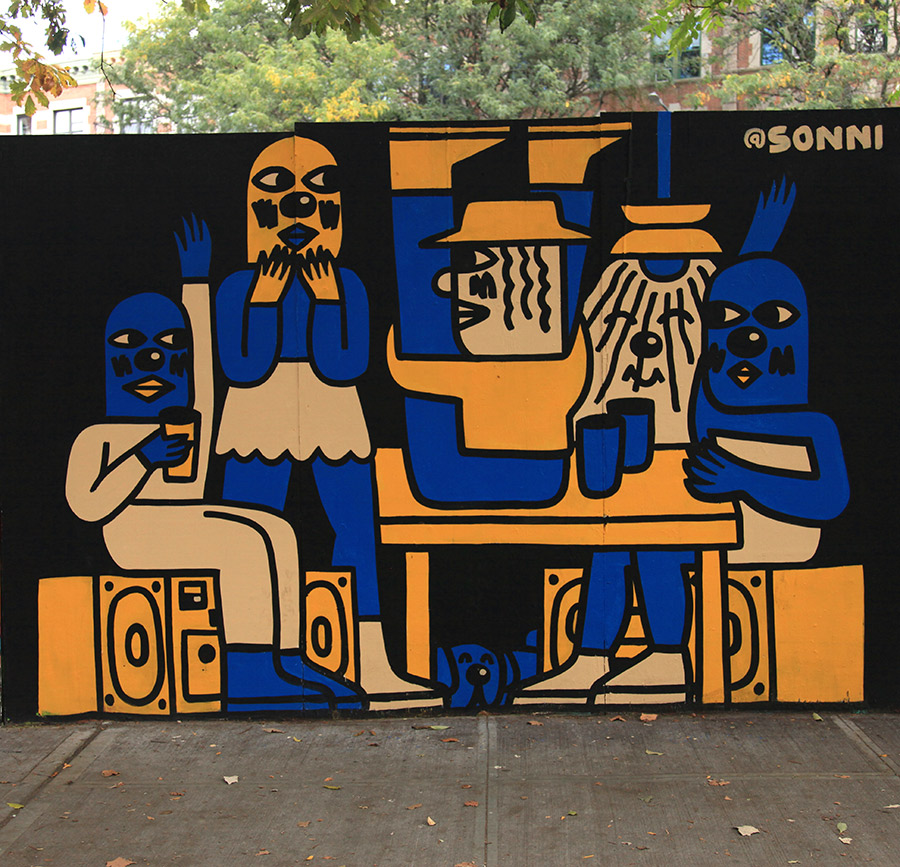
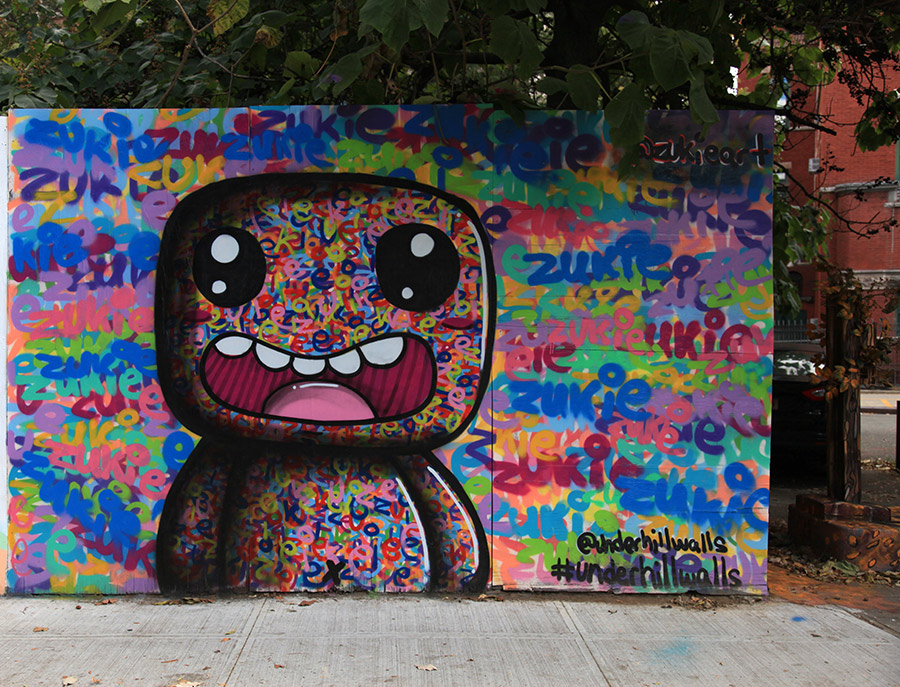
Meanwhile, much of our street art is busy with cats, pop icons, ambient dread, and general sweetness. For anyone assuming the scene remains activist or subversive, evidence is not plentiful. Still, it photographs beautifully.
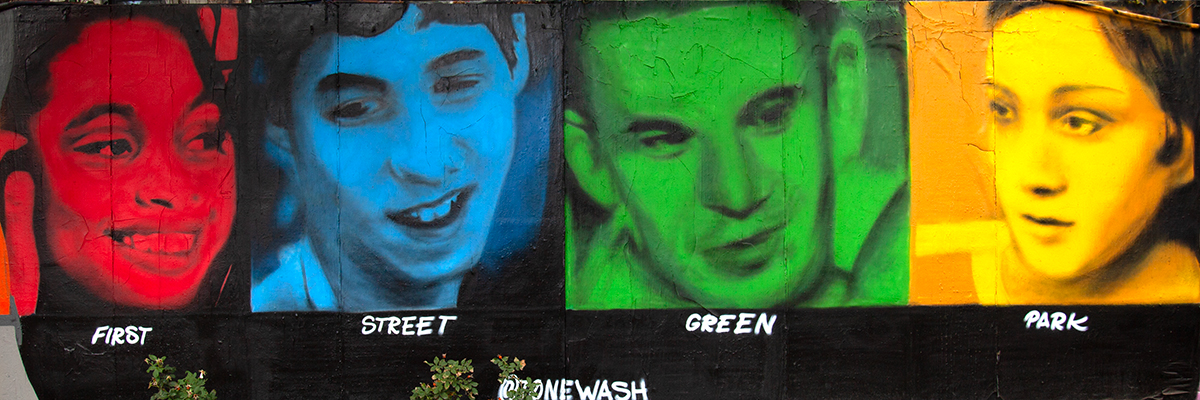
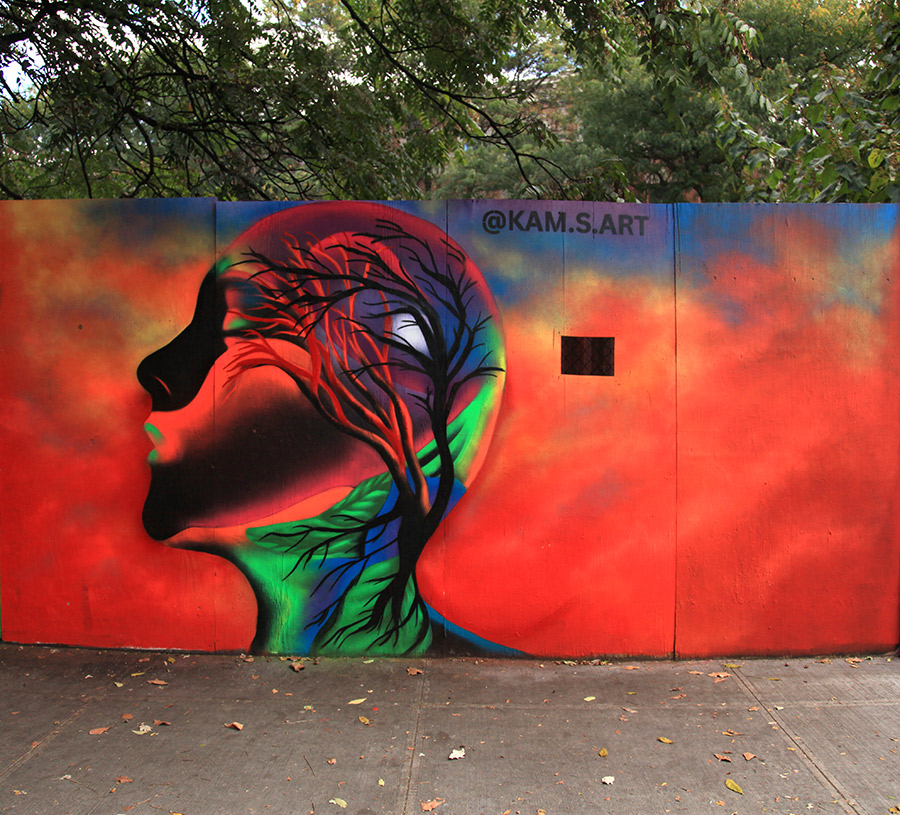
Here is our weekly interview with the street, this week featuring Chloe, I Am Frankie Botz, Jappy Agoncillo, Jeff Rose King, Kam S. Art, Lucia Dutazaka, Mad Villian, Man in the Box, Manuel Alejandro, Nandos Art, Rommer White, Sonni, Sophia Messore, and Tone Wash.
Spanish artist Gonzalo Borondo, from Valladolid, arrives at LuzMadrid Festival with Redentora, a site-specific installation that continues his steady movement …Read More »
 BROOKLYN STREET ART LOVES YOU MORE EVERY DAY