We’re celebrating the end of one year and the beginning of the next by thanking BSA Readers, Friends, and Family for your support in 2023. Picked by our followers, these photos are the heavily circulated and “liked” selections of the year – shot by our Editor of Photography, Jaime Rojo. We’re sharing a new one every day to celebrate all our good times together, our hope for the future, and our love for the street. Happy Holidays Everyone!
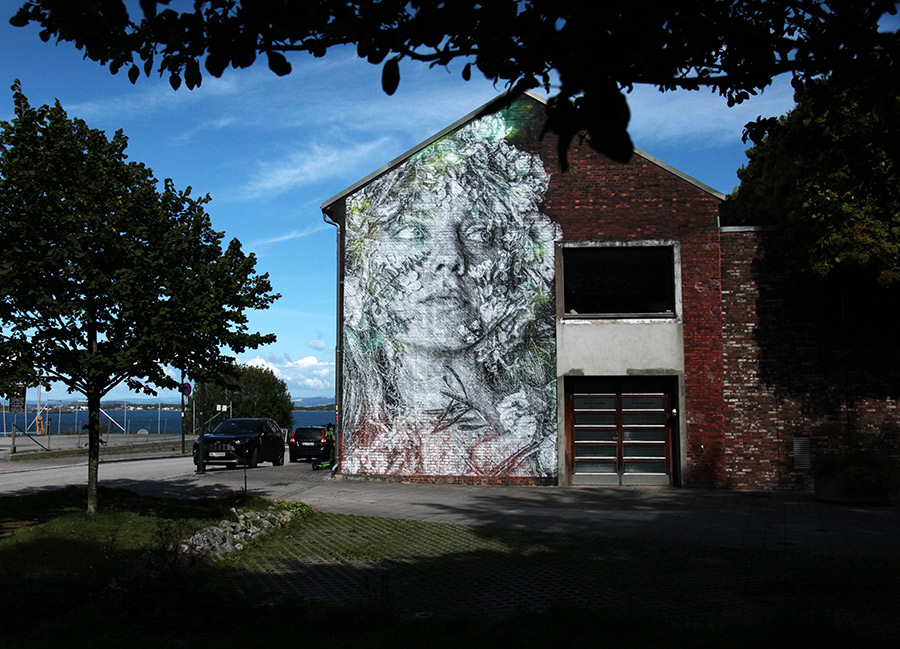
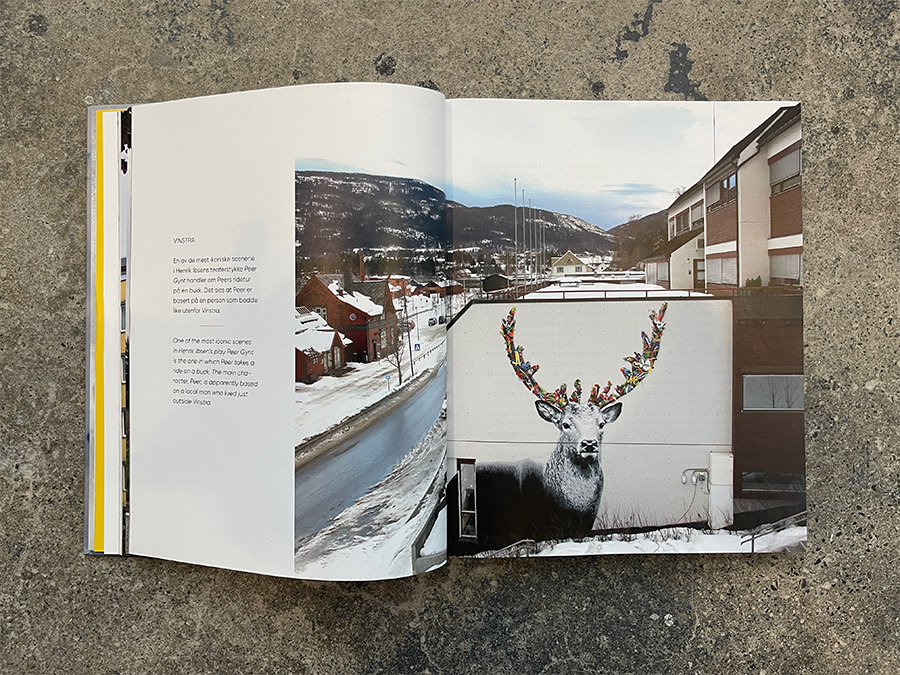
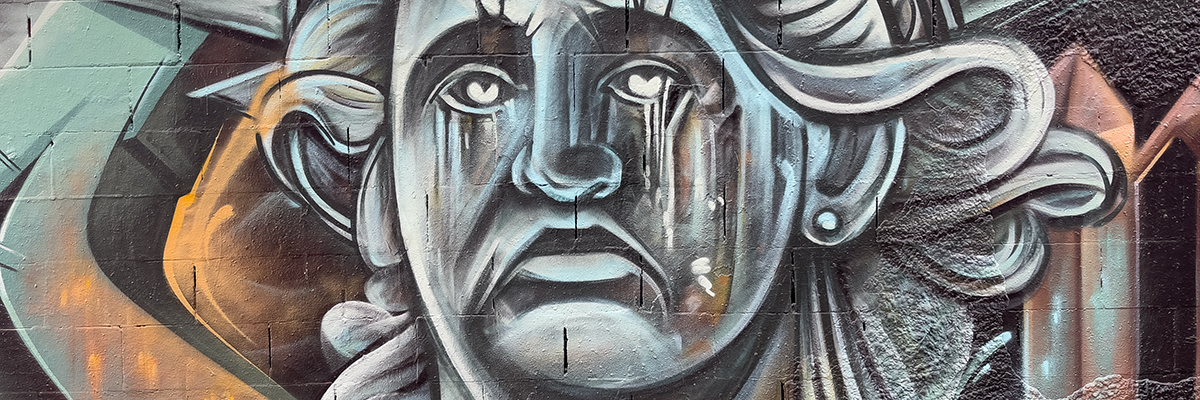
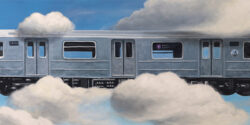
Street art duo Snik provided one of the lovely and haunting images this year when they were in Norway to install a program of pieces on the island of Utsira and finished with this one in Stavanger. They call it Overcome, referring to the reclamative behavior of nature to take over our human creations as time progresses. A second meaning of the title could also interpret the sitter’s demeanor of apprehension that affects much of the world as banks, corporations, and war-making industries overcome governments, communication platforms, traditions, and local laws. We, the ever-hopeful, are hanging in the balance as well.
We’re celebrating the end of one year and the beginning of the next by thanking BSA Readers, Friends, and Family for your support in 2023. Picked by our followers, these photos are the heavily circulated and “liked” selections of the year – shot by our Editor of Photography, Jaime Rojo. We’re sharing a new one every day to celebrate all our good times together, our hope for the future, and our love for the street. Happy Holidays Everyone!
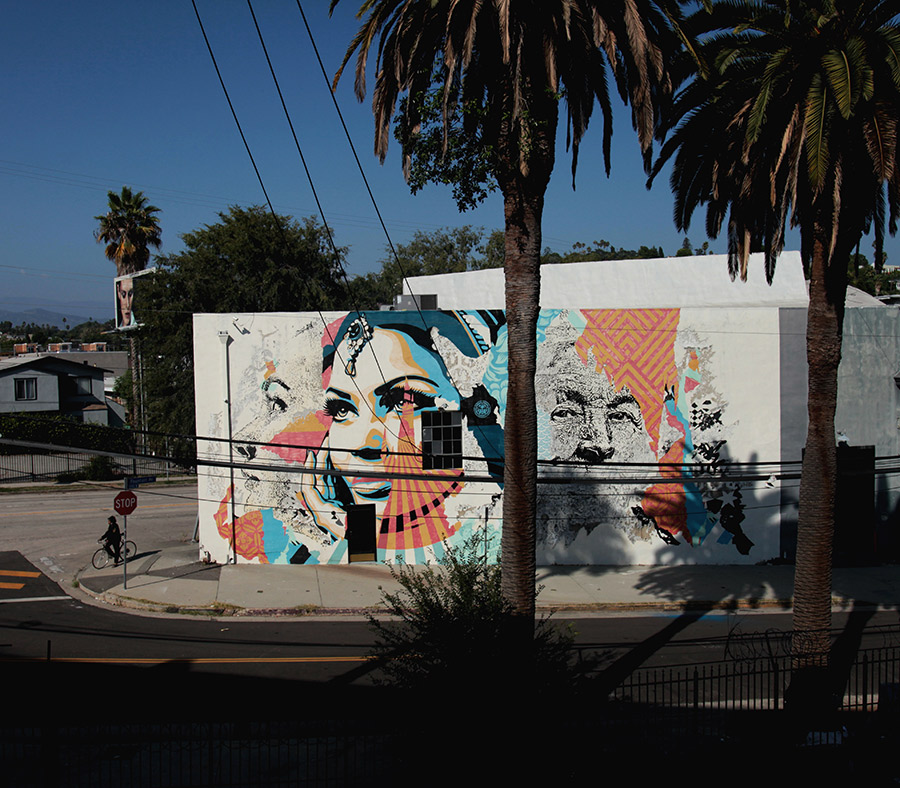
In street art photography, there are at least two truths to keep in mind. Firstly, art doesn’t need to be freshly created to strike you as new. Our recent visit to LA proved this point. It had been some time since our last trip, so when we encountered the collaborative work of Shepard Fairey and Vhils for the first time this October, it left a lasting impression. We recalled their earlier partnership – possibly their first – seen in Lisbon. That piece was more vertically oriented, nestled tightly within a narrow street in a neighborhood. In contrast, the Los Angeles piece enjoys the luxury of space, allowing it to breathe and extend its impact.
Second truth: There are times when the unexpected intrusion of elements in your photograph can be surprisingly welcome and appropriate. Untrimmed palm trees, even when they sprout haphazardly in front of a mural, bring a certain tropical charm. Likewise, the diagonal lines of telephone wires slicing through the scene can enhance the mural’s collage-like quality, especially when it’s already interrupted with a window and a doorway. Los Angeles today mirrors this eclectic mix; it’s a city where contrasts hang heavily, a shattering of the myths. The sprawl of massive tent encampments and the random upcropping of people living on sidewalks, in cars, and under bridges – all these elements contribute to the city’s Dickinsonian “Tale of Two Cities” character in 2023. Writ larger, America today is extreme wealth and poverty side by side, with rumors of revolutions scattered about. Here, the portraits capture the Fairey glamour and the Vhils grit, each layer vividly entwined and textured, a visual echo of a jackhammer pounding away at the facade.
We’re celebrating the end of one year and the beginning of the next by thanking BSA Readers, Friends, and Family for your support in 2023. Picked by our followers, these photos are the heavily circulated and “liked” selections of the year – shot by our Editor of Photography, Jaime Rojo. We’re sharing a new one every day to celebrate all our good times together, our hope for the future, and our love for the street. Happy Holidays Everyone!
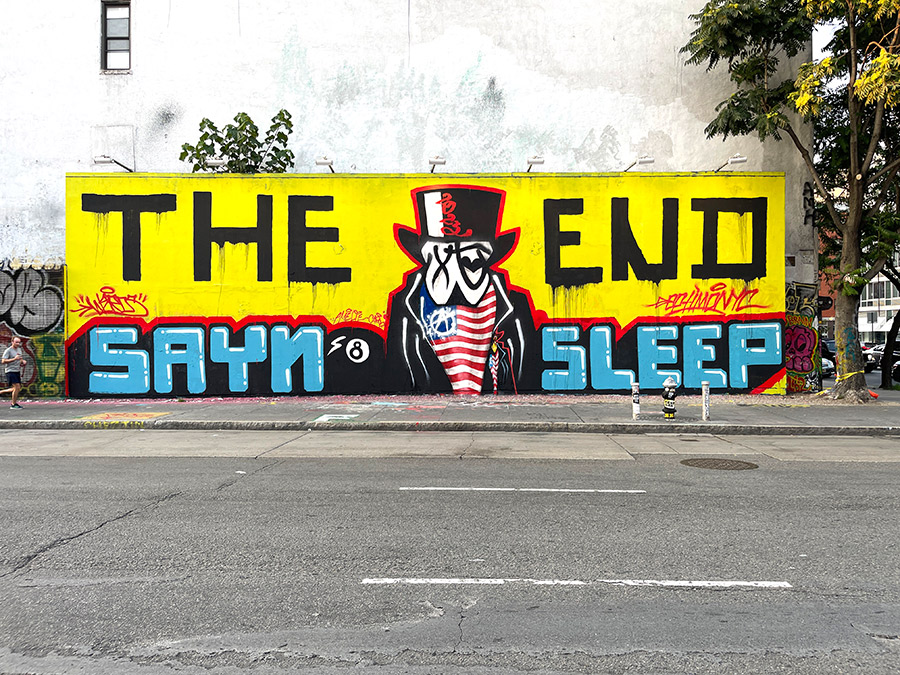
In Manhattan, at the corner of Houston Street, the Bowery Wall has reclaimed its voice in the visual dialogue of the streets this year. Marked by a vibrant array of characters, letter styles, and slogans, the wall has transformed from just another graffiti-covered surface to a vehicle for promotion and commerce, a vociferous platform for protest and argument, a landmark of artistic expression that is with and without permission. Originating in past decades as one in a sea of graffitied walls, it served as a laboratory for many artists, including the famously renowned Keith Haring.
During the go-go 2010s, the wall underwent a change that shook and reshaped its character. Owners and real estate champions of the arts Tony Goldman and later his daughter Jessica, transformed it into a more formally curated showcase. This shift occasionally sparked controversy among local graffiti enthusiasts due to its blend of artistic and commercial interests, attracting a surge in bombers and detractors.
This year, with a relaxed approach to curation, the wall has witnessed a resurgence of street-led creativity. The result is an ever-evolving, organic display of visual artistry – a dynamic and eye-popping chaotic showcase that continually engages the New York audience. A notable figure in this artistic whirlwind is Optimo NYC, a native talent often seen at the forefront, almost like a de facto Mayor of New York, complete with his signature top hat and tails.
We’re celebrating the end of one year and the beginning of the next by thanking BSA Readers, Friends, and Family for your support in 2023. Picked by our followers, these photos are the heavily circulated and “liked” selections of the year – shot by our Editor of Photography, Jaime Rojo. We’re sharing a new one every day to celebrate all our good times together, our hope for the future, and our love for the street. Happy Holidays Everyone!
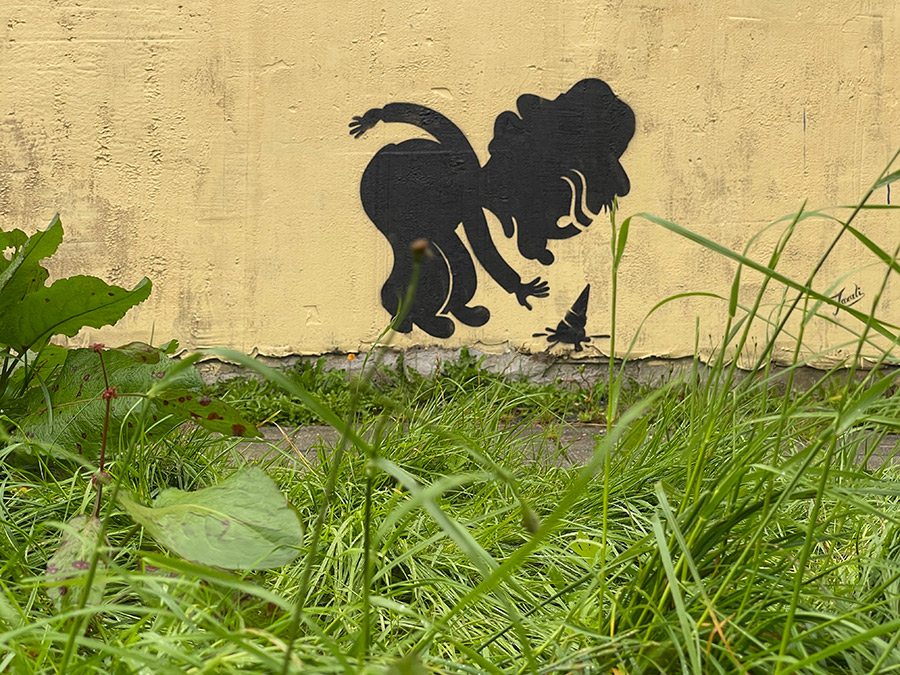
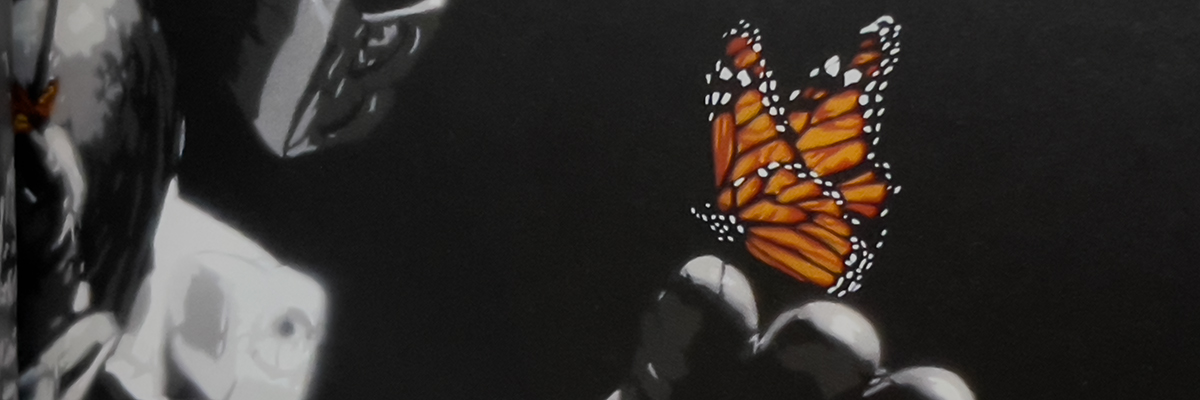
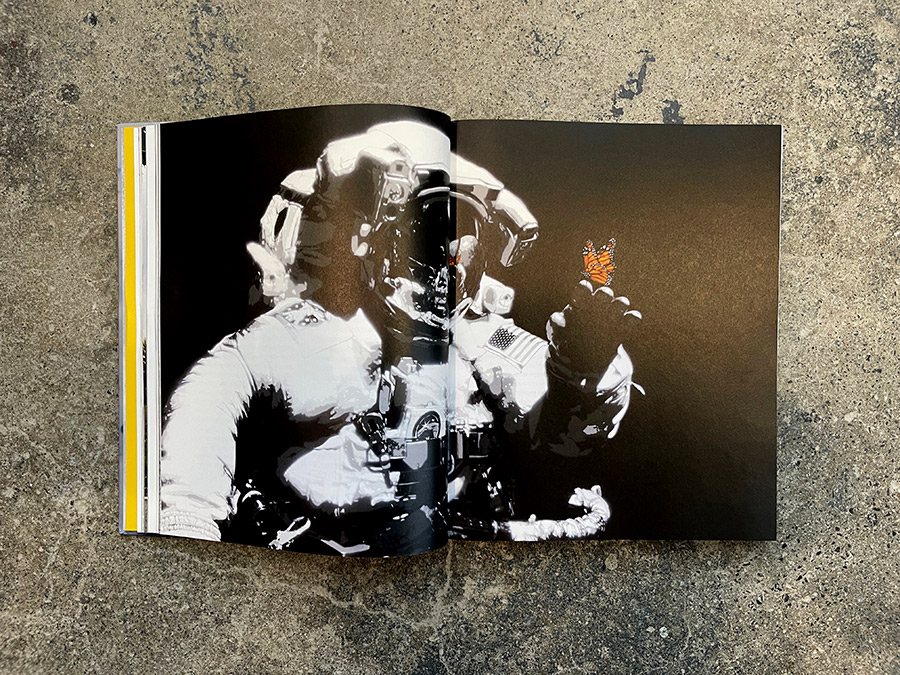
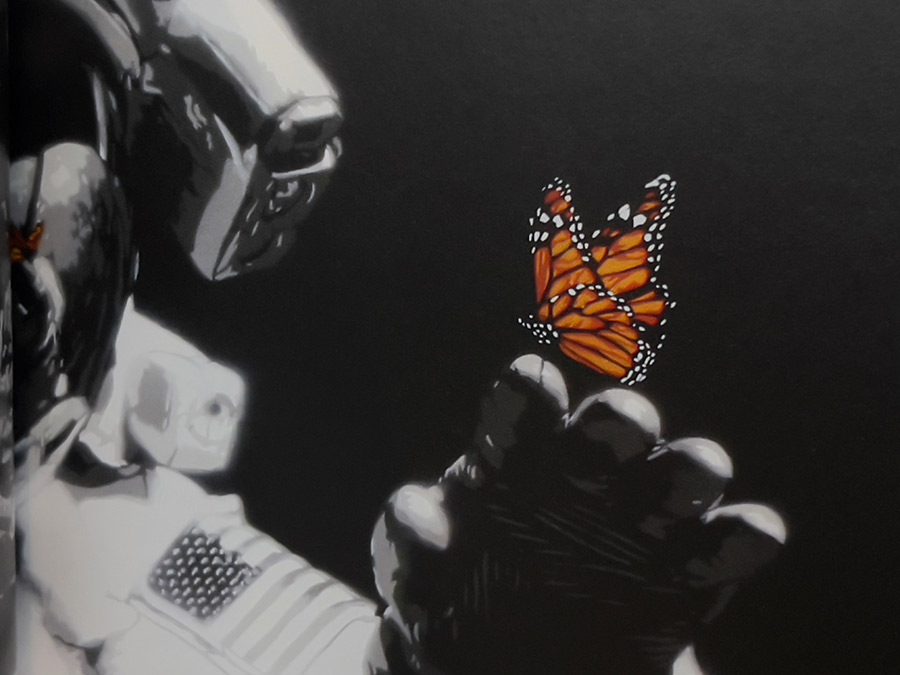
This summer in Stavanger, Norway, at the Nice Surprise festival, a monochromatic stencil by Gary Taxali captured the essence of human curiosity and our fragile relationship with nature. Placed thoughtfully in the grass, this piece by a renowned commercial artist venturing into street art for the first time, speaks volumes. It portrays a small, spritely figure, bending down to gently touch a butterfly – a simple yet profound metaphor. This artwork reminds us of the delicate dance between humanity and the natural world, echoing the words of Rachel Carson: ‘Those who contemplate the beauty of the earth find reserves of strength that will endure as long as life lasts.’
We’re celebrating the end of one year and the beginning of the next by thanking BSA Readers, Friends, and Family for your support in 2023. Picked by our followers, these photos are the heavily circulated and “liked” selections of the year – shot by our Editor of Photography, Jaime Rojo. We’re sharing a new one every day to celebrate all our good times together, our hope for the future, and our love for the street. Happy Holidays Everyone!
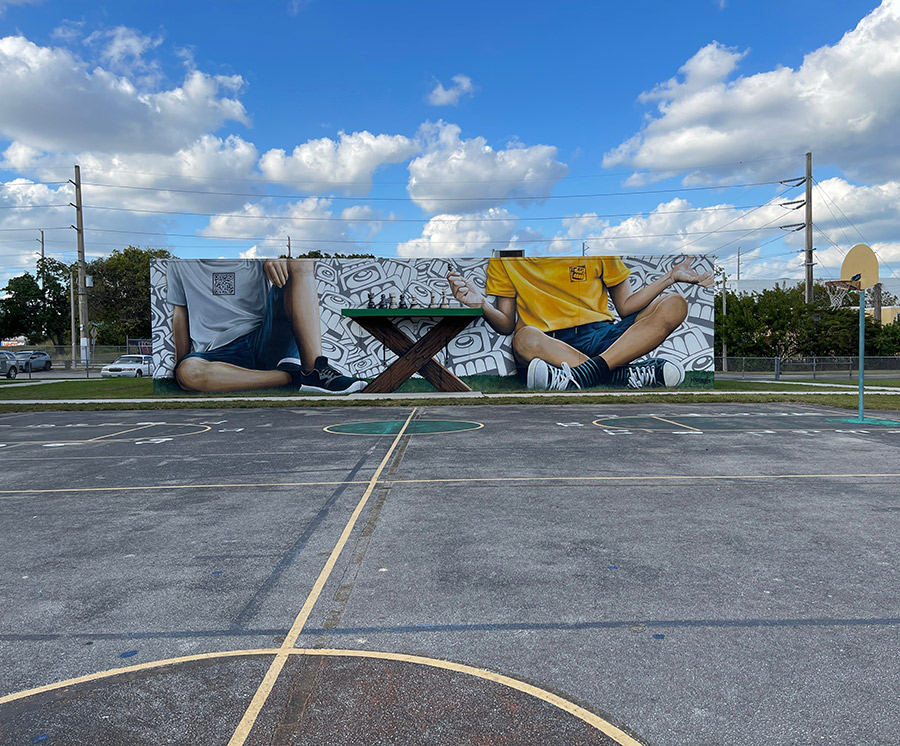
We start here at school where most kids learn about chess, the biggest game of life that there is. Chess teaches us that even a pawn can dethrone a king. When kids learn chess, they’ll understand that no matter how small their start, they can master their destiny.
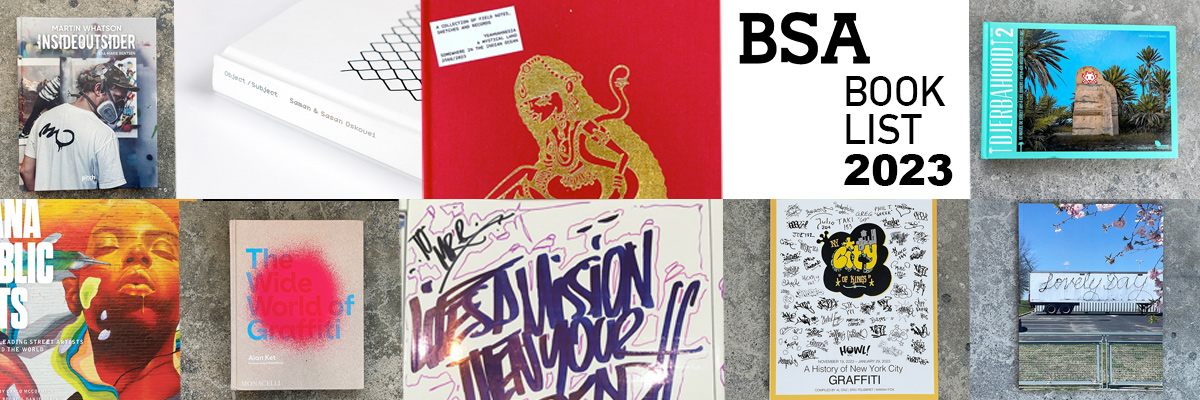
It’s that time of the year again! Our 13th “Hot List” of books – a best-of collection that is highly personal and unscientific presents a sampling across the board for a variety of graffiti and street art fans.
Our interests and network continued to venture afield this year, and we offer a cross-section of books that are well worth your time – whether it’s the stories they tell, the rare glimpse inside a wiley mind, or the revelation of seeing images previously unseen except by a handful of people. We have political, personal, and professional takes on this beautiful street art scene, as well as a careful instruction book on how to make your own
So here is a short list from 2023 that you may enjoy as well – just in case you would like to give them as gifts to family, friends, or even to yourself.
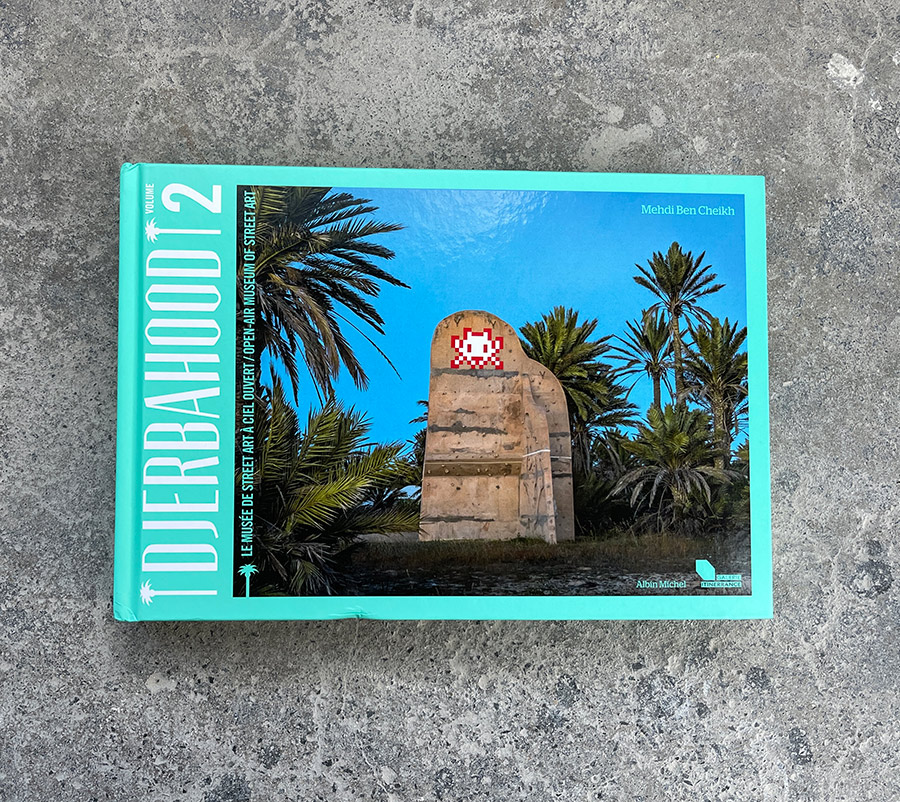
Djerbahood 2: Open-Air Museum Of Street Art – Albin Mitchel Publishers – Galerie Itinerrance
From BSA:
The traditional architecture in the Medina Atiga may be what attracts you initially, but it is the 150 street artists who will keep you wandering through the maze of tiny streets. The outdoor curation of Djerba by Mehdi Ben Cheikh, a bi-national with a gallery in Paris, happened over the last decade among the sun-blasted domes, arches, and towers here.
“Djerba was exceptionally well placed for an operation with worldwide impact.” says the visionary Cheihk in the newly released Part 2 of Djerbahood, “On this, the southernmost island of the Mediterranean, the climate is pleasant and temperate for more than half the year.”
In this village of Erriadh on the Tunisian island of Djerba, you are twenty-five kilometers from the airport, adjacent to a long shoreline of fine white sand, and officially walking inside a UNESCO World Heritage site. It also helps that here you’ll find palm trees, olive trees, figs, pomegranate, carob, apple, and apricot trees, crystal clear water, and a fairly mild climate.
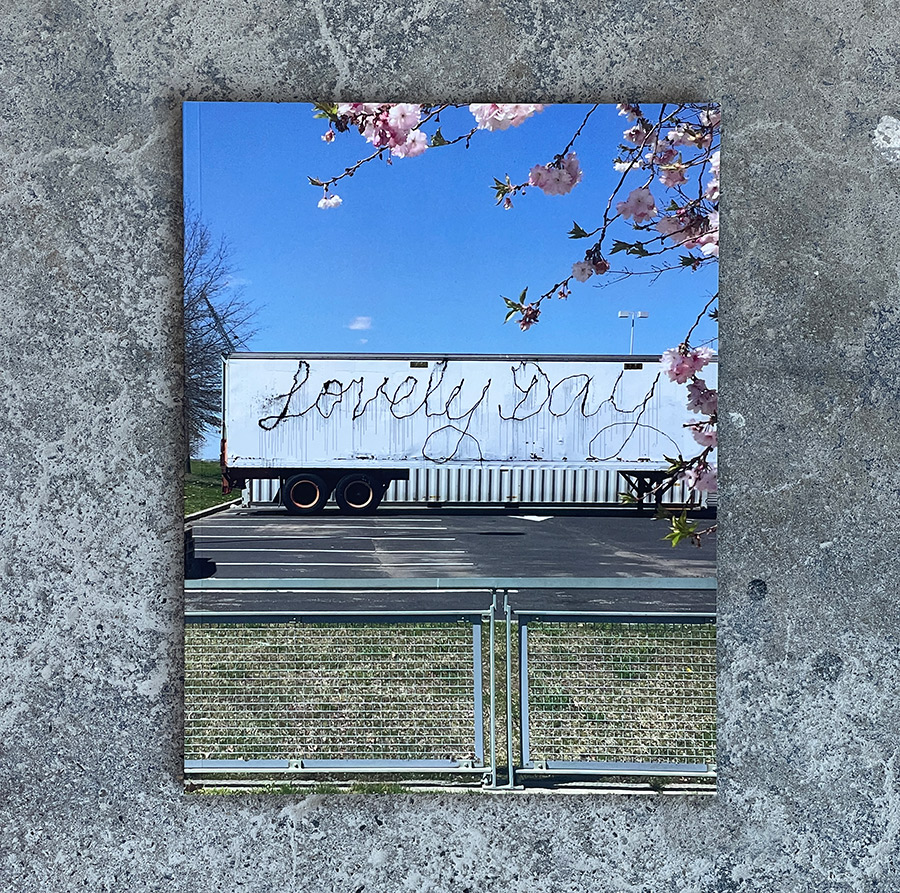
PORK: “I LEFT A NOTE”. Published by Blurring Books NYC
From BSA:
New York’s PORK is one of the few fire extinguisher writers who reliably has can-control, or nozzle control, as the case may be. If you know your extinguisher tags, these are examples of fine penmanship. Additionally, his necessarily brief cursive bon mots are cryptically funny, even if you don’t know his intention.
In this new softcover of street photography, many of his rattled-looking words are framed in their natural/unnatural environment and given their page, or spread. In the index, you may get an insight into what the artist was thinking by the title given to the corresponding pages in the body. You’ll also gain insight into the irreverence, sometimes tempered with exquisitely poised timing.
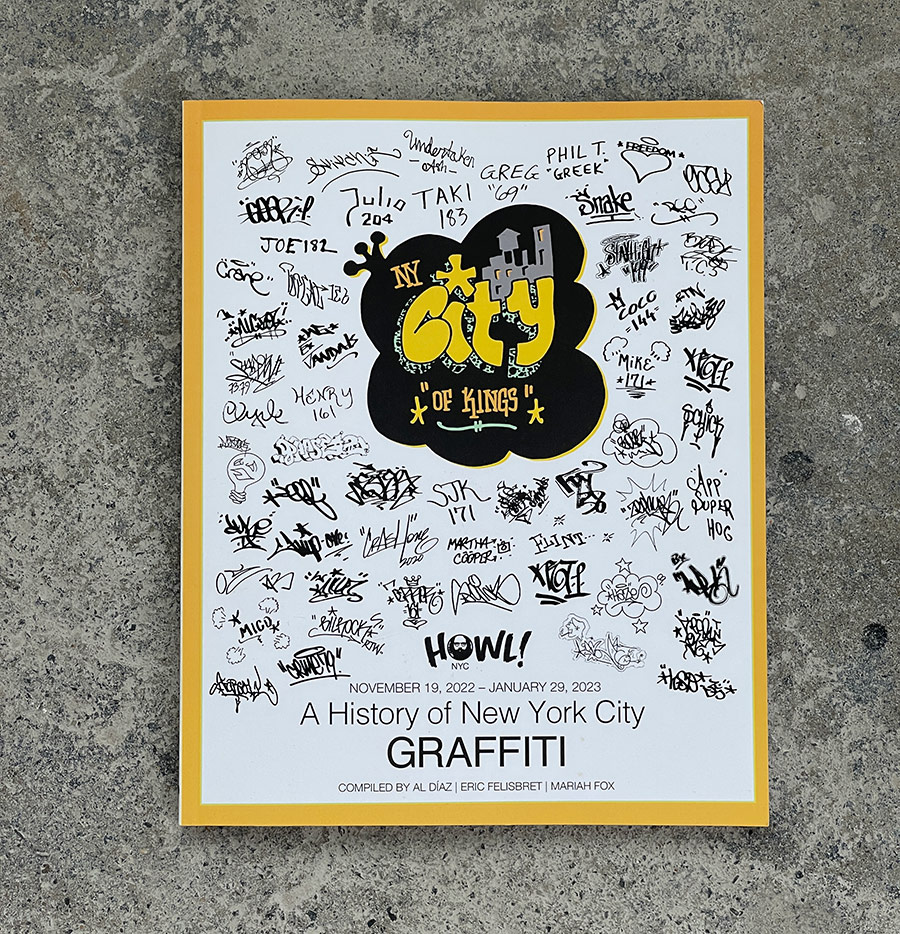
“CITY OF KINGS: A History Of New York City Graffiti” – Compiled by Al Diaz/ Eric Felisbret / Mariah Fox. HOWL! Gallery.
From BSA:
“Like a small team of ants dragging a slice of Wonderbread down the sidewalk to home base, we persevered,” writes OG New York graffiti writer and curator Al Diaz about the collaborative process that produced an exhibition and catalog this winter called “City of Kings: A History of NYC Graffiti.”
A wildly dispersed and organic scene like the one birthed by graffiti more than five decades ago has had thousands of authors, making it a daunting task to tell this story at times, says Diaz. To do so he made sure to work with two other curators who could complement his knowledge and abilities when researching and collecting proper history to illustrate this movement correctly.
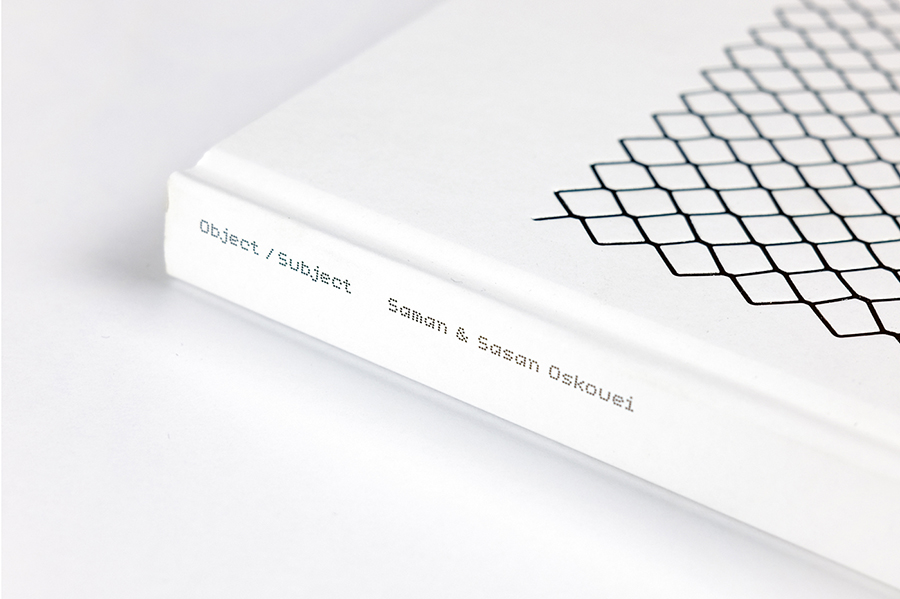
Back on May 1st, 2023 Saman & Sasan released their new self-published book titled Object / Subject. In conjunction with the book they also released a Box set, their first, and included a collection of selected prints along with the book.
If you are familiar with their conceptual pieces and their powerful resonance – like Our House Is On Fire, for example, you will be excited at the prospect of having an opportunity to have this Box set in your collection. As a special commemoration of their most recent 8 years of work – that has re-defined their vision, their reputation as contemporary artists, and their ability to profoundly render verdicts on the human condition – the new book will also include an essay by author and art critic Carlo McCormick.
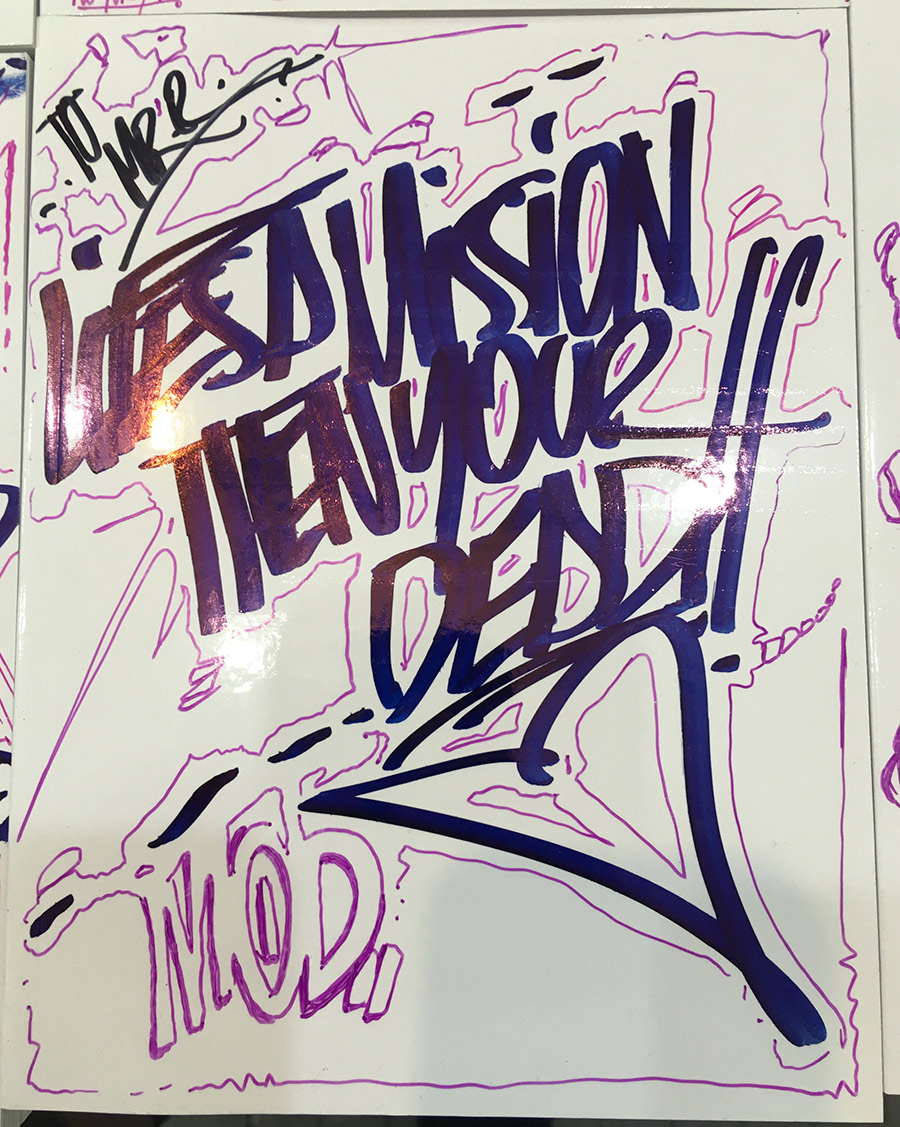
REVS, XSOUP & ARBOR. “Life’s a Mission…Then You’re Dead”
From BSA:
Today the writer expands his reach, compiling with XSOUP and ARBOR the stories of many graffiti writers into a bound volume that will become an instant classic in the largely anonymous and underground realm of practitioners as well as with the growing cadre of researchers, academics, and historians studying graffiti/street art/urban art today. With this new passion effort by REVS and a small team, these stories are preserved and documented, ensuring a greater understanding and appreciation for the interconnected/alienated paradox of the graffiti writer’s life and practice.
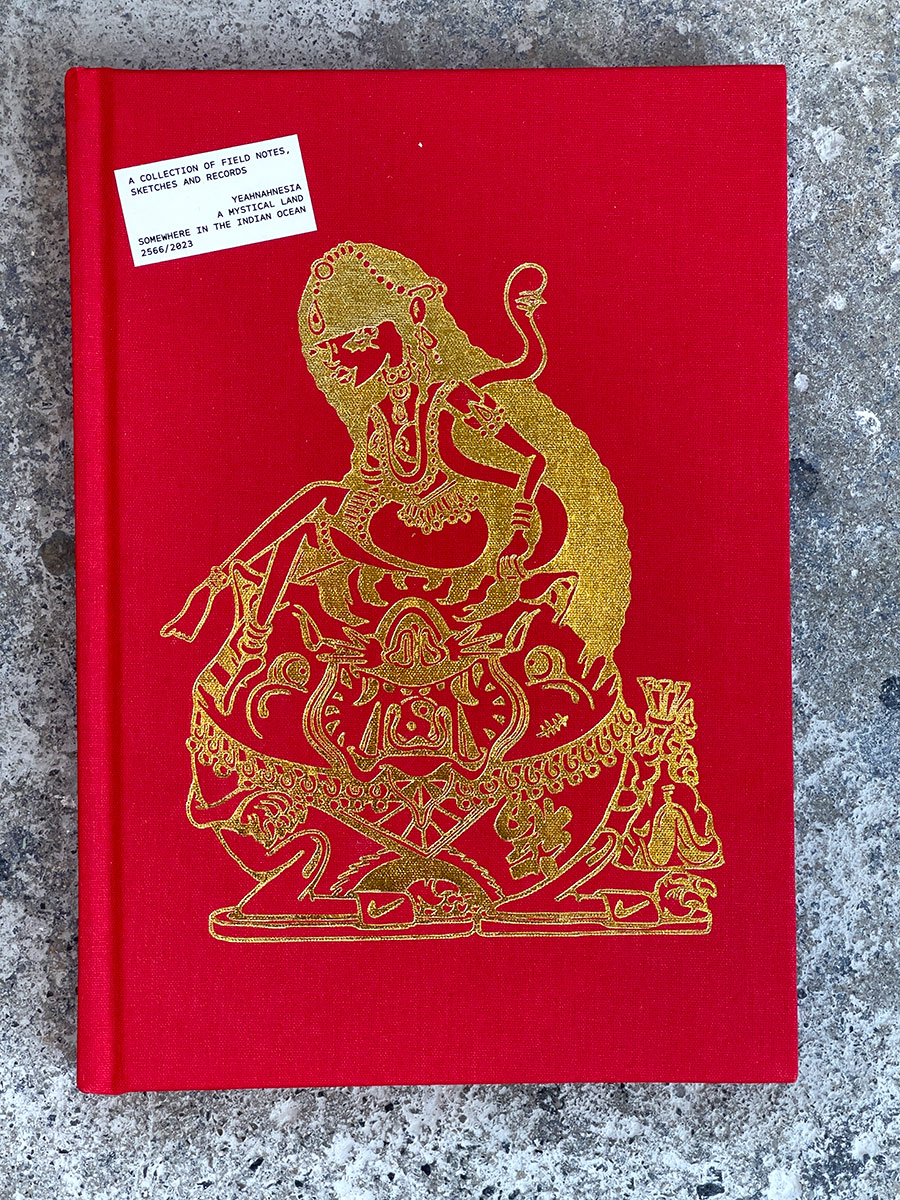
The Yok & Sheryo: Yeahnahnesia A Mystical Land Somewhere In The Indian Ocean. Vol 1. Published by Yok & Sheryo and The Art Gallery of Western Australia. 2566 AP / 2023.
From BSA:
In the realm where imagination dances with audacity, Yok & Sheryo, the dynamic duo hailing from the crossroads of New York, Australia, and Asia, have conjured up a whimsical masterpiece, aptly titled “Yeahnahnesia.” Published in collaboration with the Art Gallery Western Australia, this book is a memoir and fantasy of creativity and storytelling that makes a reader question the boundaries of reality and fiction.
Picture a tropical paradise, a place Google Maps forgot, where mythology, deities, philosophies, and unusual creatures roam freely. Yeahnahnesia, the brainchild of these intrepid artists, is a fictional island brimming with tales so rich that your skateboarding dreams will tip their hats in admiration. The burning questions of its existence and location will keep you up at night until you surrender to the allure of this enigmatic and chill place.
As you delve into the book’s 120 pages, you’ll be transported into an alternate dimension where art intertwines with narrative, and history plays a sly game of make-believe. The “Temple of Frivolous Wishes” at AGWA, Art Gallery Western Australia, Perth, is a mere glimpse of their artistic prowess. Bound in fabric with gold foil accents, this bound edition of 800 is a treasure.
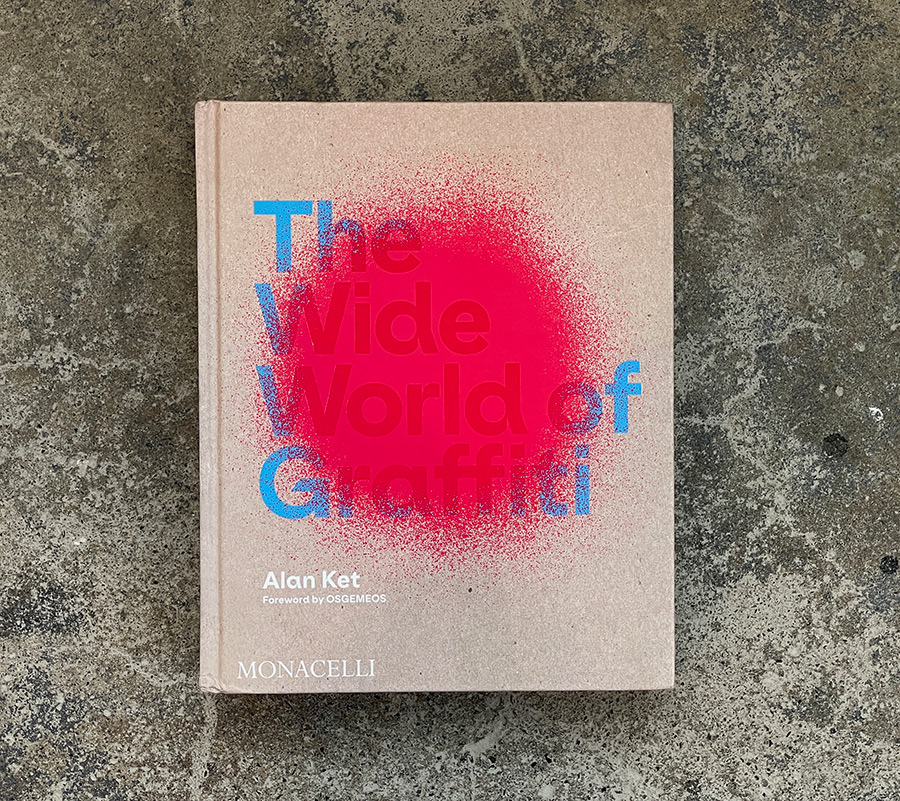
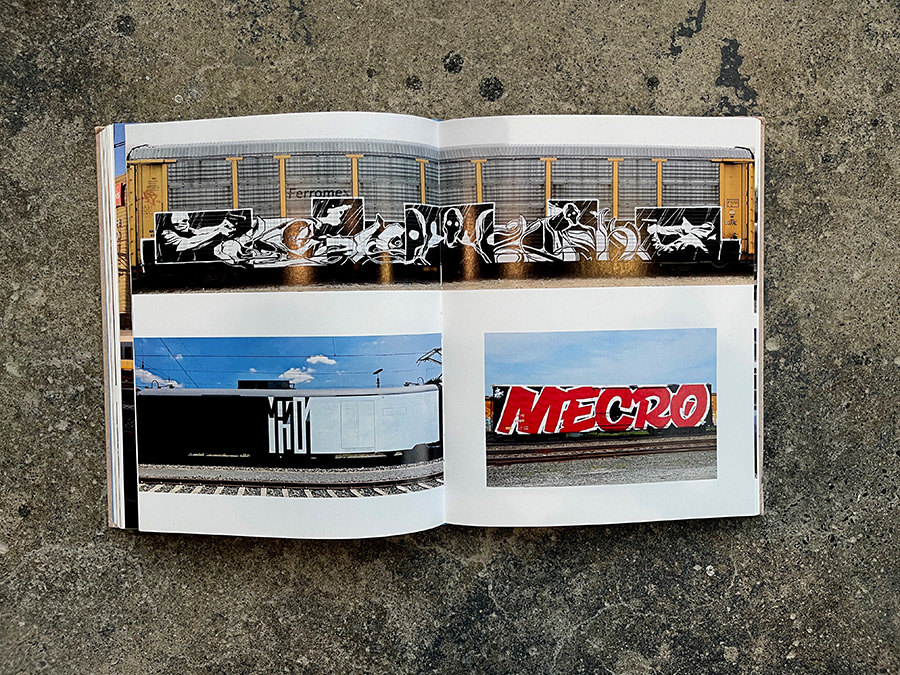
Alan Ket: The Wide World of Graffiti. Monacelli Press / Phaidon. New York
From BSA:
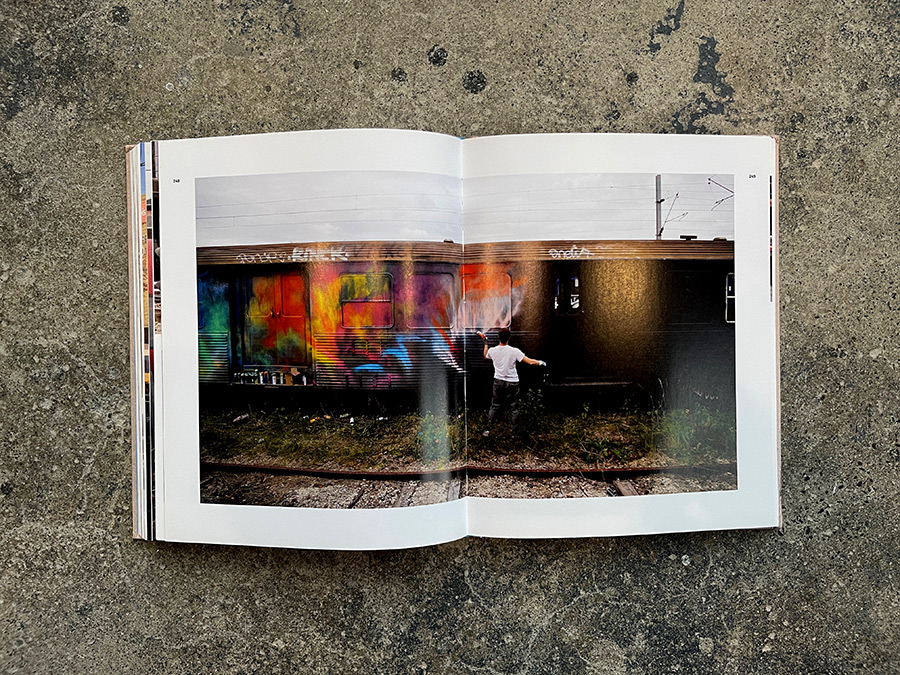
Graffiti artists often dismiss histories or narratives not of their own making, including those from their peers. This subculture, which has continuously evolved across different cities, time zones, decades, and languages over the past 60 years, is so rich in stories and counterstories that it might take another 30 years for the aerosol to clear and reveal the origins of these tales comprehensively. One unwavering truth prevails: if you weren’t there, in the same city, during the same era, didn’t grow up immersed in that urban environment, and weren’t marking the same train lines or recognized by local crews, your credibility is questioned, and the original graffiti artists (OGs) might disregard your story.
It’s meaningful when a book like “The Wide World of Graffiti” is authored by someone like Alan Ket, a native New Yorker from Williamsburg, Brooklyn, who has firsthand experience writing on city trains. As a self-proclaimed graffiti nerd, historian of the movement, and co-founder of the Miami-based Museum of Graffiti, Ket brings a unique blend of metaphorical depth and frank authenticity to his writing. He skillfully combines scholarly insight and sociological context in his narrative, spotlighting selected kings and queens of the streets to further illustrate in their words details of the scene’s evolution and his informed insights to provide context.
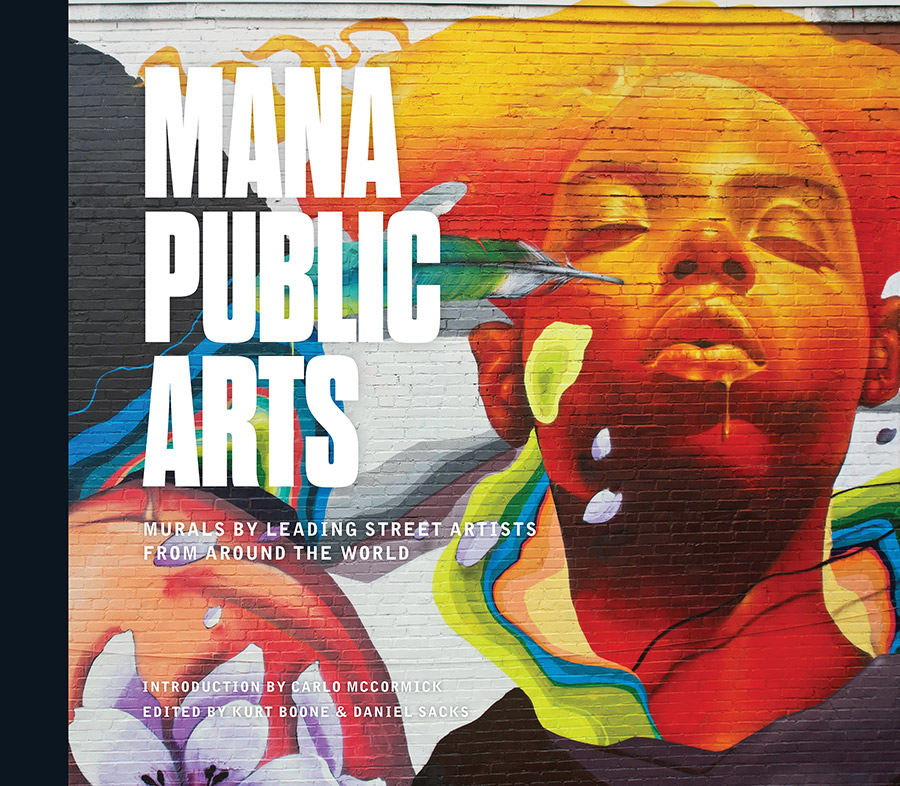
MANA PUBLIC ARTS: MURALS BY LEADING STREET ARTISTS FROM AROUND THE WORLD. Itasca Books / Mana Public Arts
From BSA:
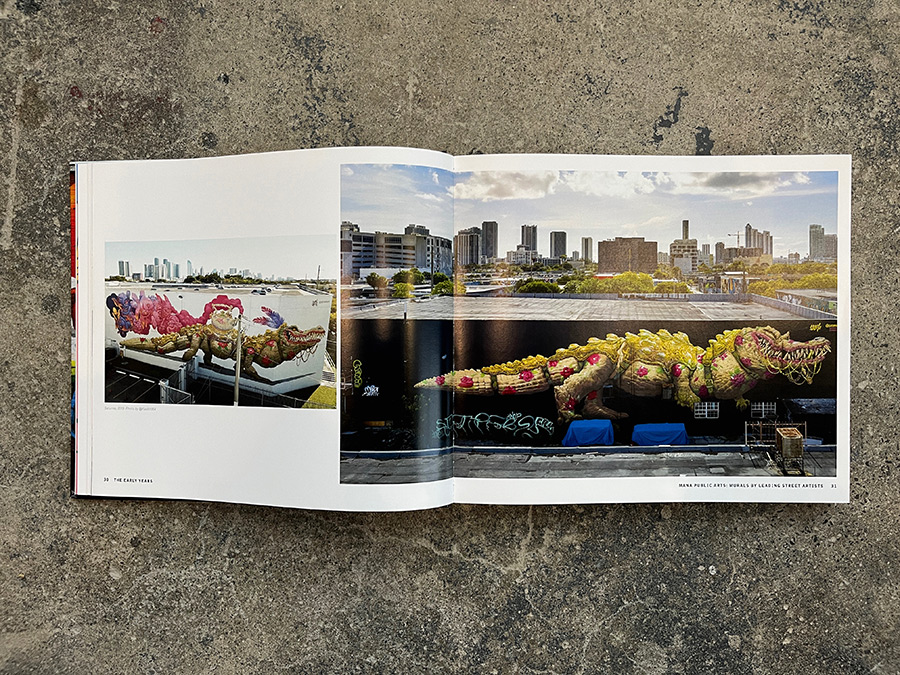
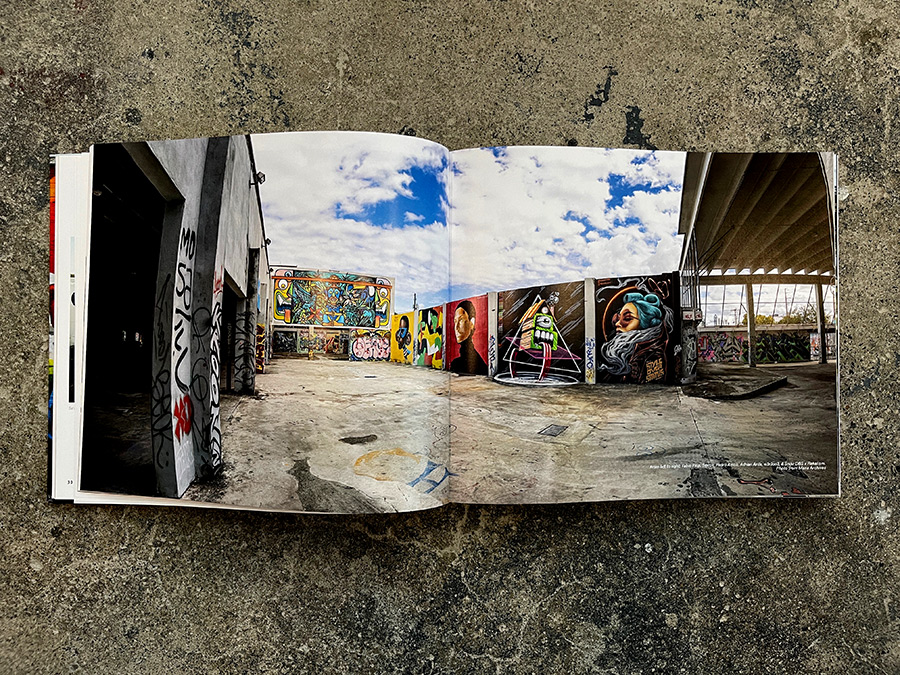
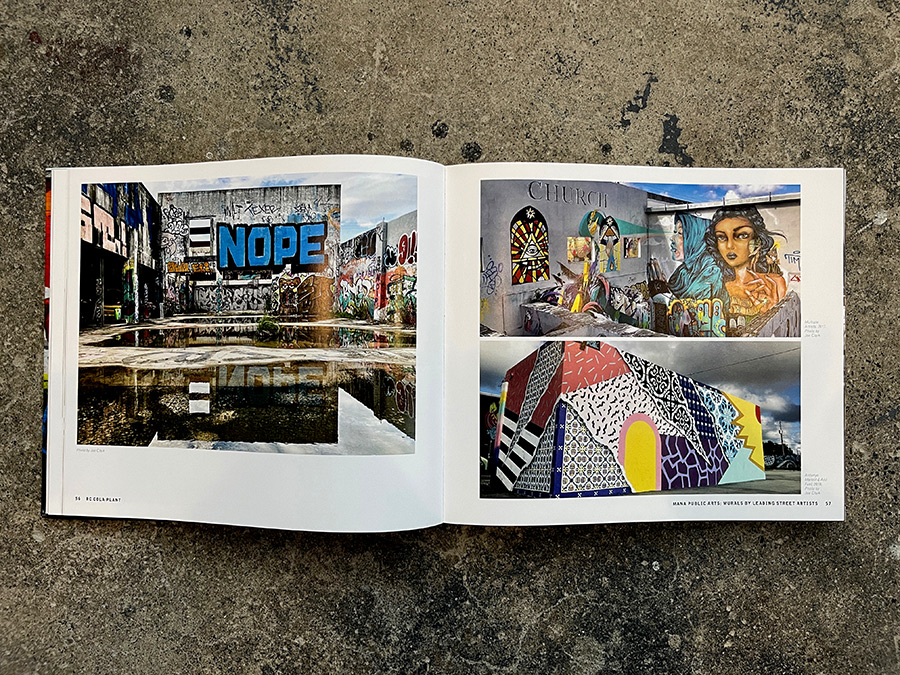
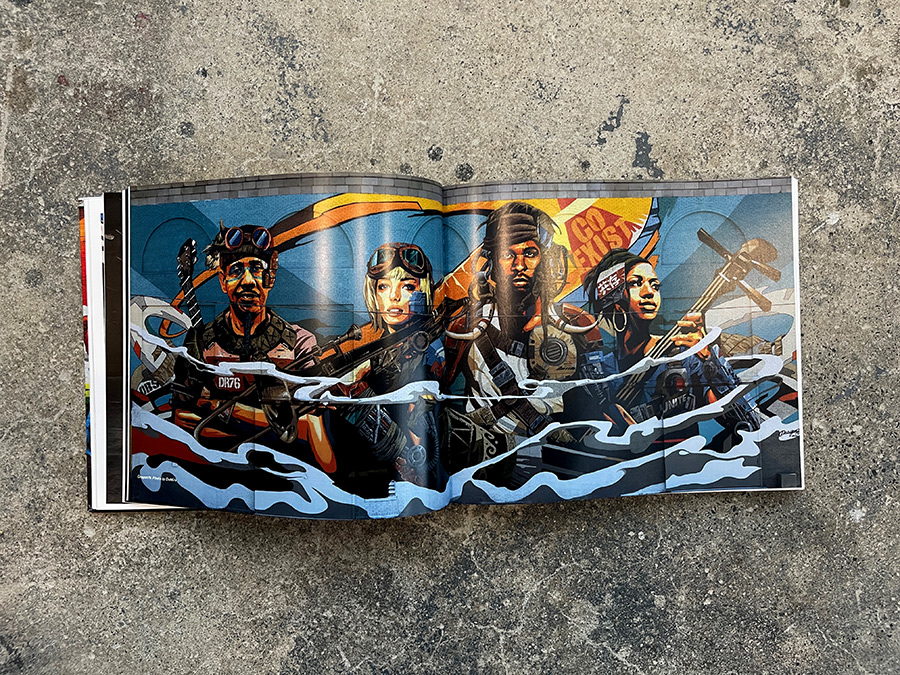
Mana Public Arts (MPA), a privately-funded real estate program supporting public art, announces the launch of a new book this Saturday at the Museum of Graffiti. The book captures the diversity and vibrancy of street murals by internationally acclaimed artists in two U.S. cities where MPA operates – Miami and Jersey City, New Jersey. Spanning over 300 pages, the book showcases a range of graffiti, street art, and mural works supported and presented by MPA over the past decade, reflecting their dedication to enhancing communities through public art.
Essays from four notable figures in the street art and graffiti world provide a deeper understanding of the evolution and changing nature of the graffiti/street art/mural art scenes in Miami and Jersey City, as well as context and educational insight into the program. Contributors include cultural critic Carlo McCormick, Brooklyn Street Art’s Steven P. Harrington, Museum of Graffiti’s Alan Ket, and UP Magazine’s T.K. Mills.
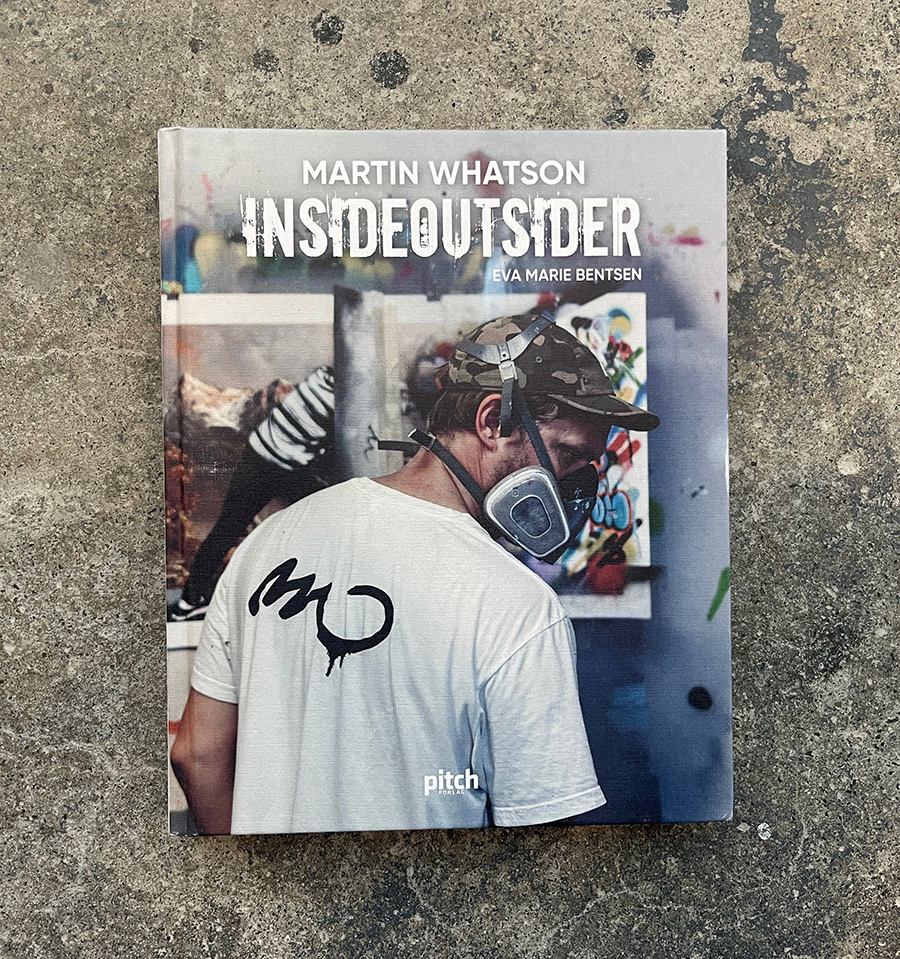
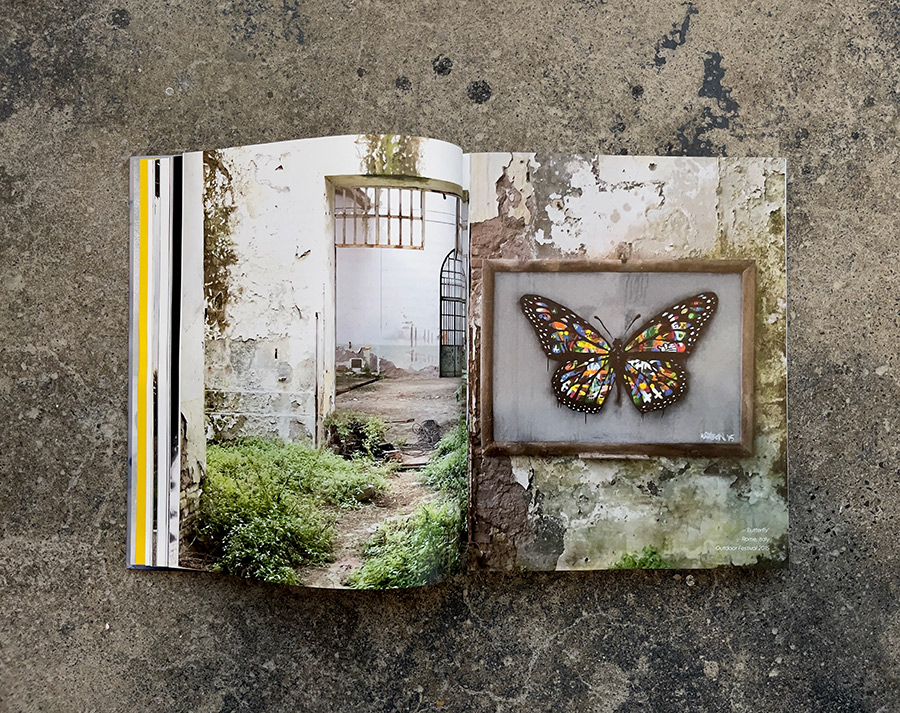
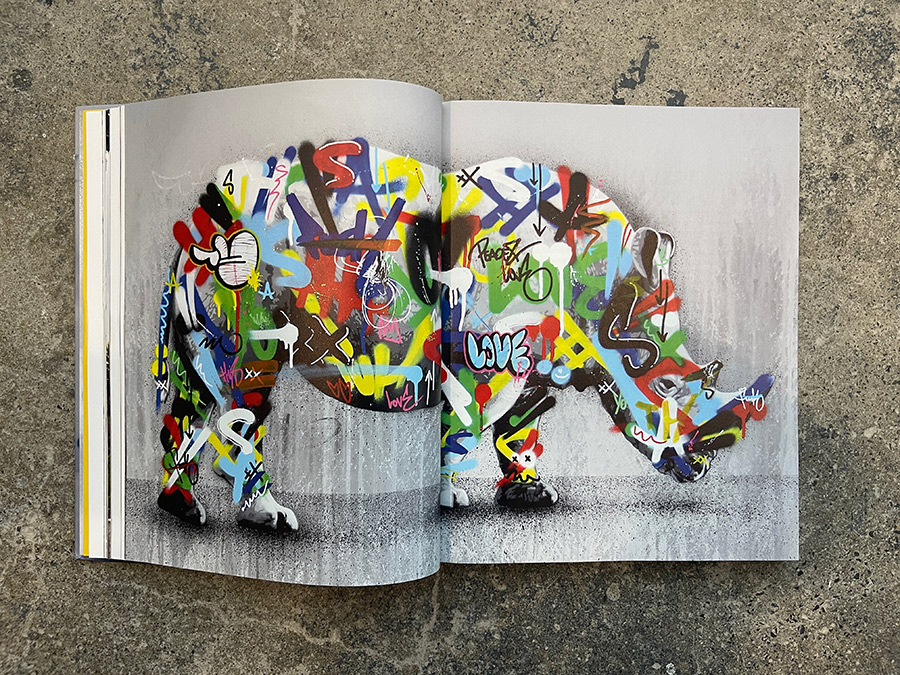
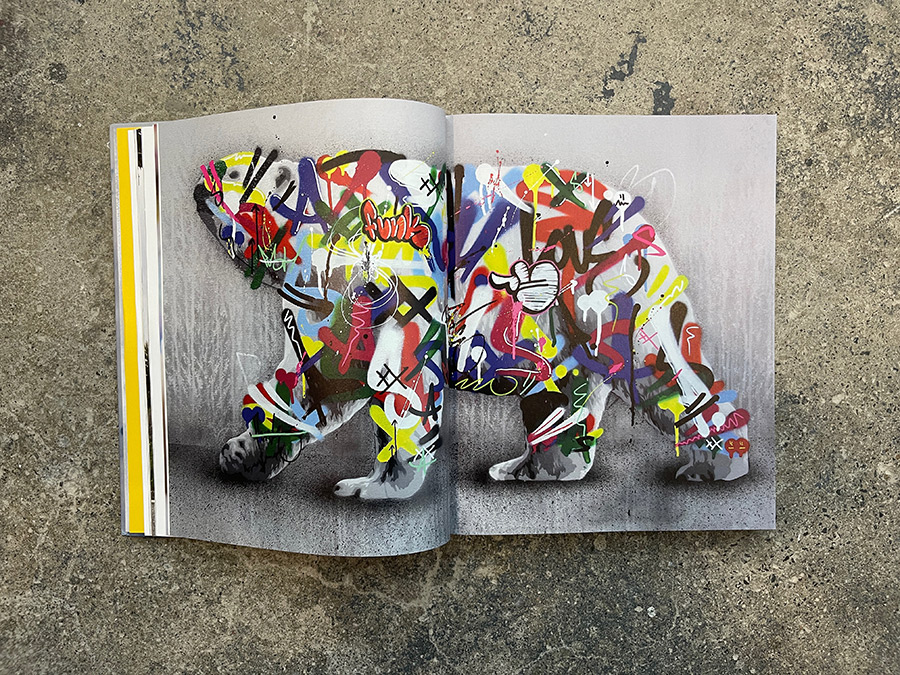
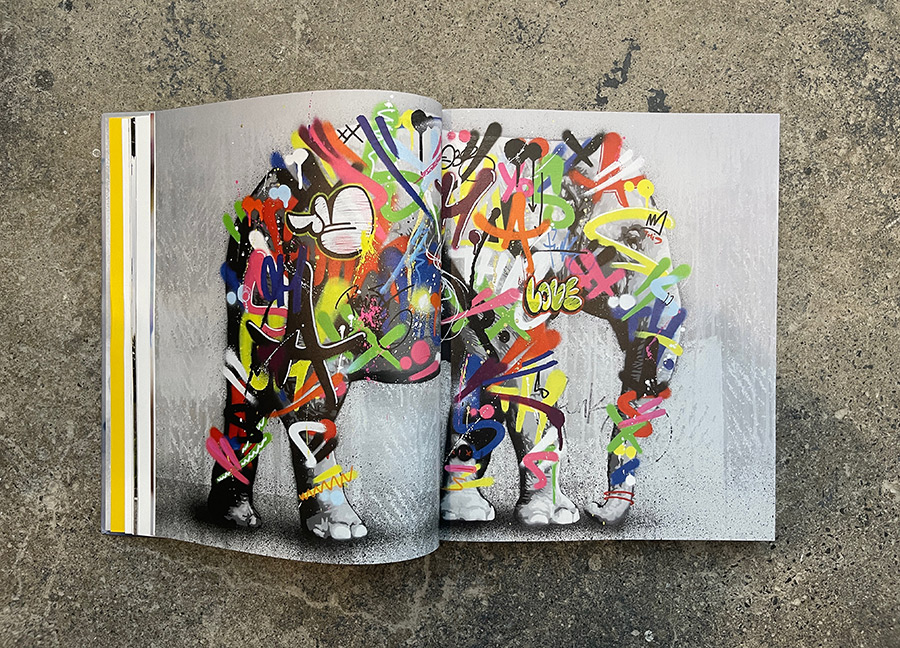
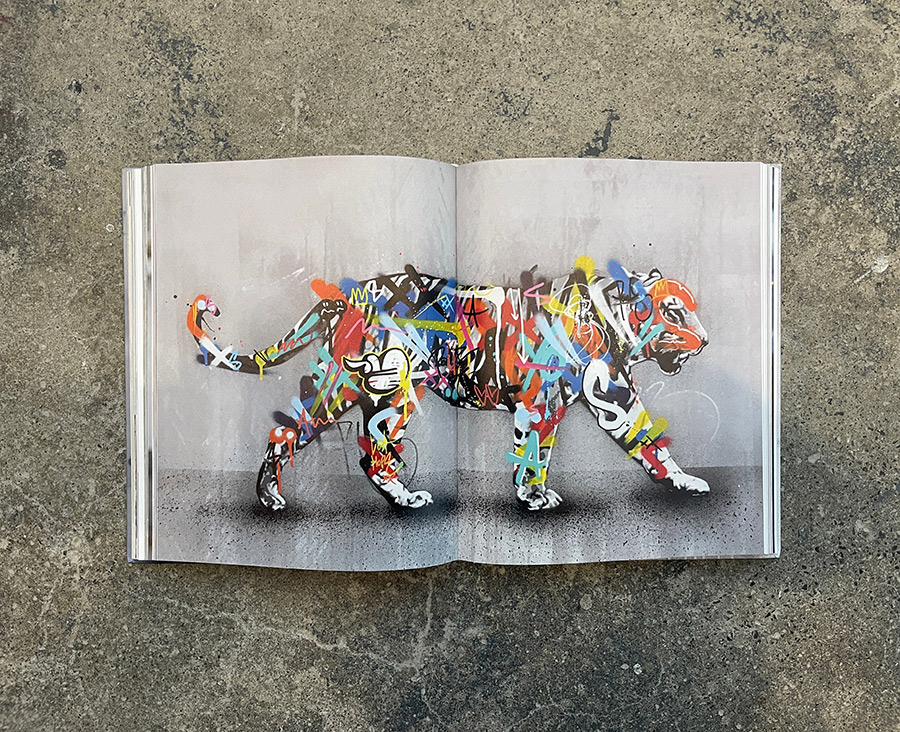
Martin Whatson, a Norwegian stencil artist born in 1984, has carved out a distinctive niche in the contemporary and street art worlds. His journey from street art to international acclaim is a narrative of artistic evolution and the versatility of visual language. This book, written by art dealer and curator Eva Marie Bentsen, offers a comprehensive look at Whatson’s career, from his early experiments in graffiti to his current status as a celebrated fine artist. His education at the Westerdals School of Communication in Oslo laid the groundwork for a unique blend of graphic design and urban art, defining his approach to art-making.
The initial sections of the book explore Whatson’s early period, where his engagement with graffiti and stencil art began to shape his artistic voice. These early works reveal a developing style, marked by influences from notable artists like DOLK and Banksy. During this time, Whatson started to refine his distinct blend of political themes and aesthetic appeal. His participation in the Nuart Festival, championed by Stavanger art dealer and street art festival curator Martyn Reed, undoubtedly played a crucial role in bringing his work to a broader audience.
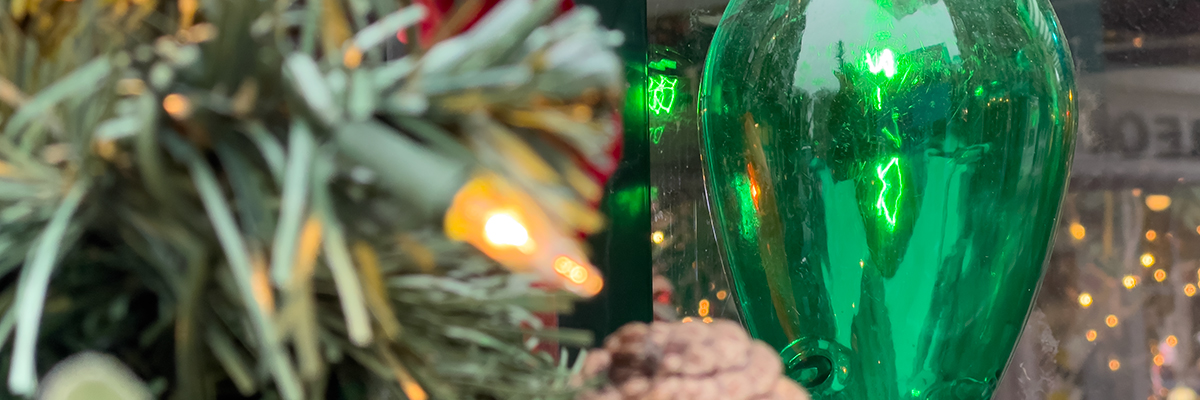
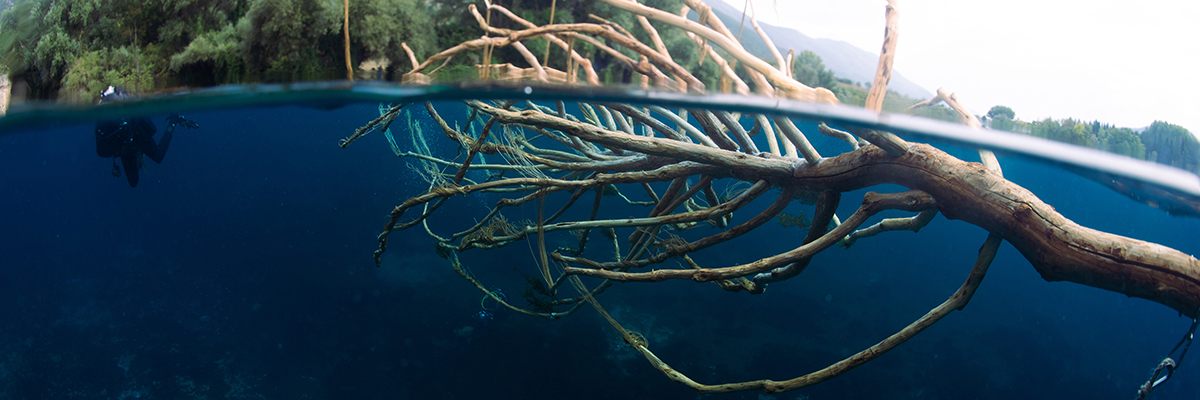
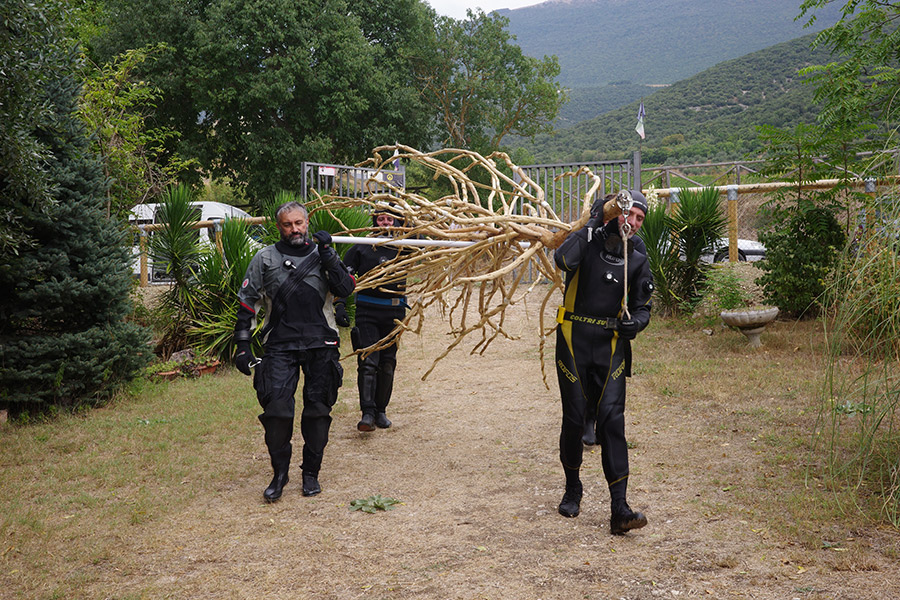
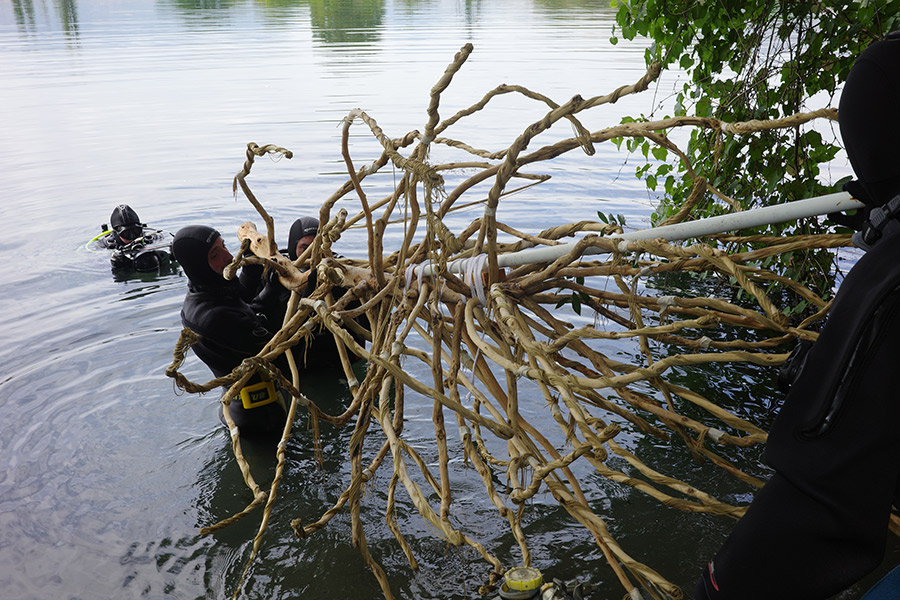
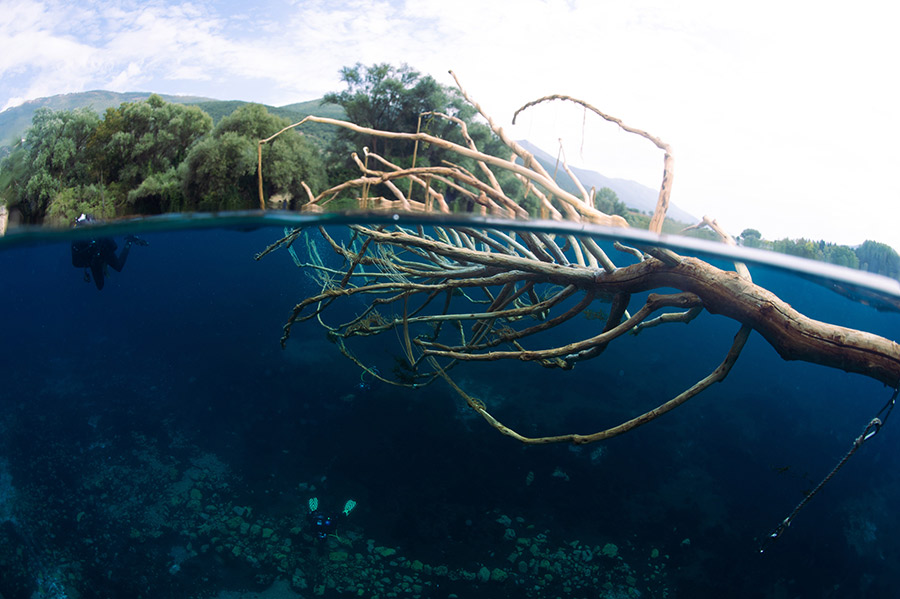
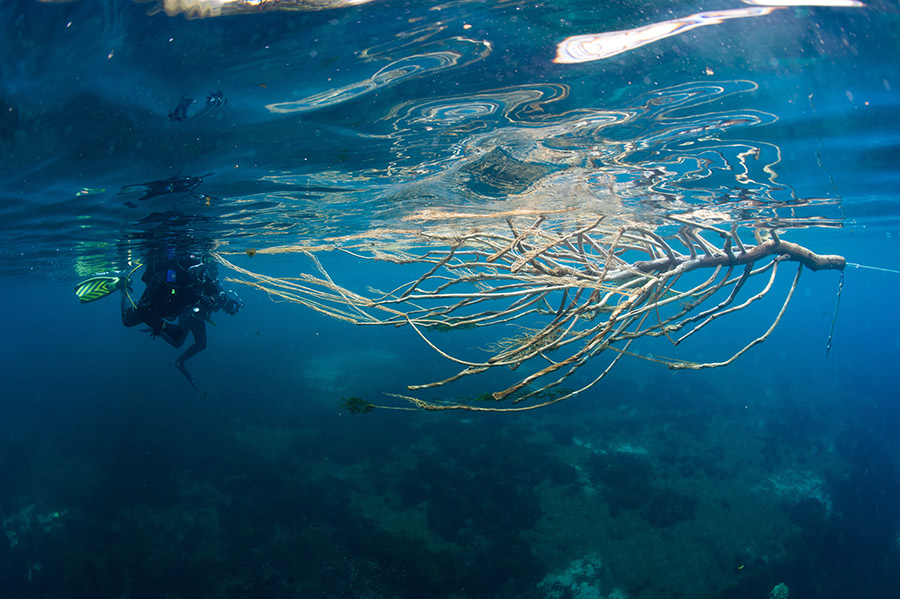
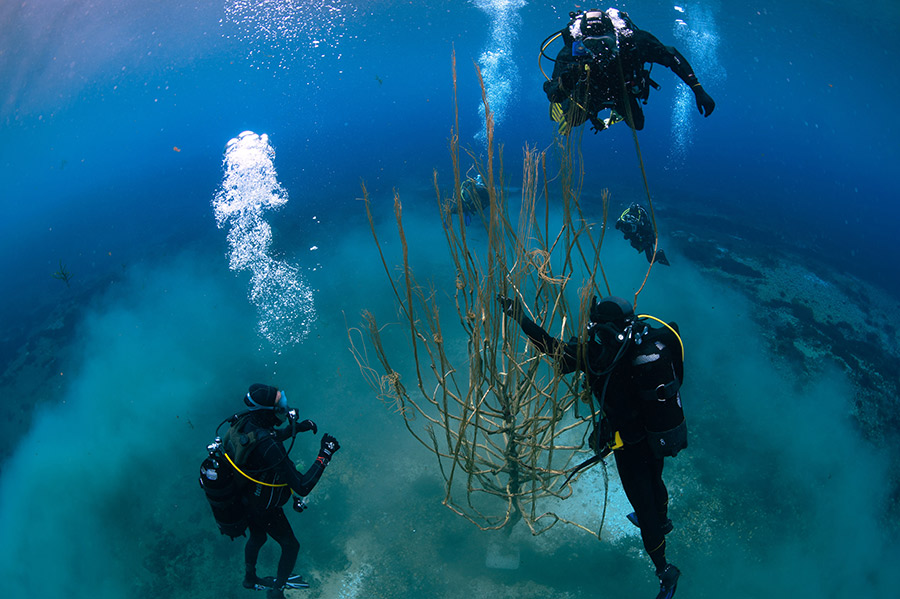
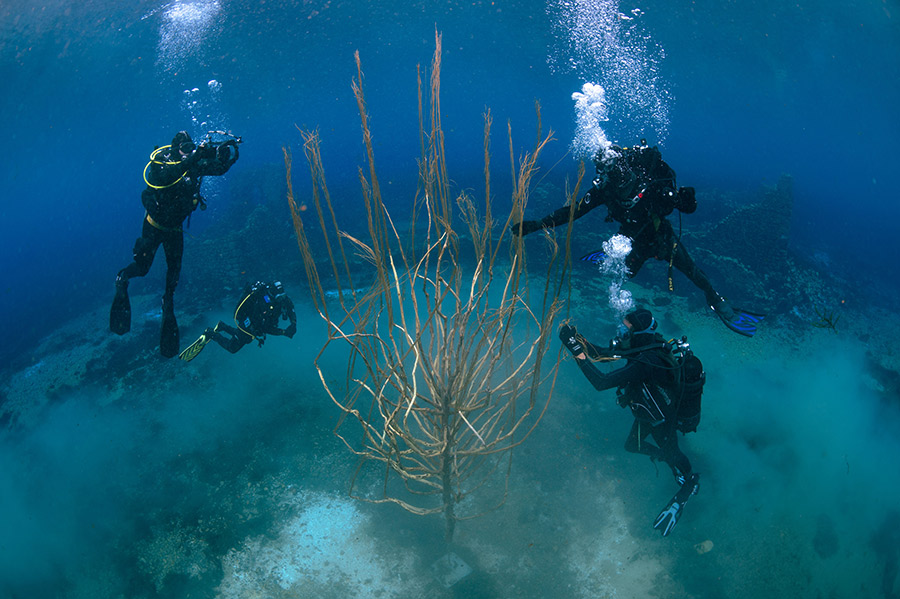
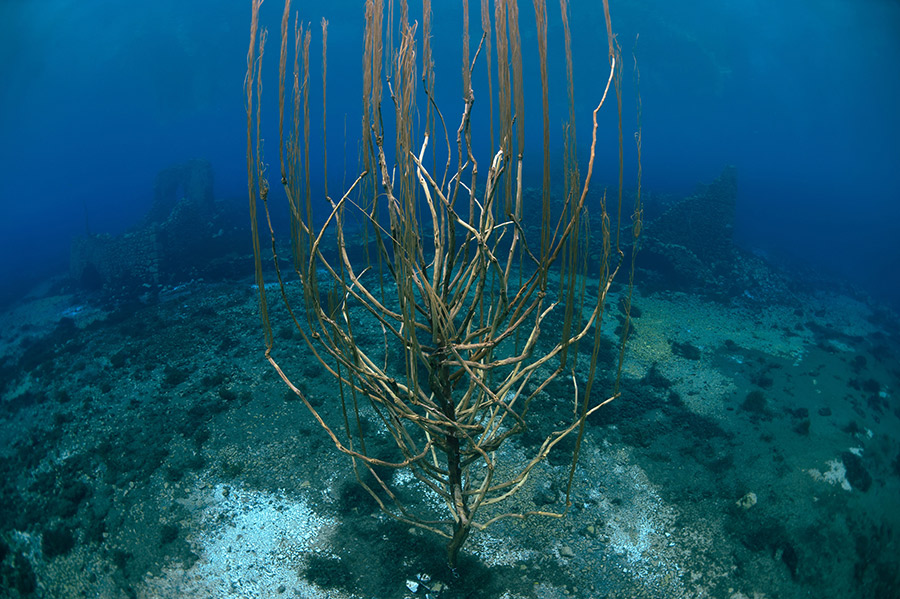
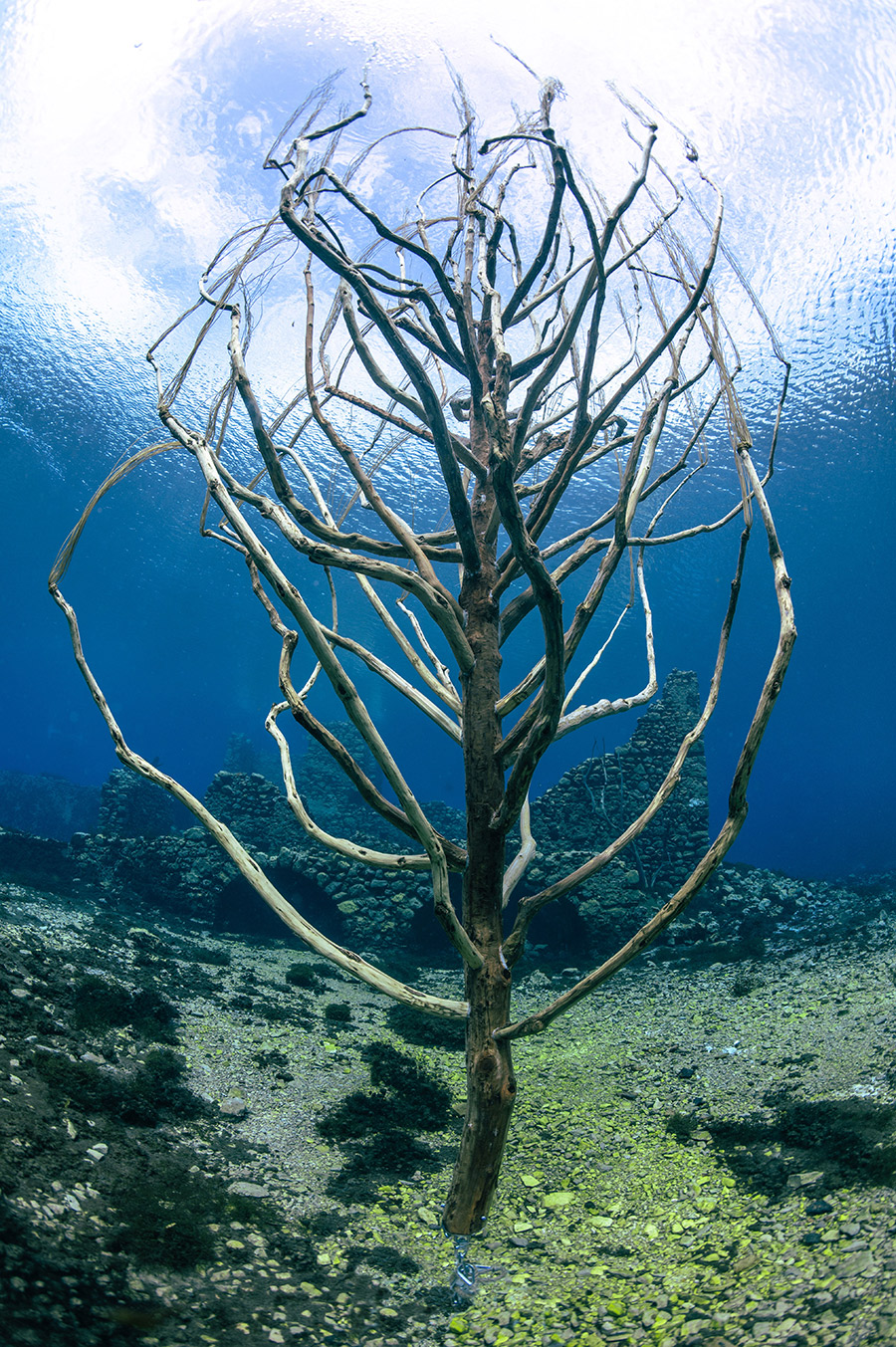
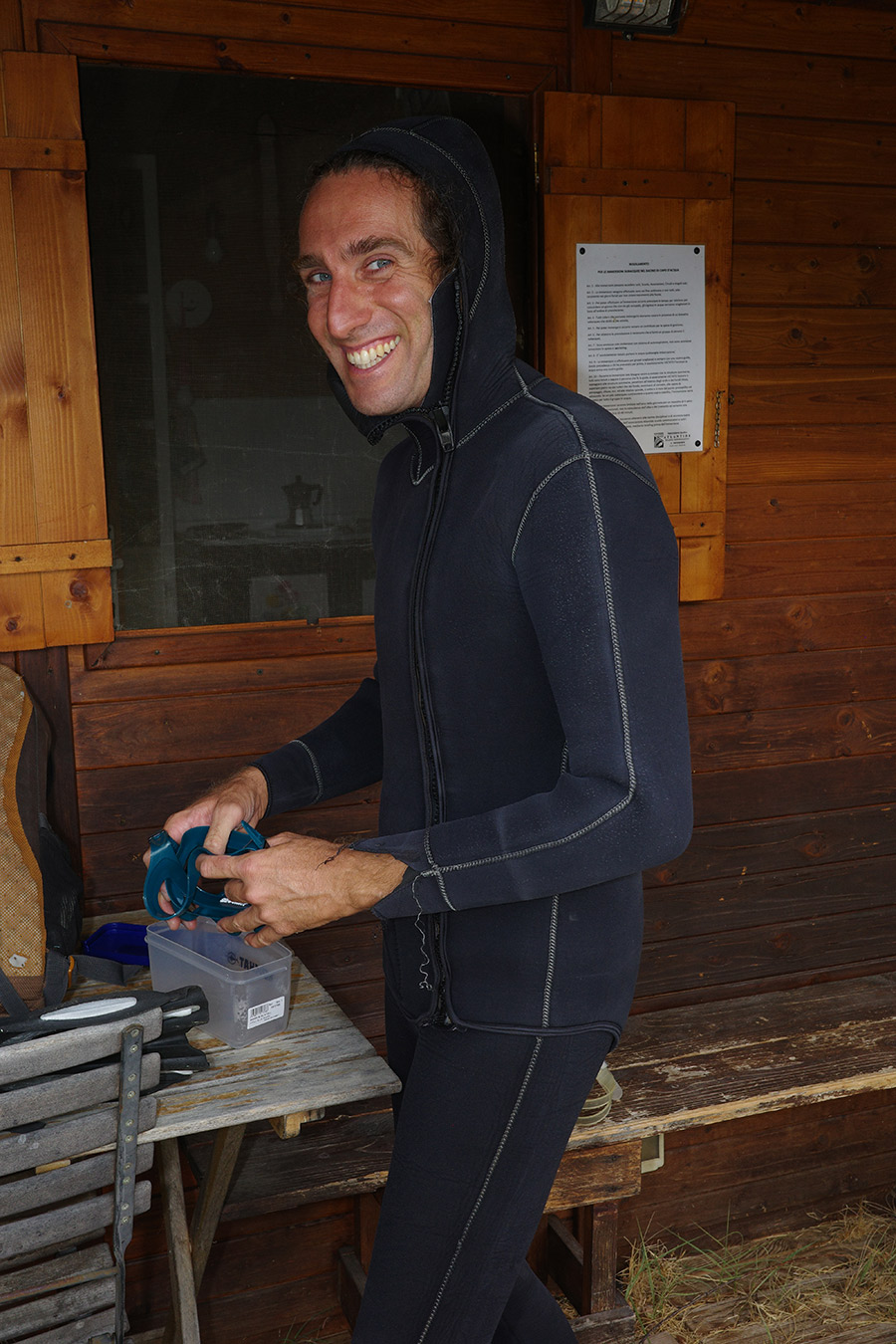
It’s not a Christmas tree that land artist /underwater nature artist Gola Hundun puts up in these photos and video. It looks strikingly alien in this crystal clear new home, but he is jubilant nonetheless. Beneath the tranquil surface of Capodacqua Lake in Capestrano, Italy, his remarkable fusion of art and nature unfolds.
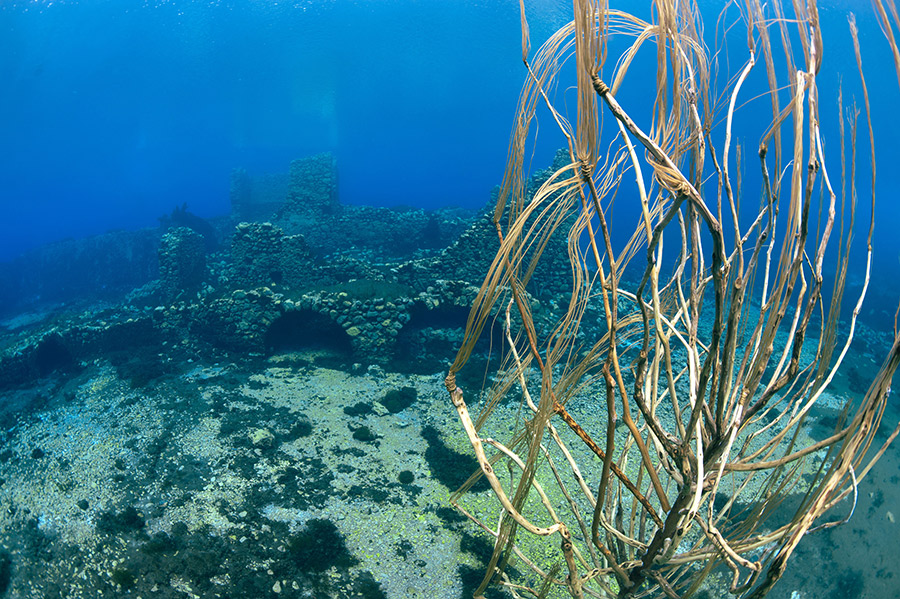
“Stele del Grano,” looks like a visionary underwater installation by an innovative land artist, transforming the submerged ruins of a mill into a canvas for an ethereal narrative. This project, a harmonious blend of history and imagination, offers a unique lens through which to view the ever-evolving relationship between human activity and the natural world.
“Stele del Grano” is more than an art installation, says Gola; it visually explores the Tirino Valley’s terramorphic history. The artist chose grain as the central motif, a symbol deeply rooted in the valley’s transformation from a wooded haven to a granary of the Papal States. The project weaves a tale of nature’s resilience and human impact, from the Bronze Age settlements to the modern-day artificial reservoir, echoing the mythic stories of lost civilizations like Atlantis.
The Artistic Process and Installation
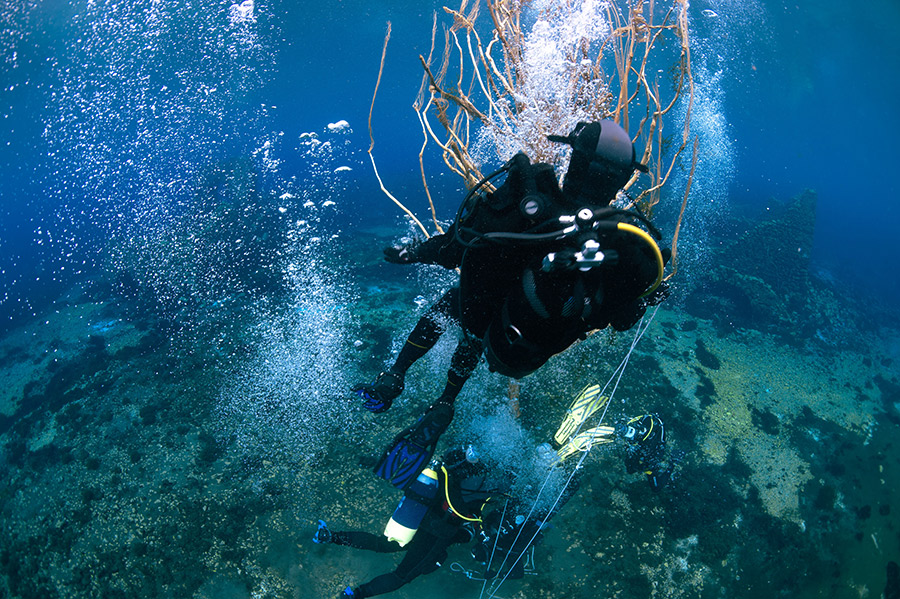
The physical manifestation of the “Stele del Grano” is crafted from branches and ropes to create a structure that mimics an ear of wheat that has morphed into an anemone-like water plant. It’s a deliberate juxtaposition, an alien yet mimetic presence amid the mill ruins and submerged trees. The installation required the synchronized efforts of numerous divers and assistants, who meticulously worked underwater to anchor this symbolic representation of change and continuity.
A part of the artist’s larger “Habitat” project, an ongoing exploration since 2018, the installation “Habitat” delves into structures built for human needs, now reclaimed by nature. This project contemplates spaces that, though altered, continue to serve as homes for diverse life forms. “Stele del Grano,” in its underwater realm, becomes a visual dialogue about the Anthropocene era, raising questions about the human footprint and nature’s adaptability.
The artist’s intention with “Stele del Grano” goes beyond mere visual impact. It’s an invitation to reflect on the dynamic and sometimes tumultuous relationship between human actions and nature’s responses. Through this underwater installation, the artist hopes to inspire viewers to contemplate the coexistence of human and natural worlds, imagining a future where balance and respect define our interactions with the environment.
While “Stele del Grano” may seem a world away from the vibrant immediacy of street art, its core resonates with similar themes of expression, freedom, and environmental commentary. Just as street art captures the pulse of urban landscapes, this underwater installation encapsulates the essence of a natural yet human-influenced environment. It’s bold: an act of free will and art-making that speaks to the enduring power of artistic expression – and its ability to ignite conversation and evoke some sense of wonder.
BSA: We always say that “nature will take over” again. We’ve actually seen this happen during our lifetime when man-made catastrophes occur, such as the Chernobyl explosion in Ukraine and most recently, during the lockdowns due to the COVID-19 pandemic. In both cases, human presence outdoors ceased, and wildlife took over. Plants and animals reclaimed what was once theirs. Tell us more about your interest in this subject. How did you become so immersed in abandoned man-made structures and their inextricable relationship with nature, and what makes you feel so connected with the past, with history?
GH: Let’s say that for me, more than a connection to history, these places propose a future vision that fascinates me, a near future in which man no longer exists but survives through his vestiges and constructs scattered over the territory that has in the meantime assumed a new hybrid form that mixed the rational line with the forms of generative chaos of non-human nature. I consider these abandoned ruins reclaimed by nature as true Temples of Rebirth.
These places in my view are always shrouded in a great romantic fascination and have a disturbing effect on my psyche, on the one hand they tease a hoped-for revenge of the rest of nature on the anthropocene on the other they stage the smashing of our species generating a short-circuit in my anti-speciesist but human brain. My interest in this kind of place was born in me at the end of the last decade. In 2018 I began the first experiments by making ephemeral gold-colored interventions inside the investigated ruins as Ready-Mades and already perfect. Still, through the gold (symbol of sacred nature), I allowed myself to emphasize the inherent creative process. Following several actions, the research took the name of Abitare first and later Habitat.
Habitat Project is conceived as an ethological and metaphysical research about buildings originally built for human needs, neglected and eventually recolonized by new living beings (plants, animals, fungus, lichens) that may convert space and shape but not the concept of space to inhabit.
Neglected buildings all over the world need to be converted or rather demolished.
Most of the time, these operations take time and money. As a result, Nature gradually reclaims what it used to own so that its space becomes populated by different living beings.
Habitatgoals are the investigation and study of this phenomenon, seen as a natural artistic process, aiming to show up a new life vision into the anthropic space by the end of the Anthropocene Era.
Its research starts from a visual analysis, develops through artistic intervention, and keeps on with the spontaneous birth of new flora and fauna through time.
BSA: What lessons have you learned from closely observing this relationship?
GH: Nature is everything. Even on those ruins, nature is a struggle, cooperation, it is dualism it is multiple vision, it has no borders, it has no private property, it is generated by multiple physical and consciousness levels one within the other. And if even before Scala Naturae was written much of humanity was already convinced that it was on a higher plane of existence and separate from the rest of living forms, natural reality admits of no objection the human being is part of nature so it can be said absurdly that the concrete walls it builds, are nature, although I myself would tend to say otherwise. .. one can say that plastic is also a part of nature, because it comes from petroleum i.e. microorganisms putrefied billions of years ago, and that is perhaps why other microorganisms today have adapted to eat it. Obviously these statements are provocations of a simplistic flavor the balance of nature in the form we know it is something very fragile. The very definition of nature is something controversial, quoting Norberto Bobbio: “Unfortunately, Nature is one of the most ambiguous terms one is given to come across in the history of philosophy.”
What I want to say is that what I have realized with this research is that the point is not to try to define what is natural and what is artifact but to understand as a species that we have to start immediately to act feeling ourselves as part of nature and stop consuming virgin soil to abandon it cemented made sterile, mono functional, mono cultivated, stop acting as if we were on an inanimate planet, alone, where the rest of the form is a mere material at our disposal. Time, rhythm, perhaps these are elements that really make us diverge from the natural order, our internal time is no longer similar to that of nature but that of the productive logic of Industry and the machine, to that of capitalism.Acting taking into consideration that everything is connected, as was done in ancestral cultures around the world, our main problem is Capitalism.
BSA: For this last project, you went underwater. What surprised you from the experience?
GH: What fascinated me most was the opportunity to learn about and study the upheavals suffered by the area where the lake now stands throughout history.
The contraposition between anthropic action and the action of the other nature have determined a history of incisive transformative movements, resulting in metamorphic peaks of great amplitude that have distorted the form and substance of Capodacqua on several occasions. For this reason, the structure made of branches and ropes that establishes an underwater dialogue with the mill ruins stems from the idea of an ear of wheat that has become something else, a sort of anemone/water plant, precisely to speak of the changing identity of that place. An alien element to the underwater landscape but at the same time mimetic in that it dialogues with other trees trapped under the water, dating back to the period before the dam.
Grain is chosen as the narrative element and guiding thread of the metamorphosis of the area. In fact, while in ancient times the place examined was a wooded valley in which a spring gushed from the underground basin of the Gran Sasso and from there flowed into the Tirino river across the valley, during the Bronze Age the area was already populated by small rural communities and at the source of the river a village arose that contributed to the foundation of Capestrano in Roman times.
Thus began the agricultural colonisation of the area; as we know, gramineae are among the first plants domesticated by mankind and even then they were the main crops. In the Middle Ages, the area was converted into a granary for the Papal States, thus becoming a sort of wheat monoculture; the mills dating from around 1100 AD, now sunk to the bottom of the lake, bear witness to this historical phase, but at that time they exploited the course of the river to grind the wheat from the surrounding fields.
In 1965, a dam was built to interrupt the natural course of the stream with the main purpose of generating an artificial reservoir to irrigate the wheat fields. On that occasion, the mills were submerged in the water, thus generating a unique natural/anthropic hybrid landscape that leaves one fantasizing about the myth of Atlantis, of course to have the opportunity to dive in such place mesmerised me compleatly.
After centuries of human exploitation, nature regained possession of the area, which became an important resting place for the routes of migratory avifauna and a habitat for various types of lake and underwater plants, as well as for the many amphitopes.
BSA: In the video we see beautiful flora on the bed of the lake, but surprisingly few fish. We were also surprised by how clear the water was. Do you think that policies put in place saved the lake?
GH: The clarity of the water is guaranteed by the fact that the lake rises near the surfacing of an underground river (Tirino) that flows for kilometers underground from its source located inside Mount Gran Sasso one of the highest elevations in Italy. This spring water gushes very cold and flowing underground maintains a constant year-round temperature of 8 degrees and is filtered by the underground rocks, characteristics that make the lake water so magnificently transparent. In fact, Lake Capodacqua is a popular destination for divers from all over the world also because it contains those suggestive mills. As I mentioned earlier, the lake was generated by Humans although certainly not for zoo-philanthropy but for utilitarian purposes, actually between the 1980s and 1990s a new human incidence will lead to the extinction of the endemic crayfish that colonised the lake caused by overfishing and the dust pouring in from the Gran Sasso tunnel. Another human incidence will be the introduction of brown trouts first and three pikes later, which will cause the decimation of the trouts and harass the avian fauna. Finally, Capestrano municipality will decide to kill the pikes by local fishermen, the last one was killed in 2007. Today, the lake has become an area of Naturalistic Interest and part of the Gran Sasso e Monti della Laga National Park, and wild species are returning hopefully to repopulate the lake.
Gola Hundun’s. Stele del Grano (Wheat Stele) project at Capodacqua Lake in Capestrano, Italy is part of HABITAT the artist’s ongoing series about human-made structures, architecture, and their relationship with nature and space. Click HERE, HERE, HERE, HERE, HERE, AND HERE to learn more about HABITAT.
Martin Whatson, a Norwegian stencil artist born in 1984, has carved out a distinctive niche in the contemporary and street art worlds. His journey from street art to international acclaim is a narrative of artistic evolution and the versatility of visual language. This book, written by art dealer and curator Eva Marie Bentsen, offers a comprehensive look at Whatson’s career, from his early fascination with graffiti to his current status as a celebrated fine artist. His education at the Westerdals School of Communication in Oslo laid the groundwork for a unique blend of graphic design and urban art, defining his approach to art-making.
Early Works and Influences
The initial sections of the book explore Whatson’s early period, where his experimentation with graffiti styles and stencil art began to shape his artistic voice. These early works reveal a developing style, marked by influences from notable artists like DOLK and Banksy. During this time, Whatson started to refine his distinct blend of political themes and aesthetic appeal.
Studio Canvases and Style Development
Readers can observe Whatson’s transition from outdoor walls to studio canvases through the book. You see highlights of his exploration of urban landscapes and decay, an ongoing theme in his work and part of the lingua franca of street artists worldwide. His artistic expression, once more heavily political, has evolved into a subtler form, still retaining some of its original edge. The featured studio works exemplify this shift, demonstrating his signature combination of urban elements with a more poetic narrative. The book showcases his venture into sculpture, which allows readers to see how his themes translate into three-dimensional forms, often reflecting his familiar motifs.
Collaborations and Diverse Artistic Dialogues
The book’s concluding section focuses on Whatson’s collaborations, highlighting his interest and ability to merge his artistic vision with that of others. These joint projects, featuring a diverse range of artists, illustrate Whatson’s adaptability and his commitment to the communal spirit of street art. with a wide audience, transcending traditional boundaries of street and fine art.
This is an insightful look into Martin Whatson’s artistic journey, showcasing how he has navigated the realms of street and fine art with his authenticity – an informative resource for those interested in the intersections of modern art, street art, and the dynamic process of artistic evolution.
The book is an overview of his career thus far. You may be familiar with him here because he has been a trusty recurring participant in the Nuart Festival, championed by Stavanger curator and art dealer Martyn Reed for a decade – exposing his work to an international art press and collection of academics, writers, fans, etc. This has contributed to his success and name recognition in certain circles.
MARTIN WHATSON: INSIDEOUTSIDER. Pitch Forlag. Norway.
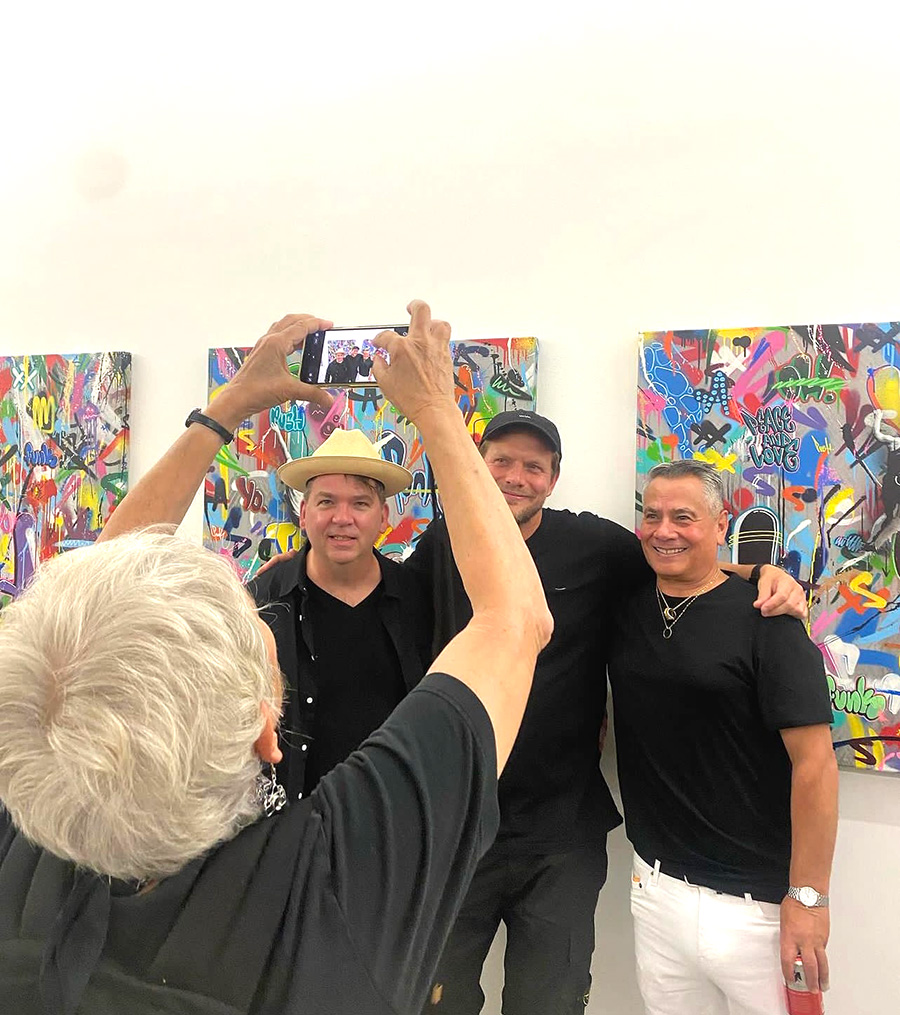
Great to see everyone last night at the Museum of Graffiti for the book launch of Mana Public Arts. Somehow, the guest list ballooned, and suddenly, we needed half a football field to fit everyone in. Right next door, the Hip Hop 50 museum had a breaking (break-dancing) expo, and the museum was broadcasting a live podcast in their glass booth for passersby to watch, and @0h10mike was walking through the museum doing one-line portraits so the streets on the periphery were very crowded. The energy at Art Basel this year waxes and wanes; rather excited, subdued, and tense, perhaps because everyone is talking about the wars, the economy, plastic surgery, the soulless co-branding of the grassroots graffiti/street art movement, the persistence of the man bun, and the political polarization that grips the country and much of the world. Nonetheless, the wide variety of artists and artworks on the street in Miami is still exceptional, the party scene at night is still pumping, and Martha still loves her margaritas.
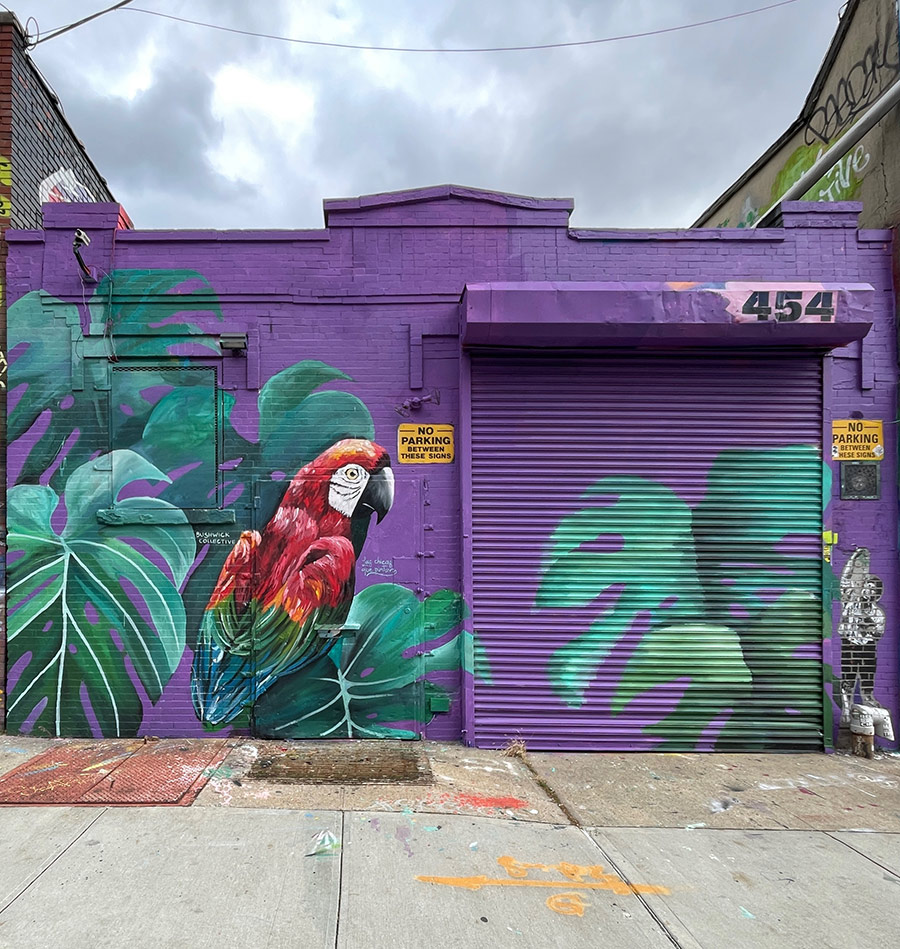
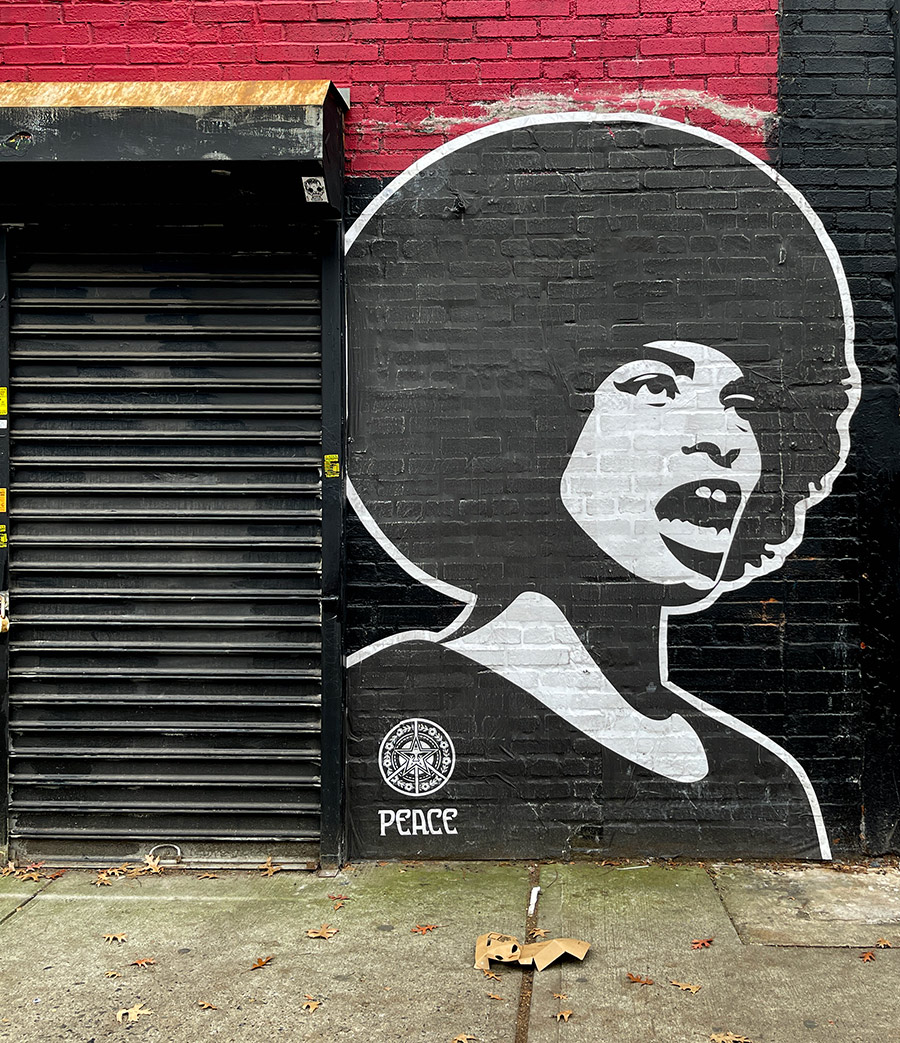
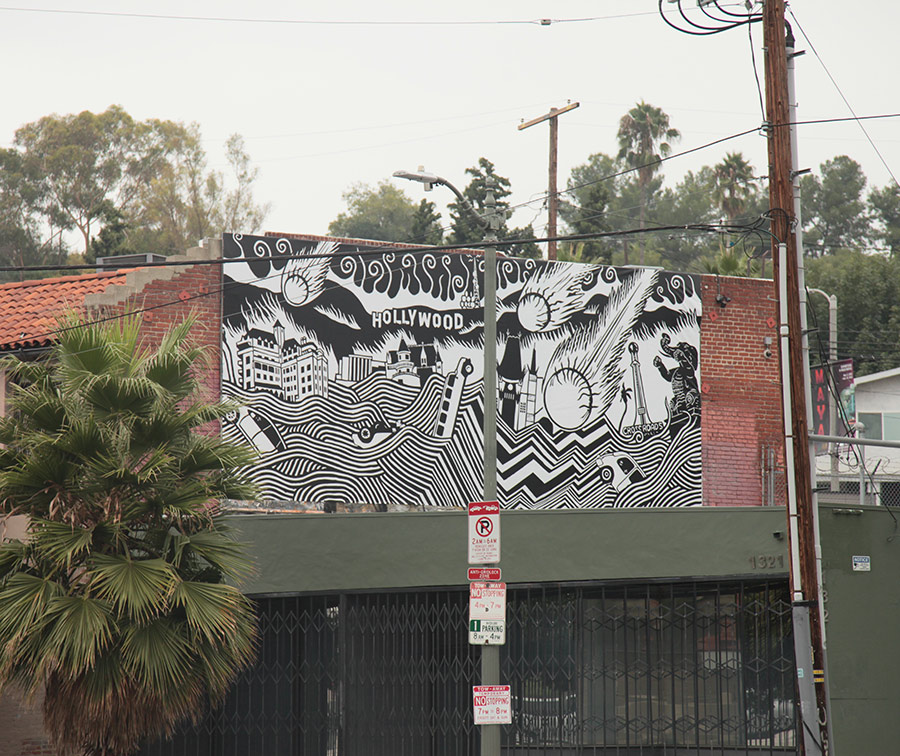
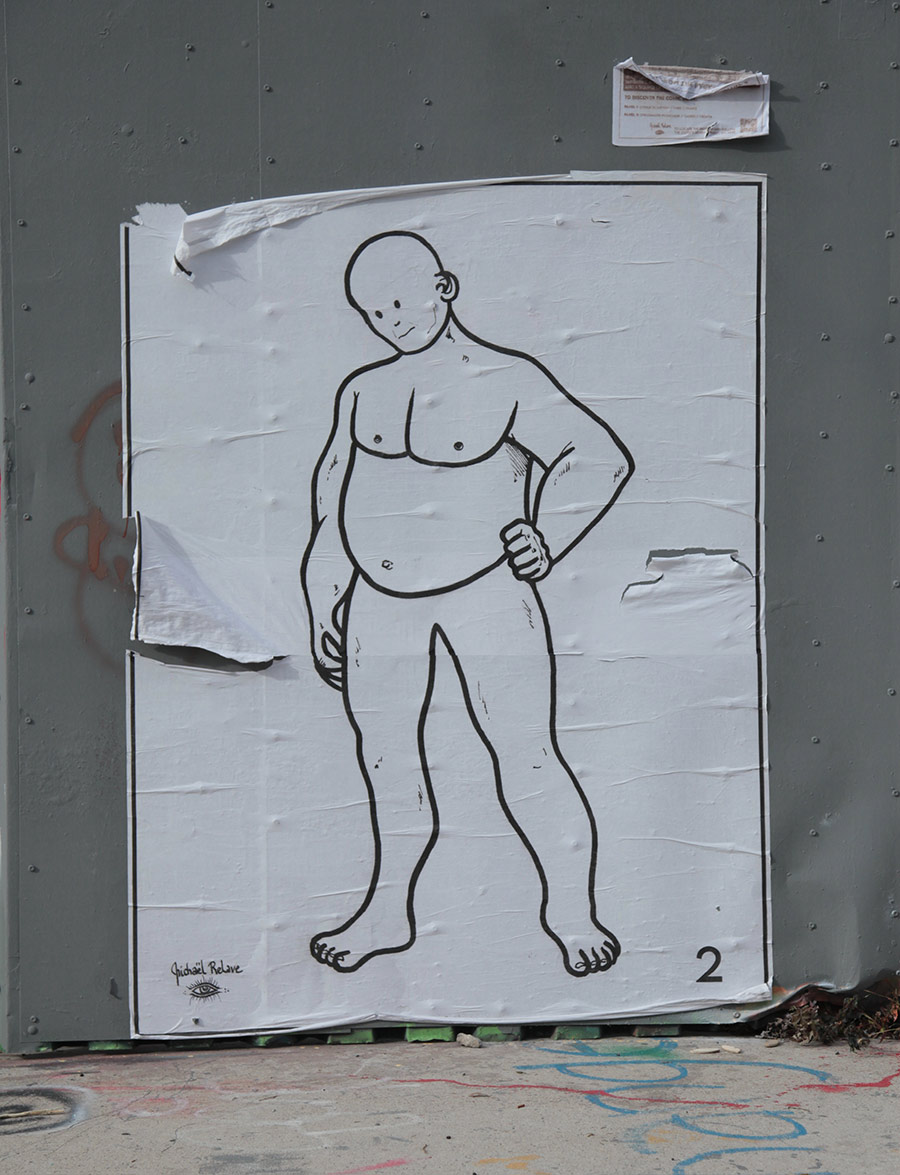
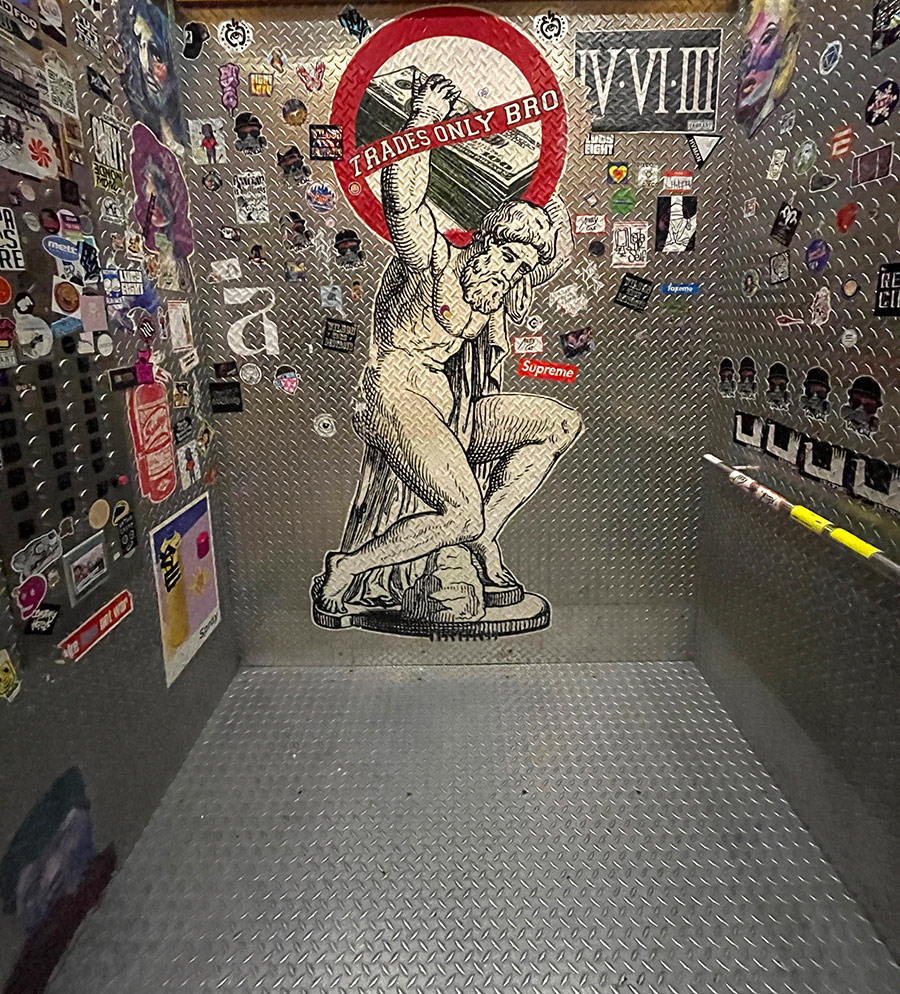
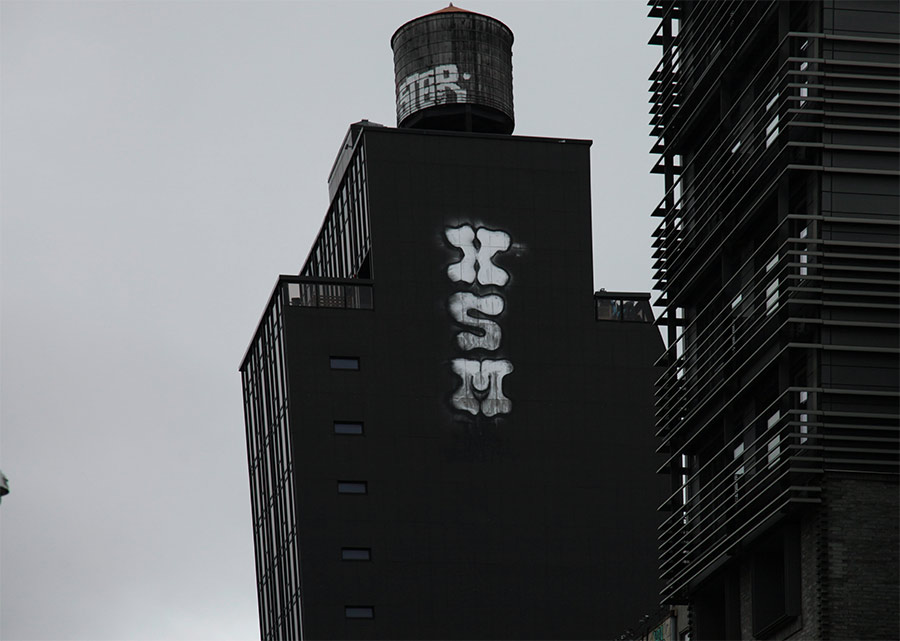
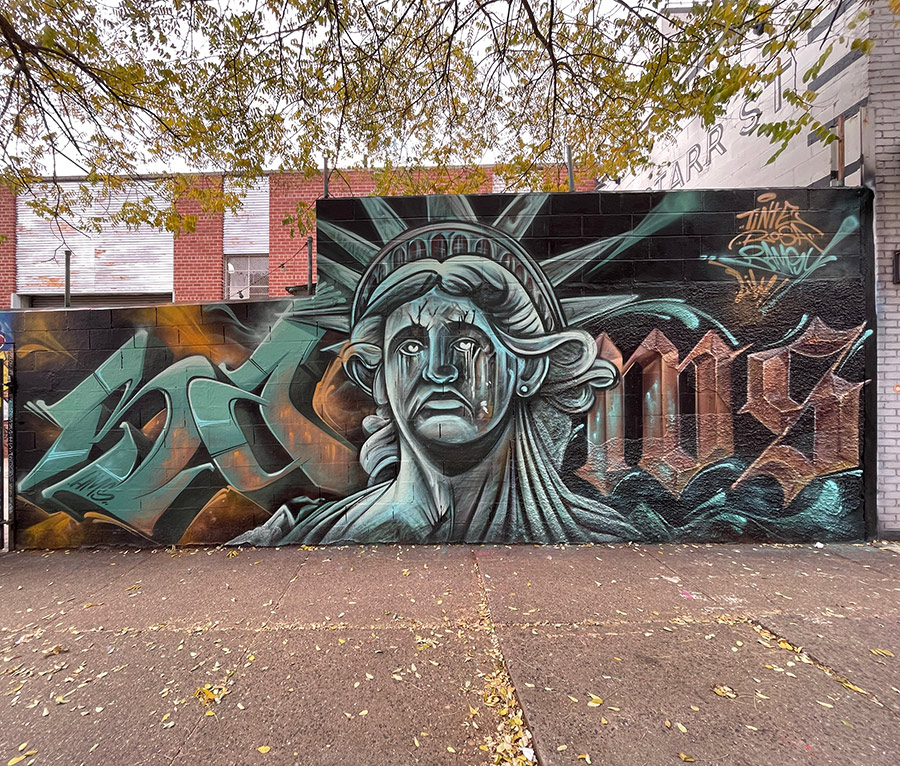
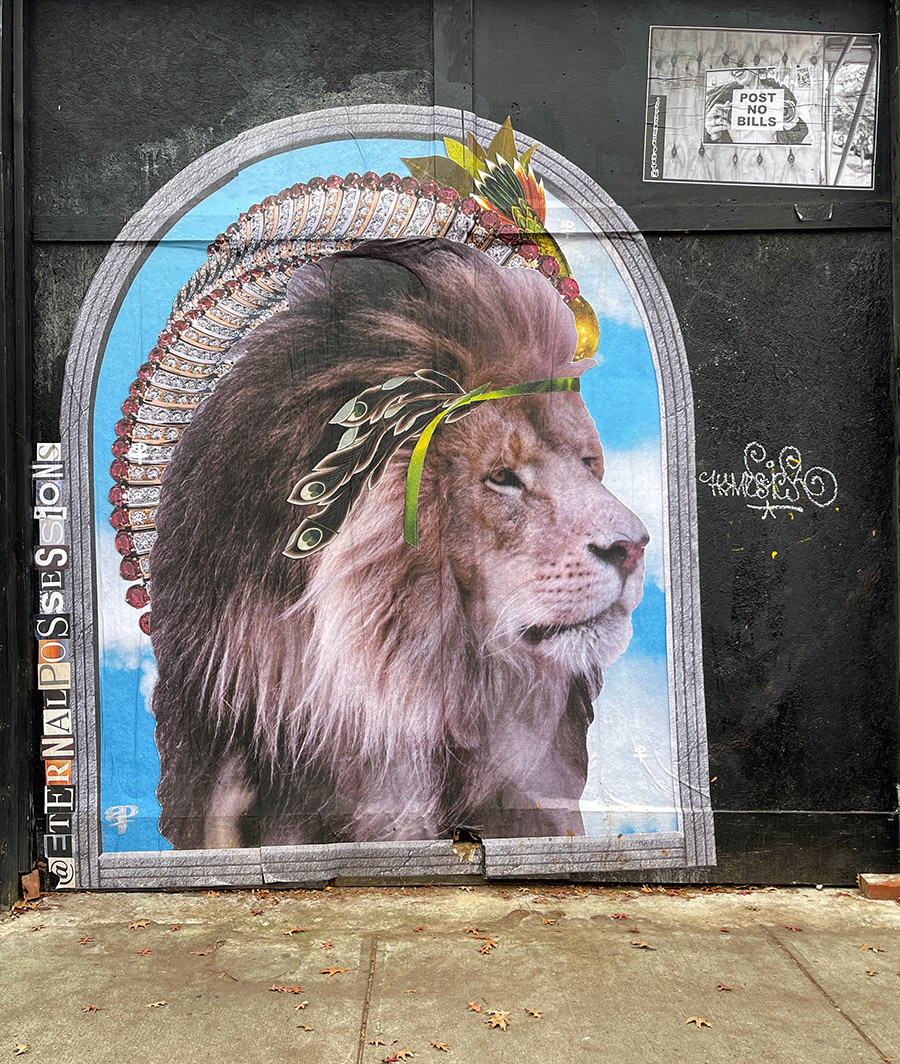
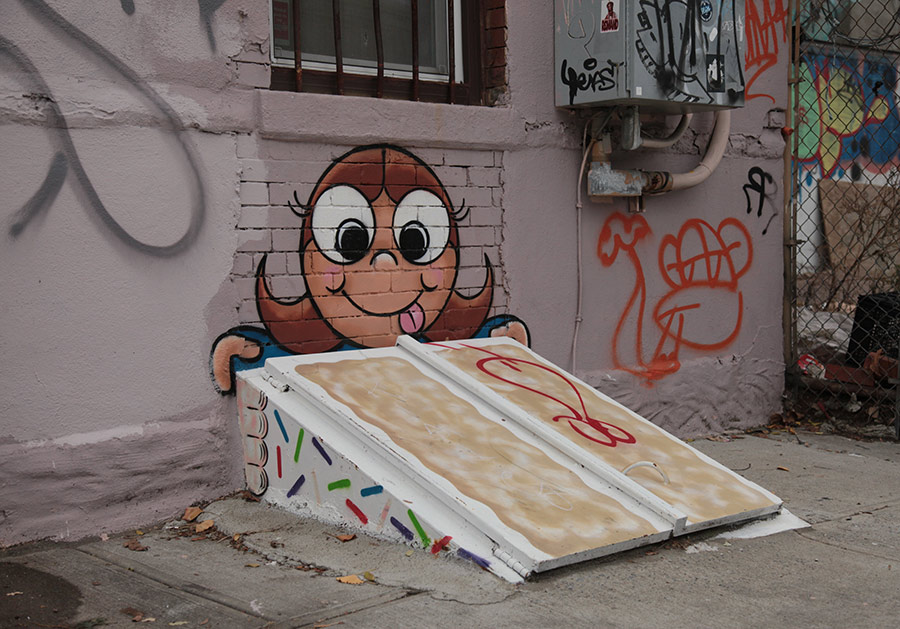
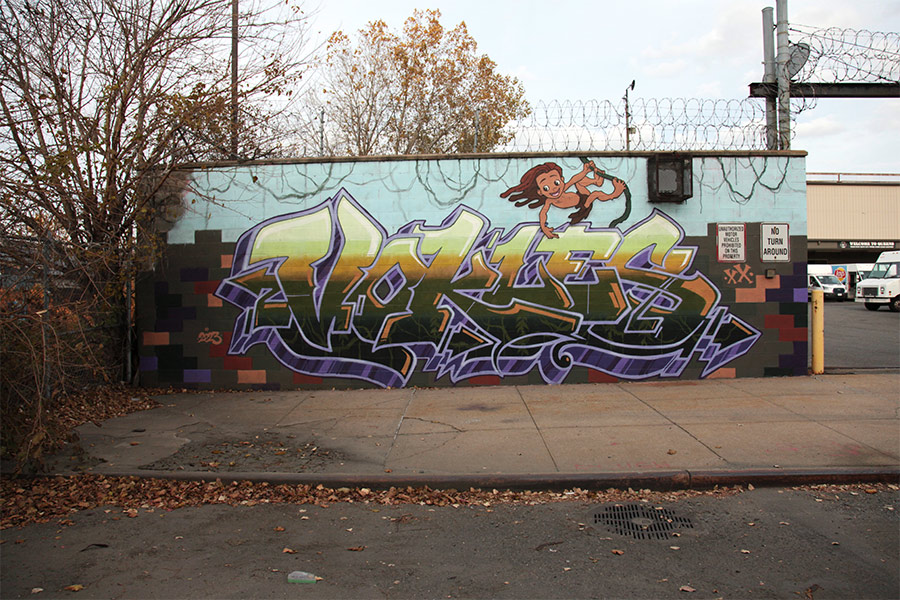
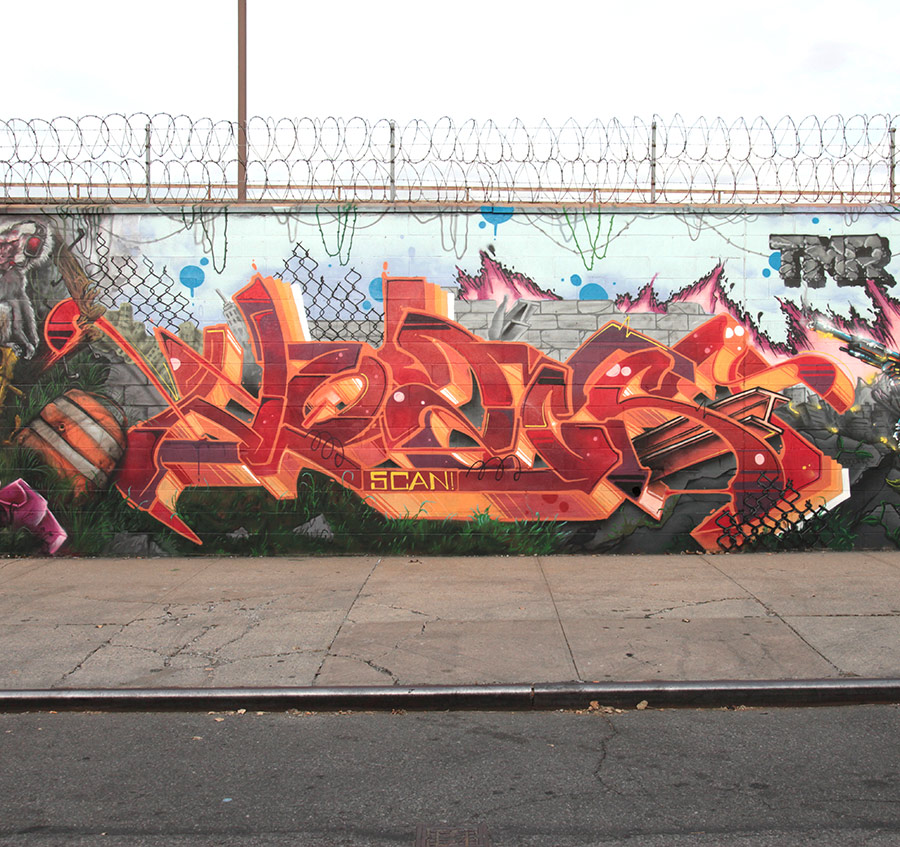
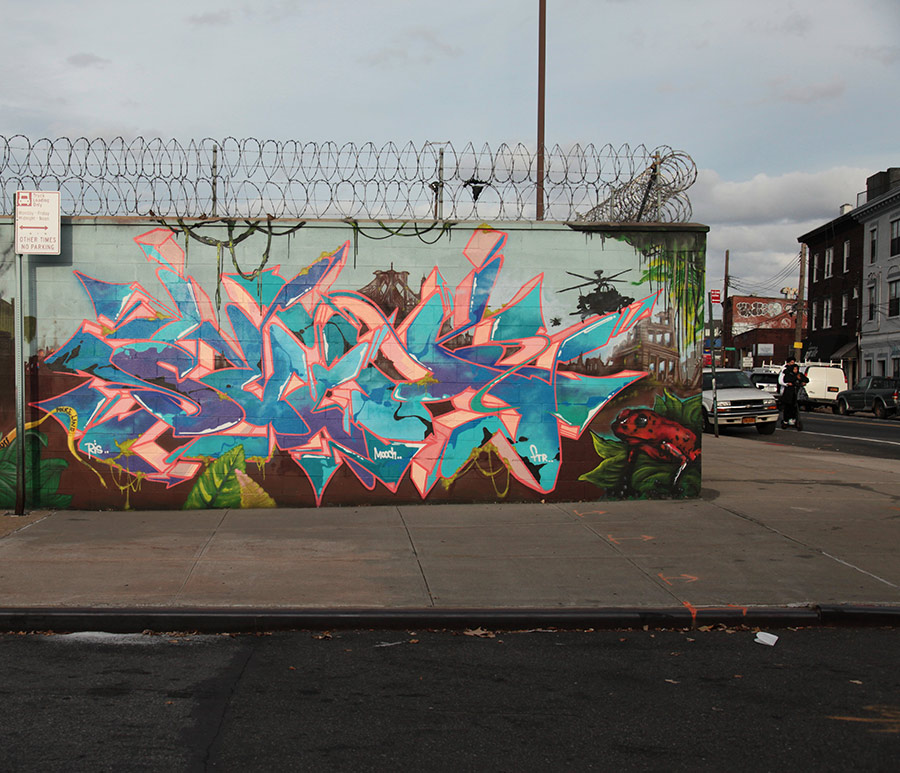
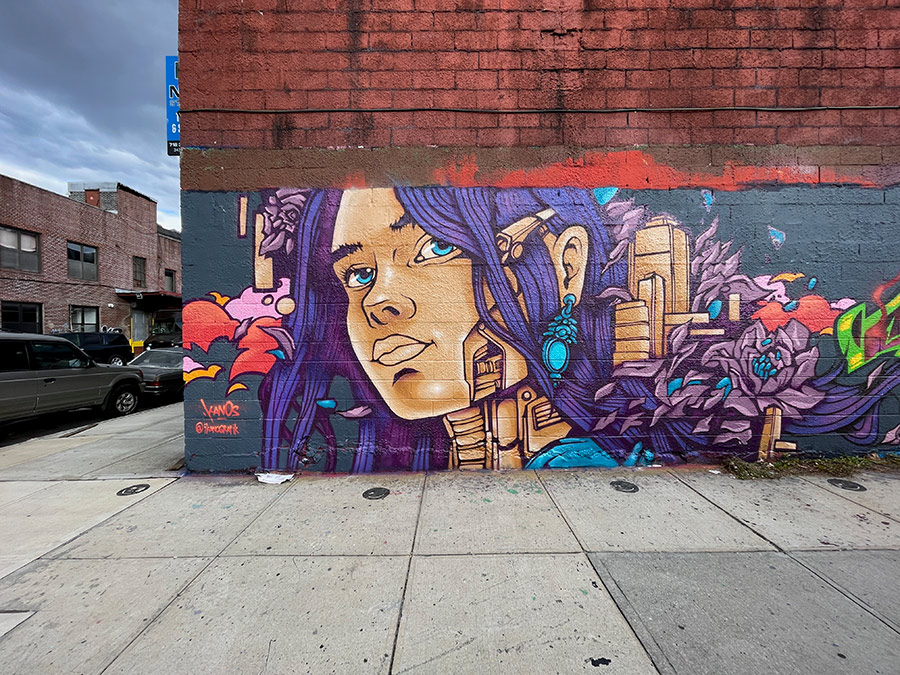
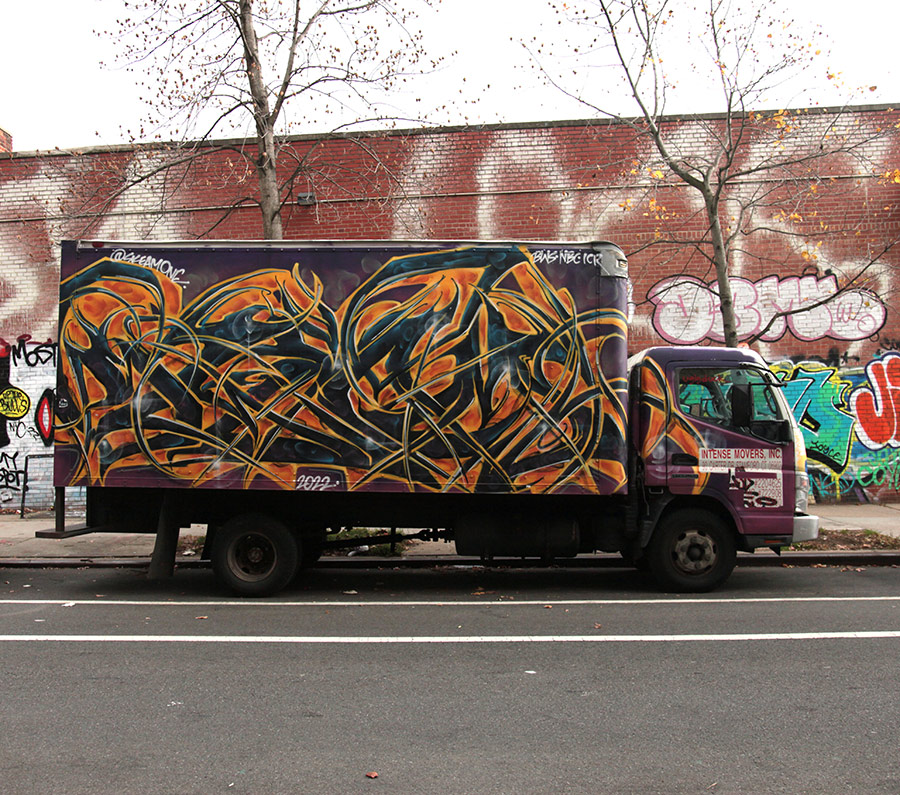
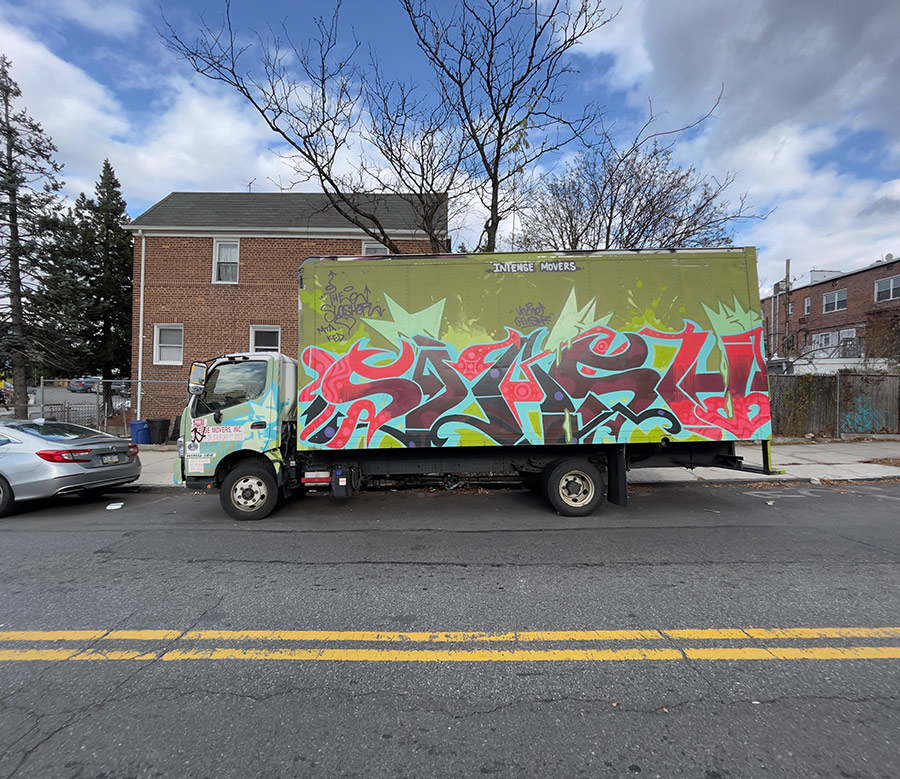
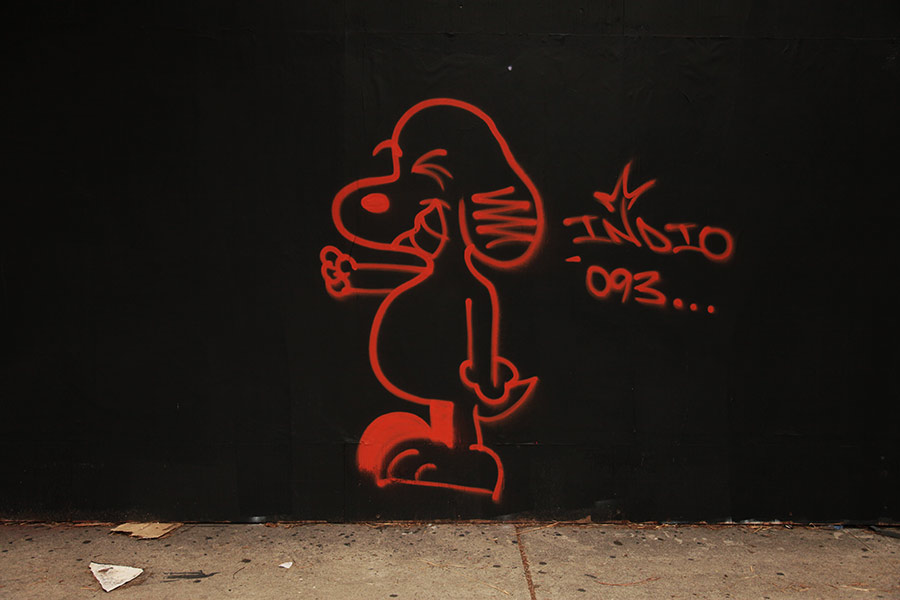
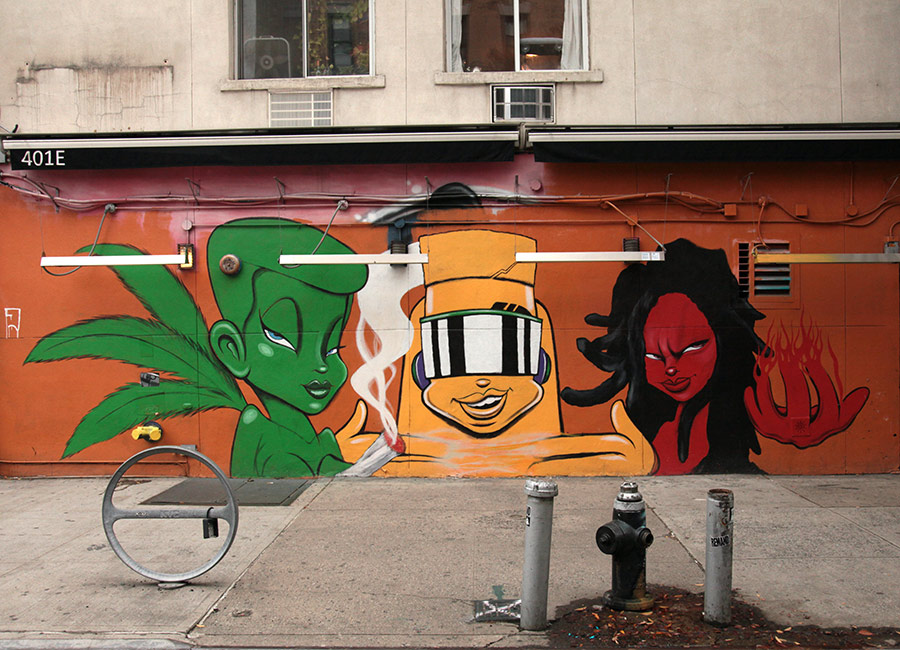
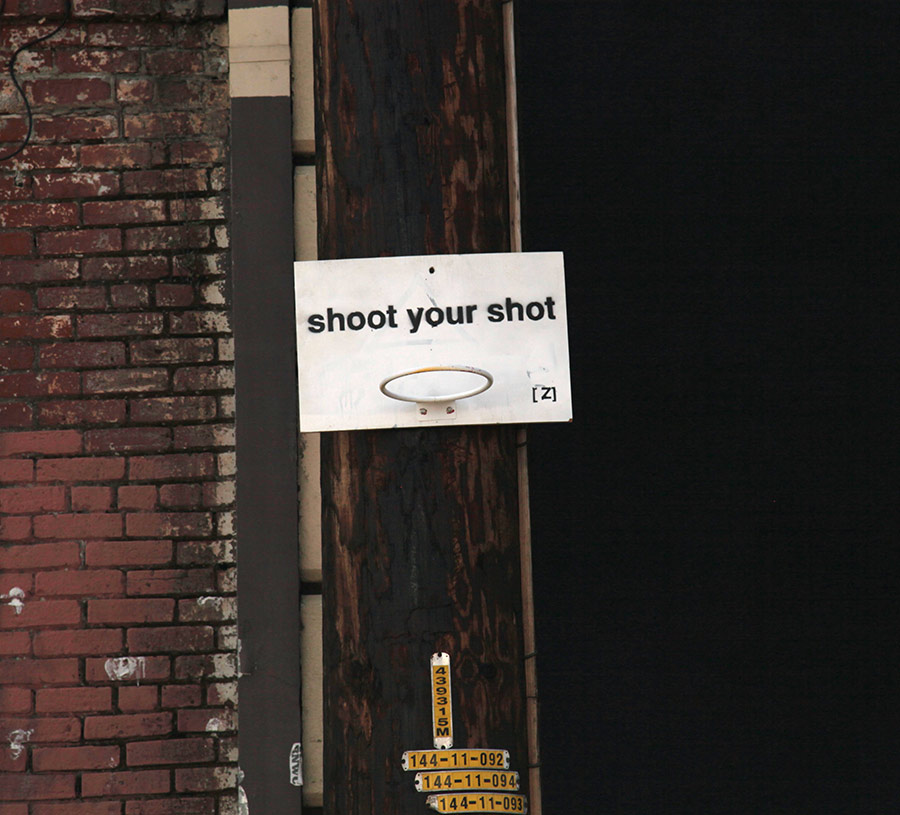
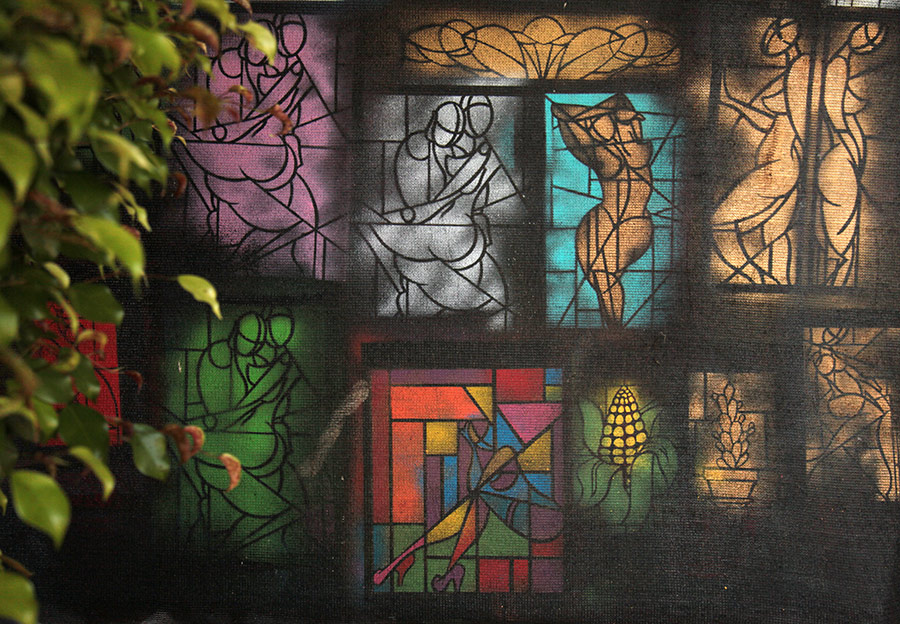
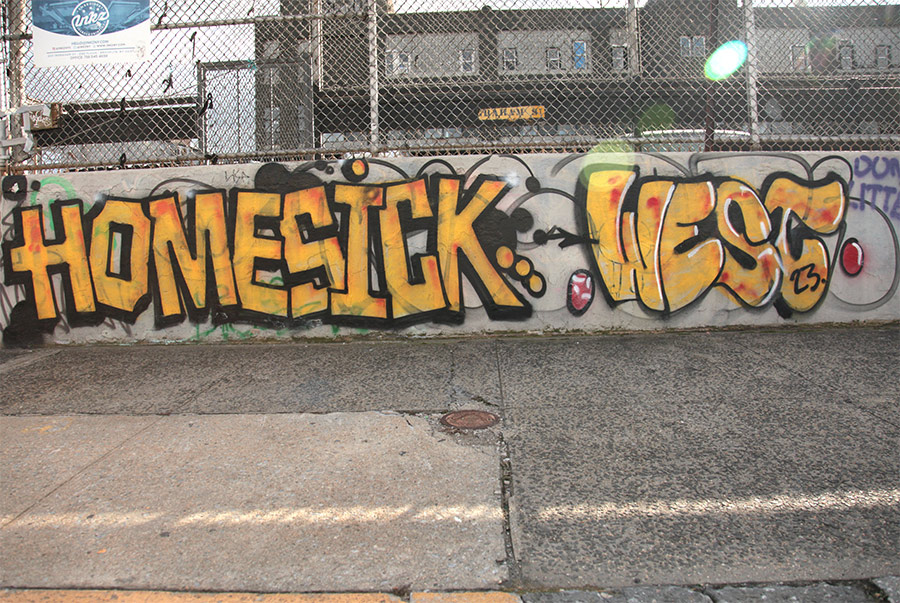
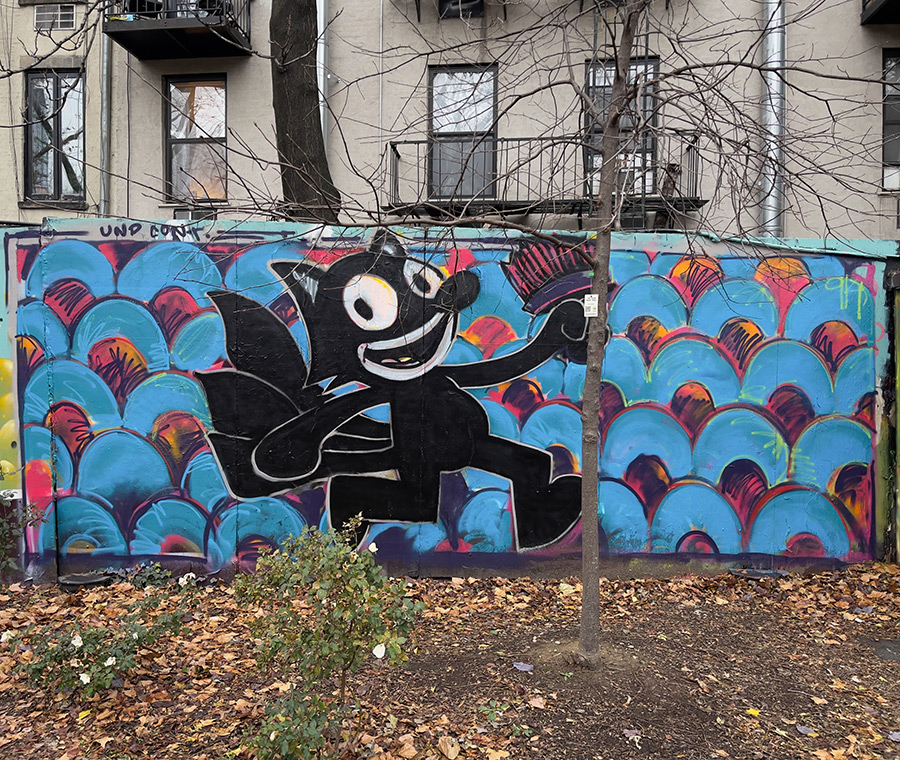
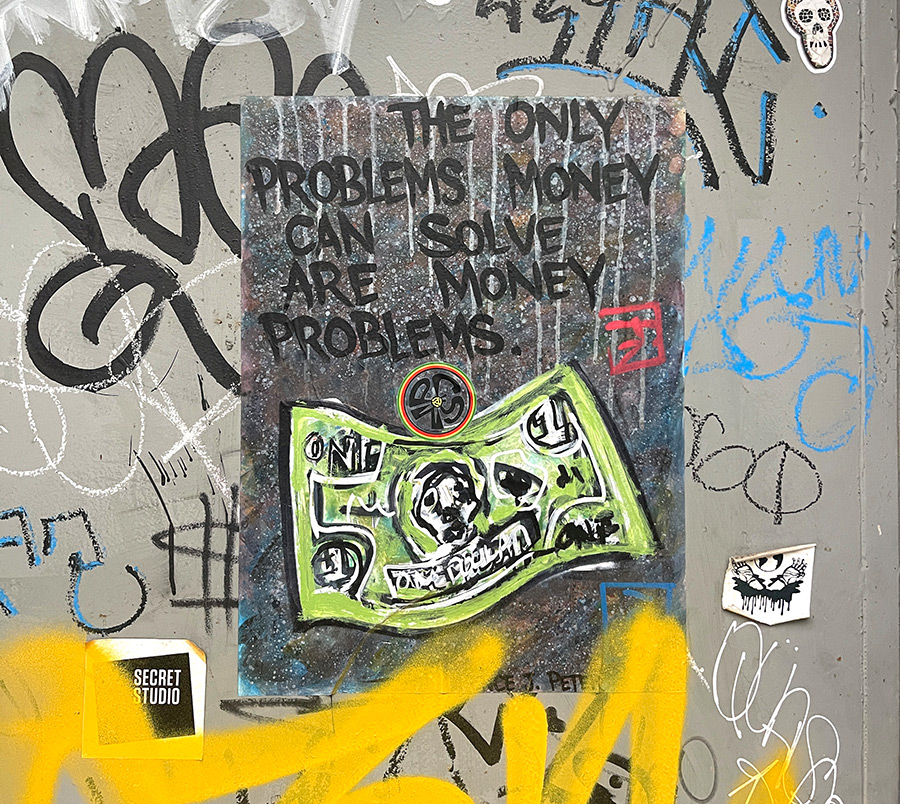
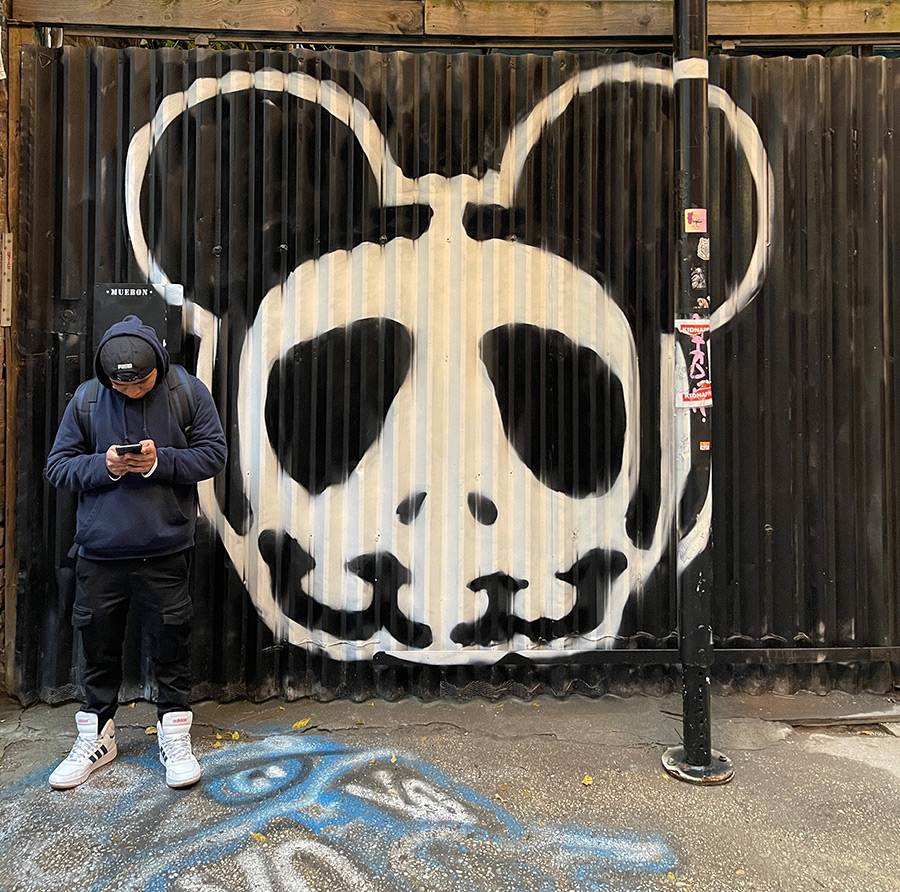
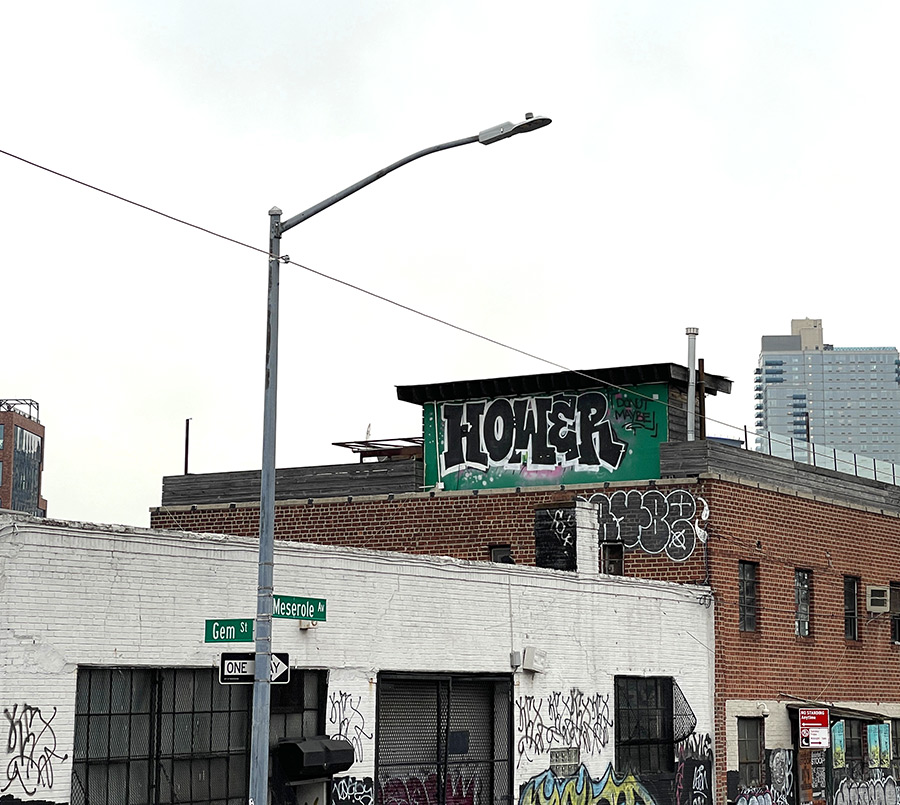
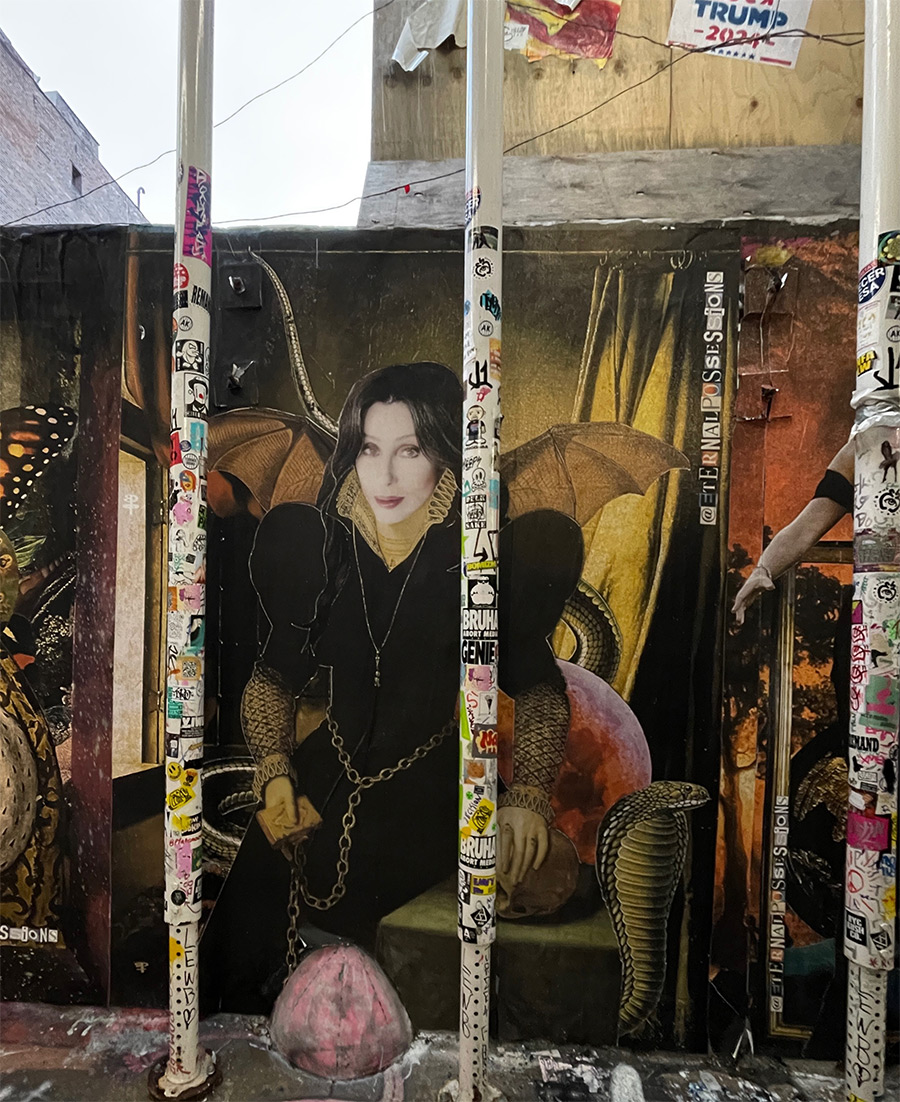
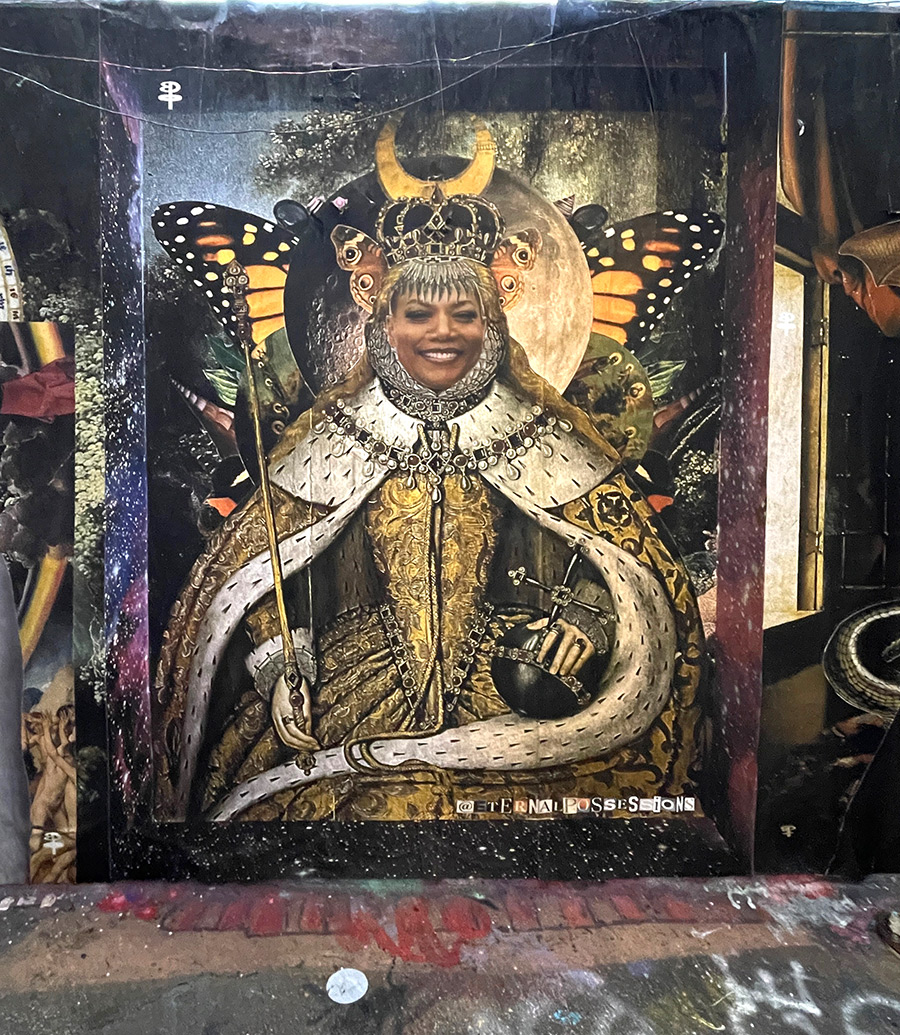
Here is our weekly interview with the street – a collection from New York, LA, and a little Miami- more Miami to follow: this week featuring Homesick, HOACS, Eternal Possessions, Such, Stanley Donwood, XSM, Tom Boy NYC, Trades only Bro, Slasher, Skeam, Kanos, Vokles, Tinta Rosa, Michael Relave, Las Chicas Que Pintan, and Indo 093.
Mana Public Arts (MPA), a privately-funded real estate program supporting public art, announces the launch of a new book this Saturday at the Museum of Graffiti. The book captures the diversity and vibrancy of street murals by internationally acclaimed artists in two U.S. cities where MPA operates – Miami and Jersey City, New Jersey. Spanning over 300 pages, the book showcases a range of graffiti, street art, and mural works supported and presented by MPA over the past decade, reflecting their dedication to enhancing communities through public art.
This book is a collaborative effort between Kurt Boone and Daniel Sacks, melding Boone’s renowned talent as an author and street photographer with Sacks’ expertise in art business and performance art. The graphic design by Josefina Modeste is both clean and open, accompanying a multi-faceted visual narrative of the streets that is presented throughout the book.
Essays from four notable figures in the street art and graffiti world provide a deeper understanding of the evolution and changing nature of the graffiti/street art/mural art scenes in Miami and Jersey City, as well as context and educational insight into the program. Contributors include cultural critic Carlo McCormick, Brooklyn Street Art’s Steven P. Harrington, Museum of Graffiti’s Alan Ket, and UP Magazine’s T.K. Mills.
Saturno. Mana. Wynwood, Miami. 2019
Established in 2014, MPA is an offshoot of Mana Contemporary Arts Center. The mural program says that it is devoted to creating large-scale, site-specific installations by artists worldwide. Mana aims to reinvigorate neighborhoods, celebrate cultural diversity, foster empathy, offer educational opportunities, initiate dialogue, and amplify marginalized voices.
Book Launch Event at the Museum of Graffiti
Join us for the book launch event on December 9th at the Museum of Graffiti in Miami’s Wynwood District, from 5:00 to 7:00 PM. The evening will feature a panel discussion with esteemed art world figures such as Kurt Boone, Carlo McCormick, T.K. Mills, Jason Naylor, Risa Boogie, Hec1, Buff Monster, Steve Harrington, and moderator Daniel Sacks. If you’re interested in attending, please email cece@feinbergpr.com to be added to the guest list.
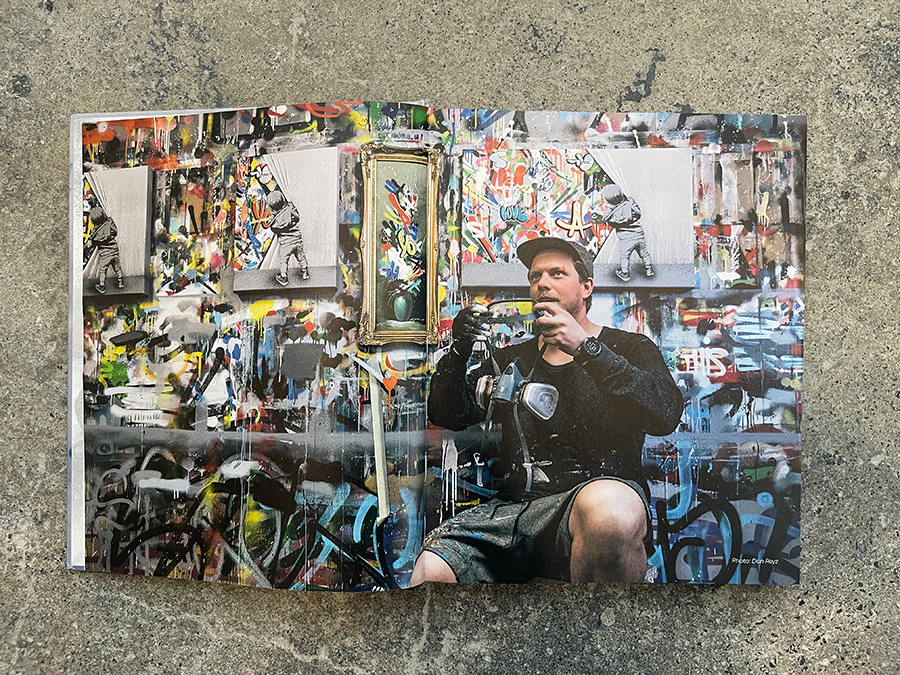
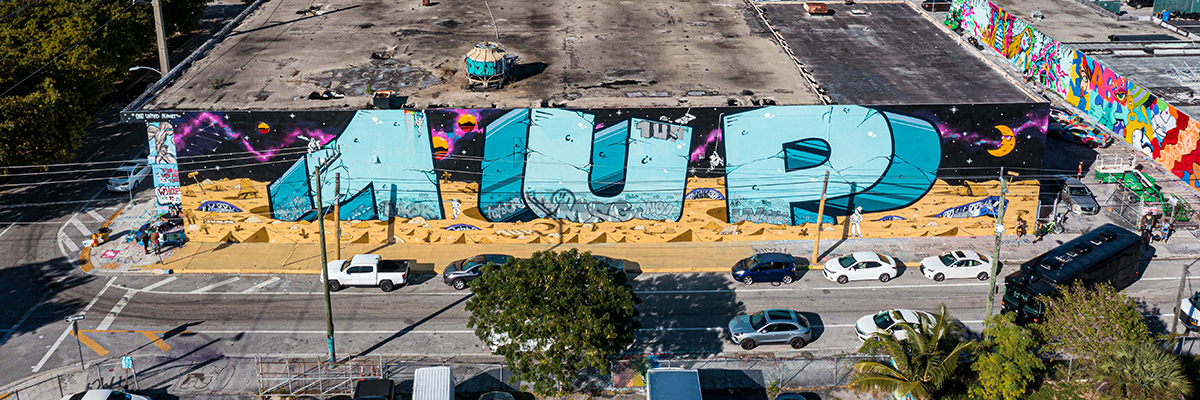
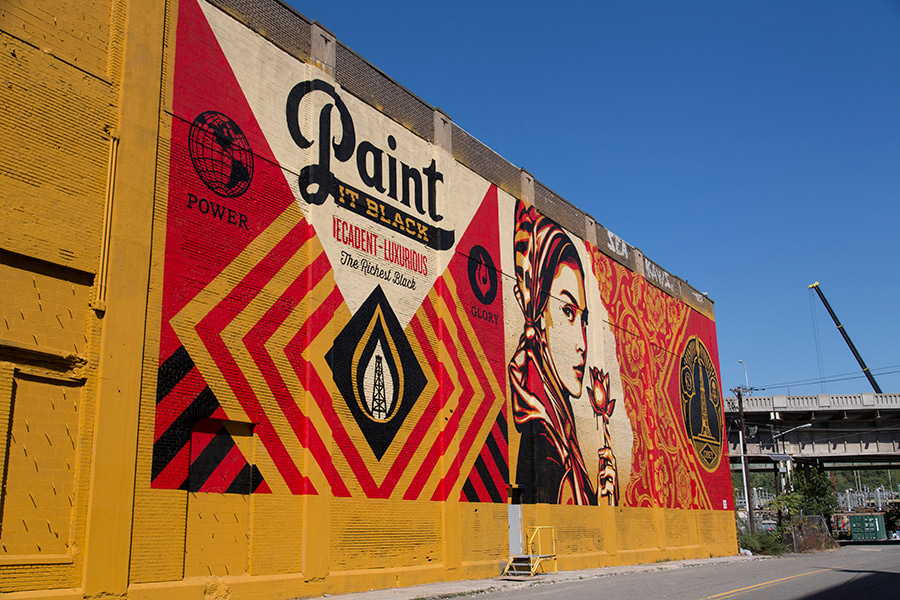
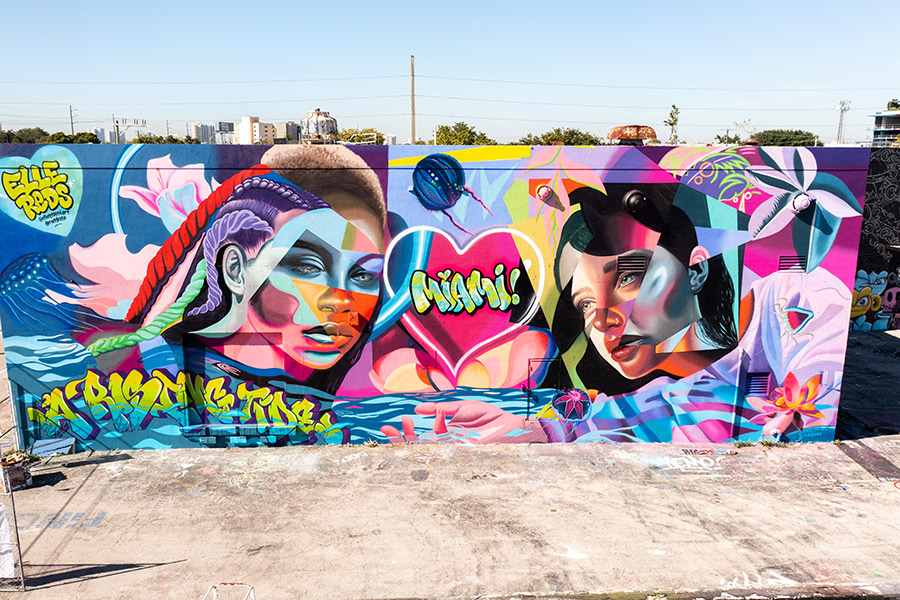
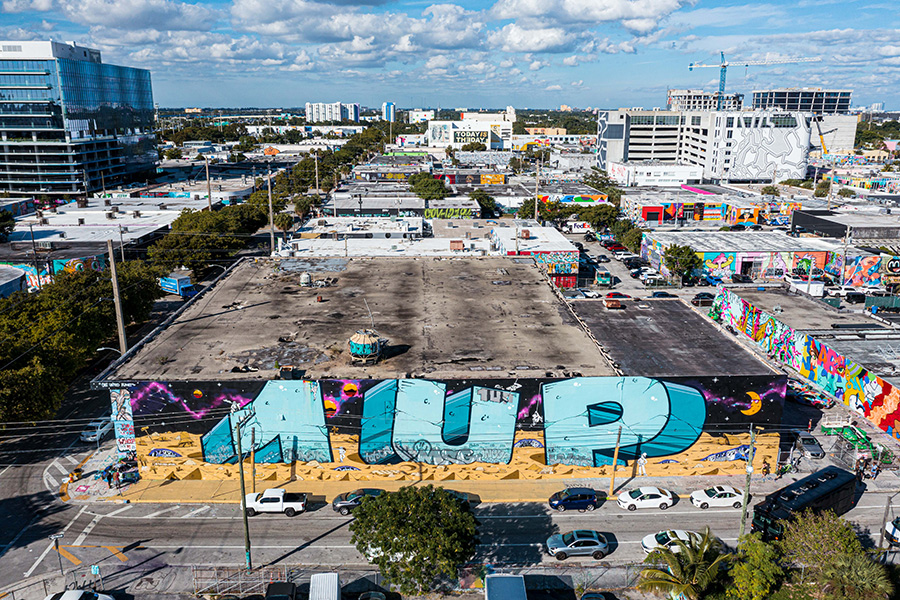
Several artists. Mana. RC Cola Factory. Wynwood, Miami. 2018Several artists. Mana. RC Cola Factory. Wynwood, Miami. 2018 Dragon77. Detail. Mana Jersey City Main Campus. Jersey City, New Jersey. Shepard Farey. Mana – The Ice Factory. New Jersey, 2015. (photo courtesy of Mana Public Art Works)Elle. Mana – Miami Mural Fest ’21. (photo courtesy of Mana Public Art Works)1UP Crew. Mana – Miami Mural Fest ’21. (photo courtesy of Mana Public Art Works)
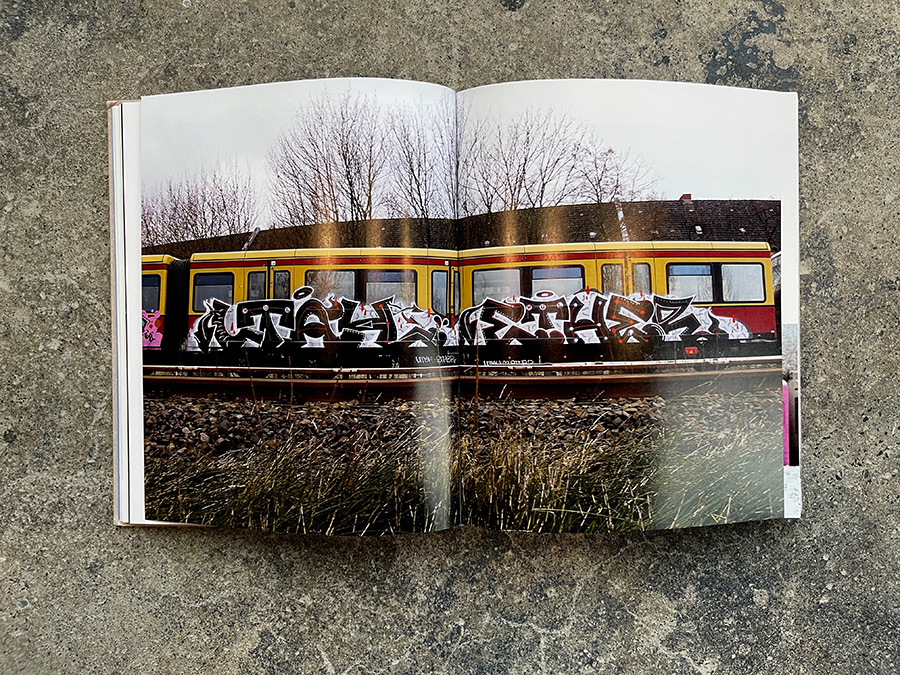
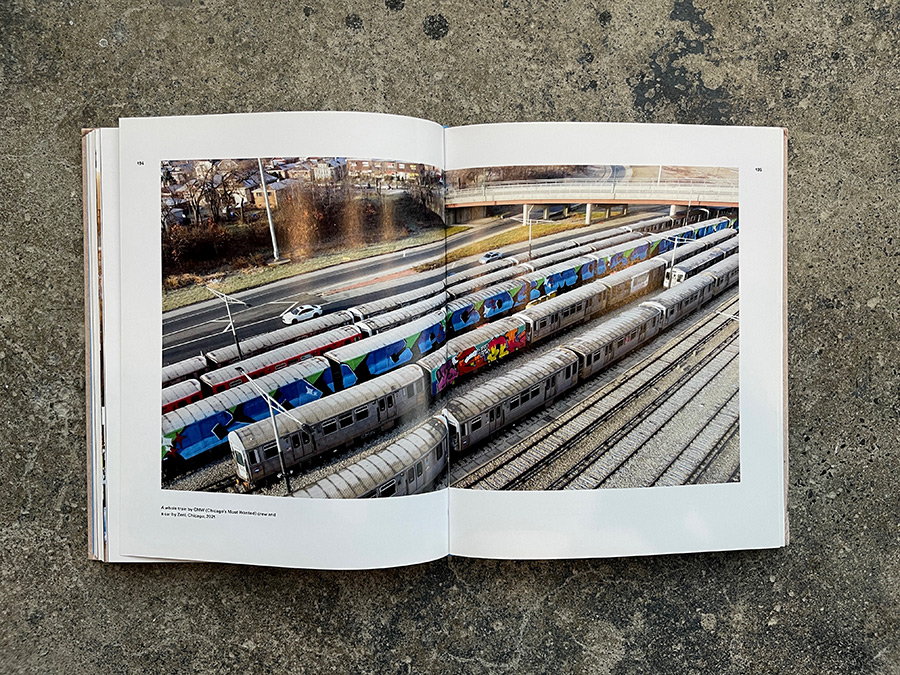
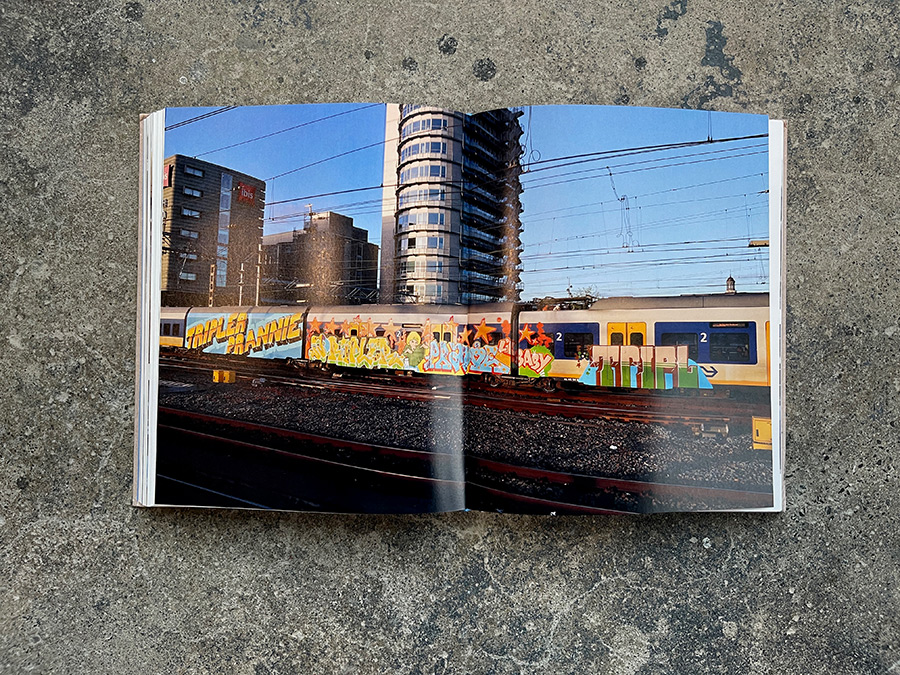
Graffiti artists often dismiss histories or narratives not of their own making, including those from their peers. This subculture, which has continuously evolved across different cities, time zones, decades, and languages over the past 60 years, is so rich in stories and counterstories that it might take another 30 years for the aerosol to clear and reveal the origins of these tales comprehensively. One unwavering truth prevails: if you weren’t there, in the same city, during the same era, didn’t grow up immersed in that urban environment, and weren’t marking the same train lines or recognized by local crews, your credibility is questioned, and the original graffiti artists (OGs) might disregard your story.
It’s meaningful when a book like “The Wide World of Graffiti” is authored by someone like Alan Ket, a native New Yorker from Williamsburg, Brooklyn, who has firsthand experience writing on city trains. As a self-proclaimed graffiti nerd, historian of the movement, and co-founder of the Miami-based Museum of Graffiti, Ket brings a unique blend of metaphorical depth and frank authenticity to his writing. He skillfully combines scholarly insight and sociological context in his narrative, spotlighting selected kings and queens of the streets to further illustrate in their words details of the scene’s evolution and his informed insights to provide context.
Ket’s narrative style, marked by its directness and subtle wit, weaves through a tumultuous and ever-changing graffiti landscape across decades and cities. He captures the art form’s evolution, acknowledging its virtuosos, acolytes, critics, observers, and new entrants. His account includes appreciation for various influences, direct and indirect, allowing each shift in graffiti’s style and color to add to the overall narrative’s vibrancy. Ket augments the text with a wealth of illustrative photographs, showcasing graffiti and its extended family in both street settings and galleries, offering a comprehensive and exhilarating journey through the graffiti world.
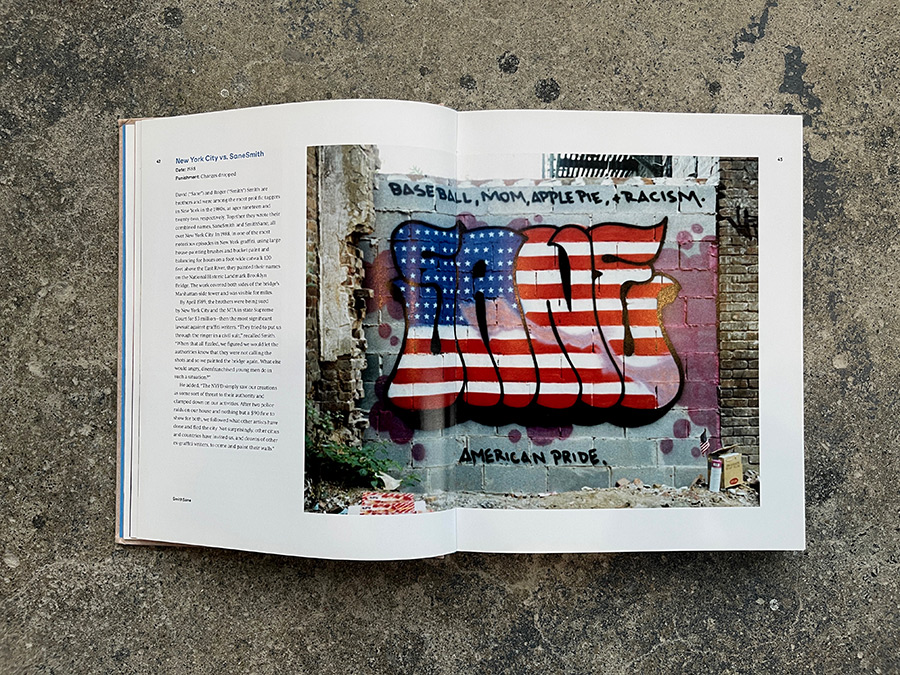
Featuring an introduction by the Brazilian graffiti brothers OSGEMEOS, along with engaging profiles and interviews with notable figures such as Sane from SaneSmith, Hotboy Hert, DESA, and Doze Green, Ket allows graffiti’s history to unfold naturally in its distinctive and sometimes idiosyncratic way, enlightening the reader by describing its pathways. He showcases the global surge of interest as expressed through contemporary styles. He gives a quick class on graffiti’s influence in various artistic mediums, including on canvas and in public murals. Ket presents key examples without reducing them to mere tokens, offering a platform for authentic voices like Rime, MadC, Nani Chacon, Saber, and Jan Kaláb to elucidate further. Despite their diverse styles, each artist is united by the important contributions of graffiti culture in their personal histories and their subsequent artistic practices.
Ket’s holistic approach is inclusive and comprehensive, acknowledging related subcultures such as tattooing, skateboarding, and hip hop, while maintaining the focus on the writing culture that crafted a visual language for a youth movement that would eventually gain global prominence.
It’s his personal characterizations that ground the reader in the genuine beginnings of the movement in late 1960s/early 1970s Philadelphia and New York. “Week after week, more and more teenagers joined in, creating aliases and then going out and writing their names on the walls,” Ket recalls, depicting the grassroots creative spark that spread across streets and onto the sides of moving trains. Citing nearly 1,600 arrests of youth for vandalism in New York in 1972, Ket portrays an urban tableau rife with chaos, hunger, aspiration, beauty, and irony, remarking, “Little did they know that their mischievous actions were birthing what is arguably the world’s most popular art movement.”
In Ket’s capable hands, these stories are not only preserved but also eloquently conveyed.
Alan Ket: The Wide World of Graffiti. Monacelli Press / Phaidon. New York, NY.
The Wide World of Graffiti can be purchased directly from the gift shop at the Museum of Graffiti HERE
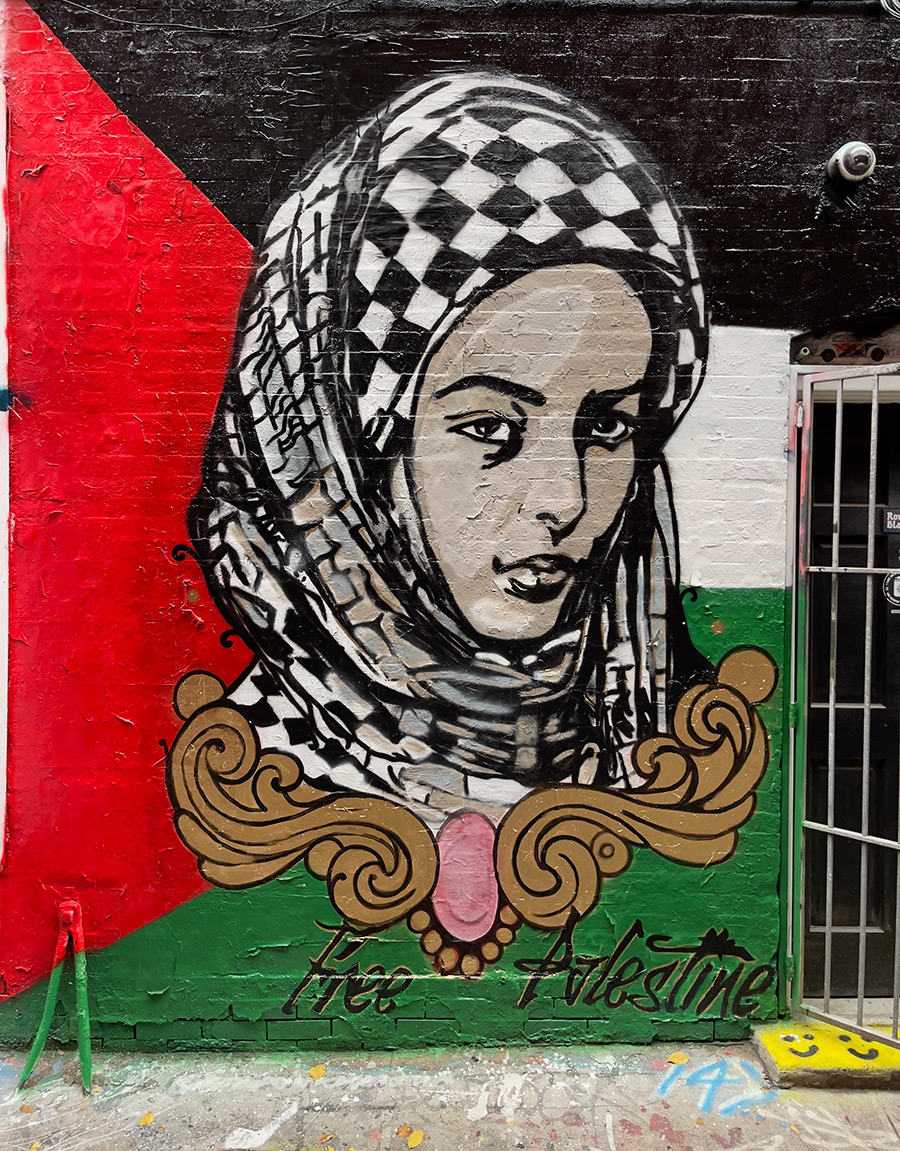
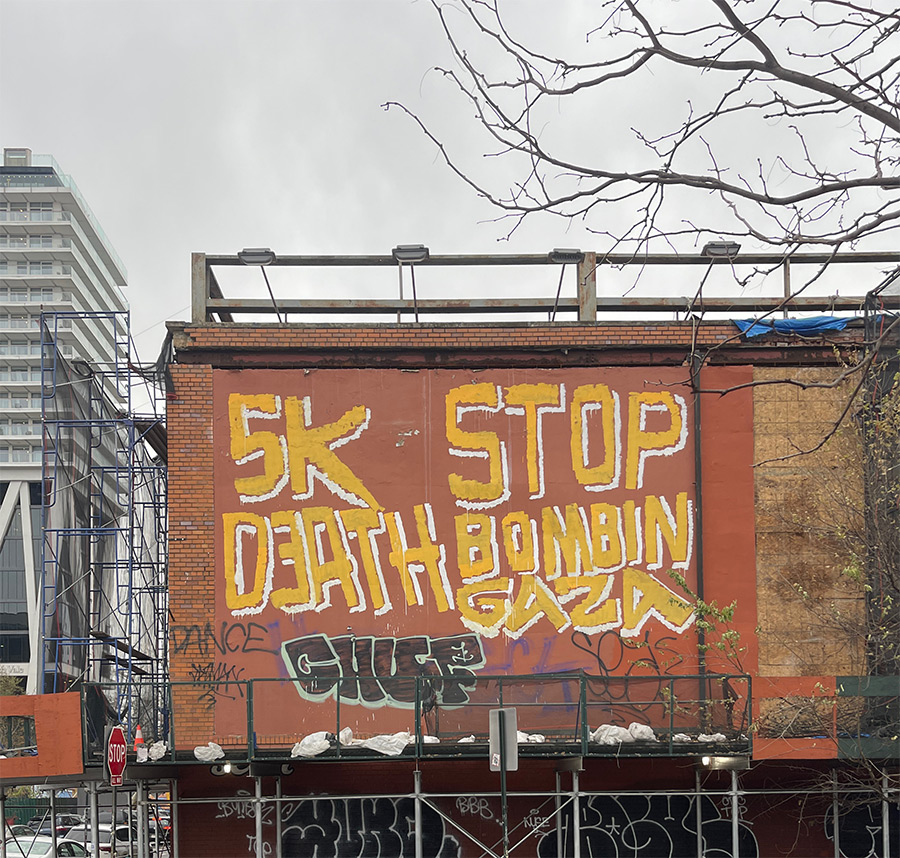
The war rages again in Gaza, and the street art in New York reflects the cultural response with more pieces every week. New York’s Fifth Avenue will be closed on three Sundays this month to allow more foot traffic to enjoy the holidays and avert car deaths now that the tree and skating rink are open at Rockefeller Center. Our esteemed New York politicians keep doing us proud this week, with George Santos getting expelled from Congress, and Trump being forced to face criminal charges like everyone else. We say goodbye to the first female Supreme Court Judge Sandra O’Connor, and to a person whom most of the world’s press contend was one of the biggest international war criminals responsible for millions of deaths, Henry Kissinger. Remarkable for some that Jimmy Carter outlived him.
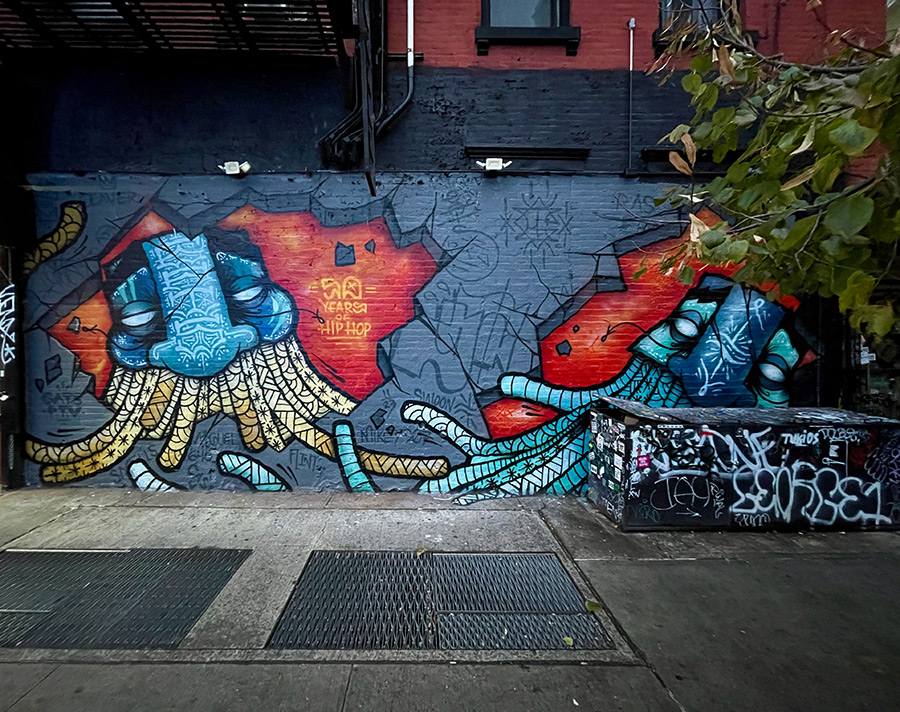
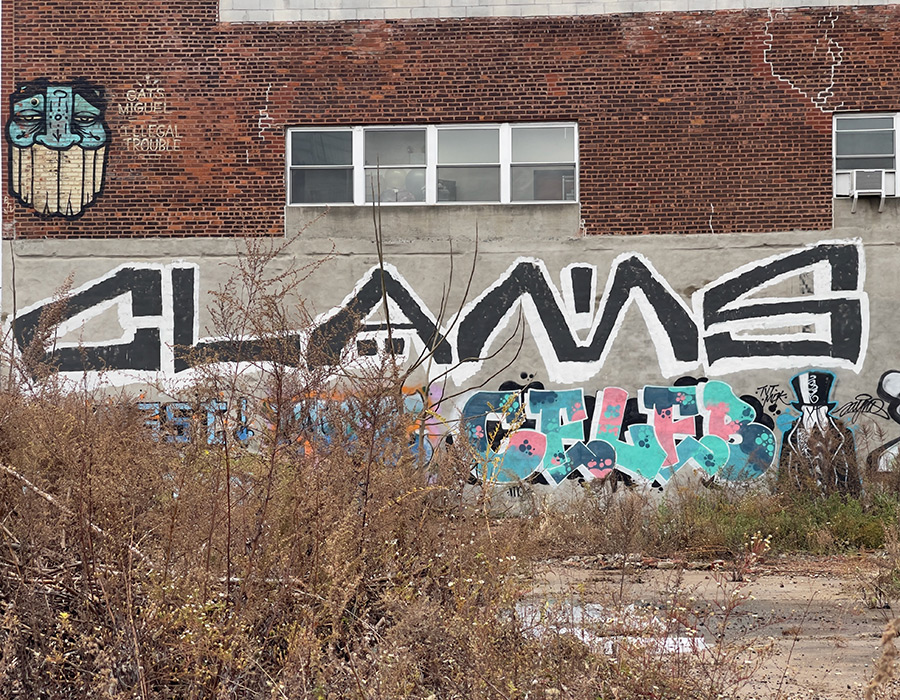
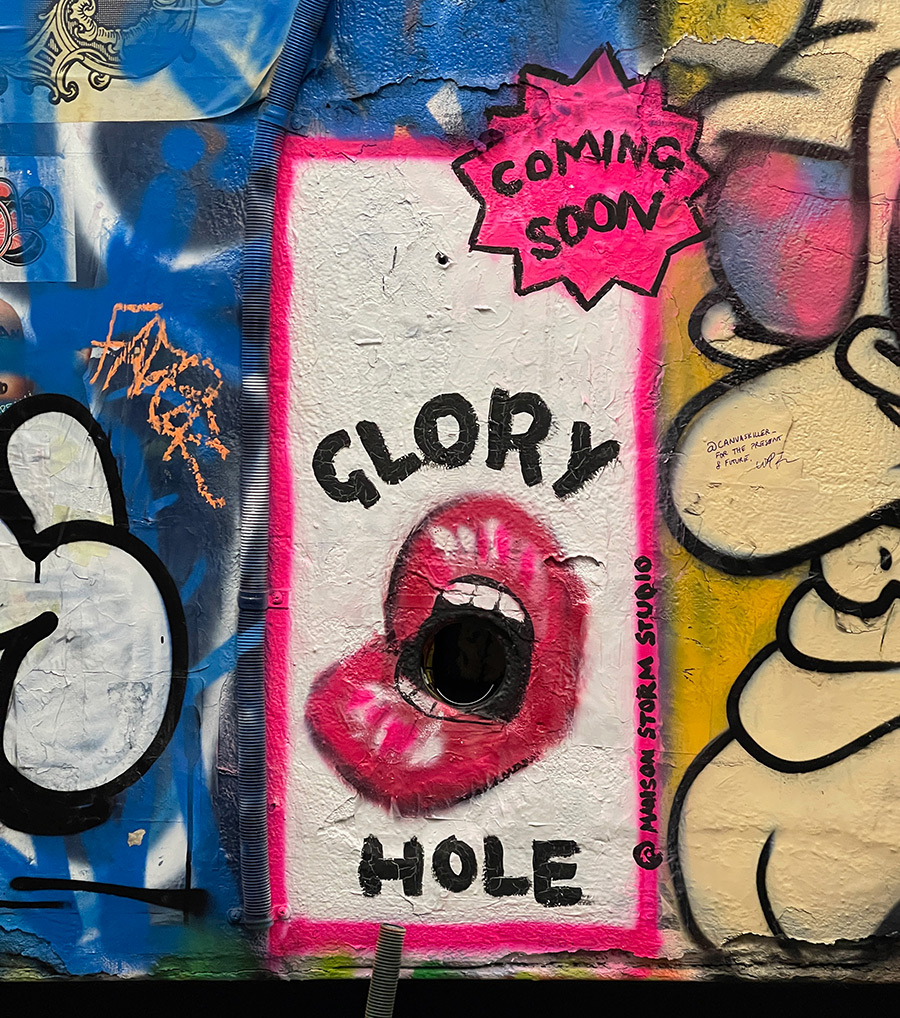
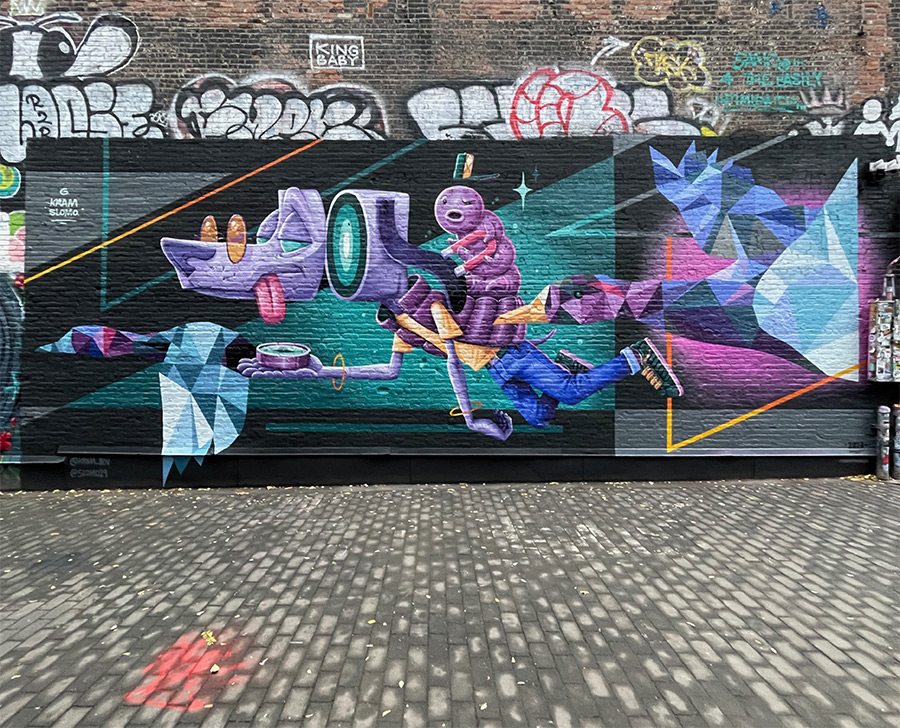
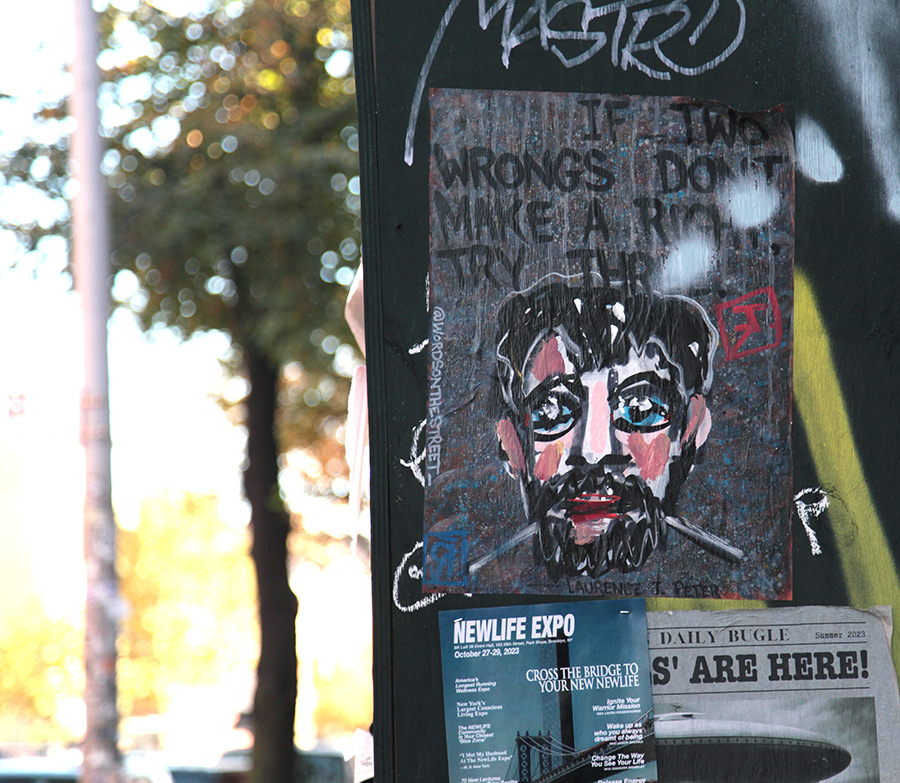
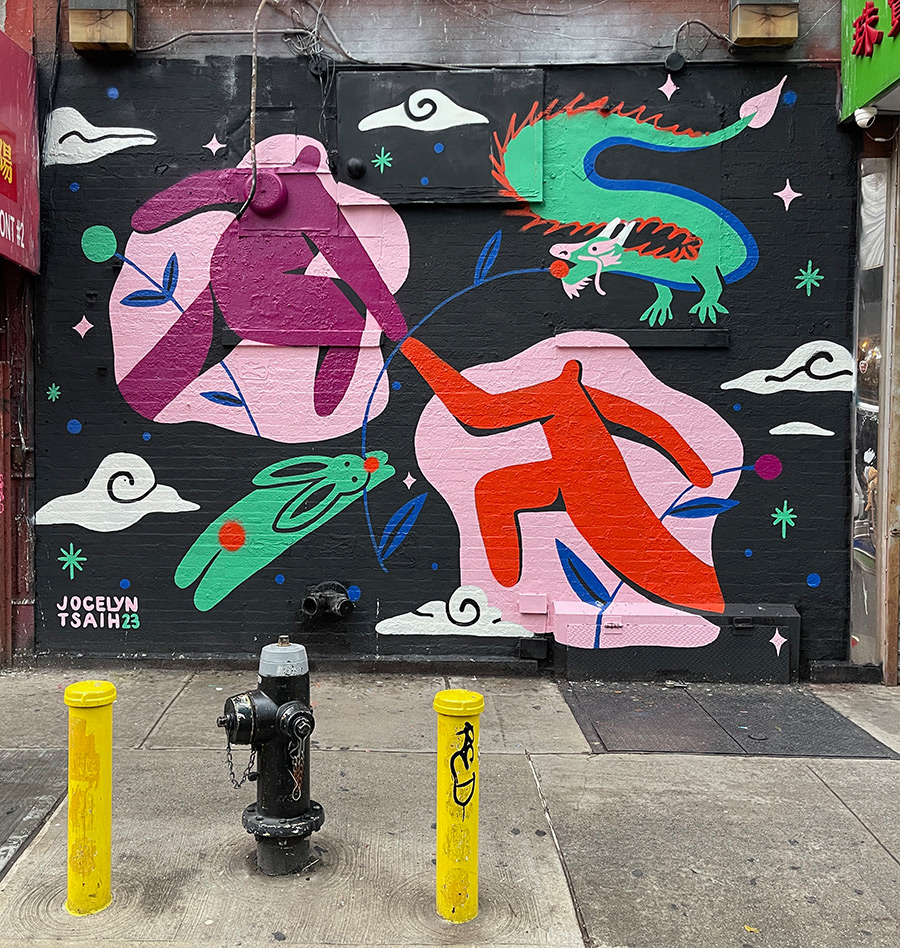
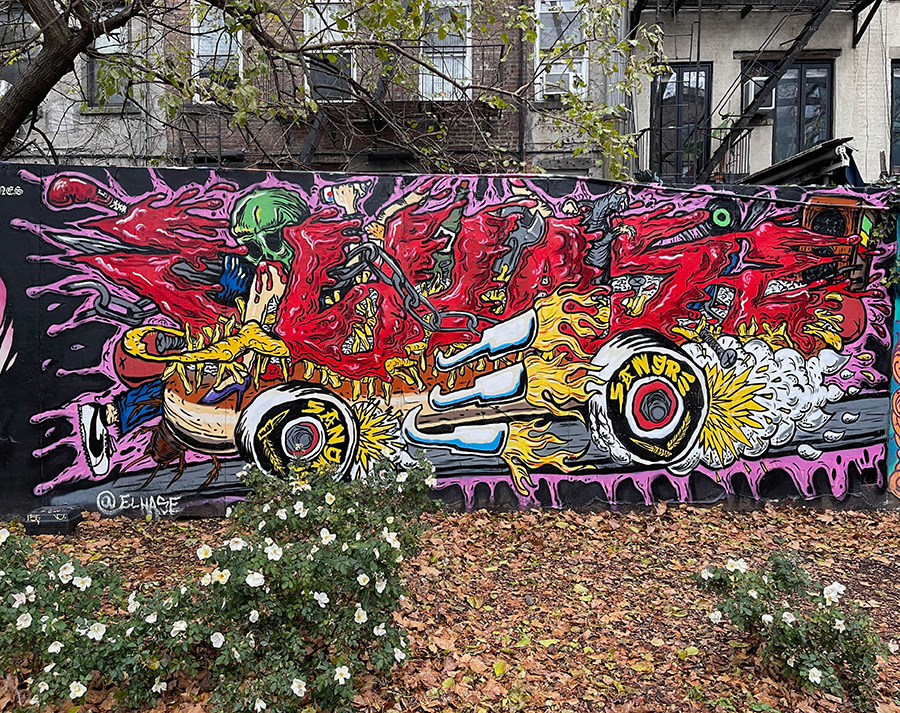
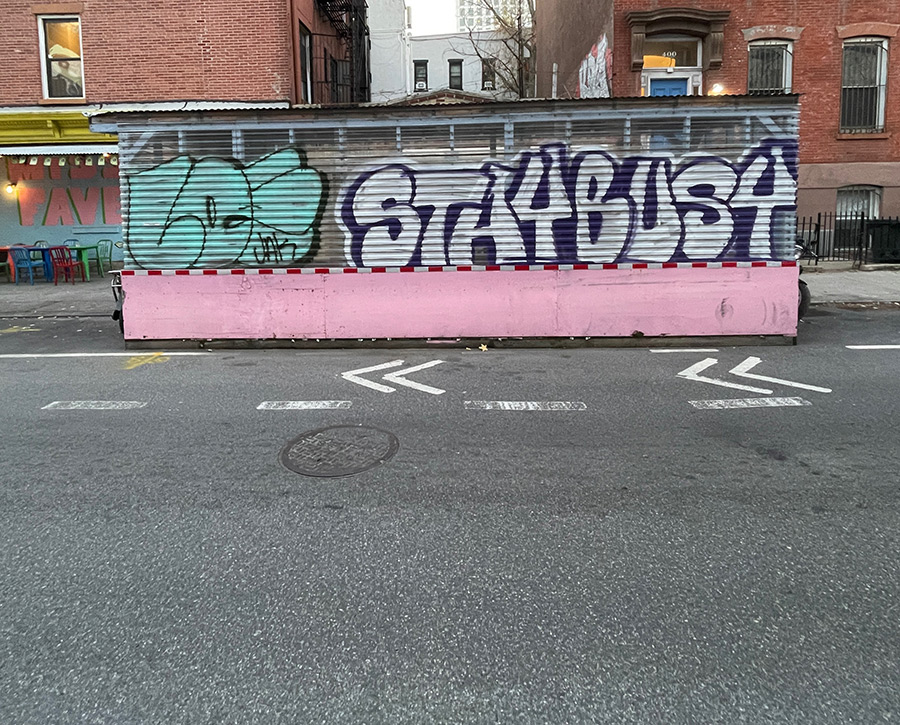
Here is our weekly interview with the street: this week featuring Optimo NYC, Kram, Gats, Eternal Possessions, Muebon, El Hase, Stay Busy, Words on the Street, Alex Itin, Madison Storm, Jocelyn Tsajh, Homer, Siomo, Clams, Celeb, and Under Control.
 BROOKLYN STREET ART LOVES YOU MORE EVERY DAY