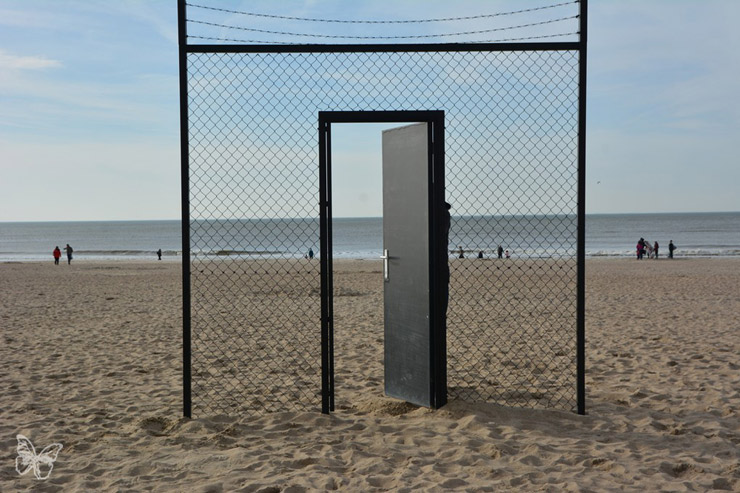
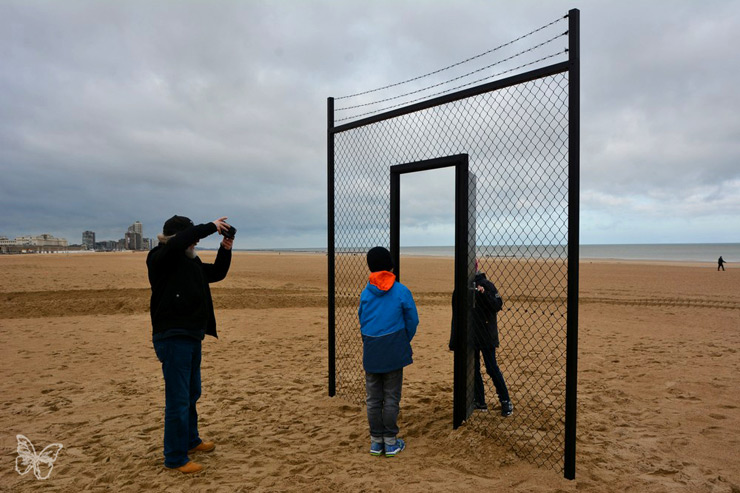
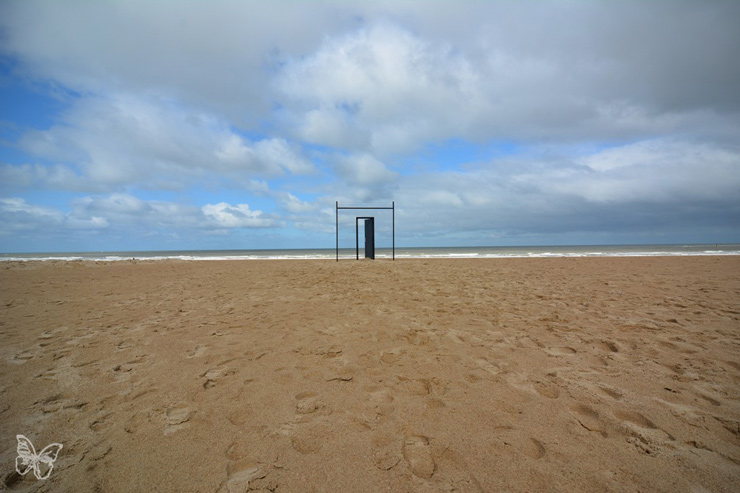
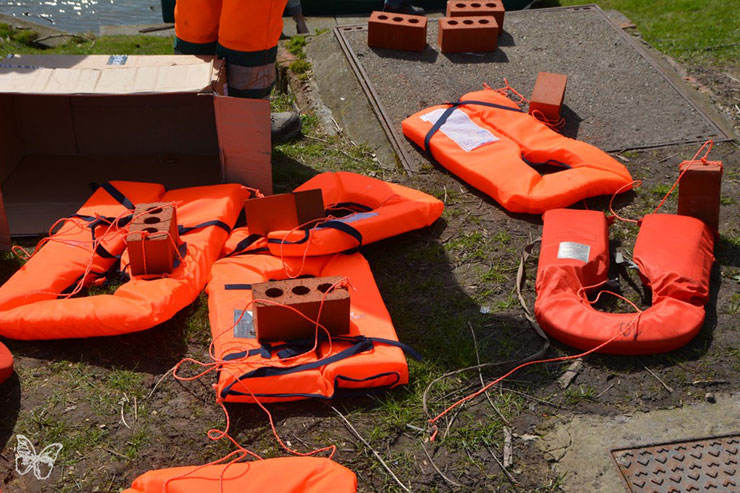
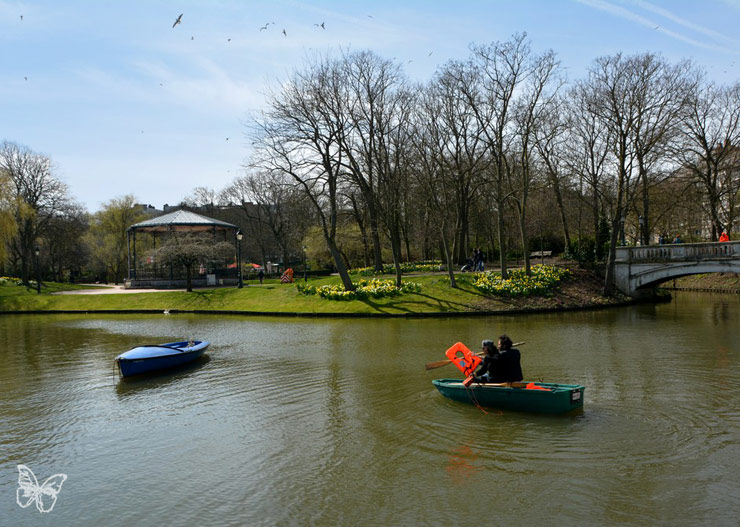
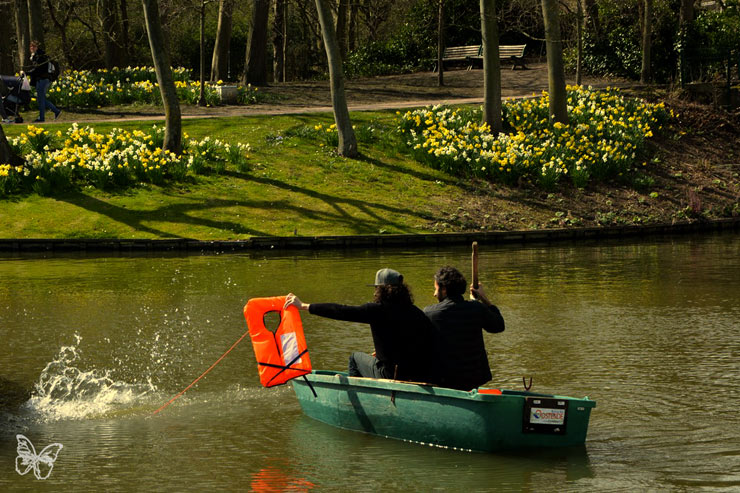
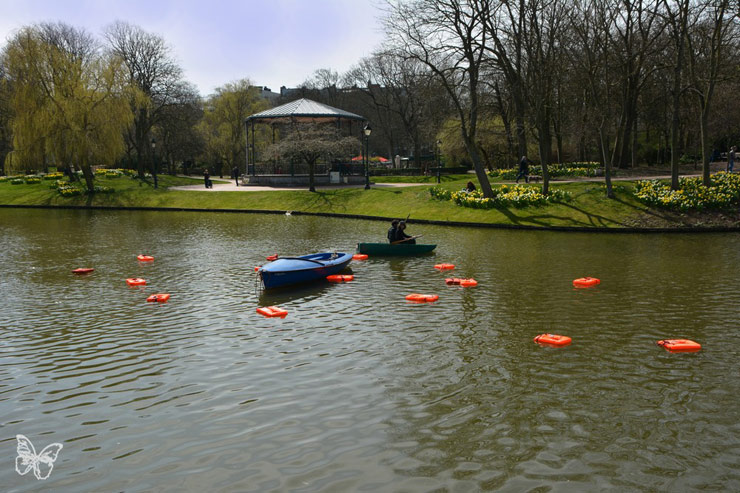
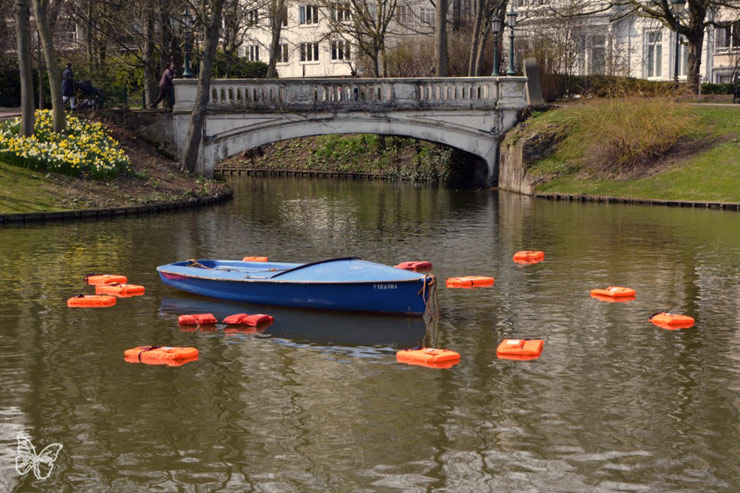
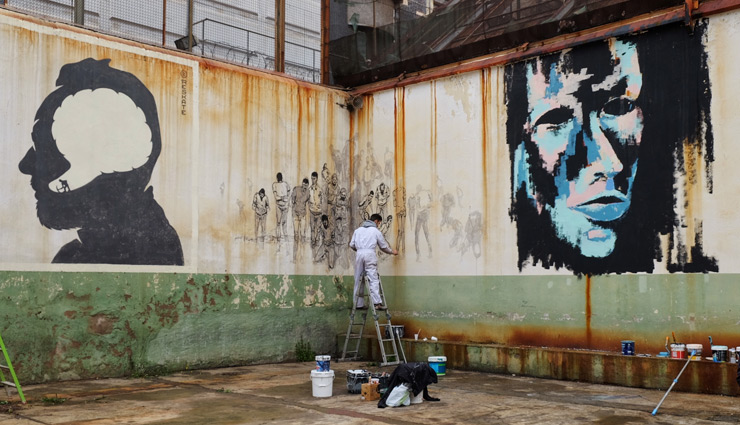
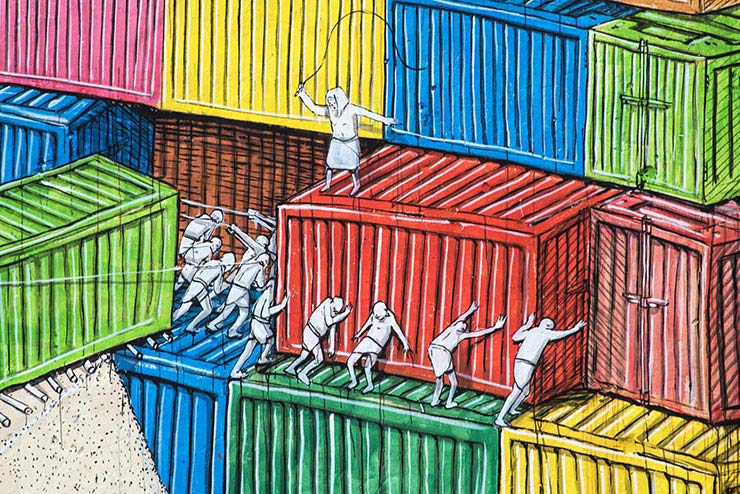
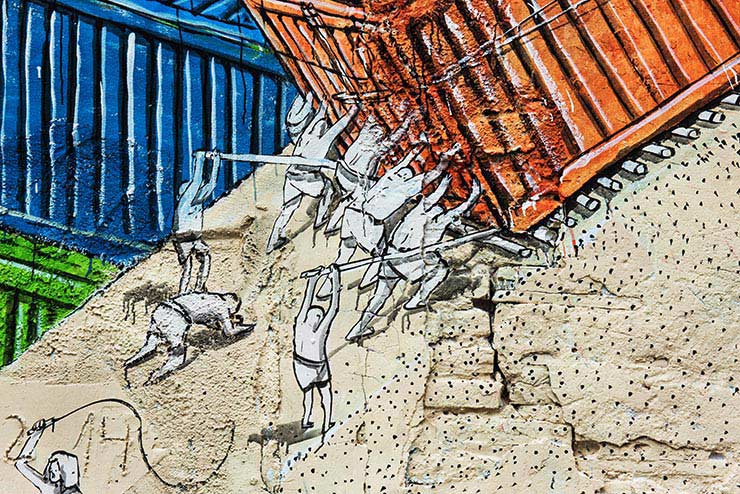
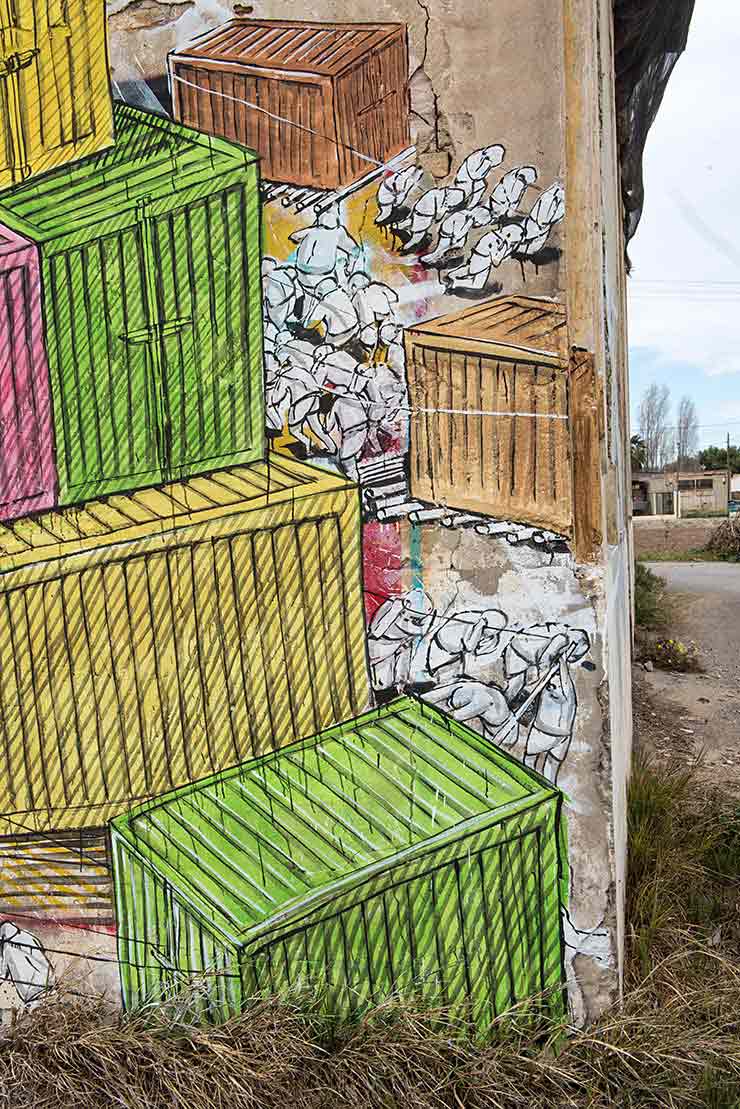
Welcome to BSA Images of the Week. First we have a series of politically themed and powerfully timely images of ICY & SOT installations from their involvement with the third edition of the Crystal Ship Art Festival in Ostend, Belgium. With forced immigration caused by the war industry providing armaments to everyone including your cousin Judy, the even more disgusting flipside of all this is the xenophobic nationalism that is now spreading in various countries, treating refugees and immigrants like crap.
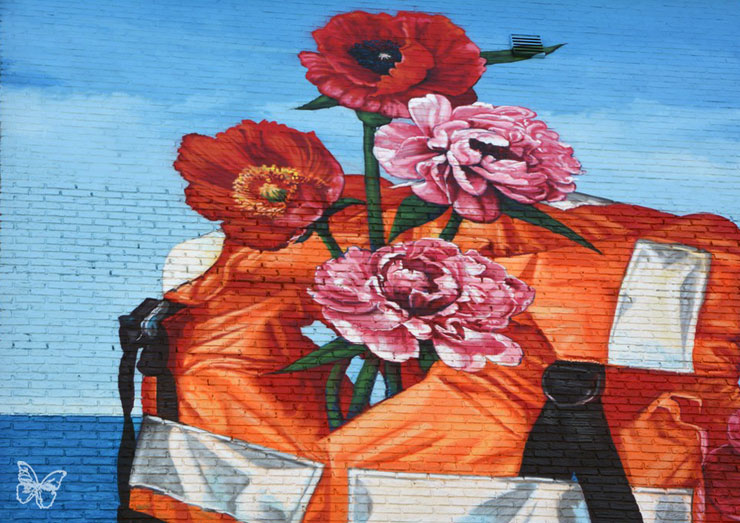
So Icy & Sot give us here the security fences that create prisons for people to keep them inside and out and, perhaps taking a page from Ai WeiWei, a floating vest installation in the local park – complete with the artists in a boat and daffodils on the grassy knolls. Right after that we have another life-vest themed piece, a mural by Gaia entitled “Requiem for Migrants, Requiem for the Liberal Order”.
Thanks to photographer Butterfly for her contributions here.
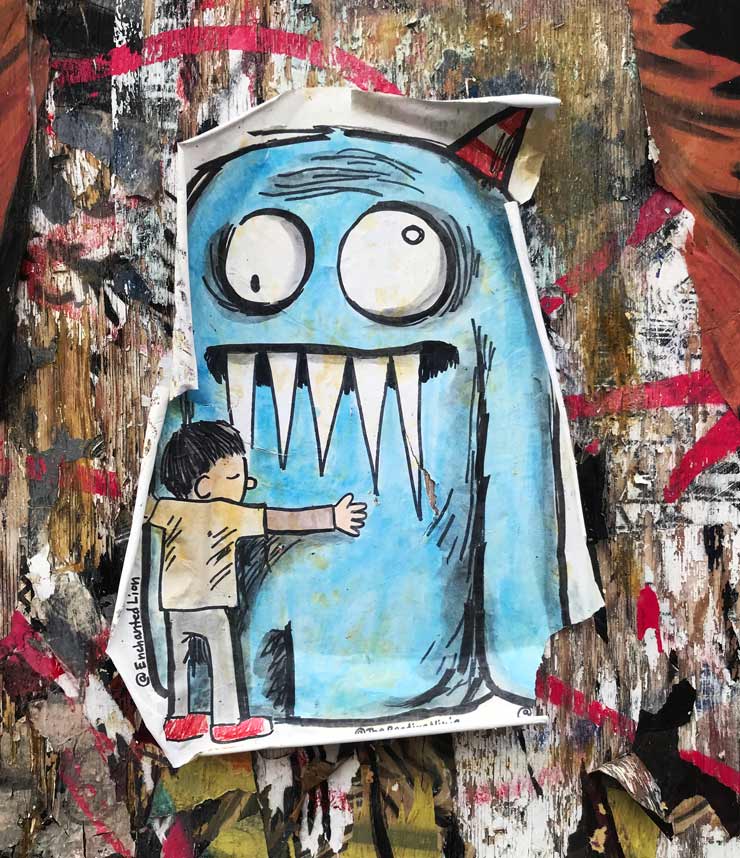
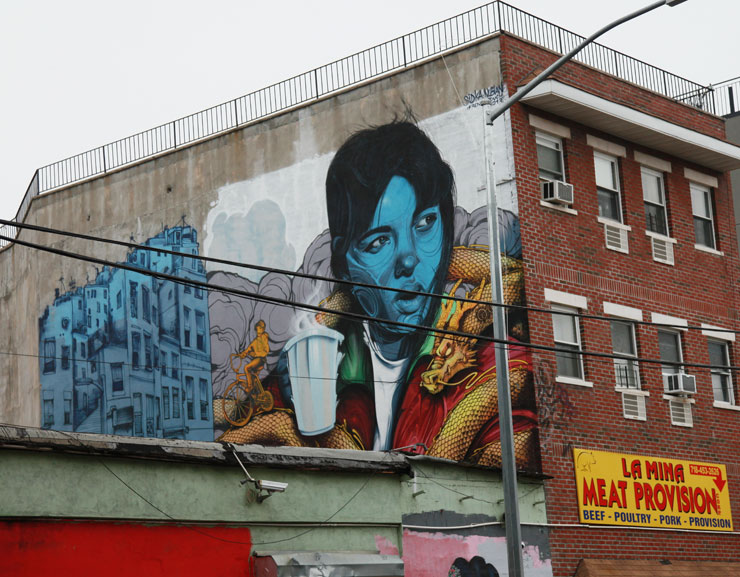
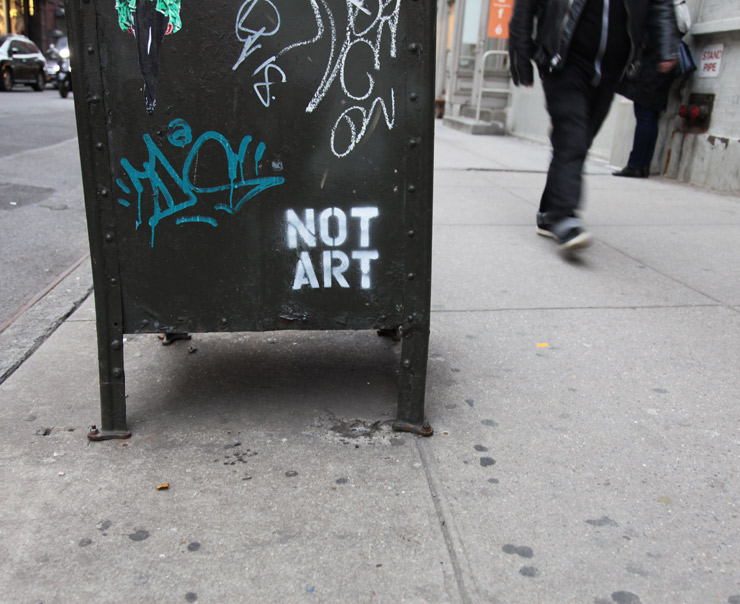
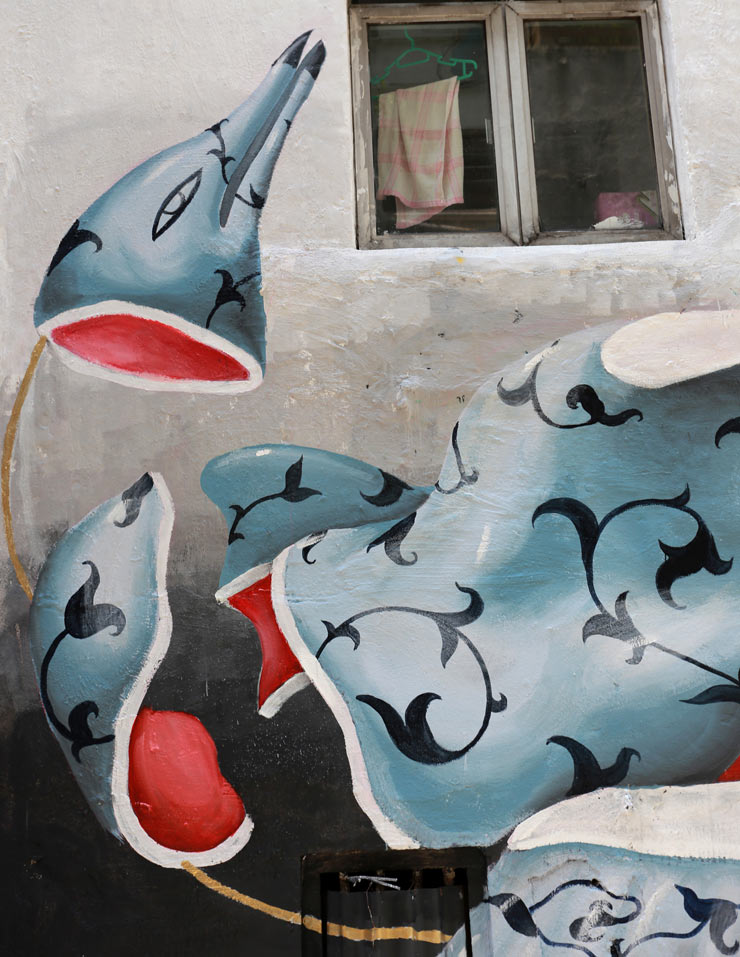
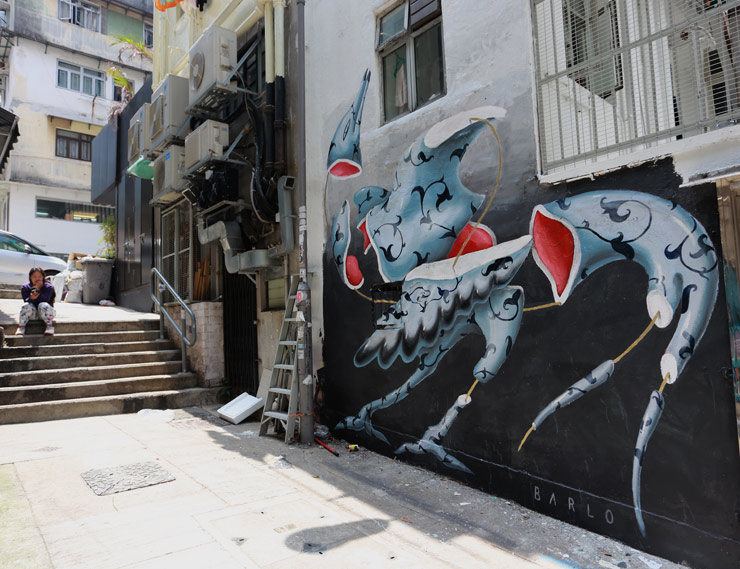
Here’s our weekly interview with the streets, this week featuring Adam Fujita, Barlo, Gaia, Icy & Sot, Not Art, Sidka Nubian, and the Reading Ninja
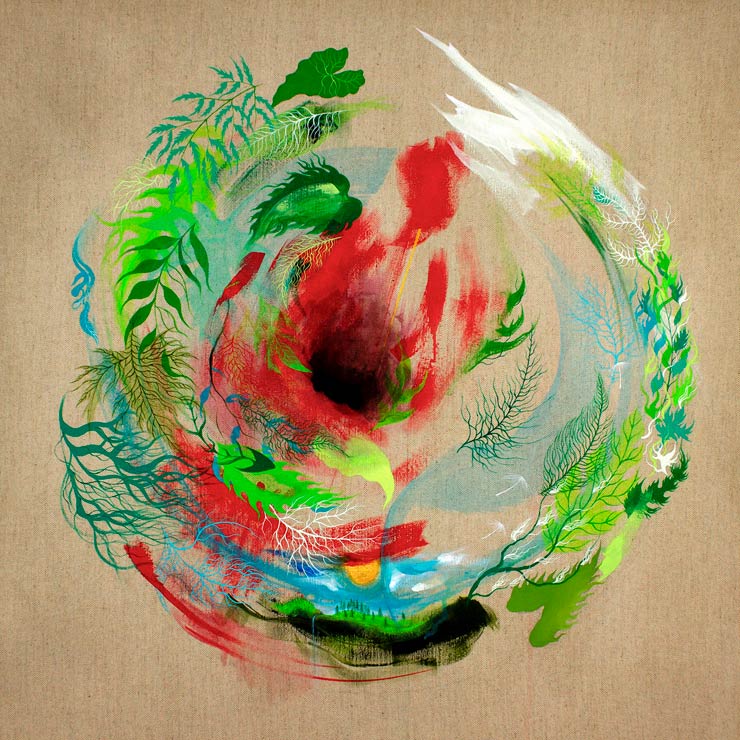
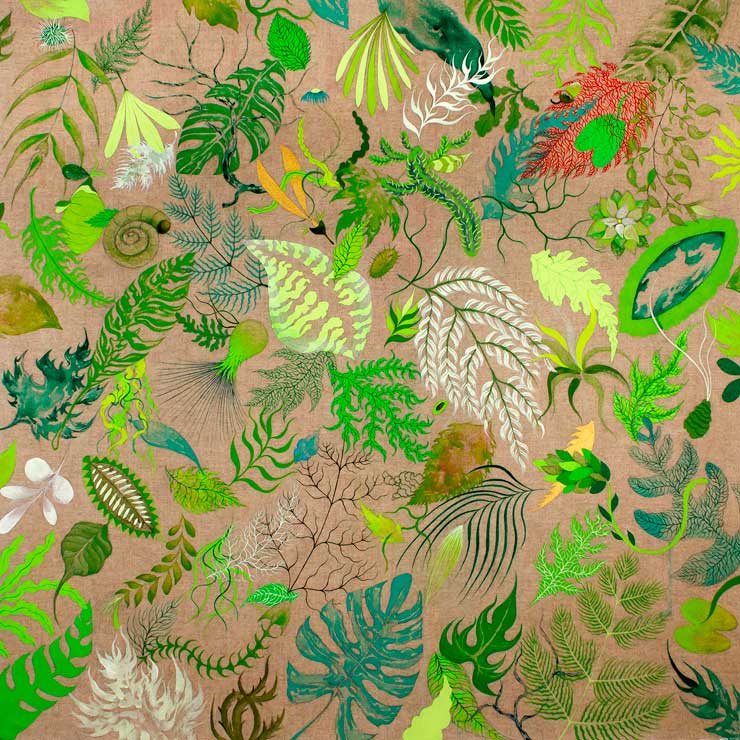
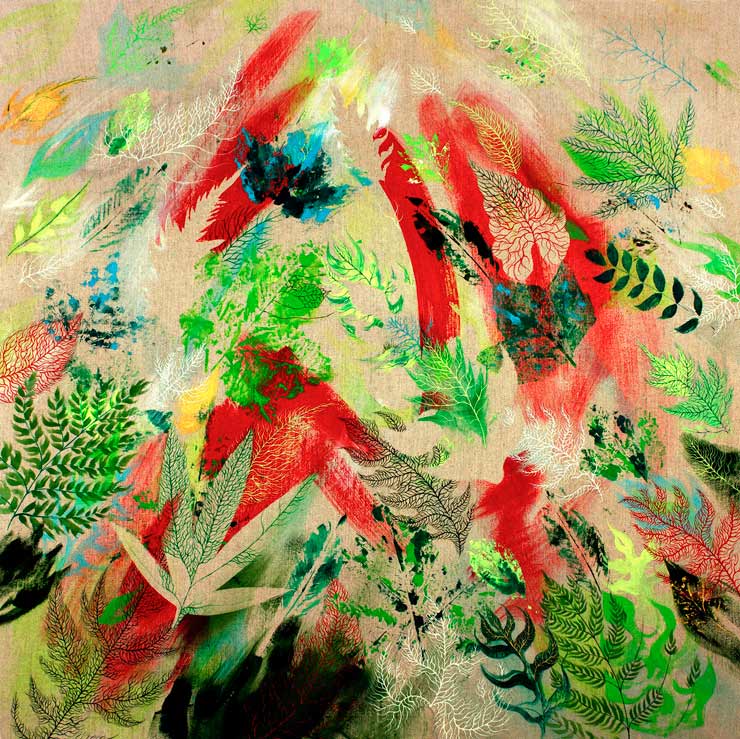
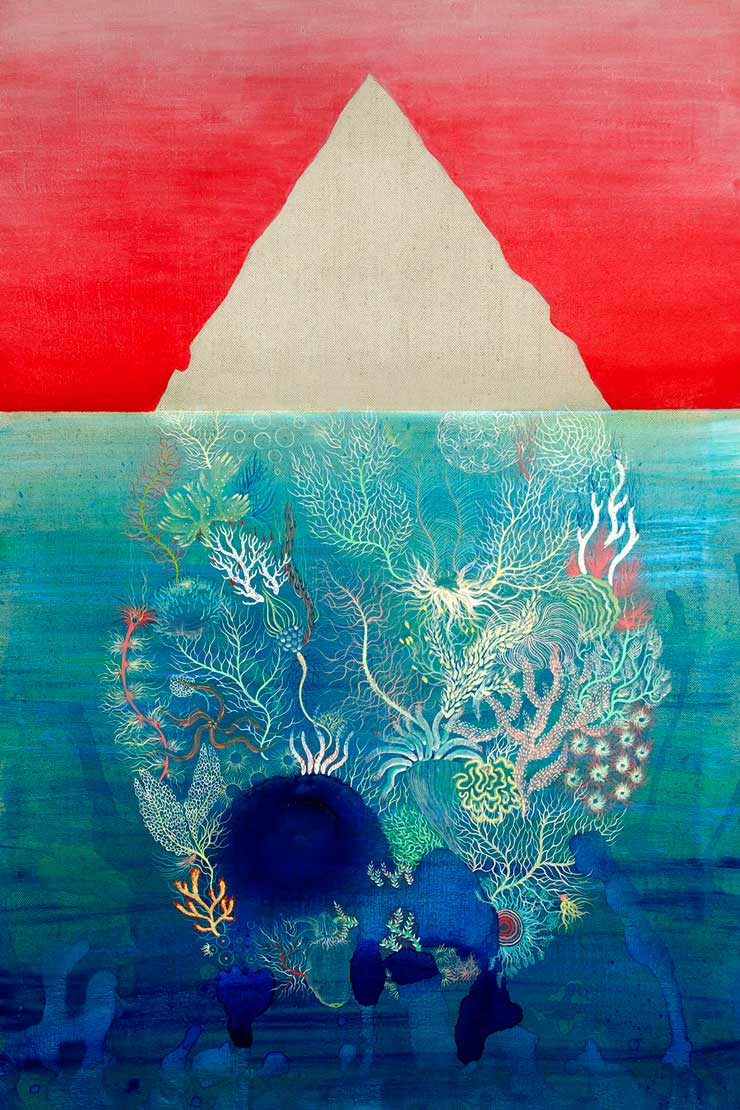
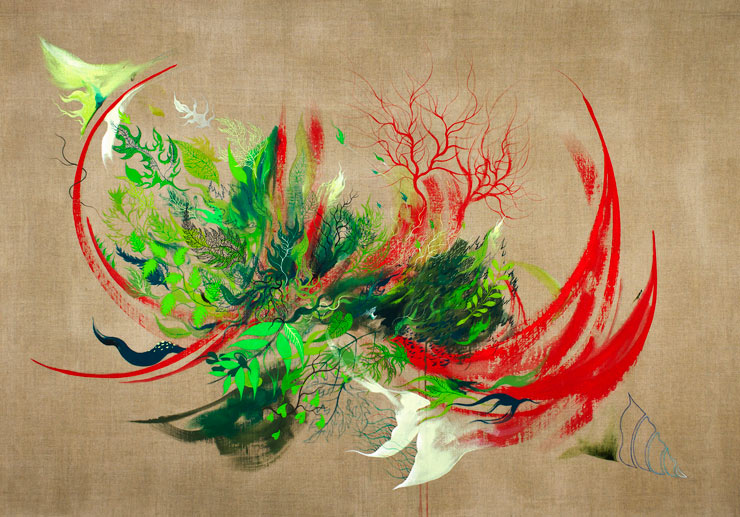
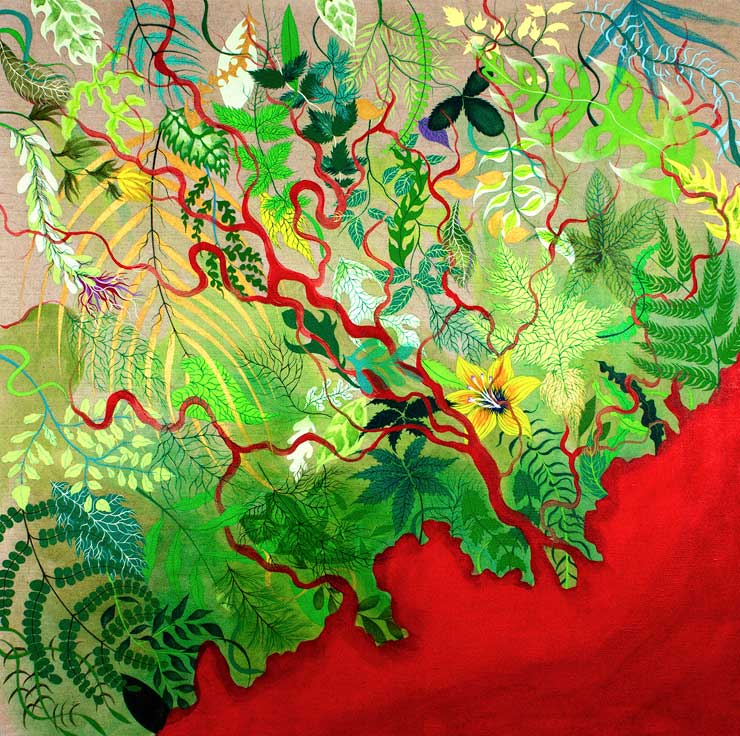
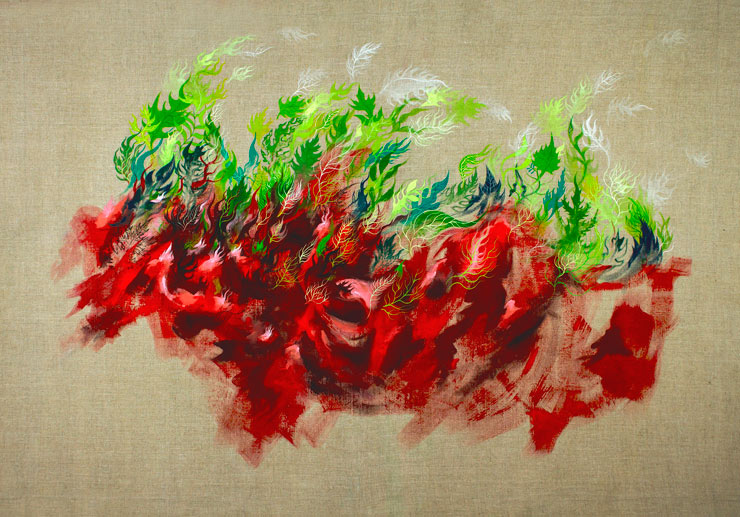
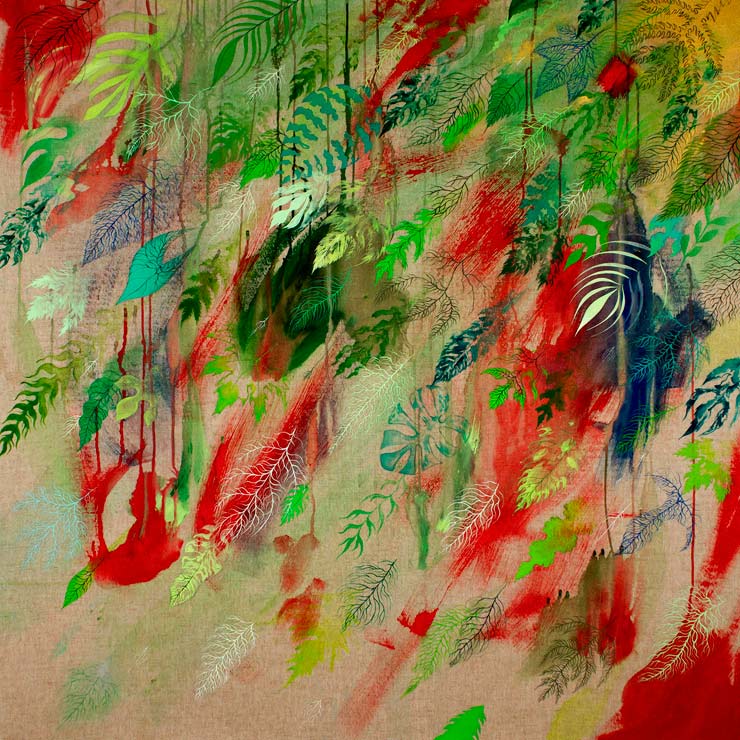
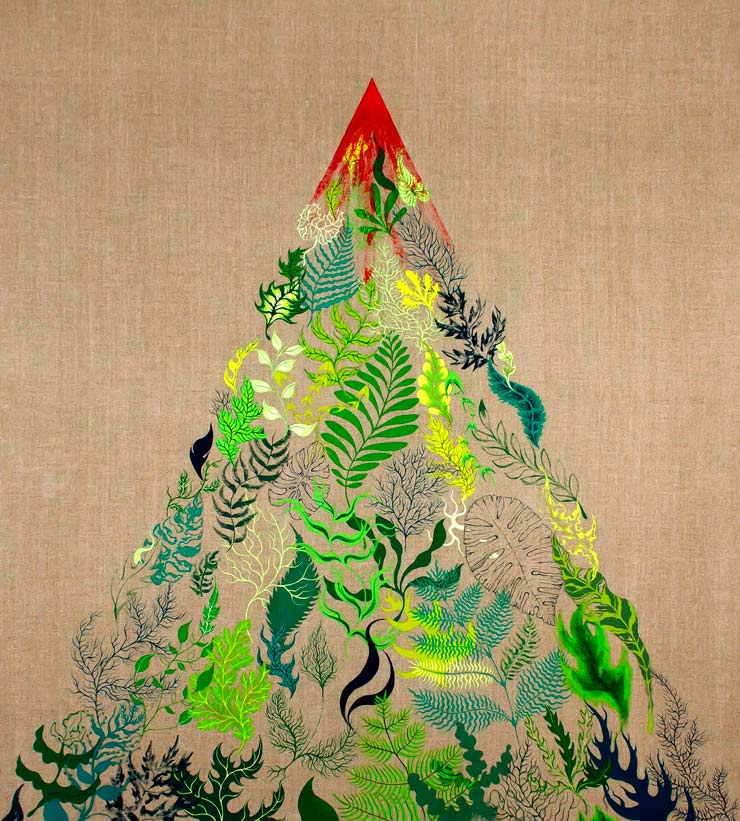
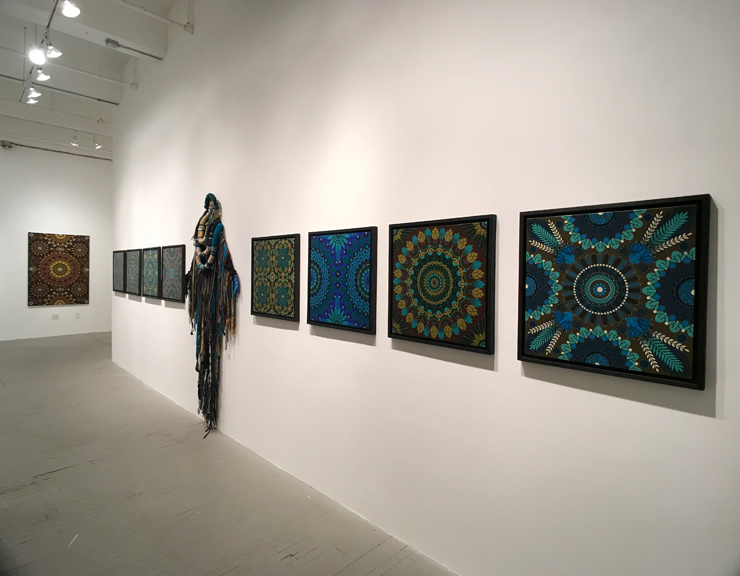
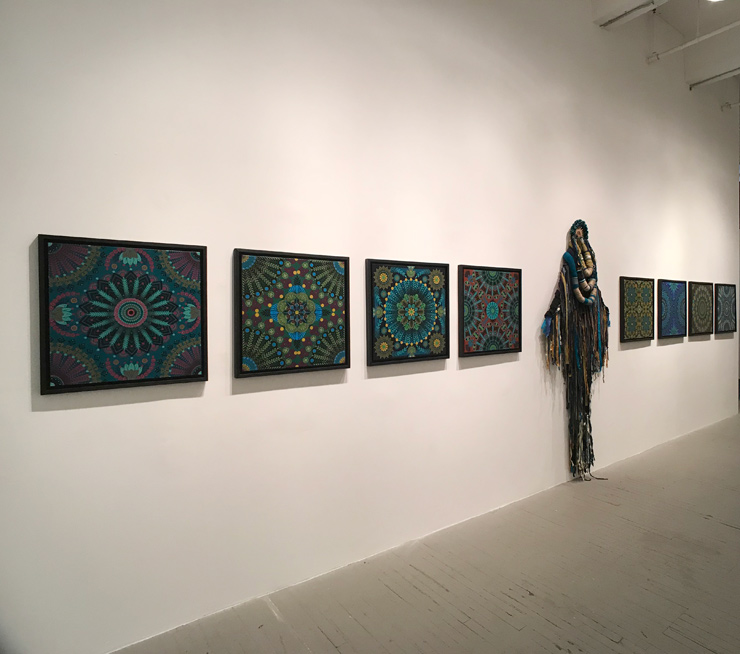
Back in February we gave you a sneak peak at Gola Hundun’s preparations for his new show inspired by Earth’s population and our individual and industrial impact on the balance of the environment.
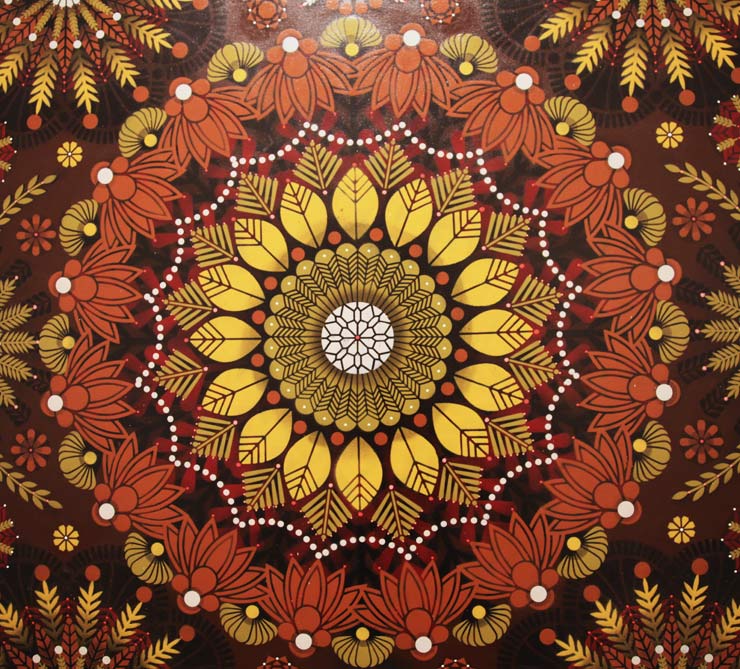
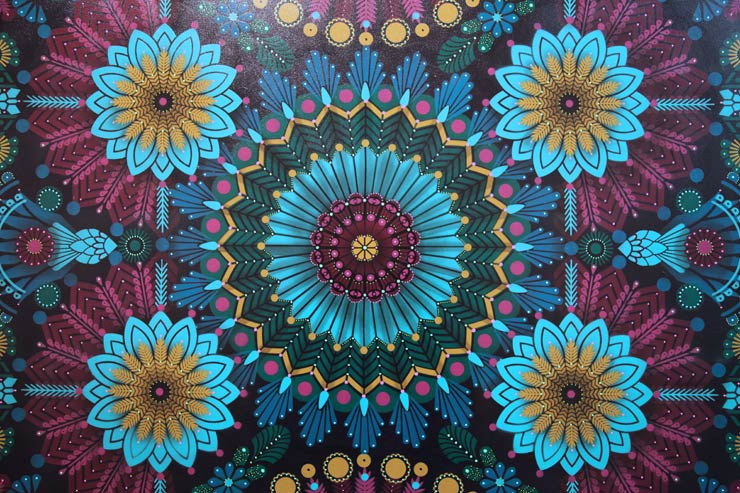
Today we have the completed canvasses, which you can see in person should you find yourself lost in Queensland, Australia. Entitled “7.6 Billion and Still Growing”, the show features organic fern and form, an ample layering of motifs and washes in an almost decorative vein, each an emotional distillation of larger systemic challenges. His own balance appears to be achieved by the gathering of these systems within geometric groupings, the riddles and solutions wrapped colorfully within.
Why people want to plunder the Earth for financial gain is not precisely baffling, everyone agrees. But why we can’t have and enforce laws to protect it for everyone is.
Gola’s organic forms and splendiferous color choices are shouting about the beauty and magic of the natural world and he says he took the opportunity to preach to assembled guests at his opening last week.
“It was a blast!!! I also made a speech to the audience telling them about the story behind the canvases,” he says, “and making some active propaganda about how much every one of us can do for the world, like becoming vegan, minimizing use of plastic and refusing to buy from several brands and corporations.”
Our weekly focus on the moving image and art in the streets. And other oddities.
Now screening :
1. Street Atelier – Rocco and his Brothers
2. Sam3 and His Troupe of Dancing Statues Pump Up the Jam
3. Valiente Creations – 12 + 1
4. Sue 975 – 12 +1
BSA Special Feature: Street Atelier – Rocco and his Brothers
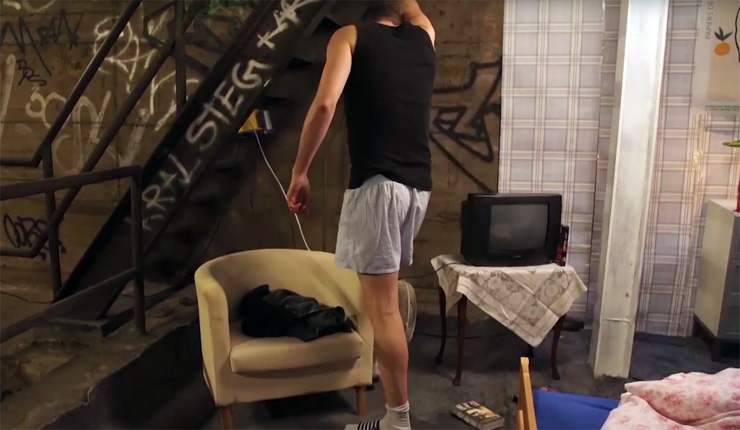
It’s an Italian movie directed by Luchino Visconti in 1960, yes. It is also the name of a crew of Berlin graffiti/installation artists whose satirical interventions play on issues propriety and property – and on social experiments that dupe the media, the public, and banks.
Did they really set up an apartment inside the subway? Is that really the tracks and wall of a metro inside a gallery? Is that Wagner playing in the mobile war arcade set up in the Christmas market? Are those hand grenades being lobbed by children? Is the bank facade blinking red every 20 seconds?
Rocco und seine Brüder (Rocco and His Brothers) have you engaged. Now you have to answer the questions.
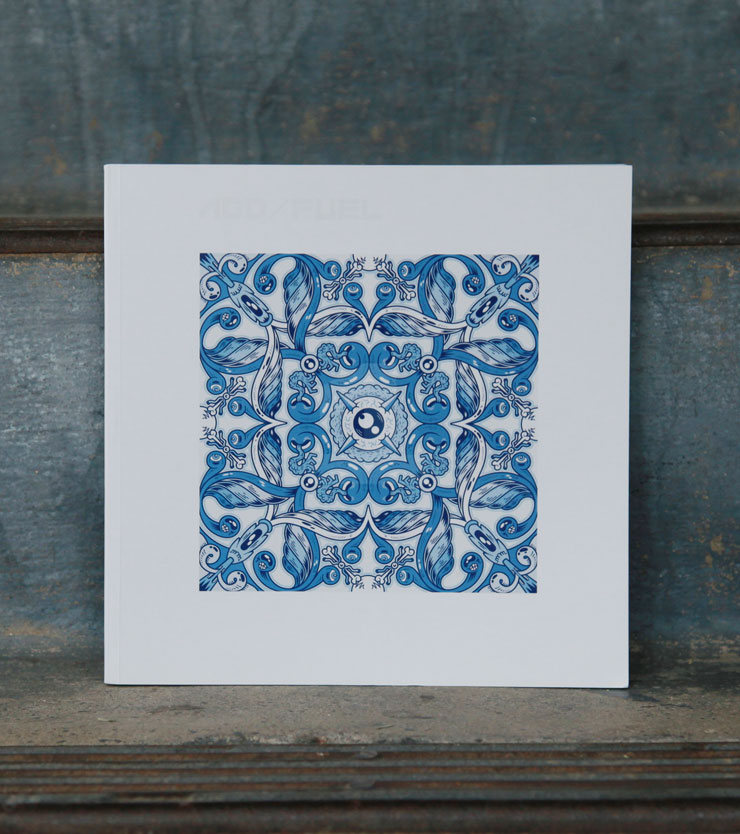
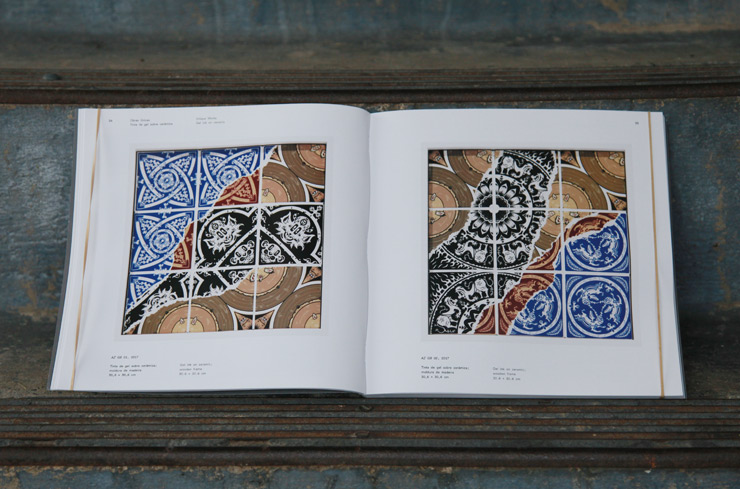
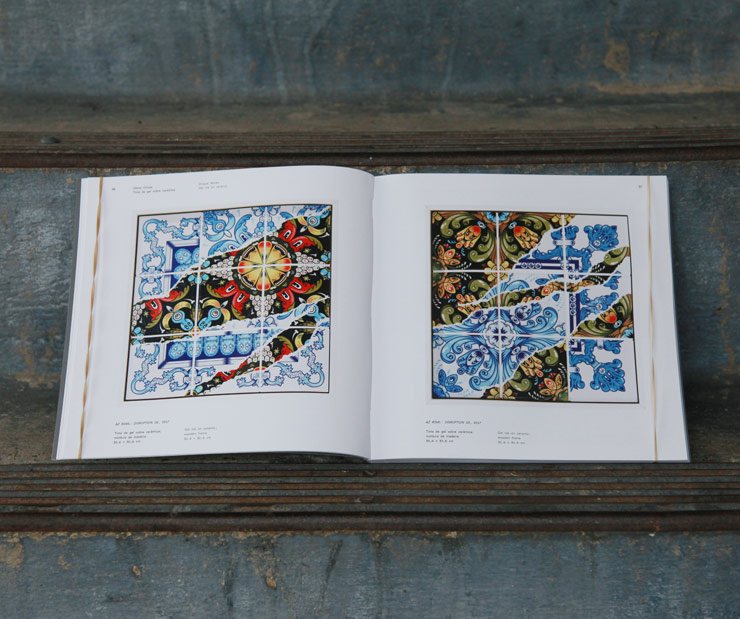
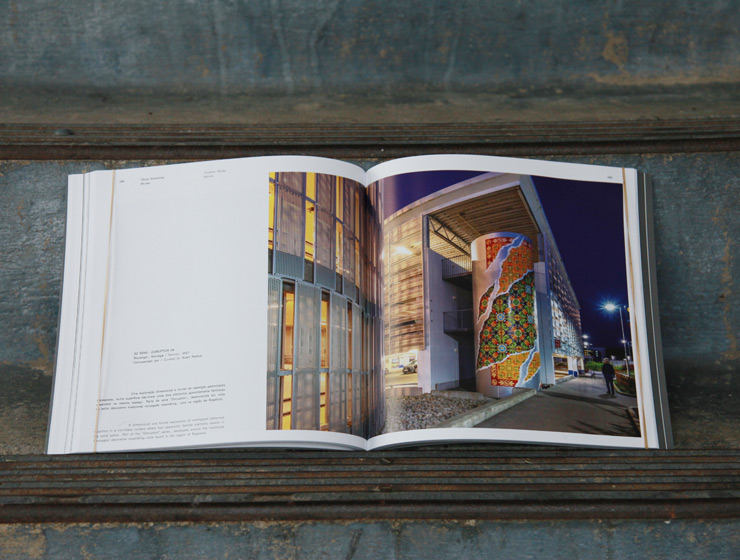
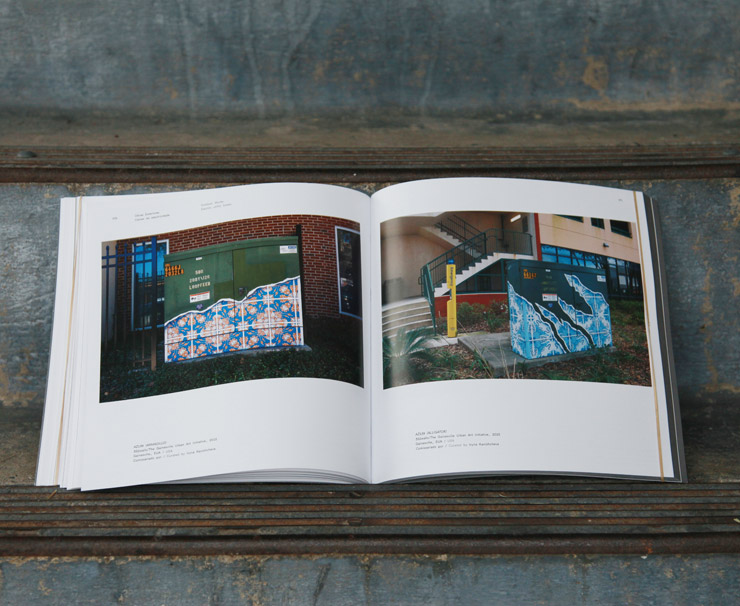
Street Artist Add Fuel is exporting azulejo to the rest of the world. Slightly differently than they did in previous centuries.
Add / Fuel – 1 – Monograph. Published by Diogo Machado. Portugal 2018.
Via his own pop-culture interpretation of the interlocking curvilinear, geometric and graphic motifs, the Portuguese artist is firing new pieces daily in the kiln of his studio in Cascais. For a decade or so his interpretations of the tin-glazed ceramic tilework have been appearing on inordinate secondary city skins in the paths of pedestrians: visual illusions meant to appear as layers of urban bark peeling back from surfaces you take for granted to reveal heritage, history, artisanship.
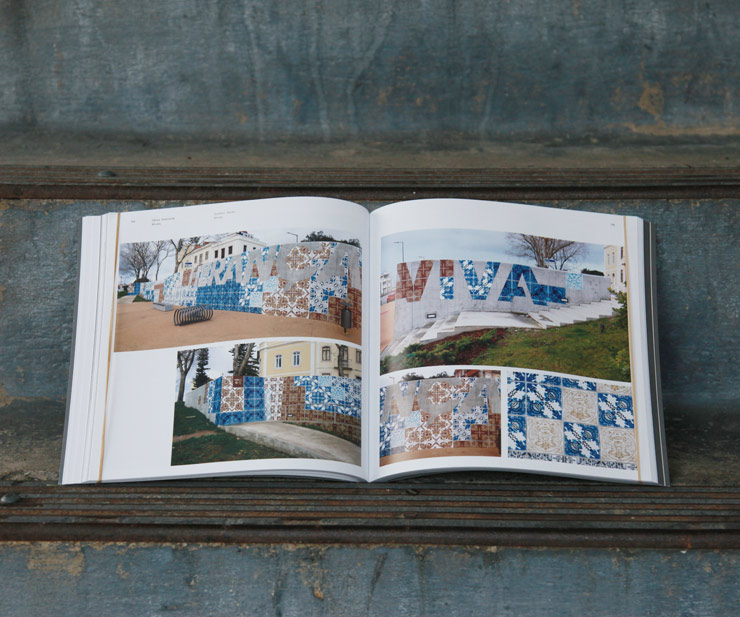
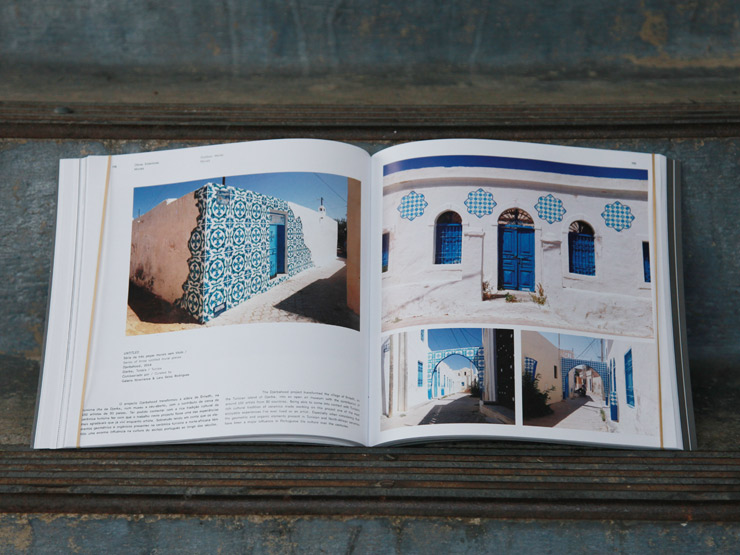
While the interiors and exteriors of churches, palaces, schools and subway stations are covered with azulejos in Lisbon, thanks to Add Fuel (Diogo Machado) they have travelled to other cities and cultures as well. Each time he is attracted to the tilemaking traditions locally, and he often incorporates his study of these new histories as well.
Add / Fuel – 1 – Monograph. Published by Diogo Machado. Portugal 2018.
What makes his work contemporary is the reworking of elements to include zombies, snakes, Gameboys, and selfie sticks in his patterns. A graphic designer and illustrator, he imagines his complex tile ornamentation as a patterned fill for masking or knocking out type. Entire walls become quilted blocks and remnants stitched together. Taking inspiration from Jacques Villeglé and his torn poster collages (or even Faile’s more recent reworking of the method for ripped away pop revelation) Add Fuel uses the device of showing the past, the foundation for the culture, helping us to imagine a life before ours.
Add Fuels first monograph is tile-shaped and precisely rendered, a survey of the patterned and pixilated, pleasant and pernicious imagined motifs he has placed upon tiles, screenprints, embroidery and façades. Using historical, artists and artisanal work as inspiration, with his archive of ideas and executions he has created himself as one for others.
Add / Fuel – 1 – Monograph. Published by Diogo Machado. Portugal 2018.
Add / Fuel – 1 – Monograph. Published by Diogo Machado. Portugal 2018.
Add / Fuel – 1 – Monograph. Published by Diogo Machado. Portugal 2018.
Add / Fuel – 1 – Monograph. Published by Diogo Machado. Portugal 2018.
Add / Fuel – 1 – Monograph. Published by Diogo Machado. Portugal 2018.
A new sharply political campaign championing the freedom of expression has caught fire in Spain in the last few weeks under the hashtag #NoCallaremos, and Street Artists are now adding their talents to the protest. Rather shockingly for a modern European nation, a rapper’s prison sentence for offensive lyrics was upheld in Spanish Supreme Court in February (Billboard) and that decision along with other recent events has sparked a number of creative protests across the art world in cities across the country. Today BSA contributing Street Art photographer Fer Alcalá shares his opinions and new images of the murals in progress with BSA readers.
THE NO CALLAREM PLATFORM
~ by Fer Alcalá
…or how some of Spanish top artists react against censorship and repression of the freedom of speech from the central government…
It’s now known worldwide: the Spanish government is imprisoning hip hop artists like Valtonyc and Pablo Hasel because of their sharp and truthful lyrics as well as sentencing people like you and me because of their critical posts on social media.
As a reaction to these acts against the freedom of speech that are more in tune with a well established dictatorship than with 40 years of democracy, some projects like the No Callarem (we won’t shut up) platform have raised their voices.
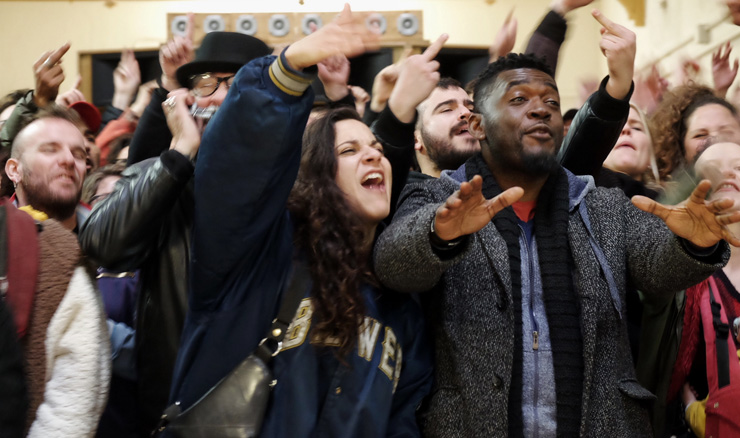
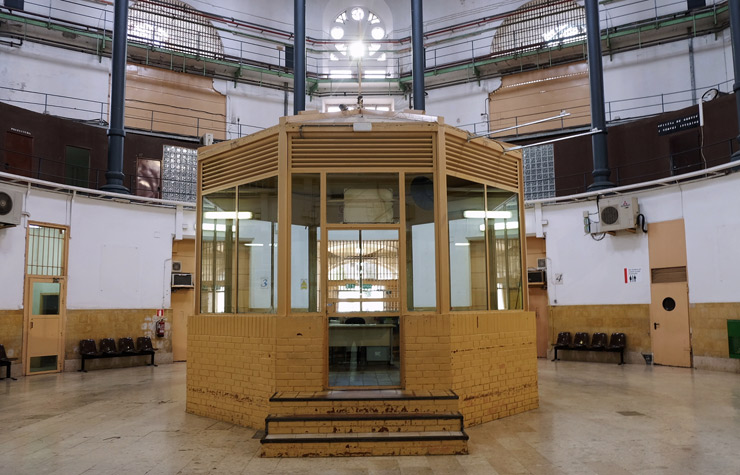
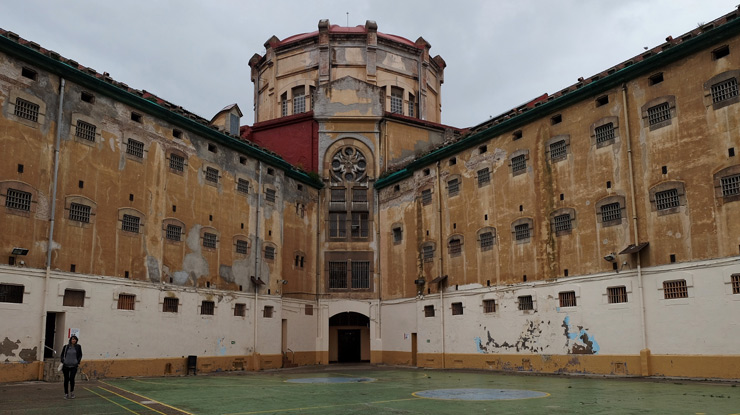
One of the direct actions organized by the platform for fighting against Partido Popular’s civil rights oppression was to film a video clip featuring some of the most renowned lyricists on the scene as Frank T, Elphomega, Los Chikos del Maíz, La Ira, Rapsusklei, and César Strawberry, among others, at the old La Modelo prison. The location is an accurate metaphorical scenario when you are seeing that your liberty is being cut off thanks to laws like ‘Ley Mordaza’.
The song ‘Los Borbones son unos ladrones’, which alludes directly to the Spanish monarchy, includes some excerpts from some of the songs created by rappers serving a prison sentence. The video clip for the song, which you can watch at the end of this article, has become viral and almost all media outlets in the country are speaking about this big shout-out in the name of freedom.
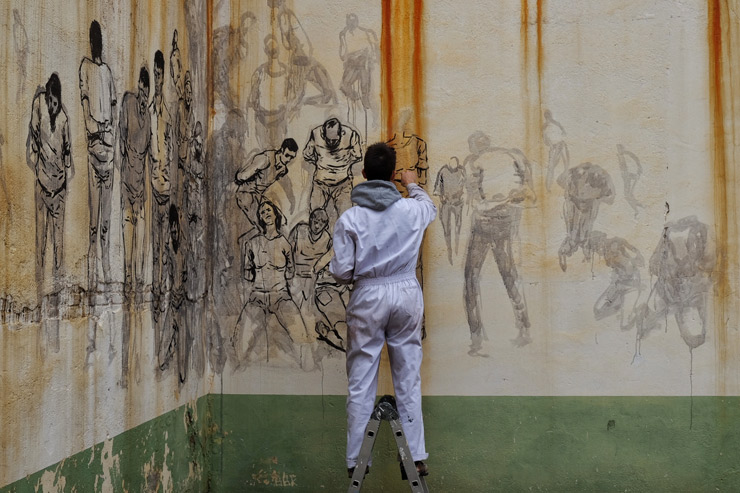
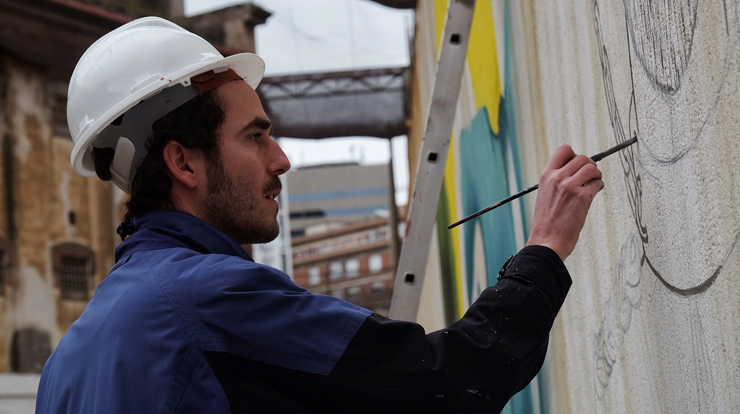
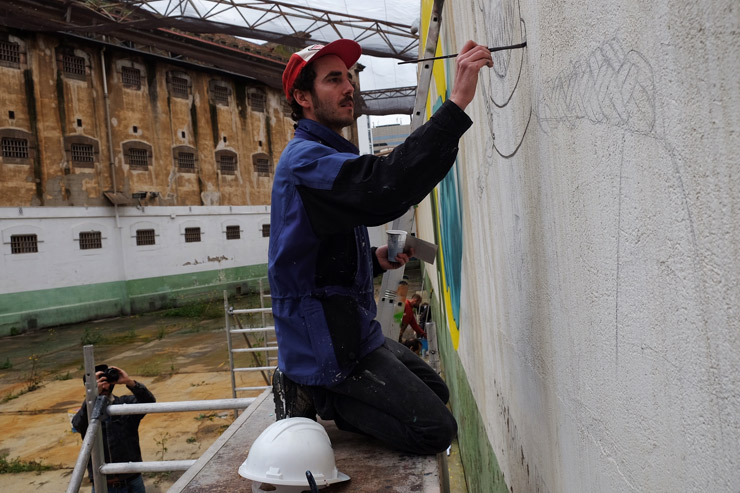
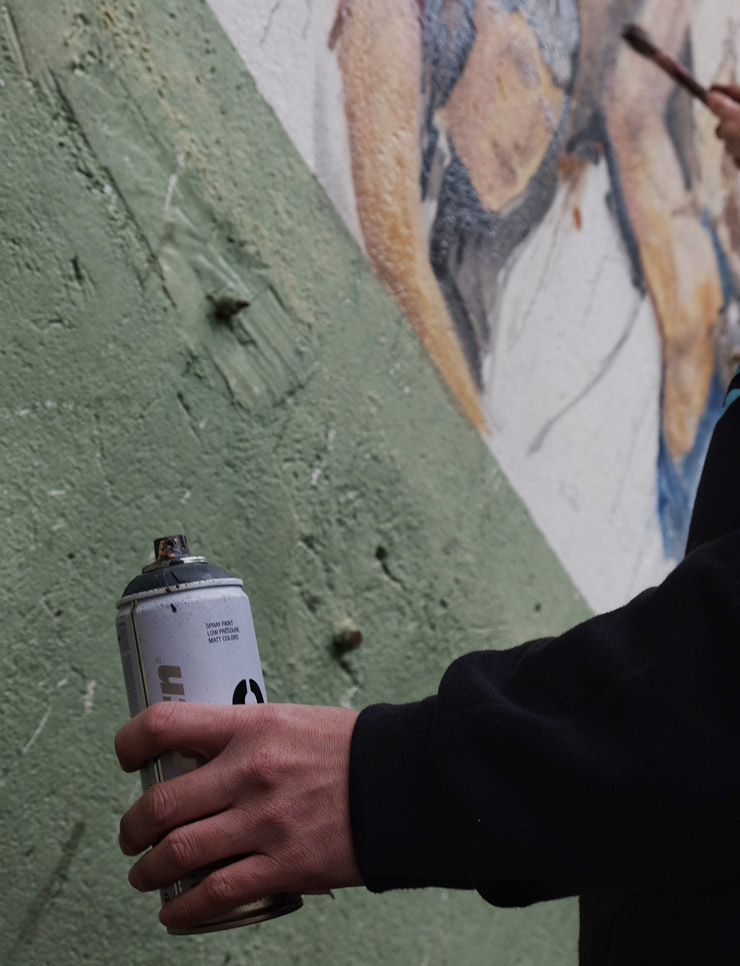
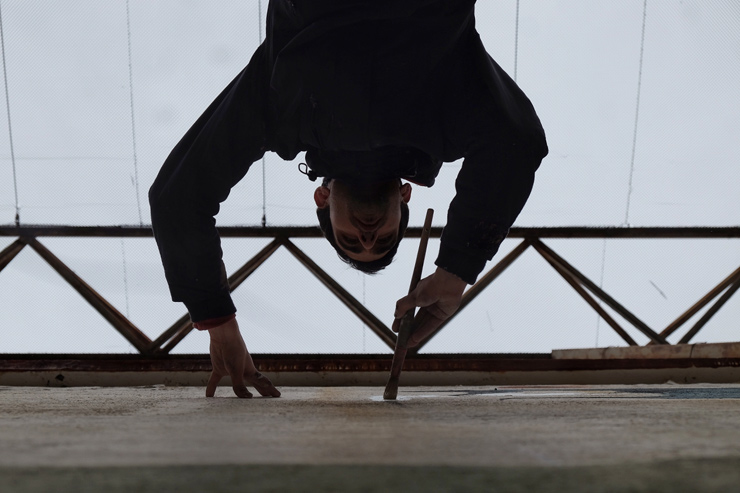
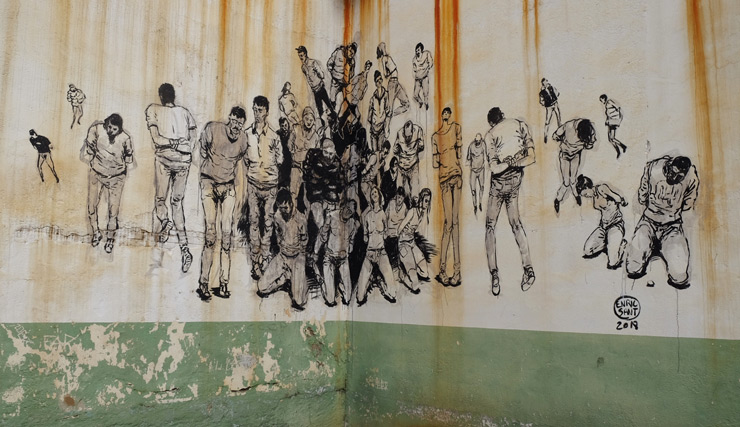
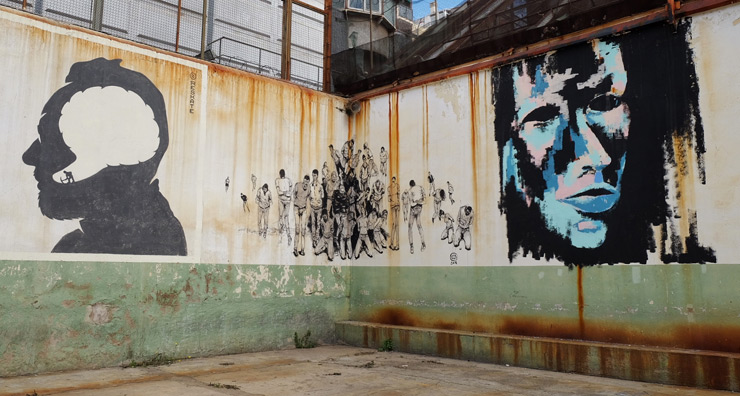
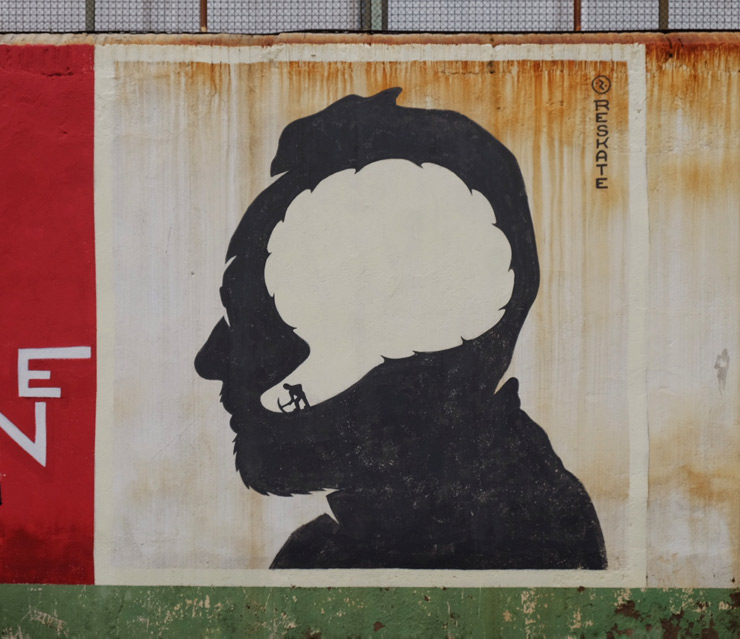
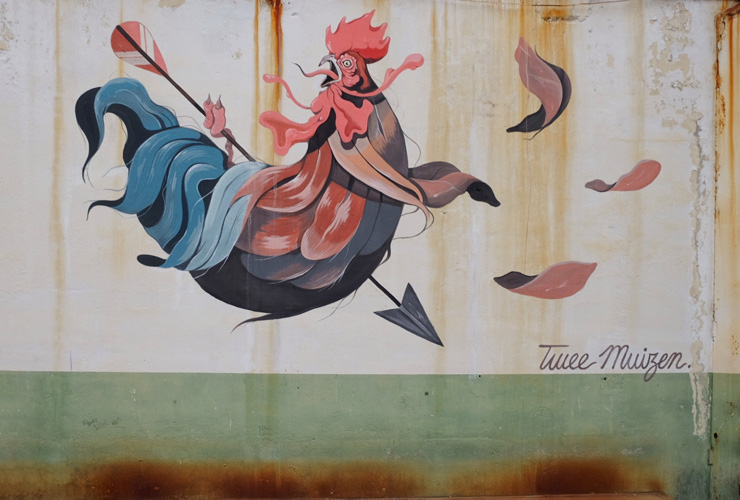
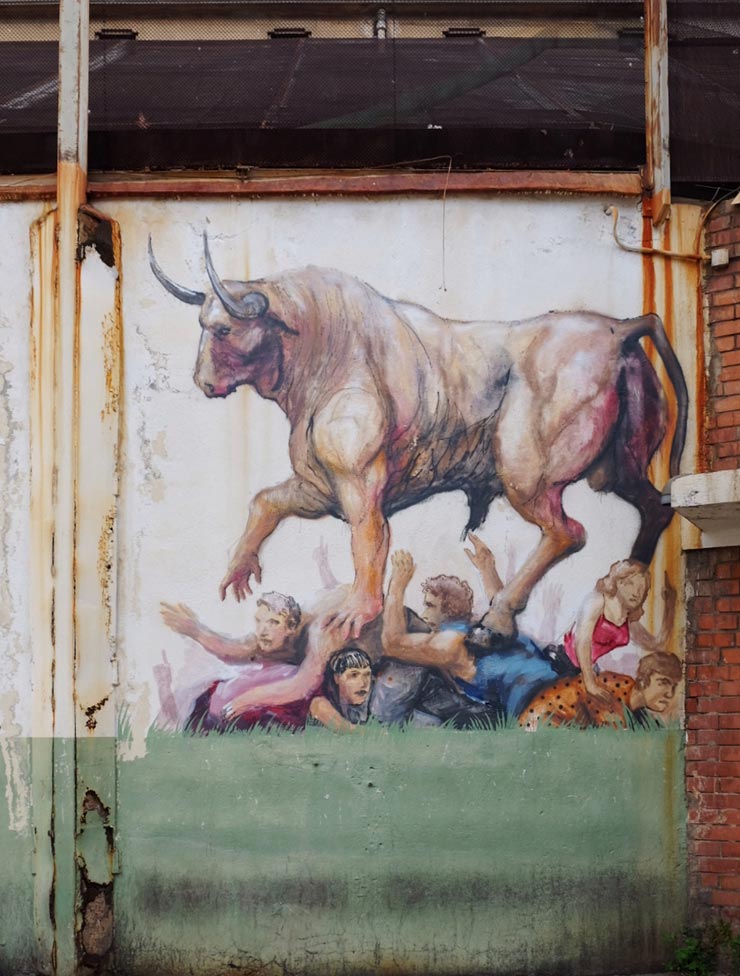
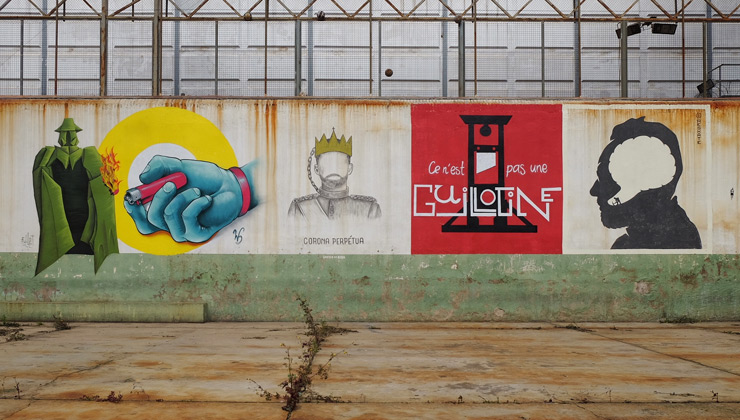
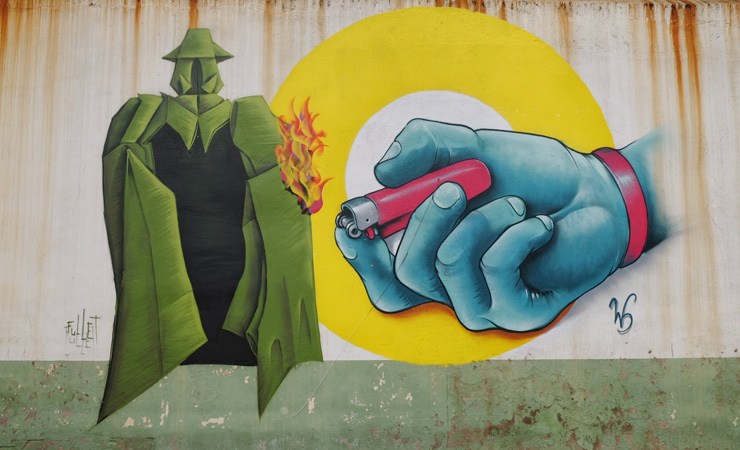
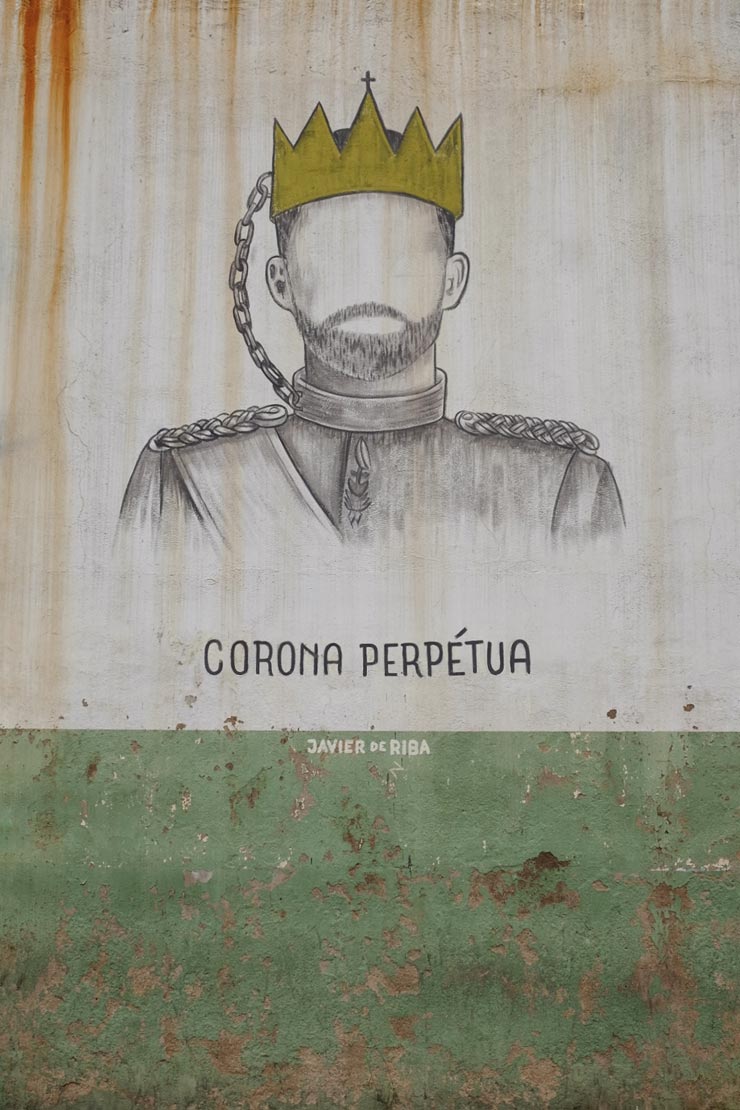
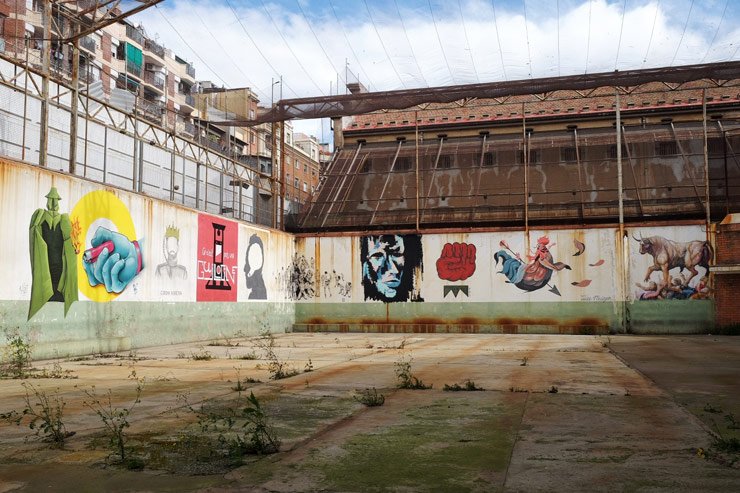
I was invited to witness the filming and painting session by local artist Javier de Riba, from Reskate Studio, who invited some fellow artists to paint at La Modelo walls as a part of the whole process. Franco Fasoli JAZ, Twee Muizen, Txemy, Joan Tarragò, Enric Sant, Milvietnams, Werens and Fullet gave a new voice to the walls surrounding that backyard, providing 2D images that perfectly matched the spirit behind the beats and the rhymes.
This is what Javi has to say about his collaboration with the project:
“Our involvement with No Callarem happened thanks to the Catalan rap artist Pau Llonch. He lit the spark for recording a clip against the Valtonyc and Hasel sentences. They wanted to do it at La Modelo no matter what and the No Callarem platform supported the action. We helped to spread the word for putting together a team with different languages together to visually enhance the video clip.
At the beginning, was what meant to be an ‘atrezzo action’ turned into a bunch of pieces that can be visited in the backyard of Gallery 4. In fact that backyard is not open to the public, but you can see it from the watch guard pit. We think that, from a conceptual point of view, it’s very powerful to keep those pieces locked – especially when thinking about how things are going in Spain regarding freedom of speech.”
Additionally it’s worth mentioning Reskate’s initiative about shouting against the suffocating atmosphere that we are experiencing here for some time: ‘Our idea is that every artist post one piece / illustration / painting / picture (old or new) supporting our initiative promoting freedom of speech in order to criticize the lack of democracy within the Spanish government.
Some of the hashtags that we will use are #NoCallarem #EzGaraIsilduko #NonCalaremos #NunVamosCallar #NonCararam,#NoCallaremos being the main one.
Visual artists from Madrid, Zaragoza, Almería, Oviedo, Valencia, Vila-real, Barcelona, Bilbao, Valladolid, Tenerife…are supporting this initiative. Some of them are: Malakkai, Escif, Paula Bonet, Aryz, Ricardo Cavolo, Enric Sant, Twee Muizen, Franco Fasoli, Hyuro, Javier Jaén, Boa Mistura, Conrad Roset, Jordi Borràs, Danjer, Cinta Vidal, David de las Heras, Juan Díaz-Faes, Chamo San, and Marina Capdevila, among others.
La Semana por la Libertad de Expresión (Freedom of Speech Week) is happening now, with different activities taking place all over the country. The funds raised from these activities will go to a resistance fund for the platform in order to defend all those people chased and brought to justice because of censorship and repression. You can check the whole program of the week HERE.
So, yes: we have a fight going on. Comedians, actors and actresses, musicians, journalists, visual artists, the guy / girl next door who is active in social media… It’s kind of a Russian Roulette game where, if you are critical with the established system and you are using 3rd grade humor as a weapon, you can end in jail. And all of it is happening in a country whose government is accused of being the most corrupt on the whole continent.
I have a very well informed friend who has been kind of disappointed with the absence of critical vision and combative behaviors from most of the big names in the local street art / graffiti scene. Thanks to initiatives such as No Callarem and the impulse of people like Javi de Riba, she is reconciling herself with this small, but powerful little world whose images have the strength for making important things happen.
Finally, I’d like to recommend that you check the publications under the hashtag #nocallaremos that are out, as there will be some fine and unique art being produced for the occasion in the upcoming days.
As it’s being said in Los Borbones son unos Ladrones:
– rap music is not a crime
– we need scratches, we need paintings
– I don’t dream about Versace, I dream about barricades
– …because of the poetry that still sleeps in the ditches…
Big props to Javi de Riba, Xavier Urbano and all the artists behind the No Callarem movement.
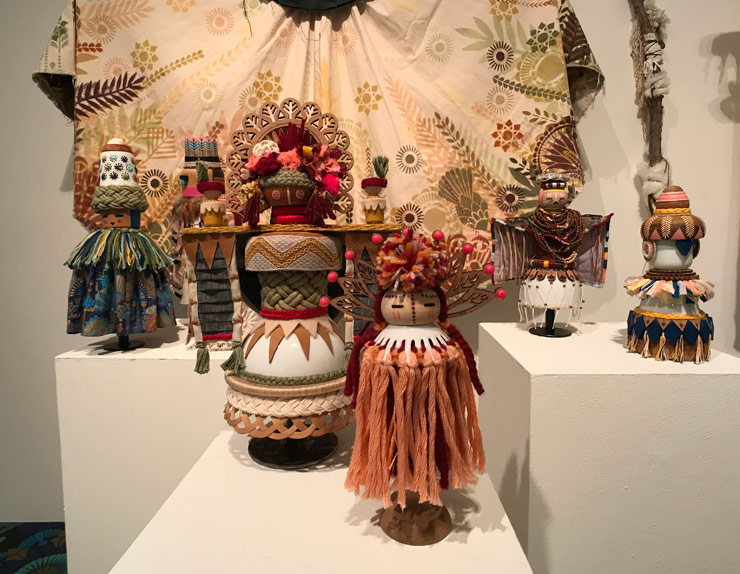
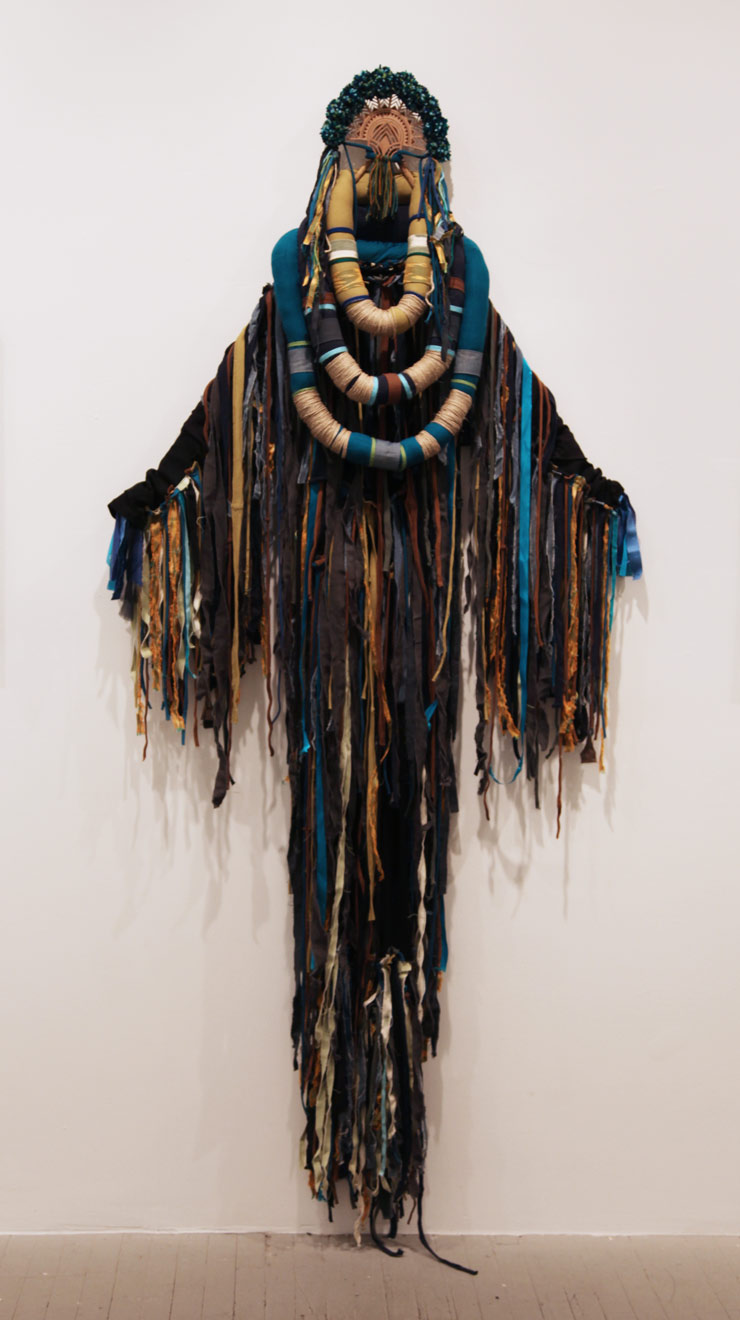
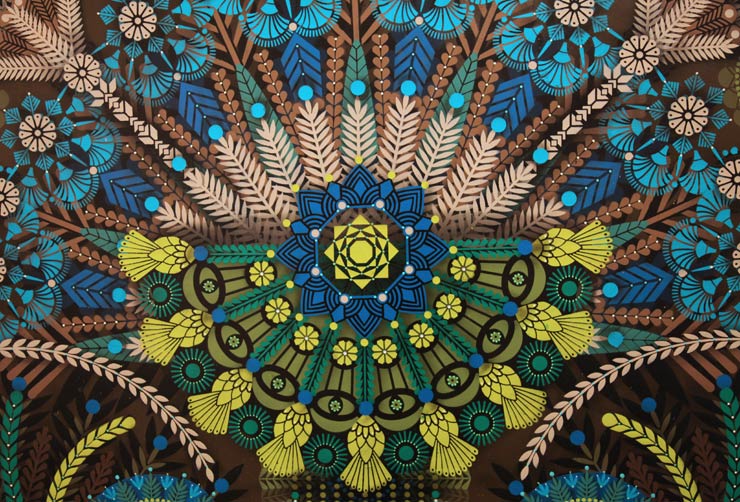
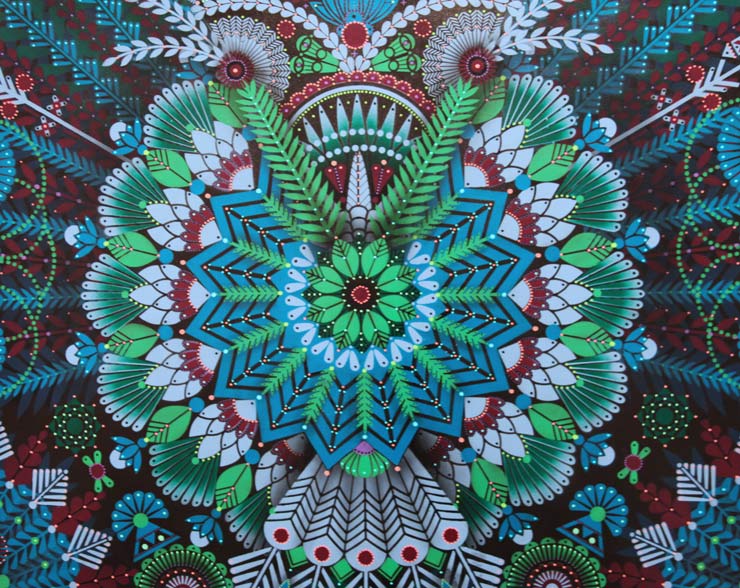
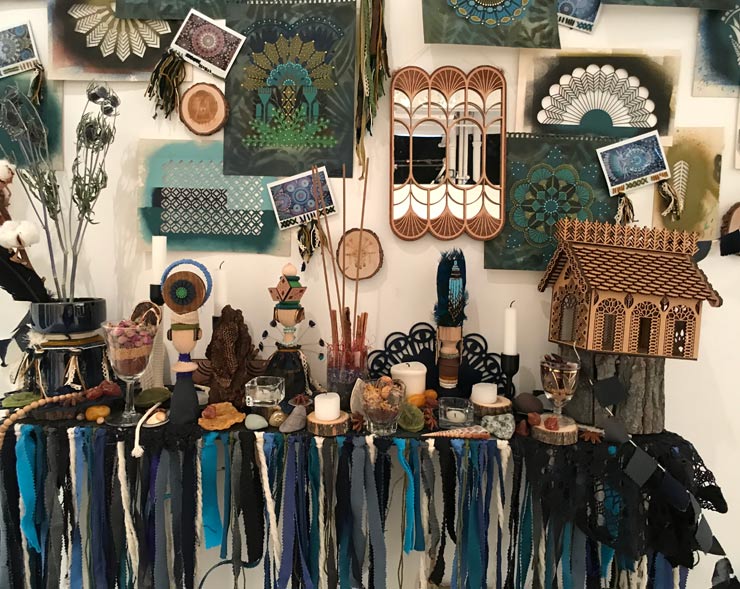
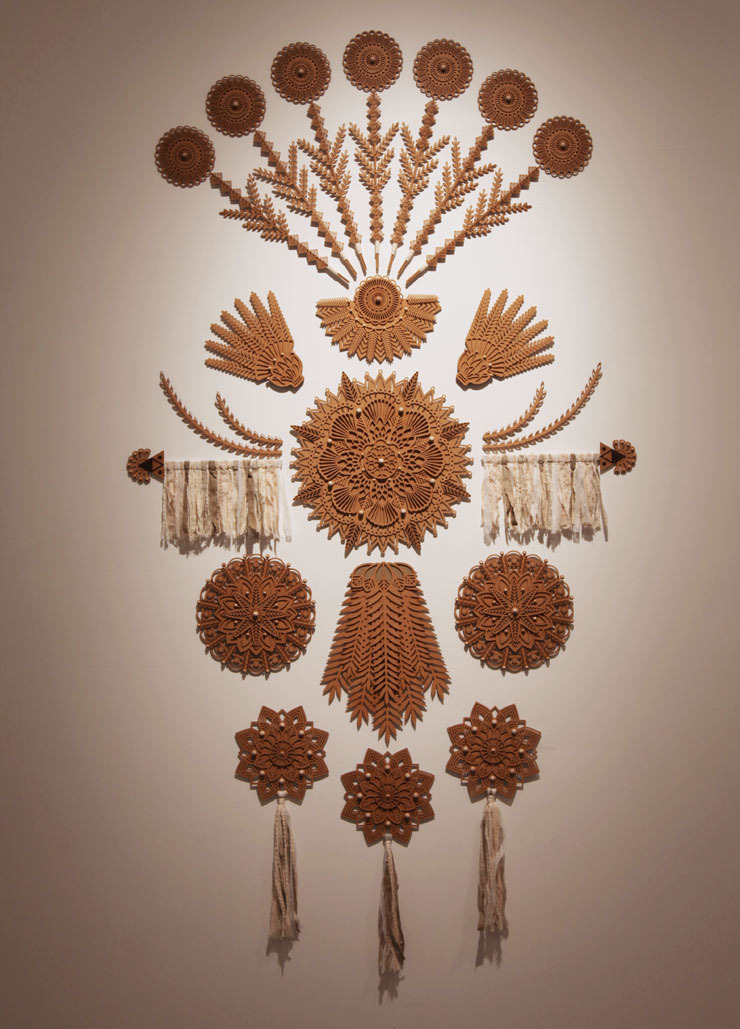
Former French Street Artist Koralie is currently having an extensive solo gallery show of paintings, sculpture and installation with Johnathan LeVine Projects in Jersey City, and her geisha is not hard to find – at least her sunny spirit is here.
The signature Japanese musical and dance entertainer she brought to the streets in the 2000s could be seen as an early influencer for these precise folkly patterned pieces – along with Russian nesting dolls, eastern European braided maidens, the occasional samuri.
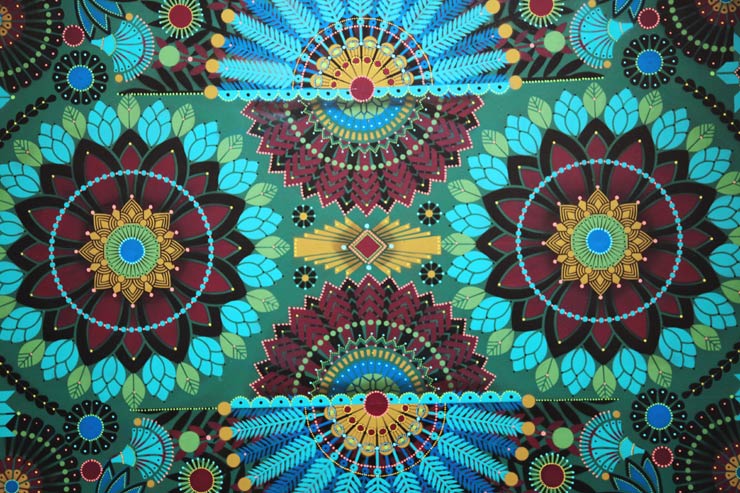
Most striking as you walk through this colliding of patterns, colors, and laser cut texture, is the sense that symmetry can make order of the effusion; a series of rhythmically visual punctuations that almost become audio, almost dance.
The influences emanate from the childhood fantasies of ornamented cultural traditions including Japanese, Russian, and Hopi, but here they are trippily lifted and re-combined with one another through the ordered graphic vision of Koralie, detached from their heavier origins and free to make new friends.
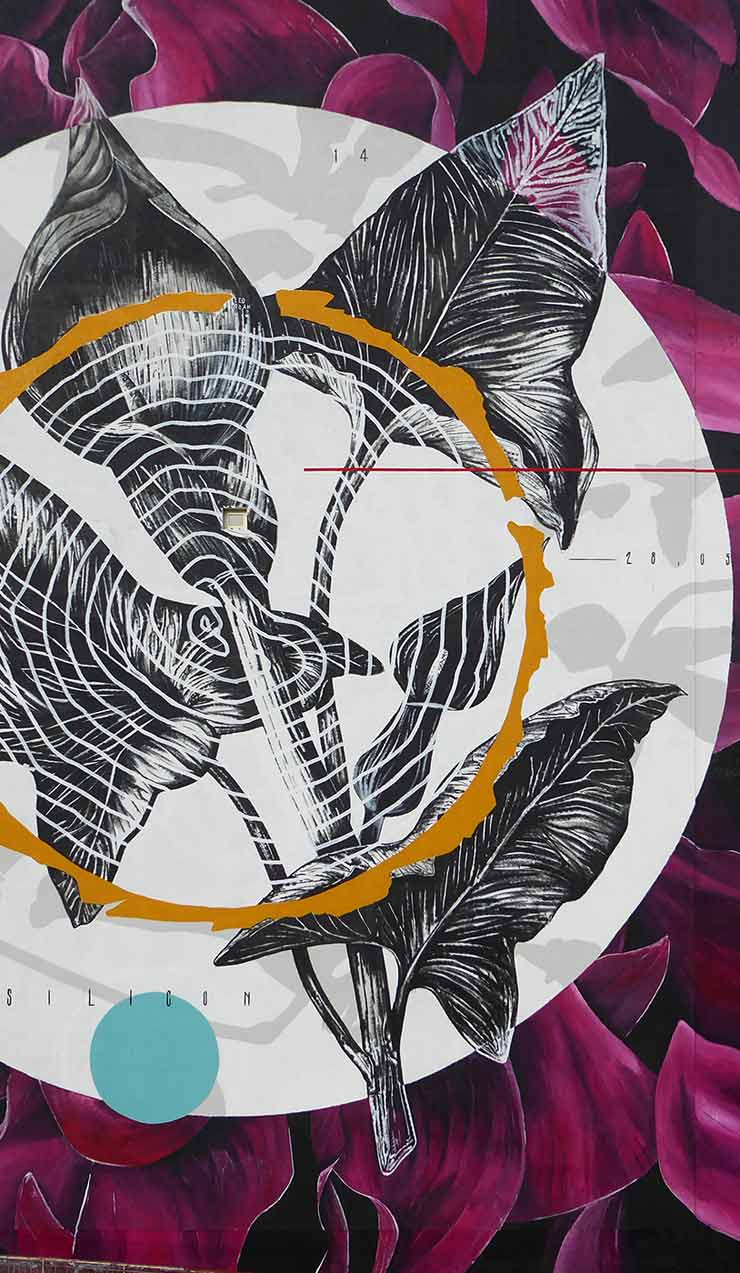
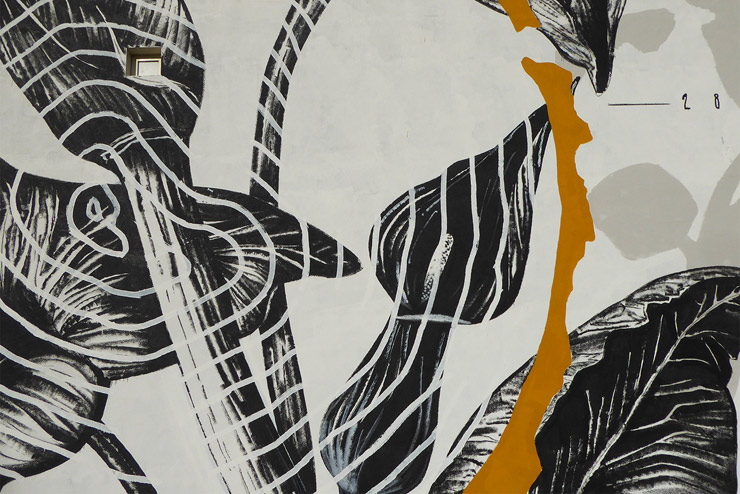
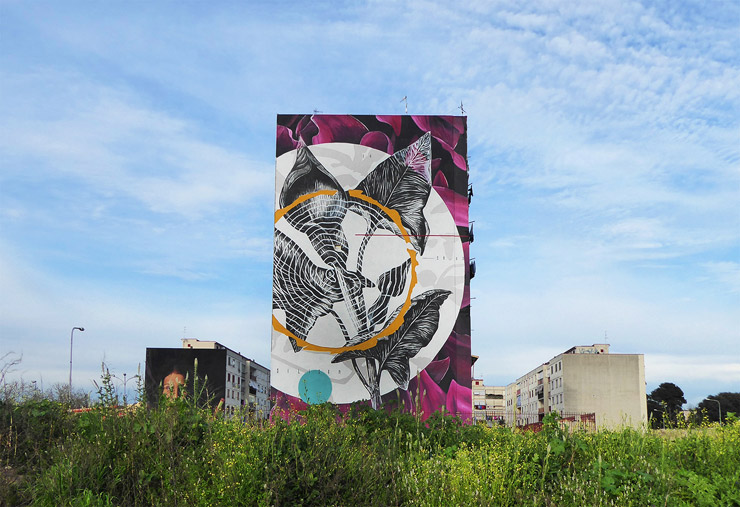
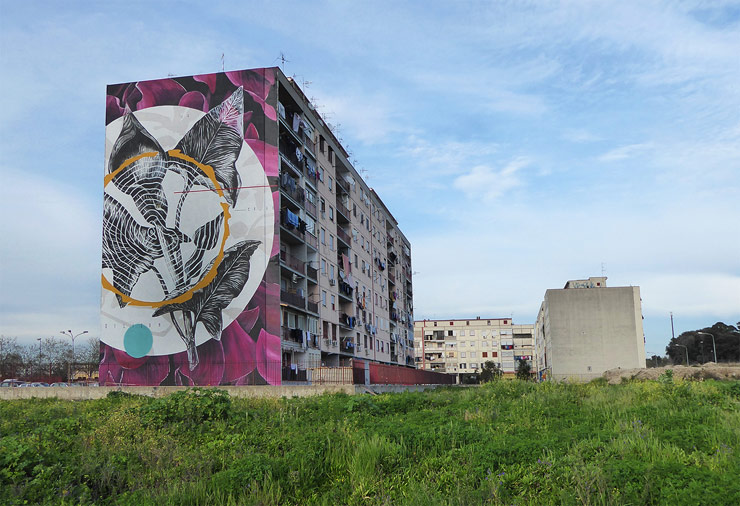
“The happiest flower is the one that is able to have a secure foundation, to receive joy and nourishment.” We paraphrase the Italian muralist Fabio Petani about the name of his new piece in Parco dei Murales in Naples.
He is speaking about flowers as a metaphor for children and families, and says that he took direct inspiration for this new mural from the observations of a group of youth who had been on a tour of this neighborhood and he observed the art and photography they created in a class after they went on the tour.
Petani says he took inspiration for the colors he chose, yellow and purple in particular, as these were the most photographed hues from the students. He says he also saw the geometry of the circle recurring so he used that shape as a formal pattern, repeated.
Currently from Piedmont, Petani was born in 1987 in Pinerolo, Turin, Italy, and he says that his interventions are inspired by flora and he integrates the shapes occurring in nature with the geometric elements of the built environment.
He says he thinks his works are “telling a tale between art and nature through chemistry.”
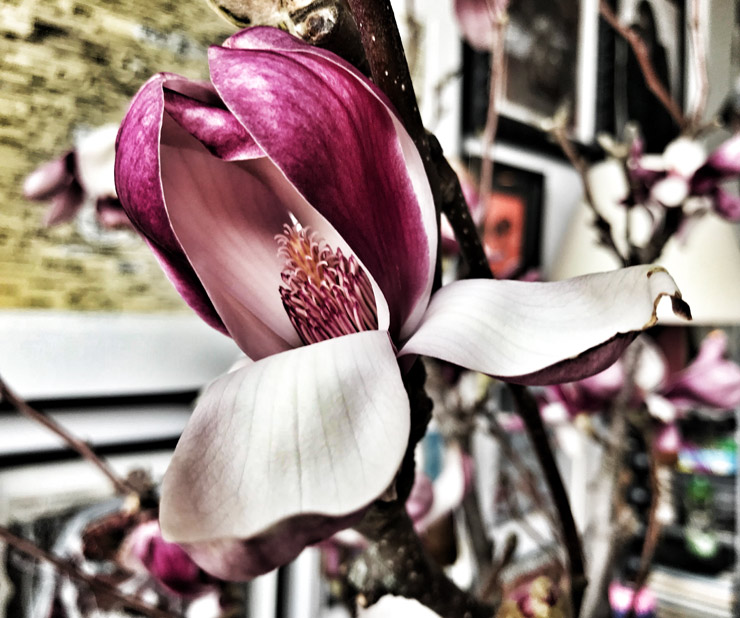
Happy Sunday ya’ll! April is the cruelest month, true. Magnolias today, snowstorm tomorrow.
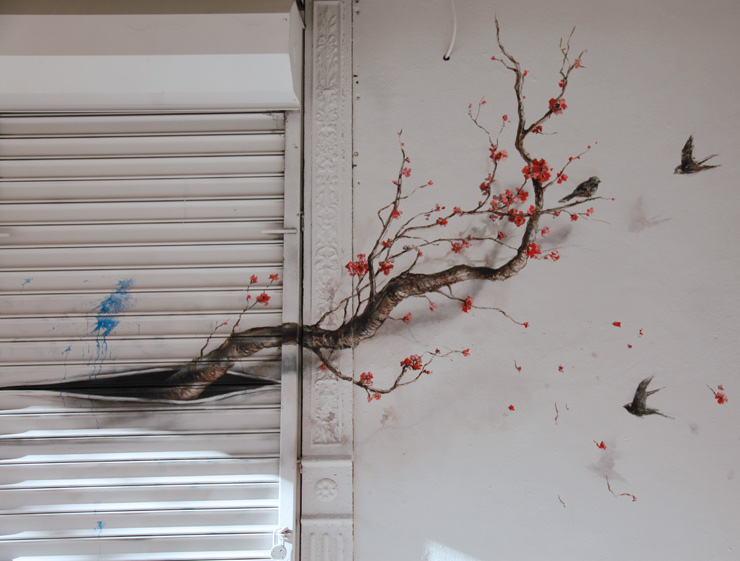
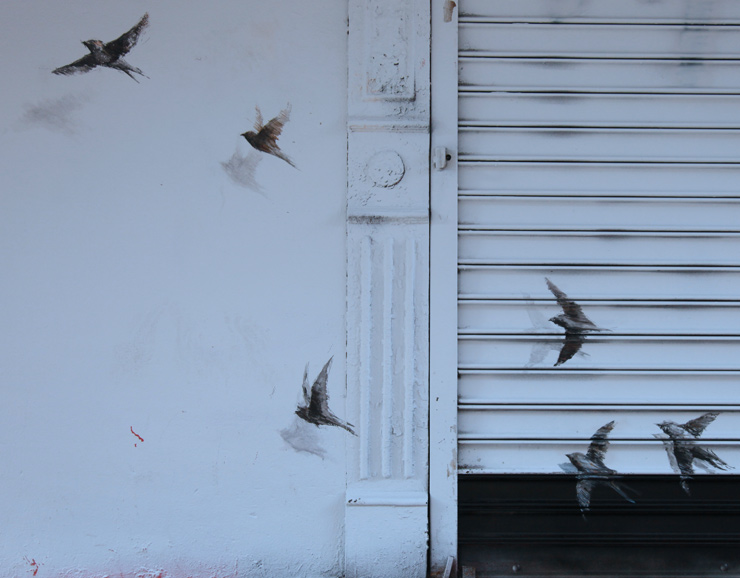
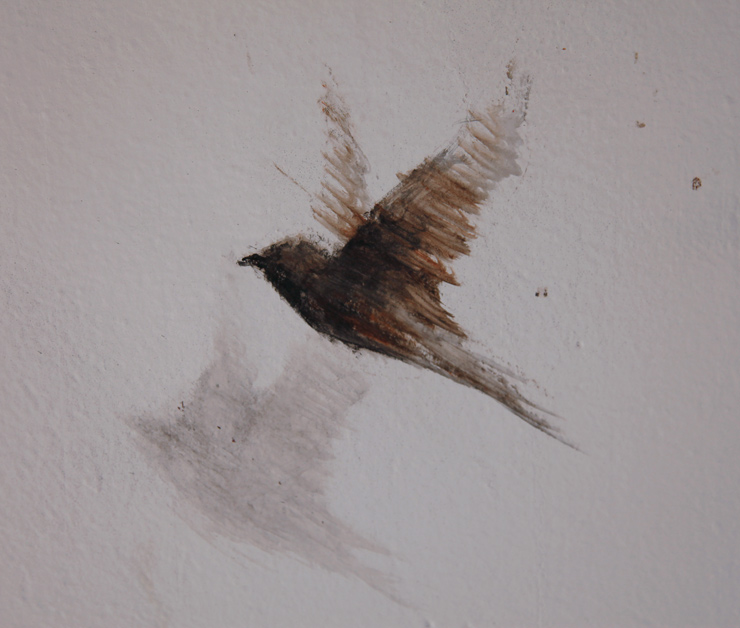
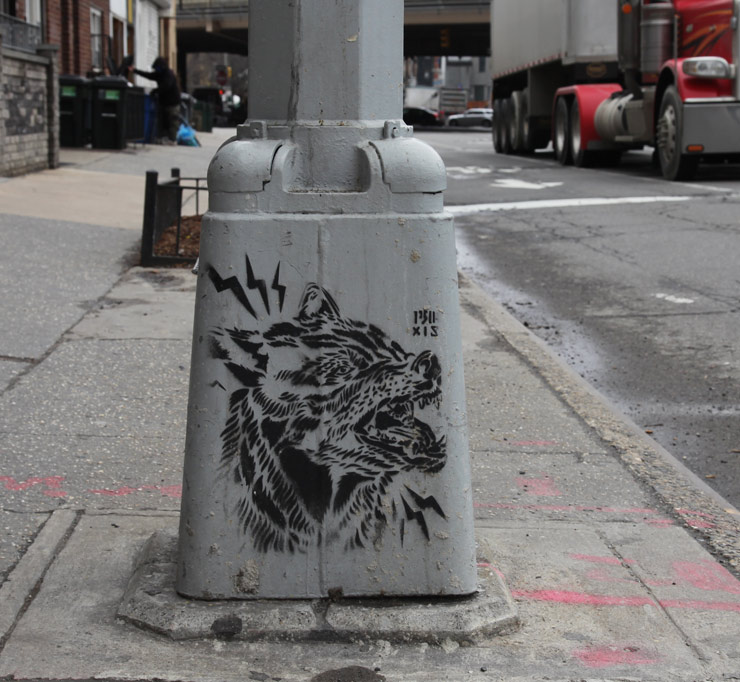
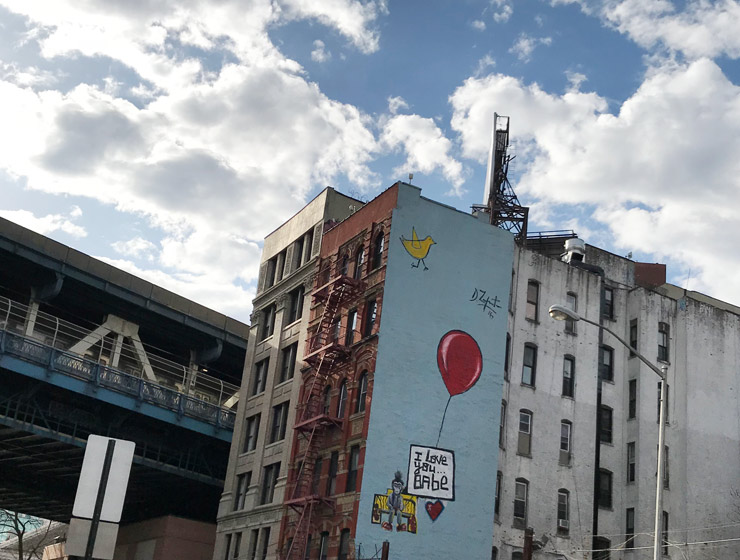
Great to see the Spanish Pejac here in New York after years of writing about his work elsewhere. It has an extra special quality that plays with perception and that people respond to – especially when he paints blossoming trees at the exact time they are blossoming in our parks, back yards and front stoops. At the other end of the spectrum, the deliberately monstrous and unhinged west coast Neck Face was back for a couple cameos to add some jarring electricity to an increasingly homogenized and candy-covered NYC.
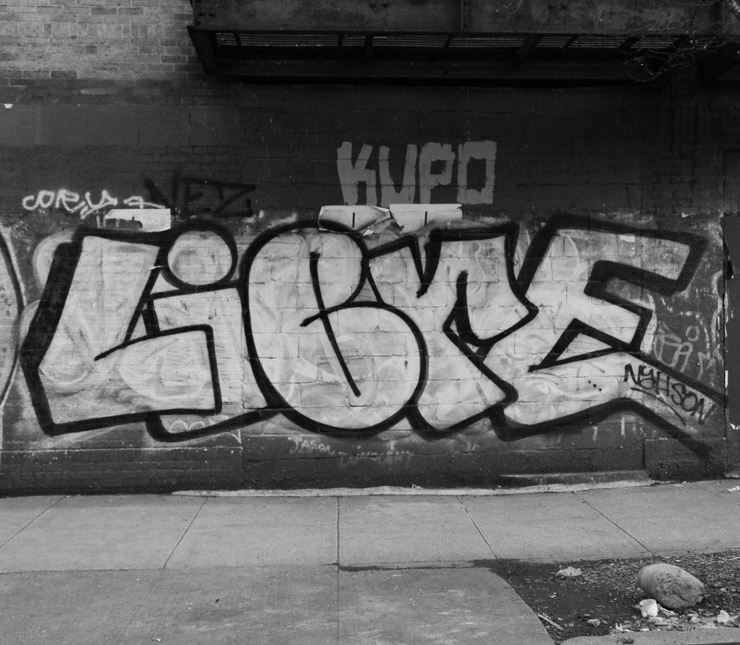
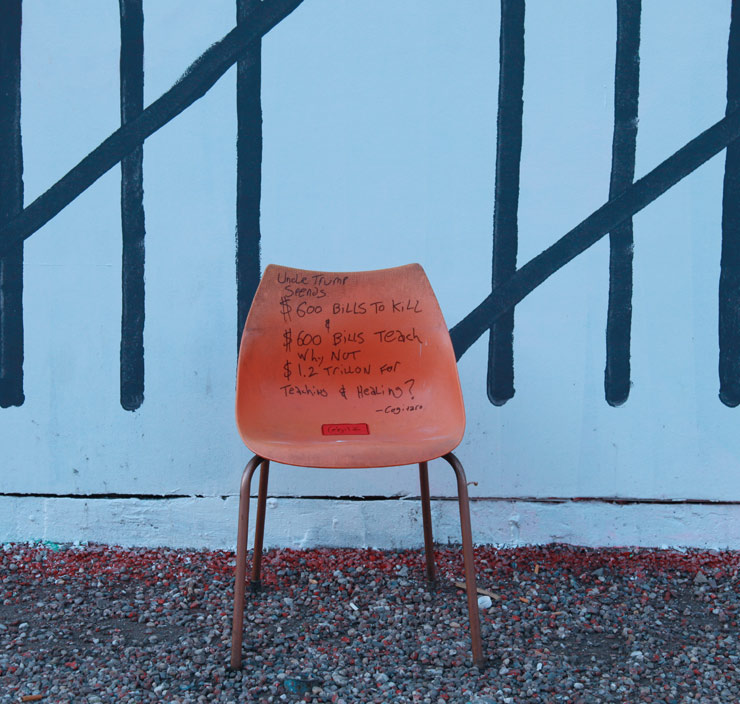
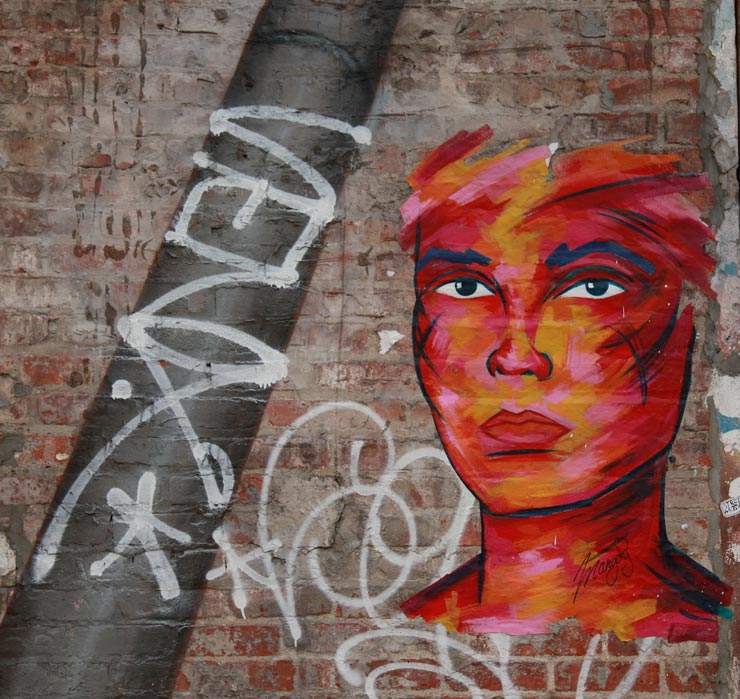
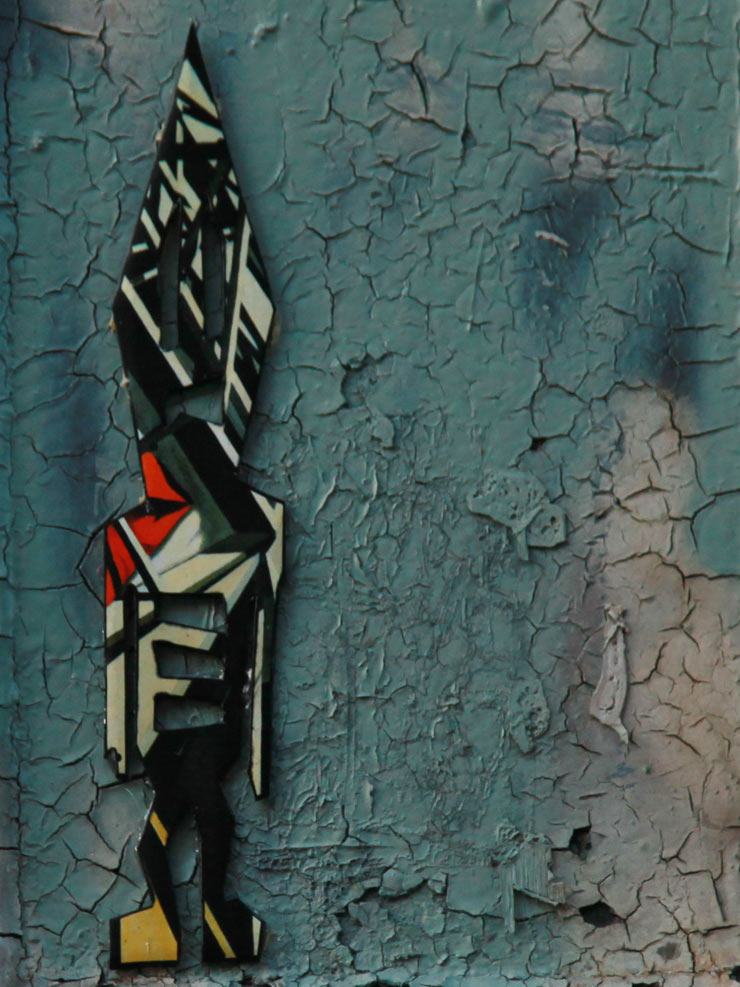
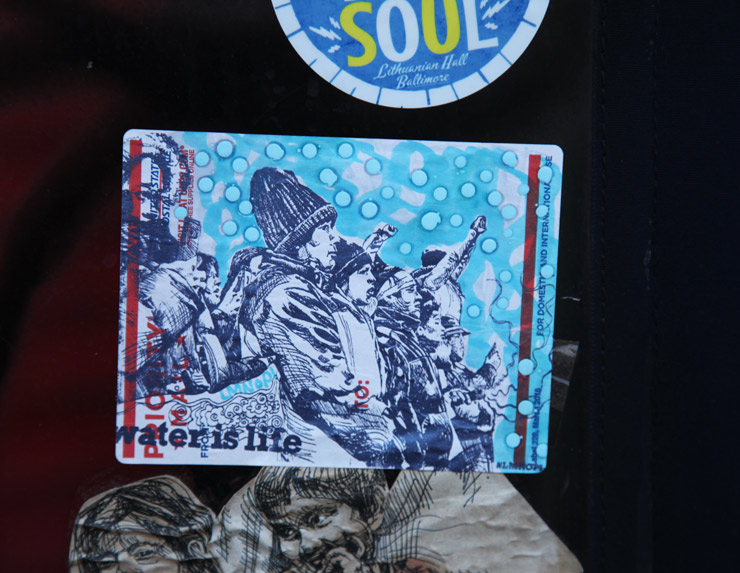
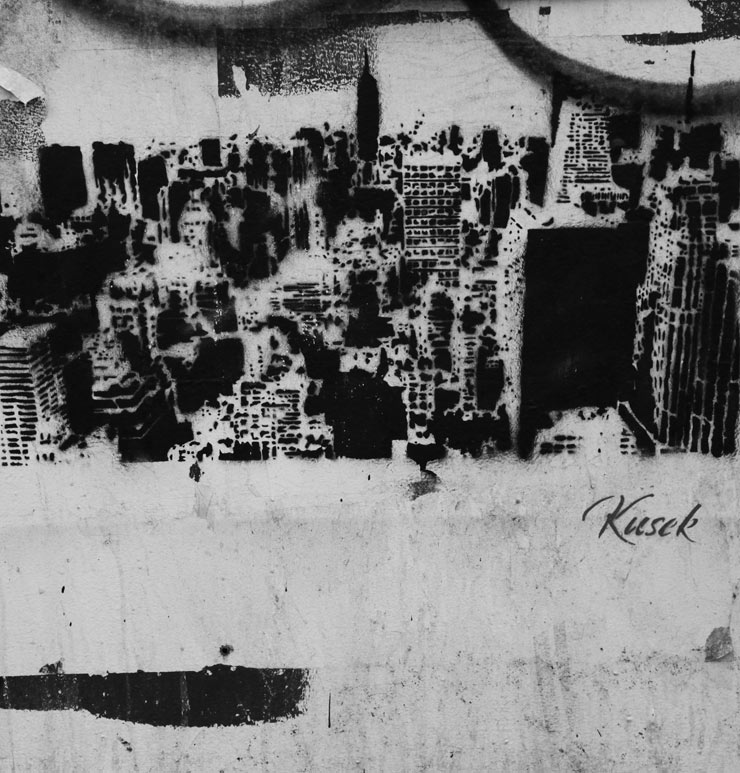
Here’s our weekly interview with the streets, this week featuring Cogitaro, Kusek, Libre, Lister, Manyoly, Neck Face, Pejac, Praxis VGZ, Skewville, and Stickman.
But they aaaallllllllllll come crawling back, Blanche. You know why? Because they know they’ll never have it as good out there as Brooklyn can serve it up here, day after f*cking day.
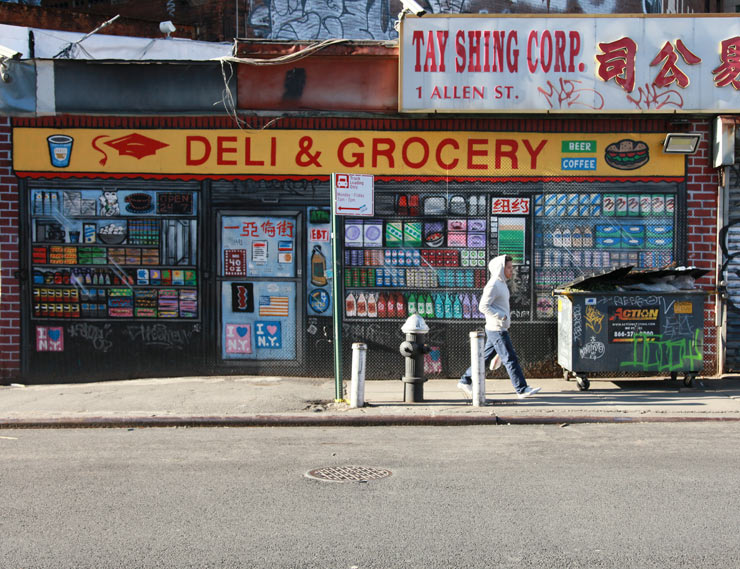
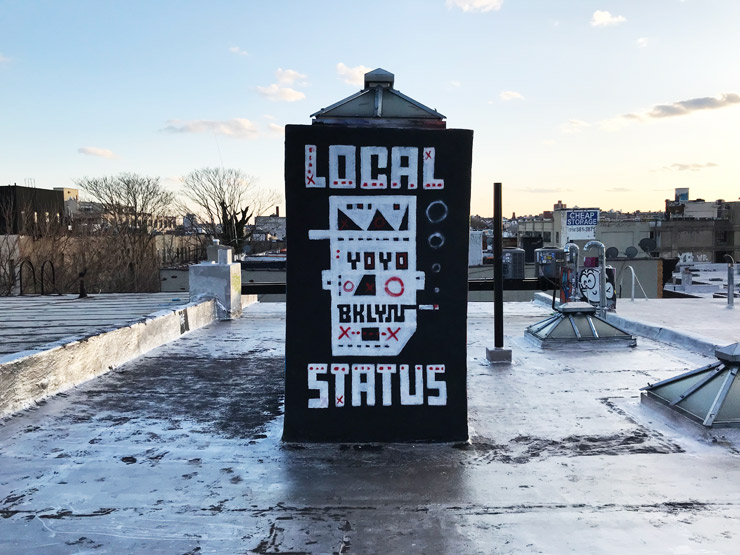
Like the defiant backslider he is, cheeks still red and eyes still puffy from crying so hard, Ad’s only partially sorry for abandoning the Street Art scene that the Skewville brothers helped launch here since the late 90s. Now he’s even making noise about the new tattered headquarters he has in a prime location of this BK armpit.
Also he says he has plans, which is rarely a good sign.
But for some reason the neighborhood feels whole again. So kill the fatted calf, and crack open a 40 oz. ! Welcome back Skewville!
Our weekly focus on the moving image and art in the streets. And other oddities.
Now screening :
1. Chip Thomas AKA Jetsonorama new KQED mini-doc
2. Sinclair Says: Multiple Sources for Your News? No.
3. Studio Visit with Mark Dean Veca
BSA Special Feature: Chip Thomas AKA Jetsonorama
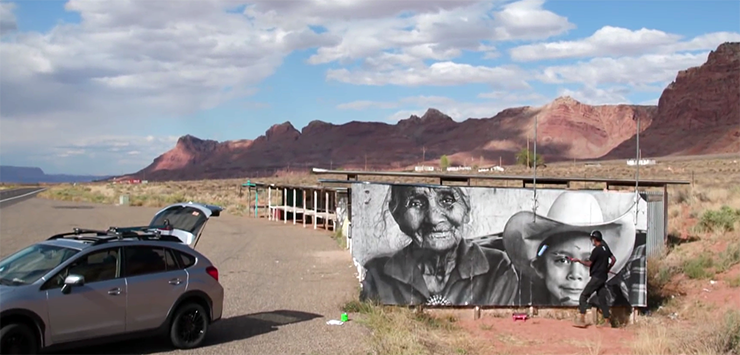
He has a hat, sunglasses, and he has been creating huge black and white photo installations of people wheat-pasted to the sides of buildings for how long? Surprising to us that Jetsonorama is not more of a household name in Street Art circles – his work is solidly tied to biography and human rights, uses his own photography, and routinely elevates humanity – and has been doing it for some time now.
Why isn’t he in huge museum exhibitions?
Today we have a new video giving you a good look at the work and the artist along with the genuine connection and presence that he has with community, taking the time to share their stories.
Multiple Sources for Your News? No.
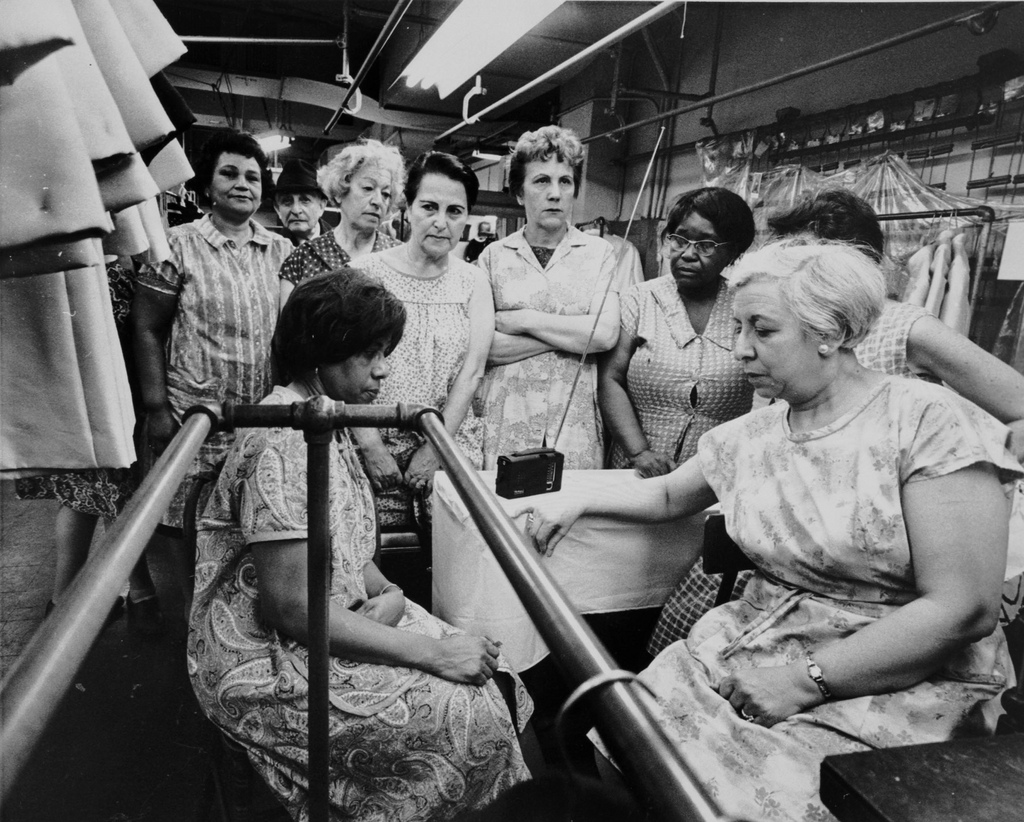
They don’t call it programming for nothing. The reasons Biff and Buffy newsreader don’t seem to have any souls is because that’s not really them talking. Thanks to the 1996 Telecommunications Act signed by Bill Clinton, the majority of TV, radio, magazines, newspapers, news websites, and billboards are now consolidated into the hands of about 6 companies, instead of 36, or 300.
This system seems ripe to put out any message and hit you with it three, five, seven times a day every day from multiple sources – until you think that the message must be the voice of the people. Imagine what they can convince you of.
When they say “deregulate” often what they really mean is “we regulate”. Moments of truth like this video only pop their heads up out of the foxhole once in a while – then disappear in a fog.
Juxtapox Magazine x Chop’em Down Films: Studio Visit with Mark Dean Veca
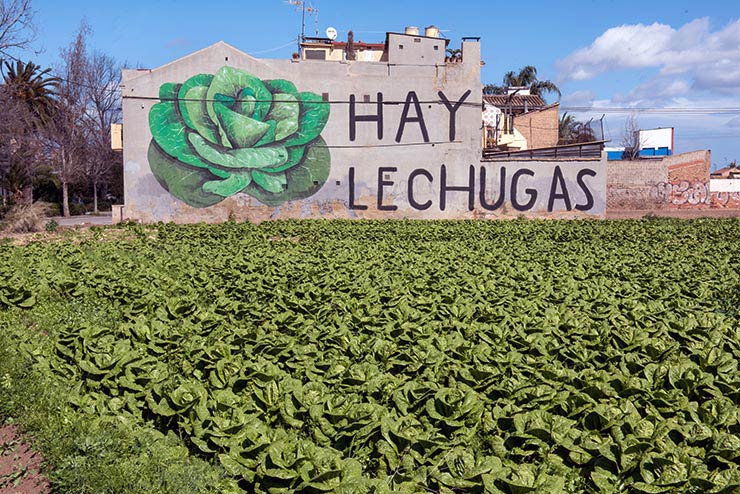
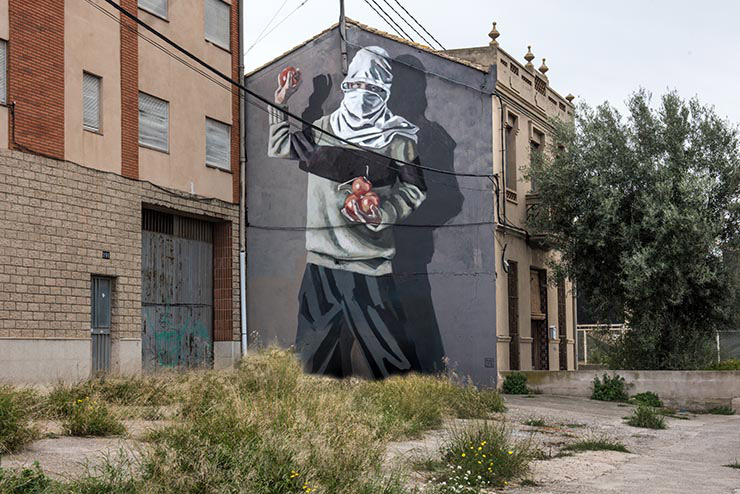
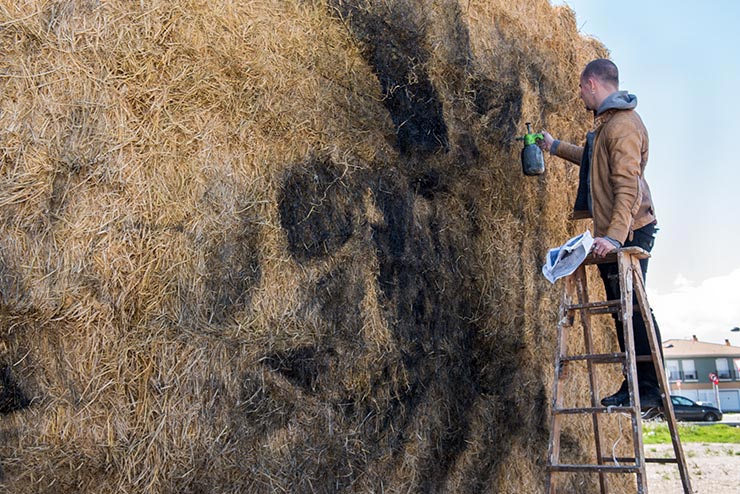
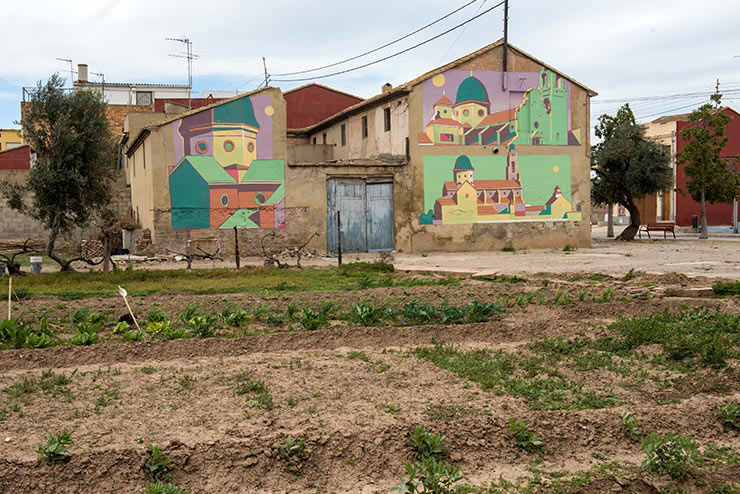
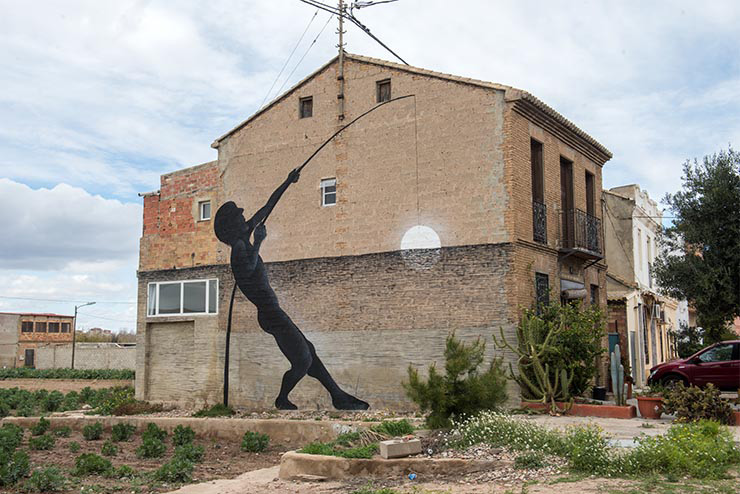
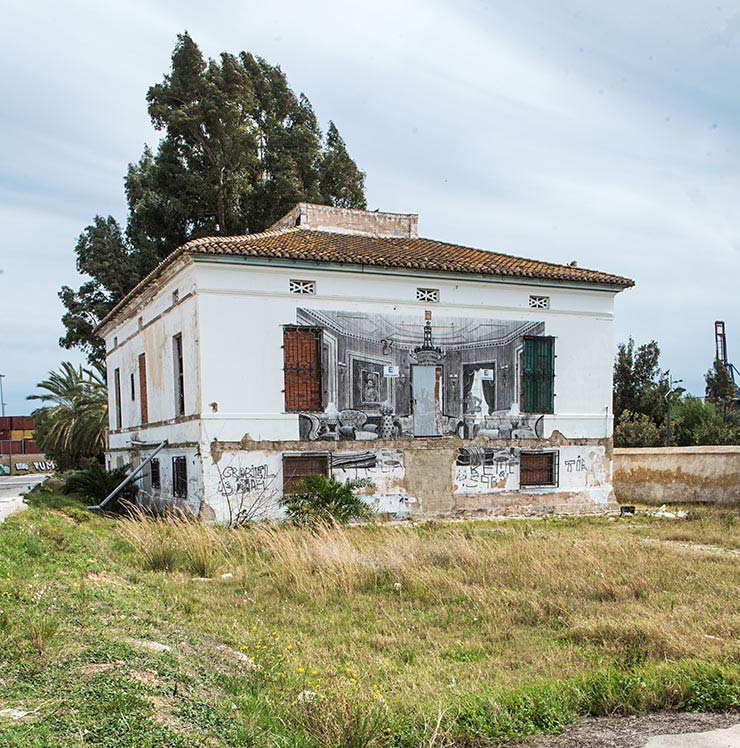
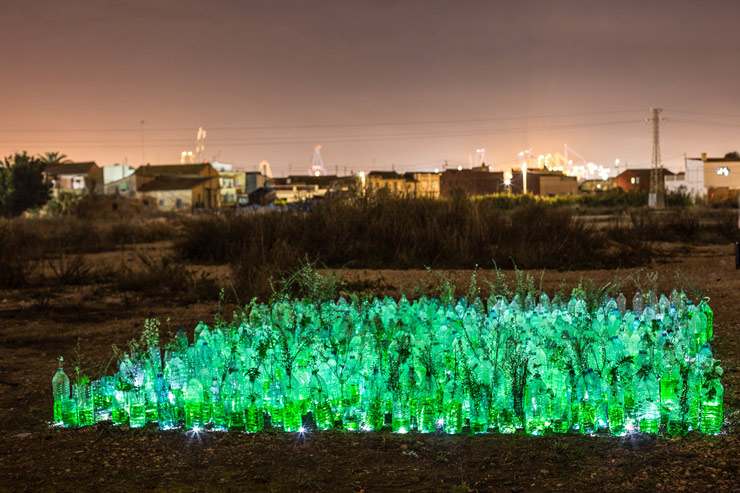
Street Artist Escif organized with other artists to fight the commercial development of seaside land in Valencia last month. With the help of other socially responsible artists including Aryz, BLU, Borondo, Escif, Anaïs Florin, Hyuro, Luzinterruptus, Daniel Muñoz “SAN”, Sam3 and Elías Taño, Escif and local organizers are publicly pushing a message that shows the local council what it means when citizens are engaged.
According to the organizers La Punta is a hamlet of orchards and gardens located in the south of the city of Valencia where more than 15 years ago the “Logistics Activities Zone” (ZAL) project of the Port of Valencia decided to chase hundreds of people out of this land to give to developers as a new port initiative.
Well, that failed spectacularly, probably because funding fell through due to the global financial crisis, and 15 years later development has not happened. The land has begun to evolve and return to its more natural state and a local farm economy has sprouted up. Meanwhile city planners are hoping they can conjure up another way to use these public lands for private profit.
But grassroots organizers say they want the public/private predatory folks to step back and let citizens decide what to do with this area. Thanks to this new “SenseMurs” public art initiative that is drawing a lot of critical eyes to the matter, more citizens may actually get a seat at the table. Well organized and great communicators, on March 10 and 11 the artists and activists gave tours of the murals of SenseMurs, called a press conference, threw a concert, and opened the doors to other citizens for their participation in the process.
“Within this context, neighbors and associations are trying to bring attention to this reality in order to negotiate with the Administration and start a public participation process,” says the art collective Luzinterruptus in an email, “where it will be decided how these lands will be used and to mend the injustices committed against the neighbors so another chance is given to the deported families to return and work the lands of l’Horta de la Punta.”
Enjoy these shots of the installations from Martha Cooper and two from Juanmi Ponce, starting off with the one and only BLU.
A: ¿ Porqué HAY LECHUGAS ?
B: Pues porqué alguien plantó semillas en esta tierra fértil, les puso agua y dejó que el sol hiciese su trabajo. Imágino que es un ciclo natural. La tierra es generosa y muy prospera. A poco que la cuides, te regala lechugas como estas.
A: No me refiero a eso. Mi pregunta es porque escribes la frase HAY LECHUGAS.
B: Ah! …pues porque hay lechugas!
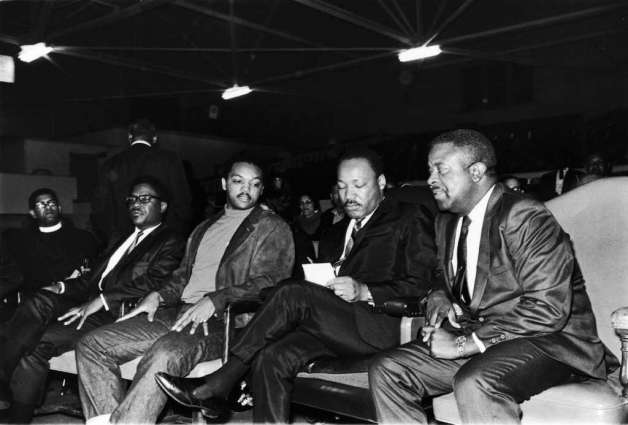
A dark day in our nation’s history today as we mark the 50th anniversary of Martin Luther King Jr.’s assassination and we recognize that our legacy of racism still severely hinders our progress forward today.
Dr. Martin Luther King, Jr., flanked by Reverends Bernard Lee, Jesse Jackson and Ralph Abernathy, looks over notes before his “I’ve Been to the Mountain Top” speech delivered on the eve of his untimely death, April 3, 1968, at the Mason Temple in Memphis, Tenn. (Maurice Sorrell/Ebony Collection via AP Images) Photo: Maurice Sorrell
He had a vision of us as a unified people, a vision that we get glimpses of but still haven’t reached. Seeing his speeches, hearing his words, remembering his strength and determination gives us the impetus to rededicate ourselves to the causes of equality and justice and the dismantling of systemic racism.
When we say equality, it has to be equal access to opportunity. And when we say justice, it has to be economic justice. Some say that it was King’s more strident and vocal advocacy of economic justice and the rights of workers and unions, his criticisms of the manipulations of the press, and his outspoken targeting of the military industrial complex that ultimately posed a threat to power.
 BROOKLYN STREET ART LOVES YOU MORE EVERY DAY