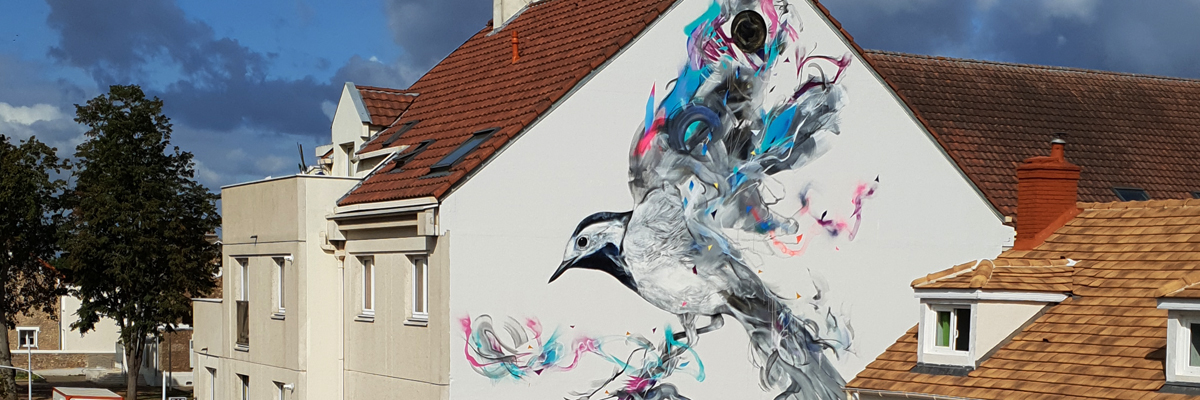
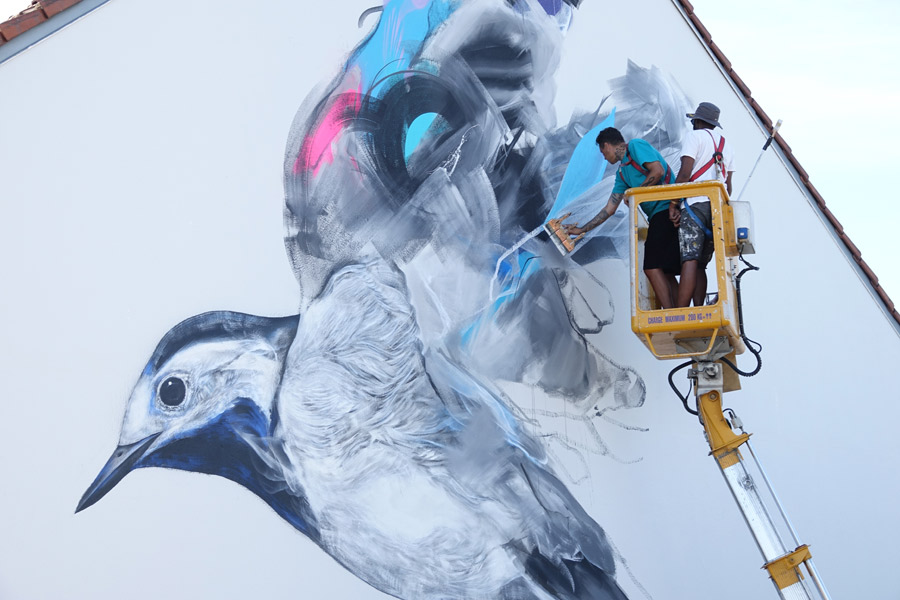
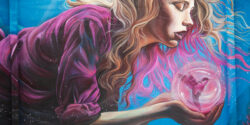
“Not all people like Street Art and not everyone likes Mickey Mouse!” said street artist L7Matrix on his Instagram earlier this year, which may explain his collections of birds, tigers, even jellyfish realistically rendered, then exploded in colorful abstract.
His signature style is typically aviary
and it has taken him from Berlin to Brooklyn to LA to Talinn to Paris to the
Twitter office in his native Brazil to complete his attractive mural making for
clients and festivals.
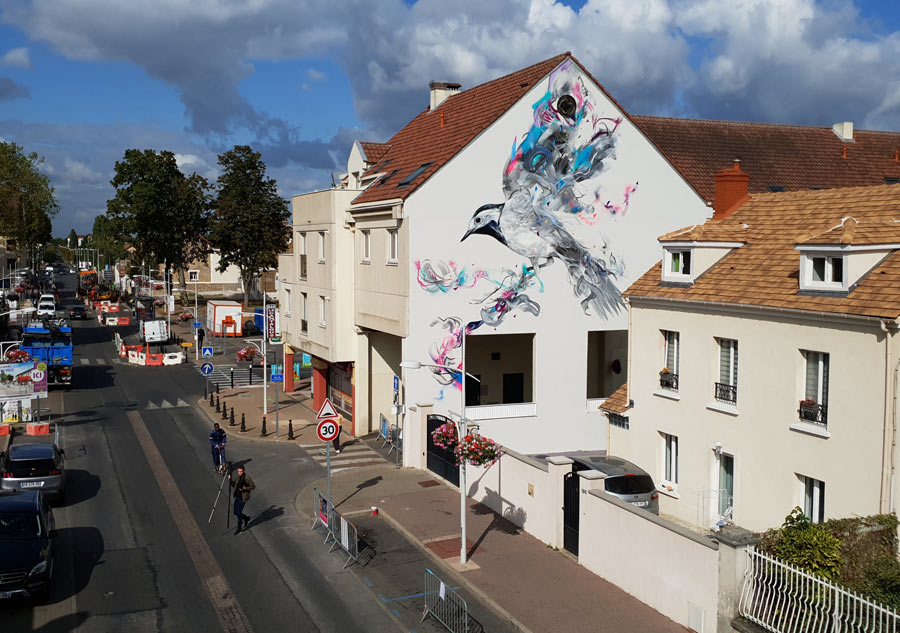
Here we have his latest fresco
completed as part of the Wall Street Art festival in Grand Paris Sud. Organizer
Gaultier Jourdain tells us that this is the first urban fresco completed in
this southern French town of Moissy-Cramayel.
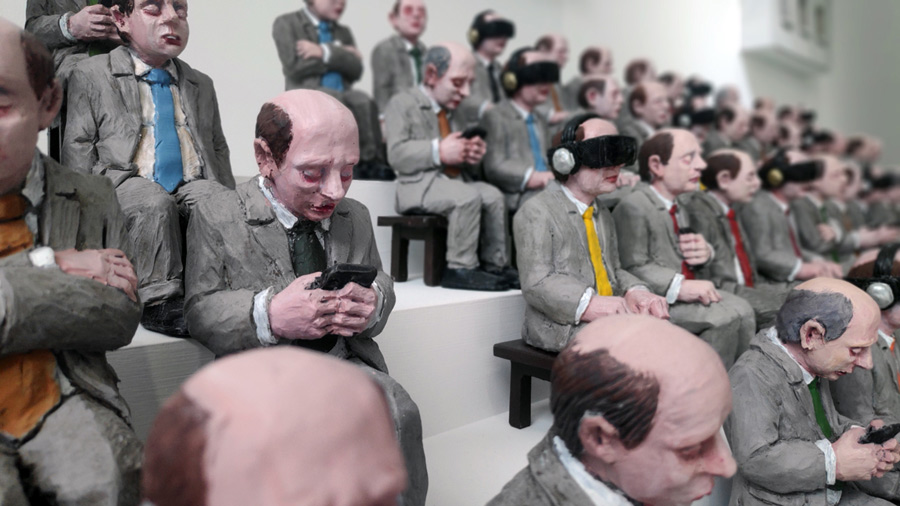
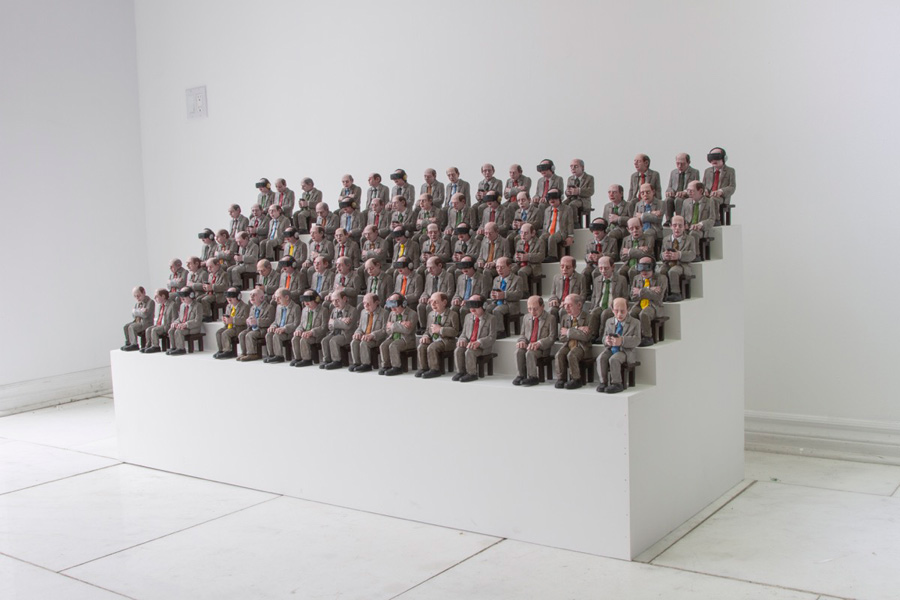
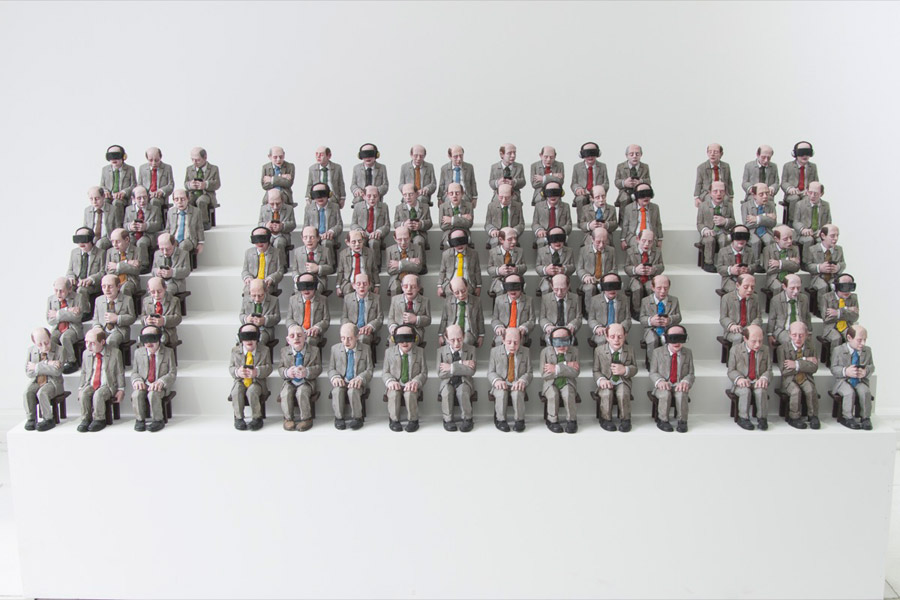
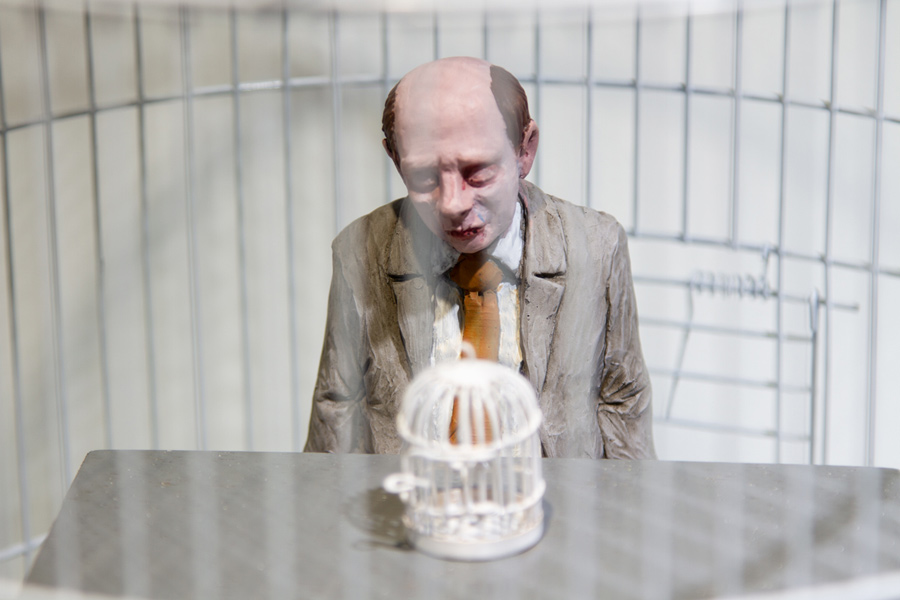
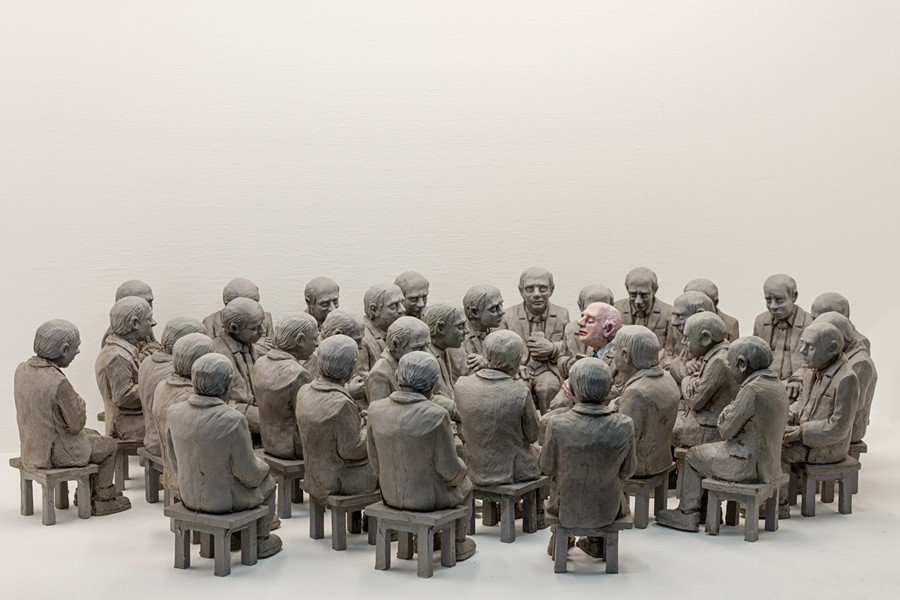
The evolution of an artist’s practice is something we feel very privileged to observe over time and we revel in the successful steps forward that any artist takes, preferring to see it as an act of courage. Street Artist Isaac Cordal is currently taking a big jump forward, consolidating his strengths and doubling down on his convictions in ever more powerful ways for his new exhibition entitled “Ego Monuments”, now showing at Galerie C.O.A. in Montreal, Canada.
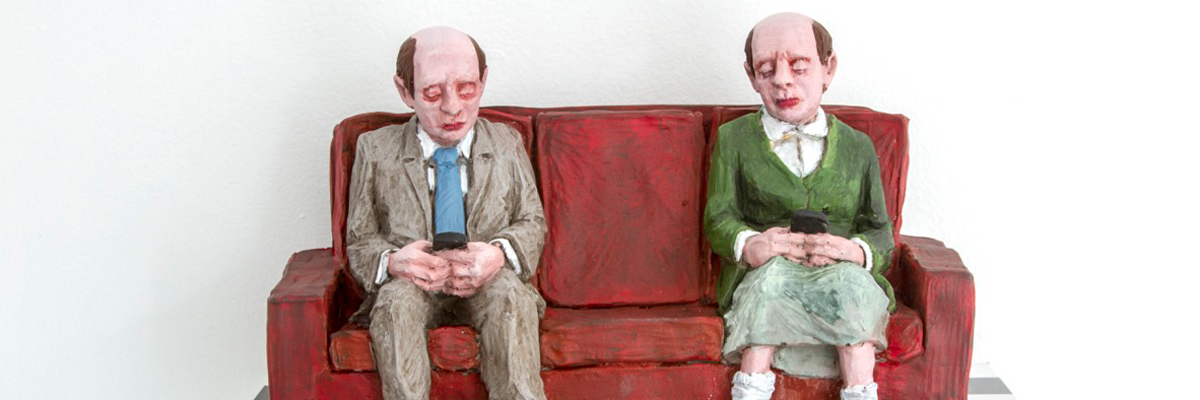
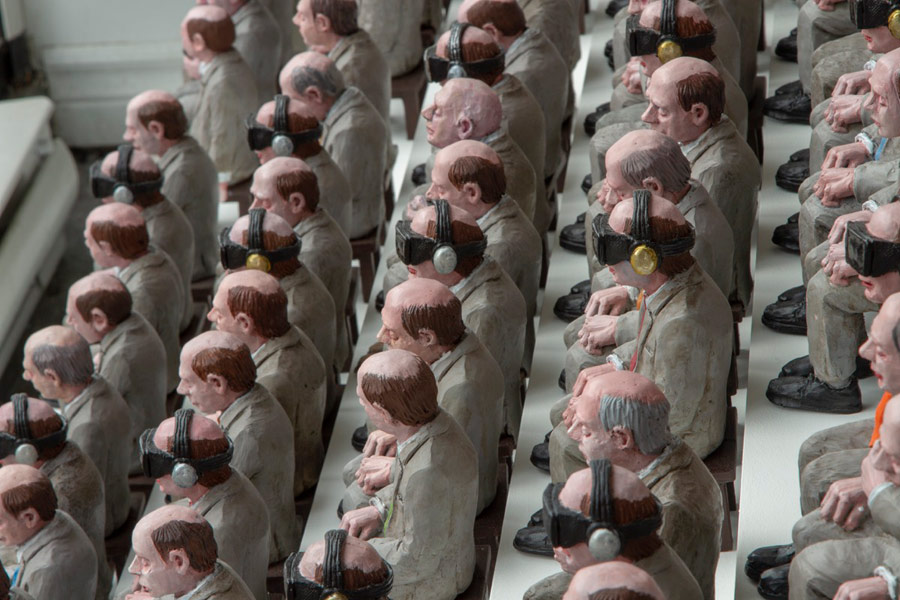
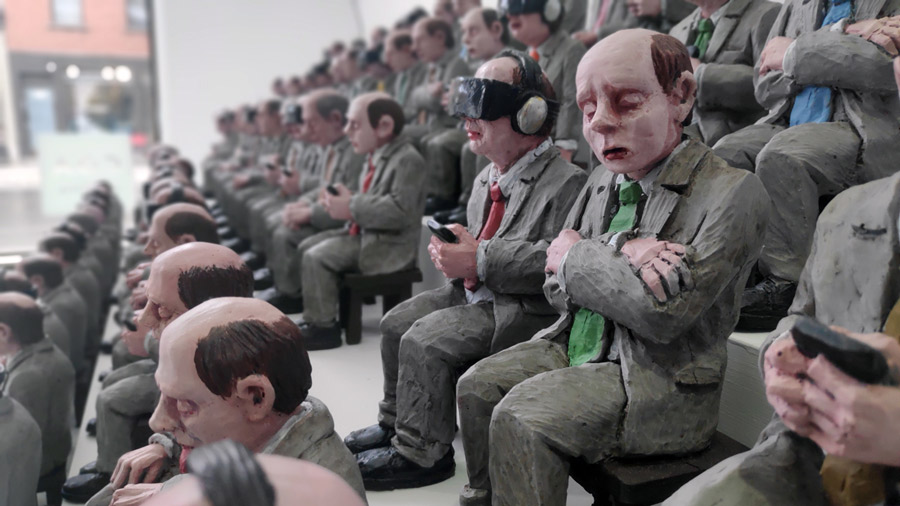
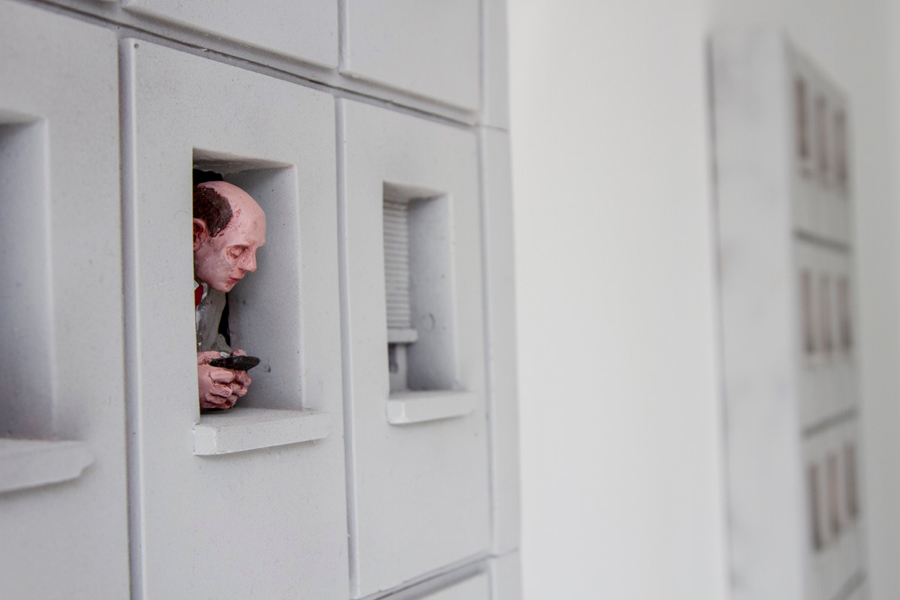
His vocabulary intact and increasingly sophisticated, something tells you that it is all synthesizing and gathering with the momentum of a storm. Here he is mocking the clique mentality of the politburo, presenting his company men as a block of distracted dullards, each separately miserable and indistinguishable in their groupthink.
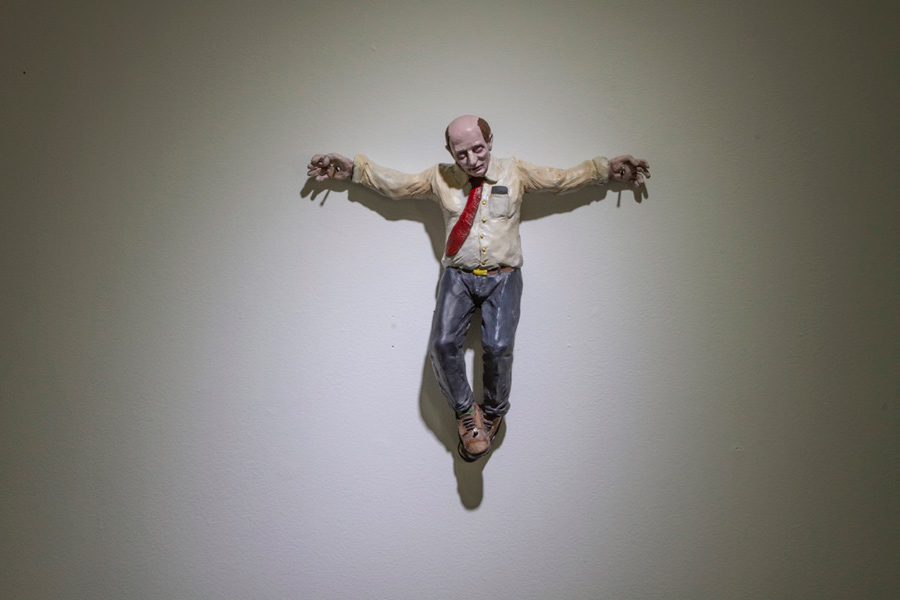
The image of one of his hapless figures as a crucified businessman with slightly ghoulish smirk taps into the themes of self-important sacrifice and holy reverence of so-many corporate heroes, frankly flagellating the idea of either. Elsewhere soaring pedestals lift the individual so high that coming down would likely result in death.
As a disarming collection of
installations in the gallery you may revel at the methods Cordal devises to
communicate the collective blindness pushing us further toward oblivion, his
blunt critique of consumer culture and mindless navel-gazing is a reassuring
mediocrity that warms you gradually– as the water rolls toward a boil.
“We are the new version of
colonialism,” Cordal says his new press release, “we are waiting for climate
change by sunbathing on the beach. We live permanently exposed, controlled,
leaning out to the public balcony of the social networks and Big Brother has
become our flat-mate.”
As we examine our public statues and the messages of our massive free-standing art in parks, Cordal suggests that size matters in this age of the SELF. “Monuments to the ego would be so big that it was necessary to change the scale of these works to place them into the gallery.”
Elsewhere he comments on the sorrowful narcissism that permeates the culture, as expressed by his figures here: “Almost all the sculptures that are part of the exhibition have their eyes closed, immersed in their smartphones or virtual reality headsets. Blind to their own reality, they don’t want to see beyond their own perimeter. ”
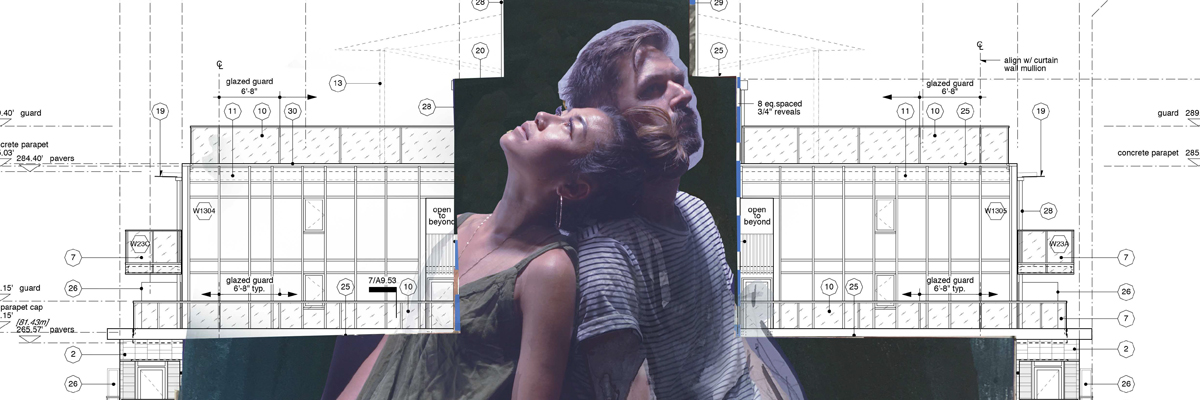
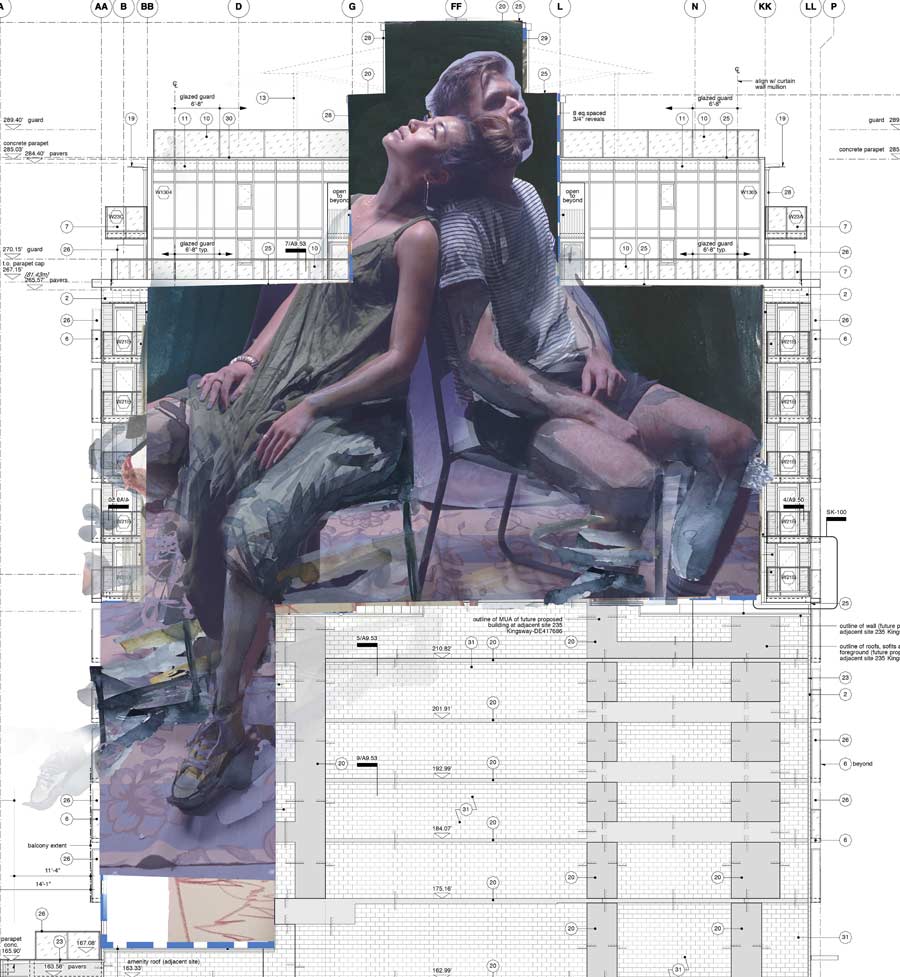
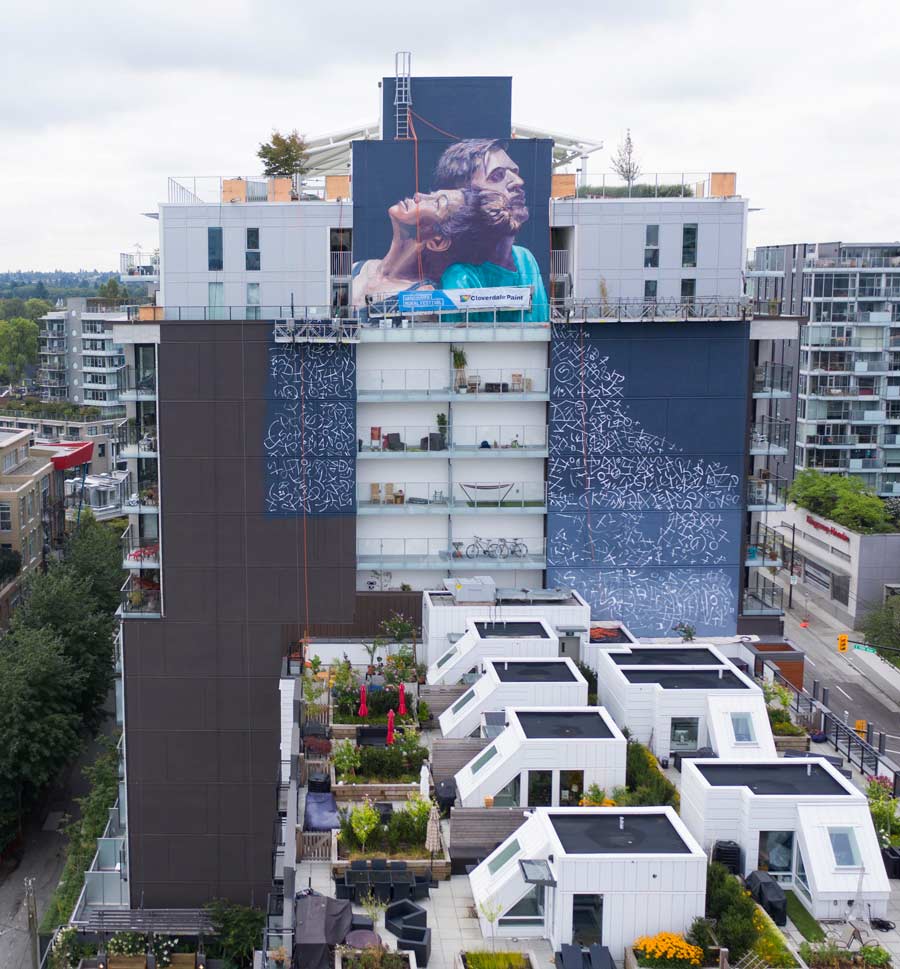
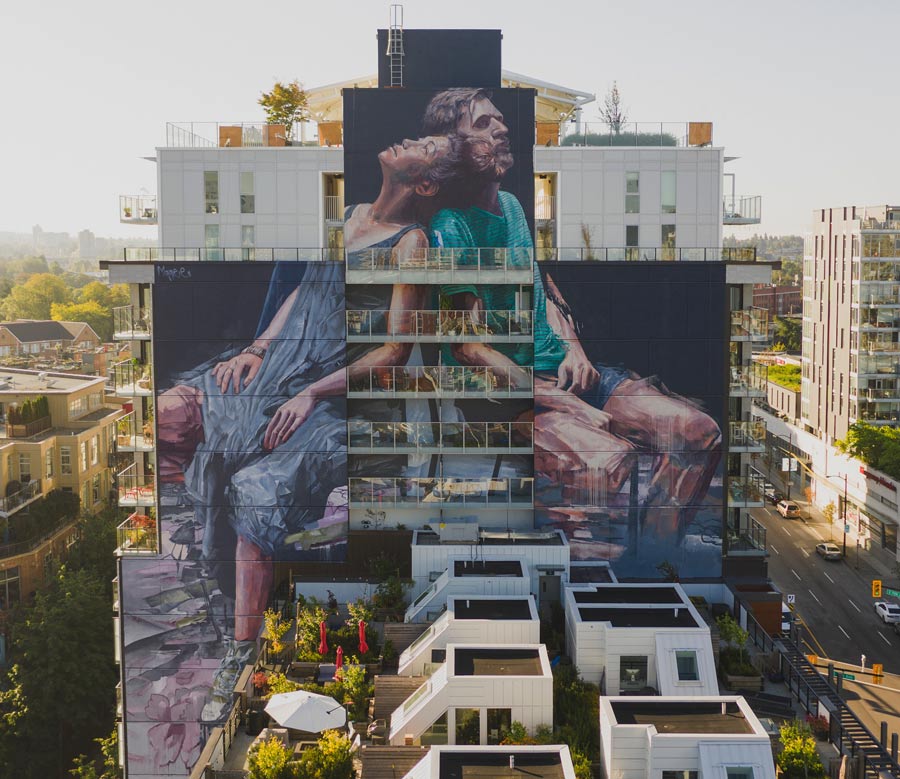
Brisbane based conceptual realist Fintan Magee sends us a new conceptual, figurative piece he just finished in the Mt Pleasant neighborhood of Vancouver, Canada as part of their local mural festival. Included in the lineup were a varied selection of illustrators, graphic designers, old skool graffiti writers, and practitioners of current trends like dark pop surrealism.
Fintan tells us that this mural,
perhaps because of the unusual configuration, was a challenge – and you can see
the original sketch he includes here of a couple who are local events managers
who work in the performing arts.
“They are part of a new series I
am doing that explores story telling through body language,” he says. “The work
also uses public art to celebrate local workers and community contributors over
celebrity or the grandiose.”
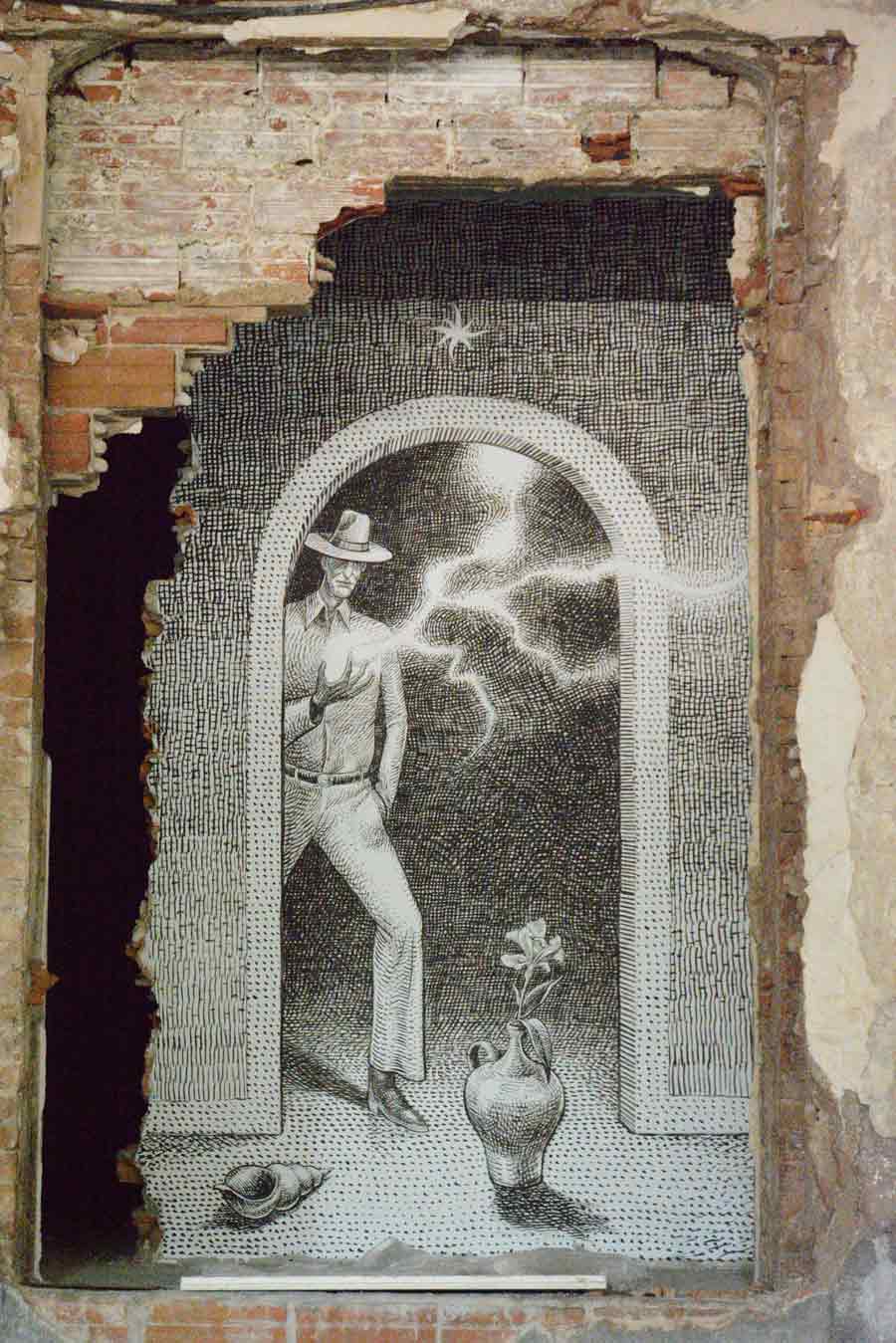
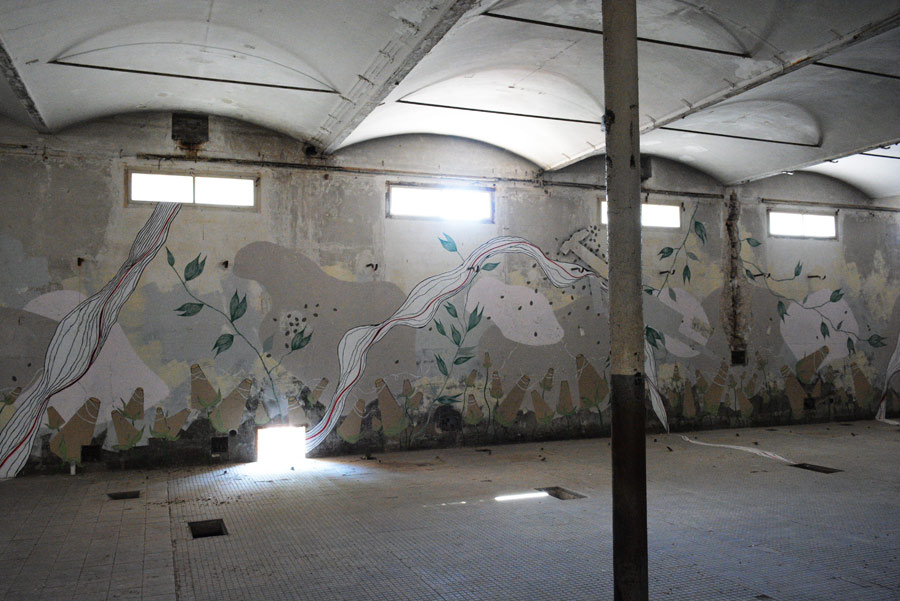
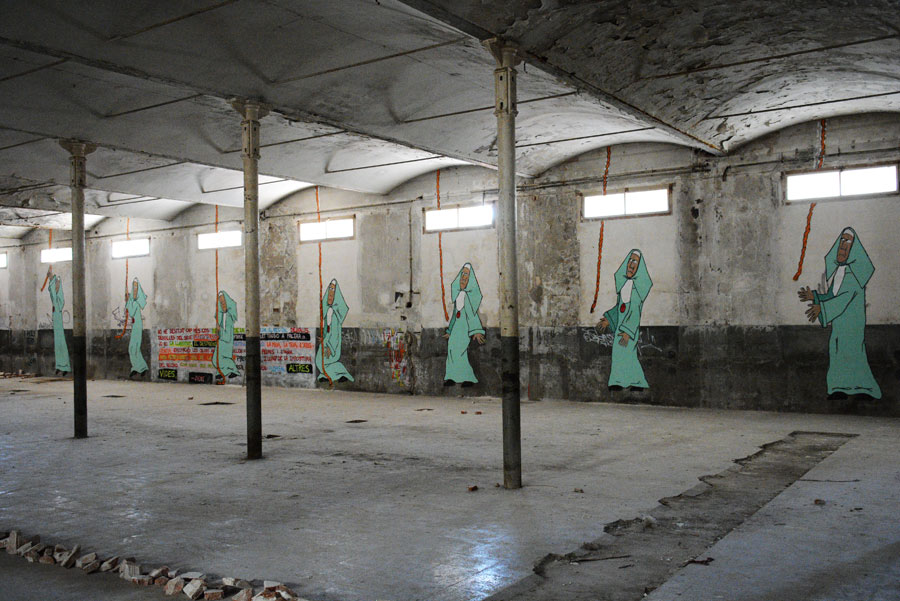
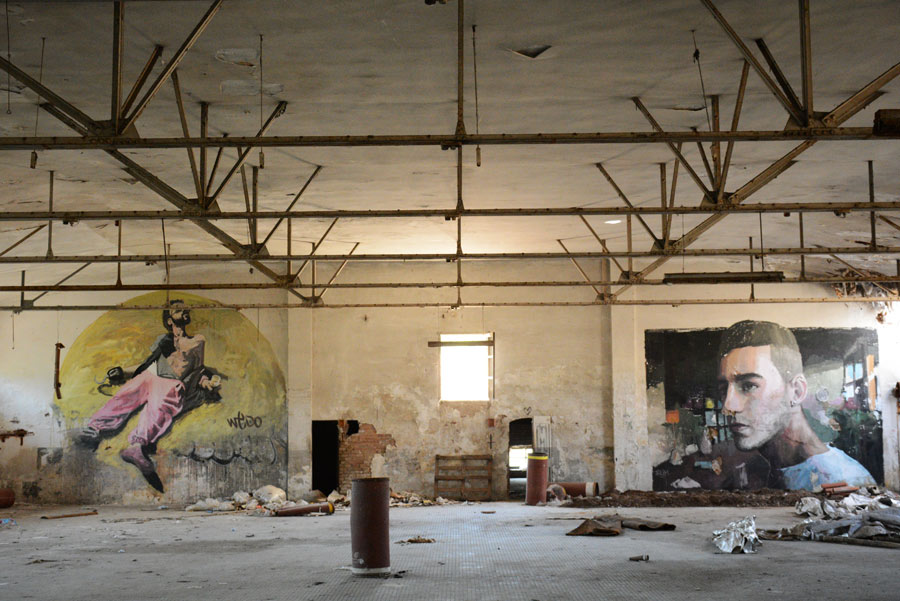
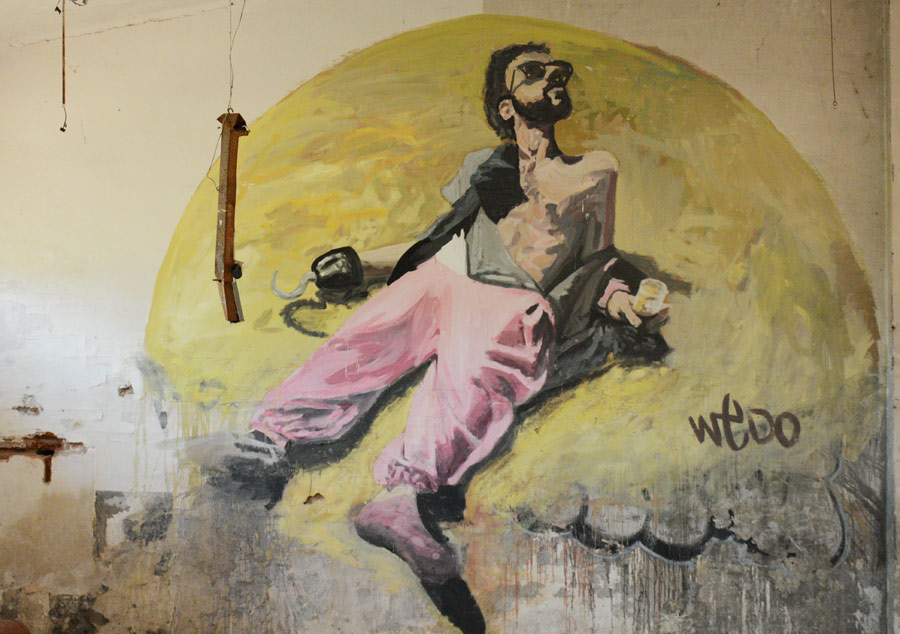
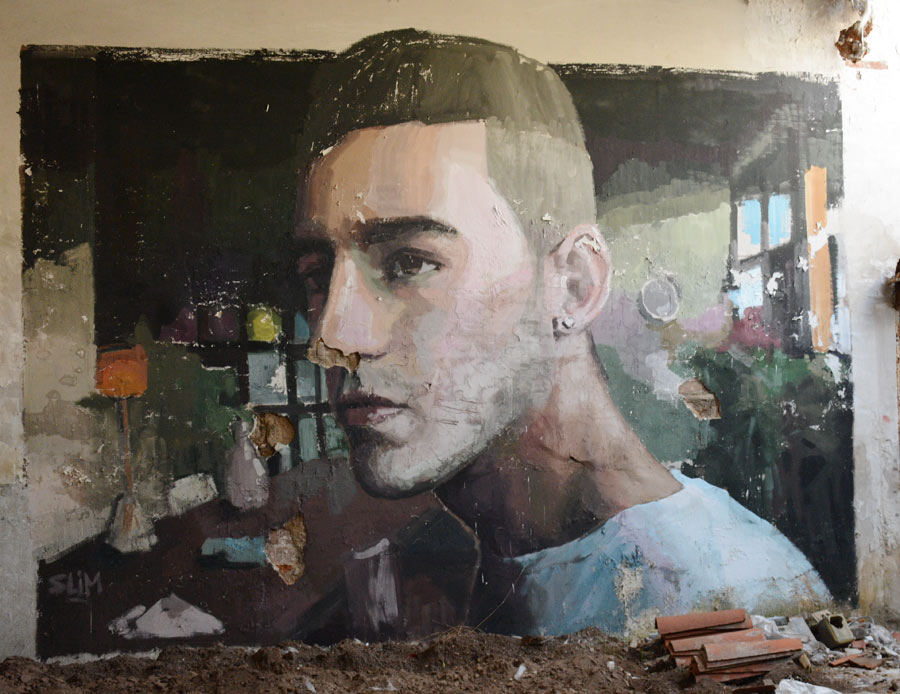
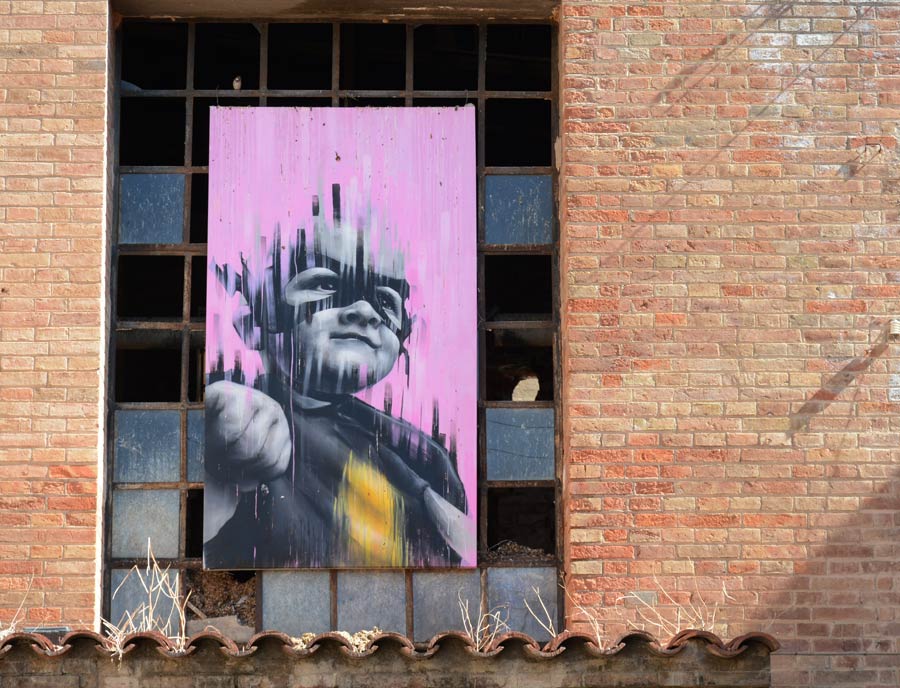
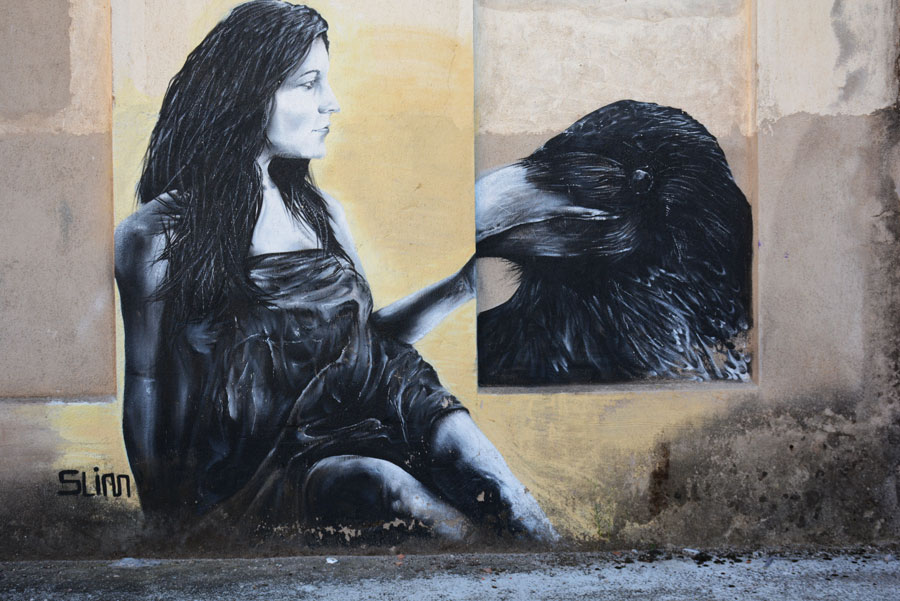
Typically you may expect to be praying the novena and asking God for absolution of your dastardly sins here in this sprawling compound called The Konvent near Barcelona. While no one would stop you today, you may also wish to check out a number of new installations throughout the many buildings by Street Artists.
The Roman Catholic former convent hosted 50 or so artists over the last couple of years to transform the space, perhaps to reinterpret its original charge in a modern light, perhaps just to ready the compound for commercial, cultural, and community pursuits of the owners.
Certainly the decaying spaces and austere aesthetic is inviting, calming, possibly frightening, depending on your associations. Now they are home for music, dance, theatre, film festivals, and artist residencies – often offered only in Catalan but some also in European Spanish.
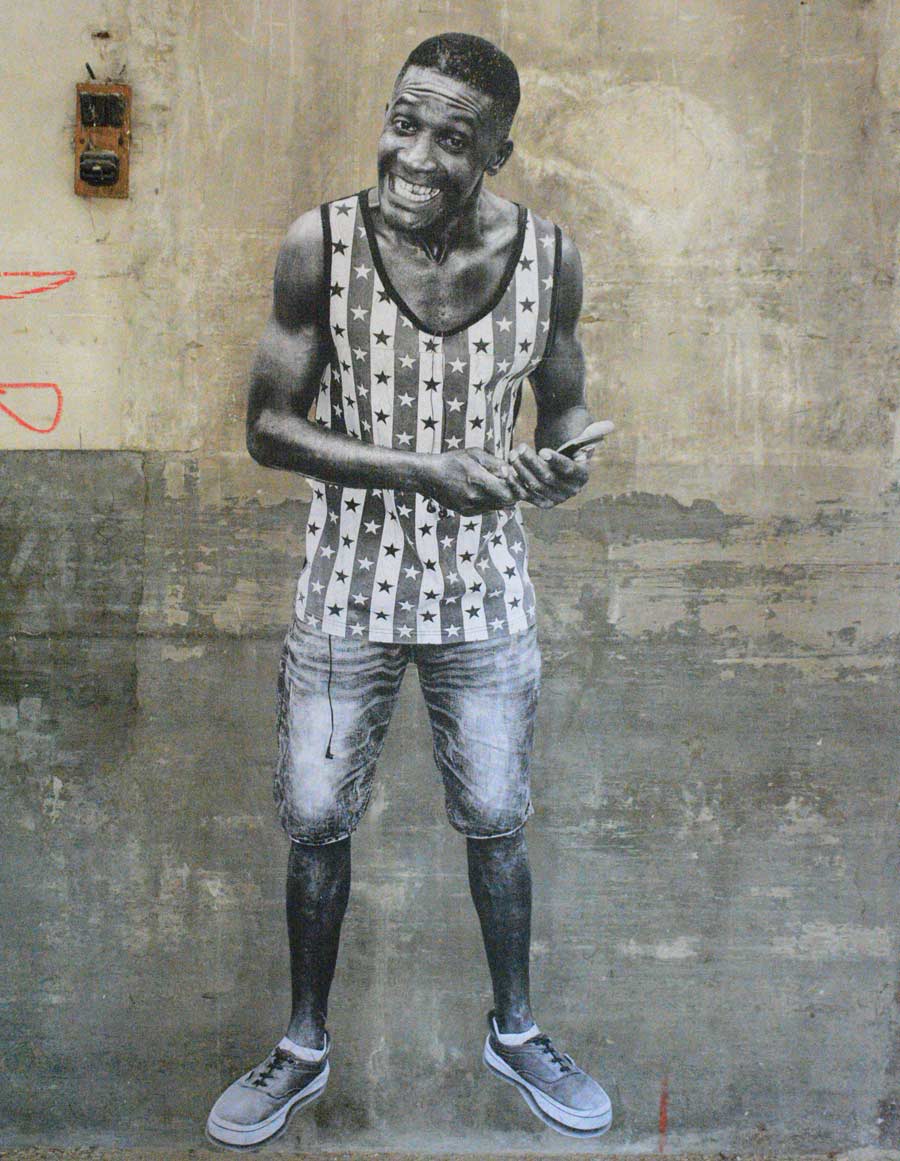
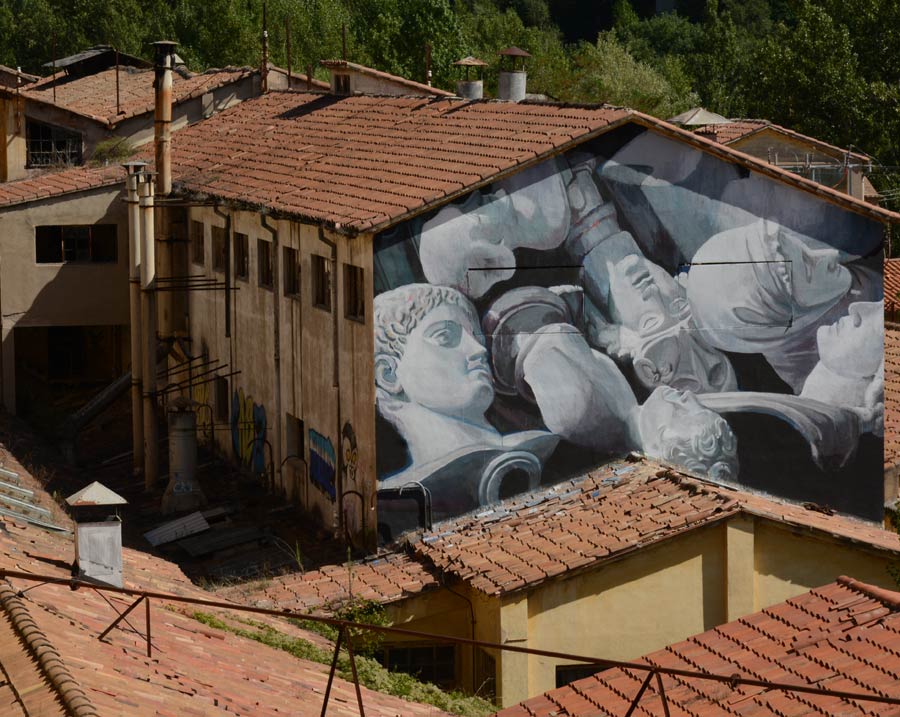
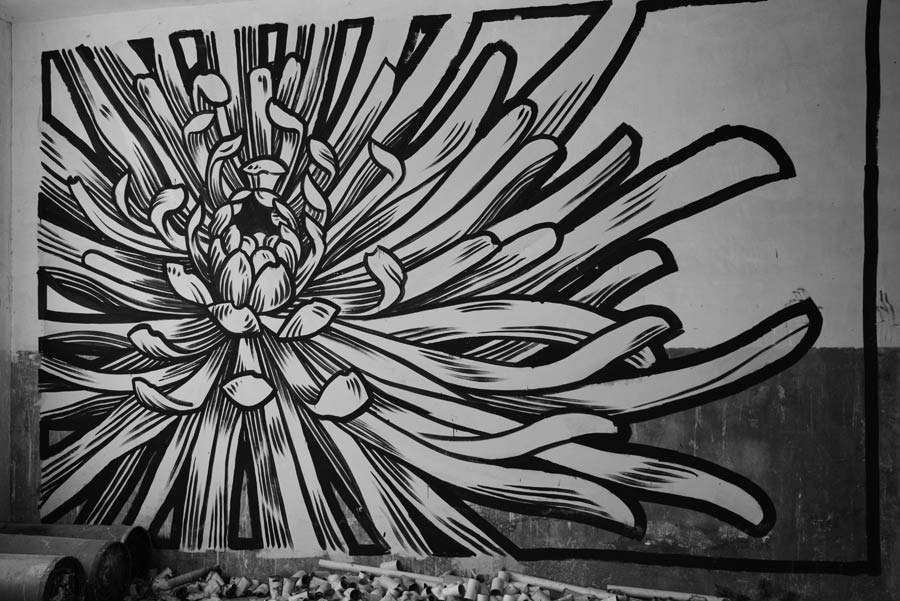
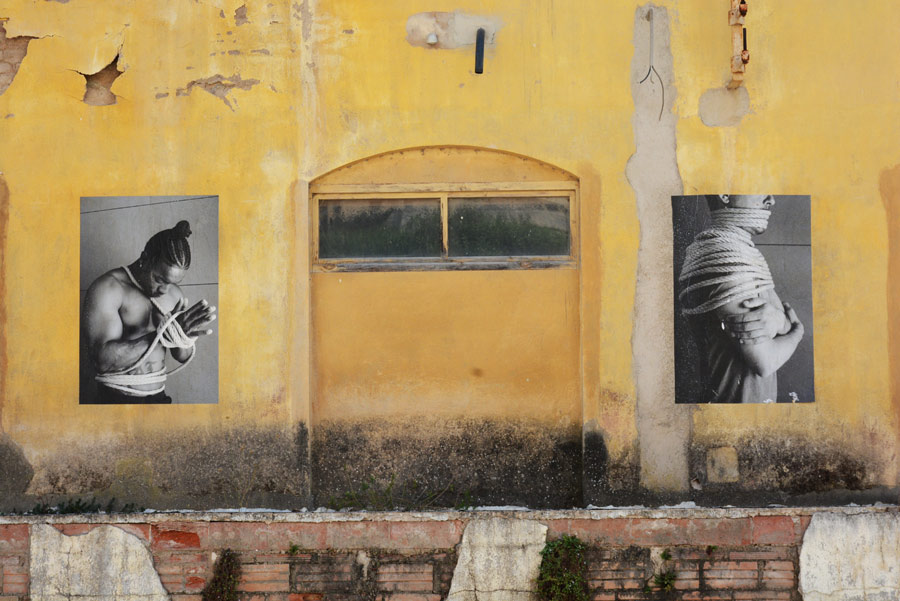
As you walk through the spaces you are welcomed by these works by artists, many of them at one time or another categorized as Street Artists, whose voices now usher in a new era of contemplation and perhaps internal exploration.
Our thanks to photogapher and BSA contributor Lluis Olive Bulbena for sharing these images from El Konvent.
For more information about El Konvent please Click HERE
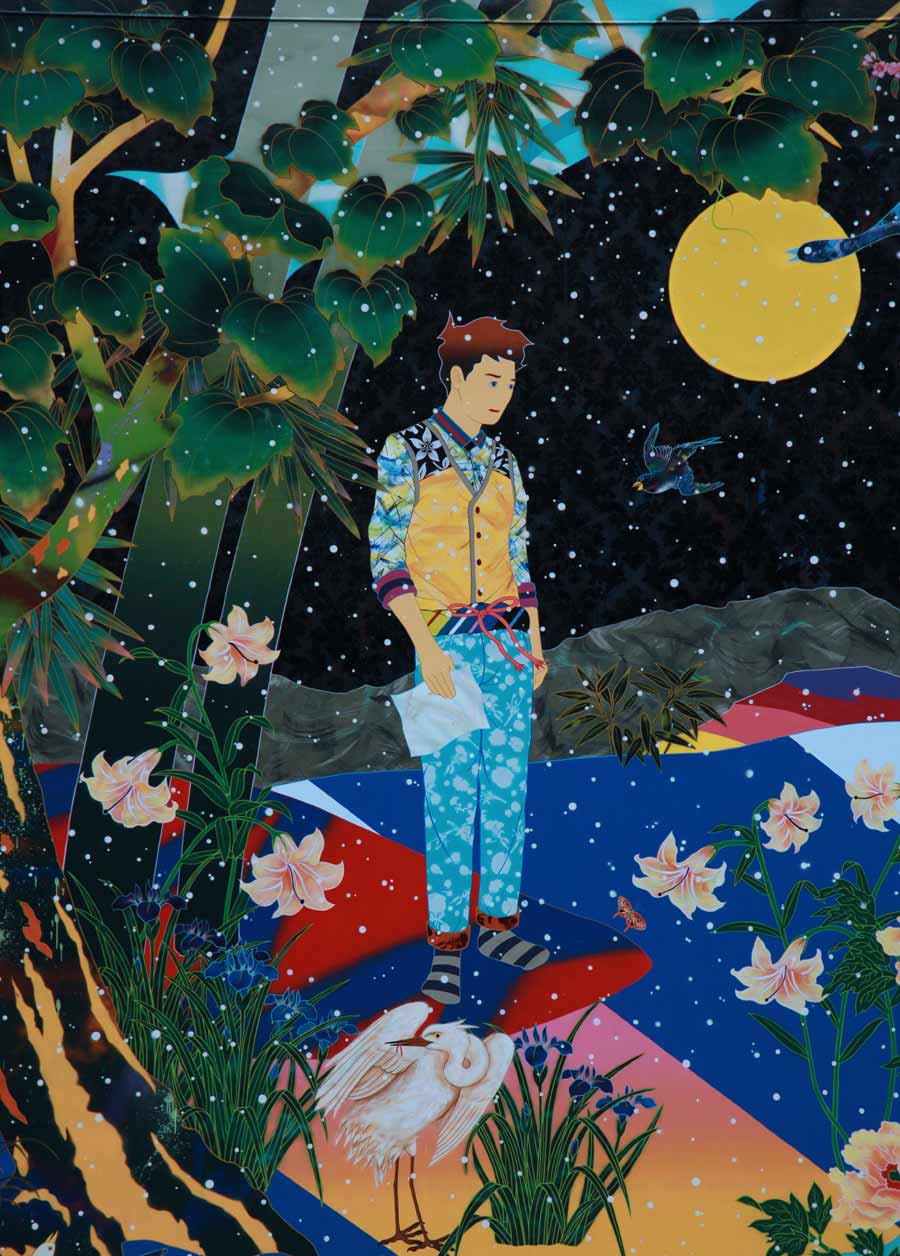
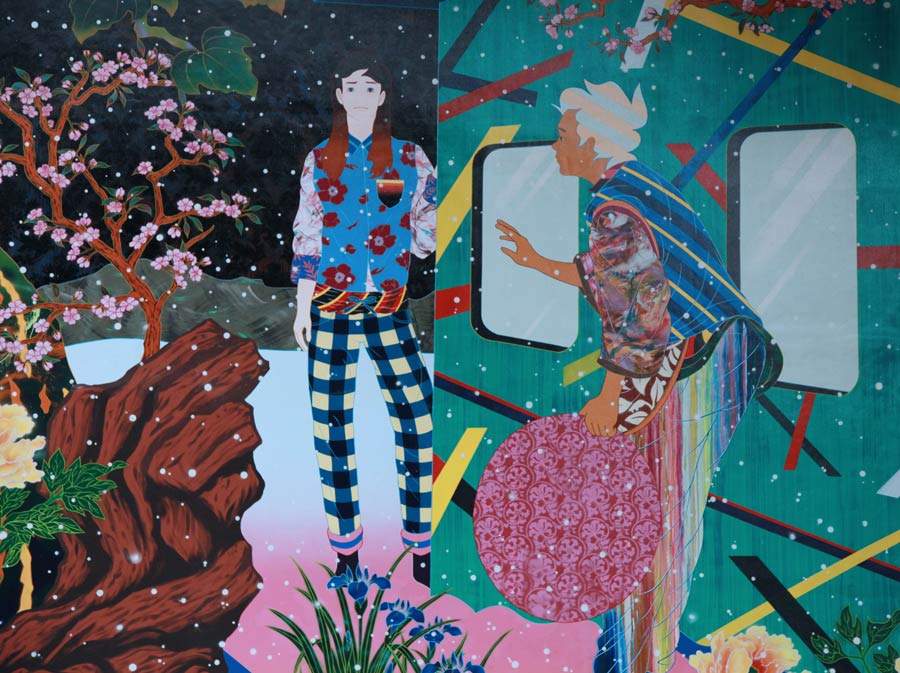
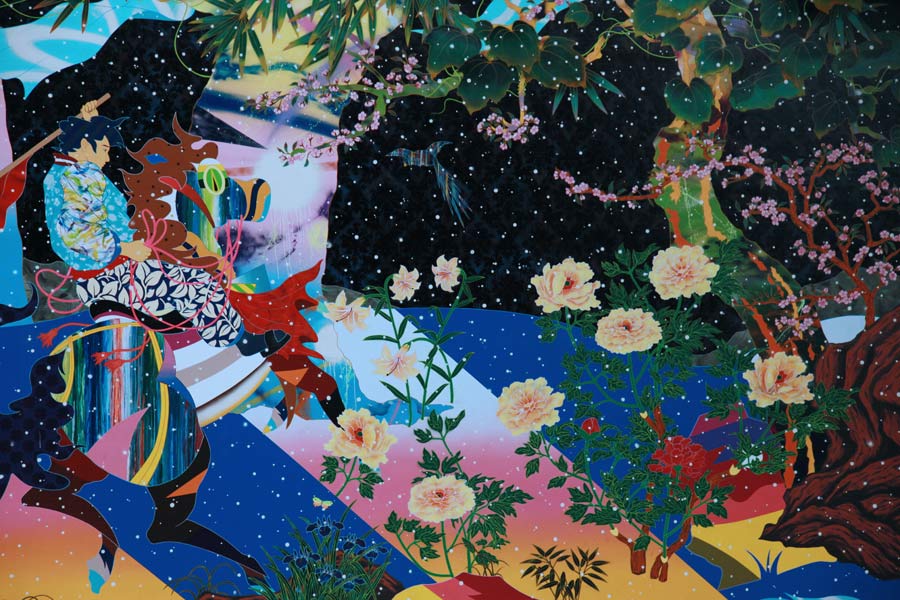
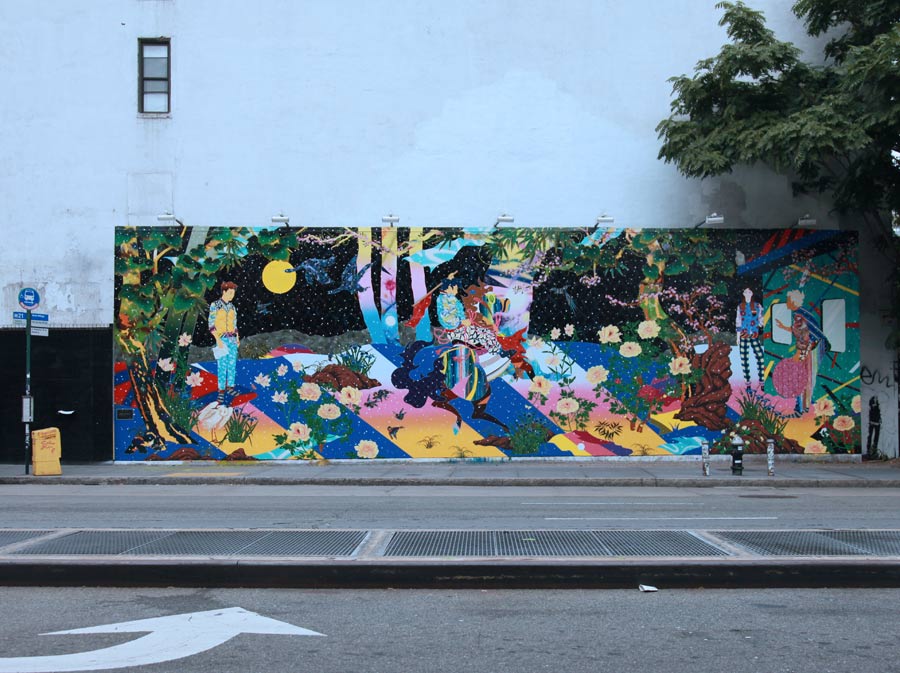
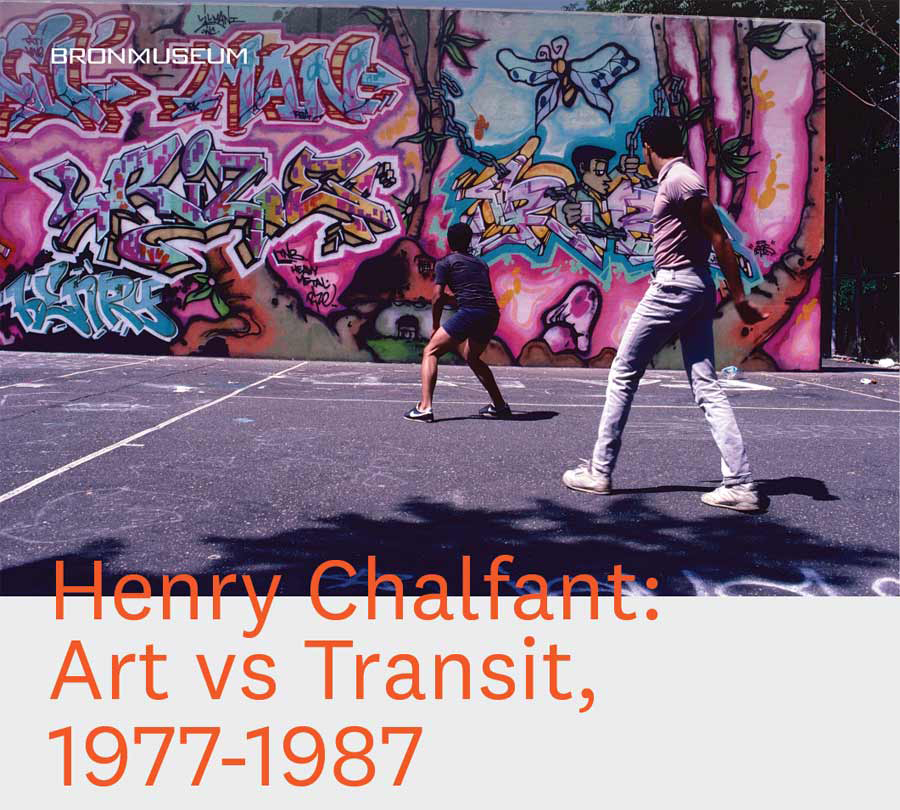
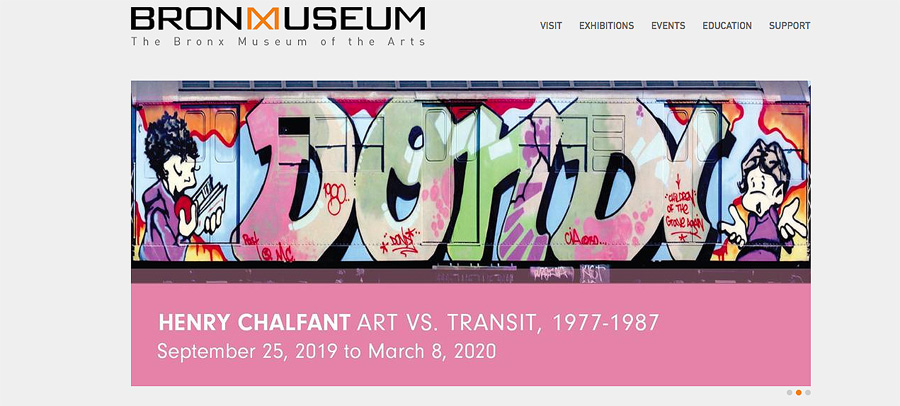
Gorgeous, tremulous days and nights in New York as we march with determination into fall – Tomokazu Matsuyama and his 12 assistants finished his epic contribution to the Houston Wall, a huge crowd overflowed the Bronx Museum to celebrate the photographer/filmmaker Henry Chalfant and his pivotal work that brought fame to graffiti writers, and Kehinde Wiley stunned Times Square with a new monument entitled “Rumors of War”, which the artist says “attempts to use the language of equestrian portraiture to both embrace and subsume the fetishization of state violence.”
Meanwhile, the highest office in the land lies in disgrace, under a cloud of increasing impeachment odds even as the state exports multiple wars and the Feds are quietly pumping 75 billion dollars into financial markets with more planned over multiple days to stave off the coming crash.
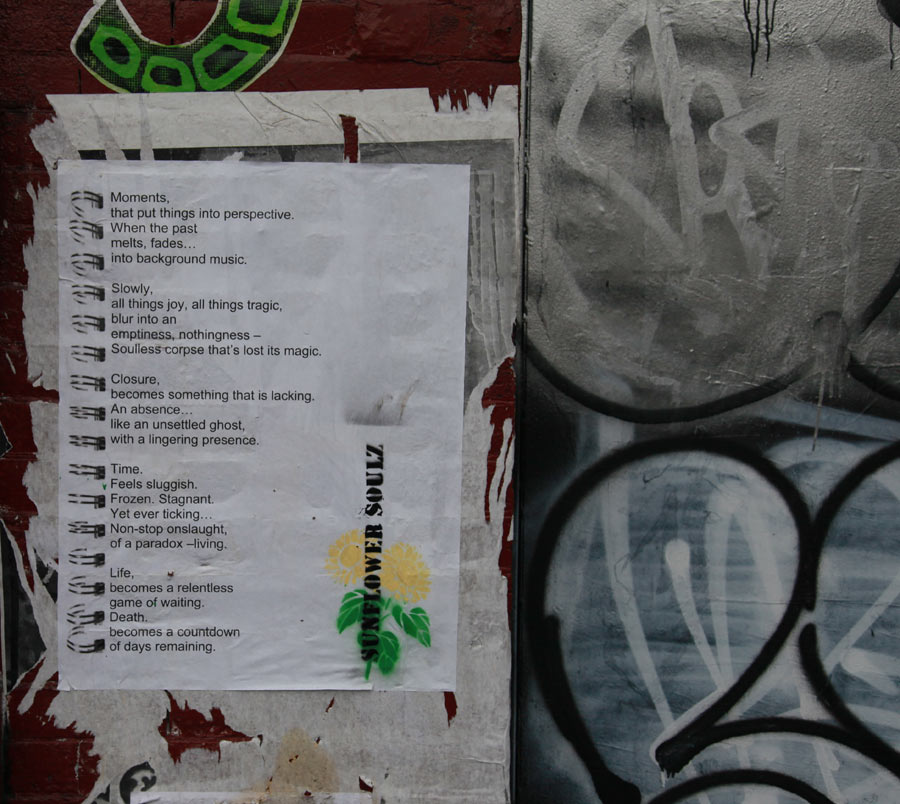
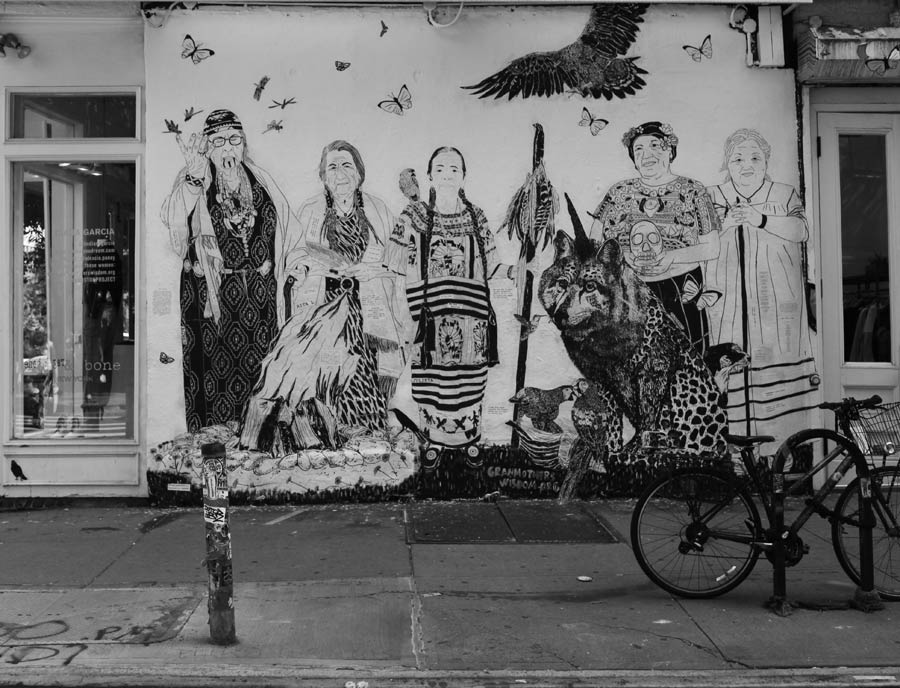
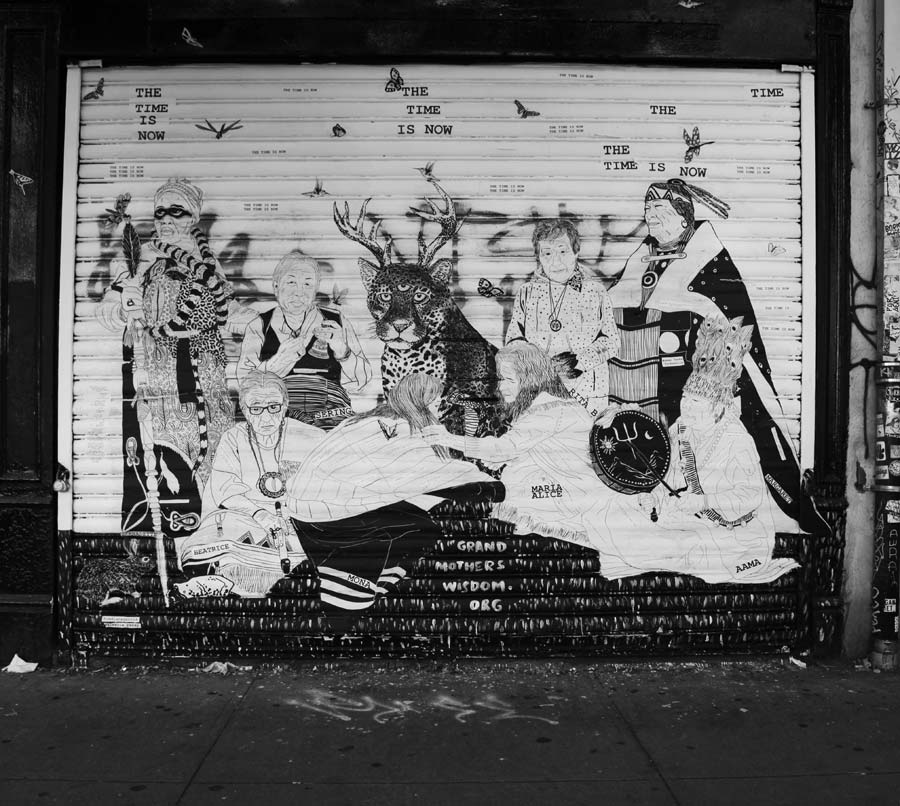
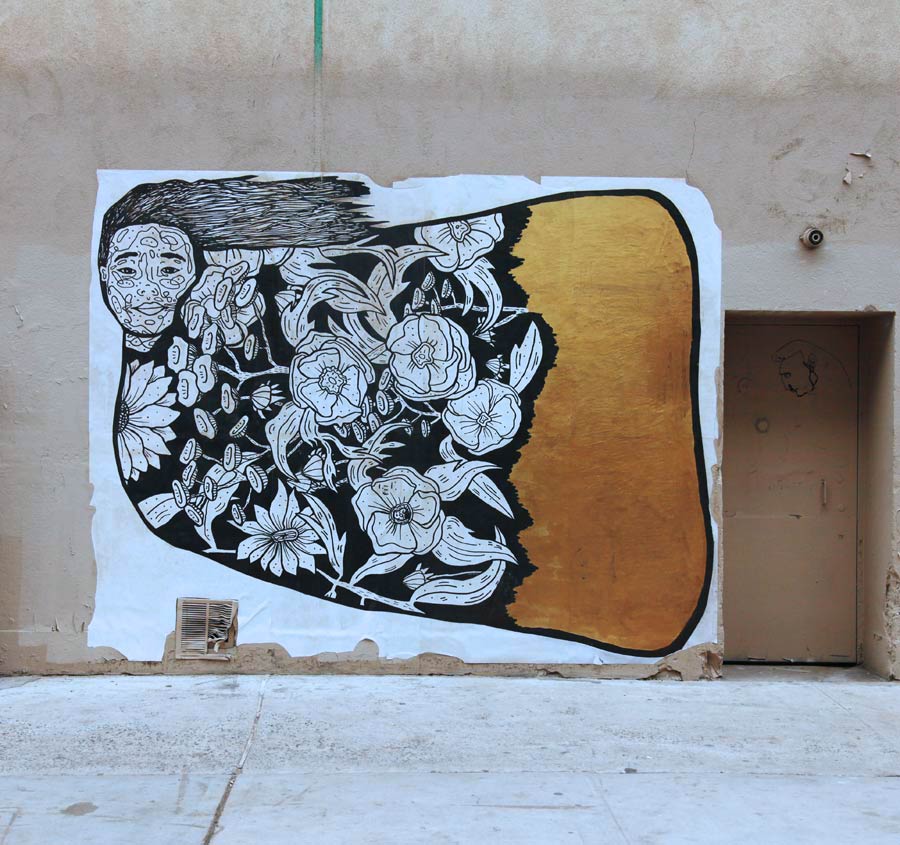
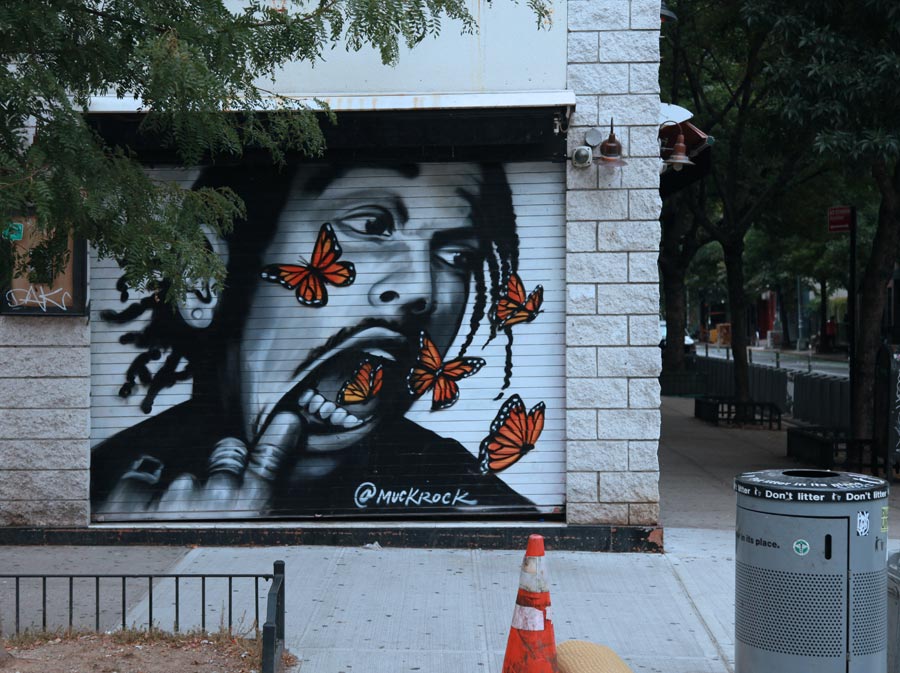
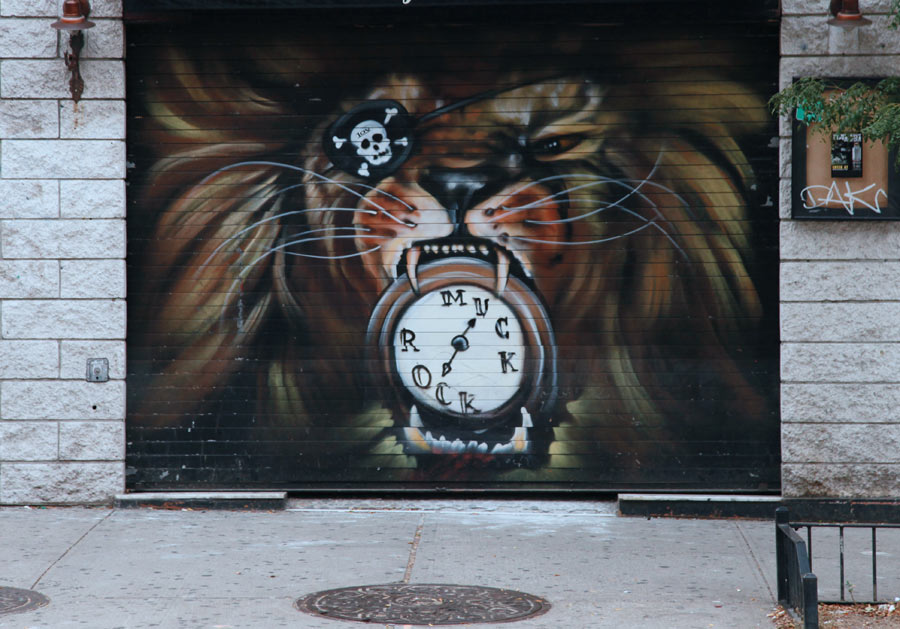
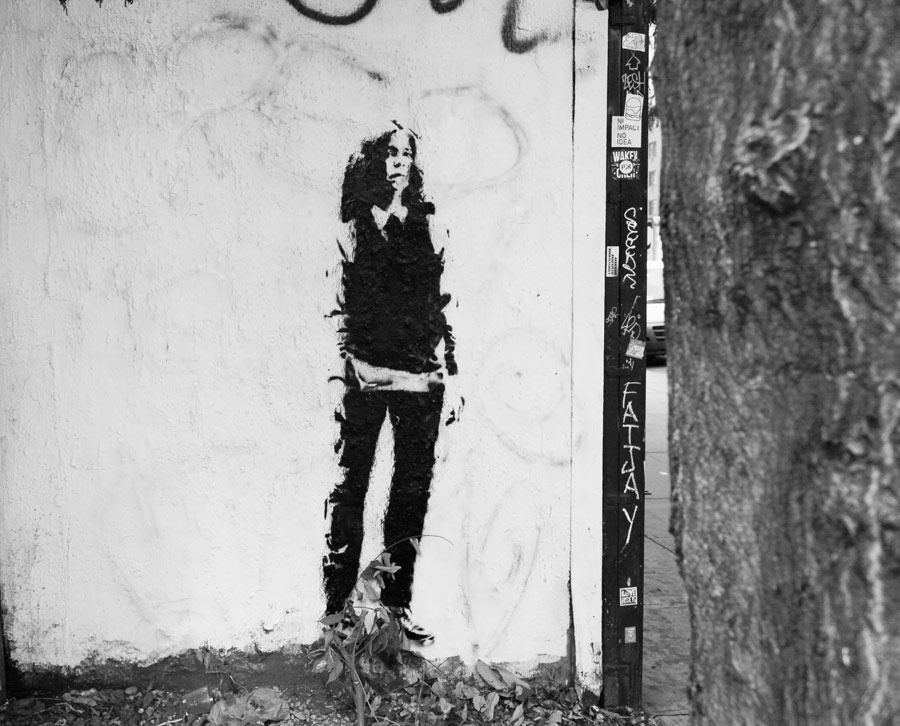
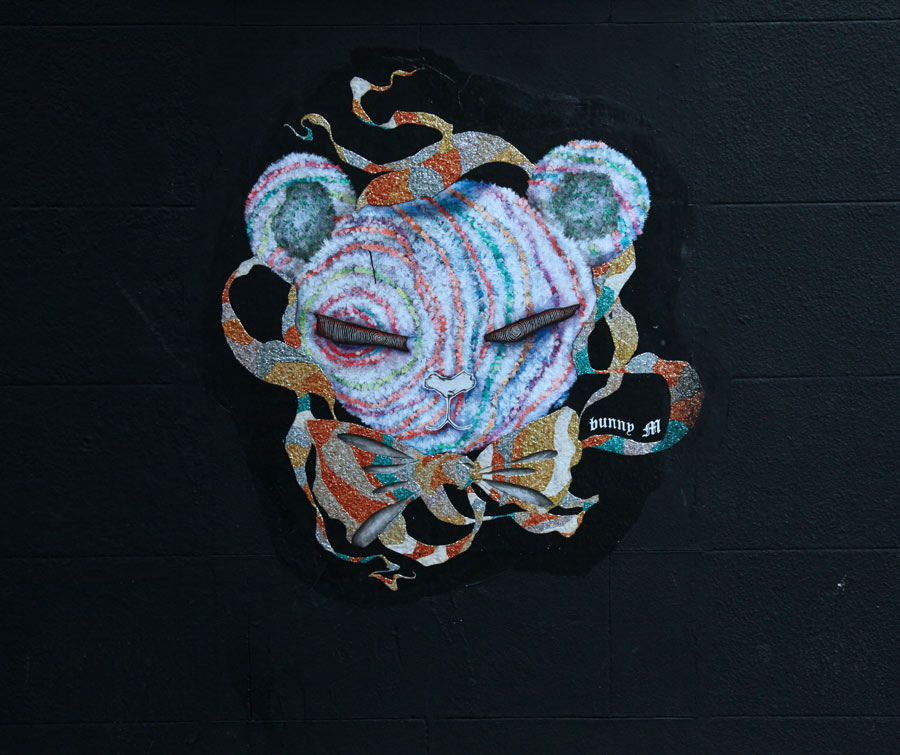
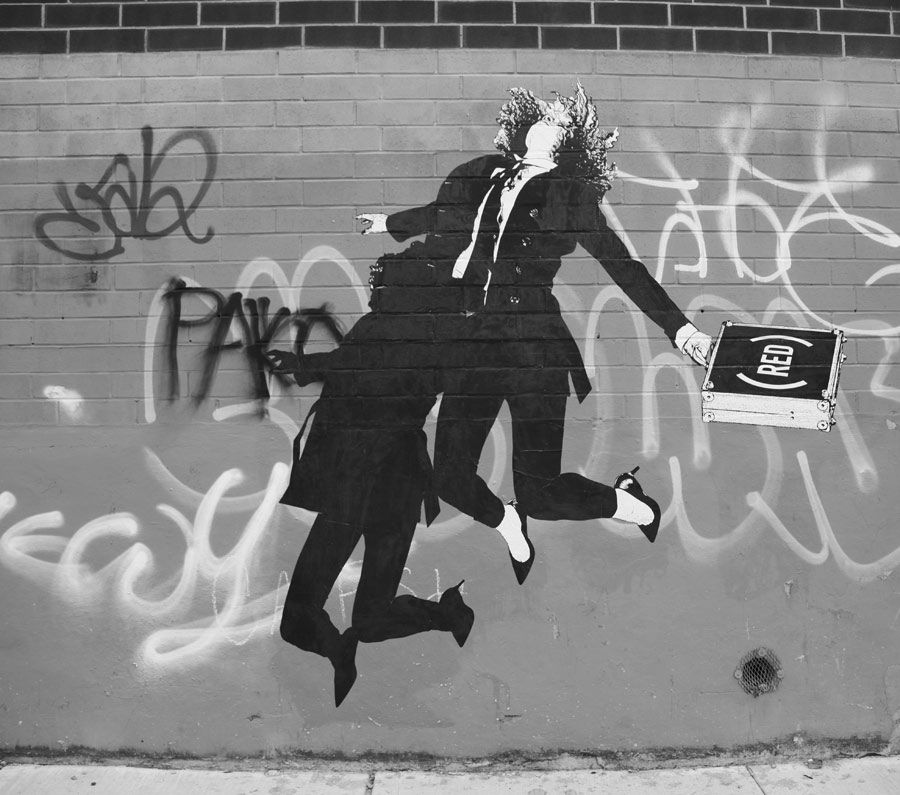
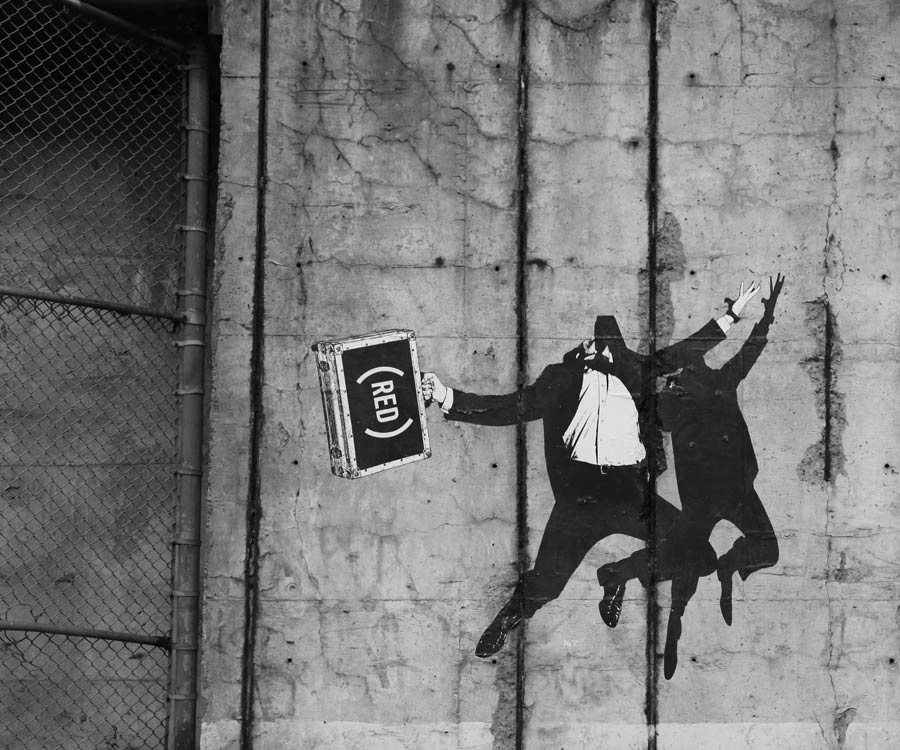
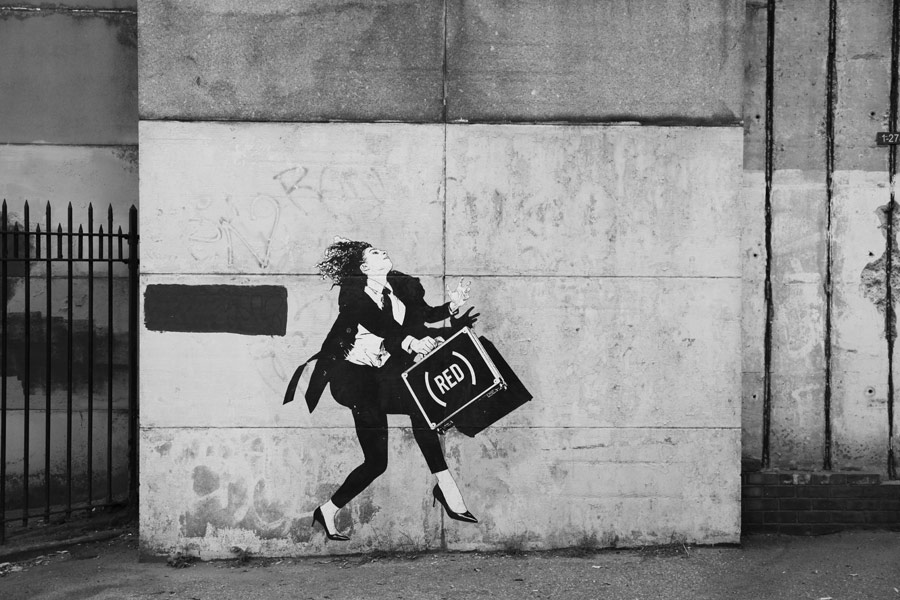
Here’s our weekly interview with the street, this time featuring Bunny M, Diana Garcia, Matzu, Muck Rock, RED, Sunflower Soulz, and WK Interact.
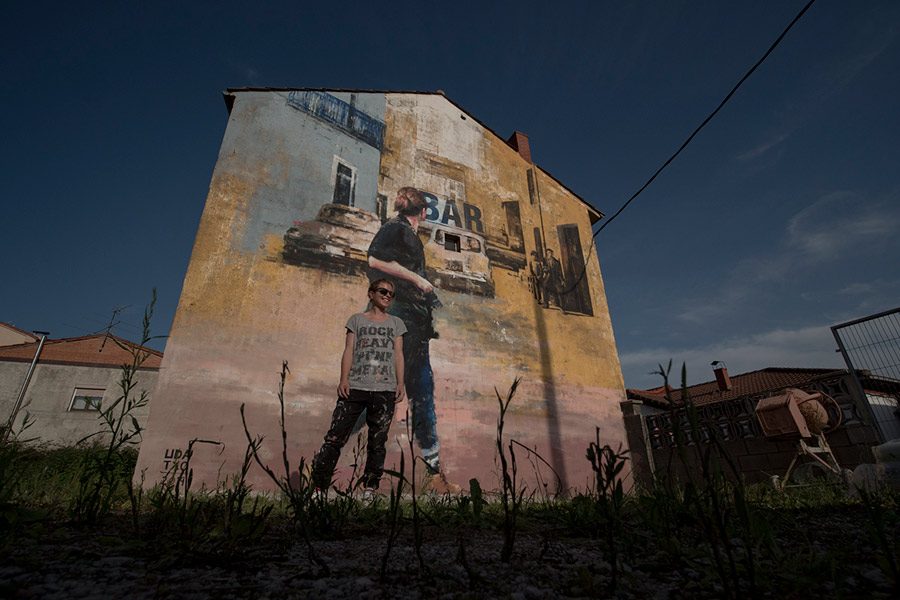
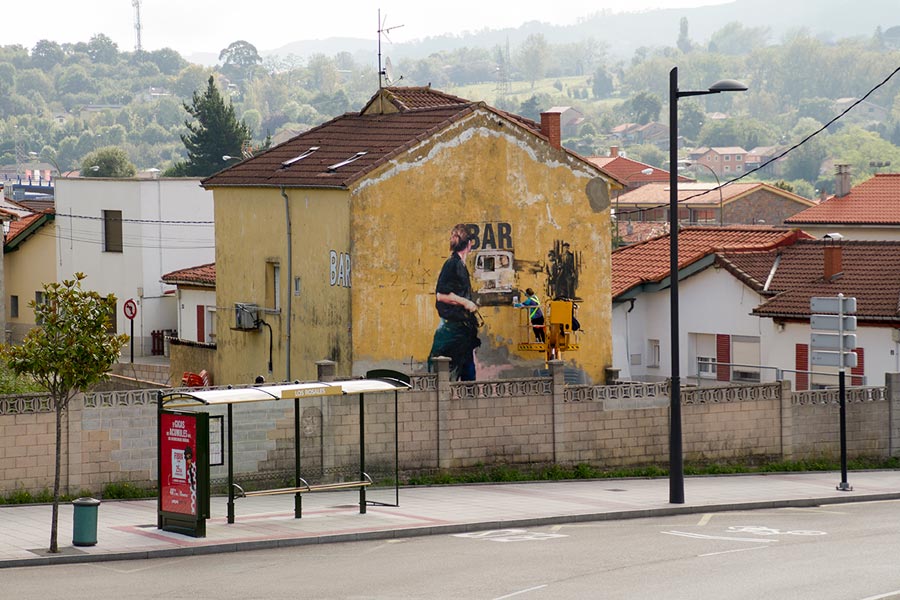
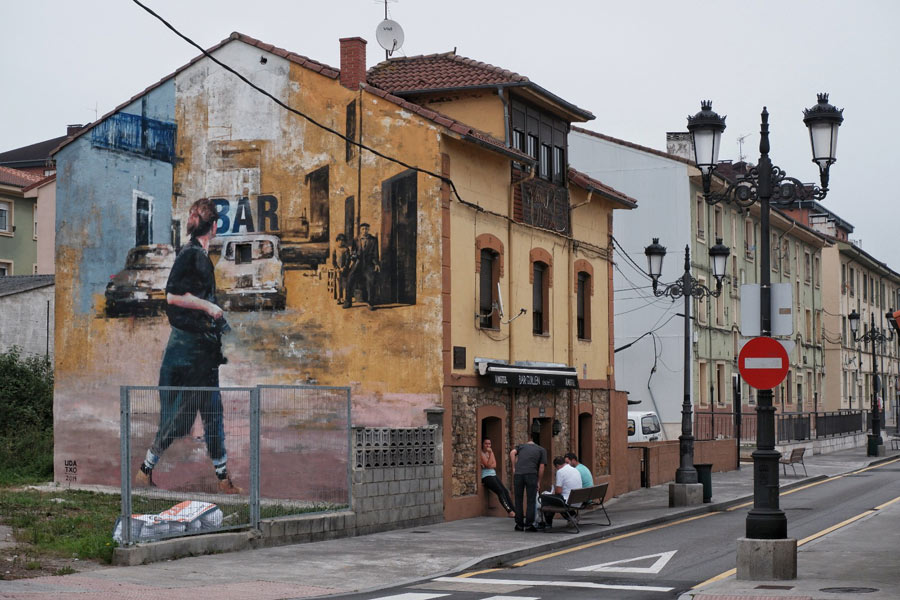
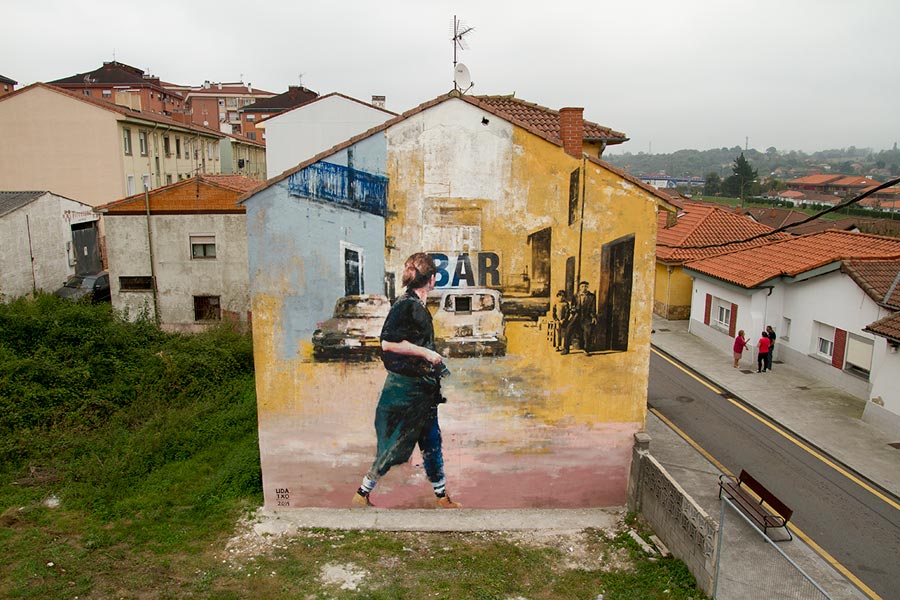
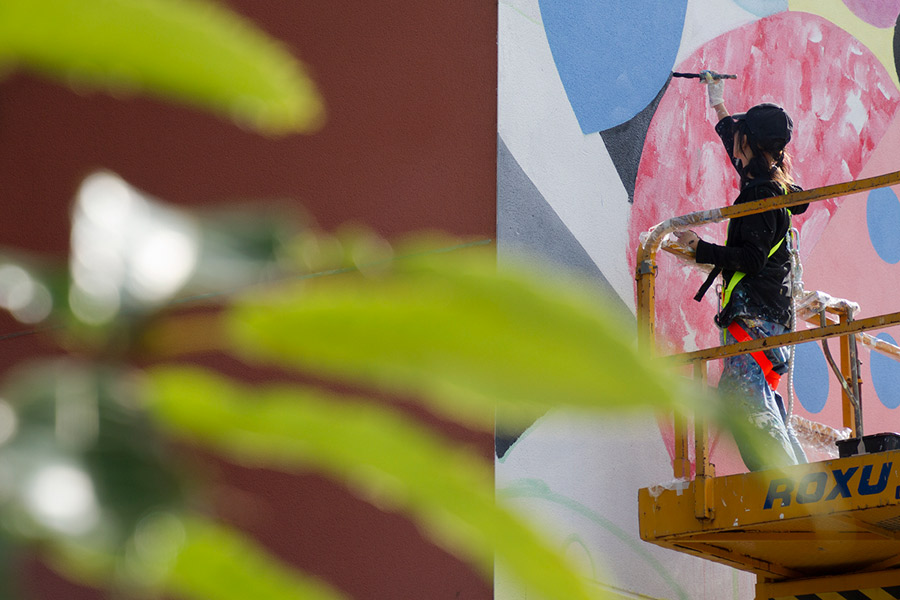
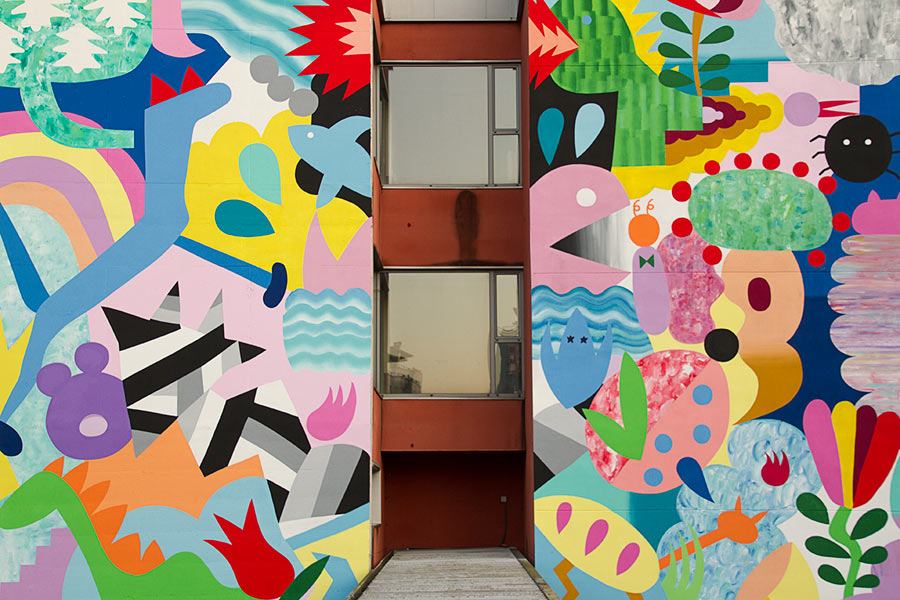
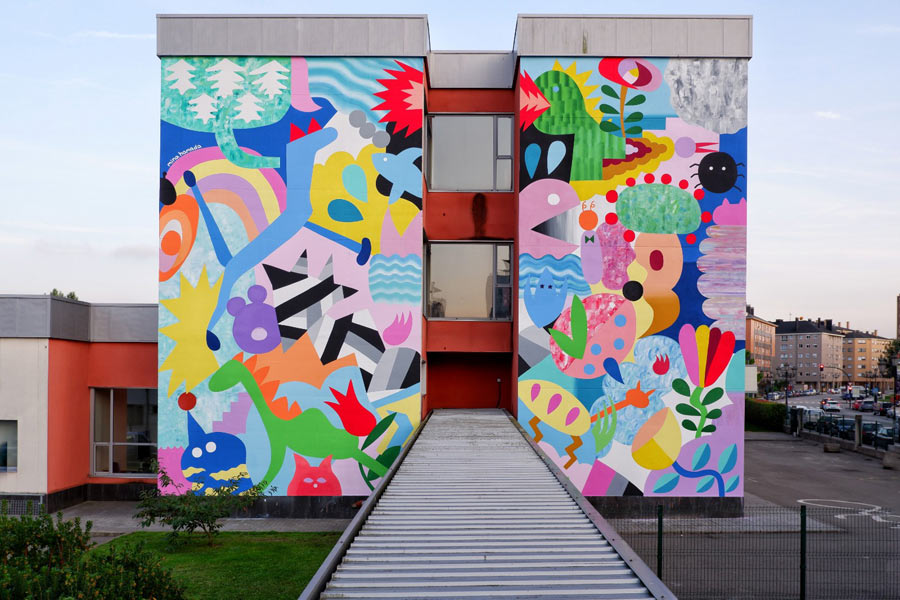
The color palette of the new collection of murals at the 3rd edition of Parees Festival is softened, earthen, stable. Adding five new murals brings the total to 23 here in Oviedo The 3rd edition of Parees Festival in Oviedo in Northern Spain, only minutes from the Bay of Biscay.
Udatxo. Parees Festival 2019. Oviedo, Spain. (photo courtesy Parees Fest)
As you review the techniques and schools of influence you can see the careful curation of the selection of muralists – each seemingly contextual, whether figurative or abstract of geometric.
Organizers say the newest artist participants, Mina Hamada, Hedof & Joren Joshua, Udatxo, Catalina Rodríguez Villazón & Matth Velvet, were chosen from a global selection yet are expected to be cognizant of their immediate environment in their conception.
Udatxo. Parees Festival 2019. Oviedo, Spain. (photo courtesy Parees Fest)
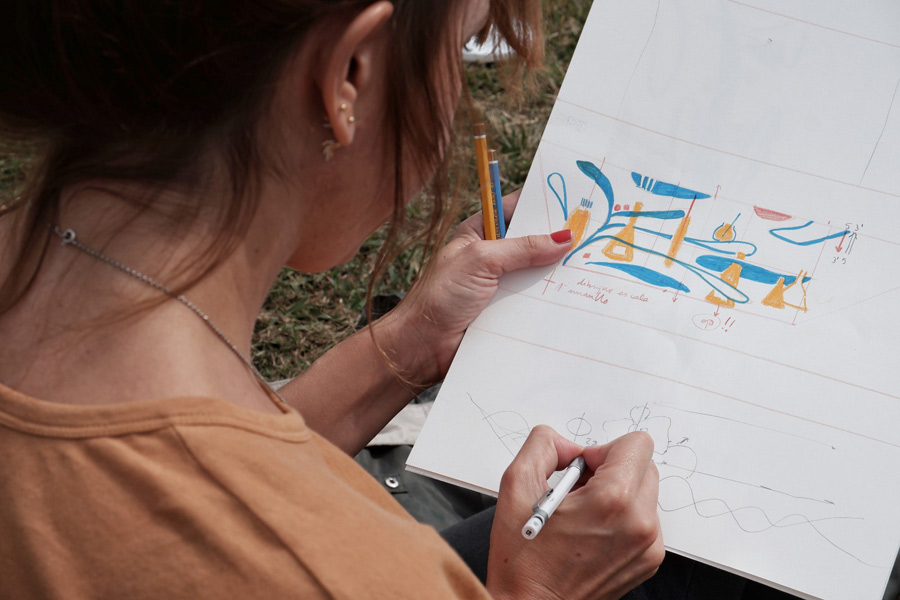
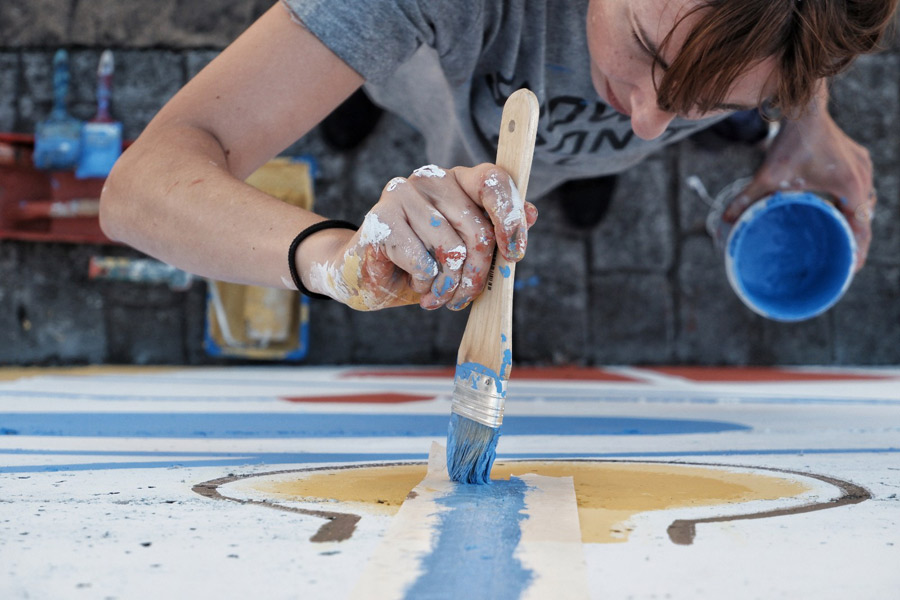
There are themes based on regional culture, say the organizers, and “You can also add to this spirit the main characteristic of the event which make it something different from other urban art festivals in the country: the participatory processes: neighbors from every area where the walls are located collaborate with their authors in order to participate in the final design.”
Udatxo. Parees Festival 2019. Oviedo, Spain. (photo courtesy Parees Fest)Udatxo. Parees Festival 2019. Oviedo, Spain. (photo courtesy Parees Fest)Udatxo. Parees Festival 2019. Oviedo, Spain. (photo courtesy Parees Fest)Hedfof & Joren Joshua. Parees Festival 2019. Oviedo, Spain. (photo courtesy Parees Fest)Hedof & Joren Joshua. Parees Festival 2019. Oviedo, Spain. (photo courtesy Parees Fest)Hedof & Joren Joshua. Parees Festival 2019. Oviedo, Spain. (photo courtesy Parees Fest)Hedof & Joren Joshua. Parees Festival 2019. Oviedo, Spain. (photo courtesy Parees Fest)Hedof & Joren Joshua. Parees Festival 2019. Oviedo, Spain. (photo courtesy Parees Fest)Catalina Rodriguez Villazon. Parees Festival 2019. Oviedo, Spain. photo courtesy Parees Fest)Catalina Rodriguez Villazon. Parees Festival 2019. Oviedo, Spain. (photo courtesy Parees Fest)Catalina Rodriguez Villazon. Parees Festival 2019. Oviedo, Spain. (photo courtesy Parees Fest)Catalina Rodriguez Villazon. Parees Festival 2019. Oviedo, Spain. (photo courtesy Parees Fest)Catalina Rodriguez Villazon. Parees Festival 2019. Oviedo, Spain. (photo courtesy Parees Fest)Catalina Rodriguez Villazon. Parees Festival 2019. Oviedo, Spain. (photo courtesy Parees Fest)Catalina Rodriguez Villazon. Parees Festival 2019. Oviedo, Spain. (photo courtesy Parees Fest)Catalina Rodriguez Villazon. Parees Festival 2019. Oviedo, Spain. (photo courtesy Parees Fest)Matth Velvet. Parees Festival 2019. Oviedo, Spain. (photo courtesy Parees Fest)Matth Velvet. Parees Festival 2019. Oviedo, Spain. (photo courtesy Parees Fest)Matth Velvet. Parees Festival 2019. Oviedo, Spain. (photo courtesy Parees Fest)Mina Hamada. Parees Festival 2019. Oviedo, Spain. (photo courtesy Parees Fest)Mina Hamada. Parees Festival 2019. Oviedo, Spain. (photo courtesy Parees Fest)Mina Hamada. Parees Festival 2019. Oviedo, Spain. (photo courtesy Parees Fest)
Our weekly focus on the moving image and art in the streets. And other oddities.
Now screening : 1. “Nos Jardins” By Anais Florin for Bien Urbain #9 2. Vhils and his Work. A look into the Lisbon based artist 3. YZ Yseult: Making of the Mural La Marianne
BSA Special Feature: “Nos Jardins” By Anais Florin for Bien Urbain #9
Horticultural Street Art Activists to the Rescue
These
gardens have been maintained by gardeners. For generations.
Now the city council wants to take them over to build a new “eco-district” here in the Les Vaîtes neighborhood of Besançon. And the soil tenders say “These are Our Gardens,” resisting the change, insisting on the historical respect they believe these gardens deserve.
After
spending many days with them, taking pictures and speaking with everyone, artist
Anaïs Florin
decided she could help by creating posters to highlight their struggle.
“Les Vaîtes before the eco-discrict” ! She put up some legally, and some illegally in the city center by taking over the bus stop shelter. Viva Les Vaîtes!
Vhils and his Work. A look into the Lisbon based artist
Yes, your grandmother is going to know about Vhils now.
YZ Yseult: Making of the Mural La Marianne
Marianne is a symbol of Republican France. A Marianne is a bust of a proud and determined woman wearing a Phrygian cap. She symbolises the attachment of the common citizens of the revolution to the Republic – Marianne is liberty, egality and fraternity.
The
first thing you should know is that Marianne
is a symbol in France – capturing the spirit of liberty, equality, and
brotherhood/sisterhood (Liberté, Equalité, Fraternité). Commonly depicted as a
proud and determined woman wearing a Phrygian cap, Marianne symbolises the
attachment of the common citizens of the revolution to the Republic.
Street Artist YZ and engraver Elsa Catelin have just finished
their view of the heralded symbol on the streets of Périgueux
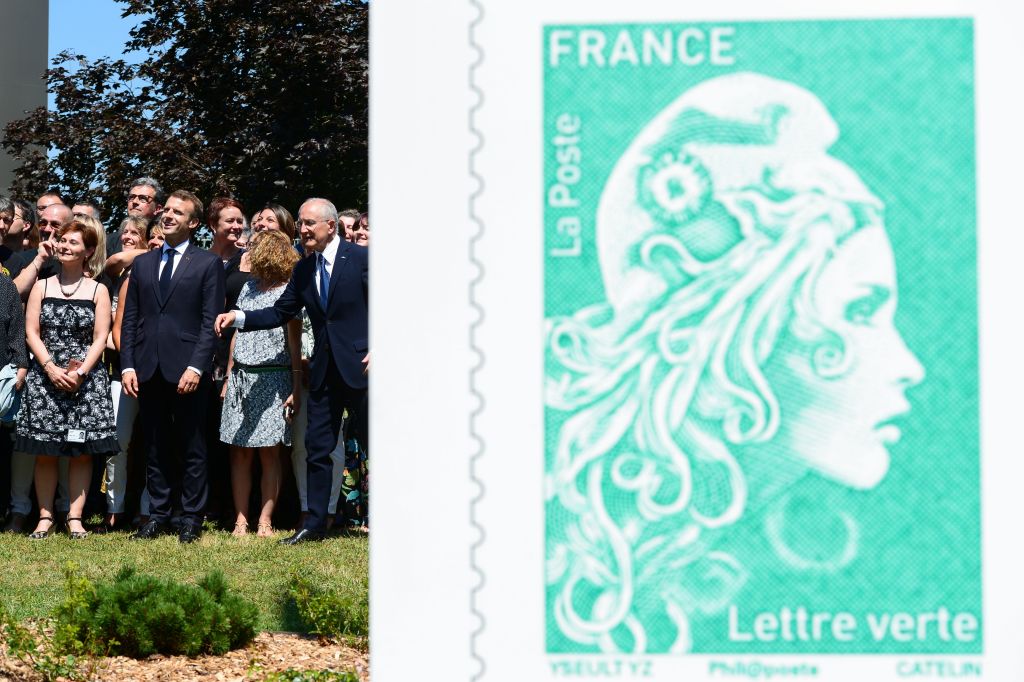
(Dordogne) – and it actually became the new face of Marianne stamps. Selected
by the President of the Republic, Emmanuel Macron, YZ had the opportunity to
meet him and see her work unveiled across a 16 meter by 11 meter wall.
French President Emmanuel Macron poses at the end of the inauguration of the newly printed stamps with French national symbol “Marianne” designed by French-British street artist Yseult Digan aka YZ, in Boulazac, southwestern France, on July 19, 2018. Photo by Nicolas Tucat/AFP/Getty Images.French President Emmanuel Macron (C), poses at the end of the inauguration of the newly-printed stamps with French national symbol “Marianne” designed by French-British street artist Yseult Digan aka YZ, in Boulazac, southwestern France, on July 19, 2018. (Photo by Nicolas TUCAT / AFP) (Photo credit should read NICOLAS TUCAT/AFP/Getty Images)
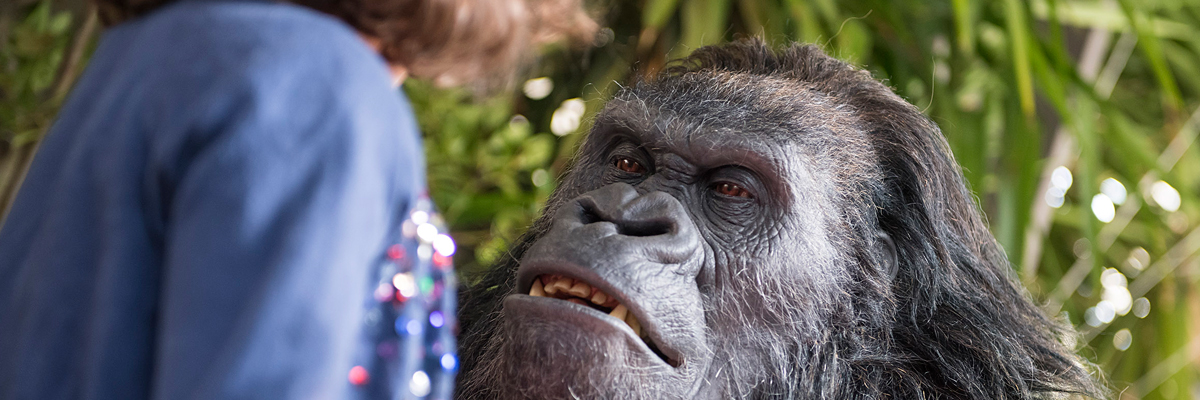
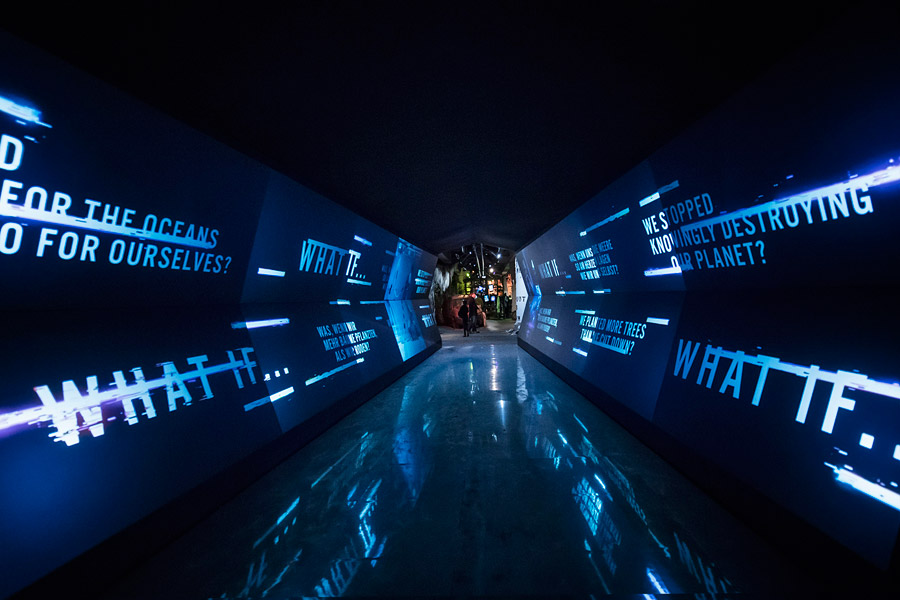
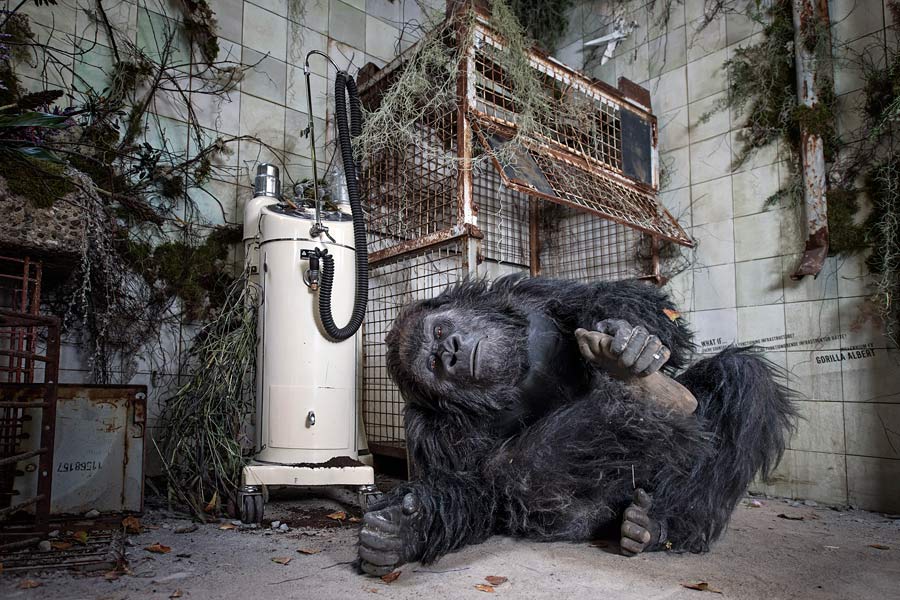
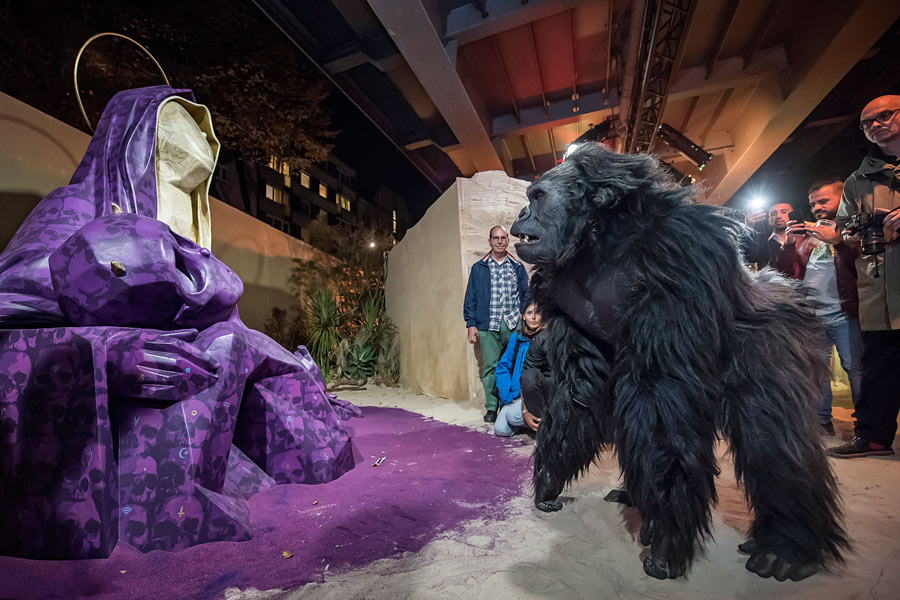
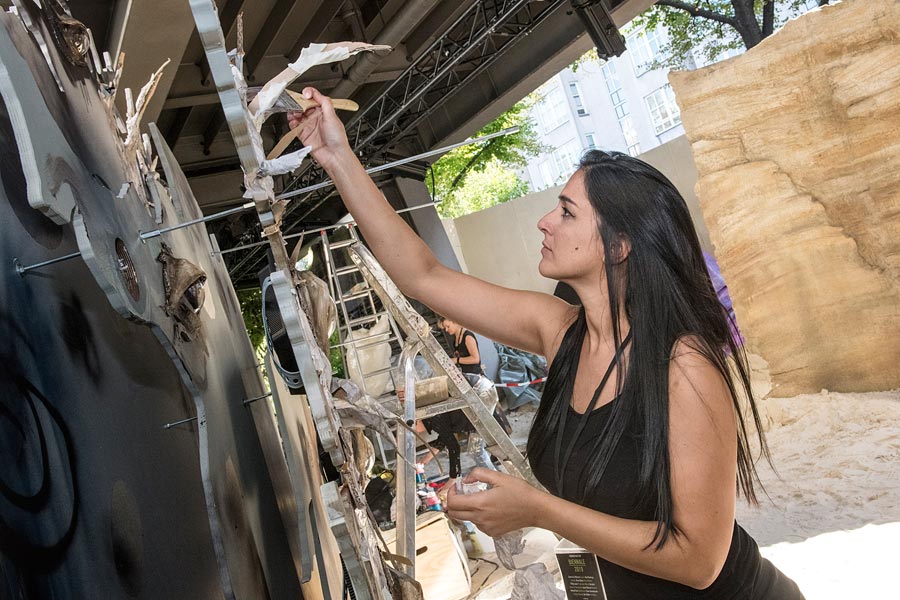
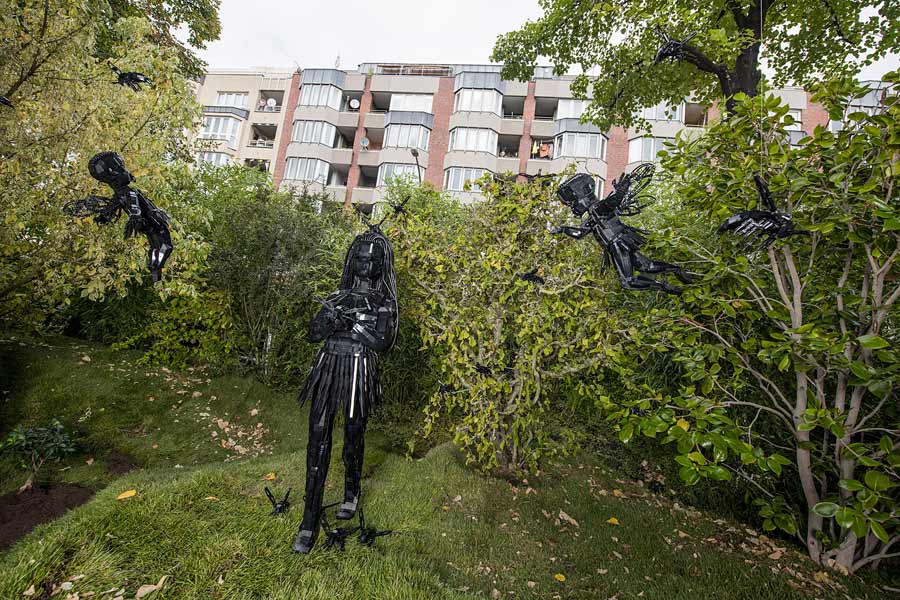
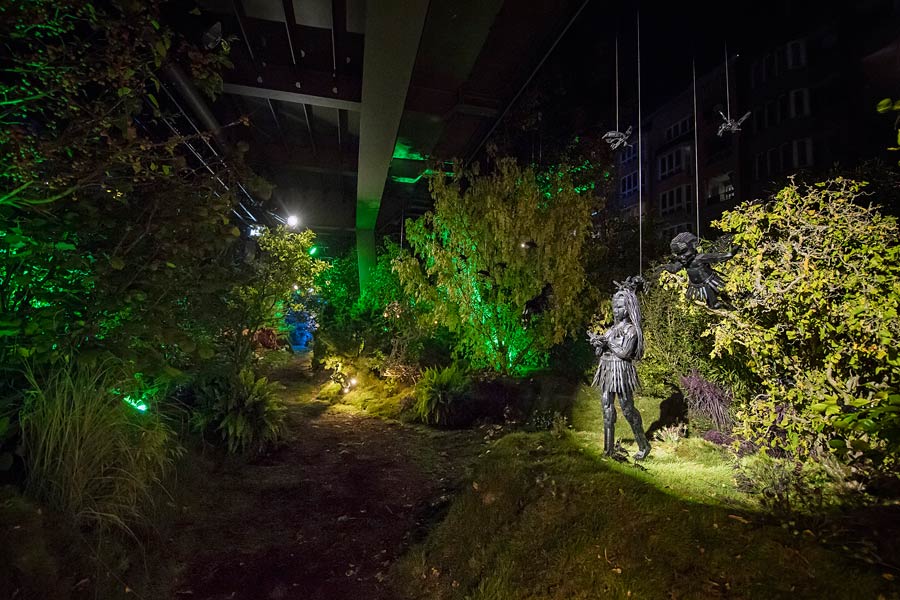
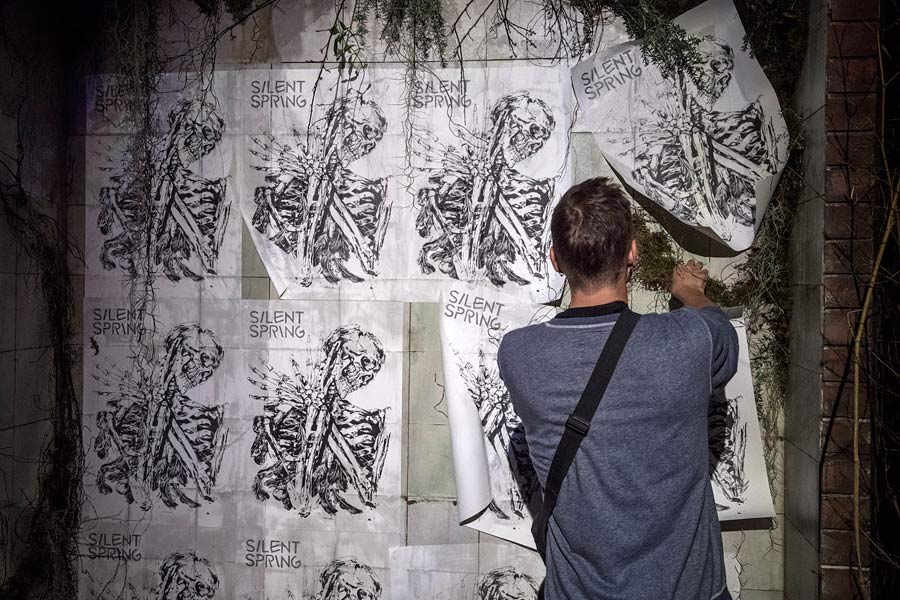
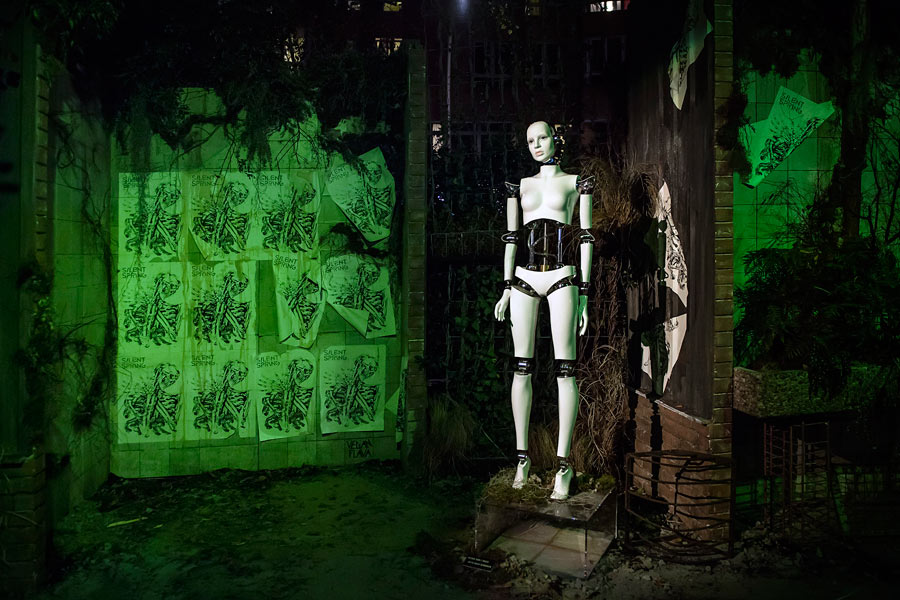
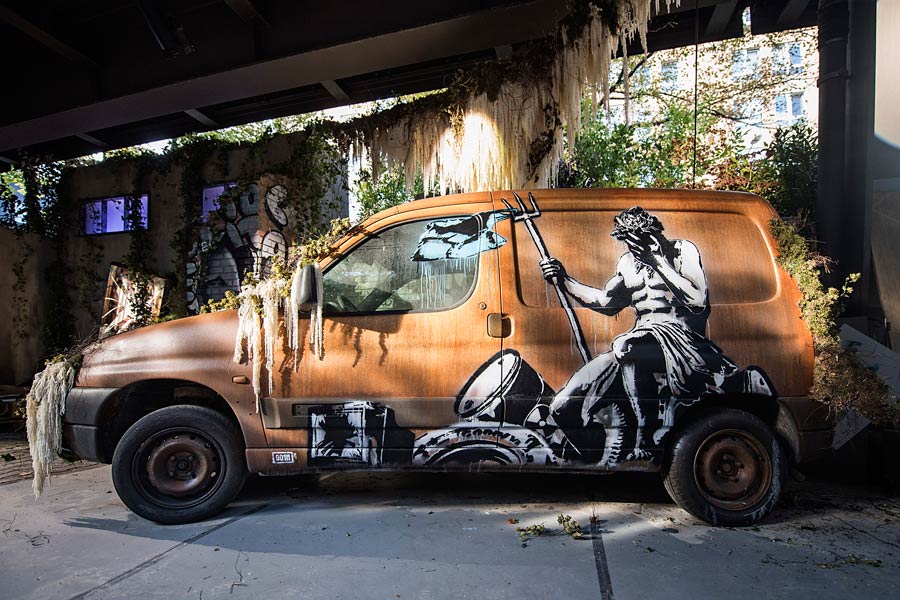
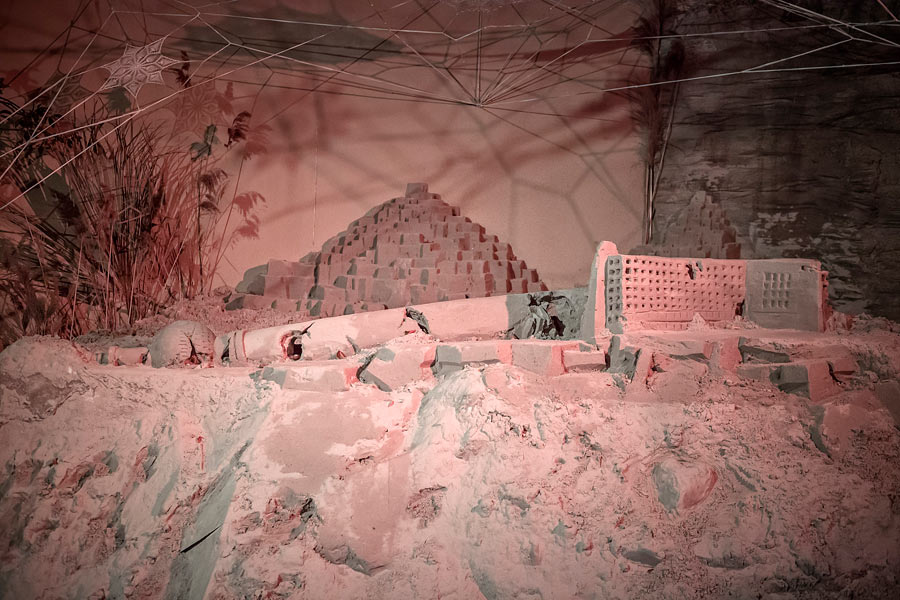
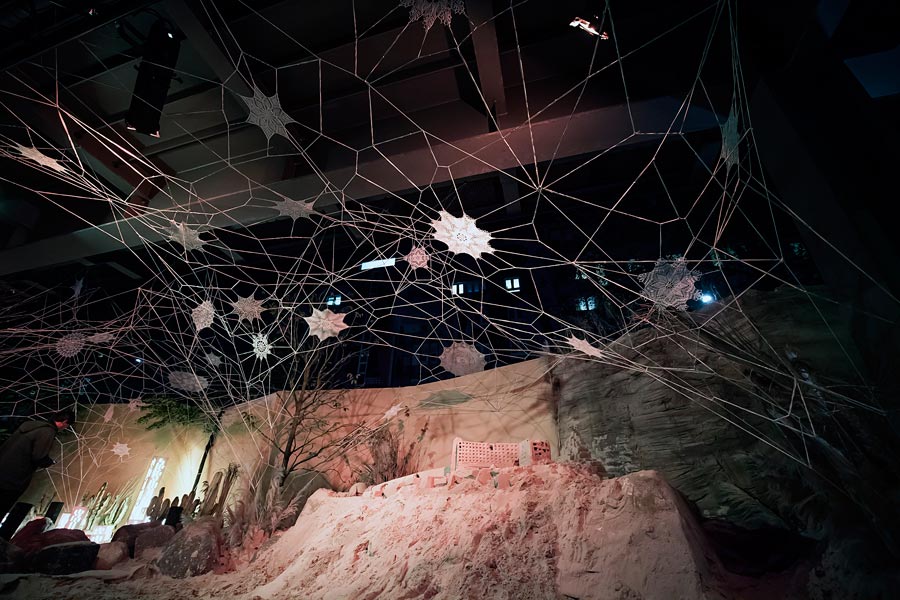
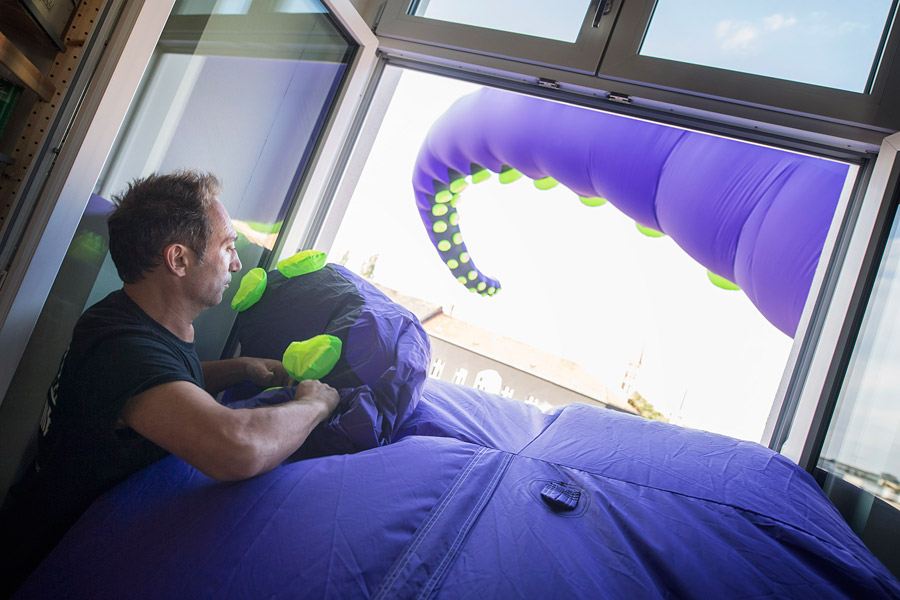
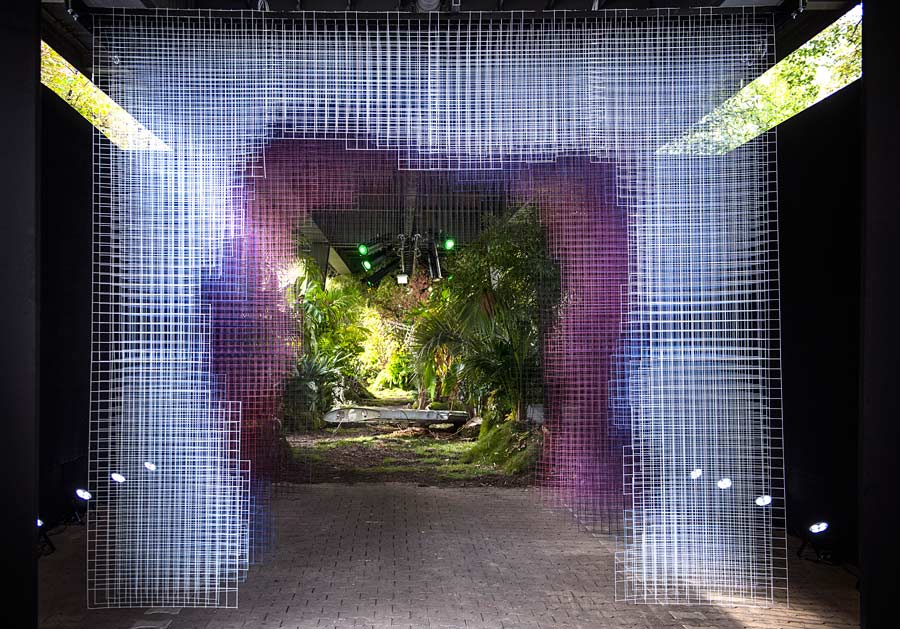
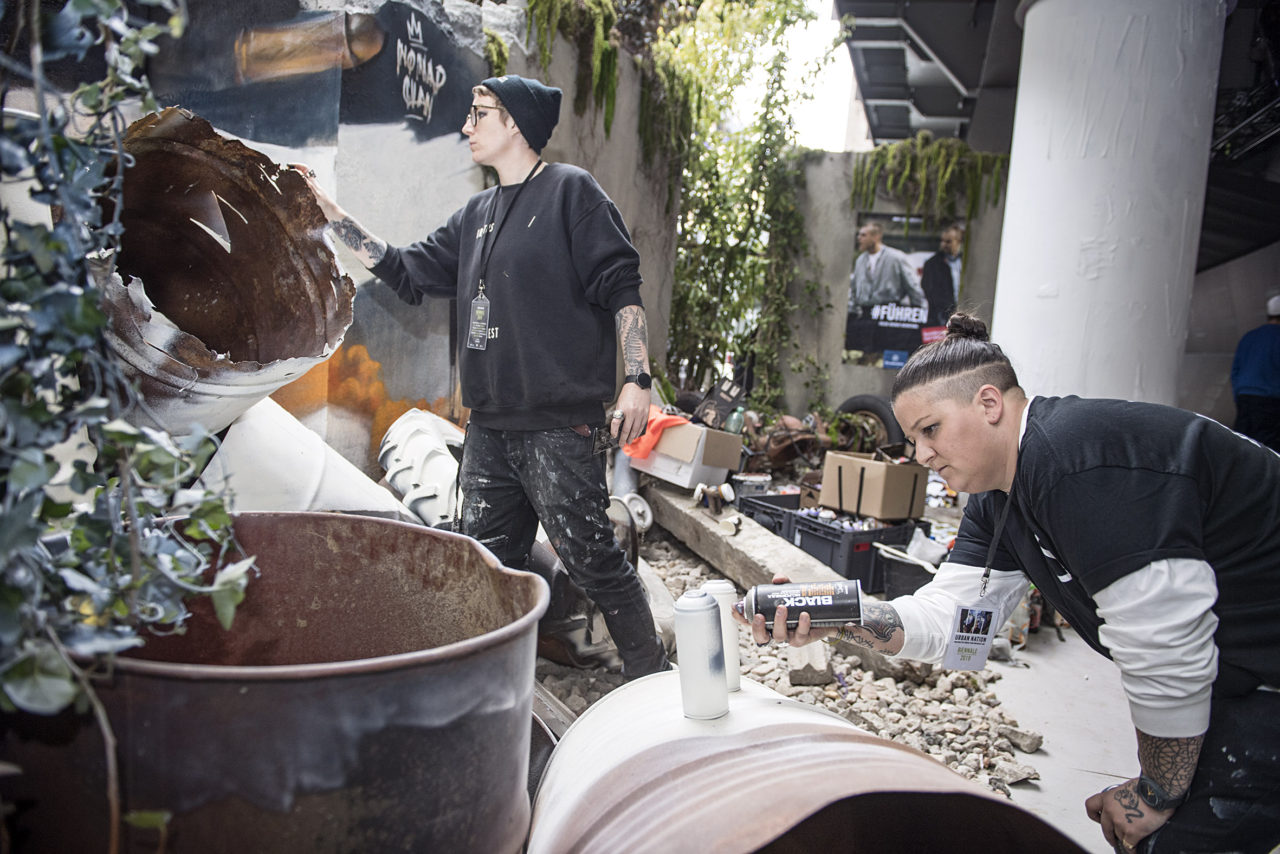
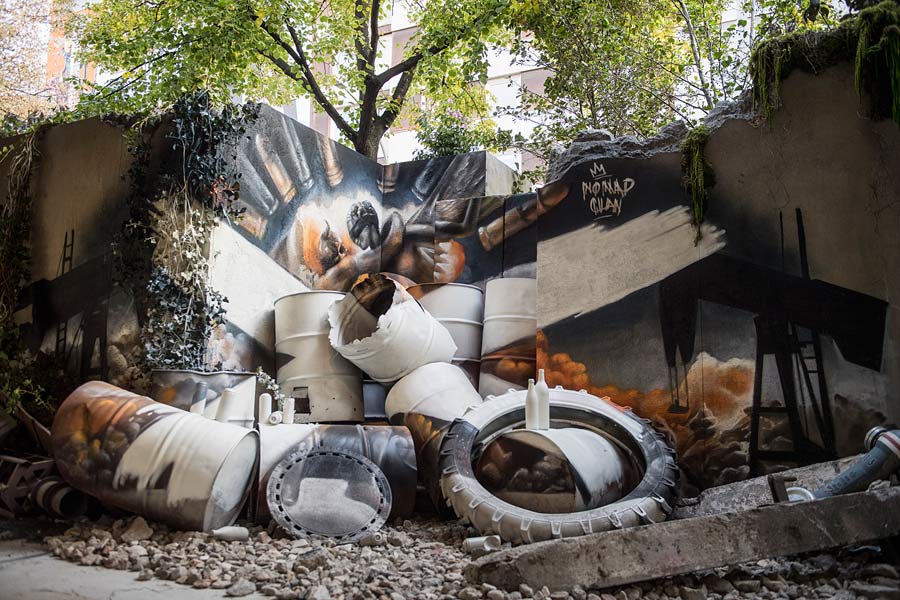
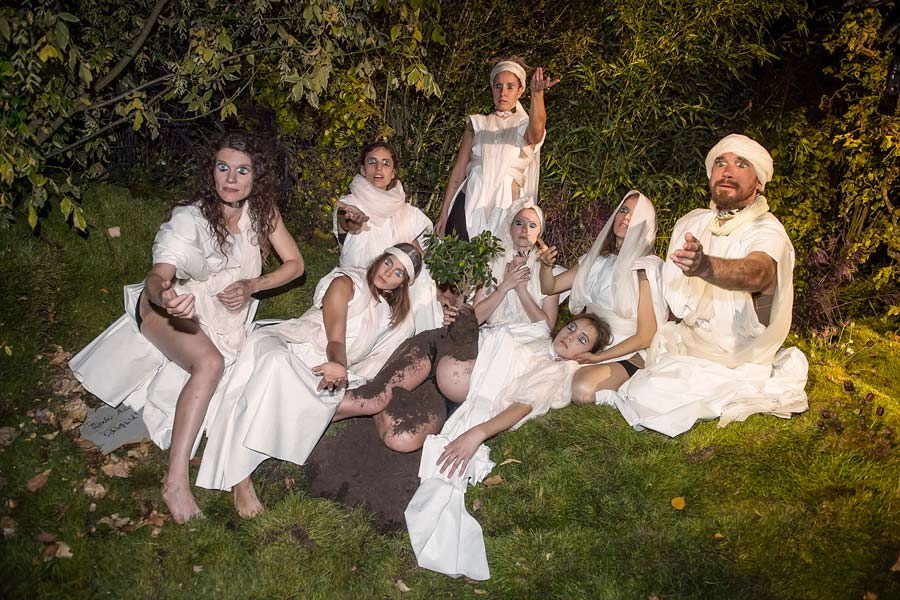
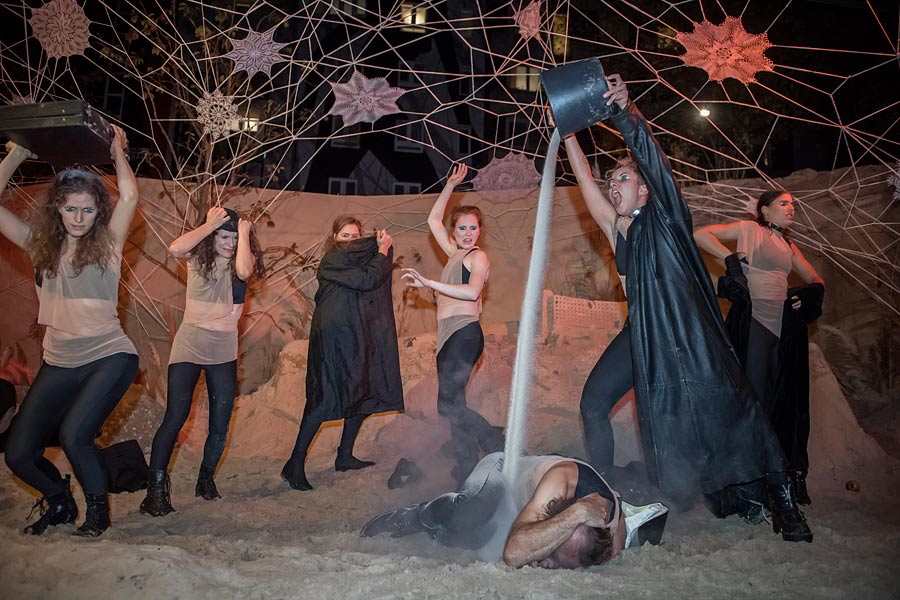
That’s how curator Yasha Young began the UN Biennale in Berlin this month. A fantasy-infused ramble through a future jungle teeming with dark pop goth and an animated gorilla, the multi-featured installation by the outgoing Creative Director was meant to pose questions about a possible future, or many possible futures on an Earth deeply scarred, reclaiming itself from man/womankind’s folly.
Spread along a 100-meter path and teeming with small surprise exhibits popping from the savage magic of two-day overgrowth, the installation appeared to take inspiration, at least in part, from the wildly successful Berlin exhibition two years ago called, “The Haus”, by a trio called Die Dixons. That one featured 175 artists creating immersive, site-specific futurist/fantasy installations on the five floors of a former bank – inviting dance troops and performances and thousands who cued for hours around the block.
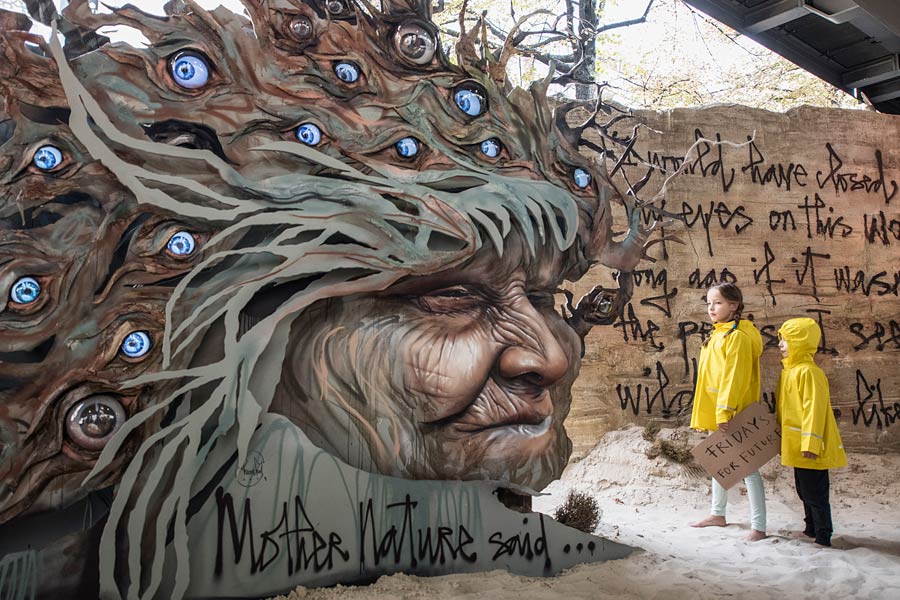
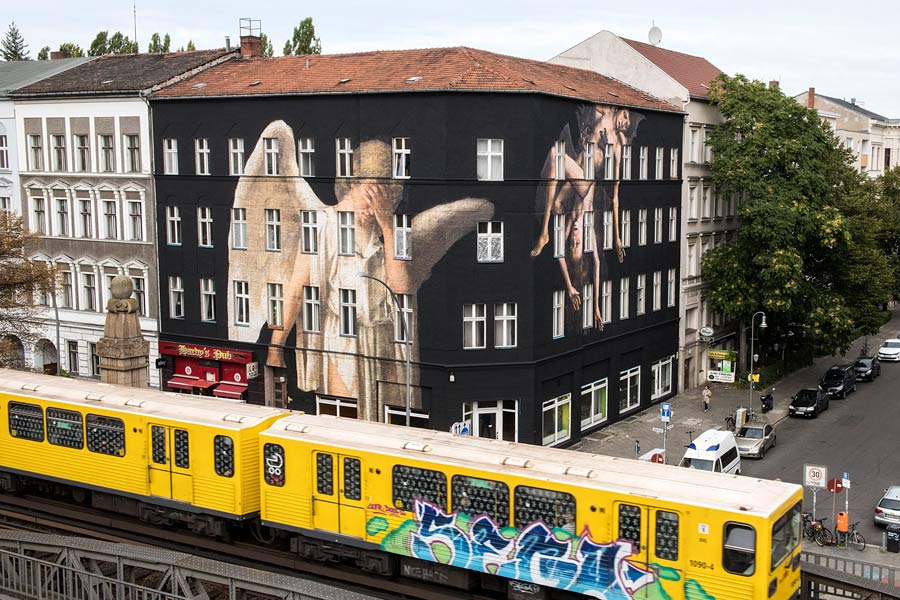
One of artists at UN’s “ROBOTS AND RELICS: UN-MANNED”, Herakut, was also in the Haus exhibition and here under the roaring U-Bahn on Bülowstraße produces one of the best synthesis of technology and fantasy. Their sculptural painted theatrical character of Mother Nature is straight from a childs’ imagination, blinking eyes forming a blue inquisitive aura around its visage.
No doubt many visitors winding through this late summer wildness were feeling quizzical to one another, confronting the various staged scenarios by 27 artists and asking “what if…”. Perhaps a lush and greener version of the traveling “29 Rooms” selfie house we saw in Brooklyn a few years ago, this one blended themes of post-disaster with a glistening dark leafy future girded with idiosyncracies and Hans Ruedi Giger airbrushed human/machines locked in biomechanical reverie.
“They
carry us off into barren deserts with relics of human existence,” says the
press release, “colorfully patterned
animals in overgrown areas as well as spherical light worlds.”
It
wasn’t a fait accompli that Henry Chalfant was going to capture an entire
graffiti train in late 1970s New York. He needed to devise a technique and plan
his attack.
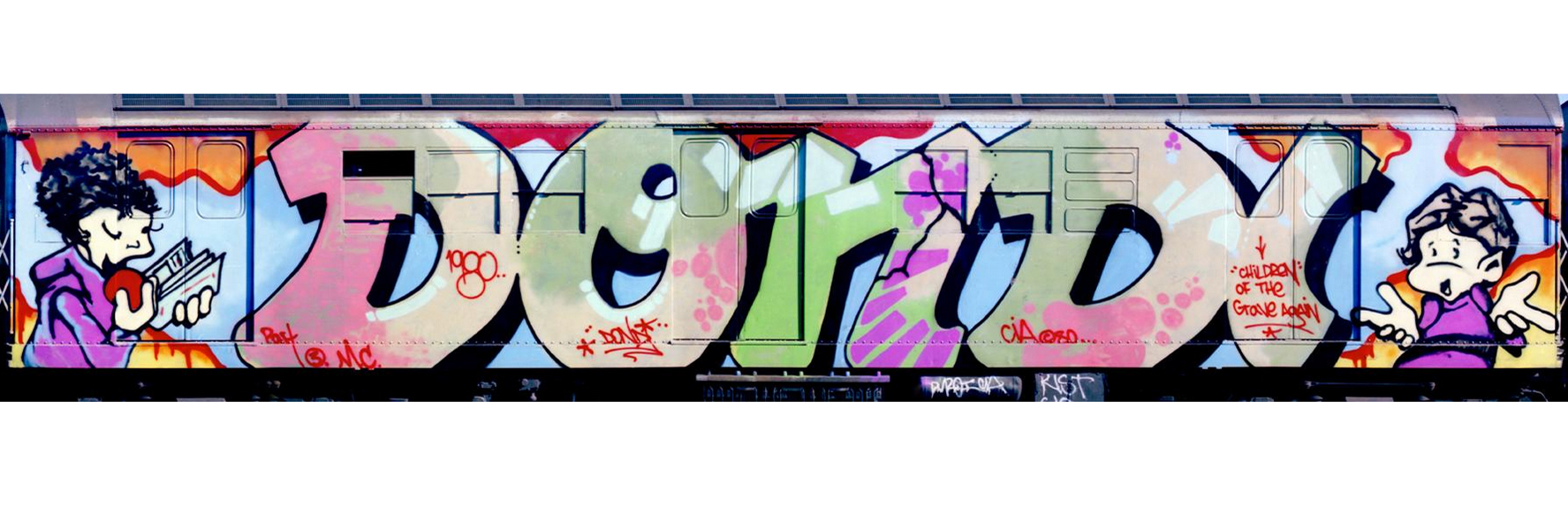
In much the same way that train writers like Blade, Dondi, SEEN, Mare and Skeme had to strategize, scope, and execute their hand-rendered work upon the rails under challenging circumstances and sometimes dangerous conditions, the photographic documentarian Chalfant had to likewise show up with his tools and skillz to document the work. He shot multiples in rapid succession by positioning himself, timing the trains, preparing his materials, and overlaying those images together end-to-end in a time-consuming methodology that he alone devised.
By presenting an ingenious visual anthropology, Henry captured for a greater audience the aesthetics and a more permanent record of the final product – at a time when most authorities and public sentiment saw little if any value in the work. This premeditated outlaw vandalism was also artistry, born with pure adrenaline by teenagers who were eager to make their mark in a rapidly declining US city in the midst of economic crises. When tags evolved to whole cars, whole cars became set pieces, and whole trains became a visual opus that swept into, through, and out of your view in minutes. By capturing and preserving them completely Chalfant ensured that future generations could appreciate them as well.
From
the press release:
“He co-authored the definitive account of New York graffiti art, Subway Art
(Holt Rinehart Winston, N.Y. 1984) and a sequel on the art form’s world-wide
diffusion, Spray Can Art (Thames and Hudson Inc. London, 1987). Chalfant
co-produced the PBS documentary, Style Wars, the definitive documentary about
Graffiti and Hip Hop culture and directed Flyin’ Cut Sleeves, a documentary on South
Bronx gangs, in 1993. He produced and directed Visit Palestine: Ten Days on the
West Bank in 2002. His film From Mambo to Hip Hop was featured in the Latino
Public Broadcasting series, Voces in 2006-2007, and won an Alma Award for Best
Documentary.
Henry Chalfant: Art vs. Transit, 1977-1987
is generously supported by KAWS, Michael D. & Kristin Elkins, David
Forbes and Velda Turan, Janet Goldman, Hal & Jodi Hess, Supreme,
Powerhouse Arts, Philip & Cheryl Milstein, Eric Firestone Gallery, Sacha
Jenkins & MassAppeal, Rob Cristofaro & Alife, Shepard Fairy, Anne
Brown, and Josh Rechnitz.”
The
exhibition is also supported by the 190 backers on Kickstarter who donated to
his outreach. https://www.kickstarter.com/projects/568527850/henry-chalfants-first-us-museum-retrospective
Banner image:
Henry Chalfant Dondi, 1980, 2013, 2013
Kodak Professional Endura Metallic Paper
17h x 65h in.
Henry Chalfant: Art vs. Transit, 1977-1987
For more information about HENRY CHALFANT: ART VS. TRANSIT, 1977-1987 and the museum’s hours of operation and tickets click HERE
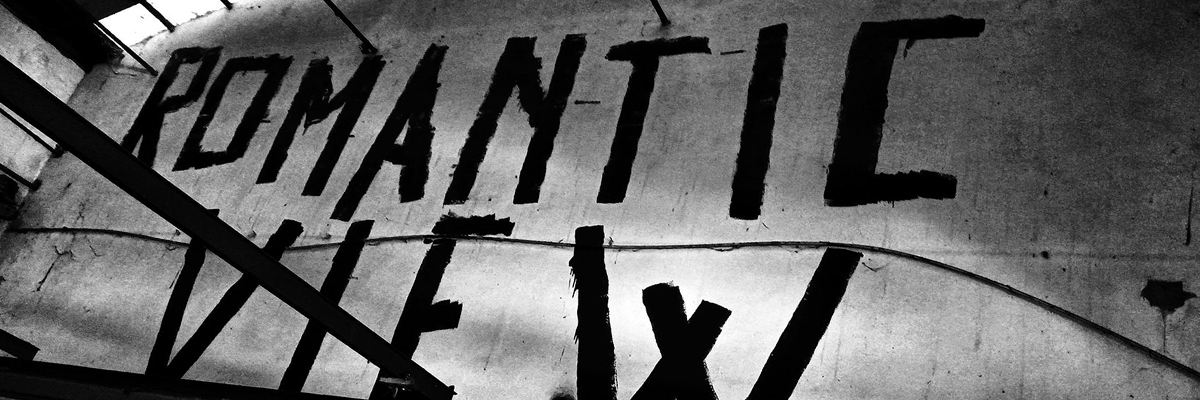
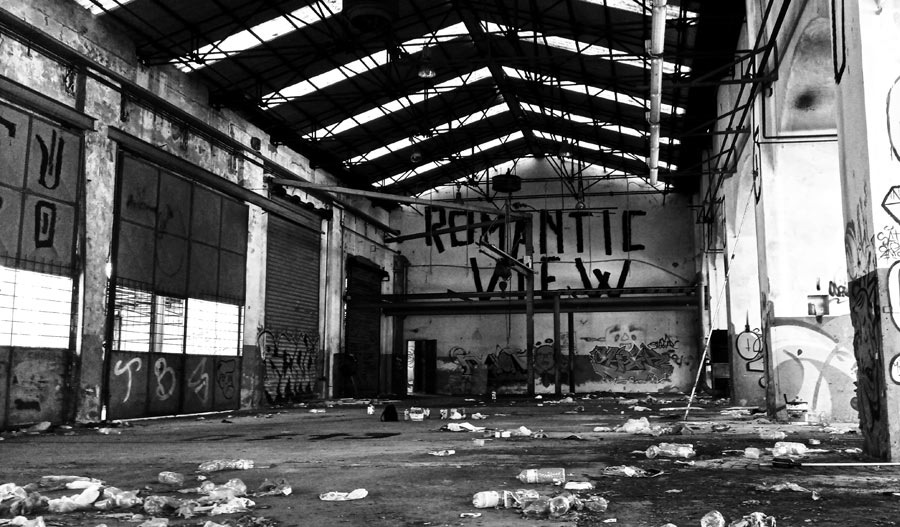
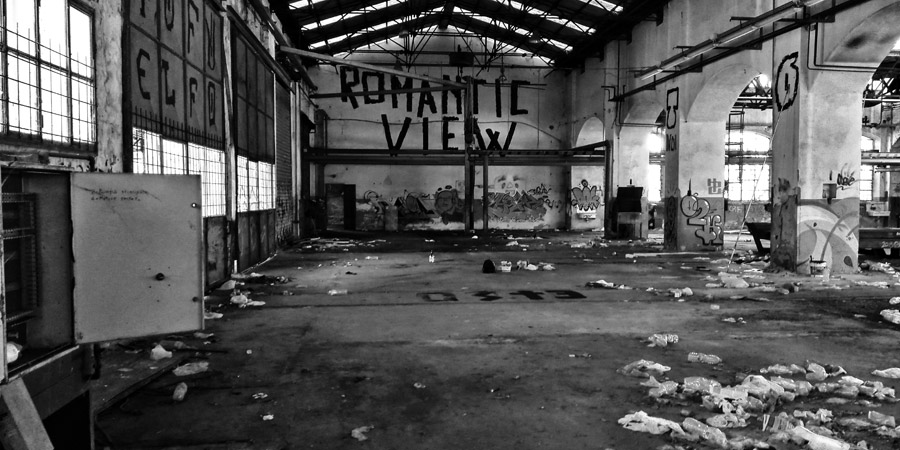
Suppose it is not so insulting for someone to say that you
tend to take a romanticized view of things. Frankly, the world could use a lot
more romanticism, and less of the callous, obtuse, horror please.
ELFO may be projecting his rose tinted view upon this abandoned and degraded building in Florence, Italy, but then again his lo-fi naïve lettering tells us he is in on the joke too – he’s just playing with you.
As illegal Street Art morphed into legal murals we began to witness the entry of formally trained artists and professionals who not only abandoned the politically charged or socially challenging themes in favor of pleasant topics and commercial aesthetics but accidentally launched an arms race for the biggest, tallest, widest walls possible.
Soon the descriptions we received about new artist works shifted from discussions on themes and messages to statistics about square meters covered, the number of stories high the building was, and how many cans or gallons of paint were required to finish it.
Spanish
artist, designer, and photographer Octavi Serra would like a larger wall
please. The one that Contorno Urbano gave him for their 11th mural
this year in Barcelona seems dreadfully small, and he has really big ideas. He
calls this mural “Insufficient”.
Serra
says his work often “focuses on capturing the irony, truisms and frustrations
of modern life,” and while this piece is evidently meant to be tongue in cheek,
he is tapping into a general sense of dissatisfaction that is part of a
materialistic culture, and part of the human condition.
By
letting the typography bleed off the edges, you also sense the claustrophobic
feelings that are playing with the artists mind. “There is this feeling of
never being completely satisfied even though reason argues that we should be,”
he says. “There is this desire to always have more, which make the road
impossible to enjoy.”
The
mural is part of the 12 + 1 public mural project of Barcelona – at the Civic
Center Cotxeres Borrell. Before the end of the year they are planning a
collective exhibition where works by all the artists who have participated in
the edition of the 12 + 1 2019 Barcelona project will be on display. The show
will feature artists Jay Visual, Ivan Floro, Margalef, Anna Taratiel, Nuria
Toll, Flavita Banana, Cristina Lina, Degon, Mr. Sis, Cristina Daura, Laia and
Octavi Serra.
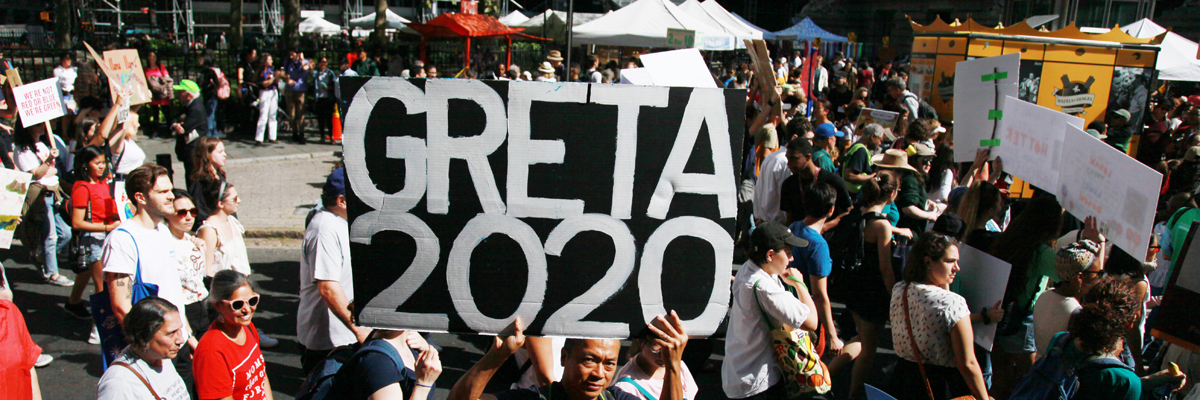
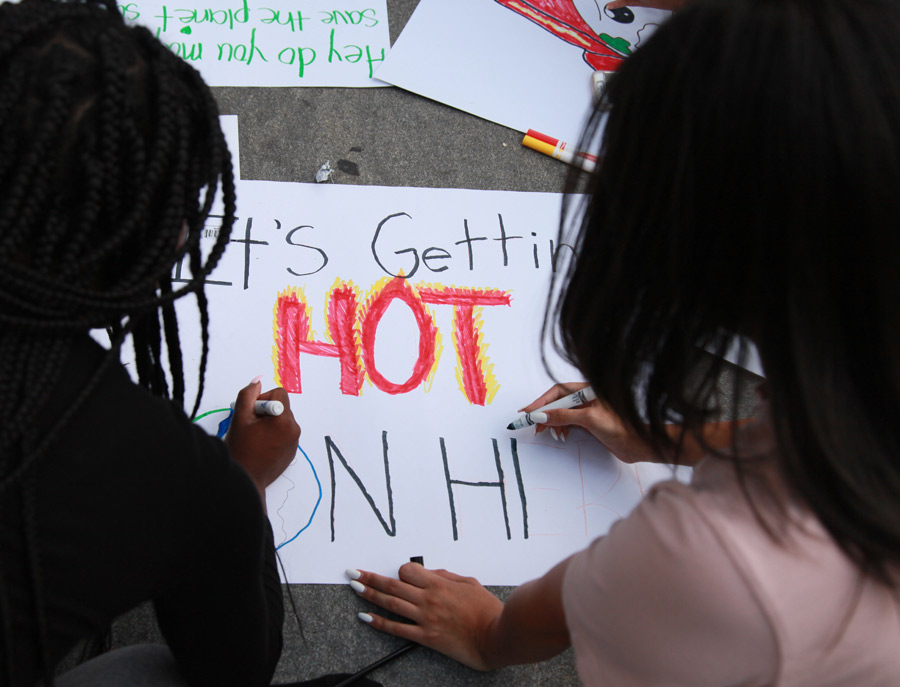
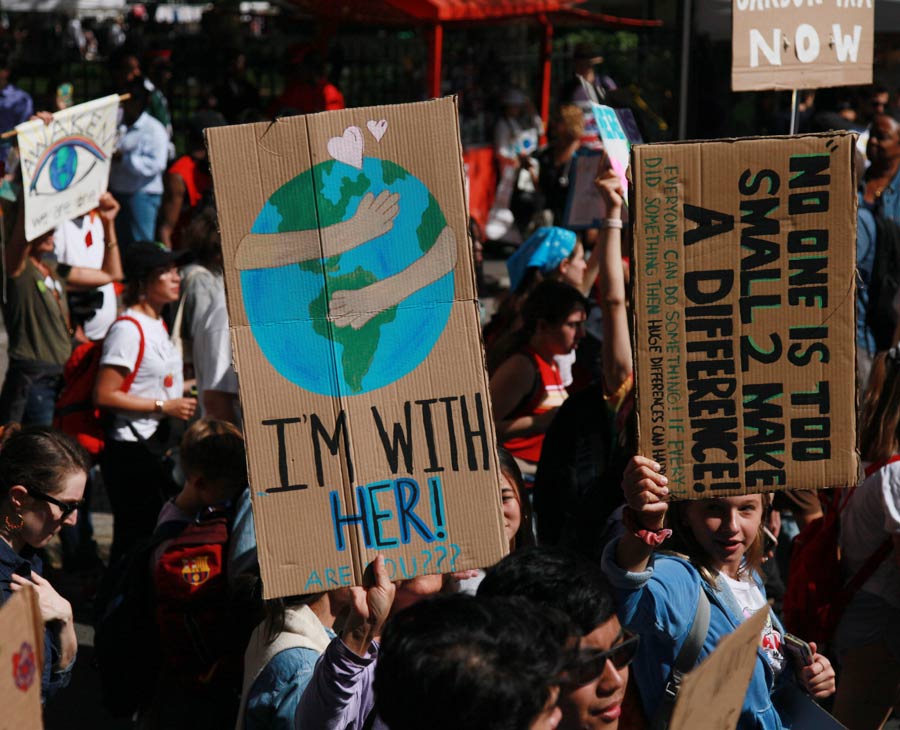
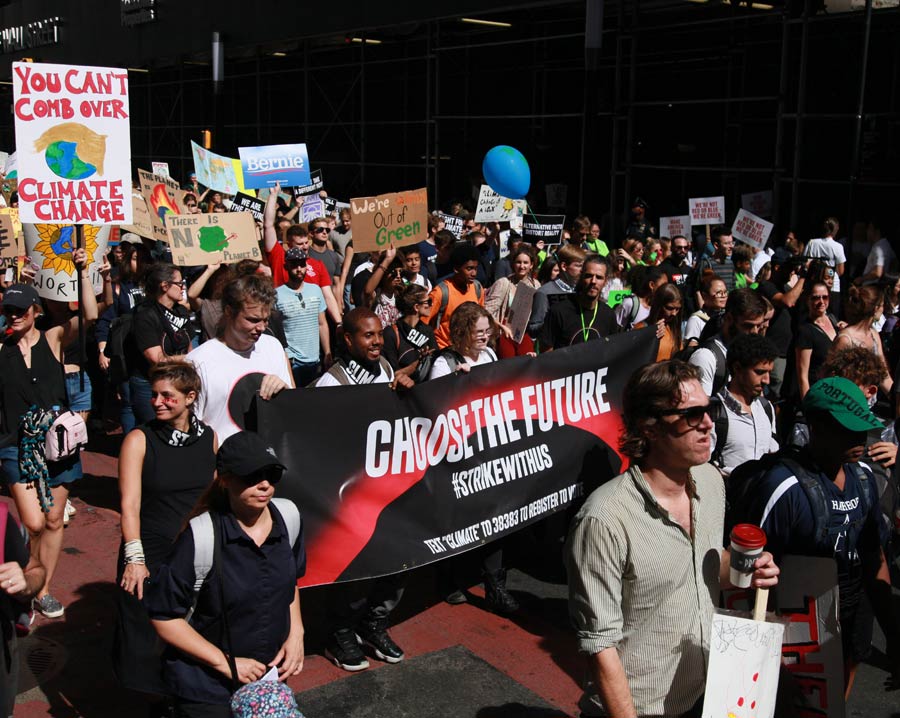
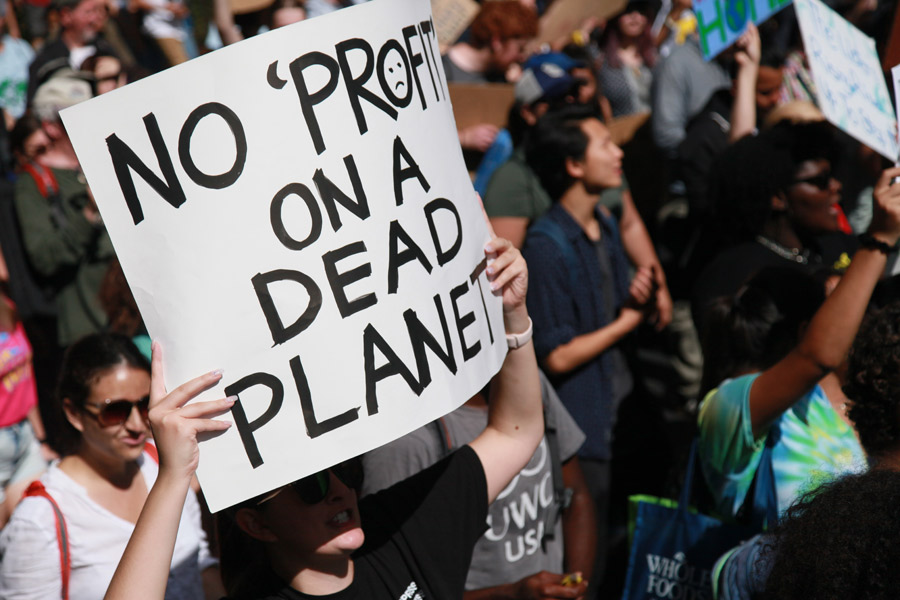
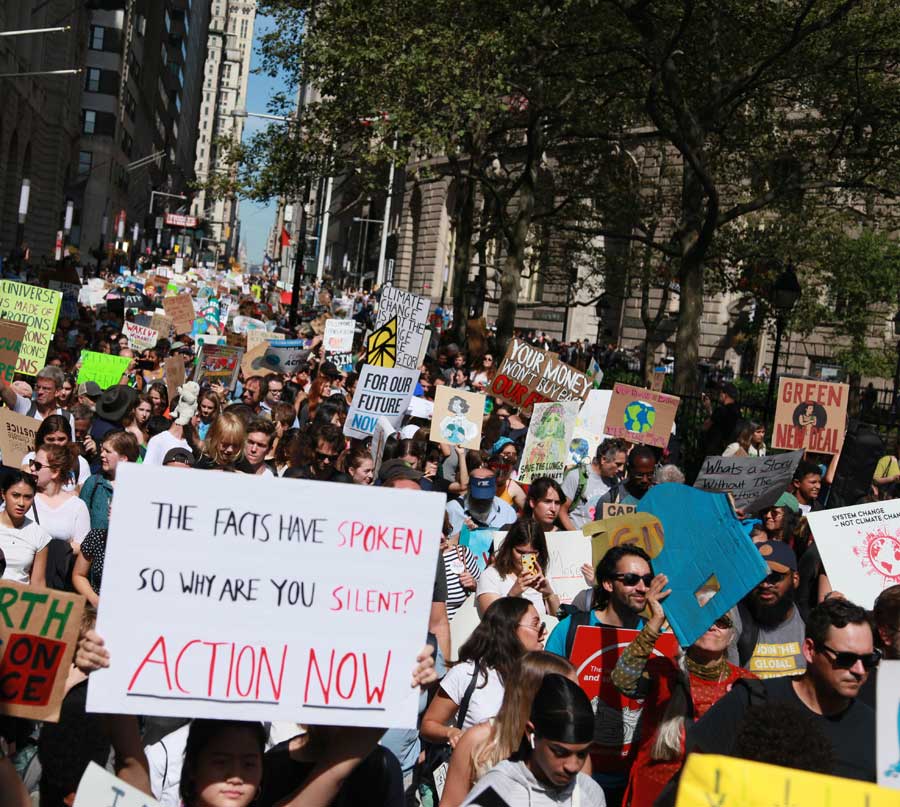
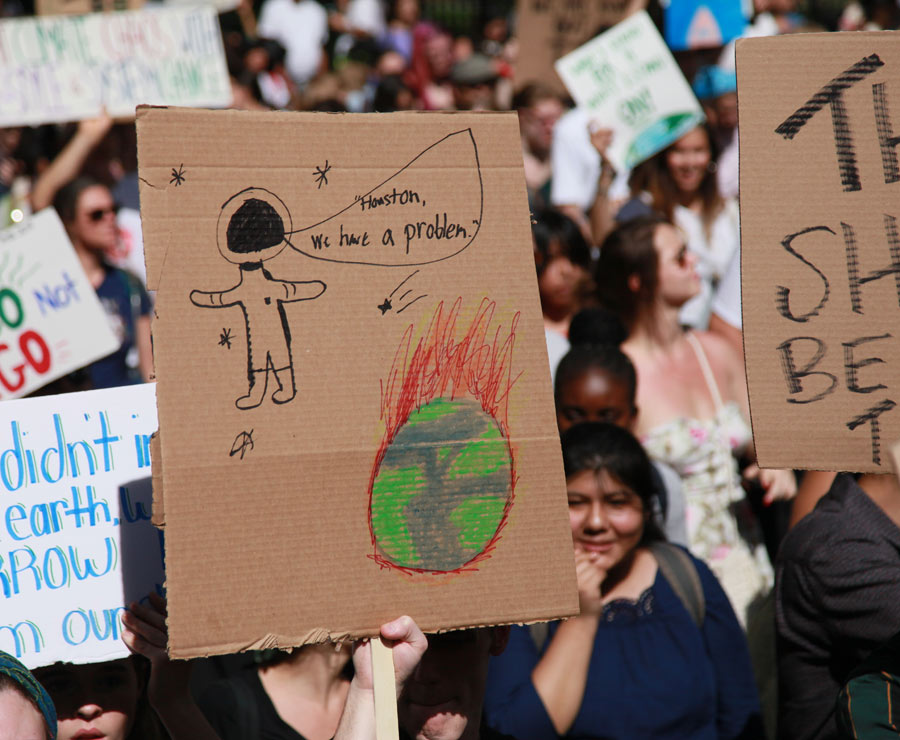
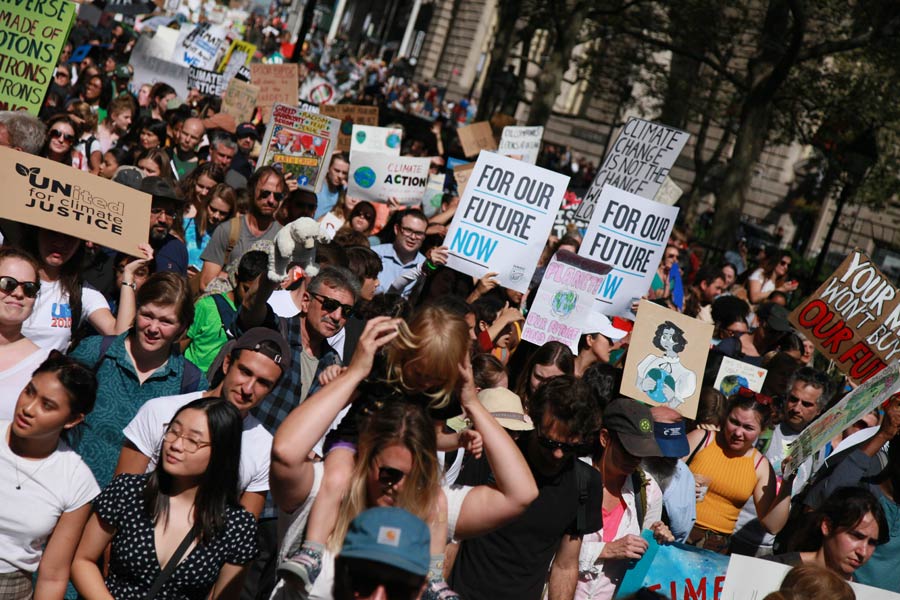
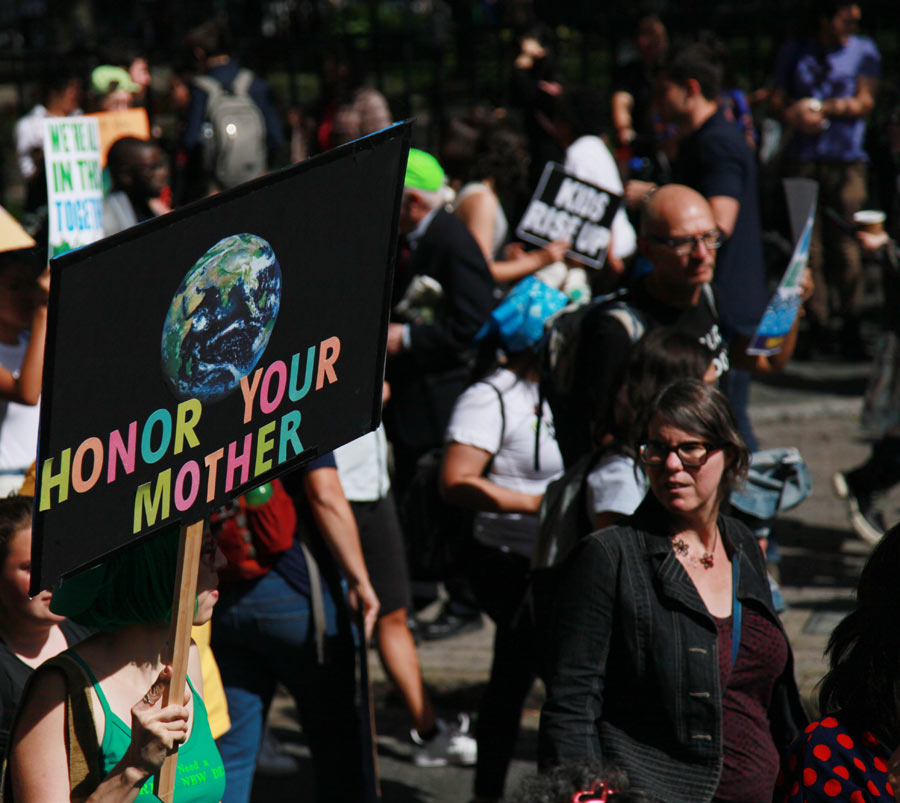
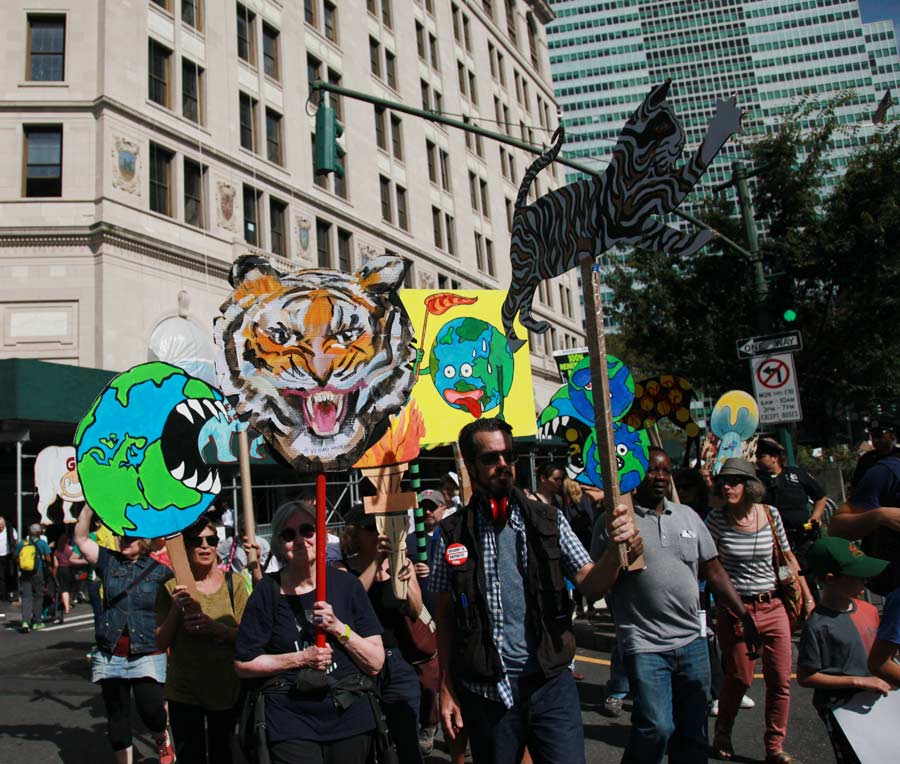
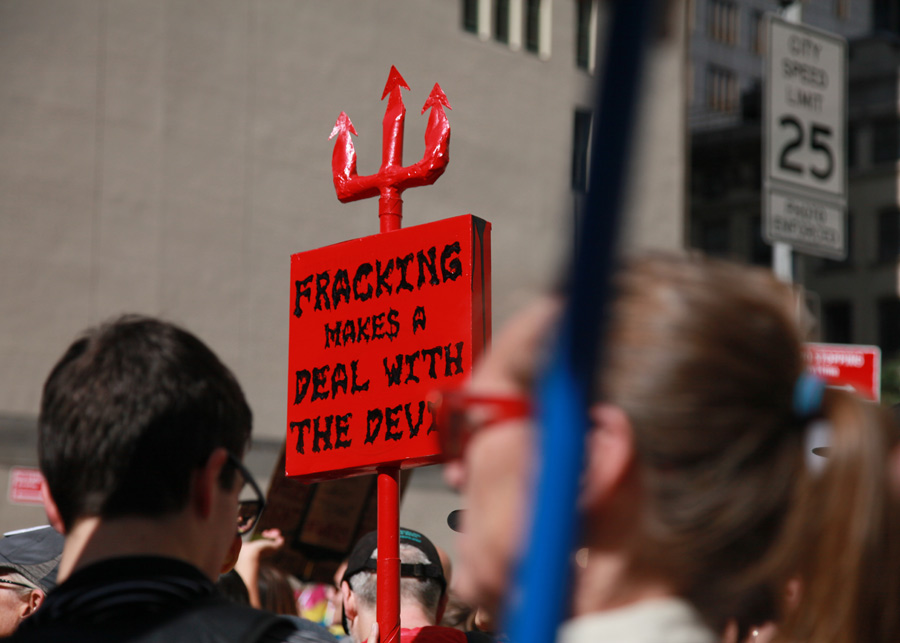
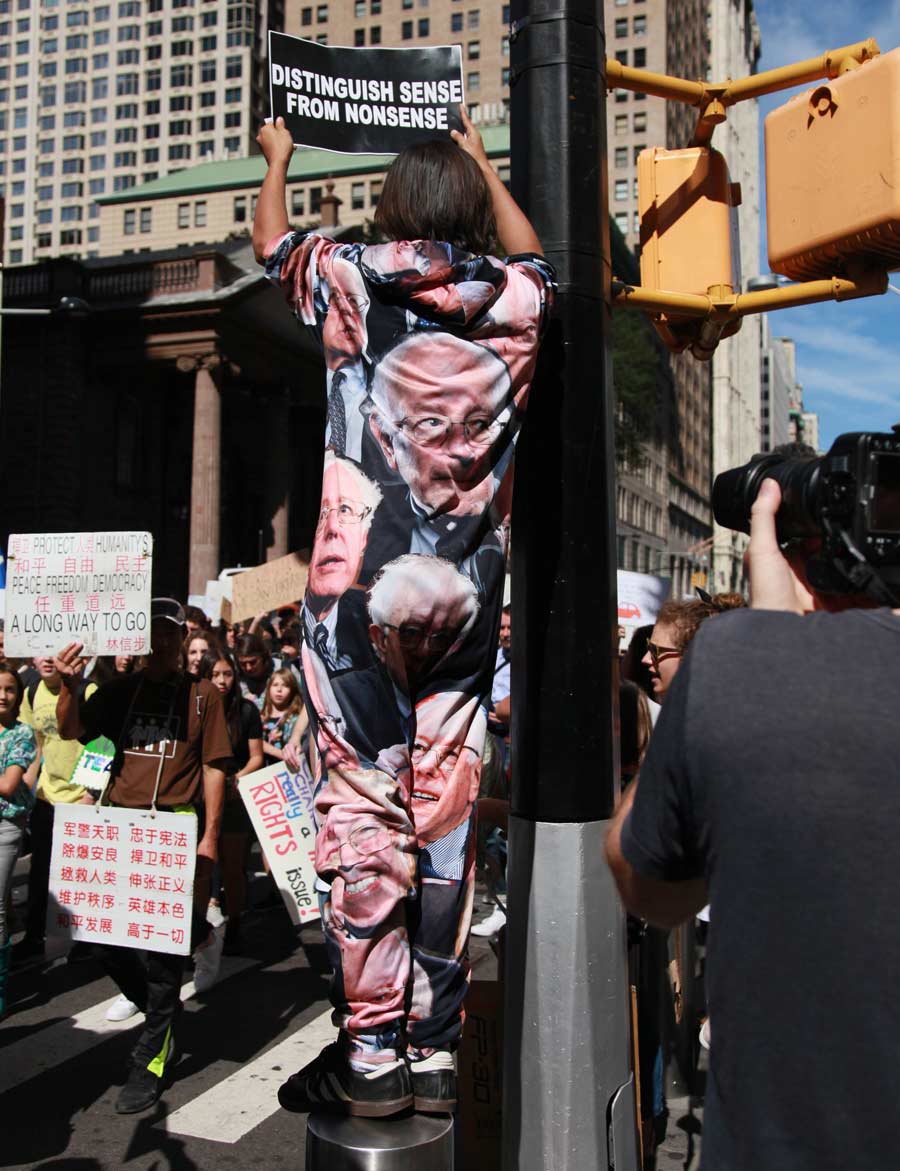
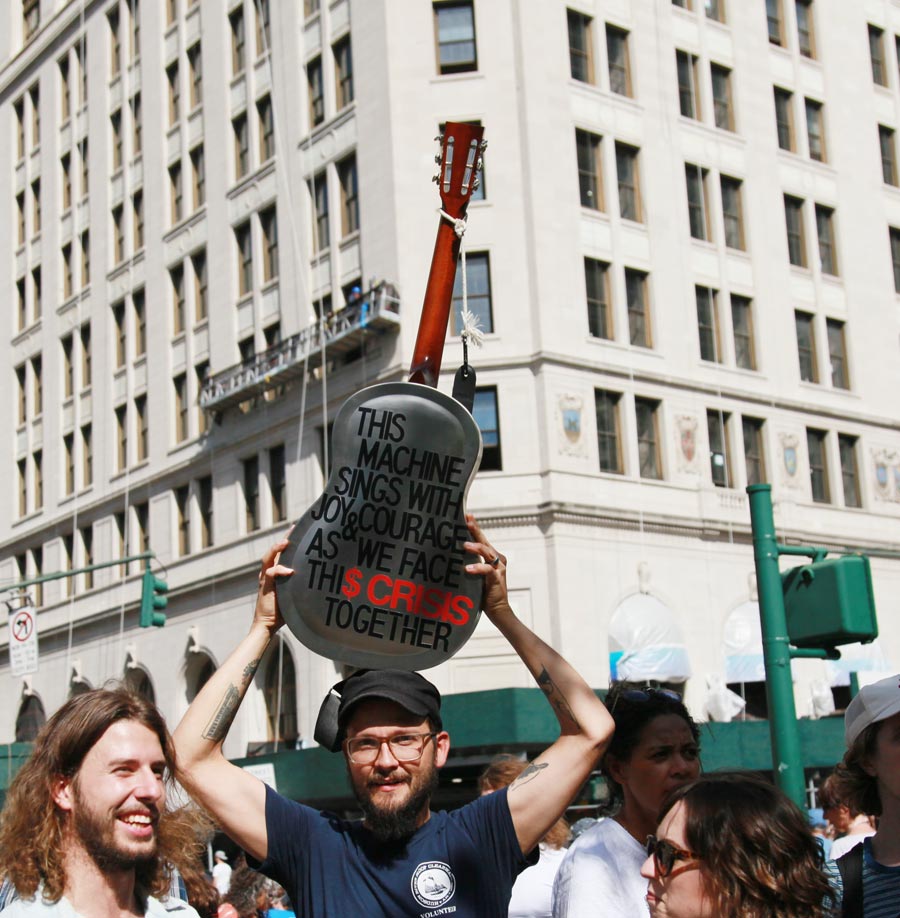
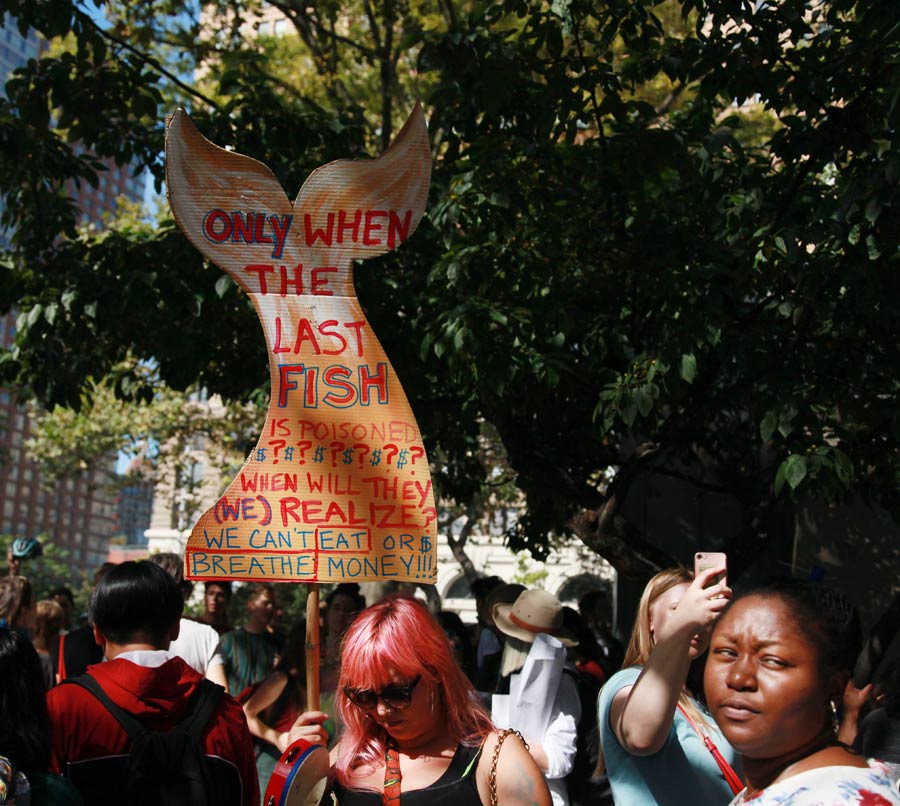
Easier said than done perhaps, but that was probably one of our favorite signs Friday at the Global Climate March here in New York. With a steady flood of disinformation affecting the corporately owned media the popular movements that are rising may not be getting the coverage they deserve, but they are getting to talk to each other and skillfully dismantle the Fog State.
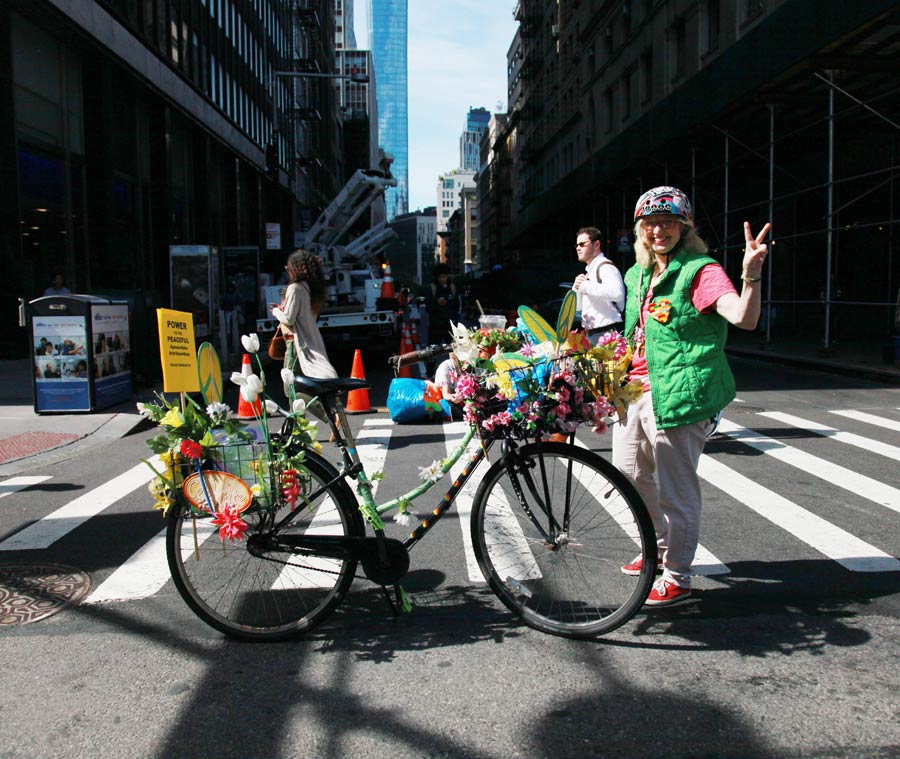
It was a sunny week in New York again and despite the worries that are plaguing our minds, and there are many, the streets came alive with so many positive messages that even the casual passerby had to be moved by the enthusiasm, the optimism, and determination on display from thousands of their fellow New Yorkers.
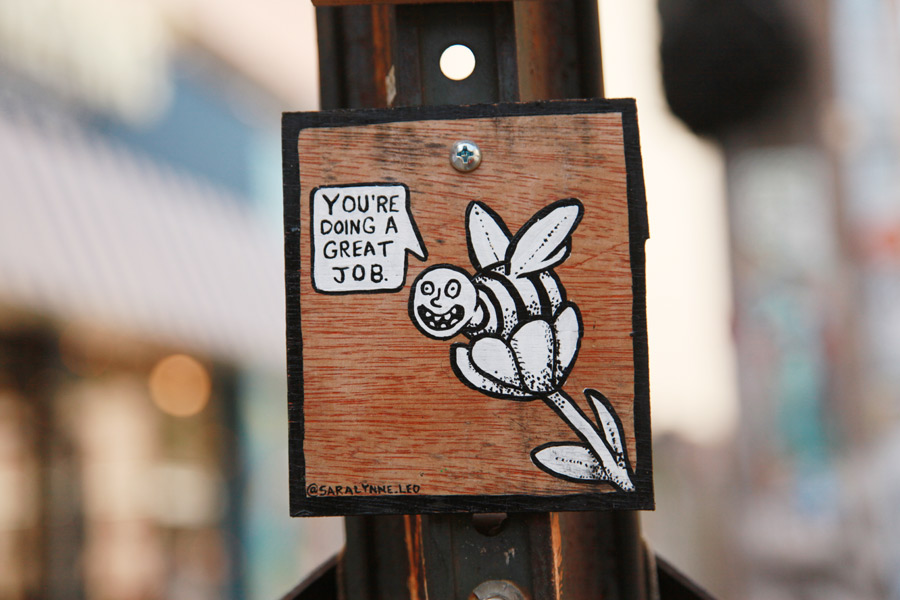
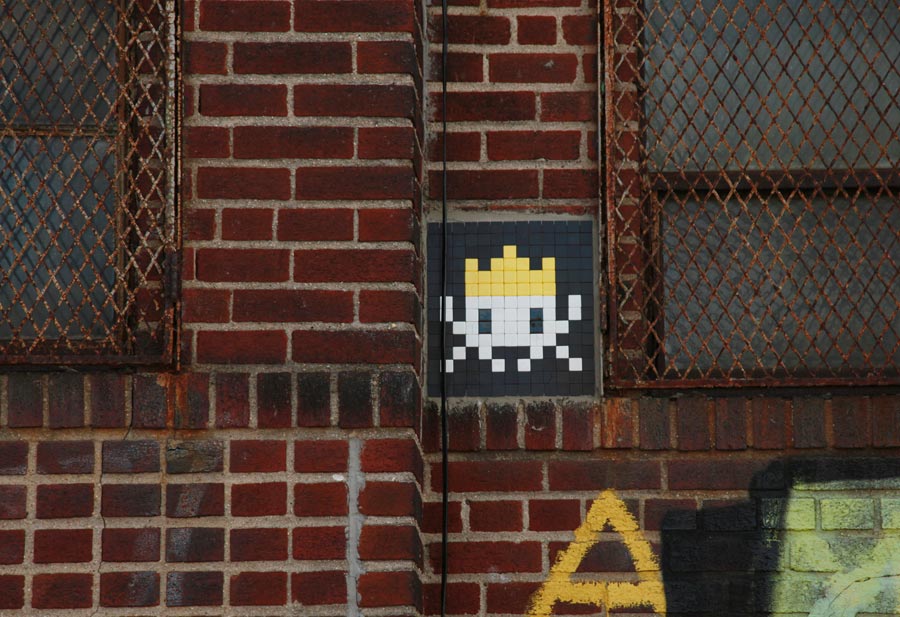
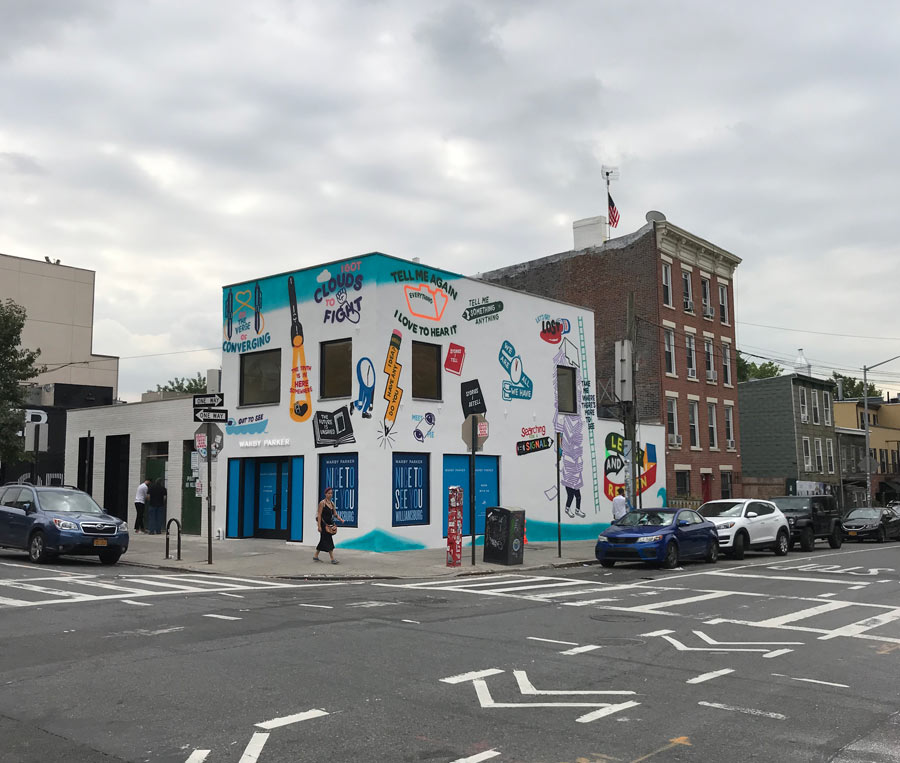
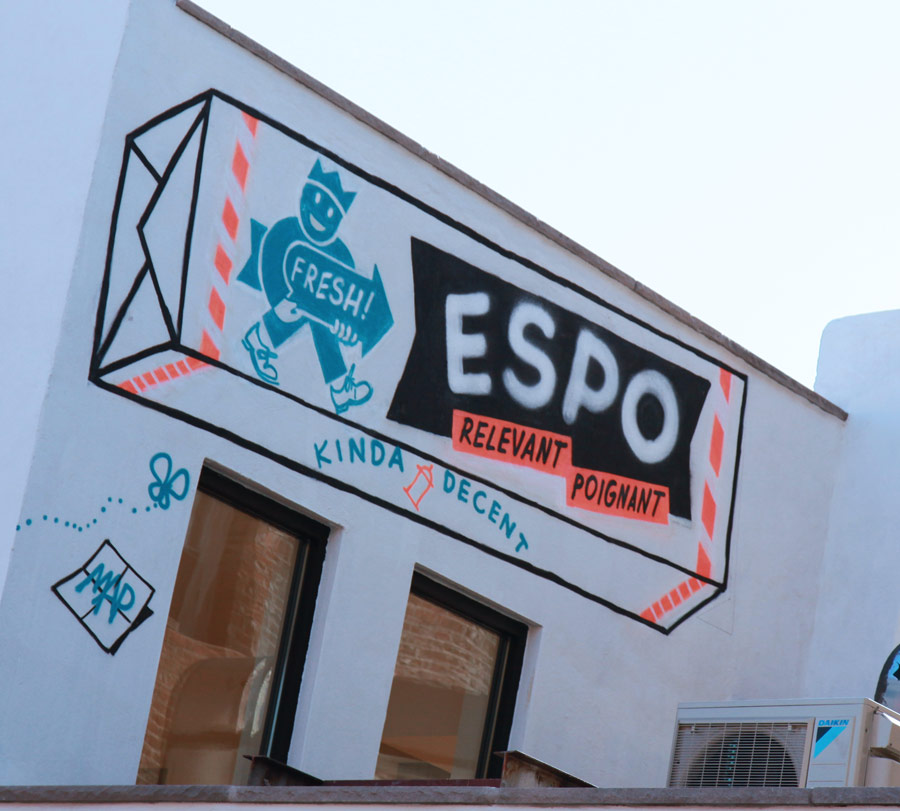
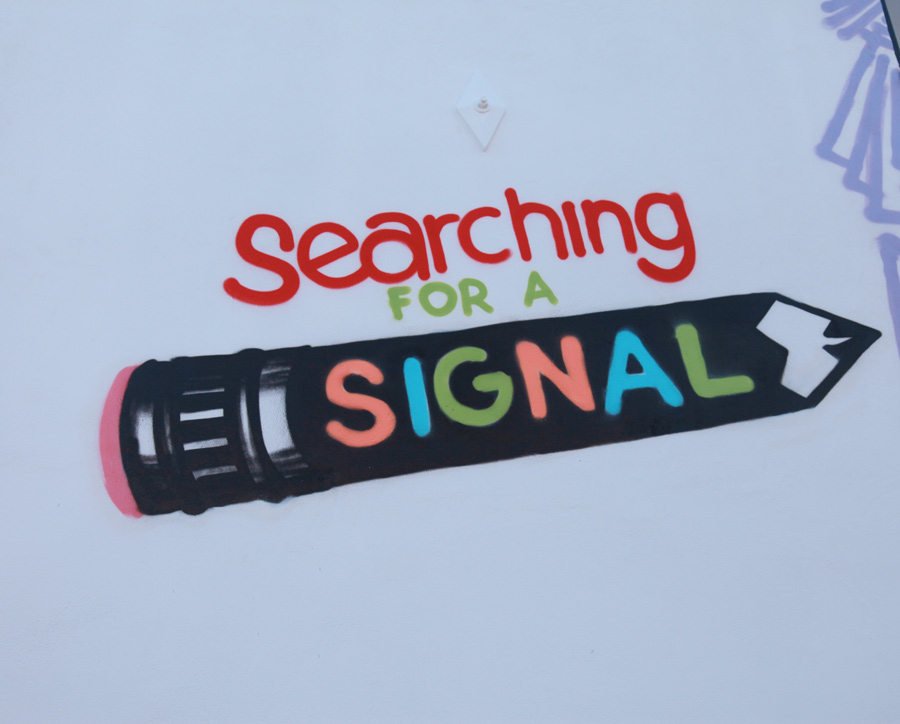
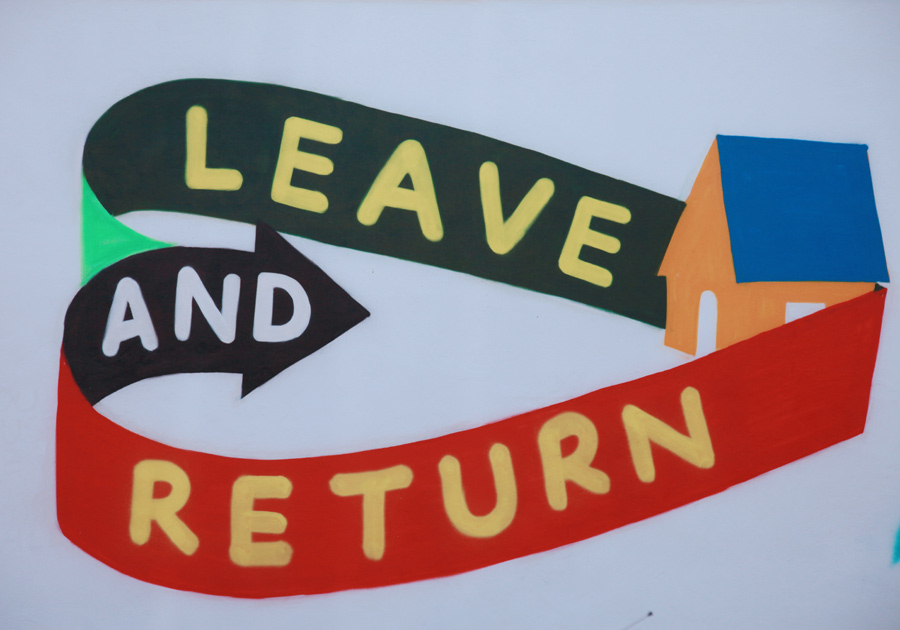
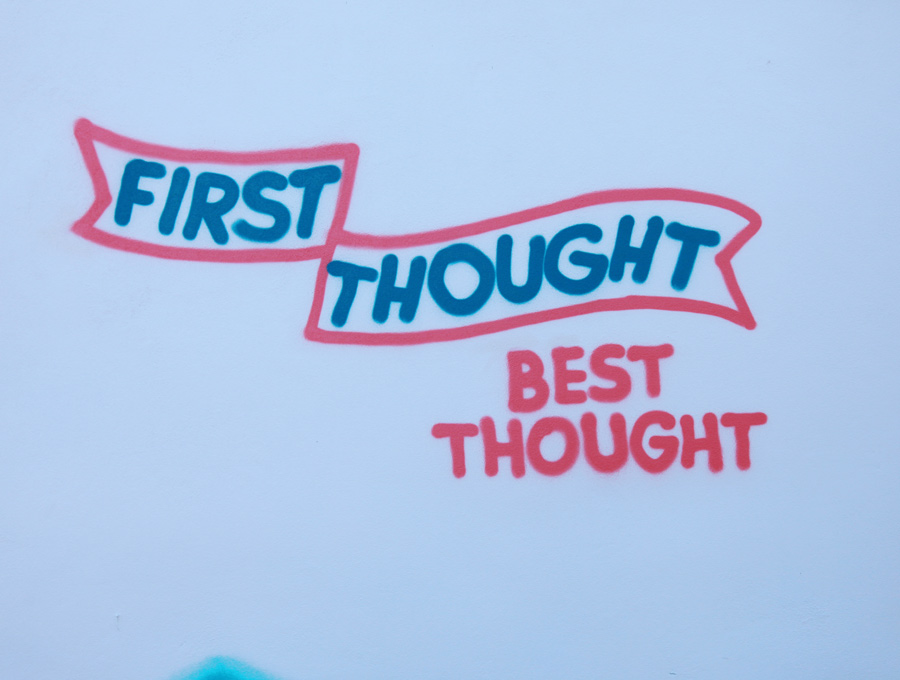
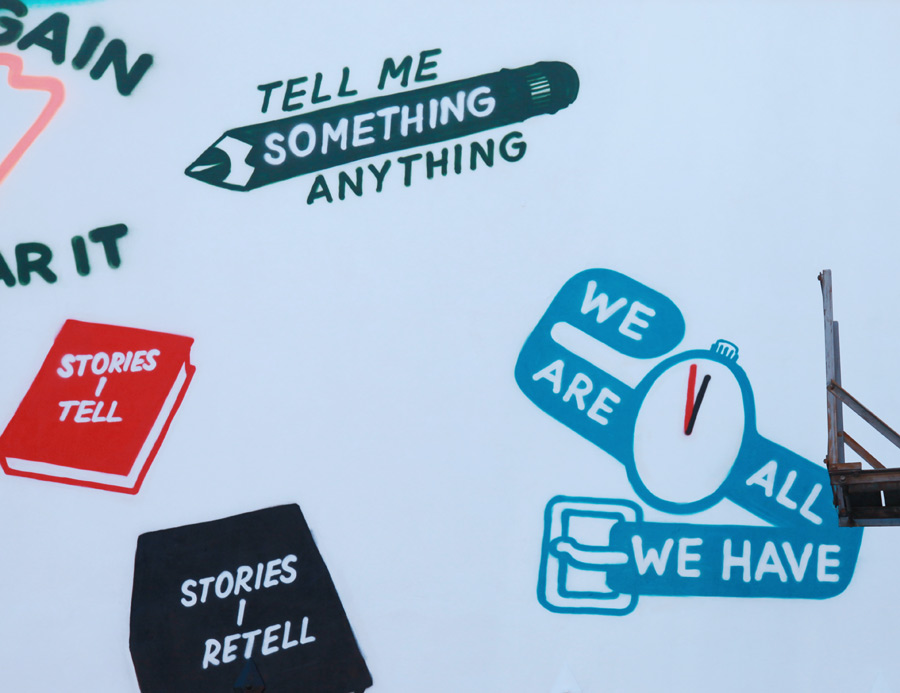
This Sunday’s collection of images have one thing in common; text. With the exception of one, the Invader piece, all the others have a message to convey in the written word.
Here’s our weekly interview with the street, this time featuring signs from the Global Climate March and Invader, Sara Lynne Leo, Space Invader, and Steve ESPO Powers.
Street art welcomes all manner of materials and methods, typically deployed without permission and without apology. This hand-formed wire piece …Read More »
 BROOKLYN STREET ART LOVES YOU MORE EVERY DAY