Our weekly focus on the moving image and art in the streets. And other oddities.
Now screening : 1. Minda Hamada y Zosen Bandido in Veracruz 2. Marina Zumi “Lucid Dreams II” 3. Udatxo – Parees Fest 2019. Video by Titi Muñoz 4. Greta Thunberg “How Dare You” Extended Remix
BSA Special Feature: Minda Hamada y Zosen Bandido in Veracruz
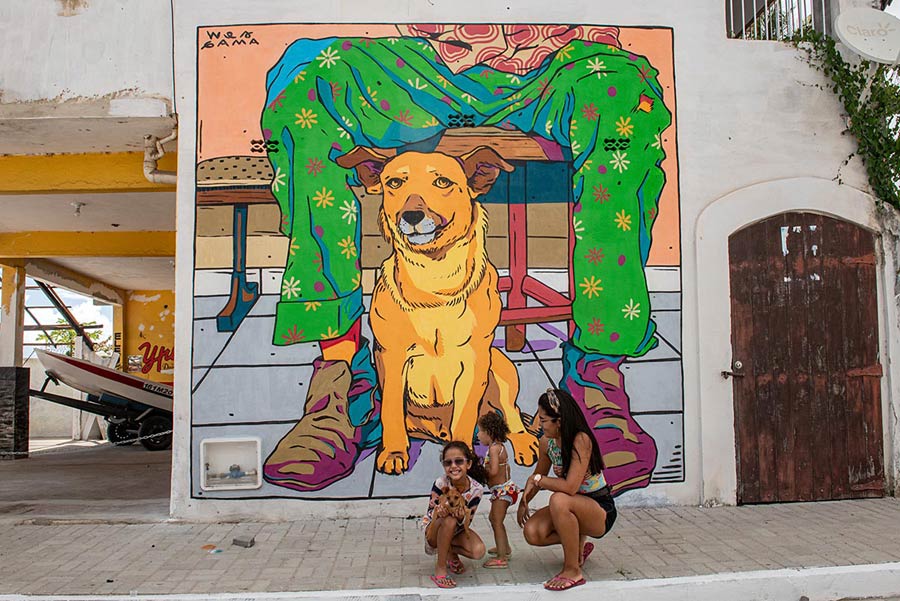
Mina Hamada y Zosen Bandido are graphic and poppy in their organic naïve-style collage compositions. Their engaging style lends itself to public arts projects that also promote business and foot traffic. Here they (mostly he) talk about their love of color, their cultural art influences, and their new project this summer in the Art District Boca Del Rio in Veracruz, Mexico.
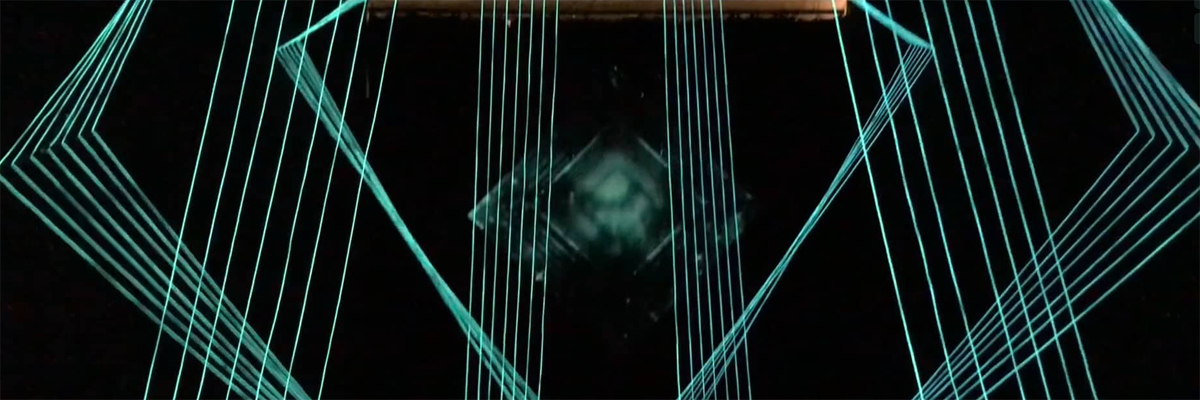
Marina Zumi “Lucid Dreams II”
Street Artist, muralist, and interactive artist Marina Zumi doesn’t stop exploring the moon and the night sky and those tremulous flickering messages that blip across our consciousness. Perhaps by way of exploring the modern, her newest electronic tracing of shapes and rhythms in the darkness borrow from Tron and early Kraftwerk, comforting and witty in the low-fi and physical familiarity of it all. Part of her show “Techno Poetry,” Zumi continues to break new ground with here lucid dreams.
Udatxo – Parees Fest 2019. Video by Titi Muñoz
Here’s
artist Udatxo painting a new mural at the Parees Fest.
Greta Thunberg “How Dare You” Extended Remix
Get up and dance to a new hit for 2019! Taking recrimination to the dance floor, is the new hit from Greta Thunberg in a heavy German techno style.
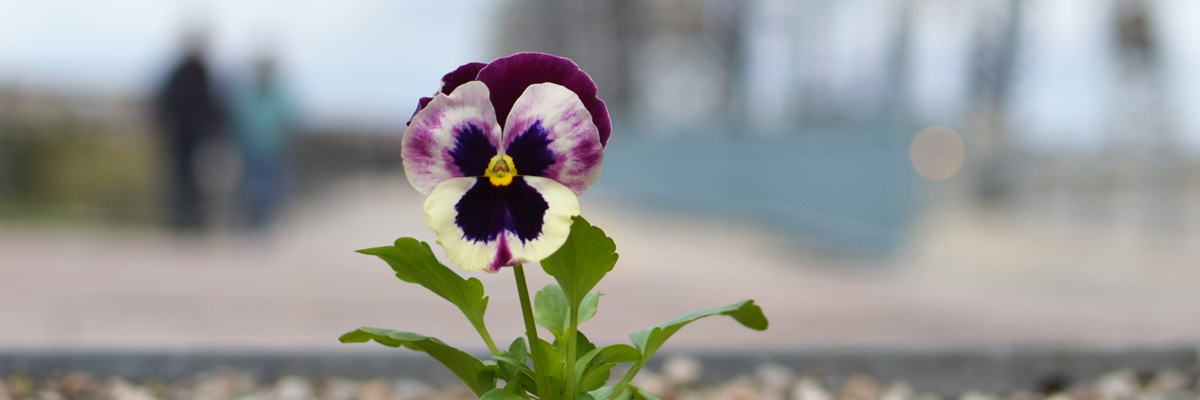
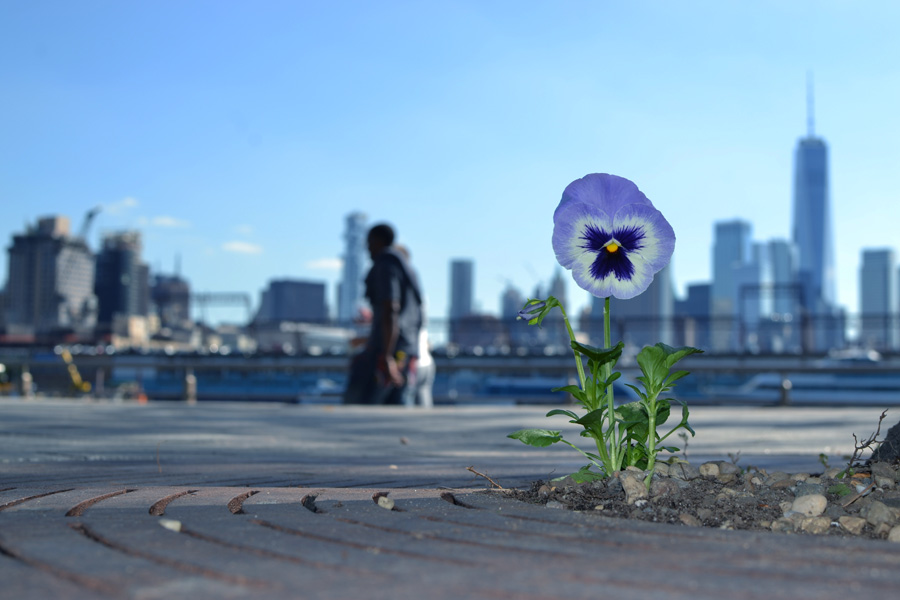
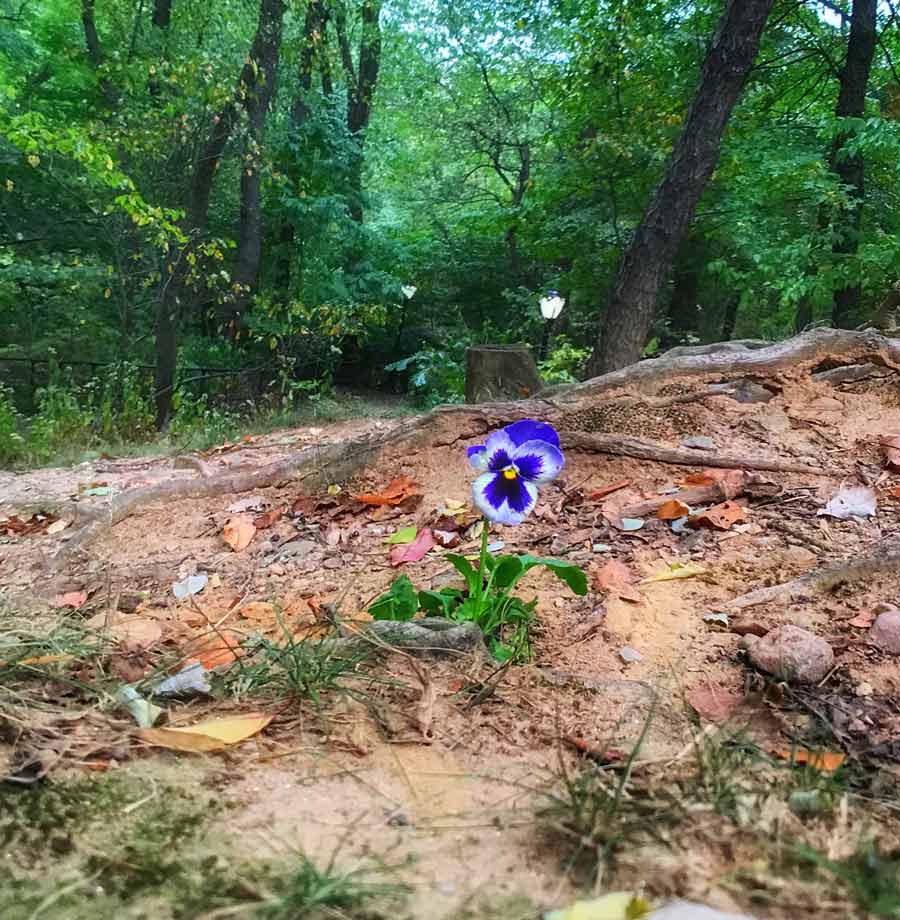
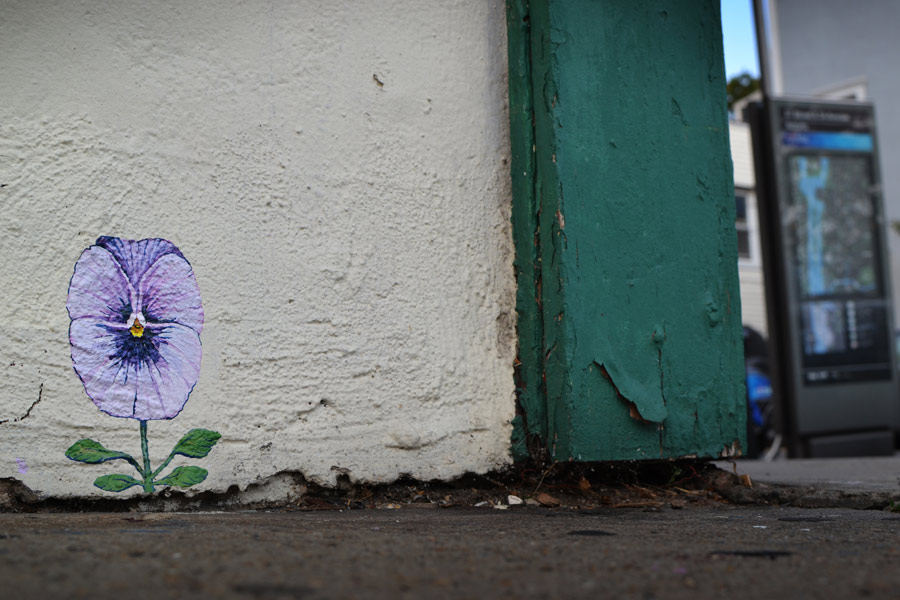
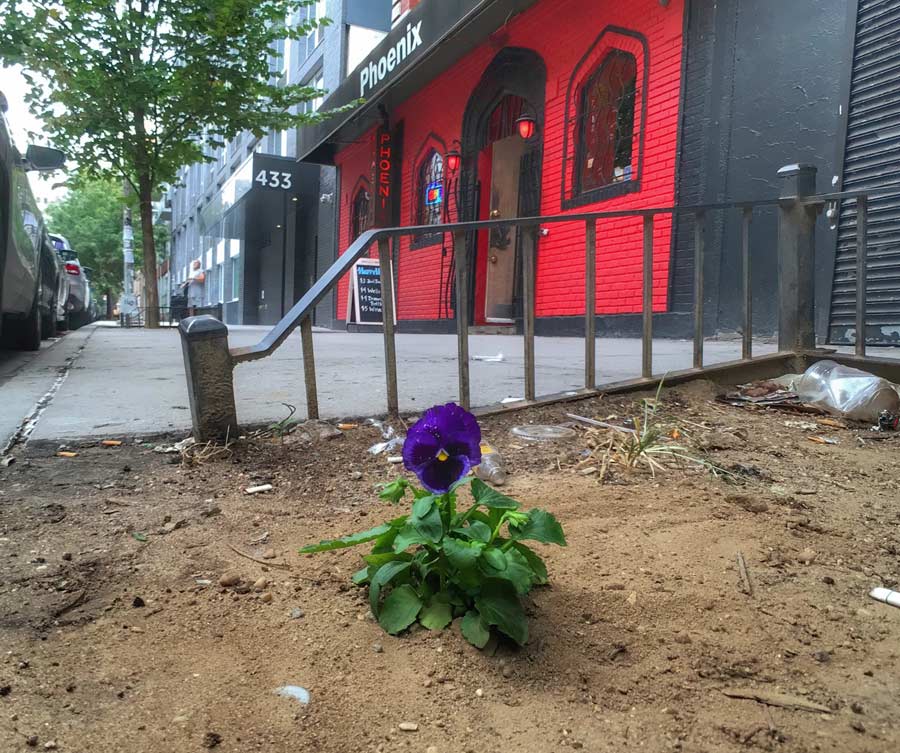
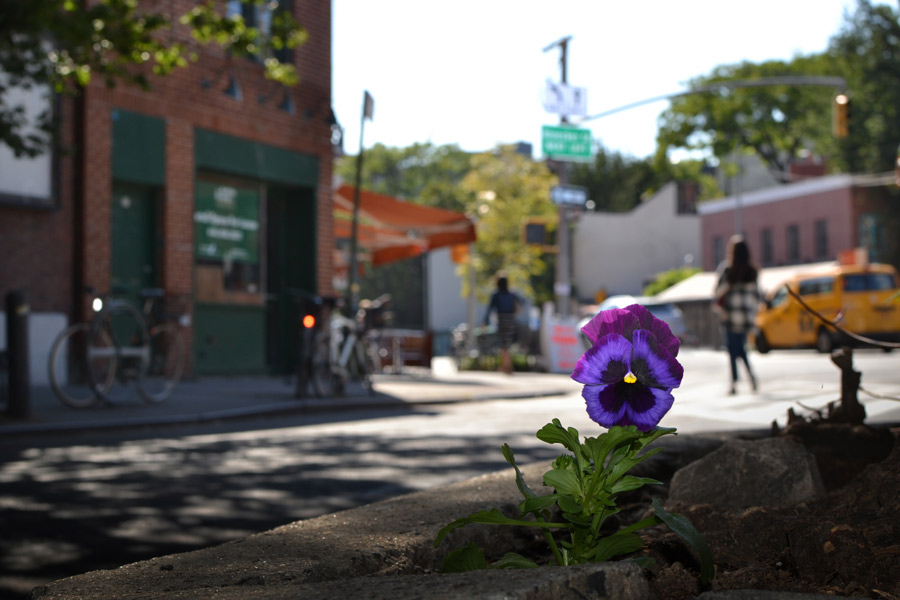
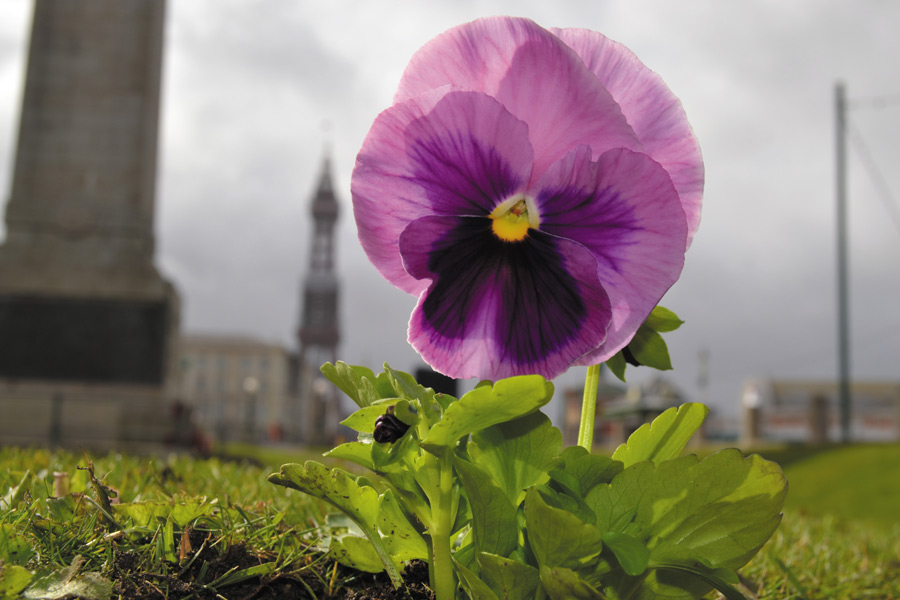
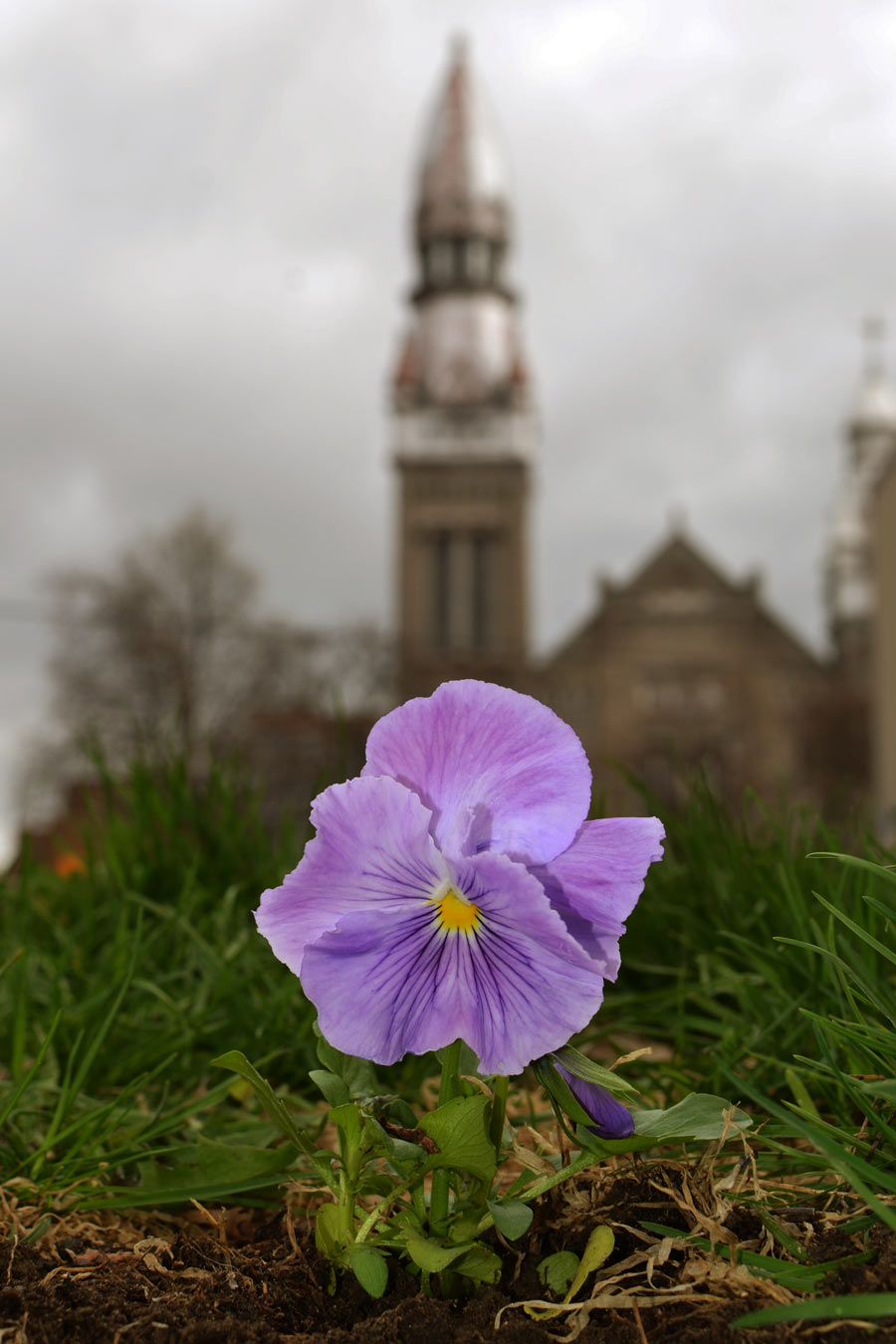
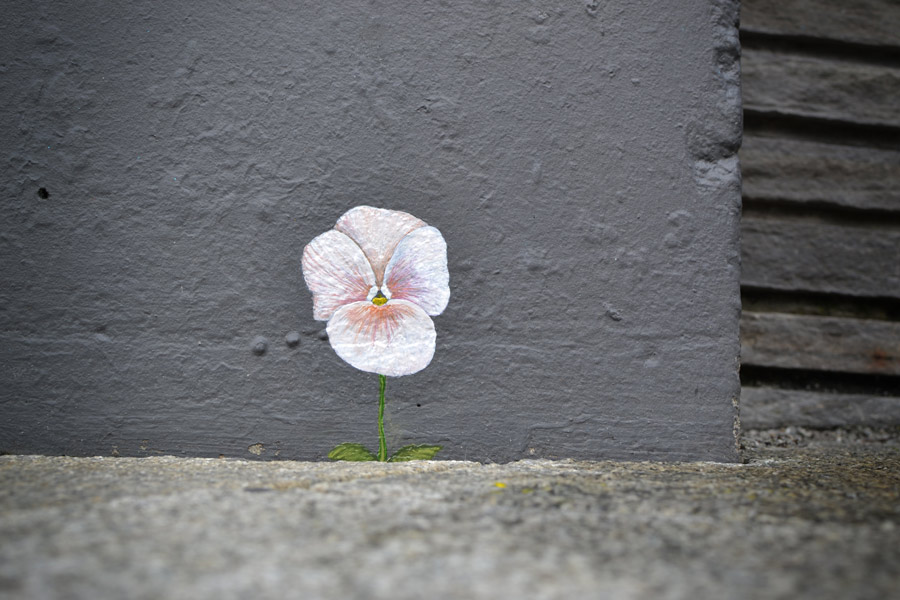
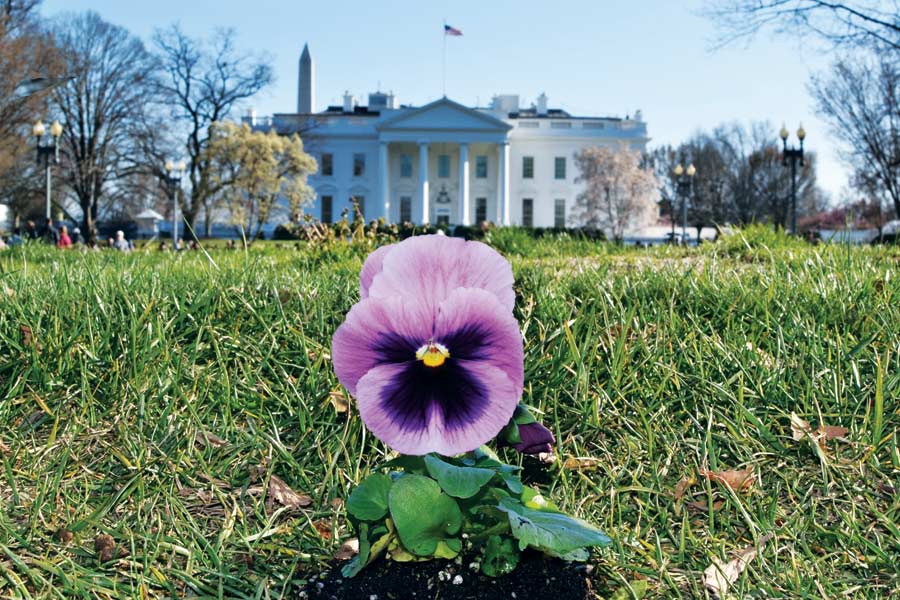
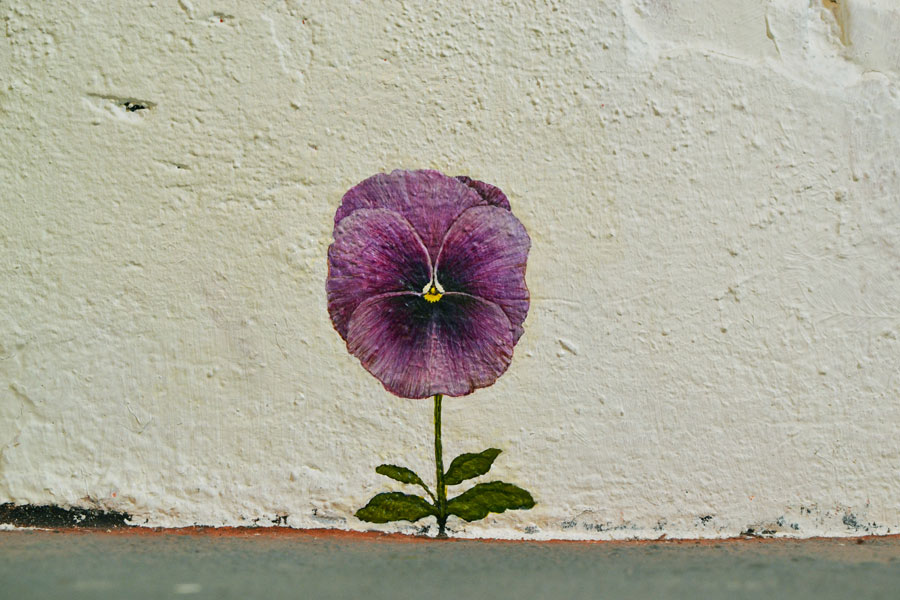
A unique private/public protest/memorial to raise awareness since 2005, the founder of The Pansy Project has planted the namesake flower, in some circles a pejorative term against gay boys and men, in thousands of locations around the world to commemorate a place where violence or intimidation toward LGBT people took place. Where it is difficult to find a good place to plant or to buy live pansies the gifted illustrationist simply paints one.
Understated and symbolic, the political and personal Street Art act bears witness to the brothers and sisters and others who society fucks with because they don’t fit traditional expectations of gender conformity. After nearly a decade and half, Paul says he will keep doing this work until it’s not necessary. You’ll probably need to help.
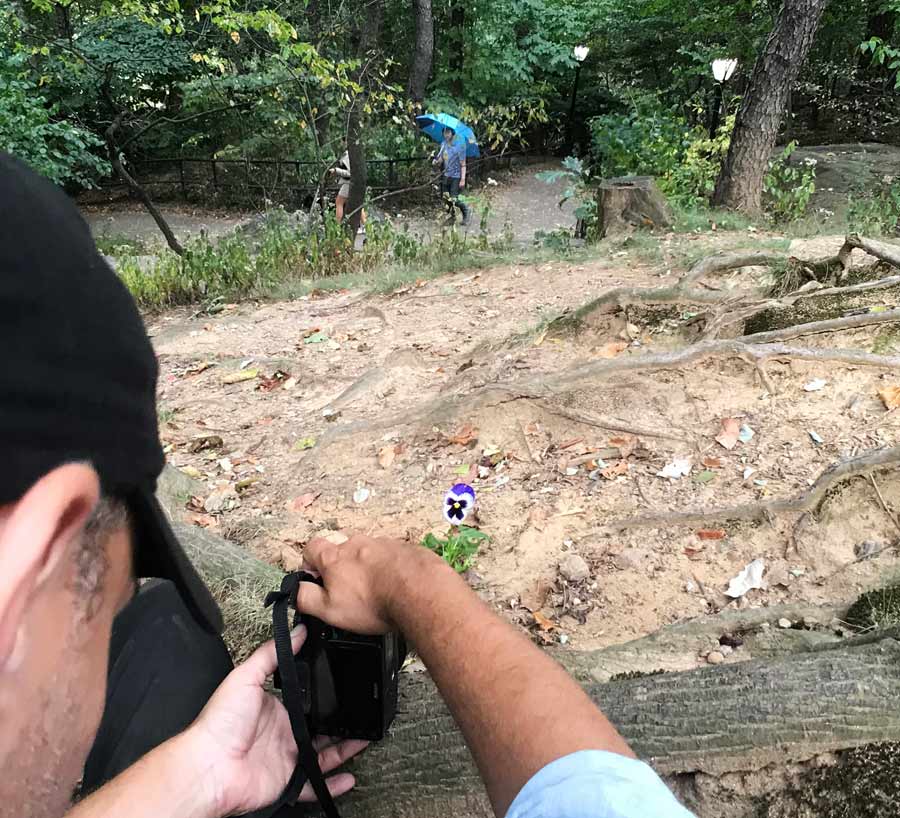
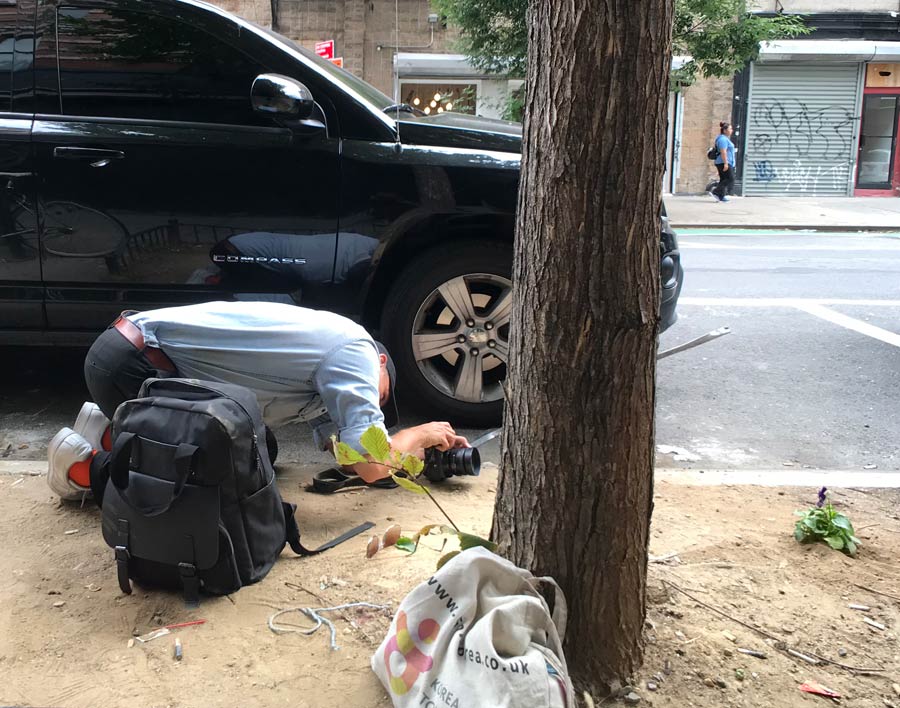
Recently we spent time with him on his visit to New York,
watching him plant pansies and asking him questions about his practice.
Brooklyn Street Art: When we think of monuments to historical events we often place them in locations that correlate with things that happened there. Can you talk about the similarities that this act of planting an ephemeral flower has to huge hulking brass statues in recalling our feeling and our memories?
Paul Harfleet: When I began to think about how to respond to my experiences of homophobia on the streets, I became interested in the particular nature of my memories of these attacks, they were rapid and fleeting and therefore I felt my response should be temporary and non-permanent. It felt archaic and overly municipal to begin making ‘permanent’ memorials to my own relatively minor attacks. A small unmarked living plant would add to the conversation, the flower could live and grow as I do through my experience. A tiny pop of color, unsanctioned by the city would reflect my own apparently illicit position in the urban environment.
I’m interested in how ‘permanent’ memorials became invisible over time*, their meanings sink into the fabric of the city, they become street furniture, their significance evaporates over time, unless they’re re-activated by an occasion or anniversary. Particularly when flowers are placed at war memorials, this and floral road-side memorials are echoed in The Pansy Project.
The
exact location was loaded for me, so it was essential that each place
should be altered by my intervention, it’s this that transformed how I
remembered the streets. The ritual of planting a pansy has become a
performative reparation on the street.
Brooklyn Street Art: Do you know of someone else who was inspired by your project and began a new one of their own?
Paul Harfleet: It’s difficult to know if and how my work has inspired others. I know that people have planted pansies to mark their own experiences of homophobia and I’m aware of some students that have made very different work that has been informed by The Pansy Project which is humbling.
I
am aware of other actions that explore homophobia, I was touched by the
work of Nando Messias, “Sissy’s Progress” is a performance where the
artist revisited the location they were attacked with a marching band,
though I don’t think they were informed by the project, I enjoy the
absurdity of the response to homophobia, which in itself is an absurd
reaction to difference.
Brooklyn Street Art: In the US we have had a serious and fiery debate about historical memorials that glorify a period of racism, a sort of glorification of figures who championed racism. How does our perception change when we learn about the significance of location and events that took place there?
Paul Harfleet:This has been an fascinating debate, it challenges the idea of a memorial becoming invisible*, this is an example of the memorial being re-activated by context. I think it’s invaluable to have these discussions. It’s a shame that the debate seems to be so binary; keep or destroy. As an artist I would be interested in reinvigorating these memorials rather than removing them.
The fact they celebrate the achievements of a racist society should not be forgotten, it should in my opinion be remembered and challenged through art and education, small additions or amendments to these memorials could re-contextualise their meaning, there is an opportunity here to allow these memorials to a racist culture to become something that acknowledges the behavior of previous generations and act as a warning to future ones. We only have to look at the fragility of human rights at the moment to know how important it is to retain knowledge of previous injustices.
Brooklyn Street Art: When one considers the long period that this campaign has persisted, you may wonder how Paul Harfleet continues to have enthusiasm for it. Do you ever lose interest? What inspires you to get back to planting pansies after you discontinue for a while?
Paul Harfleet: I’ve been working with The Pansy Project for almost fifteen years, for me the repetition is vitally important for how the work is read. Everyday someone is experiencing homophobia or transphobia, whether it’s micro-agression, government sanctioned or the most violent of murders, it’s always happening, so I feel I have a responsibility to continue using my art to highlight this injustice.
I’m not completely altruistic, I do have to maintain my own interest, through the project I’ve explored various ways of working from garden, jewellery and merchandise design to the writing and illustrating of a book; Pansy Boy that reveals The Pansy Project in a completely different way, most recently I’ve been exploring painting the pansies on walls where homophobia has happened.
All of these actions keep me interested. I am always trying to take the ‘perfect’ picture and document my work in new ways. I’m inspired by artists that work in very similar ways their whole careers, Sean Scully speaks about repetition; ‘I want to express that we live in a world with repetitive rhythms and that things are existing side by side that seem incongruous or difficult.’
Brooklyn Street Art: New York has an incredible story in the modern LGBTQ rights movement. Can you tell us about one of the places in New York where you planted a pansy that was particularly meaningful to you?
Paul Harfleet: My visit to New York was incredibly important for me, unusually I funded this visit myself. I usually wait until I’m invited by a festival or for an exhibition, though I wanted to be in New York during the fiftieth anniversary of Stonewall. I first came to New York in 2006 to plant pansies for the Conflux Festival.
These were the very early days of the project, some of the photos I took then were bad, since then I’ve gotten better at taking the pictures so I wanted to re-plant and document the pansy I planted at the Stonewall Inn to properly mark this historically significant location. Though I also planted new pansies, it was moving for me to plant one at Christopher Street Pier for Marsha P. Johnson, their life and death was complex and seeped in the injustices of time. This seems even more significant in America today when black trans women are so under threat.
As I write, we await the decision by the US Supreme Court on working rights for trans people, the fact that there’s even a discussion about this is an anathema to me. To quote the hashtags; Trans rights are human rights, we’re not equal until we’re all equal. In the US alone there has been 19 reported trans women murdered in 2019 alone – It’s staggering and heartbreaking.
I
was also fascinated by the queer history of Brooklyn as described by
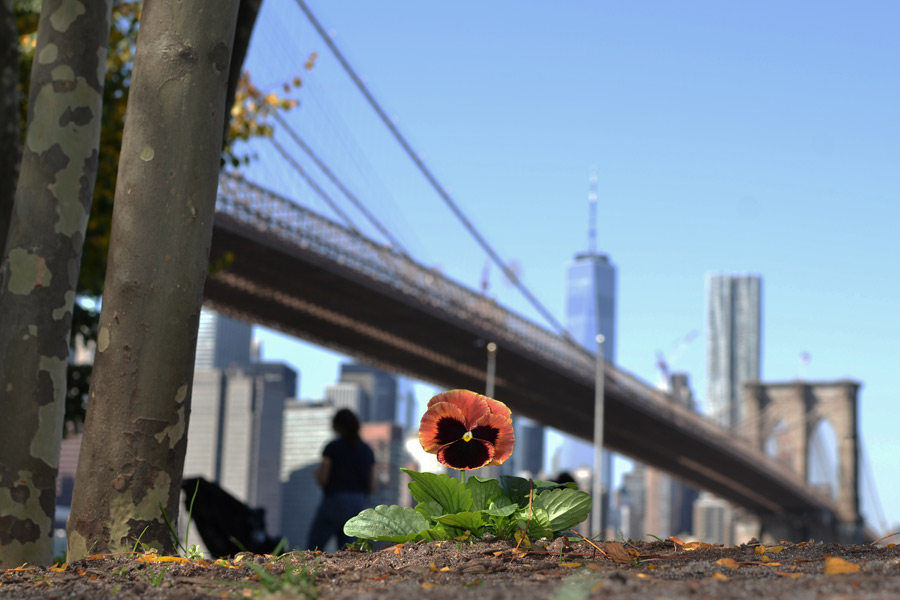
Hugh Ryan in ‘When Brooklyn Was Queer’. I love the picture I took of the
pansy I planted under the Brooklyn Bridge to mark the multiple stories
of homophobia I heard about in his book, the quote comes from the
complaints of local residents of how the Brooklyn Promenade was being
used by men for cruising; “Misbegotten Pansies” was just such a perfect
quote for this planting.
What
I do more now is make a film about the places I visit, this has the
ability to explore more of the story of each planting and helps share
the project to new audiences, I’m working on a New York film now.
Ultimatelty I adore each planting, they all mean so much to me as they
all contribute to the entire body of my work.
Paul Harfleet’s short film ‘The Pansy Project Canada’ will be shown at the Inside Out Film festival in Ottowa, Canada in October and his work will feature as part of the Homotopia Festival in Liverpool in November. For more information visit www.thepansyproject.com.
*In
a 1927 essay, acclaimed Austrian philosopher Robert Musil famously
declared, “The remarkable thing about monuments is that one does not
notice them. There is nothing in this world as invisible as a monument.”
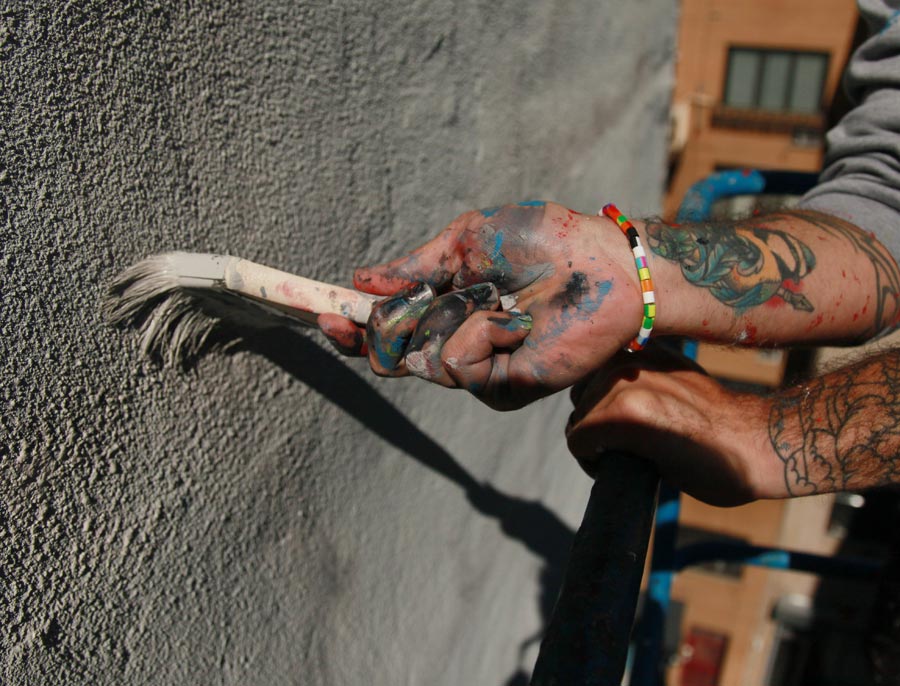
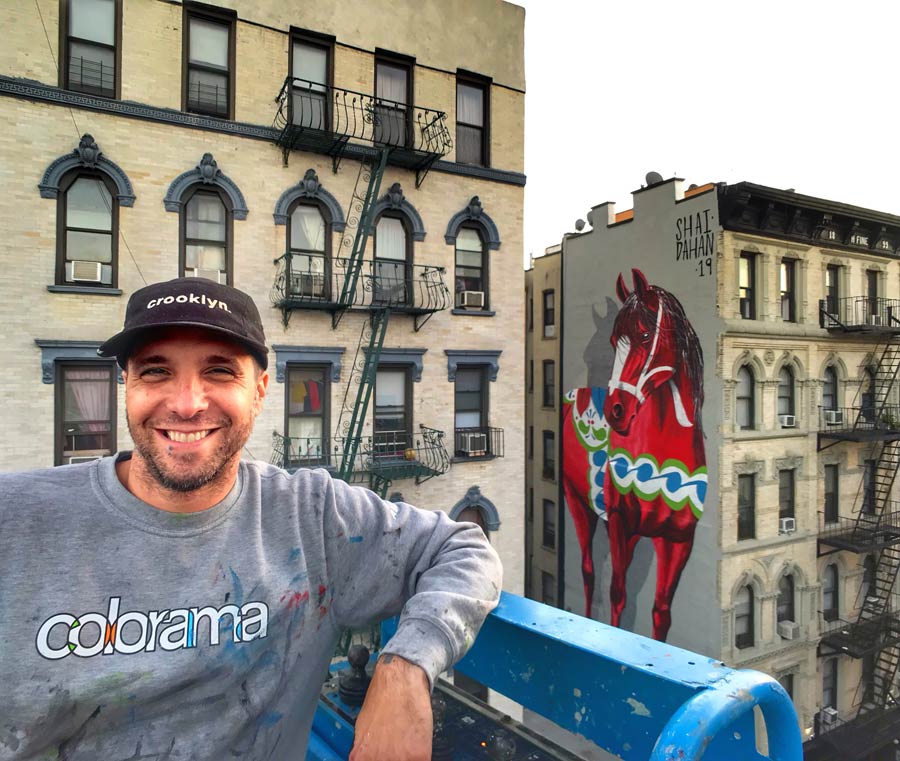
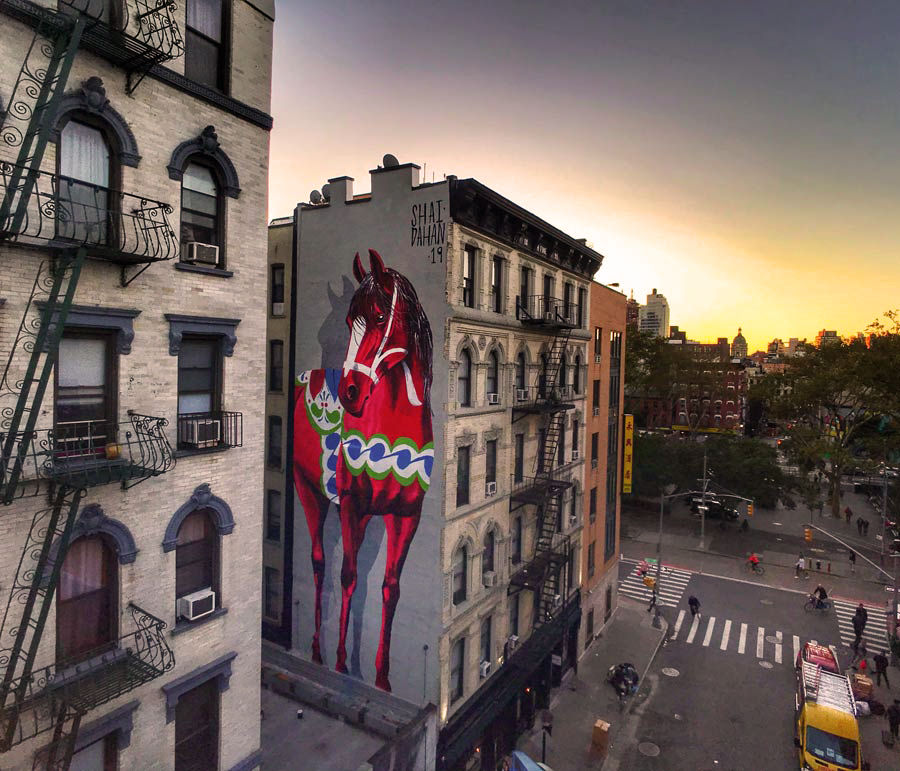
Artist, Street Art festival curator, now muralist. Shai Dahan has hel a number of roles related to the graffiti and Street Art scene since his teens. Born in Haifa, raised in LA, Dahan lived shortly on the East Coast before he pulled up stakes and moved to Sweden a decade ago to raise a family with his wife.
There he did something you don’t see a lot of artists do – he provided a huge platform for others to succeed by starting the “No Limit” Festival in his new hometown of Borås. We had the opportunity to be there a couple of times and witness the camaraderie and quality of a well-curated festival in a part of the world unaccustomed to large-scale public art, each time executed with finesse and near-zero drama.
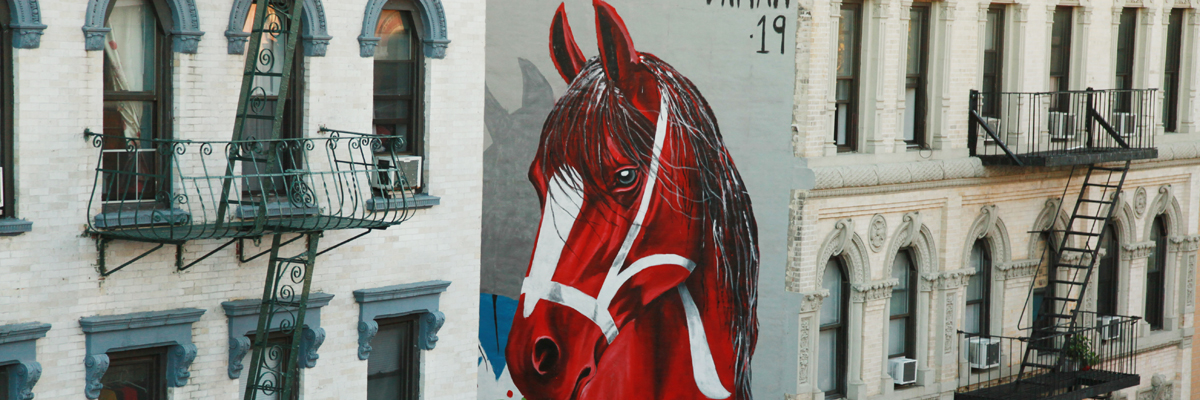
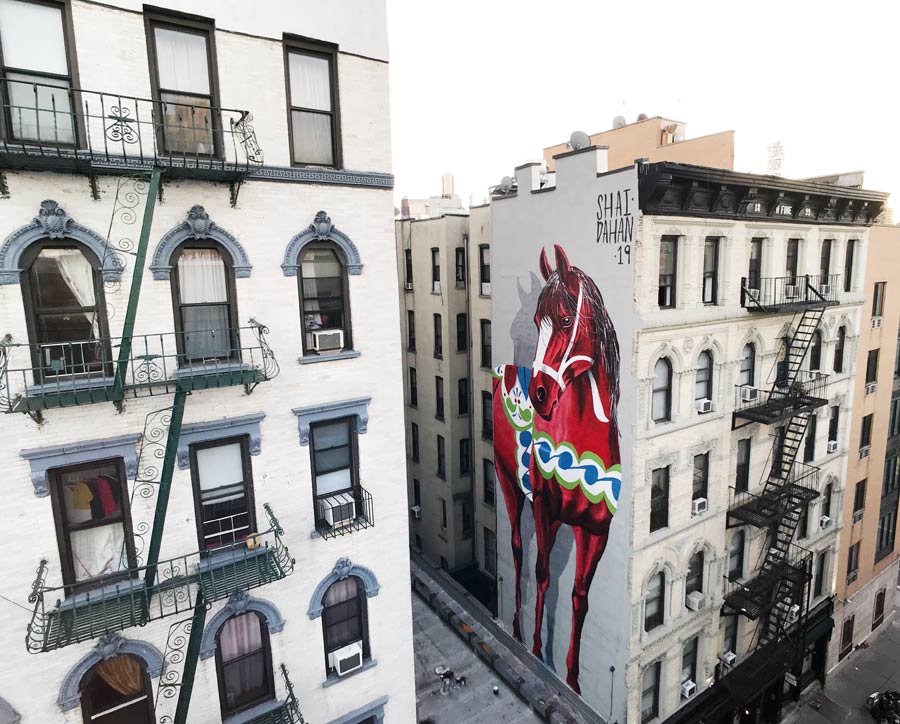
Now he’s visiting New York for the first time in years and bringing his favorite muse, the Swedish Dala horse – a symbol that helped him meet HerRoyal Highness Queen Silvia of Sweden a few years ago, by the way. We spoke with Shai while riding the lift with him last week just before he headed back to Borås.
BSA: This is the first time you painted a large mural outdoors in NYC since you participated with a group of other artists painting at the racetrack in Queens. How did it feel to be back? Shai Dahan: It is incredible. Since I have lived here I always wanted to do something large. Even after moving to Sweden, I would see some great murals go up by Shepard Fairy, Kobra, Connor Harrington and I always thought “Wow. That has to be such a great personal accomplishment”.
To me, it’s very personal. I left for Sweden in 2010. NYC has been the biggest influence on my art. A lot of people would ask me who is my biggest inspiration, like Picasso? or Rembrandt? or someone more modern? but the reality is, it’s this city. The graffiti on the roller gates. The stickers on the doors. The Krink on the post office mailbox. This is the largest outdoor Street Art gallery in the world. Turn any corner in the LES or Soho or Tribeca or Nolita and you can find an Invader piece or a Buff Monster Ice Cream or even a wheat-paste from someone random.
This entire city is a giant gallery. So to come back to add to it is such an honor. Especially since I left for Sweden, and spend the next 10 years building a professional art career painting the Swedish Dala Horses and becoming known in Scandinavia for that, to return on the 10-year anniversary to bring my horse to the city that inspired me, its nothing short of poetic.
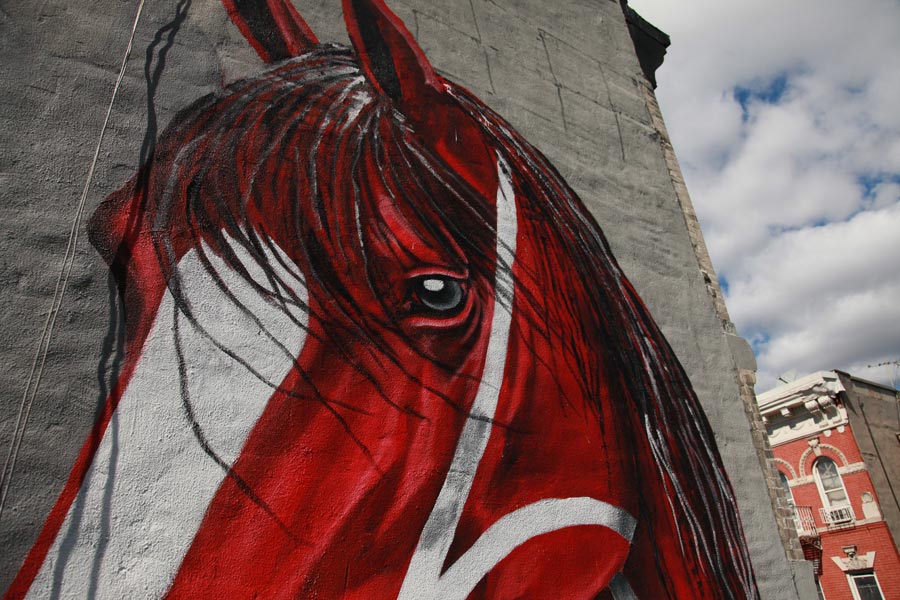
BSA: The Dala horse is a beloved icon in Sweden. Yours, big and red, looms large in the Lower East Side. Is this a gift to the Swedish expats living in New York? Shai Dahan: Its a gift for NYC. From me. This city gave me inspiration, friendships with amazingly talented artists and curators and writers (BSA shout out!), that I still maintain to this day. This city got me my first art show at the Grey Dog Cafe where I hung a bunch of skateboards in 2007. It’s the city where I took part in amazing projects like Mom&Popism, The Underbelly Project, the NY Ad Takeover and it’s the city that let me find my true talent and skills.
So, in a way, I wanted to give the city a gift back. Give her something for everything she’s given me. Swedes, of course, appreciate it (it’s been in every single major newspaper back in Sweden since Saturday Morning and even the Swedish Mission to the UN posted it to social media) so clearly, it hit a soft spot for Swedes around the world. But for me, its something more romantic than that. It’s gifting a horse to New York City.
Brooklyn Street Art: You have been painting for a bit while among your subjects is these horses. Have you noticed an improvement with your technique and style since the first horse you painted back in Sweden? Shai Dahan: God yes. But that is good. I almost feel like I am not technically a “professional” artist because that would mean I mastered my talent. I don’t believe I have. Clearly, my horses have improved in the last 10 years but I would be ignorant to assume my horses won’t continue to improve. You can always improve. But on that subject, it is fun to see my horse collection around the world. From the city of Gothenburg to the islands of Stockholm to a big city like NYC and even in the middle of the forest in Southern Sweden; My horses have a way to find a home anywhere they go.
A lot of people ask me “Why horses?” my usual response is that I am terrible at painting cats, but the truth is that horses have been used in art for centuries. The famous Napoleon Crossing, the Whistlejacket which hangs in the London Museum, you had paintings of horses in battle and war, with kings and generals. We have sculptures in Europe and here in the US with these giant masculine horses.
The horses, throughout history, have always been used as a heavy masculine symbol. But my Dala Horses, they are shades of Red, sometimes Blue or Purple. They have soft “Kurbits” patterns (Scandinavian Floral Symbols) on their bodies. They take something big and strong and give it a soft and almost feminine display. It is something that takes the original Dala Horse and moves it forward; Reinvents it or reinterprets what it means to paint horses.
Brooklyn Street Art: You organized a very well-curated urban art festival in Boras, Sweden and your participation has come to an end. Can you tell us what big lessons you learned from this experience that could be useful for other people who embark on organizing street art festivals? Shai Dahan: It’s important to approach curating festivals in the same way I approached my art career. It should never be about money. Never about fame. The sole driver for doing a great festival is to do it for your city. The people.
There is this old Greek proverb I love and used for many years as inspiration that says “Our Society grows great when we plant trees whos shade we know we will never sit under”. Basically saying, if we create and make and do things that is good for our society, even if we won’t personally be around to see its long-term effect, it is still worth doing. That is how I approached this festival. I put the city residents as a priority. I wanted to be sure that the murals we do will have years if not decades of inspiration, and joy for them.
Perhaps 20 years from now, a six-year old girl who sees these murals will be inspired to be the next Faith 47, the next Maya Hayuk, then I’ll feel like I did a good job. At the end of the day, life is what you paint it.
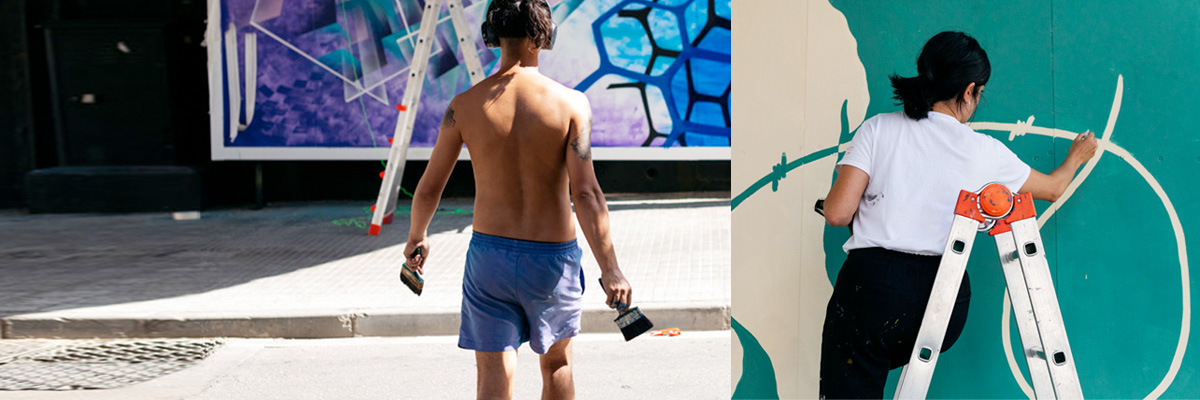
Community murals today from two artists last month in Barcelona working with the Contorno Urbano program that brings artists of many disciplines to a series of walls in the public space.
Today we have Claudio Drë and Minuskila, who each take different approaches to themes, his abstractly wildstyle, hers simply symbolic, graphic and possibly painful.
Chilean born, Barcelona-based former graffiti writer Dr. Drë began on the streets in 1996 with aerosol and eventually experimented with oil, acrylic, and canvas. His murals and fine art have been exhibited in Chile, Latin American and Europe. He has an affinity for the technical, the fine line, volume, and perspective. His new mural draws upon his original fascination for graffiti, geometry, psychedelia and the letterform, bringing each to a more futuristic dimension.
A member of the artistic collective Reskate Arts & Crafts , graphic artist Minuskula (María López) is original from the Basque Country in Donostia-San Sebastián and has dedicated much of her work to illustration and letter-styling, with some experience in muralism as well. Here she translates an illustrated metaphor large scale, calling the piece “Limits”.
“Power
is not brute force and money; power is in your spirit. Power is in your soul.
It is what your ancestors, your old people gave you. Power is in the earth; it
is in your relationship to the earth.” —Winona LaDuke
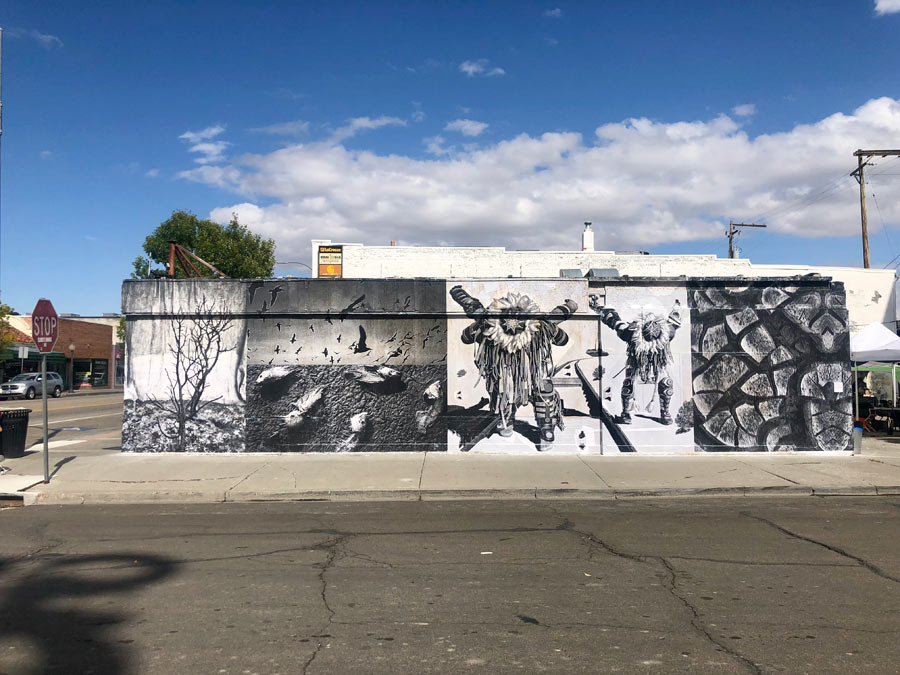
Street Artist Jetsonorama is concerned about what we are
doing to our sources of power in his new photography-based work called “Four
Meditations on a Changing Climate” that he completed at the Elko festival in Elko,
Nevada.
“The first image is a portrait of 2 shrubs that were scorched recently in a brush fire near my home,” he tells us. “The second image is a collage of seagulls and fish bones on the beach of the Salton Sea.” A theme of dessication begins to emerge as you go from sepia panel to panel.
“The third image comes from a show I did last spring with Lakota artist Cannupa Hanska Luger,” he says. “He created costumes (for which his mom, Kathy Whitman, did the beadwork on the masks), representing warrior twins in the Lakota tradition. They are called ‘The One Who Checks’ and ‘The One Who Balances.’ In this image, appalled by the havoc we’re wreaking upon the planet, they’ve returned to Earth.”
Finally the Earth, the source of power. If you look to this image to examine our relation to it, we’re in trouble.
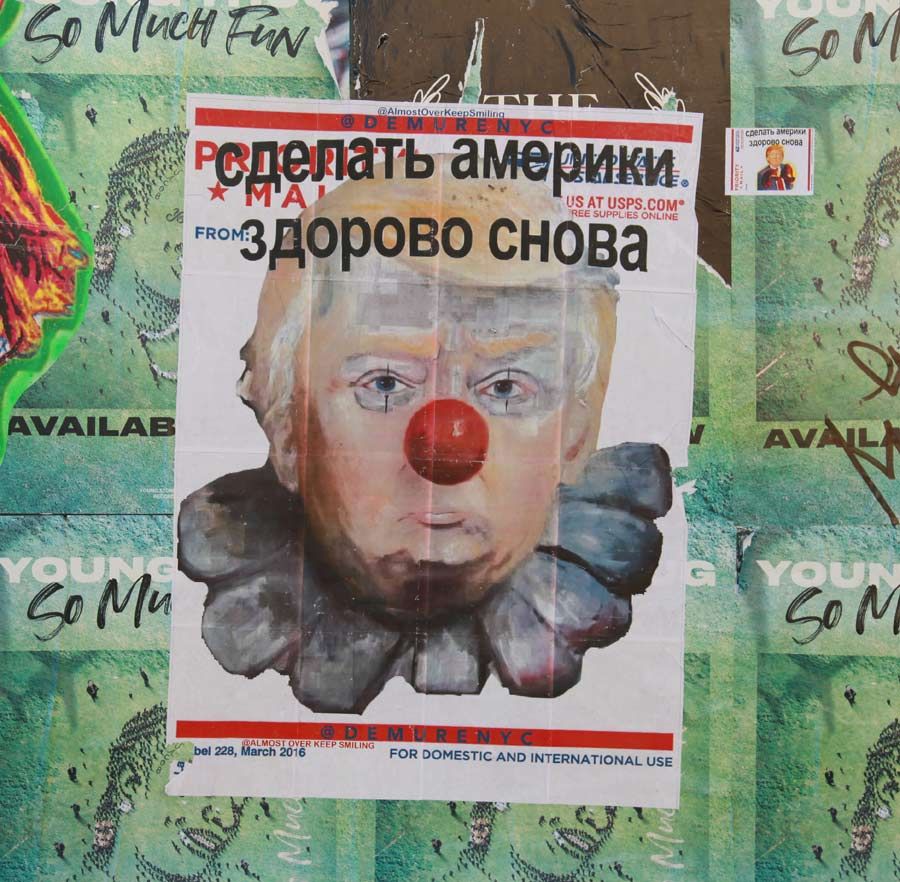
Welcome to BSA Images of the Week! Welcome to October – the time when the leaves turn yellow and orange and when your local pharmacy is selling Halloween candy and Christmas decorations because why the hell not? We’ve got The Actual Joker in the White House ready to shred all pretense of civility and rule of law before a terrified nation, not that he was holding that down at all.
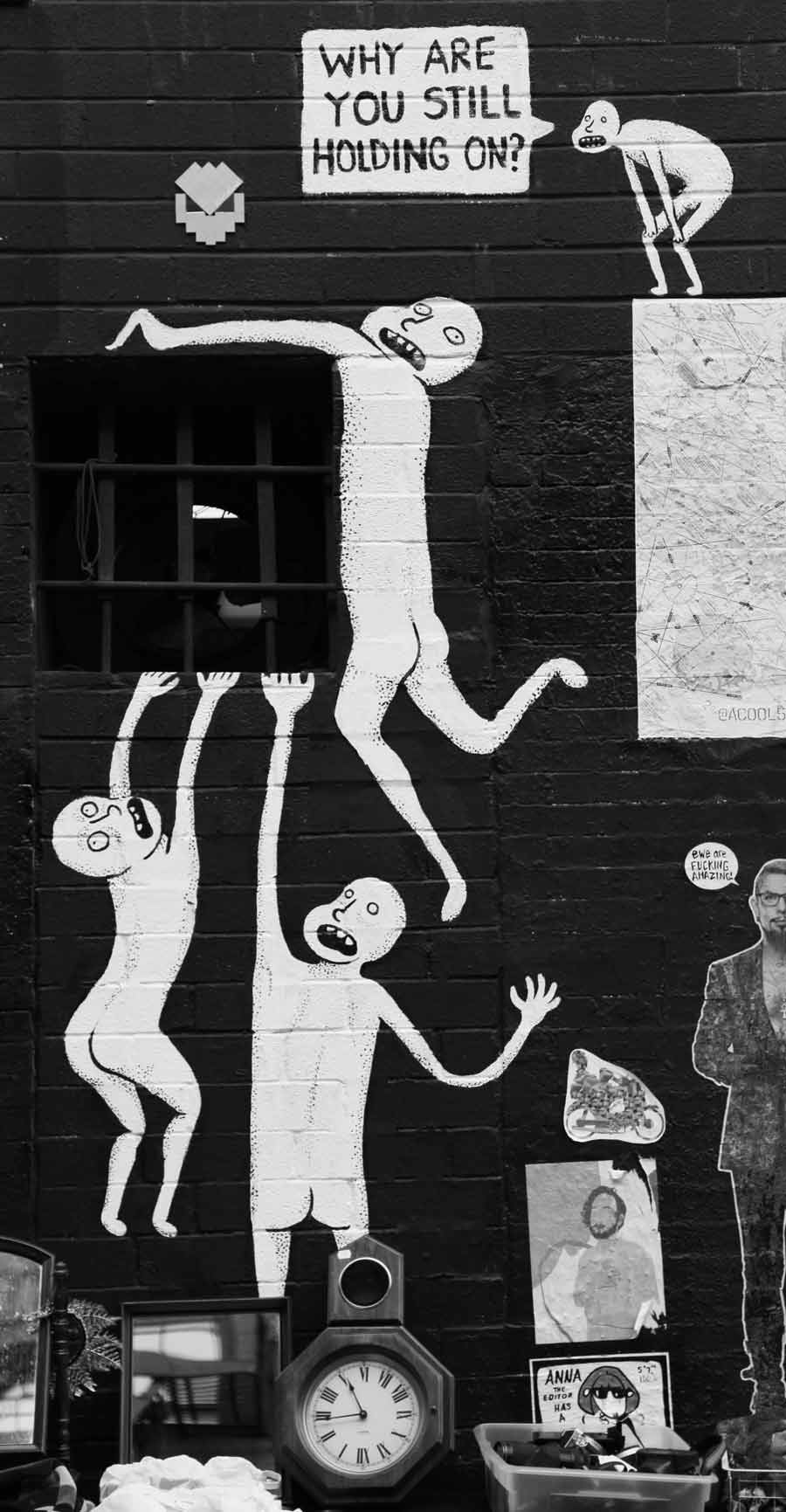
Makes us think of the sentiment of this new Street Art piece below by Sara Lynne-Leo. “Why are you still holding on?”
But we know the answer — Because the grand finale of this burning dumpster fire will be huge! – friggin’ ratings will be off the charts for this one, dawg. Plus the Demopublicans have already lined up the Warren White House so we know what’s coming on TV next on DNC.
** chomps popcorn, smacks lips
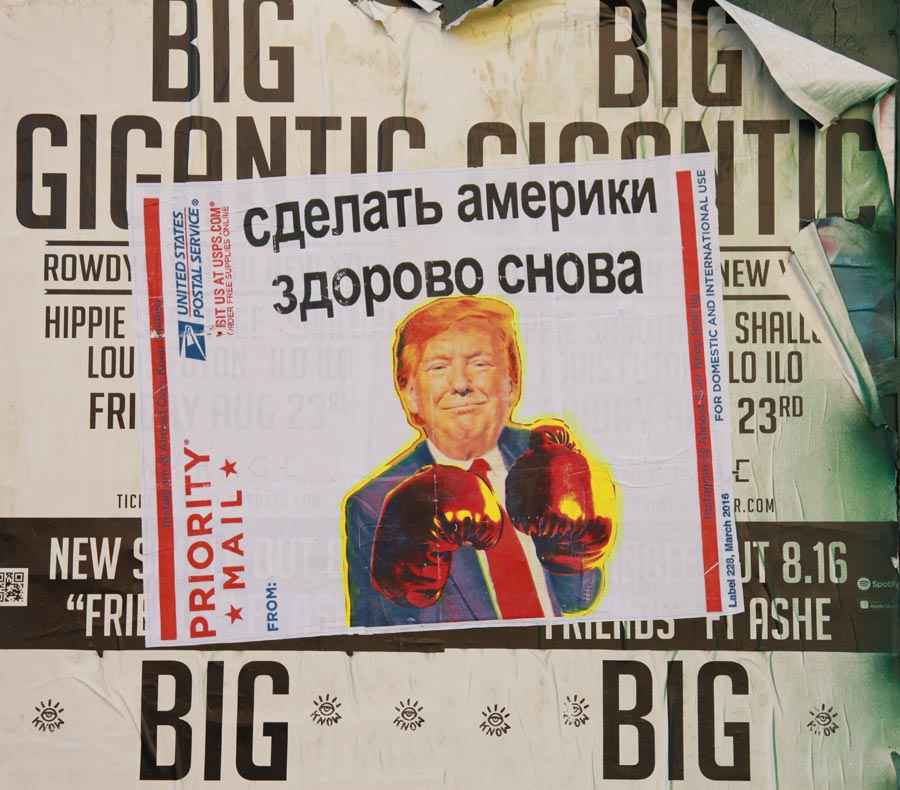
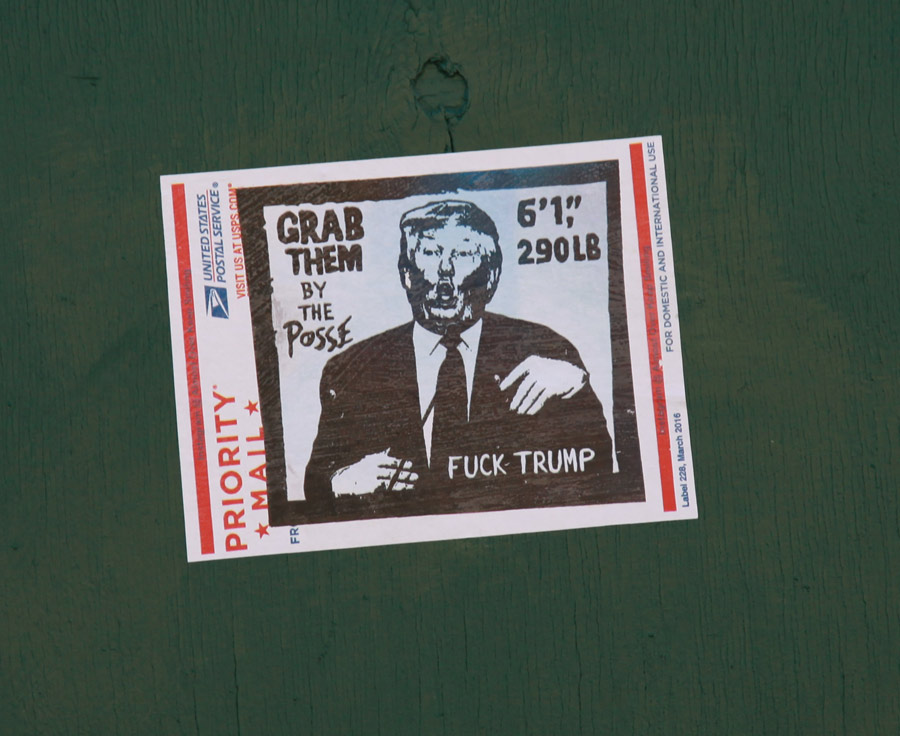
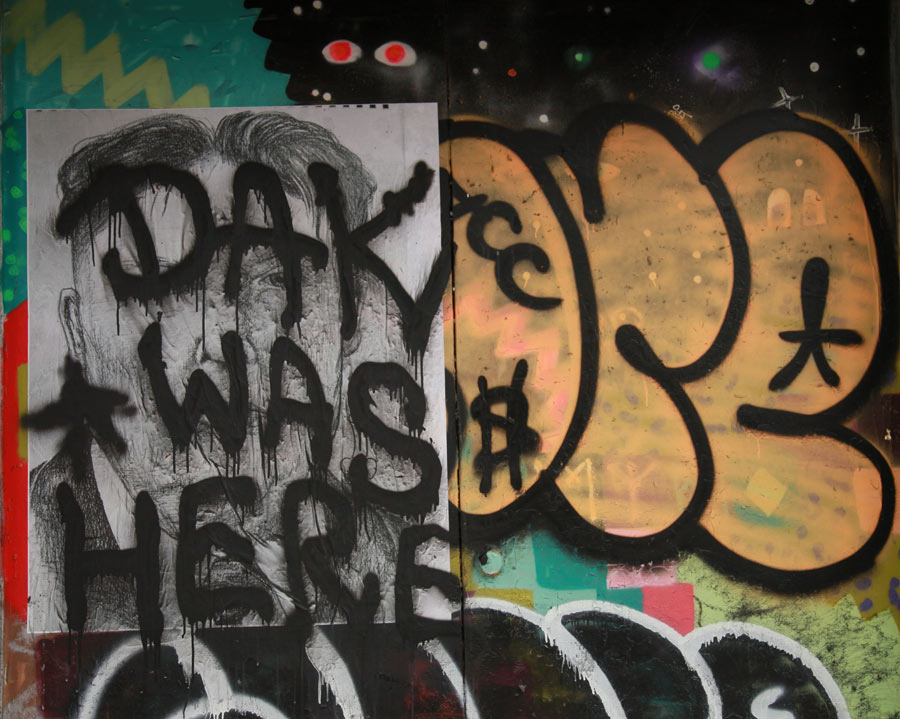
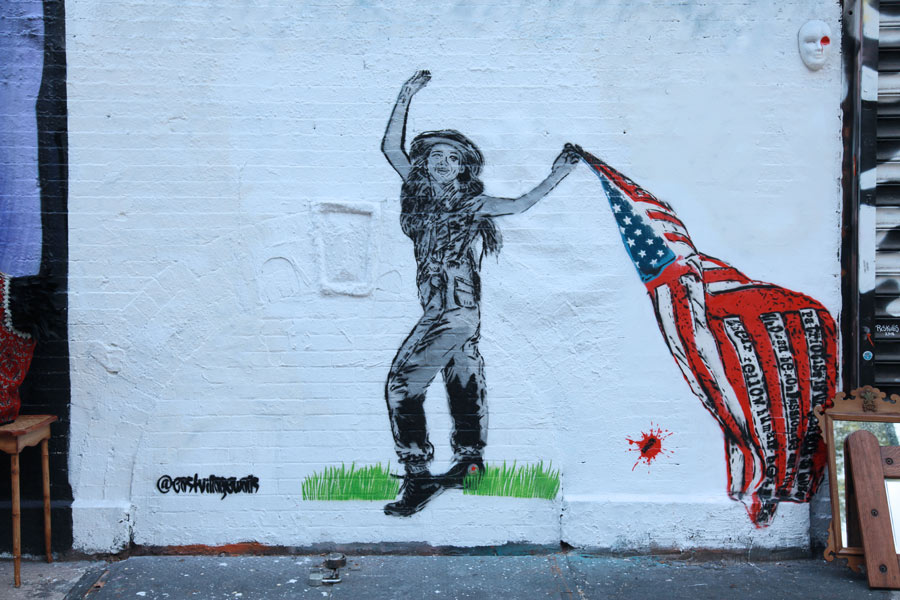
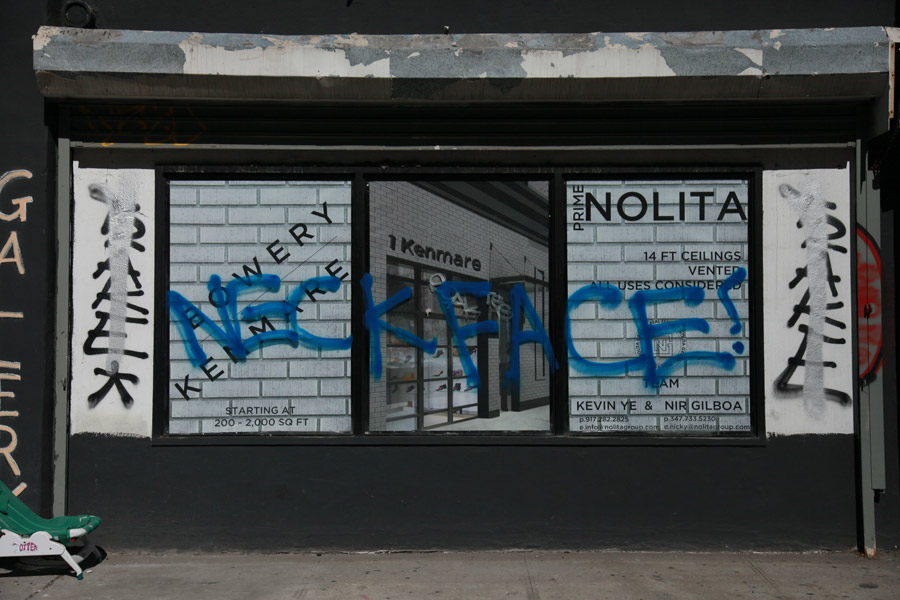
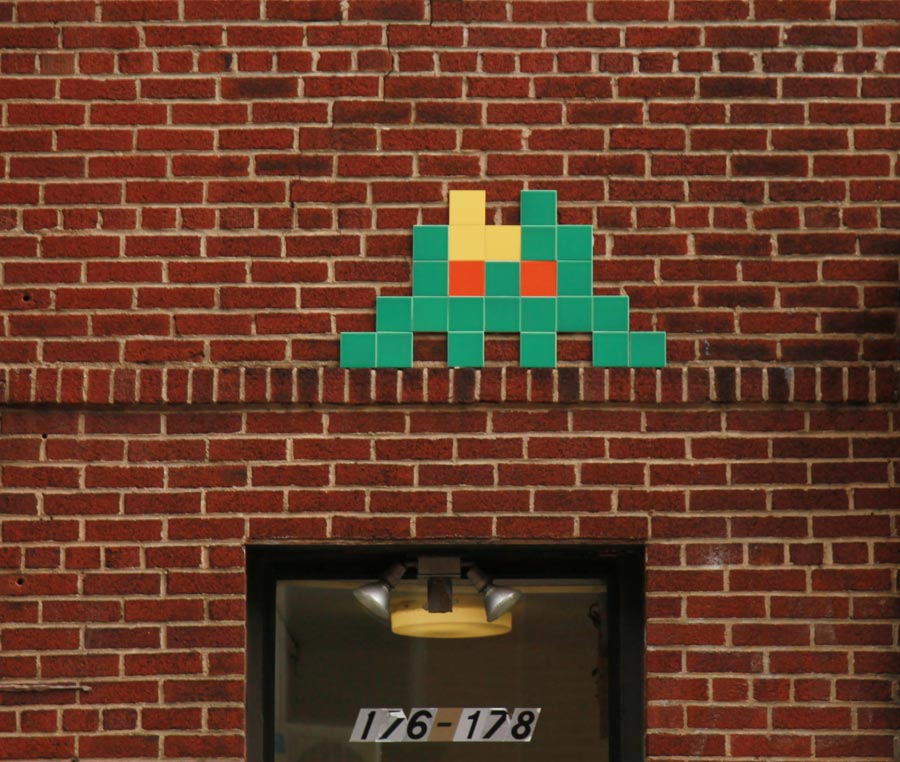
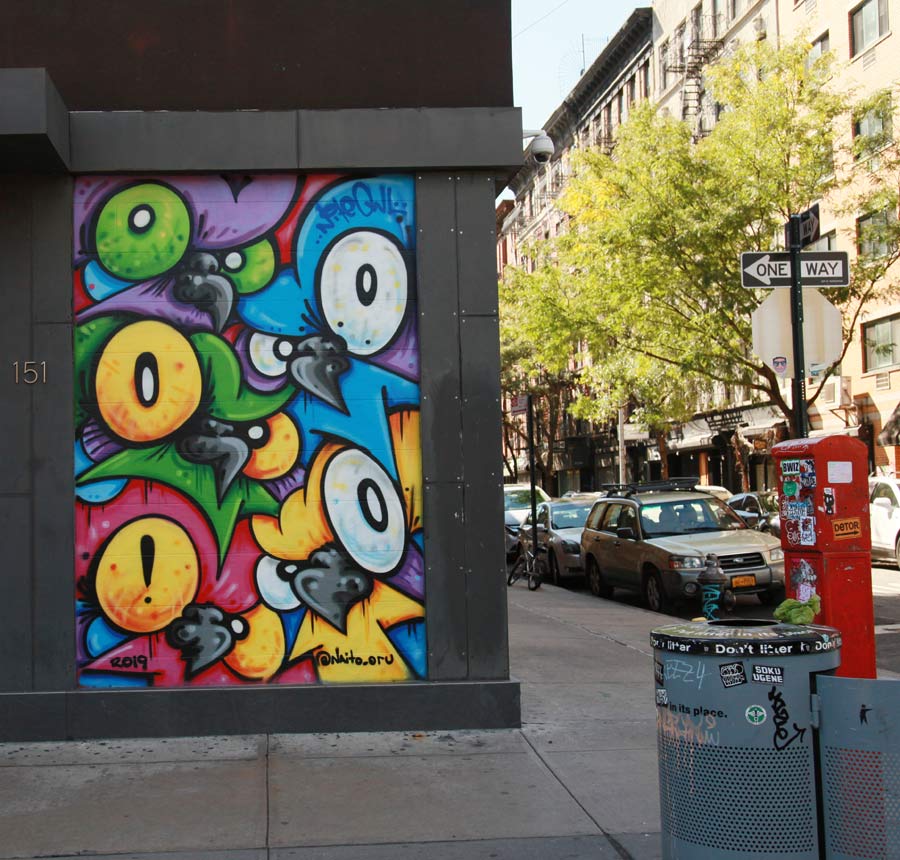
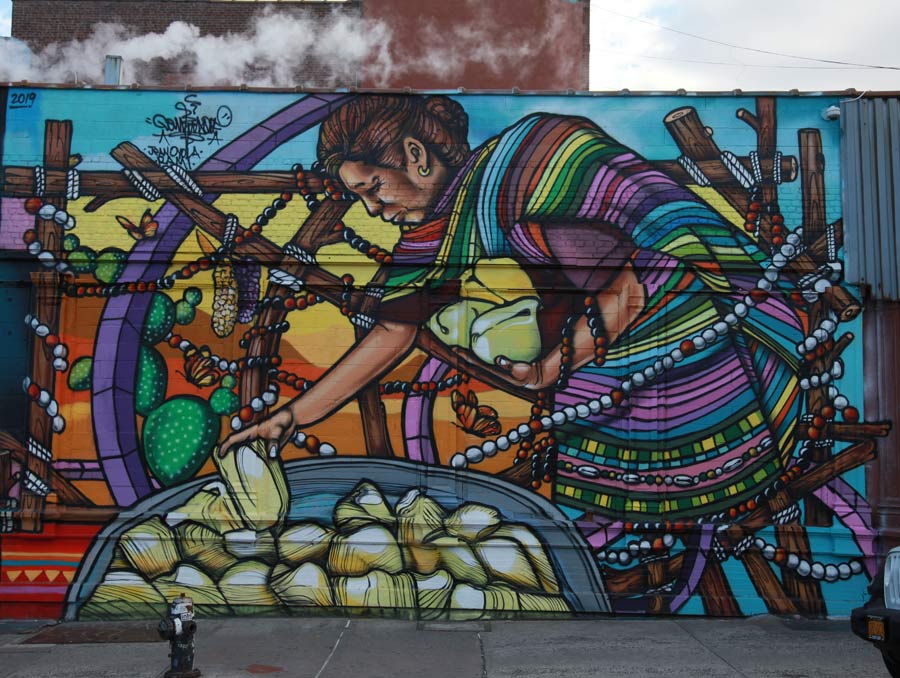
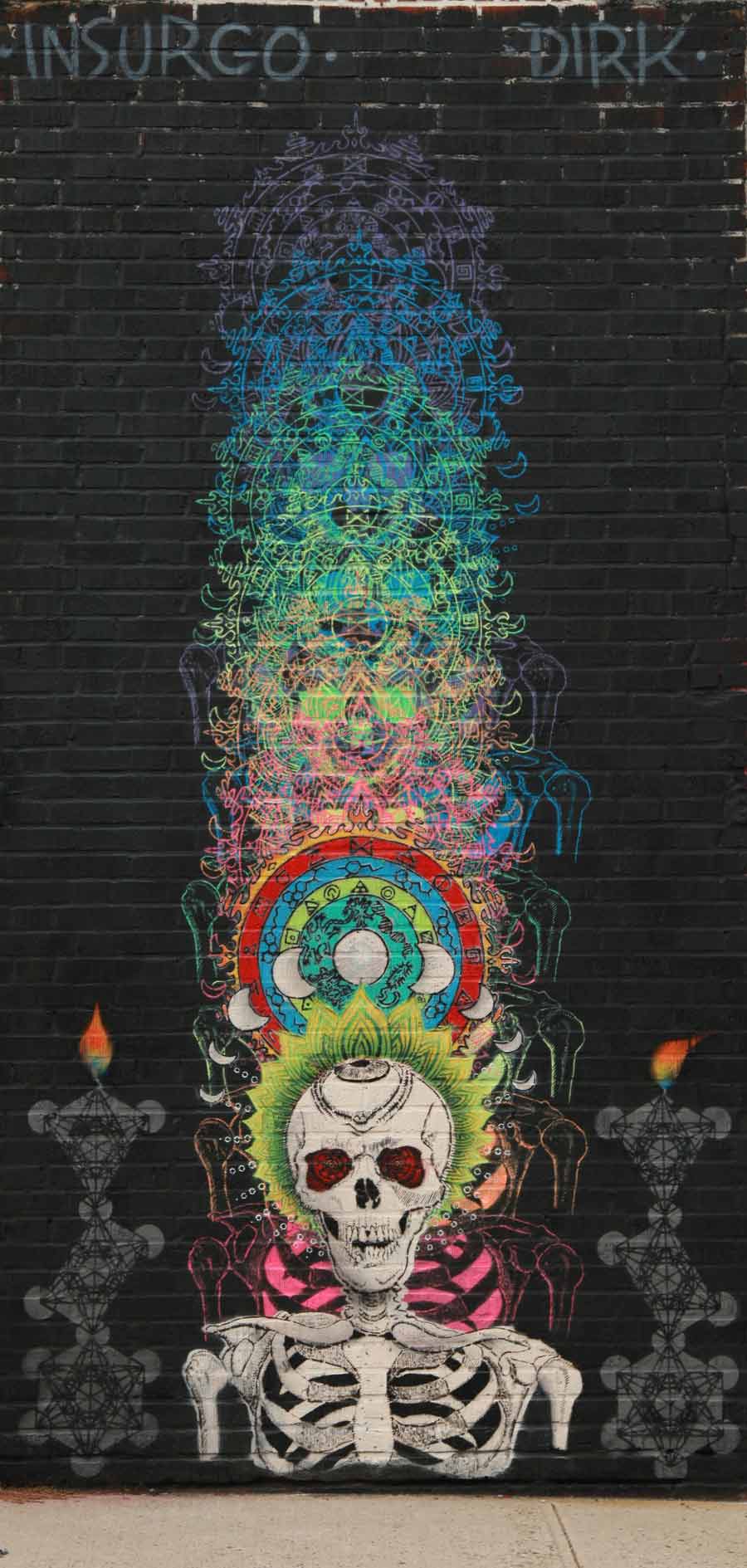
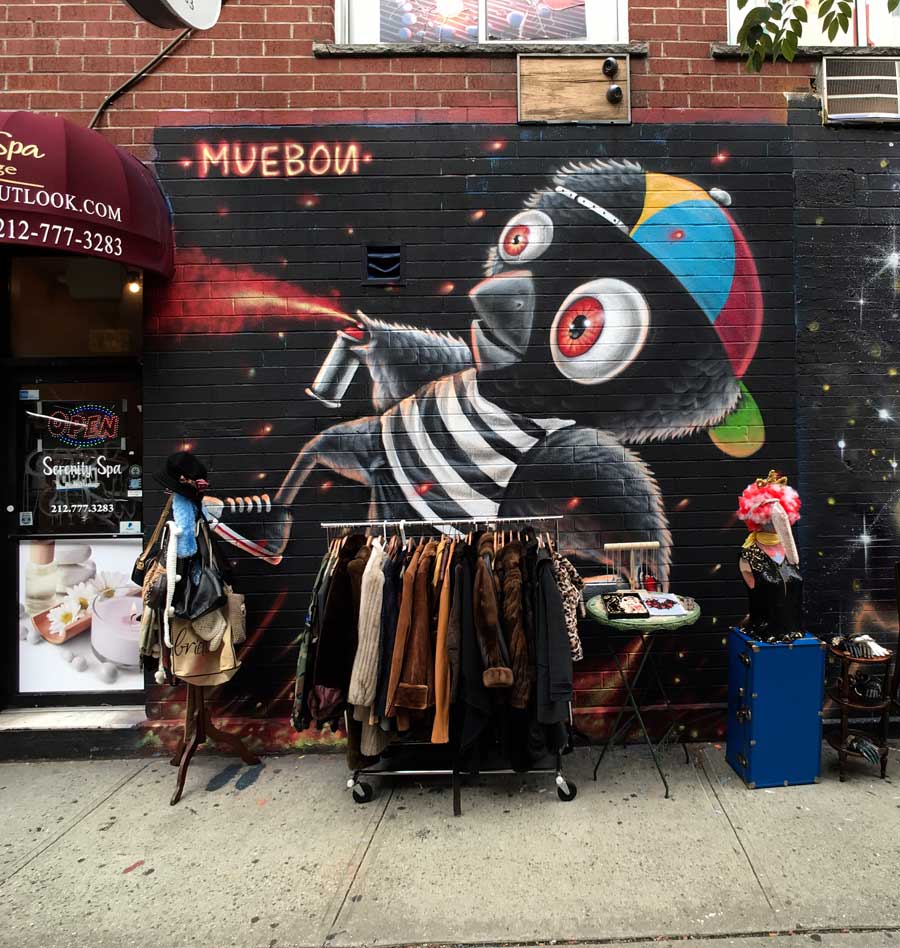
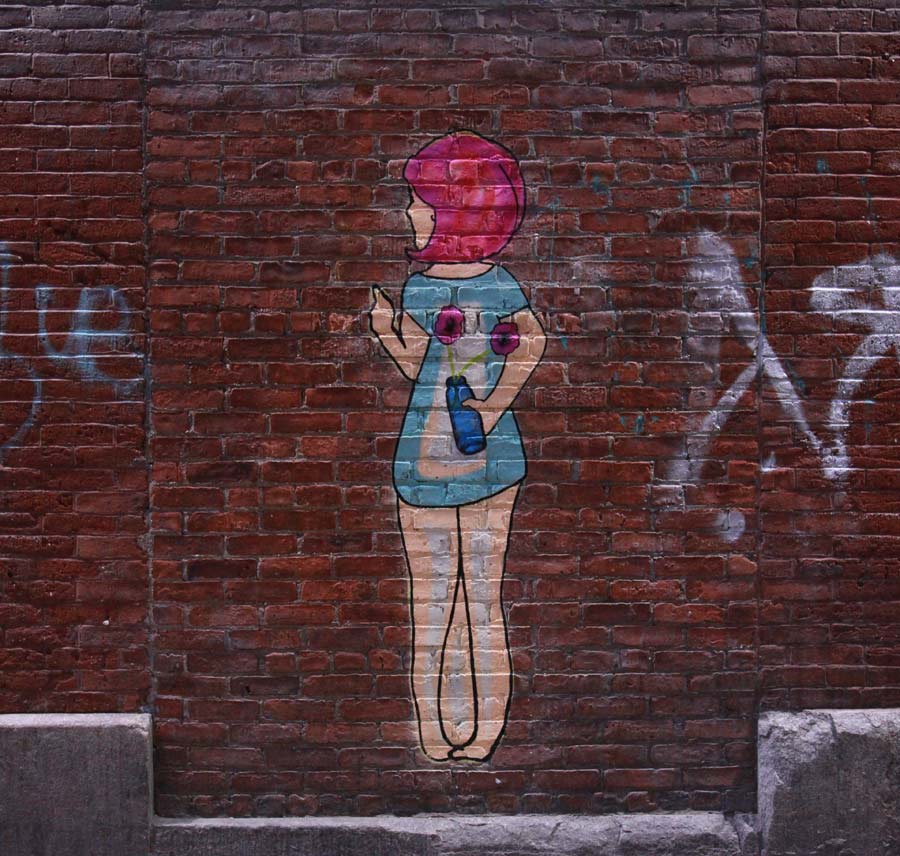
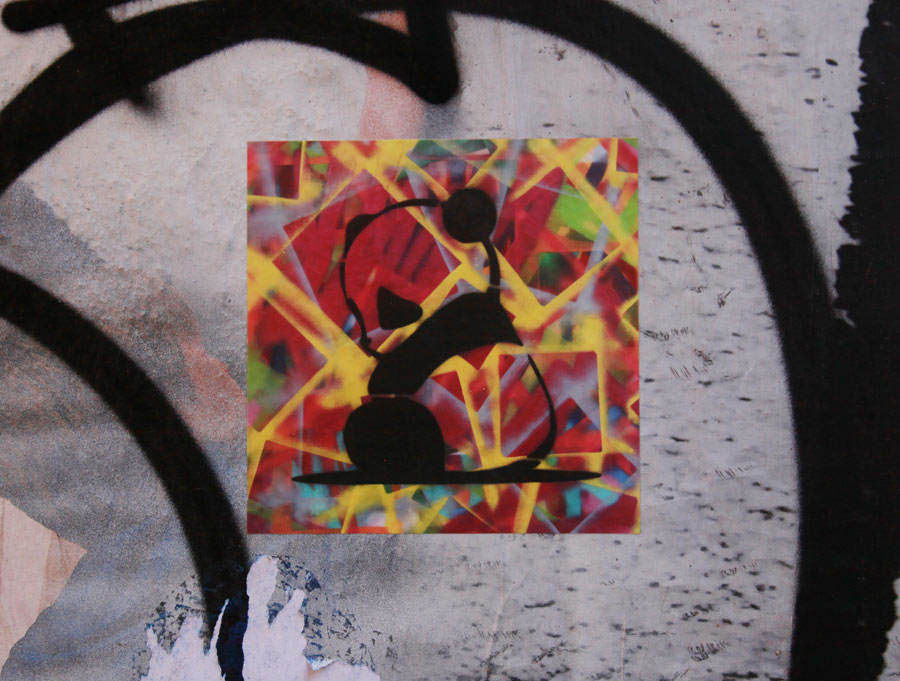
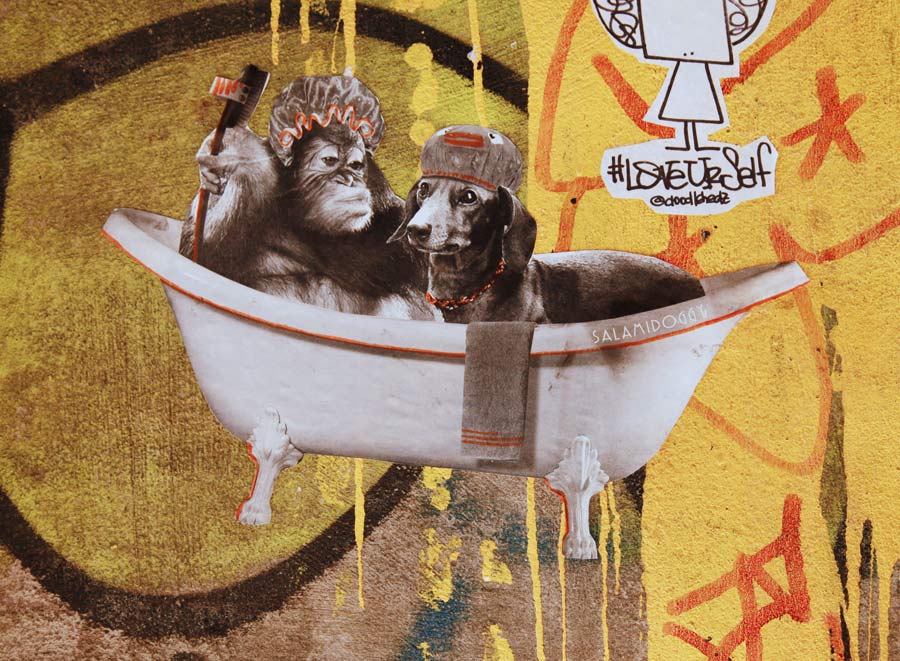
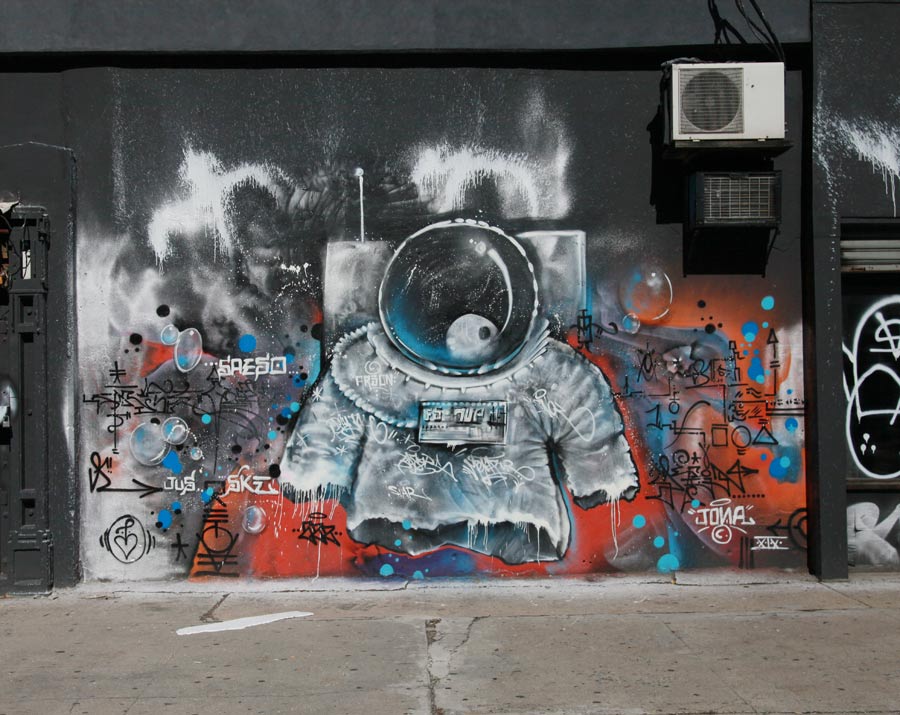
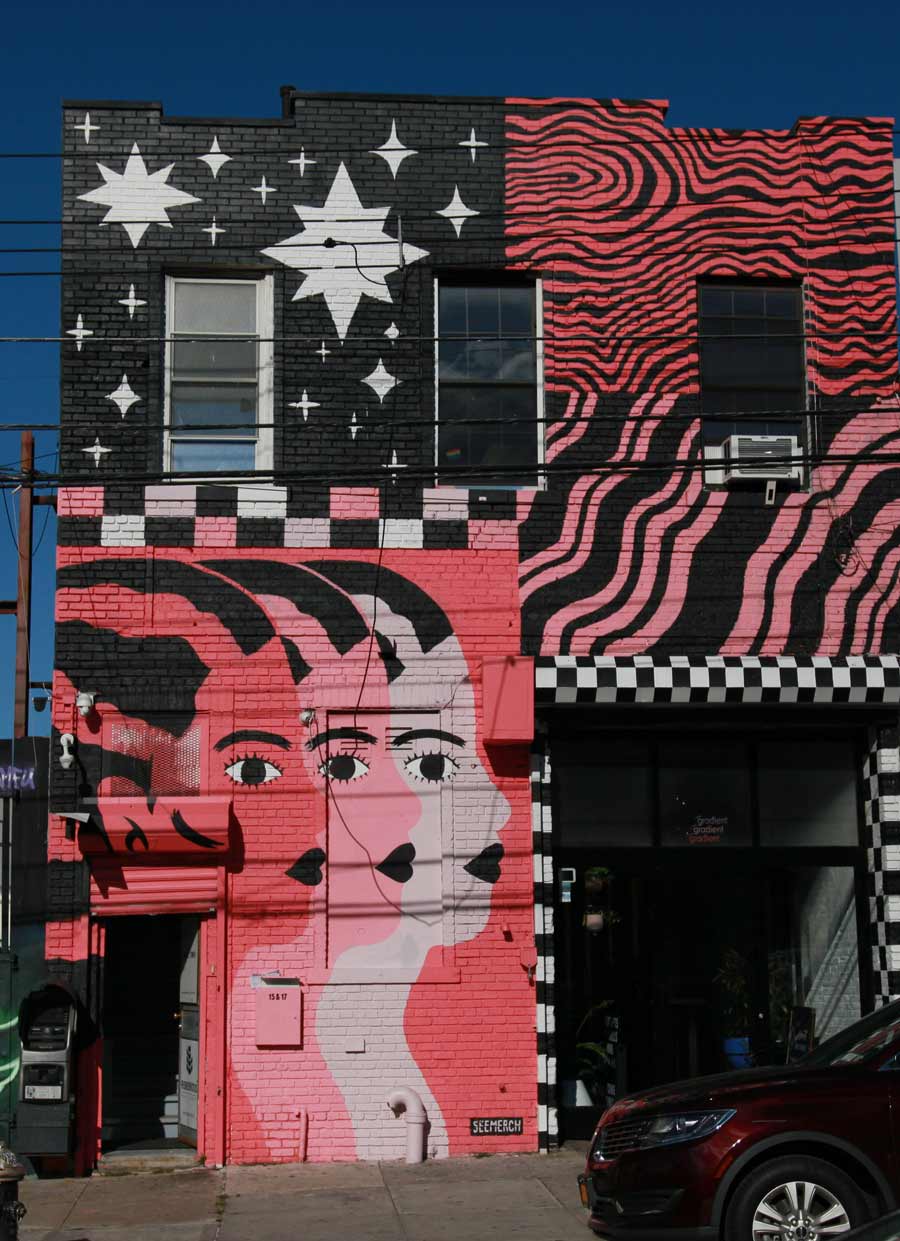
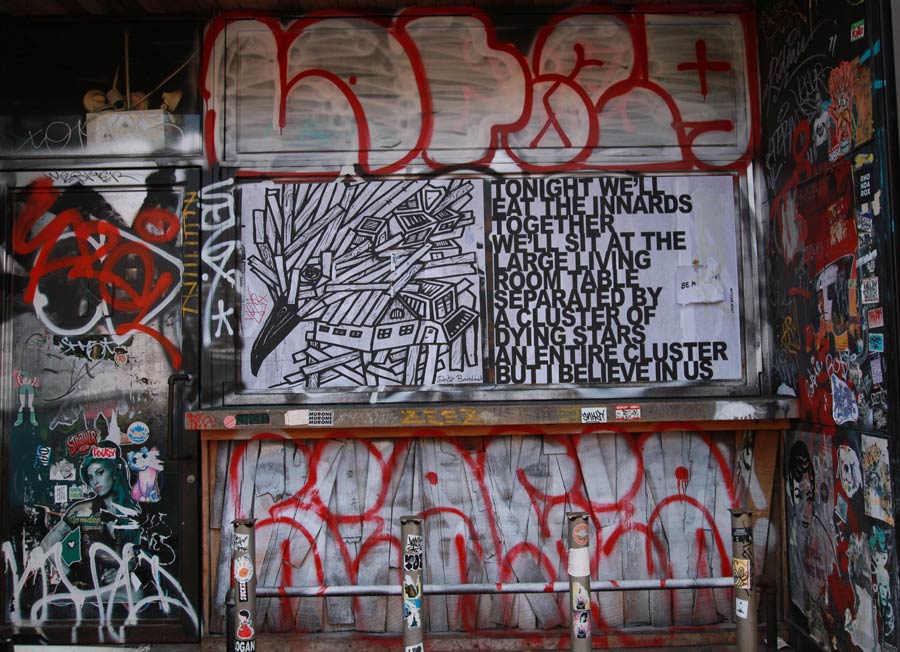
Here’s our weekly interview with the street, this time featuring DAK, Dede Bandaid, Dee Dee, Demure, Dirk, Don Rimx, Insurgo, Invader, Jeff Henriquez, Jona, Muebon, Neckface, Nite Owl, Nitzan Mintz, No Sleep, Panda Bear, Salami Doggy, Sara Lynne Leo, Seemerch, Unify Art, and WK Interact.
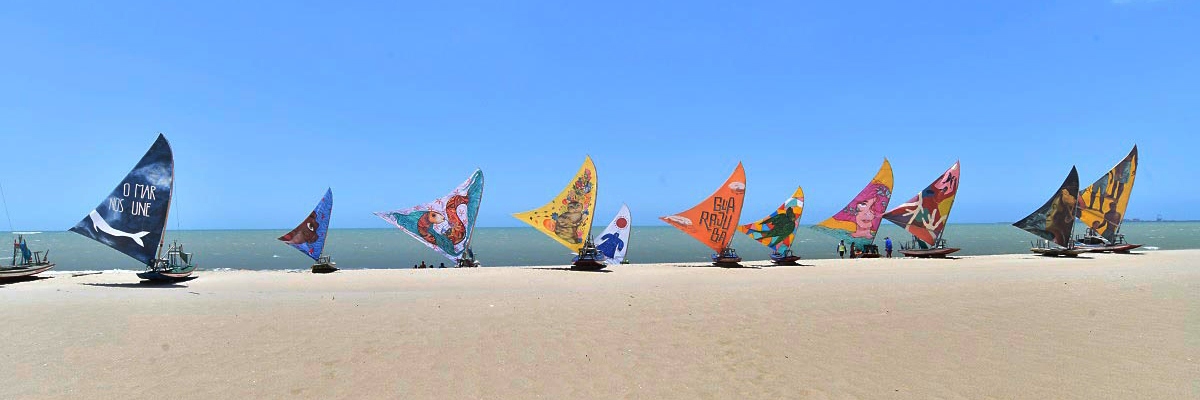
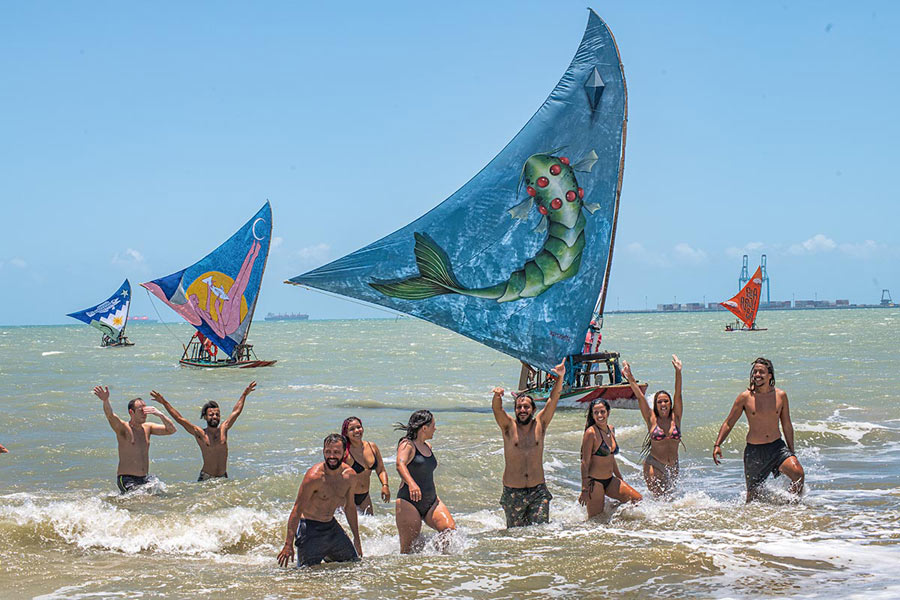
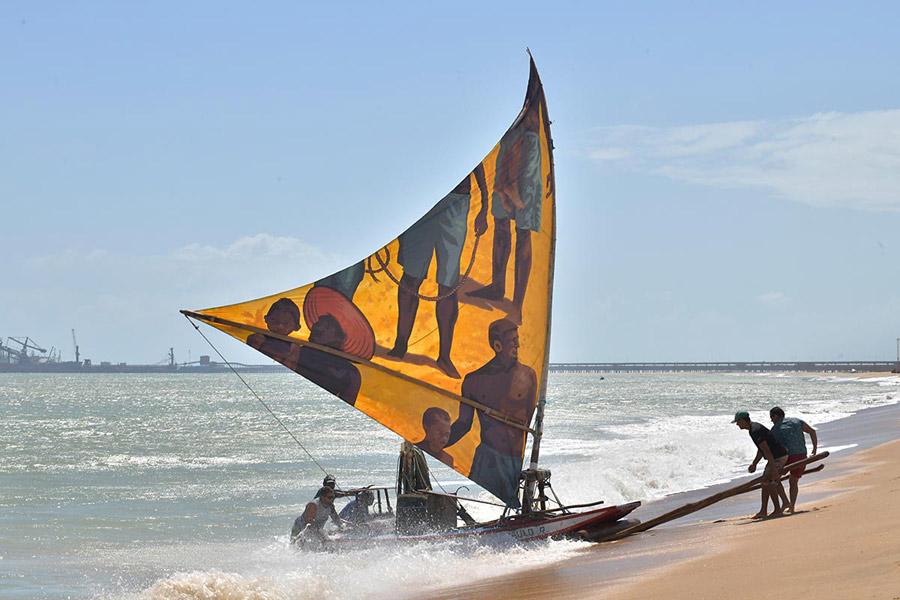
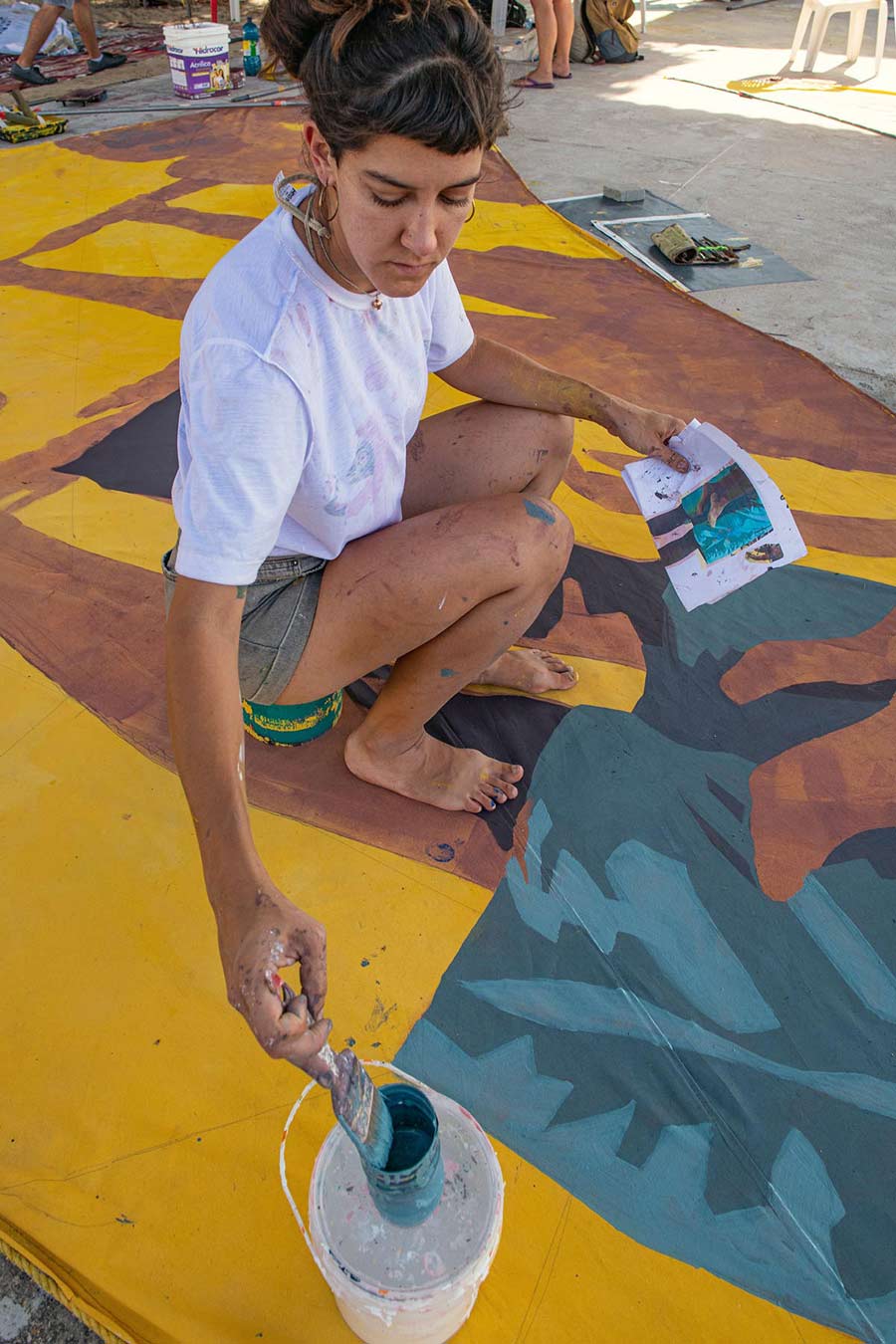
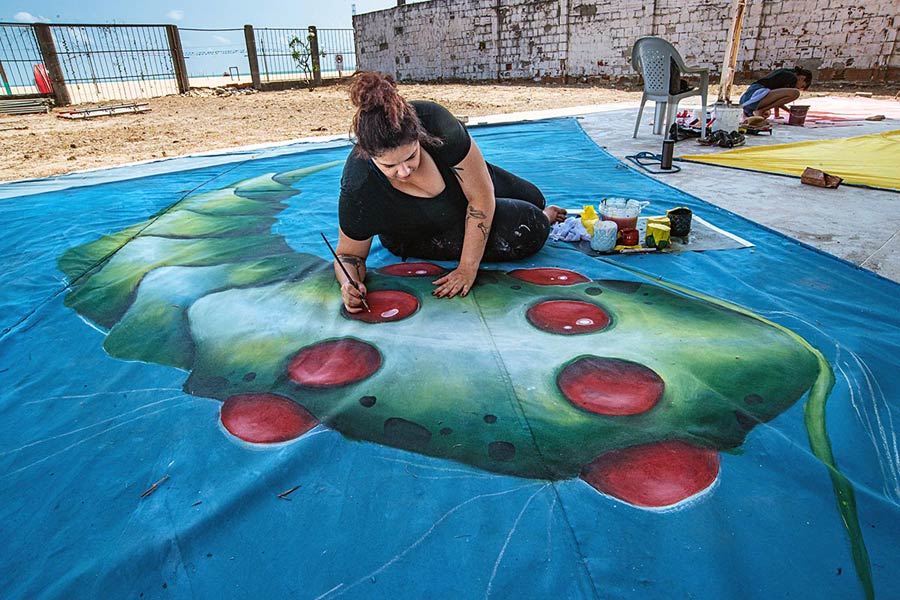
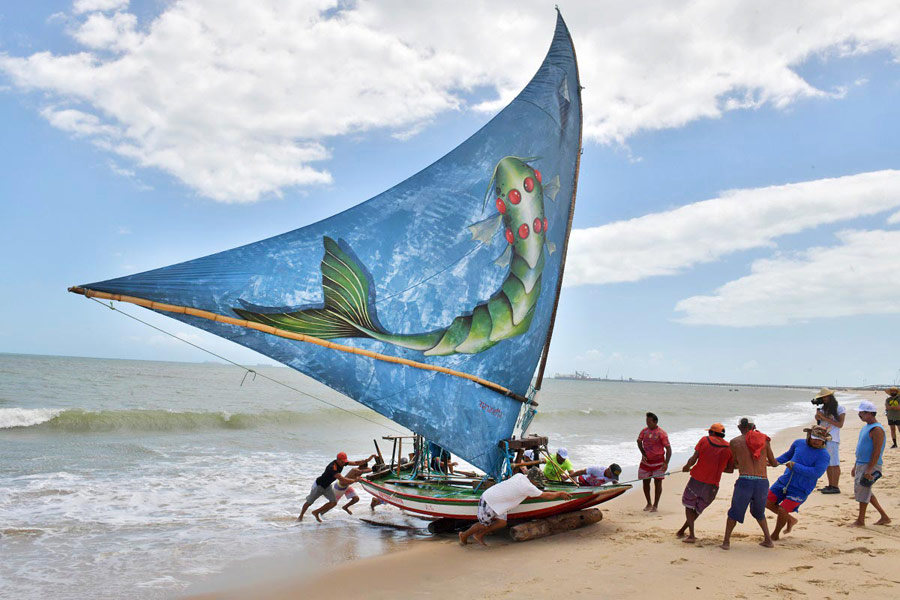
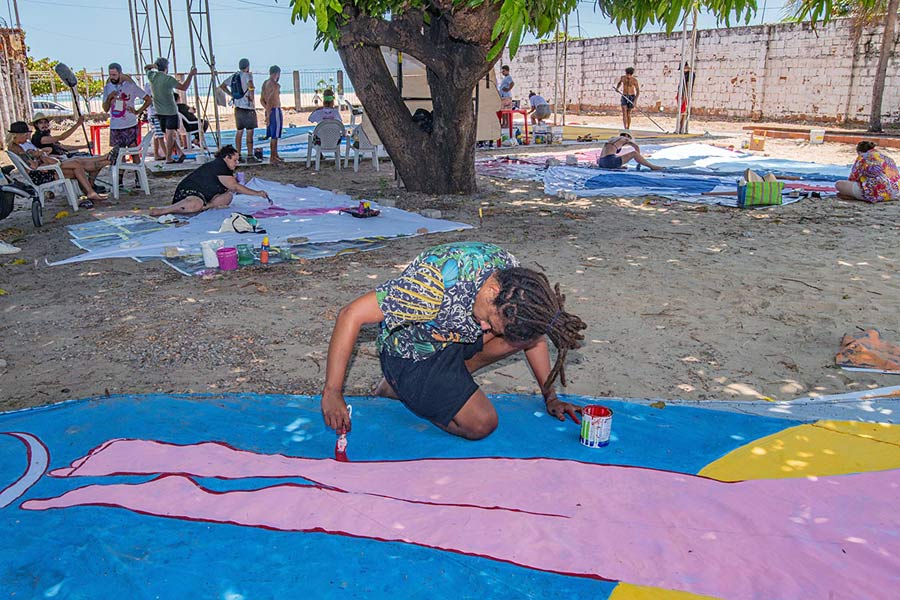
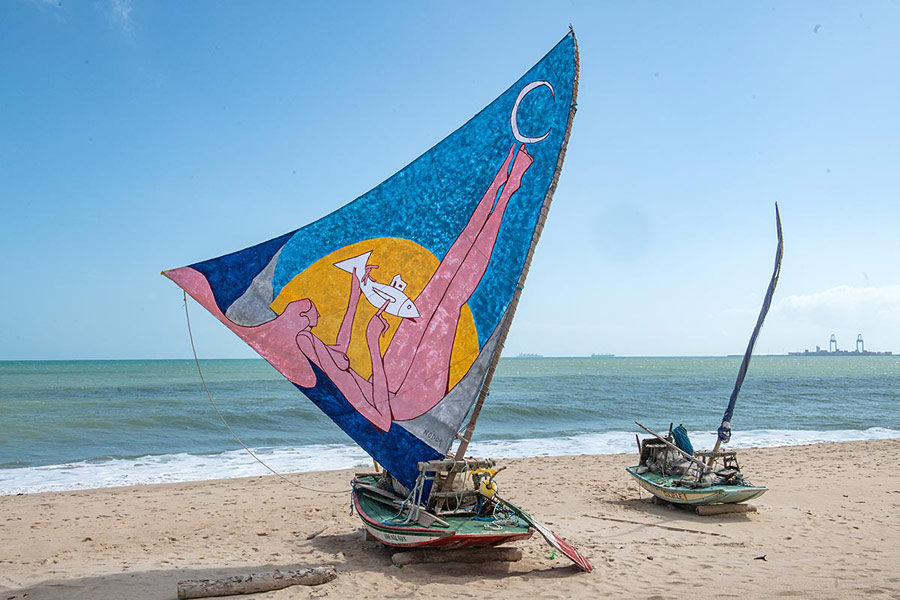
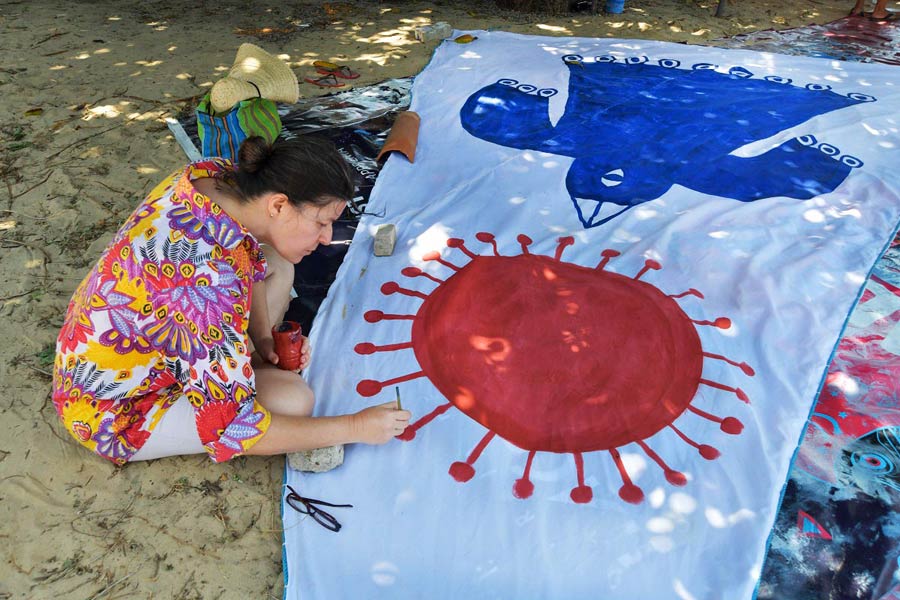
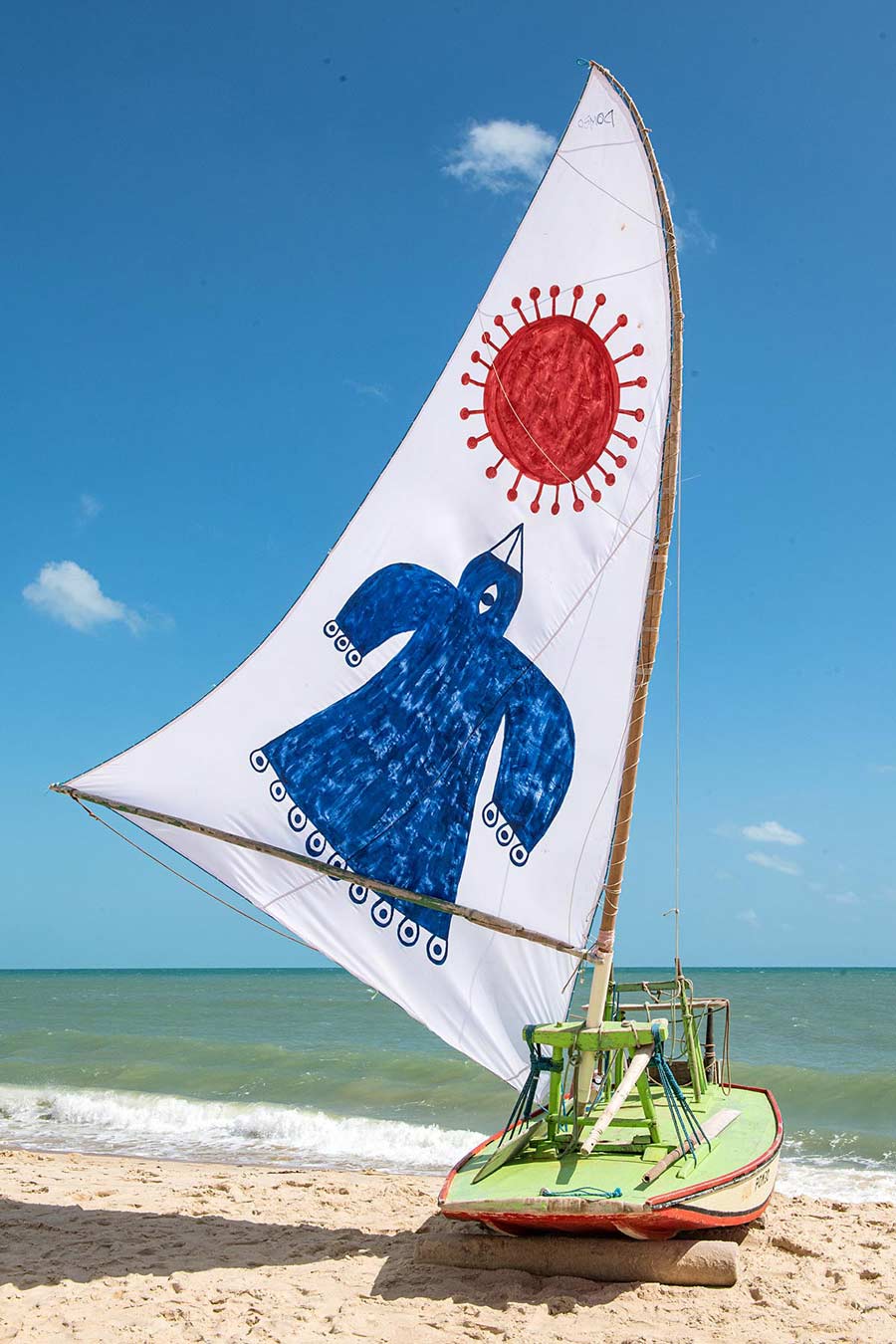
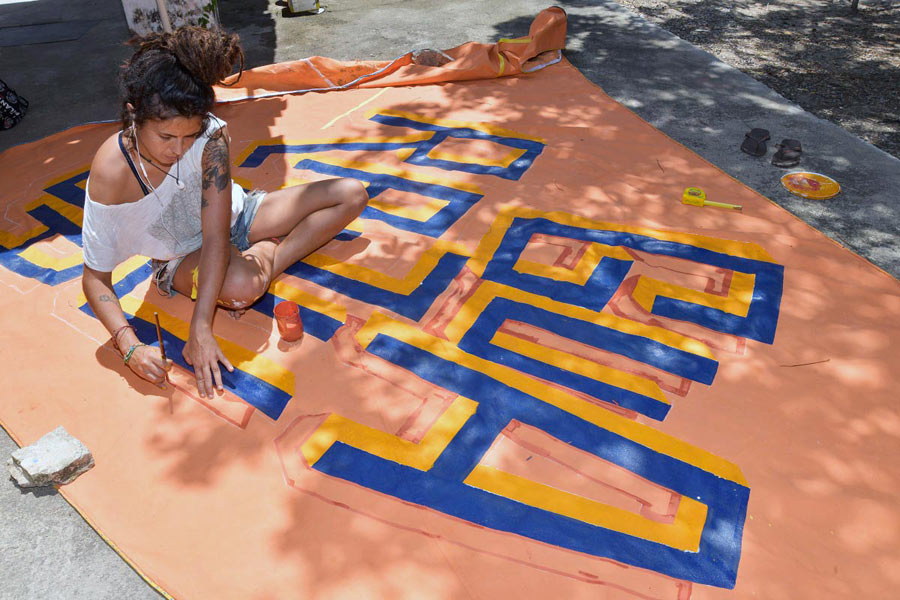
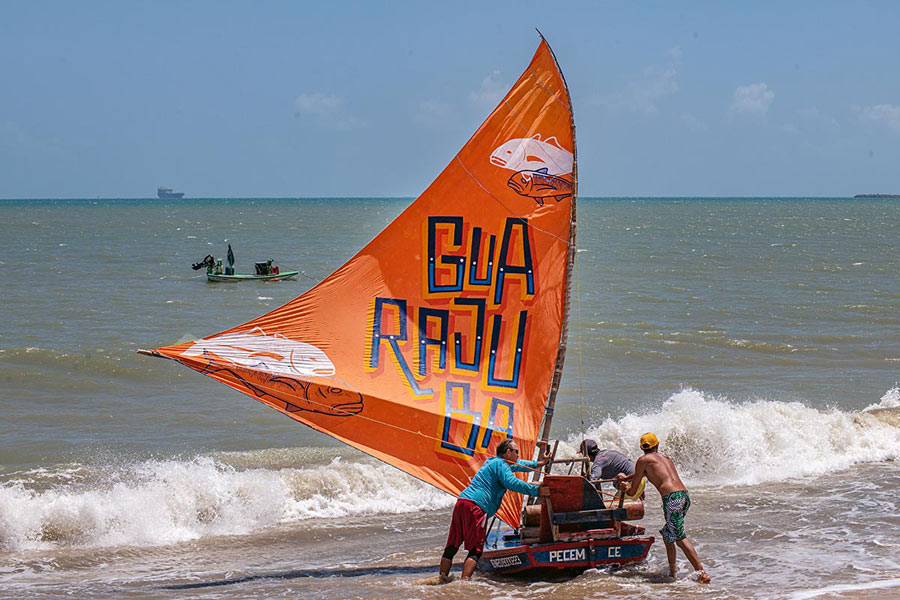
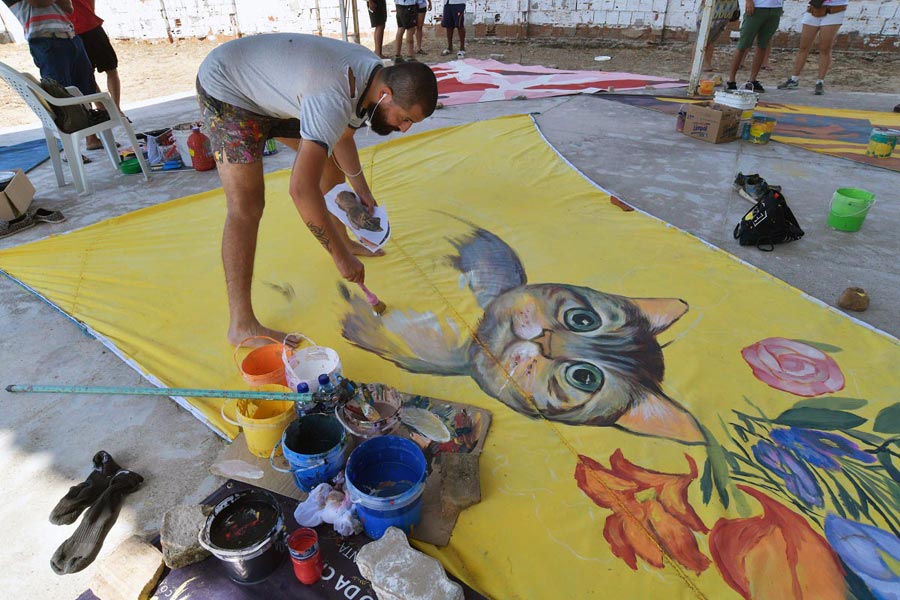
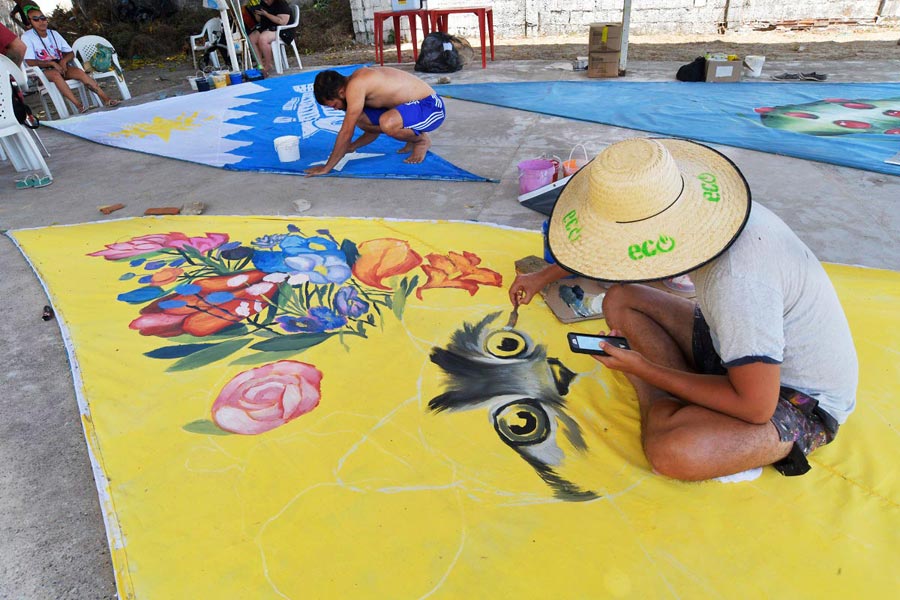
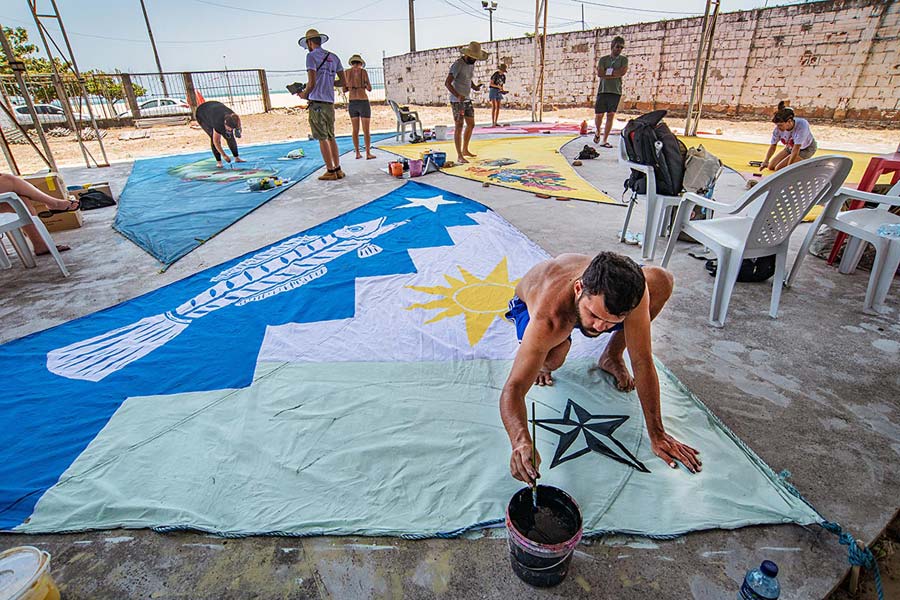
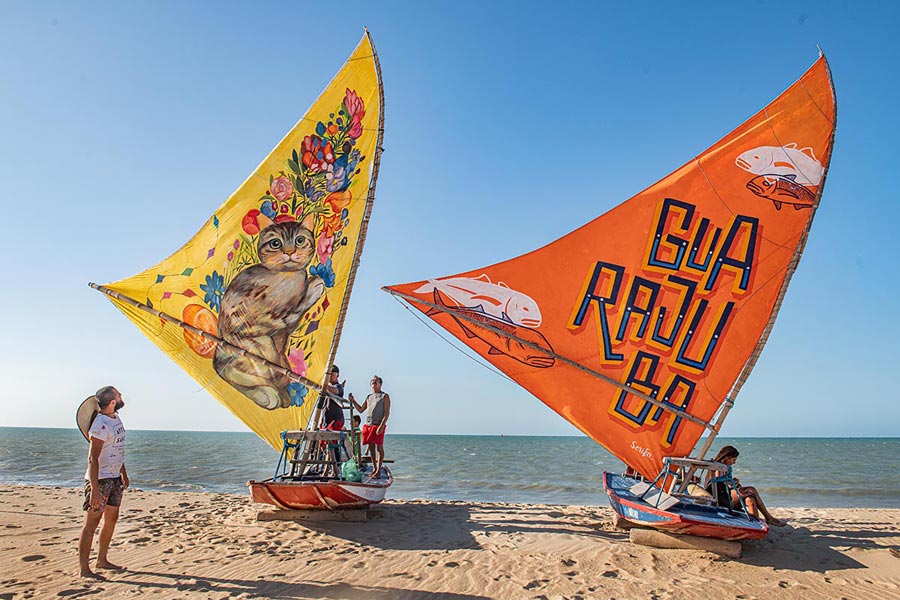
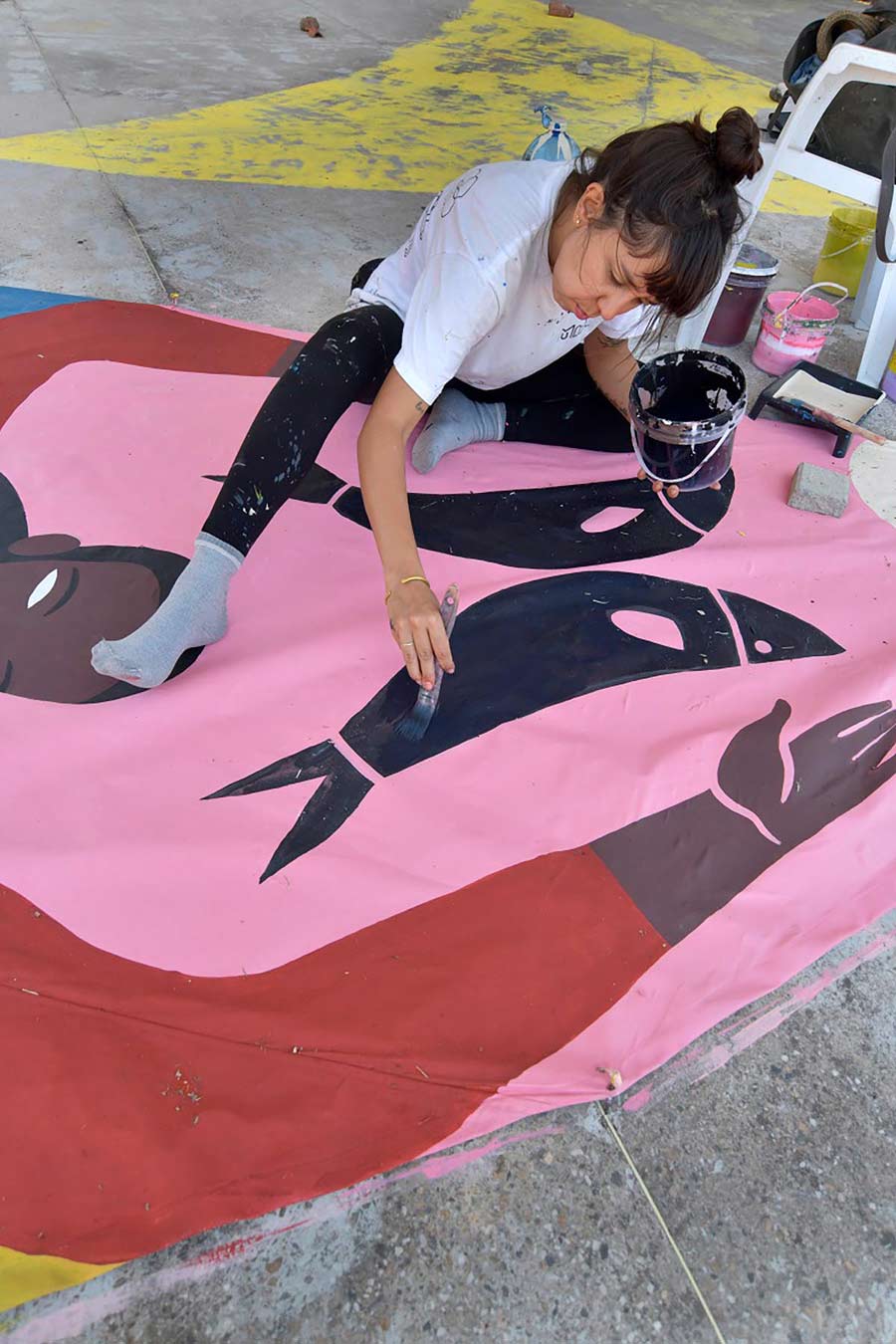
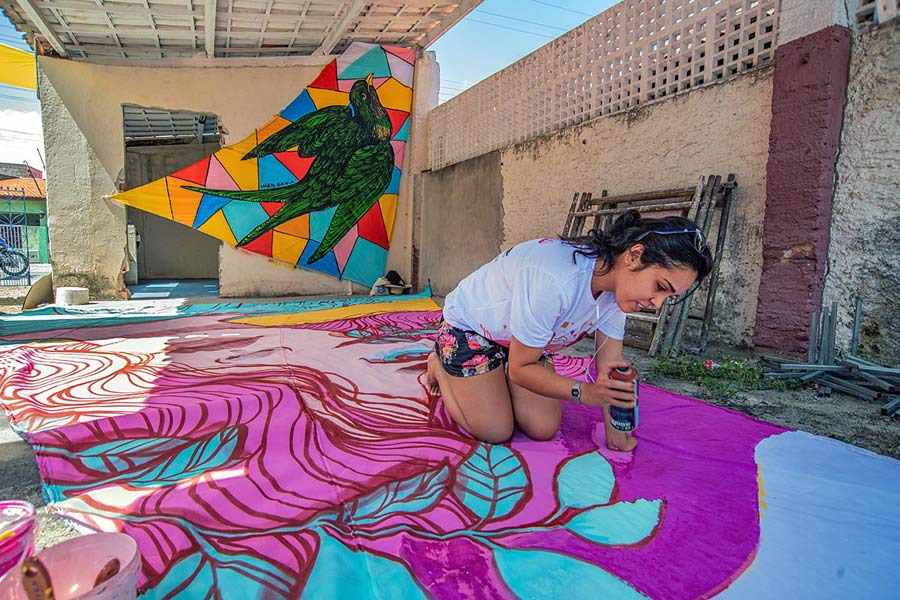
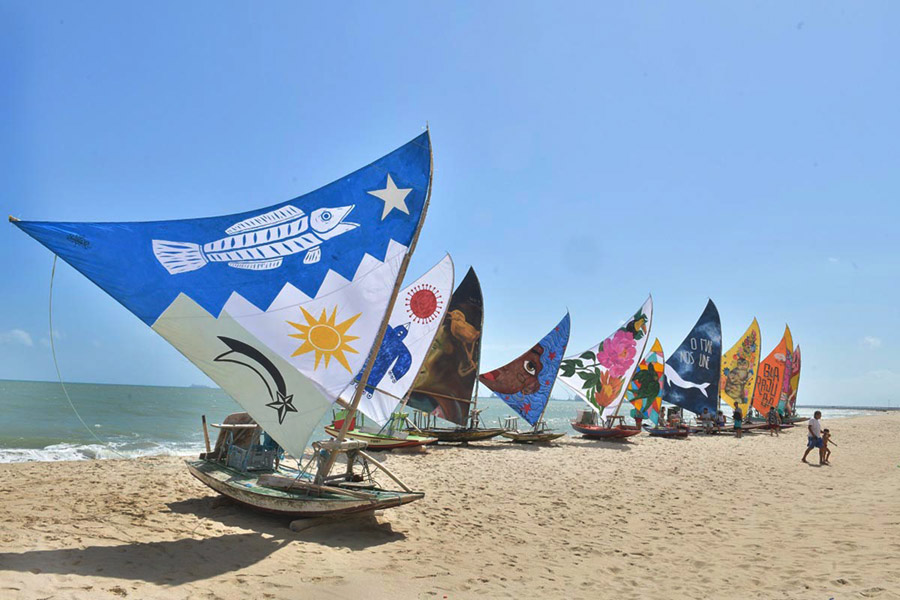
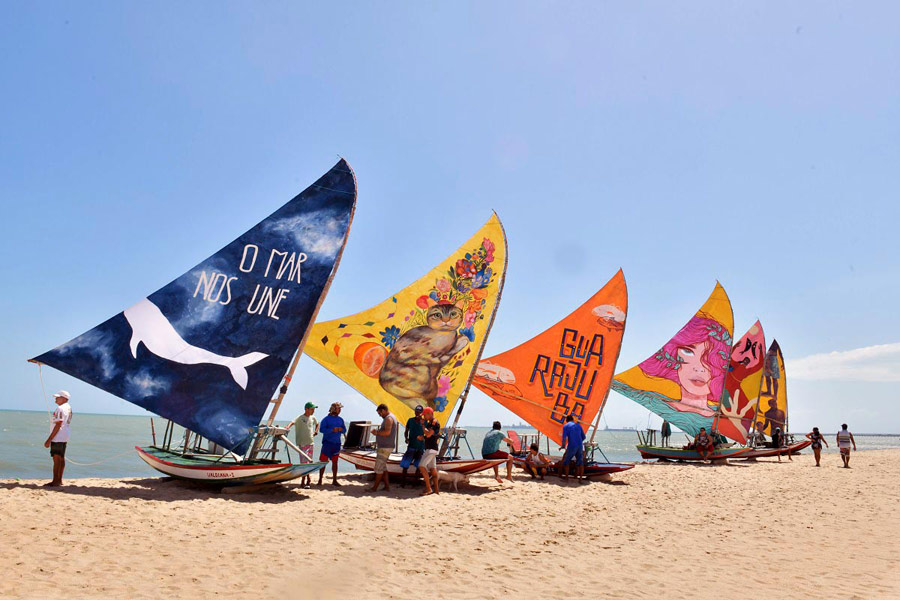
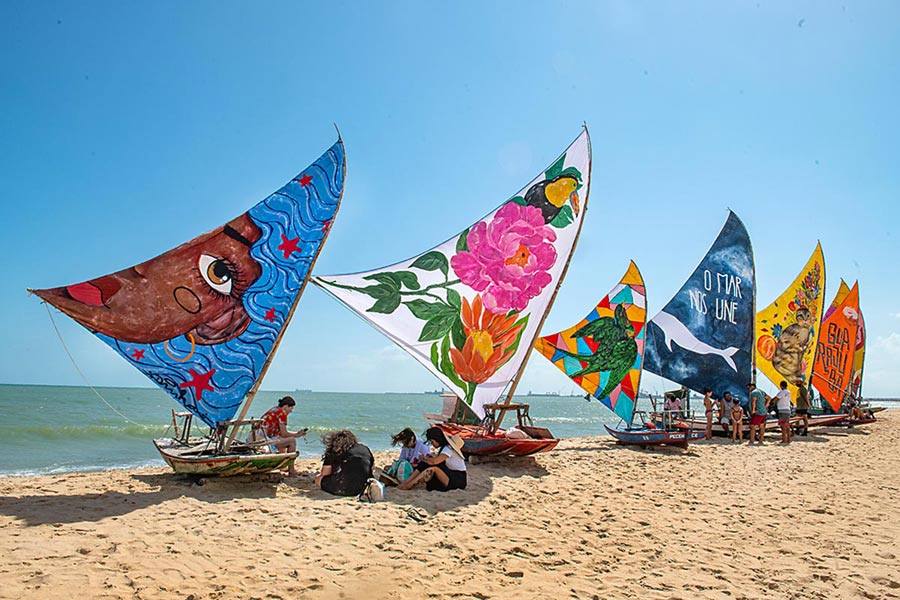
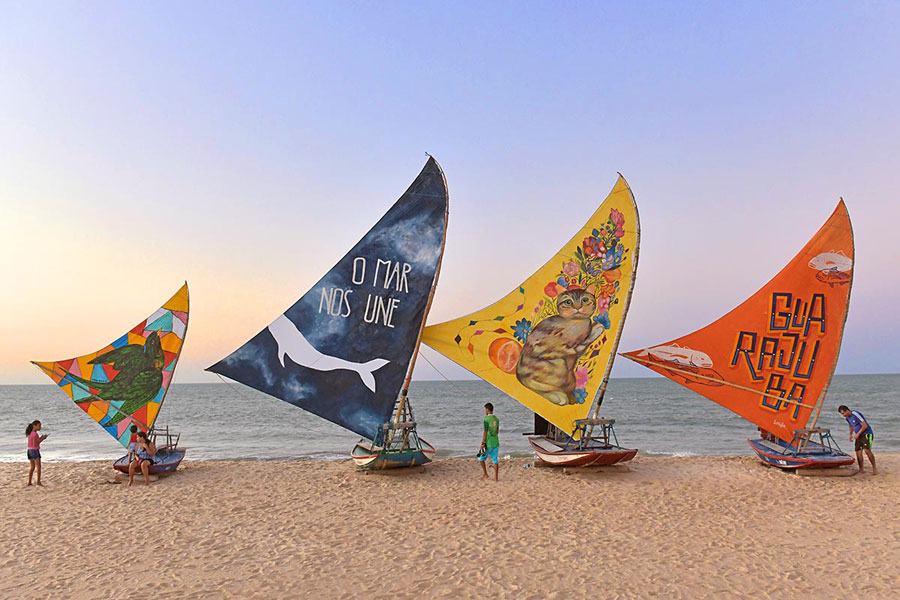
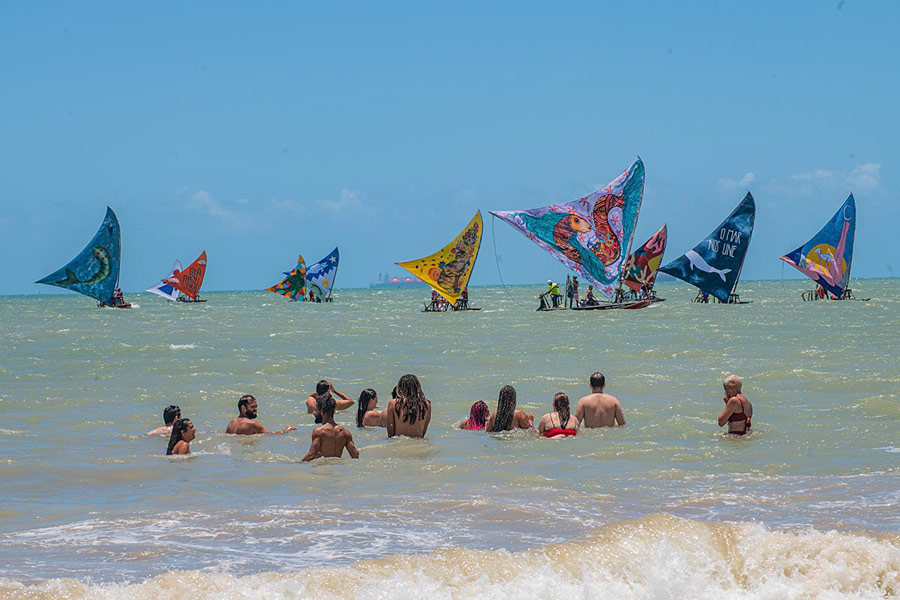
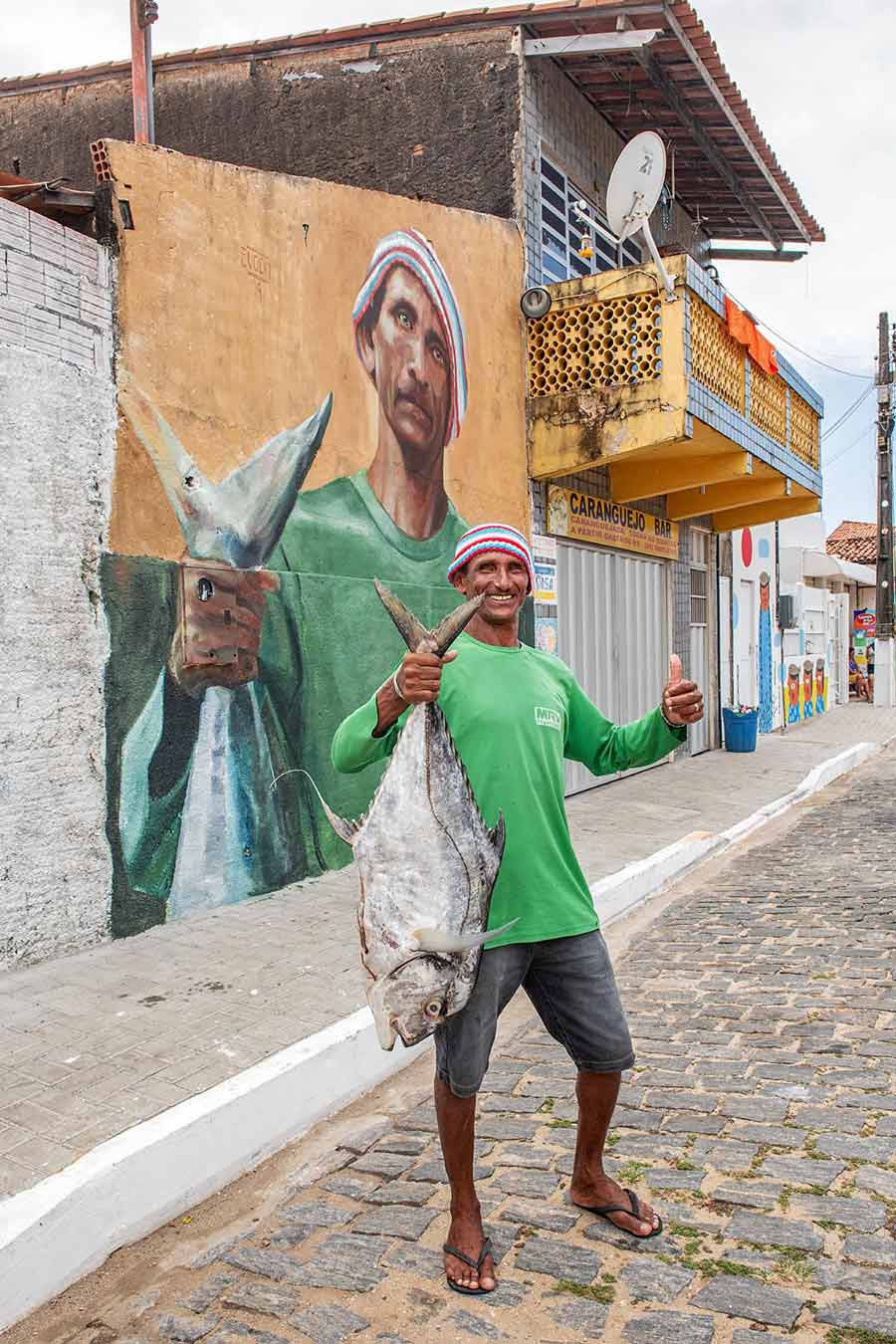
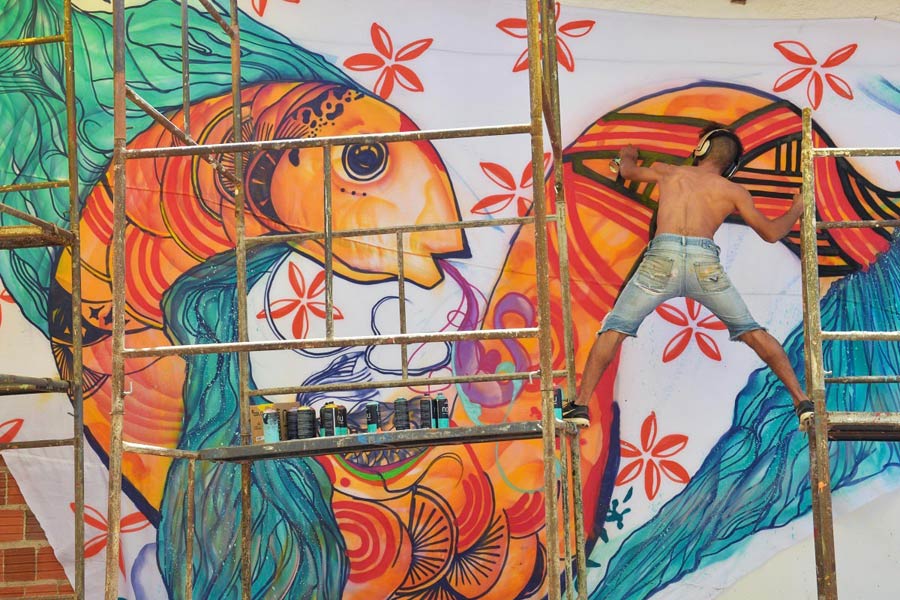
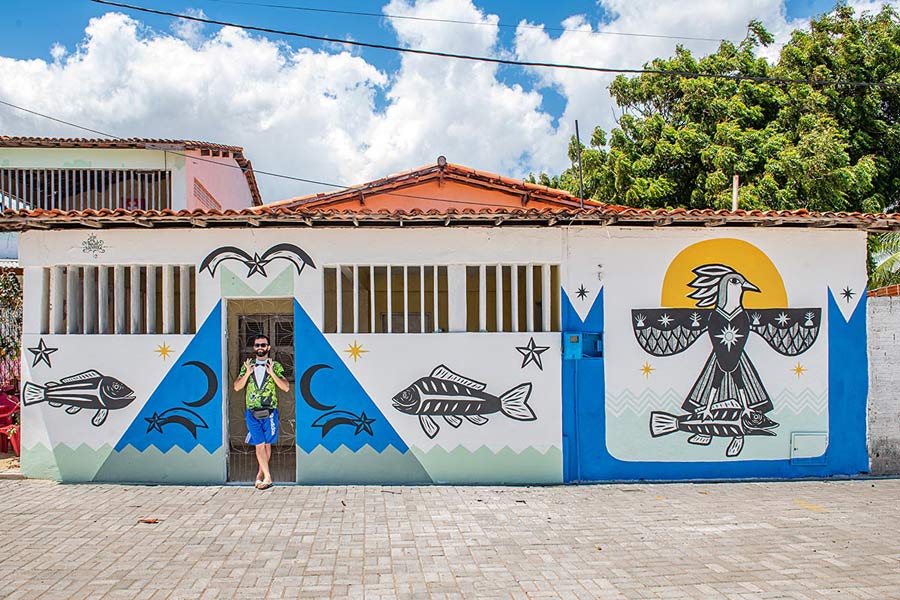
Imagine swimming with your art in the ocean, bobbing up and down in the blue waves and buffeting breezes in the sun just off the coast of Brazil. Bright and bouncing like beacons while paying tribute to the fishing community just inland, those bikinied and briefed beauties who are cavorting with victorious hands in the air are the artists who painted these sails, and photographer Martha Cooper was there to capture them for BSA readers to enjoy today.
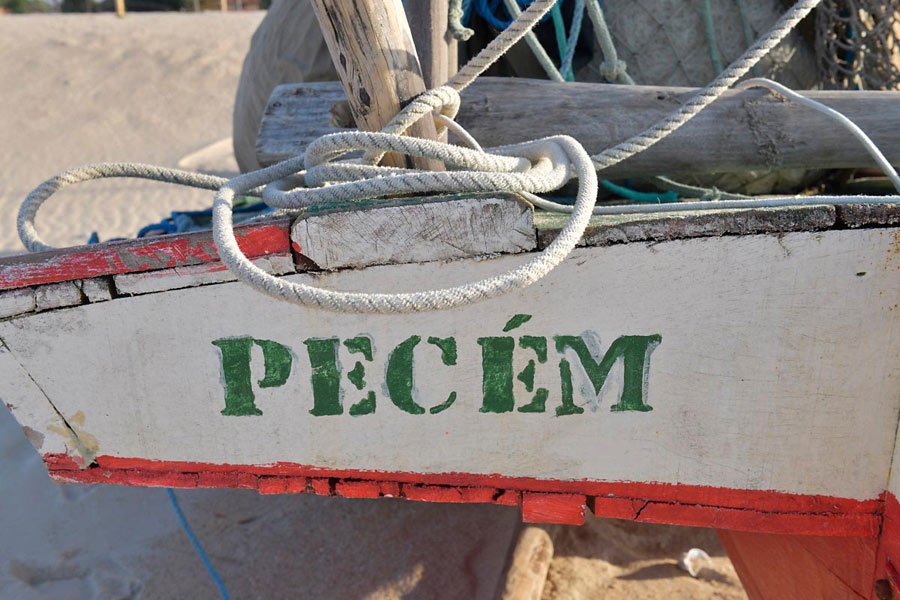
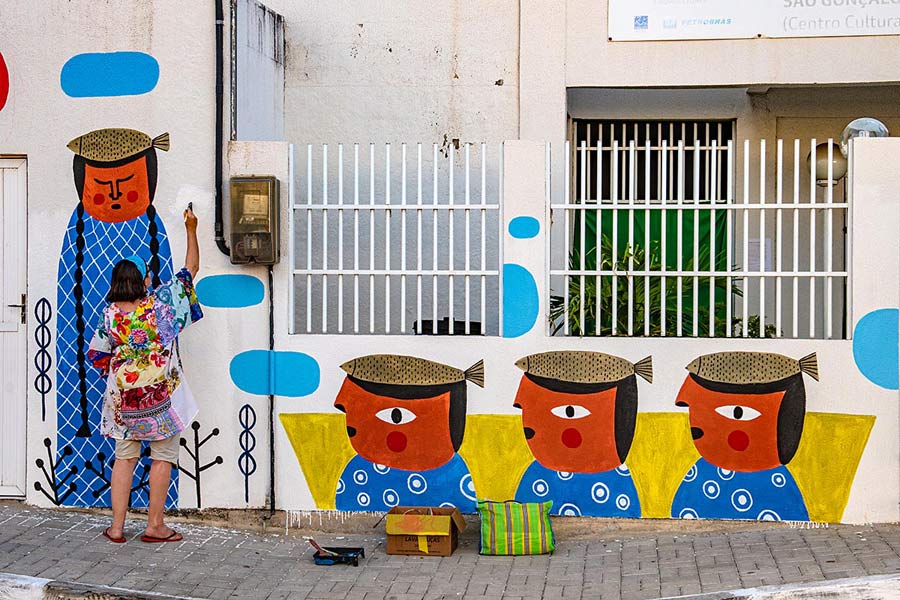
The Além da Rua festival saw its first edition in 2010, founded by Duo Acidum Project in collaboration with Ato Marketing Cultural. This year’s edition was organized by Marcelo Pimentel and Marina Bortoluzzi of Instagrafite and the concept of painting on sails is the first of its kind that we know of. One that speaks directly to the community and the history of the fishing trade in this Port of Pecém District, in São Gonçalo do Amarante. This two-week experience during September on the northern coast of Brazil included painting sails for the typical fishing rafts that fishermen/women have used on the ocean here for a long time.
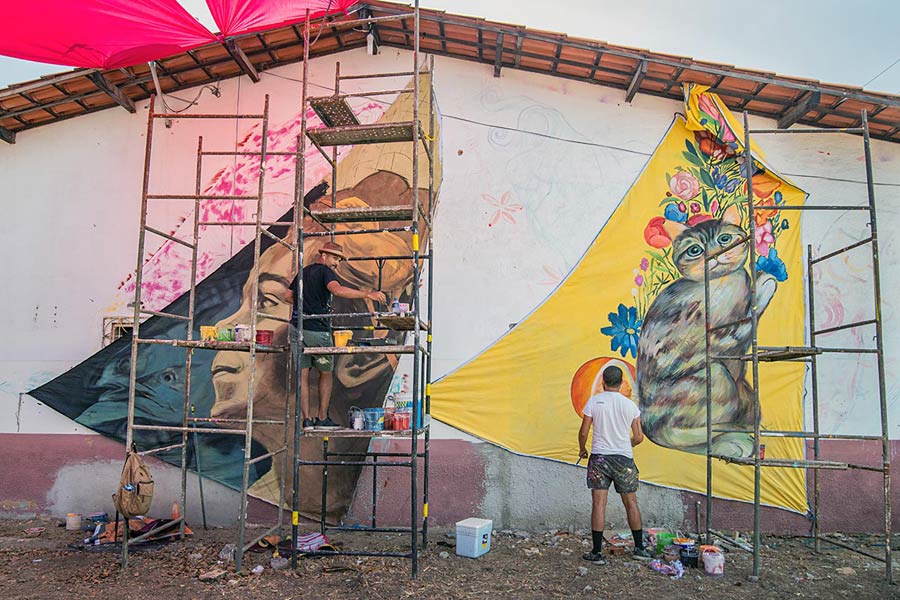
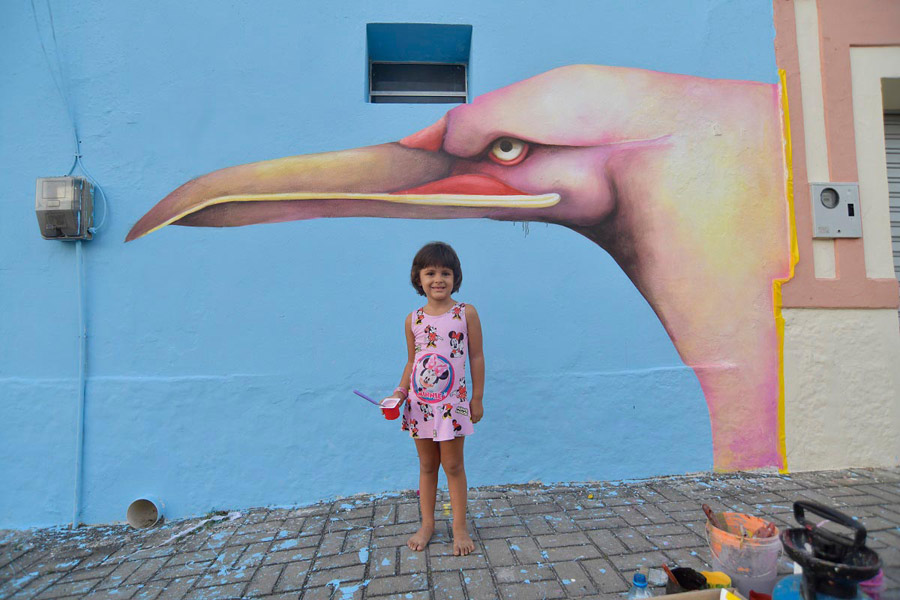
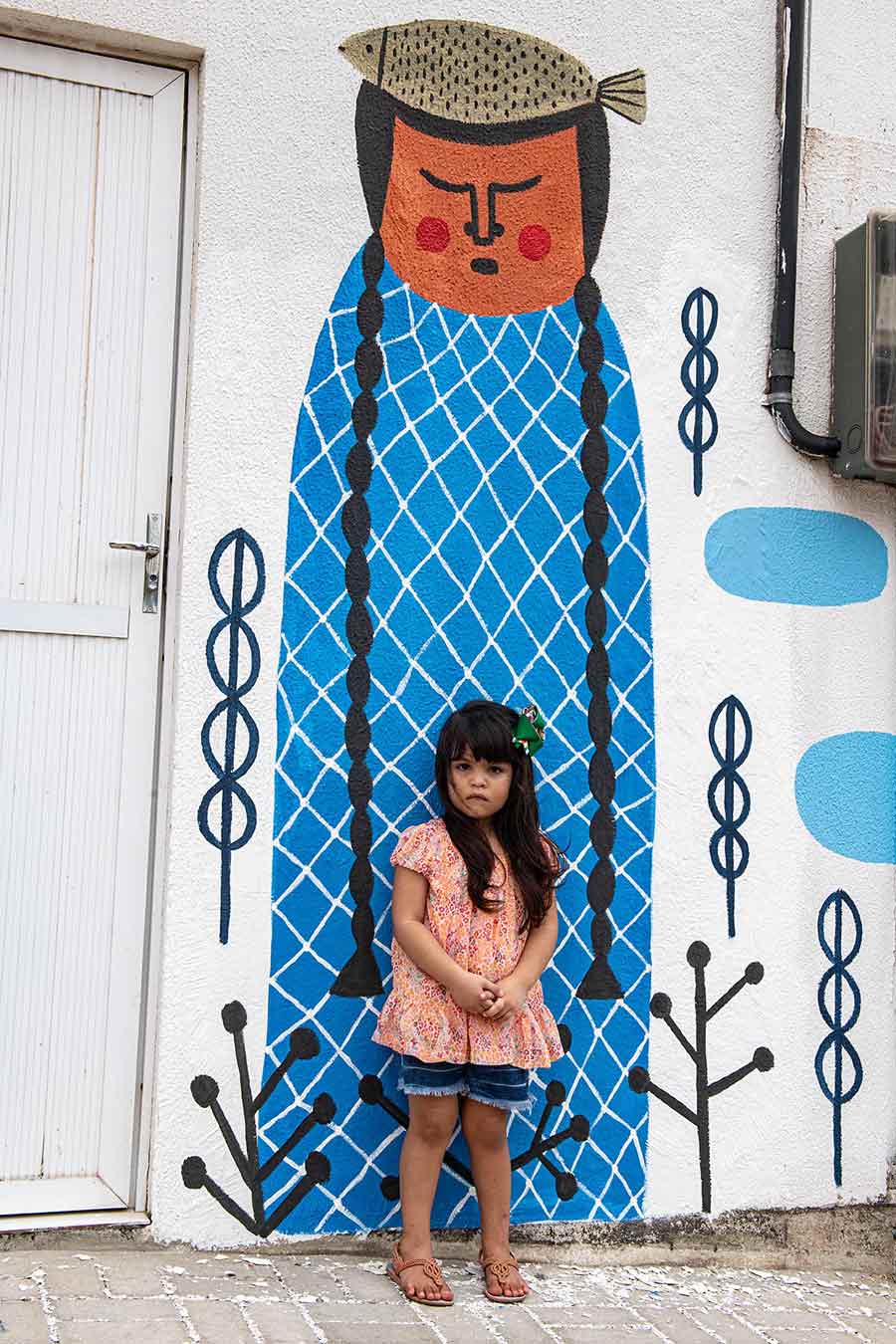
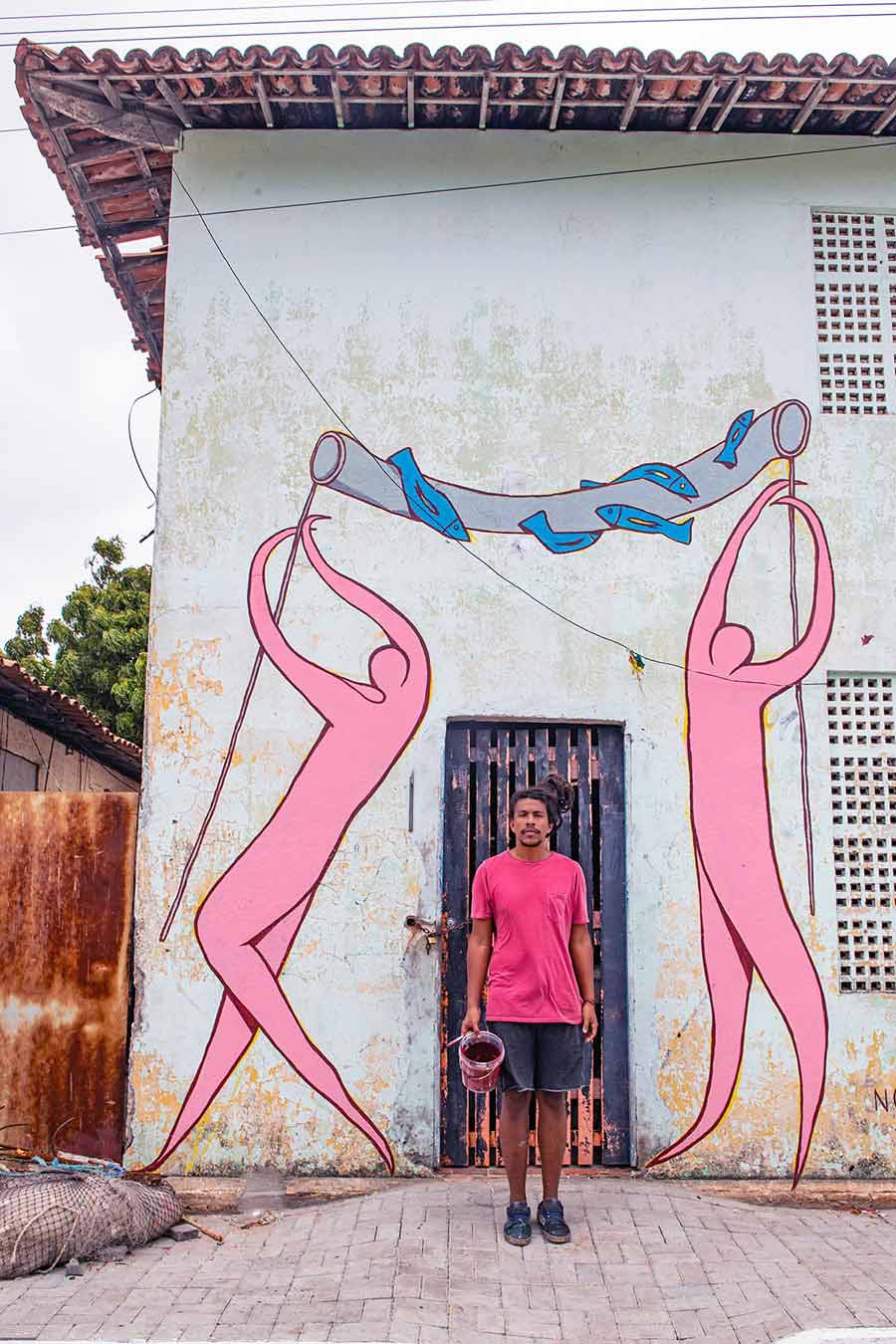
Not strictly Street Art, this oceanic open-air gallery is created by Street Artists who hail from this region of the world – Argentina, Mexico, Uruguay, Dominican Republic, Puerto Rico, and of course Brazil. The program also included murals painted on walls of the homes of the fishing people, further connecting neighbors, place, pride, and a sense of community.
We have been observing a gradual evolution in the practices of the so-called “mural festivals” that evolved from the illegal Street Art scene in the last few years and we have spoken many times here and in presentations and panels about being leery of what we call a certain “cultural imperialism” that accompanies many of them today. The mural works are simply foisted by a starry-eyed fan-curator upon a neighborhood based on their knowledge of an edgy art movement. Nearly anyone can curate events and exhibitions with the BIG names – a grab bag of stars takes very little creative acumen and the results are often as cohesive as the offerings on folding card tables at your local flea market that sells iPhone 6 cases, 8-pack packages of athletic tube socks, and velvet paintings of Elvis and horses.
By involving artists with the community, as Ms. Bortoluzzi and Mr. Pimentel artfully did, the resulting artworks can have more meaning to the folks who must live with them long after the artists leave. It’s a tricky area to discuss sometimes though because everyone reading this has seen that the worst public art in almost every city often results from the choking, stultifying, uninspiring effects of bureaucratic “design by committee” processes, so we aren’t advocating for that either.
Here photographer Martha Cooper
captures the energy and enthusiasm of the artists and fisherpeople and the
natural beauty that inspires them all in at Além da Rua.
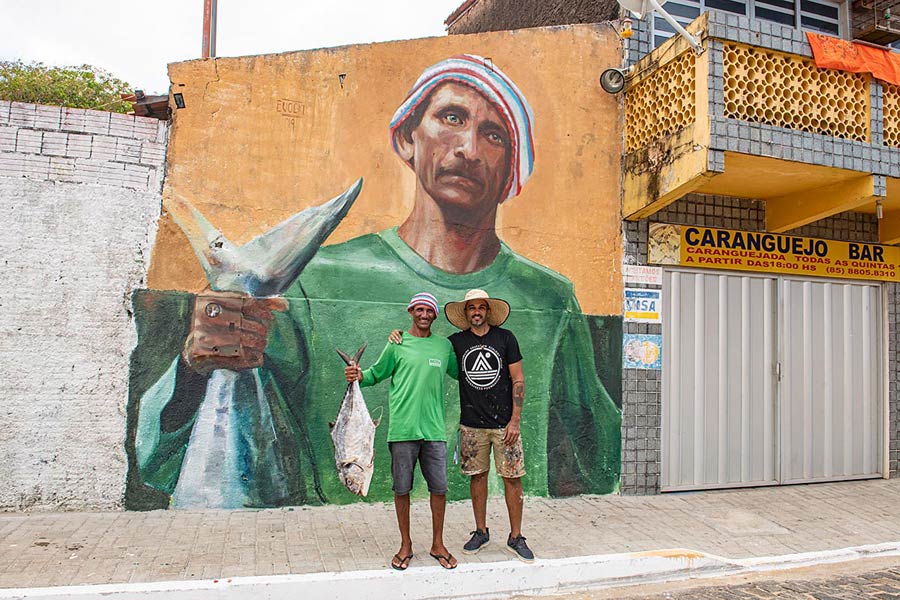
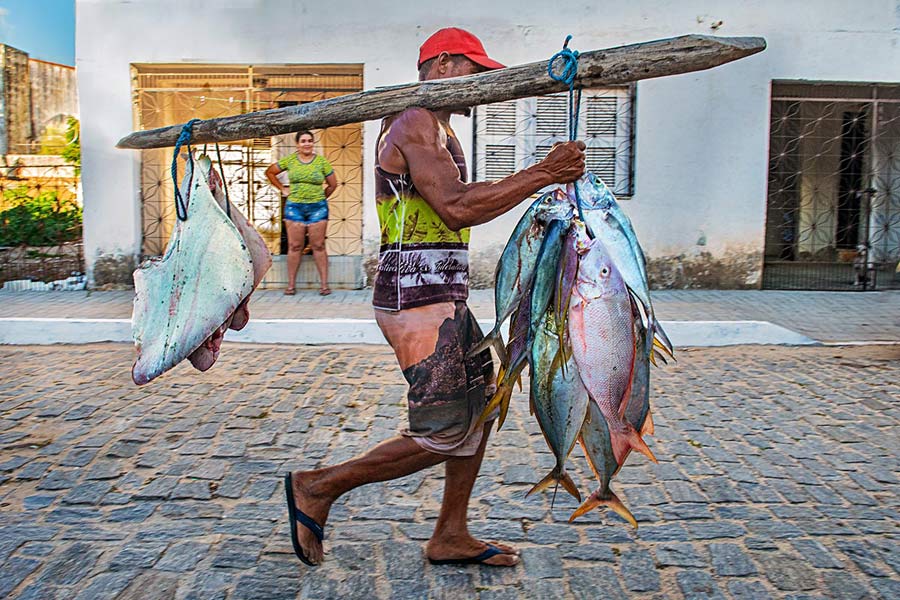
“Evoca is here painting Ednardo Palmeira’s portrait,” Martha tells us. “The portrait is on the outside of the place where Mr. Palmeira trims, preserves, and sells freshly caught fish. Ednardo seems to be the main person to do that in Pecém. Fishermen bring their fish to him.”
Our weekly focus on the moving image and art in the streets. And other oddities.
Now screening : 1. Gross Domestic Product – Banksy 2. New Stop Animation Project from Caledonia Curry AKA Swoon. 3. Henry Chalfant “Art vs Transit 1977-1987” Bronx Museum of the Arts 4. Street Art Summer Round-Up – 2019 from Fifth Wall TV / Doug Gillen
BSA Special Feature: Gross Domestic Product – Banksy
The doublespeak of Banksy very effectively demanded a whirlwind of media attention in the art/Street Art world once again this week. The anti-capitalist launched a full street-side exhibition while his personal/anonymous brand benefitted by the new record auction price of 9.9 million pounds with fees for one of his works depicting a “Devolved Parliament” full of apes – precisely during the height of inpending Brexit hysteria.
Gross Domestic Product / Banksy Installation. Video Courtesy Ash Versus
New Stop Animation Project from Caledonia Curry AKA Swoon.
Street Artist Swoon (Caledonia Curry) has been pushing her creative limits in a medium she is not known for, and the results are exhilarating.
Facing a backlog of fears and eager to go out of her comfort zones of that include linotype printing and wheat-pasting on the street – and the many projects building community – her last two years of study in stop animation are ready to be seen. Present her narrative practice and character in a surprising new way, Swoon takes chances bravely, and is ready to share her new work.
Her new exhibition with Jeffery Deitch is coming up in New York – but today we offer a sneak peek of what the deep diving Swoon has discovered.
Henry Chalfant “Art vs Transit 1977-1987” Bronx Museum of the Arts
Its here and the reviews have been glowing. One of the originals in documenting and providing platforms to artists and participants of art on the streets and trains, Henry Chalfant is please to present an impressive retrospective through next spring at Bronx Museum of the Arts.
Street Art Summer Round-Up – 2019 from Fifth Wall TV / Doug Gillen
Hop into the Doug soup of insight, mangled pronunciation and zealous fannery for projects and Street/public art concepts he wants you to remember from this summer.
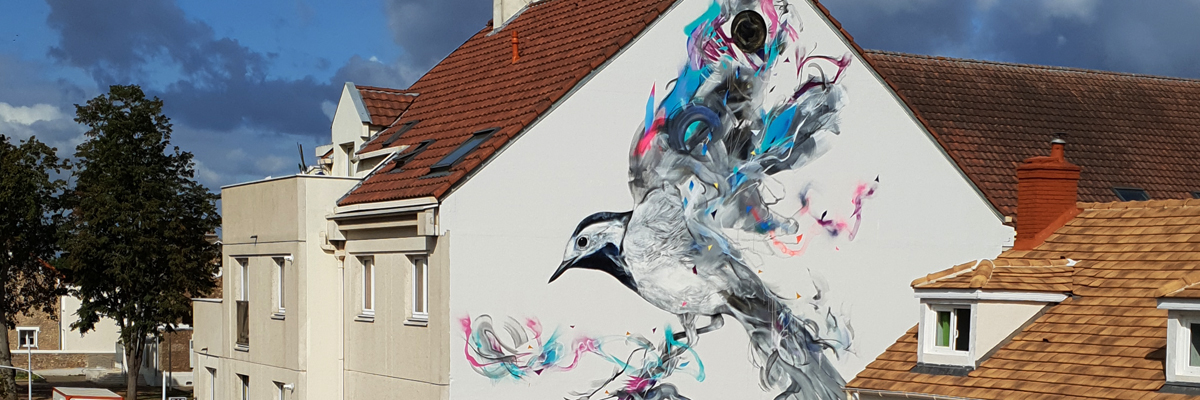
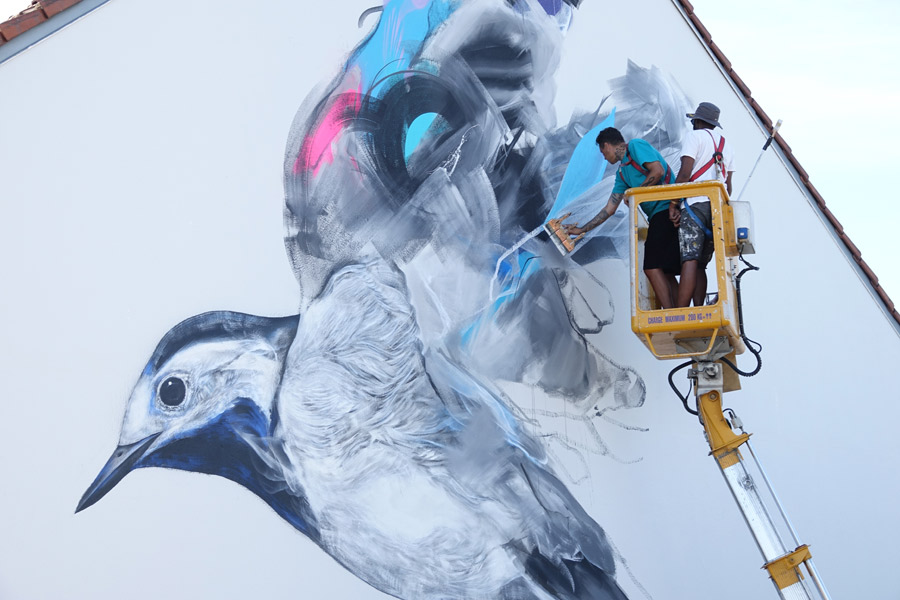
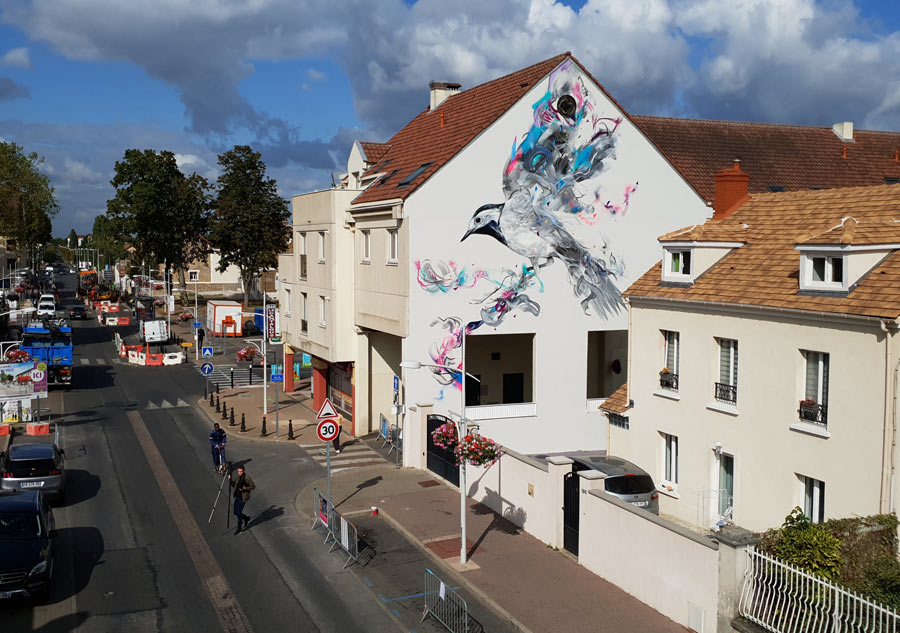
“Not all people like Street Art and not everyone likes Mickey Mouse!” said street artist L7Matrix on his Instagram earlier this year, which may explain his collections of birds, tigers, even jellyfish realistically rendered, then exploded in colorful abstract.
His signature style is typically aviary
and it has taken him from Berlin to Brooklyn to LA to Talinn to Paris to the
Twitter office in his native Brazil to complete his attractive mural making for
clients and festivals.
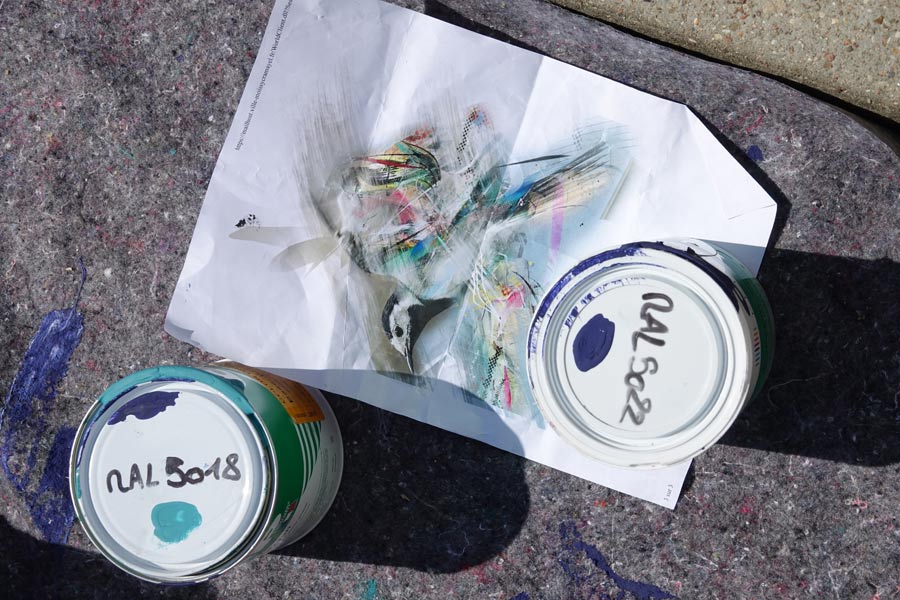
Here we have his latest fresco
completed as part of the Wall Street Art festival in Grand Paris Sud. Organizer
Gaultier Jourdain tells us that this is the first urban fresco completed in
this southern French town of Moissy-Cramayel.
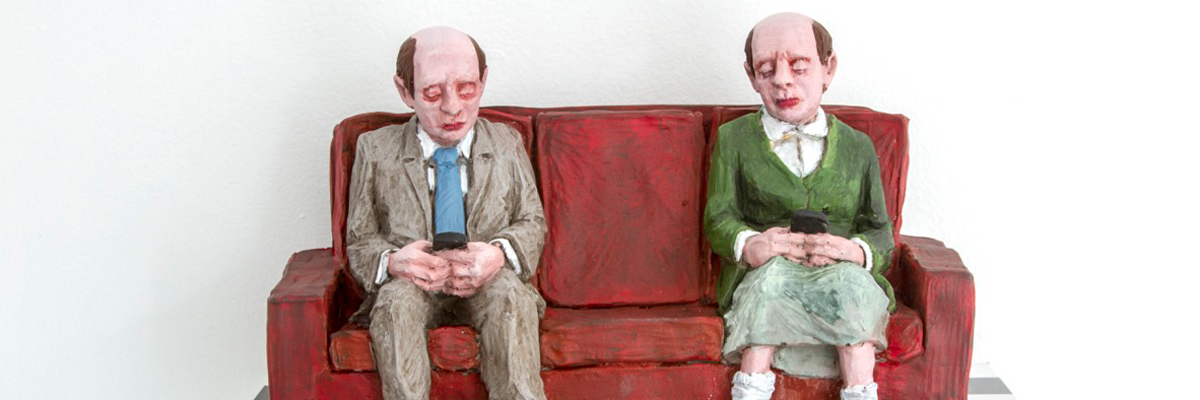
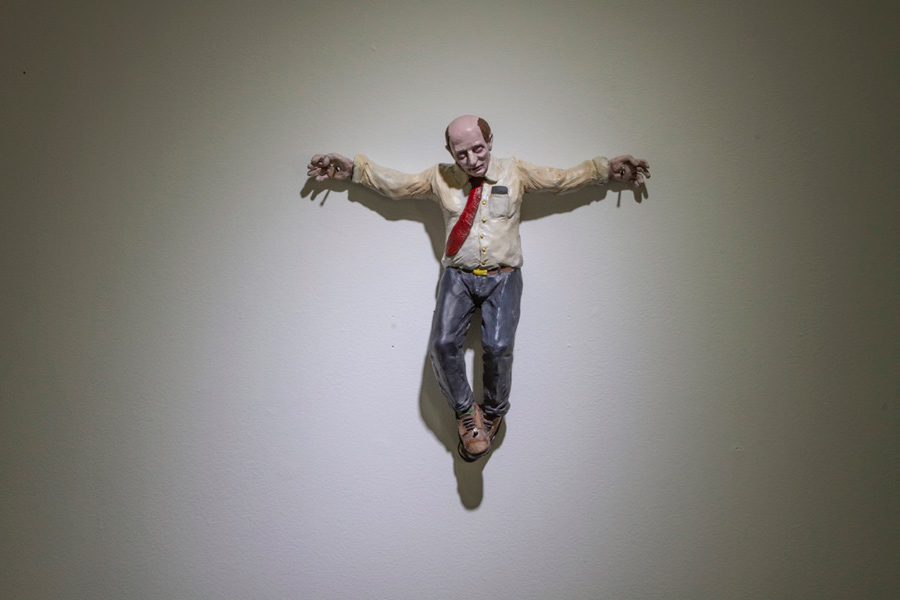
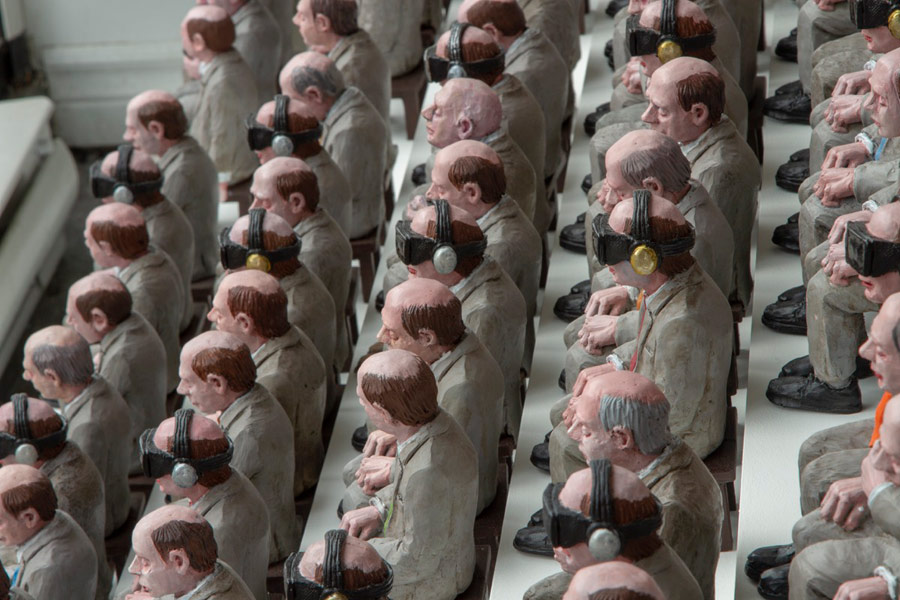
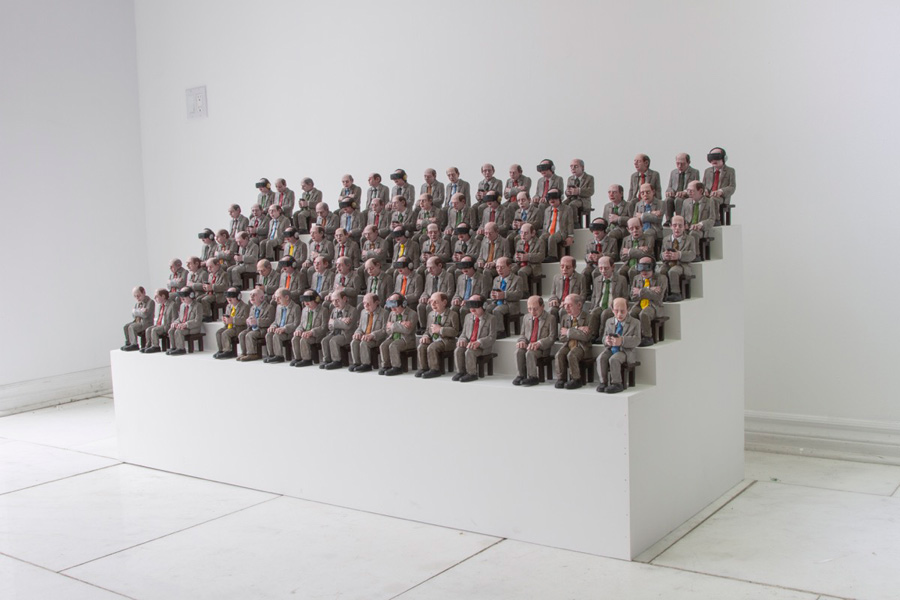
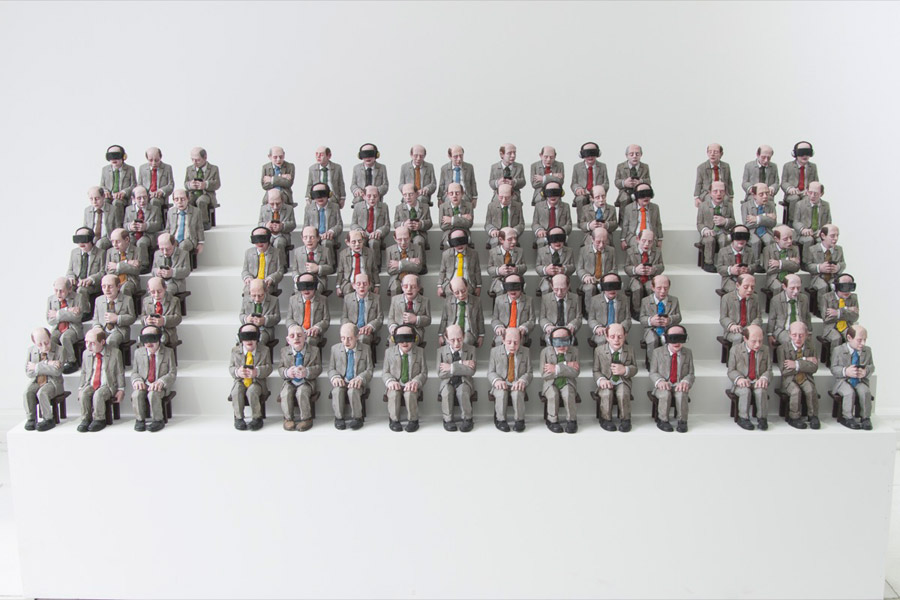
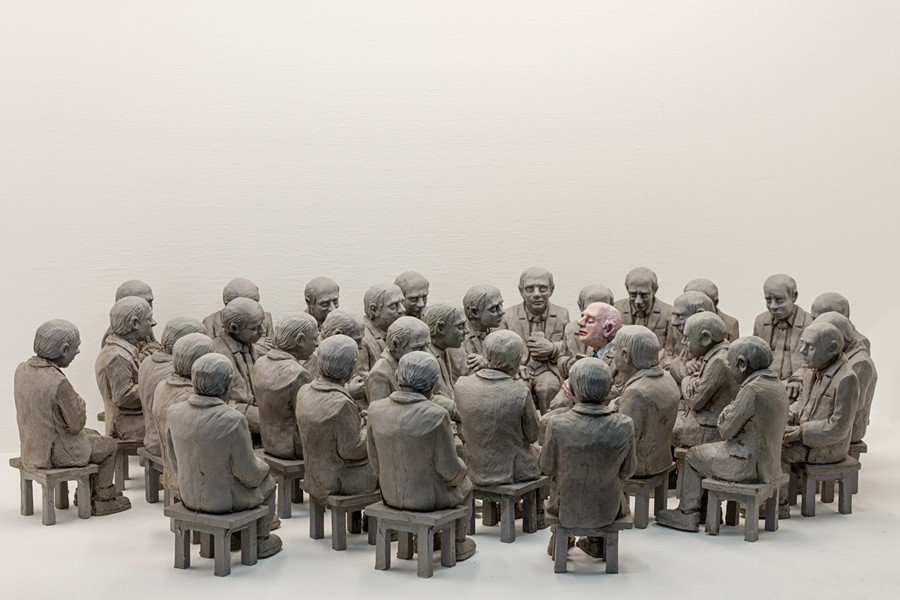
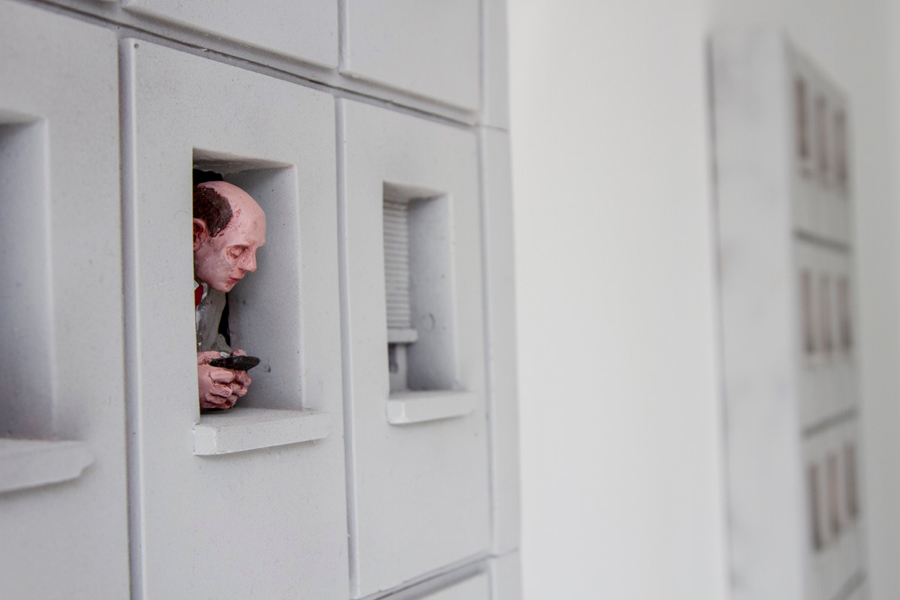
The evolution of an artist’s practice is something we feel very privileged to observe over time and we revel in the successful steps forward that any artist takes, preferring to see it as an act of courage. Street Artist Isaac Cordal is currently taking a big jump forward, consolidating his strengths and doubling down on his convictions in ever more powerful ways for his new exhibition entitled “Ego Monuments”, now showing at Galerie C.O.A. in Montreal, Canada.
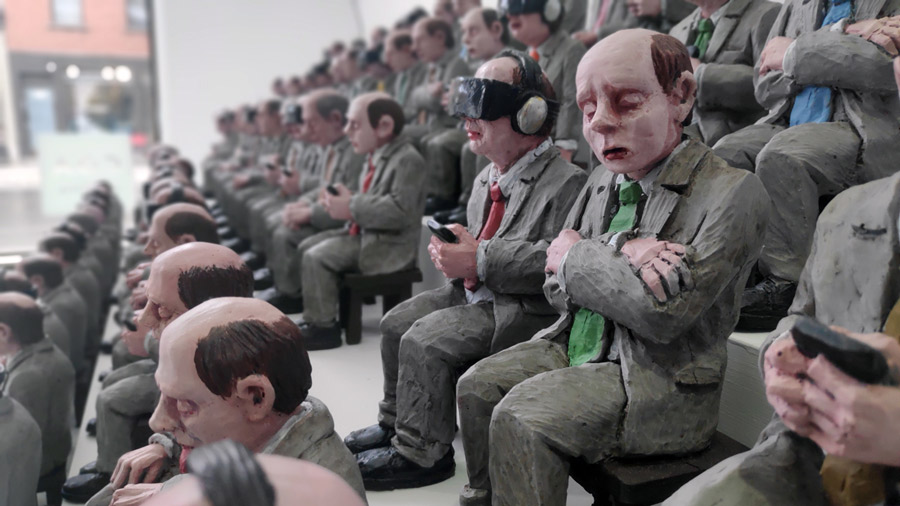
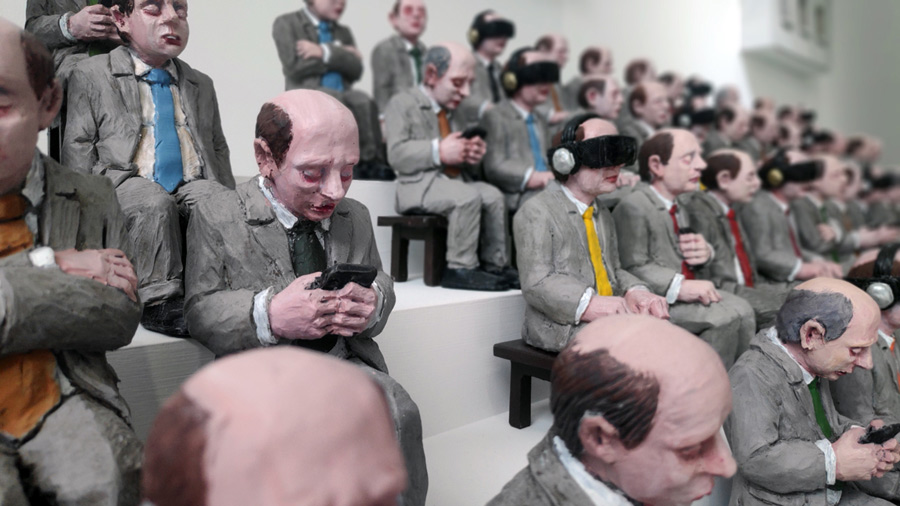
His vocabulary intact and increasingly sophisticated, something tells you that it is all synthesizing and gathering with the momentum of a storm. Here he is mocking the clique mentality of the politburo, presenting his company men as a block of distracted dullards, each separately miserable and indistinguishable in their groupthink.
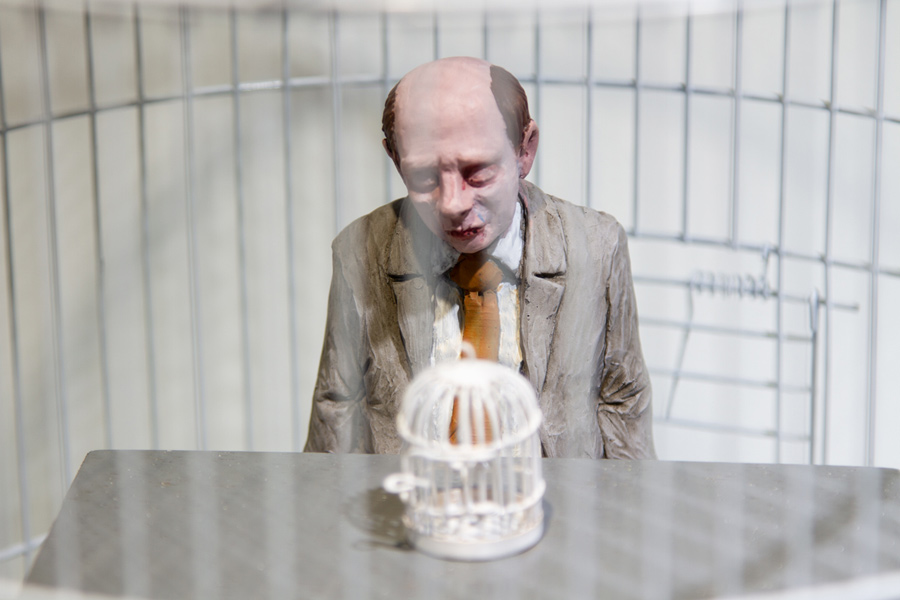
The image of one of his hapless figures as a crucified businessman with slightly ghoulish smirk taps into the themes of self-important sacrifice and holy reverence of so-many corporate heroes, frankly flagellating the idea of either. Elsewhere soaring pedestals lift the individual so high that coming down would likely result in death.
As a disarming collection of
installations in the gallery you may revel at the methods Cordal devises to
communicate the collective blindness pushing us further toward oblivion, his
blunt critique of consumer culture and mindless navel-gazing is a reassuring
mediocrity that warms you gradually– as the water rolls toward a boil.
“We are the new version of
colonialism,” Cordal says his new press release, “we are waiting for climate
change by sunbathing on the beach. We live permanently exposed, controlled,
leaning out to the public balcony of the social networks and Big Brother has
become our flat-mate.”
As we examine our public statues and the messages of our massive free-standing art in parks, Cordal suggests that size matters in this age of the SELF. “Monuments to the ego would be so big that it was necessary to change the scale of these works to place them into the gallery.”
Elsewhere he comments on the sorrowful narcissism that permeates the culture, as expressed by his figures here: “Almost all the sculptures that are part of the exhibition have their eyes closed, immersed in their smartphones or virtual reality headsets. Blind to their own reality, they don’t want to see beyond their own perimeter. ”
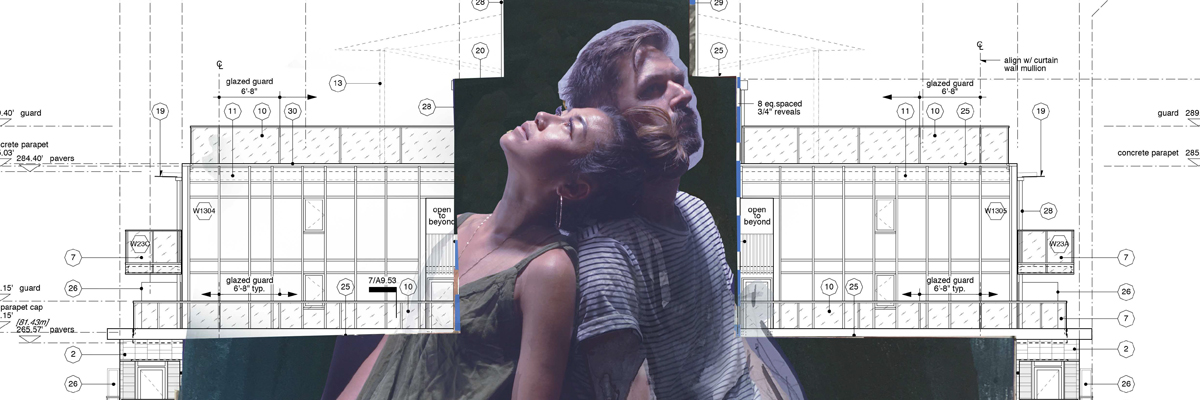
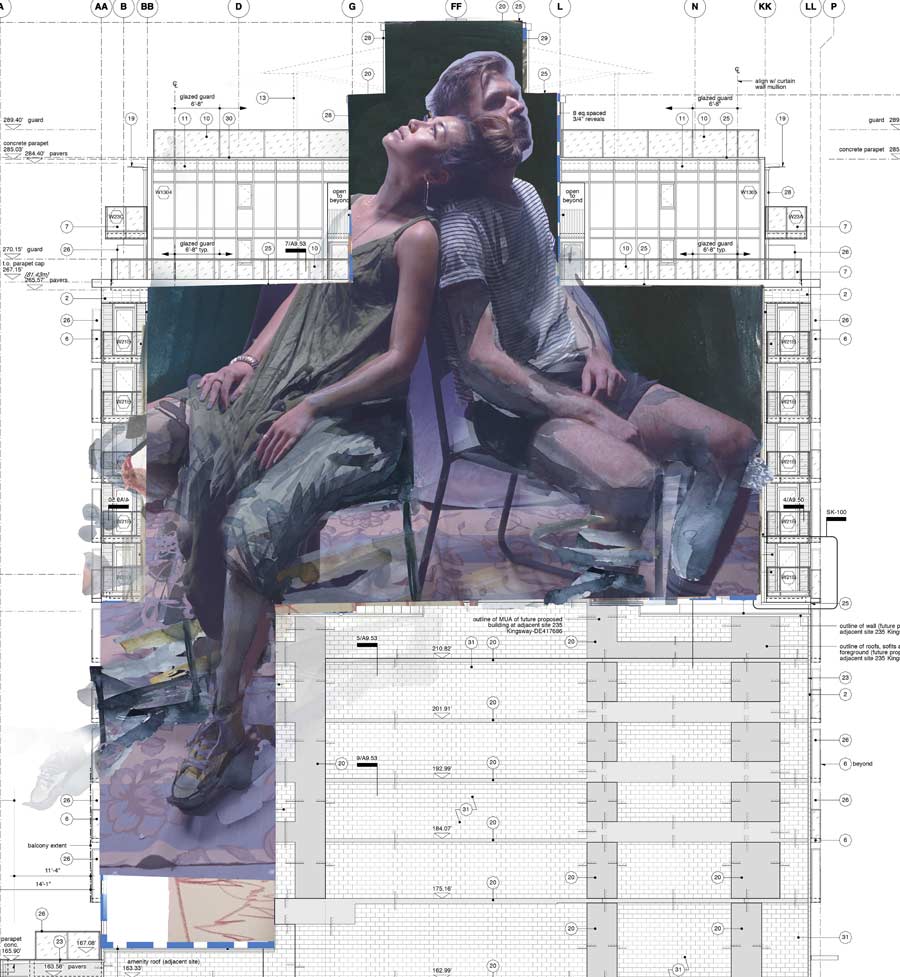
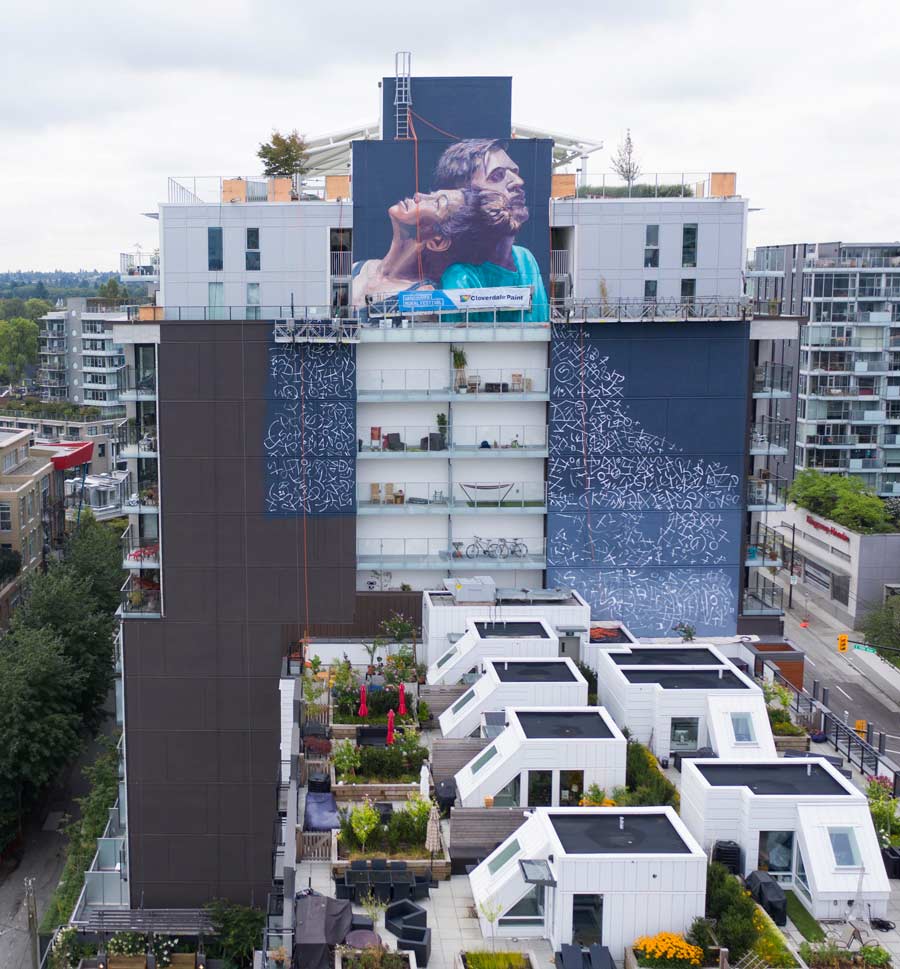
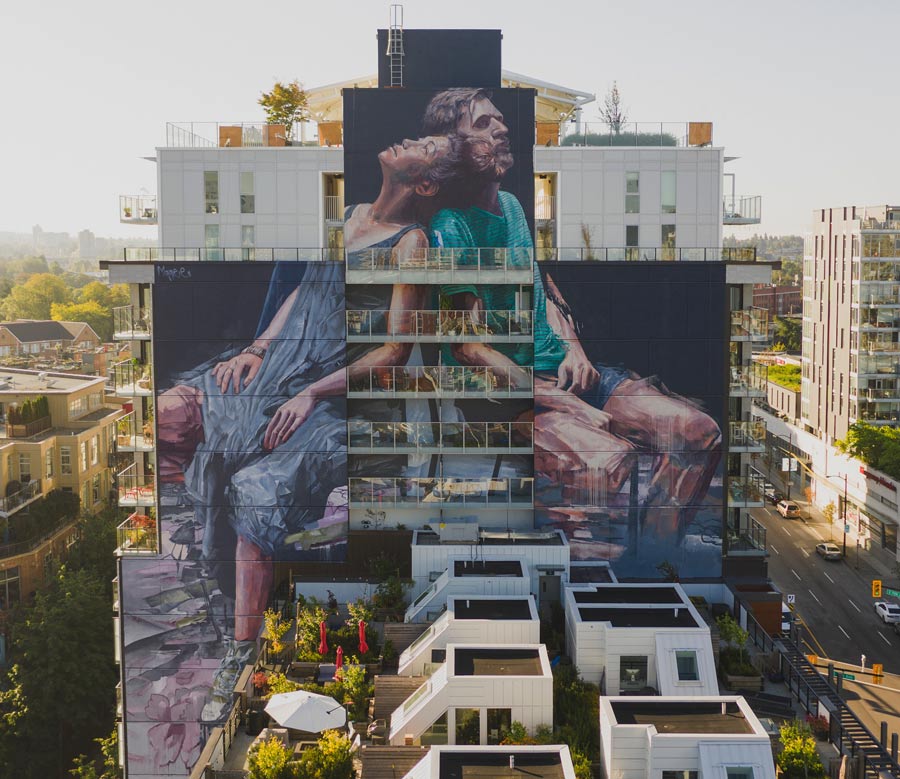
Brisbane based conceptual realist Fintan Magee sends us a new conceptual, figurative piece he just finished in the Mt Pleasant neighborhood of Vancouver, Canada as part of their local mural festival. Included in the lineup were a varied selection of illustrators, graphic designers, old skool graffiti writers, and practitioners of current trends like dark pop surrealism.
Fintan tells us that this mural,
perhaps because of the unusual configuration, was a challenge – and you can see
the original sketch he includes here of a couple who are local events managers
who work in the performing arts.
“They are part of a new series I
am doing that explores story telling through body language,” he says. “The work
also uses public art to celebrate local workers and community contributors over
celebrity or the grandiose.”
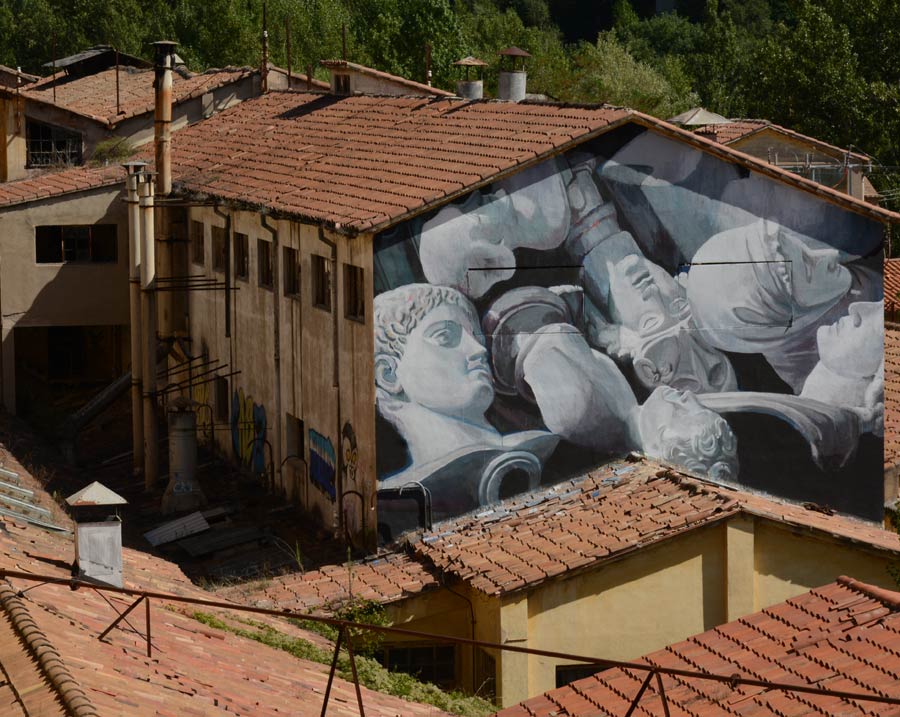
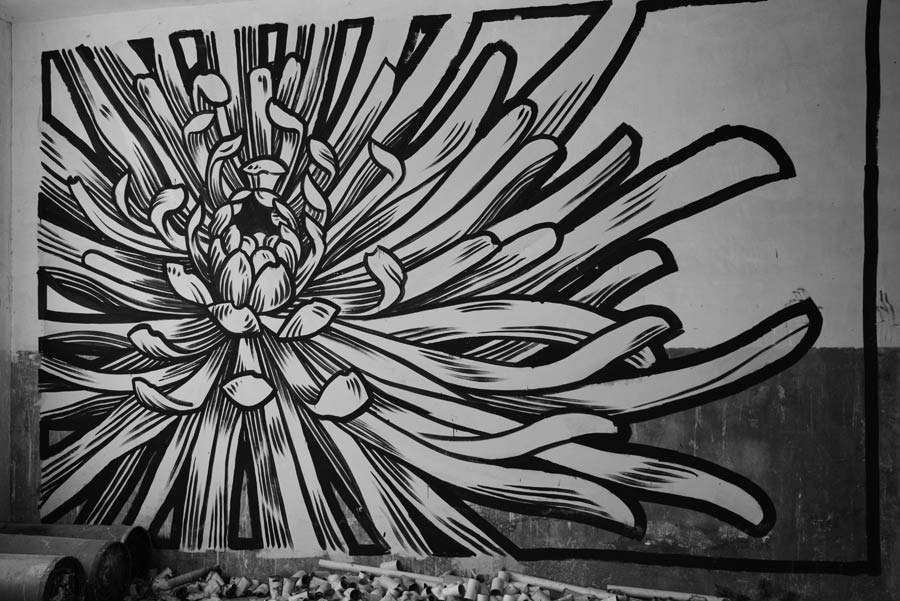
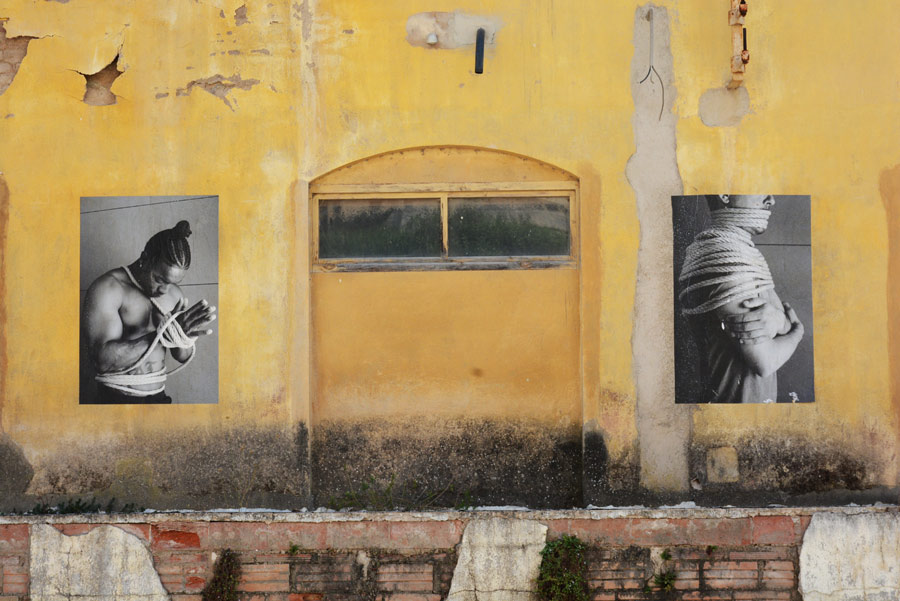
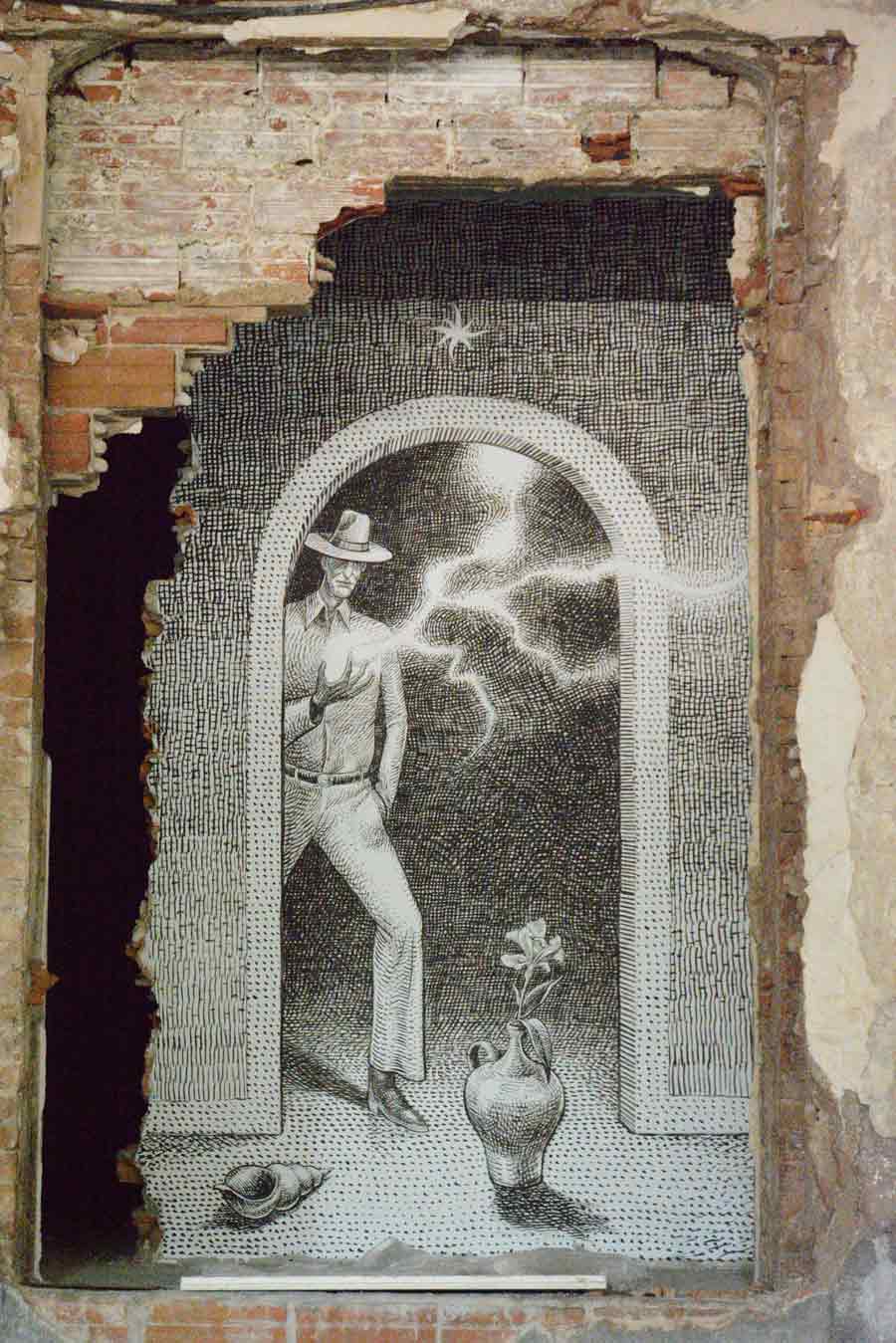
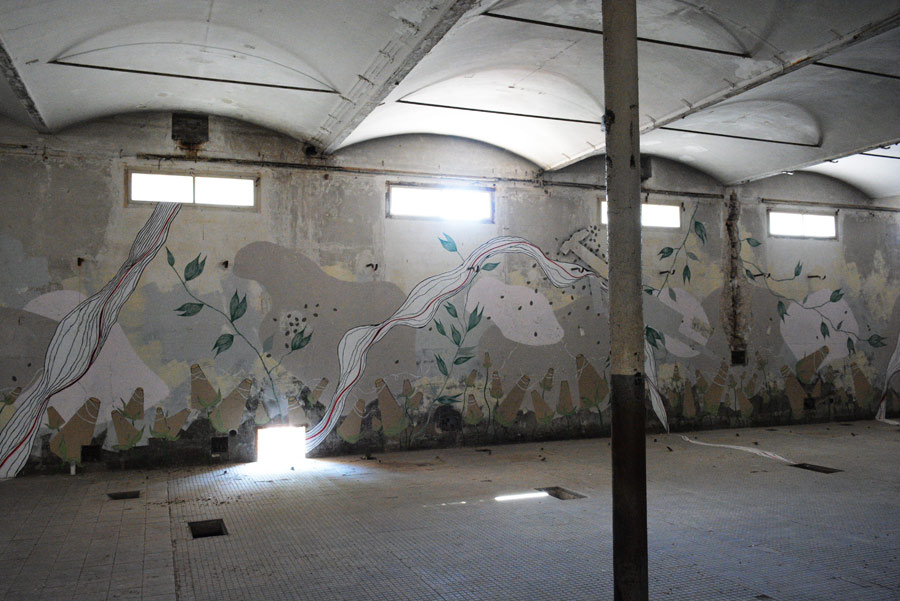
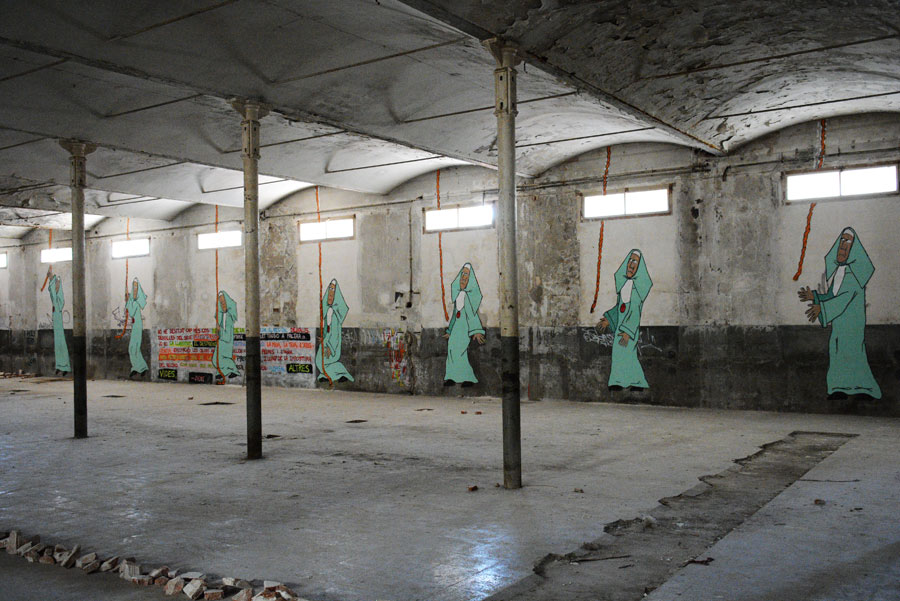
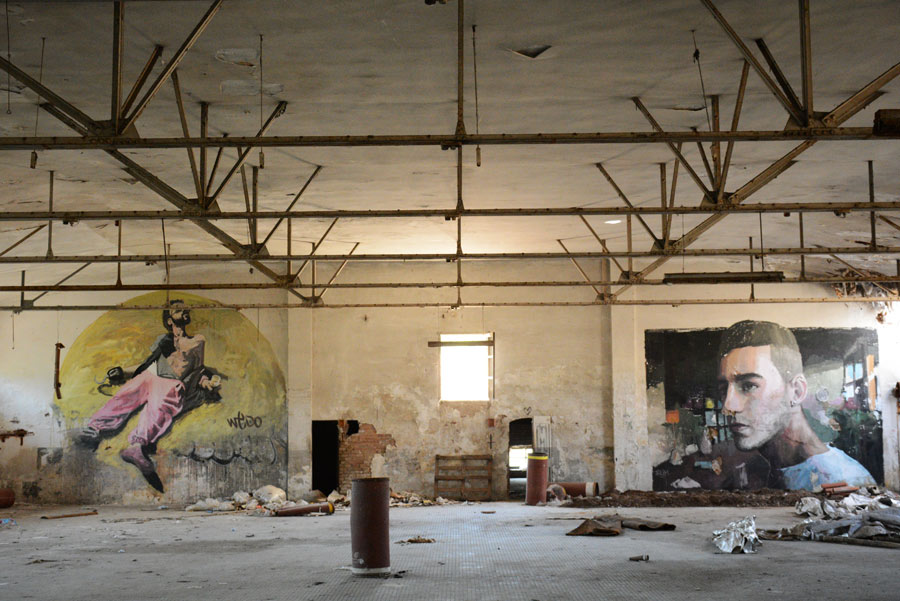
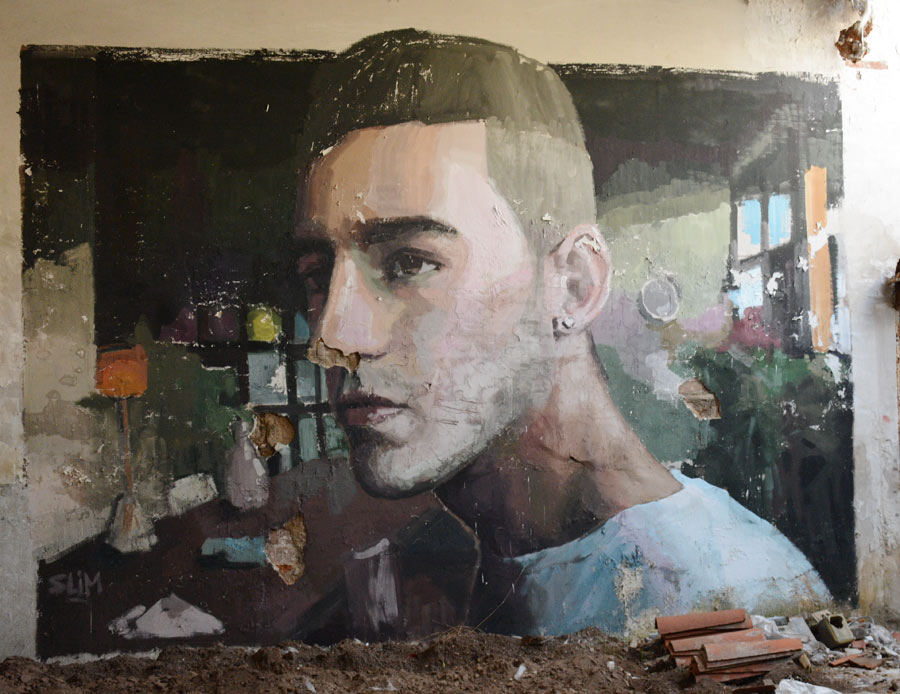
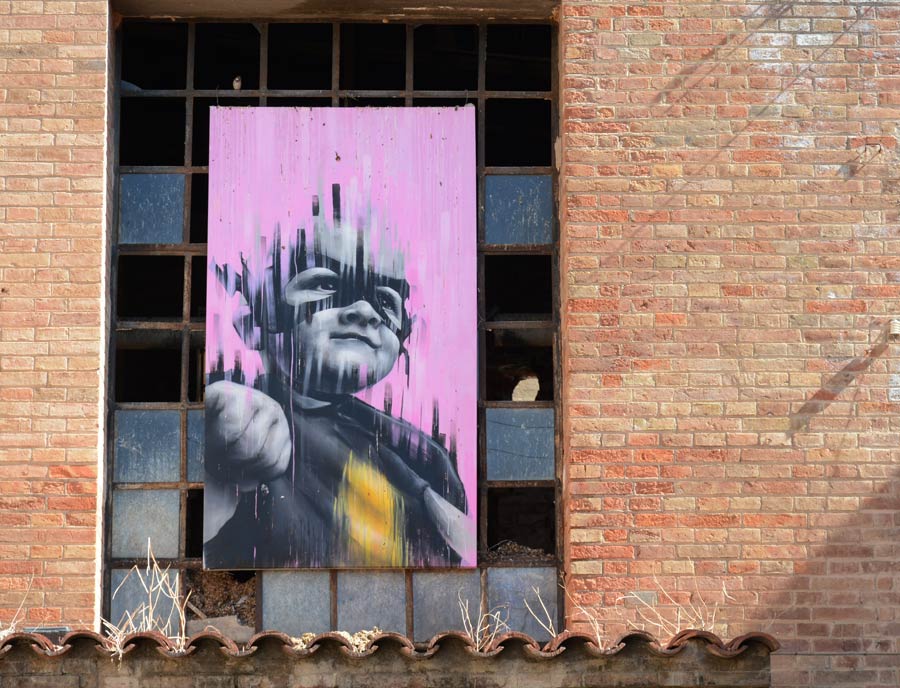
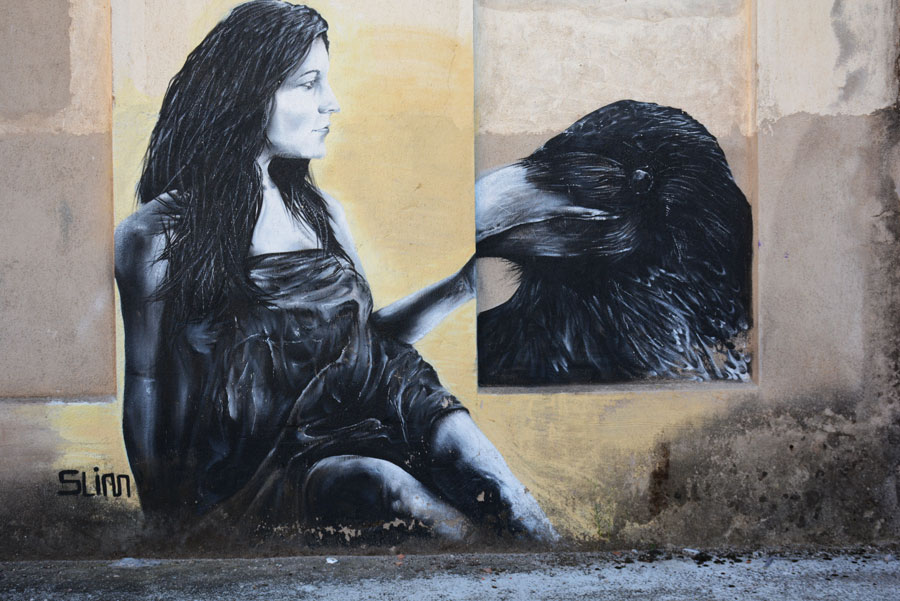
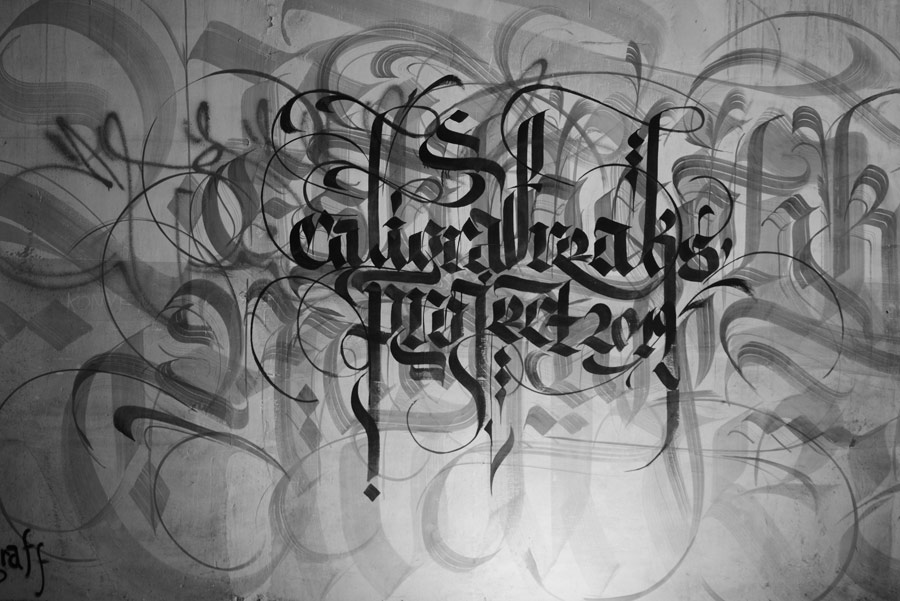
Typically you may expect to be praying the novena and asking God for absolution of your dastardly sins here in this sprawling compound called The Konvent near Barcelona. While no one would stop you today, you may also wish to check out a number of new installations throughout the many buildings by Street Artists.
The Roman Catholic former convent hosted 50 or so artists over the last couple of years to transform the space, perhaps to reinterpret its original charge in a modern light, perhaps just to ready the compound for commercial, cultural, and community pursuits of the owners.
Certainly the decaying spaces and austere aesthetic is inviting, calming, possibly frightening, depending on your associations. Now they are home for music, dance, theatre, film festivals, and artist residencies – often offered only in Catalan but some also in European Spanish.
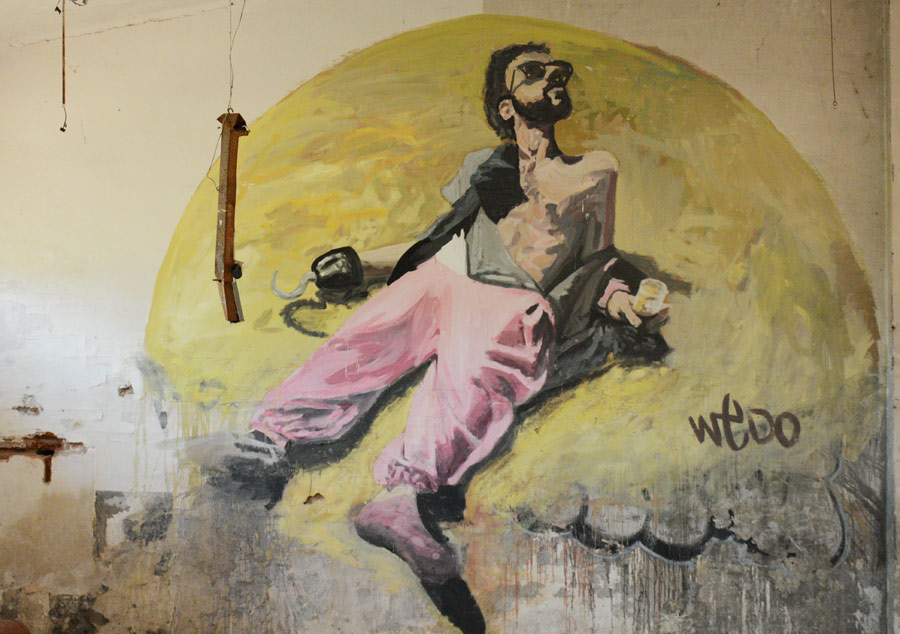
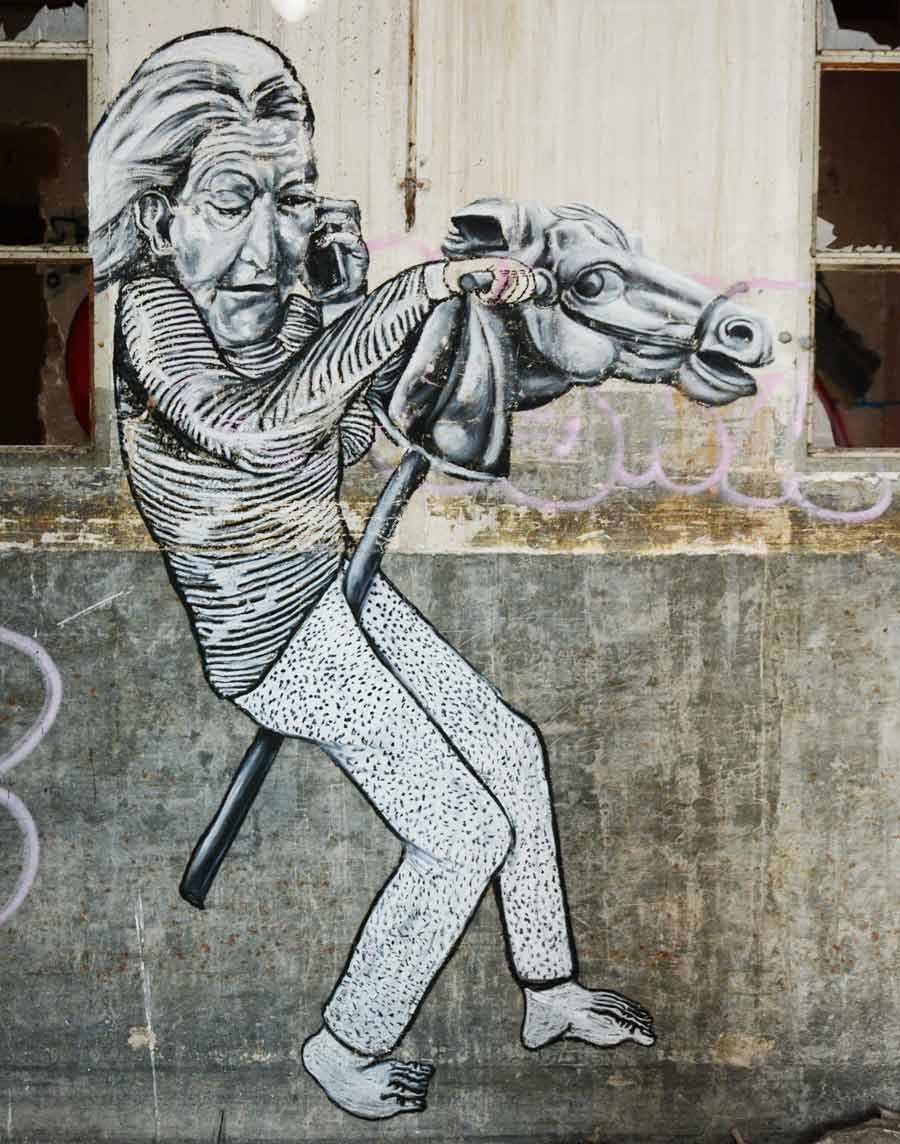
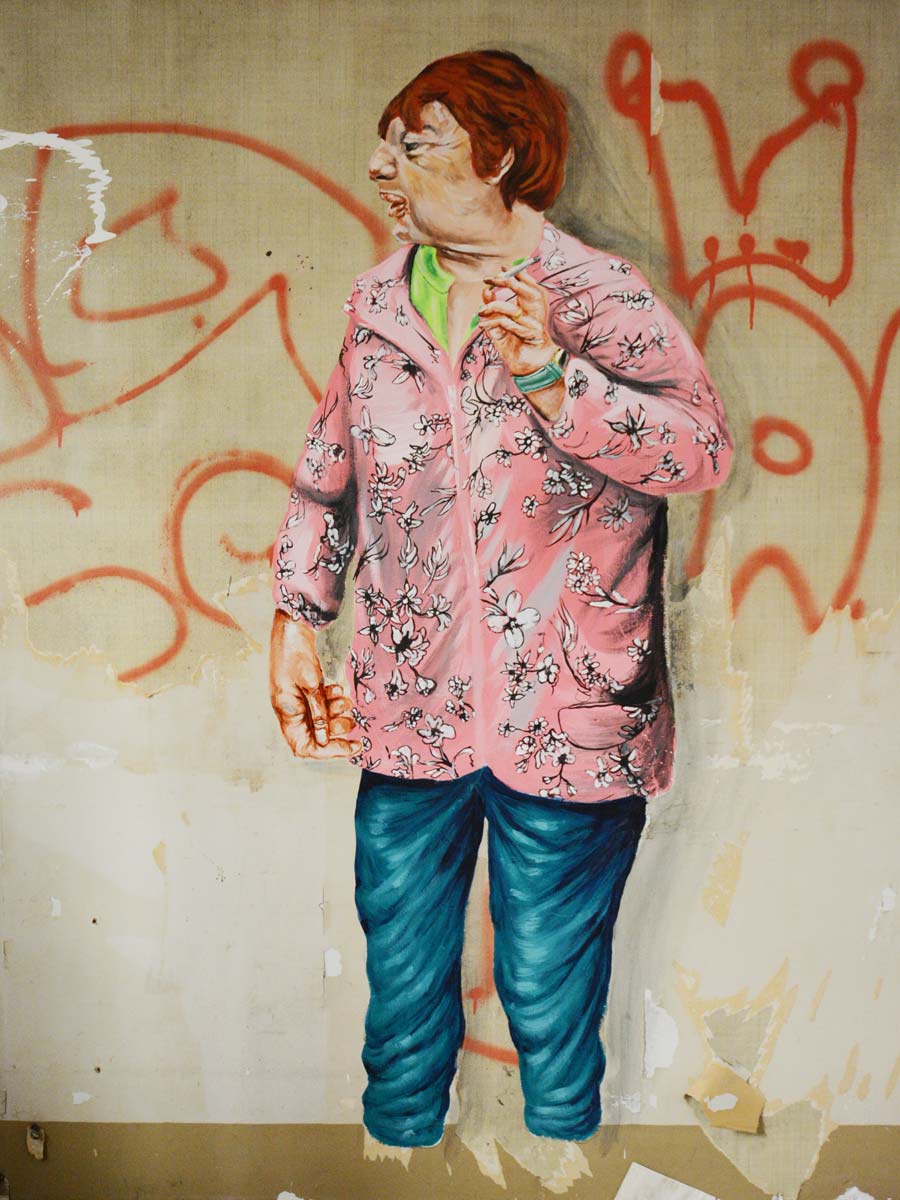
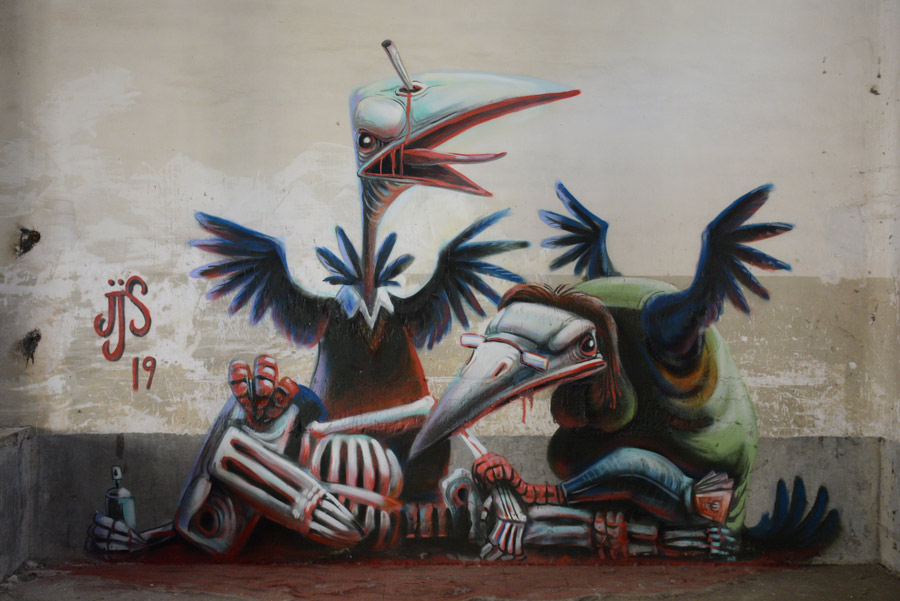
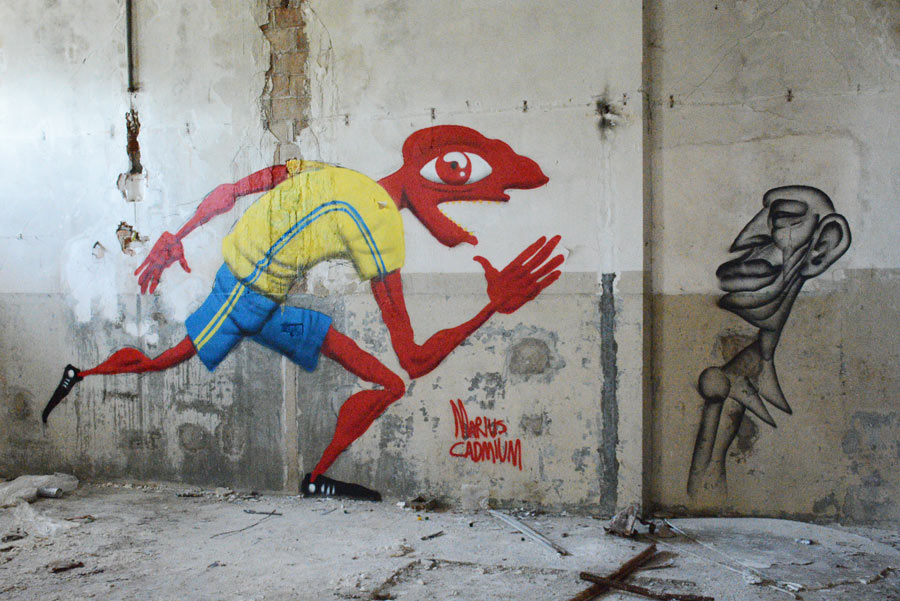
As you walk through the spaces you are welcomed by these works by artists, many of them at one time or another categorized as Street Artists, whose voices now usher in a new era of contemplation and perhaps internal exploration.
Our thanks to photogapher and BSA contributor Lluis Olive Bulbena for sharing these images from El Konvent.
For more information about El Konvent please Click HERE
 BROOKLYN STREET ART LOVES YOU MORE EVERY DAY