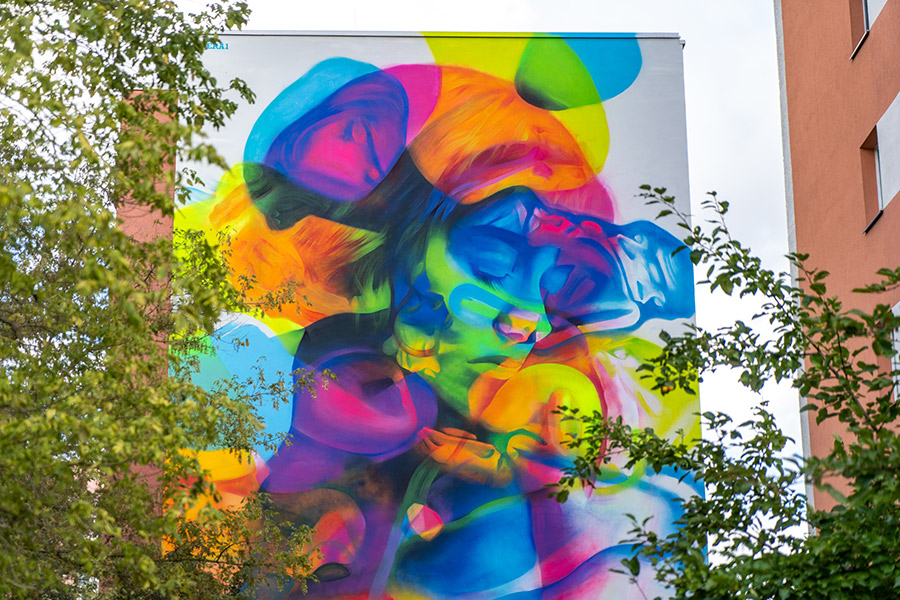
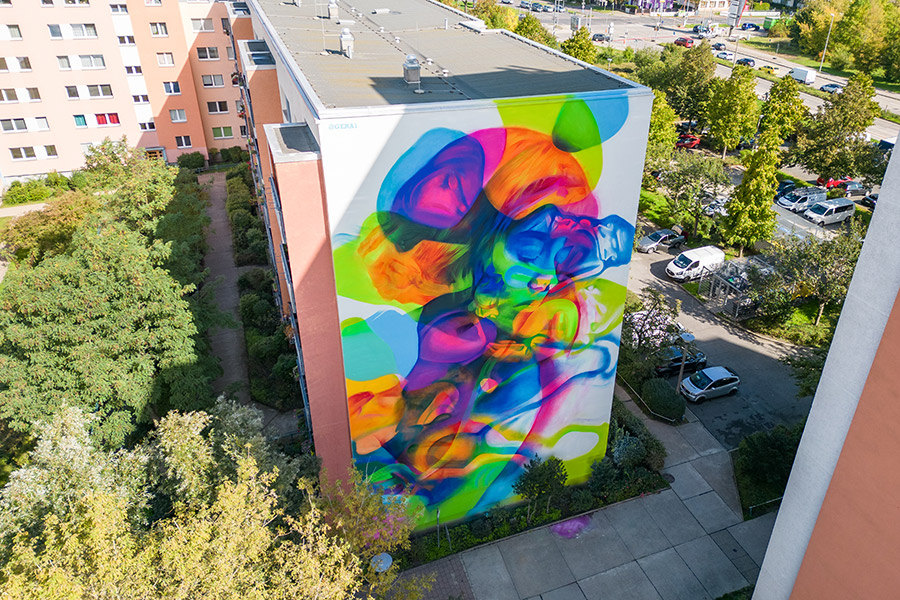
Berlin is possibly most famous among the youthful demographic for the organic illegal graffiti and street art that covers entire neighborhoods – something that has stayed true for decades. Additionally, real estate companies and private curation groups have been sponsoring large murals on housing buildings throughout the city for the last decade.
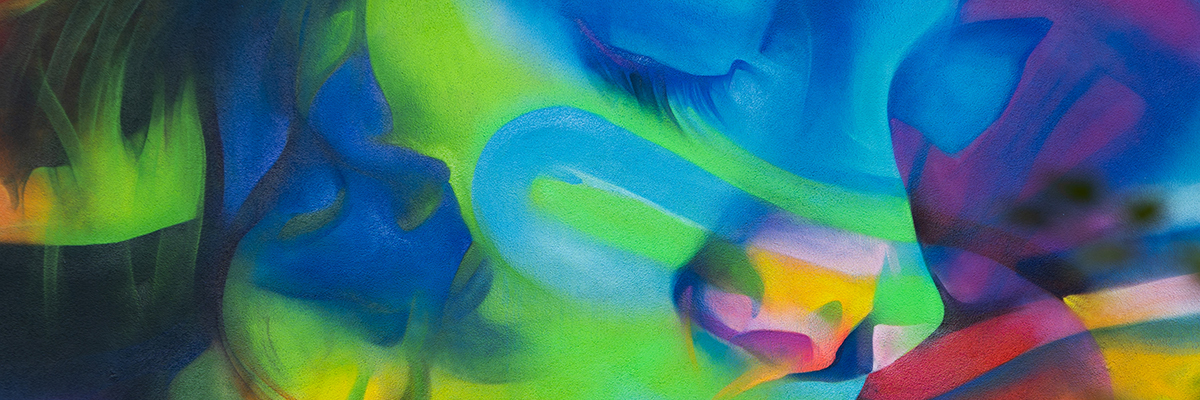
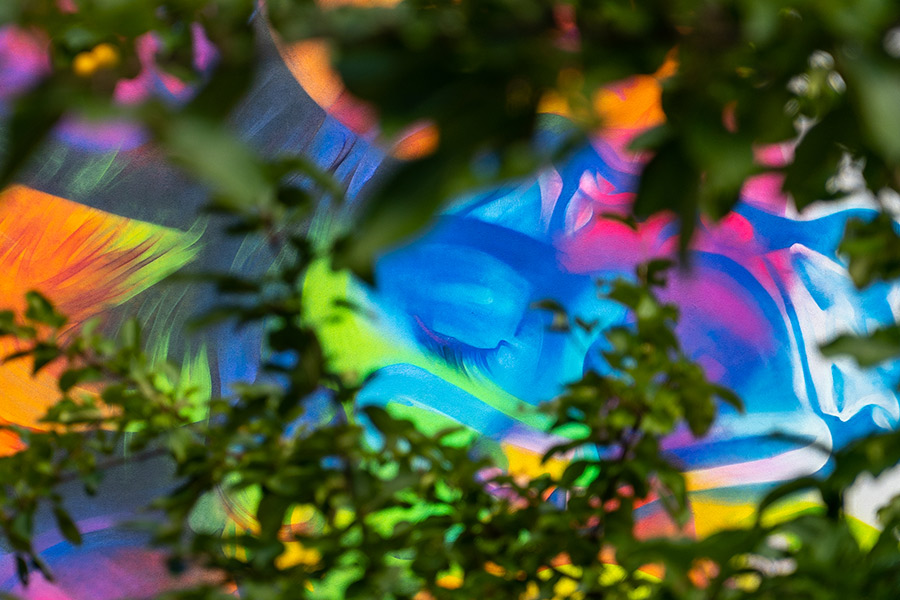
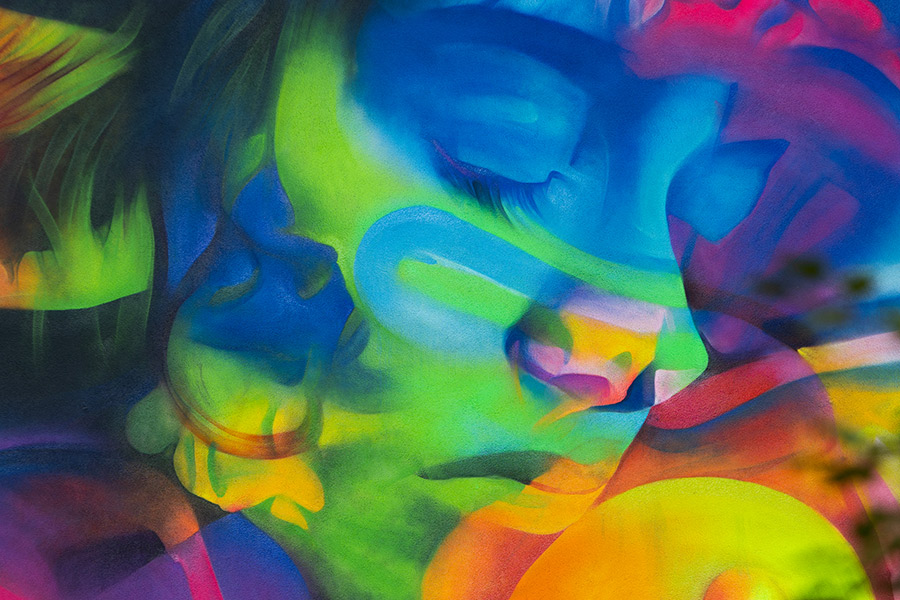
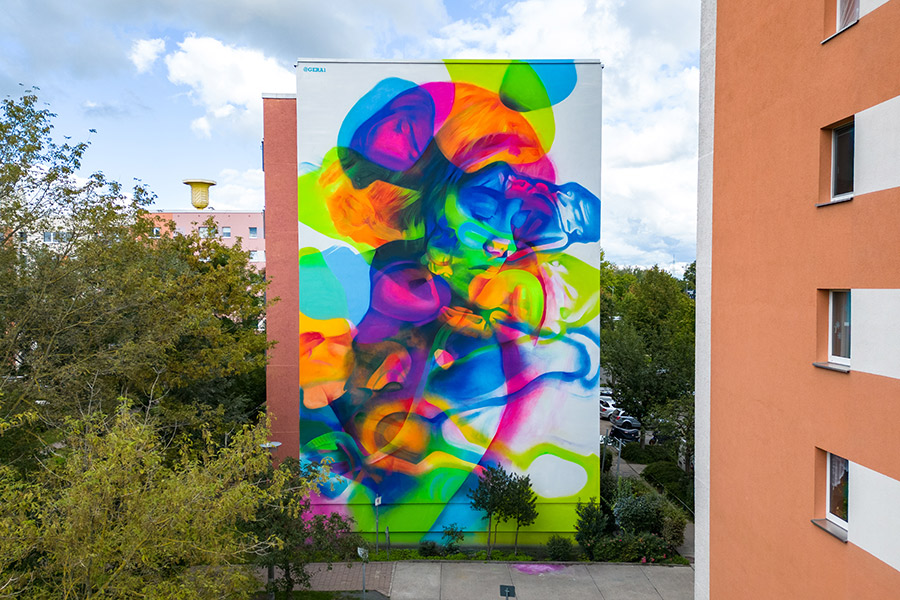
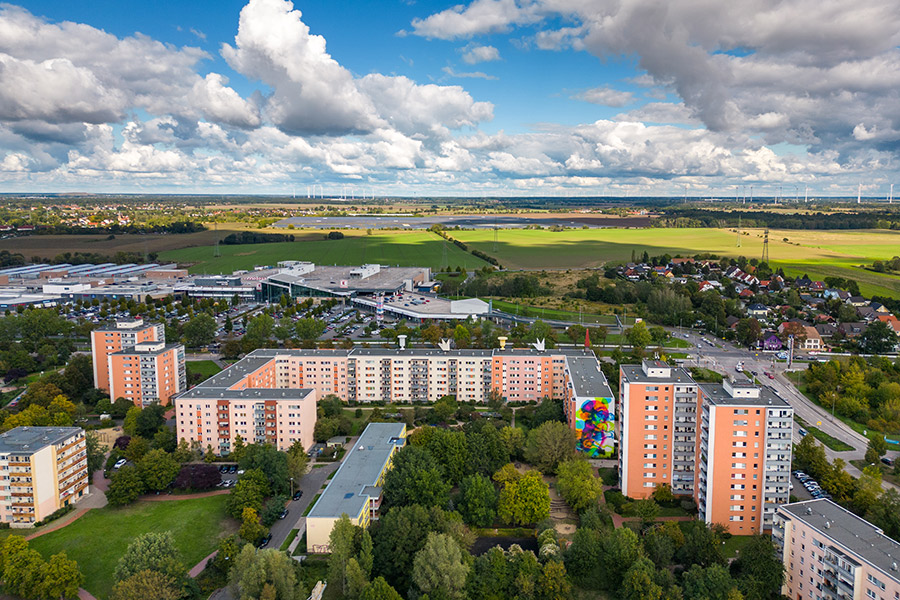
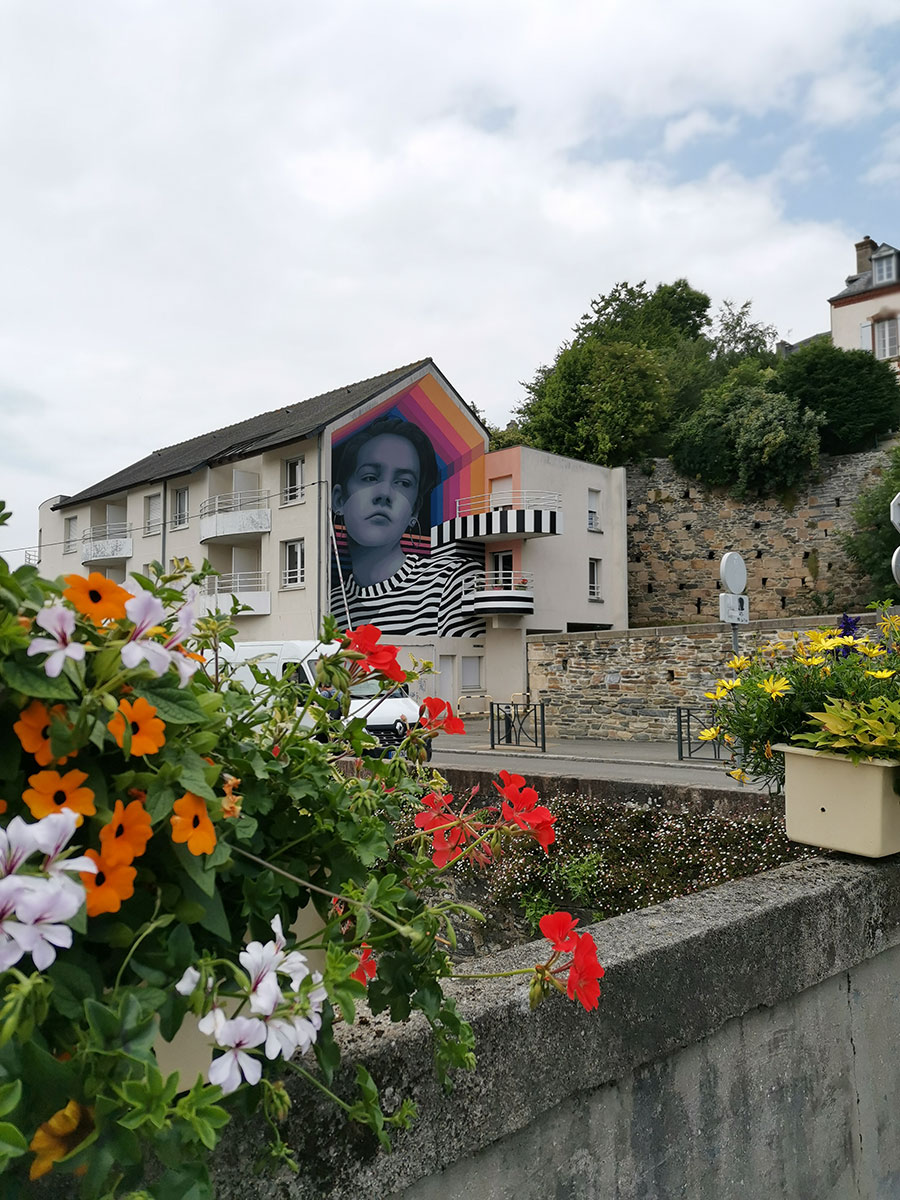
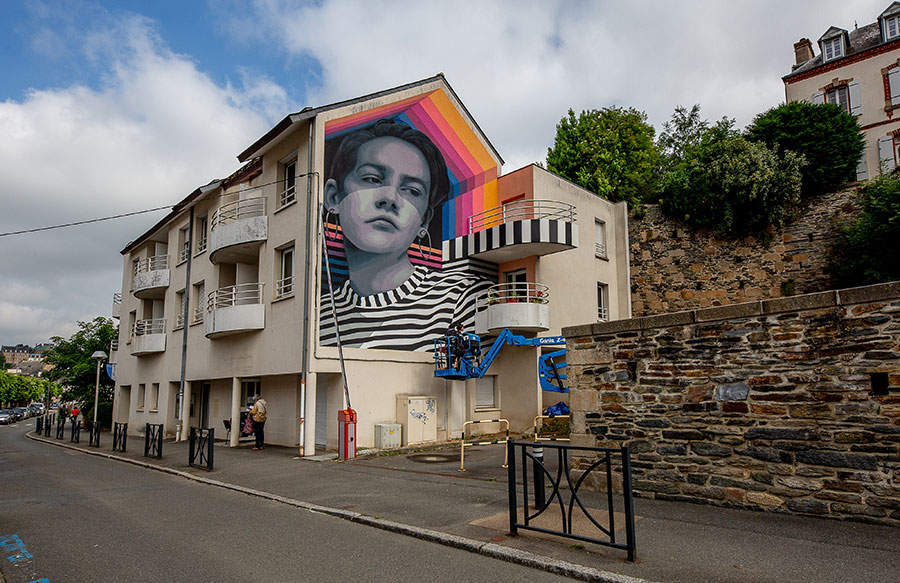
Today we have the new one in Marzahn-Hellersdorf on Stendaler Straße by the artist Gera 1 from Athens, Greece. A graffiti writer since 2009, Gera 1 graduated with a Fine Arts degree in Thessaloniki, and has painted large-scale works in Paris, Milan, and elsewhere in Europe. The multilayer image features a female form awash in a dream of CMYK, the principal colors used by printers everywhere. The color palette is a signature of the artist, who favors “glitch art”, realistic portraits, and abstract forms.
As the Northern Hemisphere is heading into autumn, we bring you two more blasts of summer’s rich jewel tones from central Gothenburg in Sweden. UK Muralist Sophie Mess favors pleasant domestically flowering botanicals and slices them up diagonally in a way you may associate with Berlin’s James Bullough’s portraits or Li-Hill’s sculptures. Decidedly more targeted to the House & Garden set, here Mess creates a decorative mural duo for tourists and shoppers in the courtyard of Magasinsgatan, commissioned by gallery/agency Artscape.
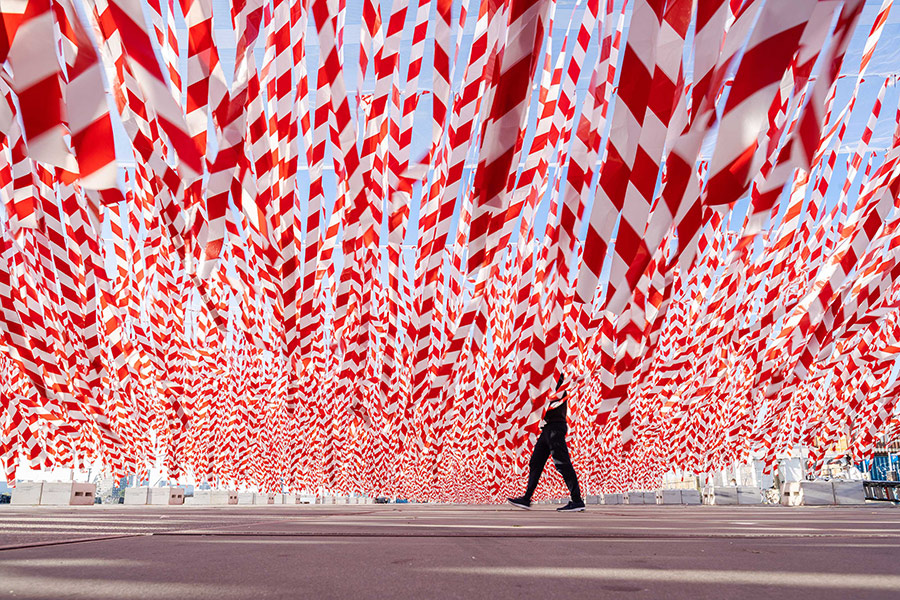
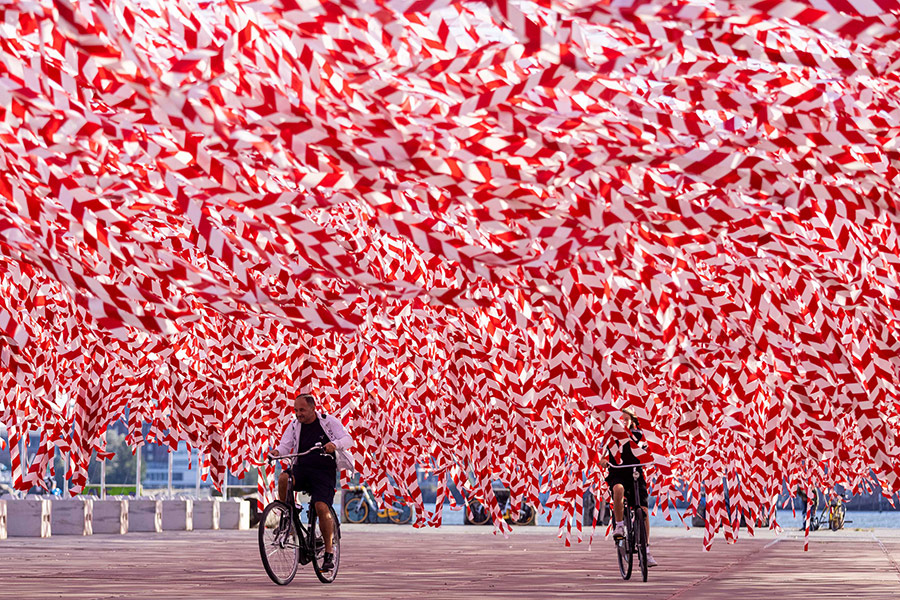
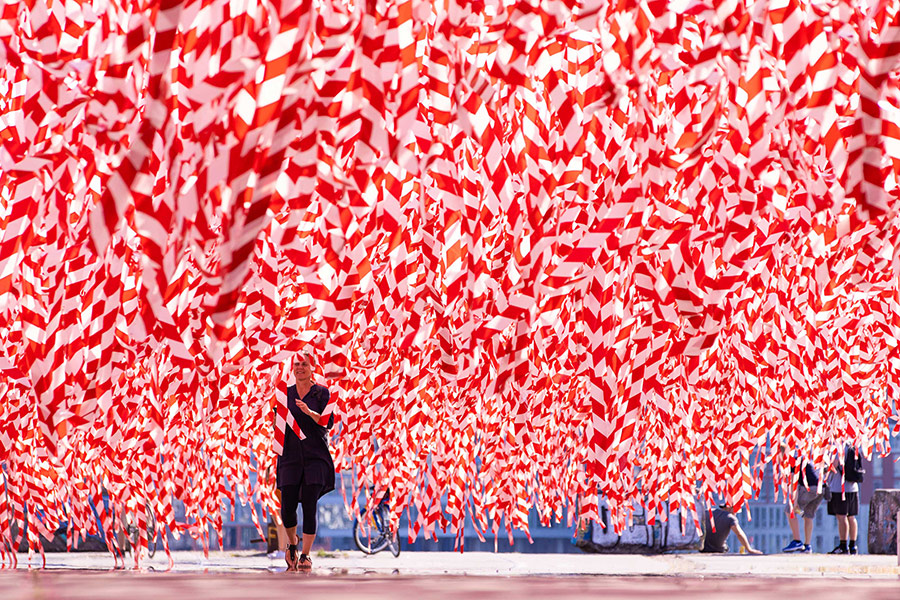
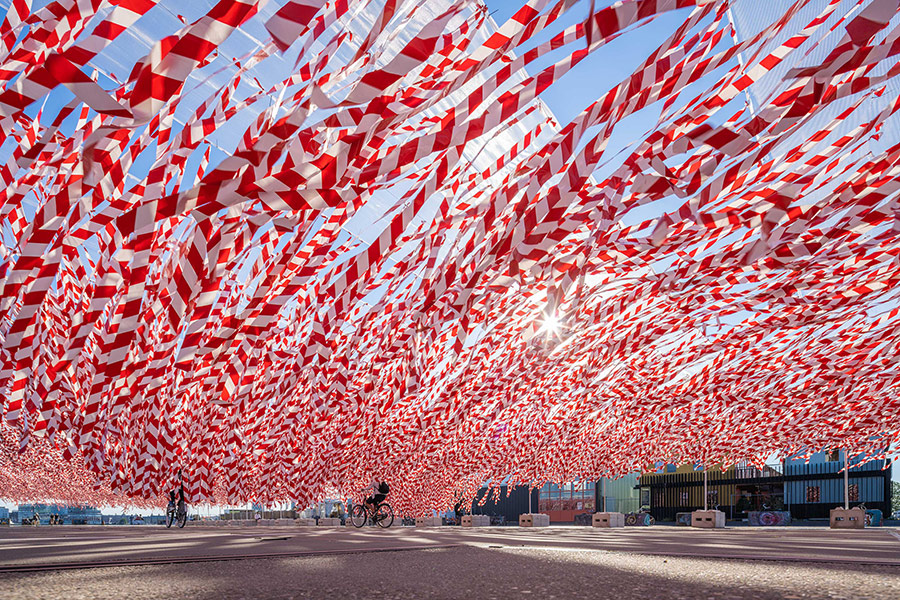
First, he pulls the humble barrier tape away from its original context – which is to provide a visual warning to stay away from a potentially dangerous place. Then he deconstructs the actual roll of tape, turning it from long continuous spans of red and white into a sort of fringe field hanging from cables just above your head.
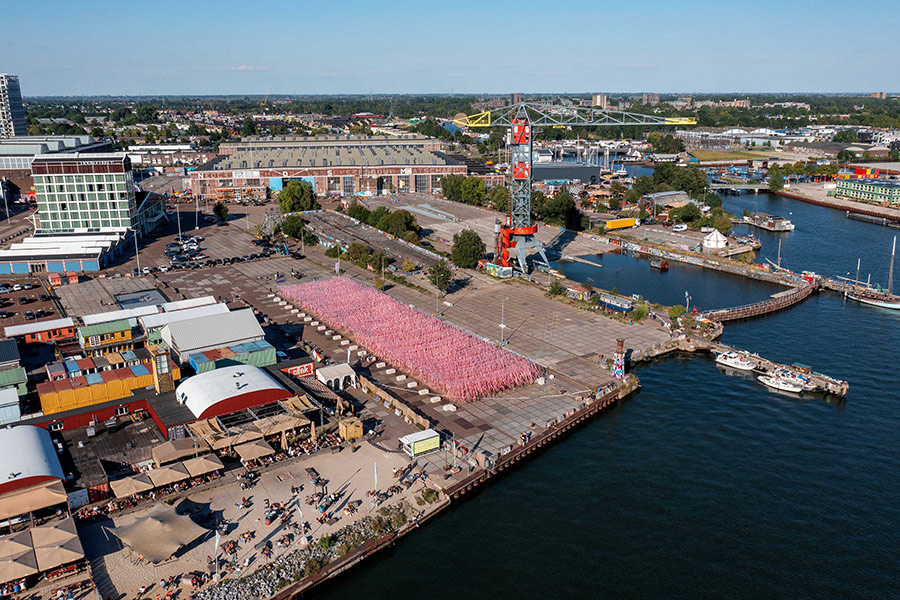
With the addition of waterfront breezes and your gentle dances beneath, this installation of “Barrier Tape” in Amsterdam, The Netherlands, is a fully interactive kinetic and sound sculpture. The 1,600-meter installation is drawing a lot of attention to this location because it is bright and makes a rustling sound reminding you perhaps of leaves. It also brandishes a sense of emergency or danger, but you’re not sure why.
“Inside the piece, the repeated element takes the viewer into a transitory state of disorientation,” says the artist Spy.
“The pieces of tape swing in unison with the wind, creating a wave-like motion throughout the composition and generating an intense, random soundscape.”
SpY would like to thank “r1” for his inspiration and support.
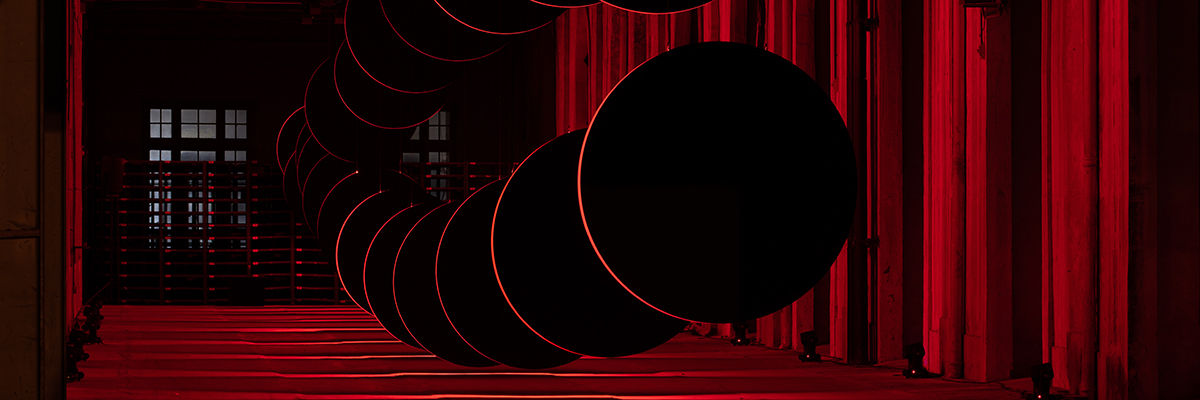
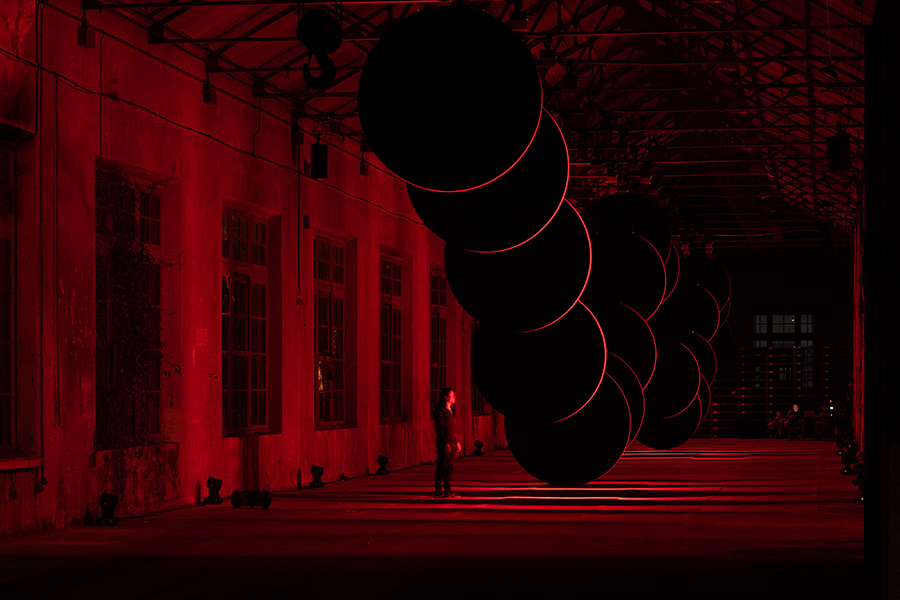
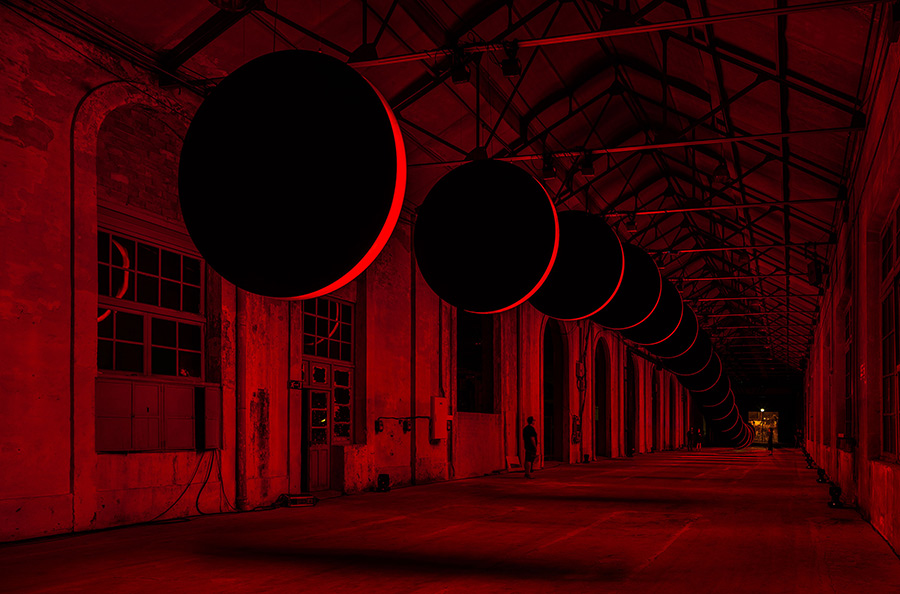
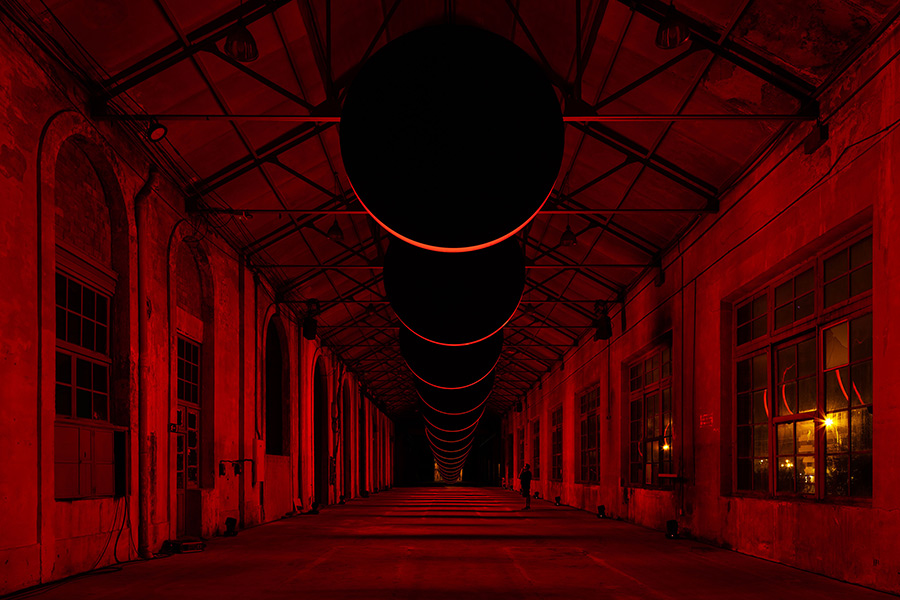
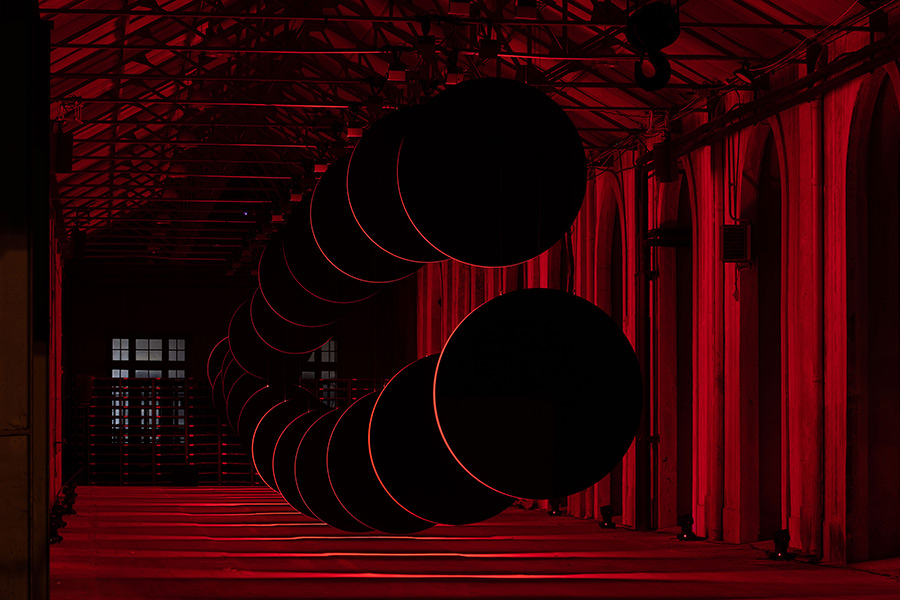
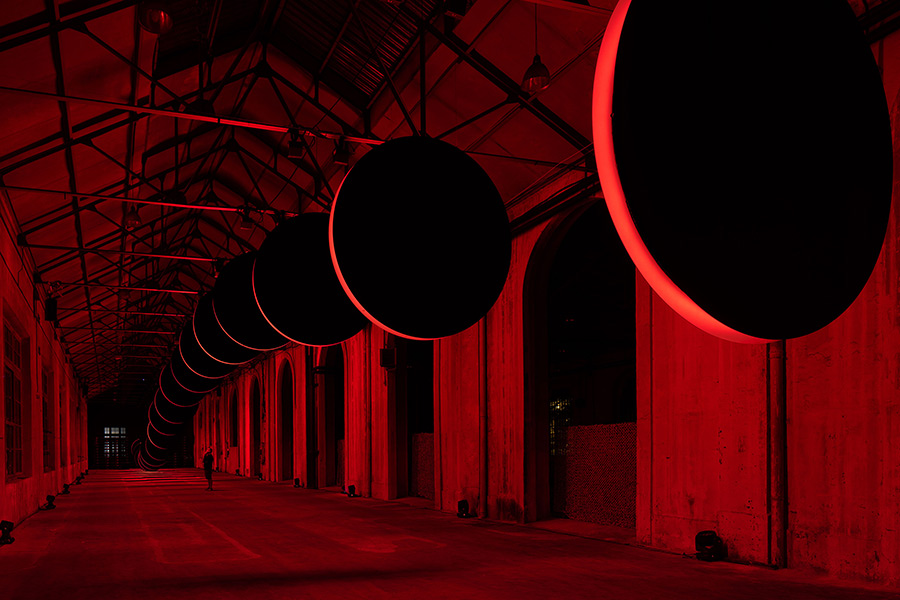
Site-specific installations are sometimes very impactful, especially when they transform space. Street artist and public artist SpY capitalizes on the slow choreography of twenty large discs rising and falling in concert here at the Weapons Factor in La Vega in Oviedo, Spain.
For SpY, every space can be a workshop and laboratory. Seeing this kinetic interplay of the simplest of shapes, their edges catching the crimson light keeps changing and reinventing, a bionic conveyance. Add the soundscape, and it changes again as it meets light patterns while creating new ones.
“Visitors can navigate around and across a living artwork, actively engaging in a unique, multidimensional experience of hypnotic and immersive qualities, marked by the scale of the piece within the imposing space of the warehouse,” says SpY.
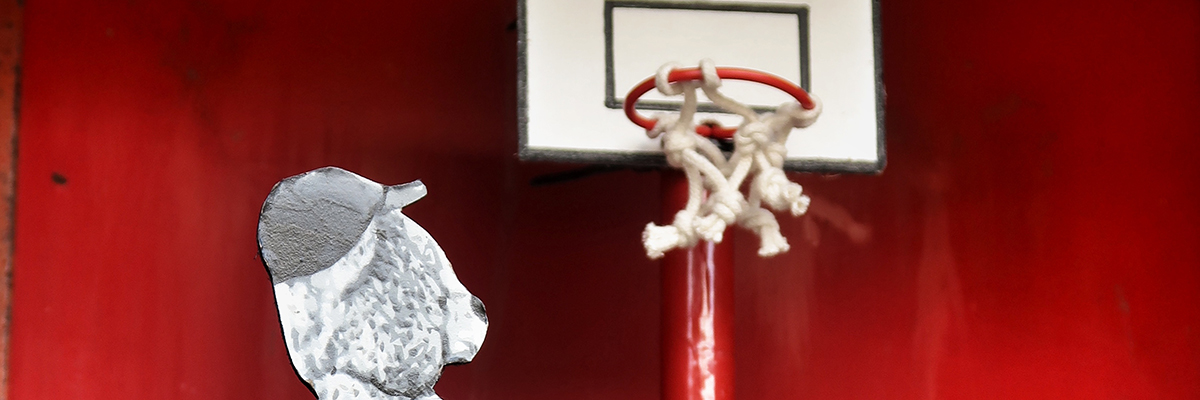
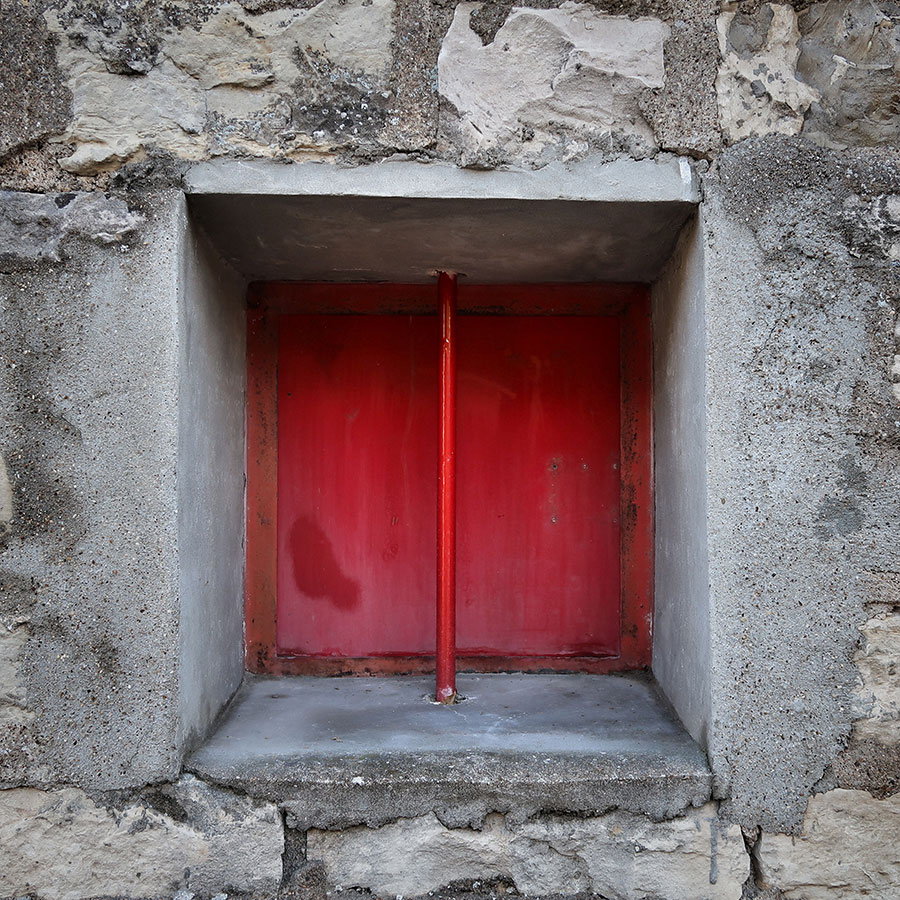
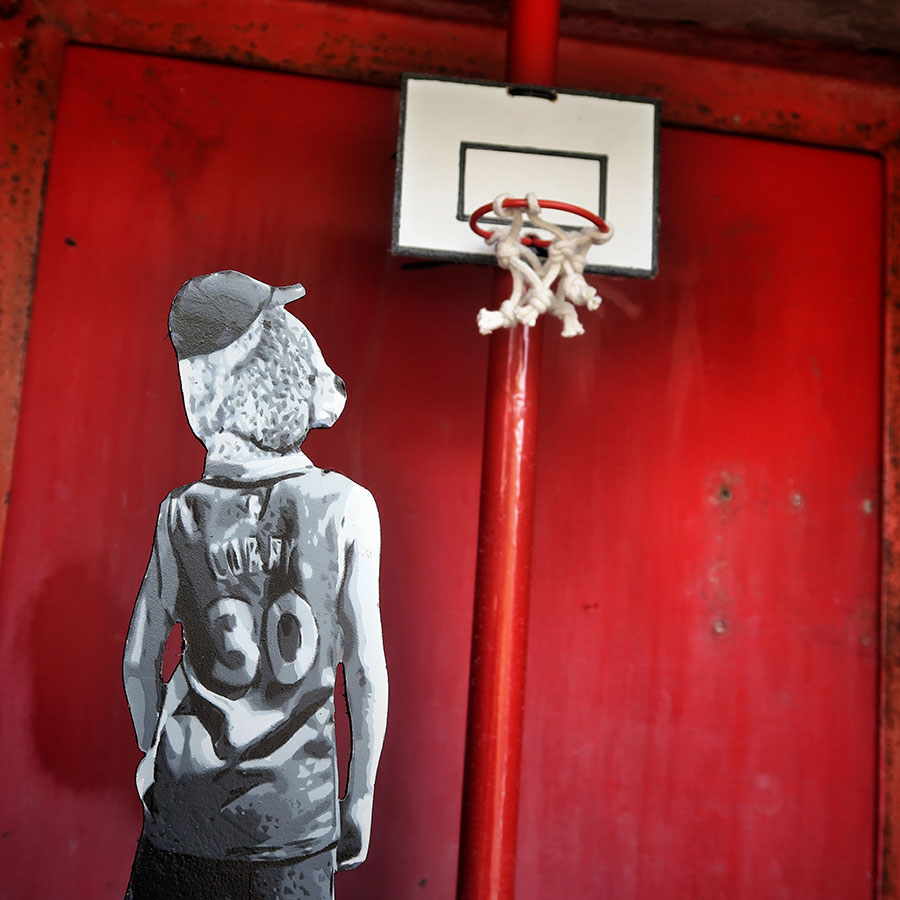
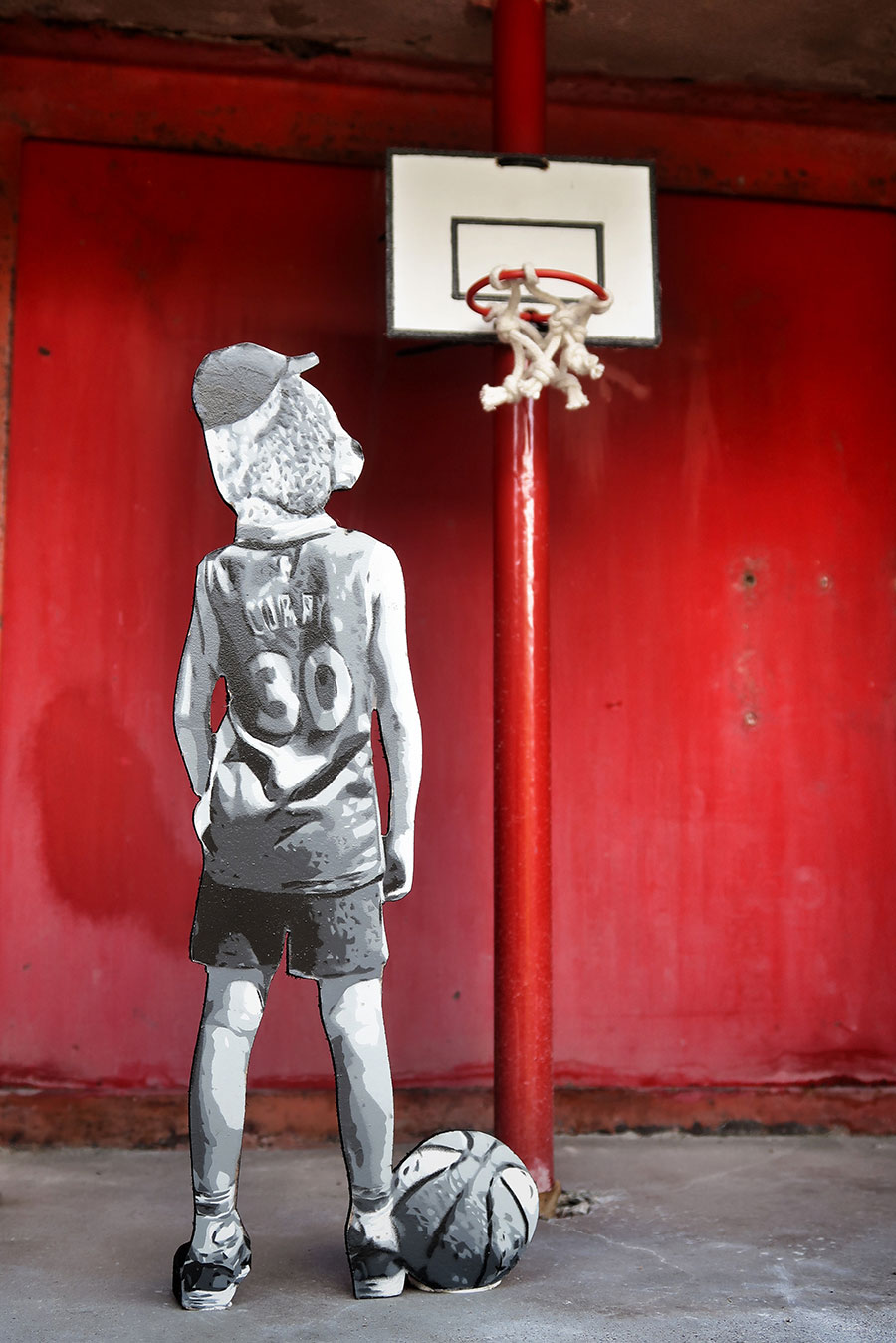
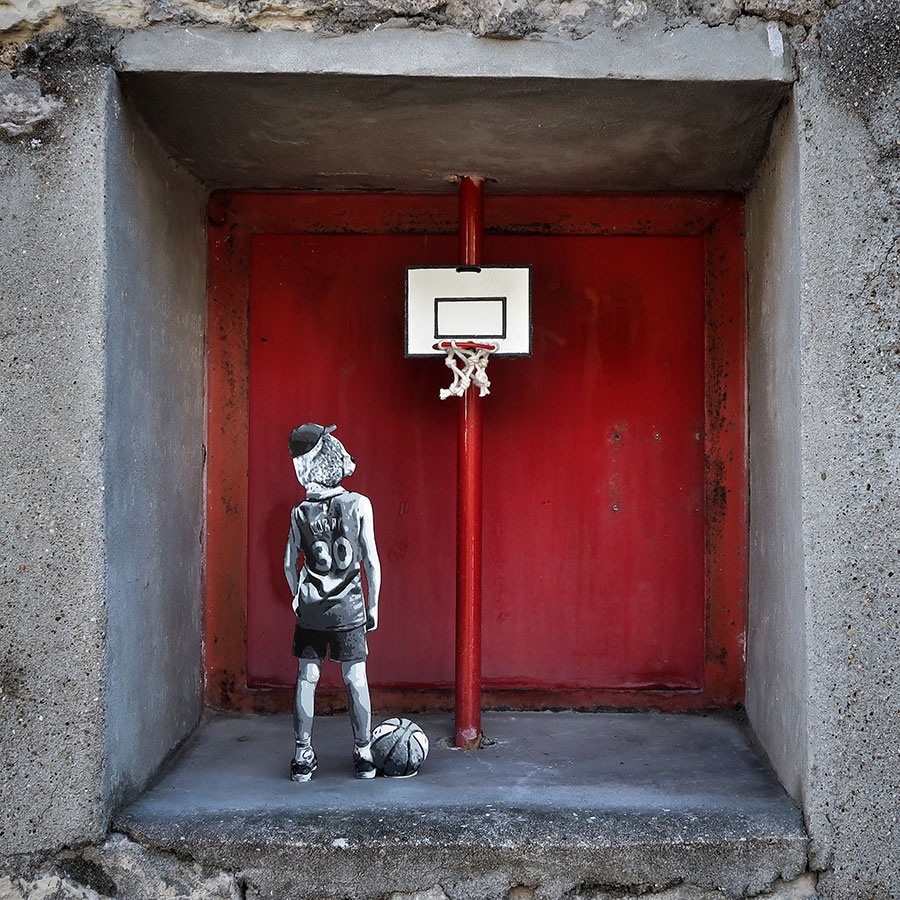
Ja Morant, James Harden, Trae Young, Luka Doncic? Yes, they are all premier ball players this season in the NBA. But at the pinnacle of this survey of top athletes, says the sons of the French street artist Tuco Wallach, stands the 34-year-old Stephen Curry.
It’s agreed.
Tuco Wallach. NBA 2022/2023 Tribute. Somewhere in France. (photo courtesy of the artist)
Regardless of your socio-economic status, the street still meets you where you are at, and Tuco put this installation in his neighborhood as a tribute to entertaining athleticism, corporate sport media, and the celebrity heroism that basketball players now focus on. October starts the NBA 2022/2023, says Tuco, and “my two sons are very (very) happy.”
What better way to include home life with his street art than to feature superstar shooter Stephen Curry with one of his signature Teddy Bears?
Tuco Wallach. NBA 2022/2023 Tribute. Somewhere in France. (photo courtesy of the artist)Tuco Wallach. NBA 2022/2023 Tribute. Somewhere in France. (photo courtesy of the artist)Tuco Wallach. NBA 2022/2023 Tribute. Somewhere in France. (photo courtesy of the artist)
Well, it was all going well until you came along, Ian. No offense dude but it’s like you walk around with a cloud over your head. The negativity from this hurricane has left us feeling blue (or grey) all weekend – just murky, moody skies so dark that you have to turn a lamp on to see in your apartment in the middle of the day. And few graffiti stalwarts will go out in this weather to perform aesthetic acts of mark-making, though there are exceptions.
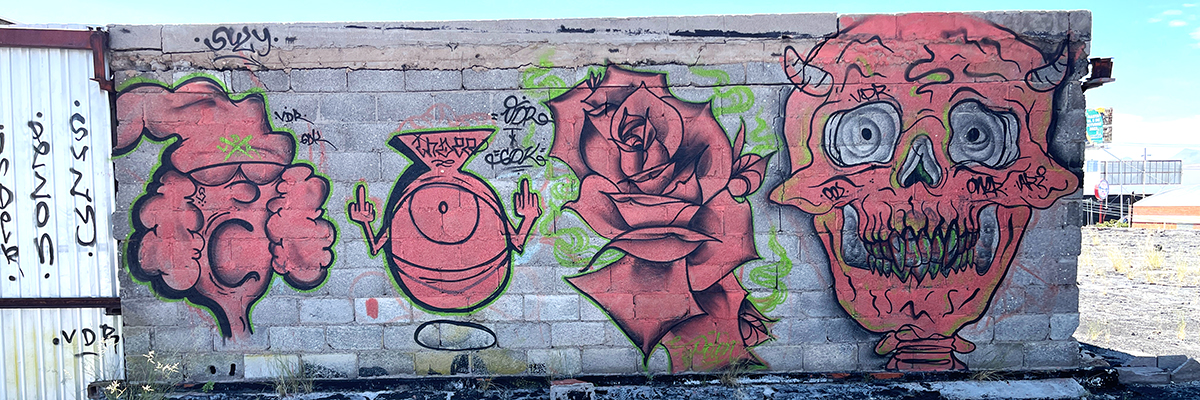
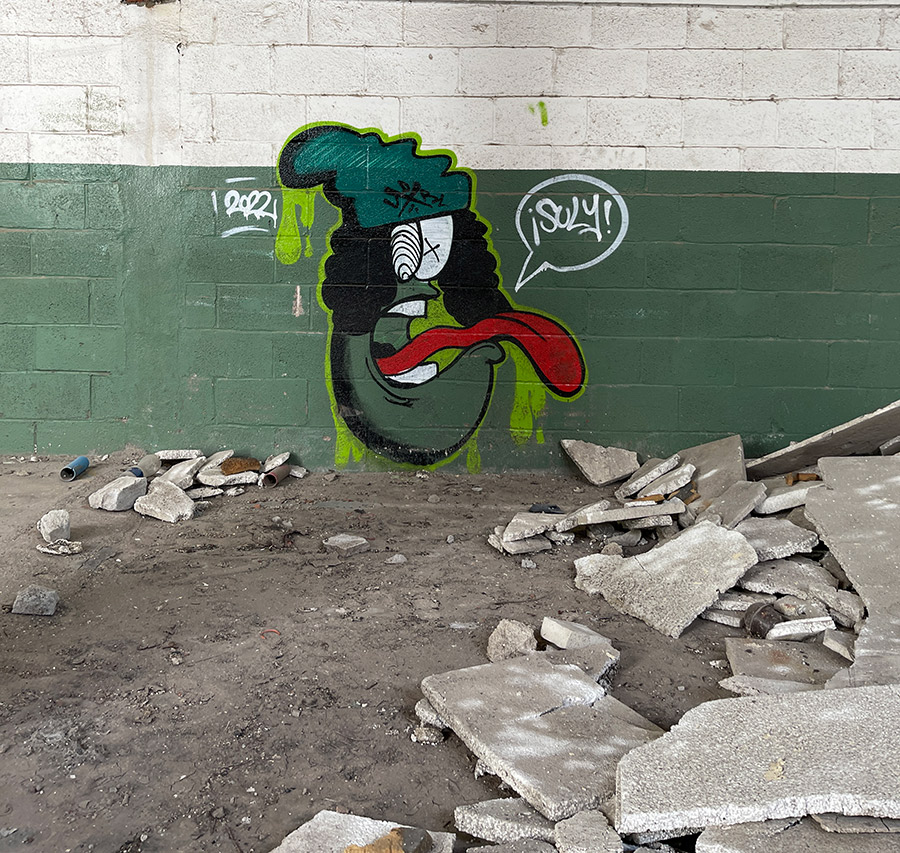
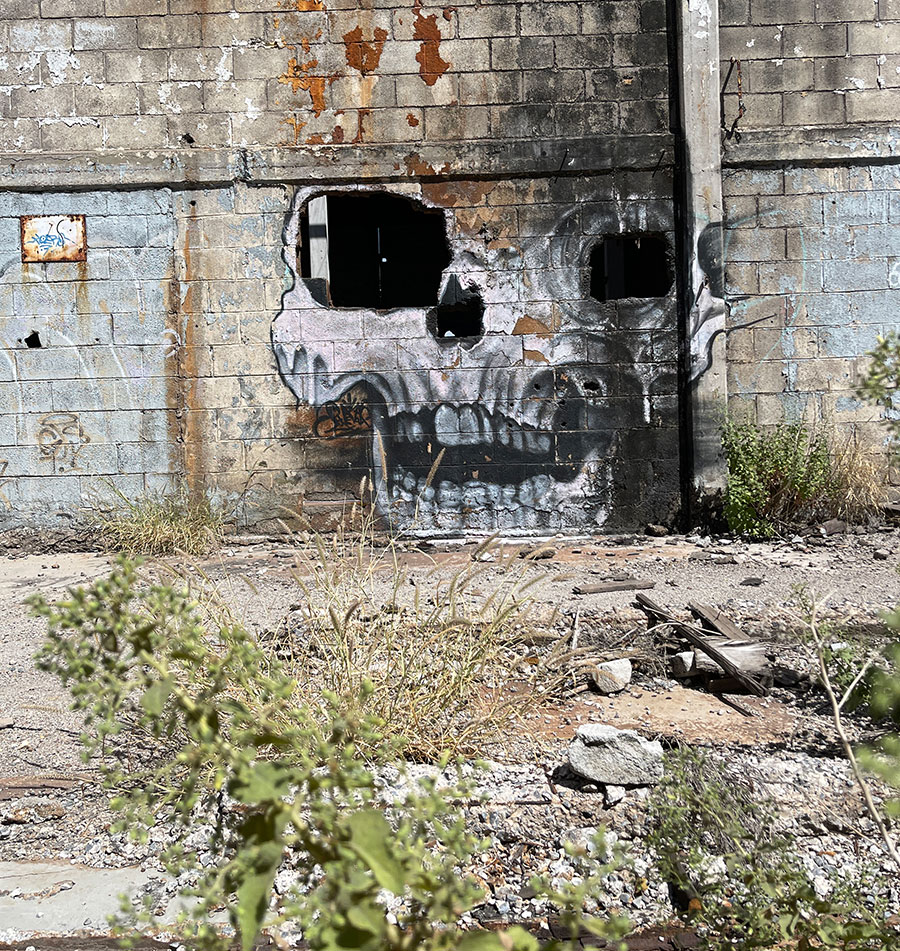
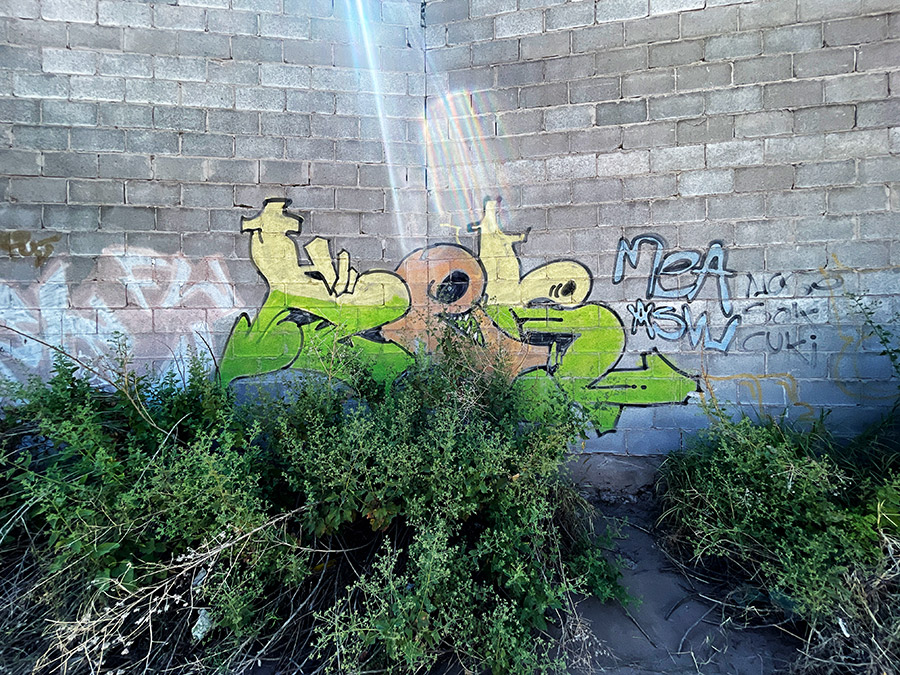
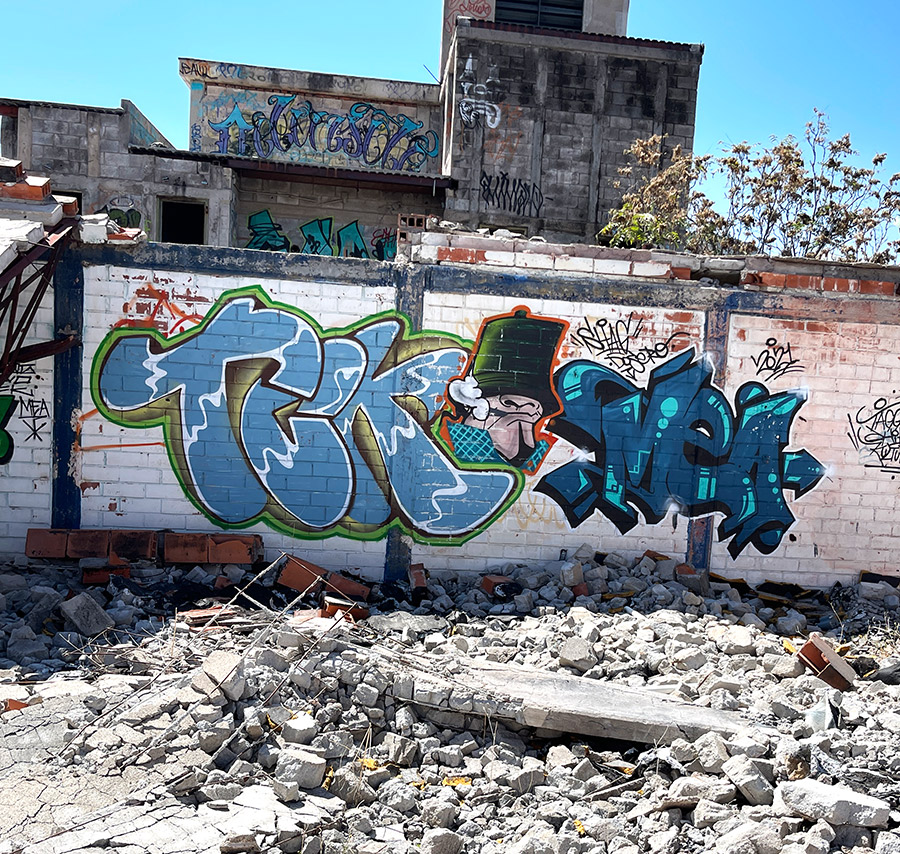
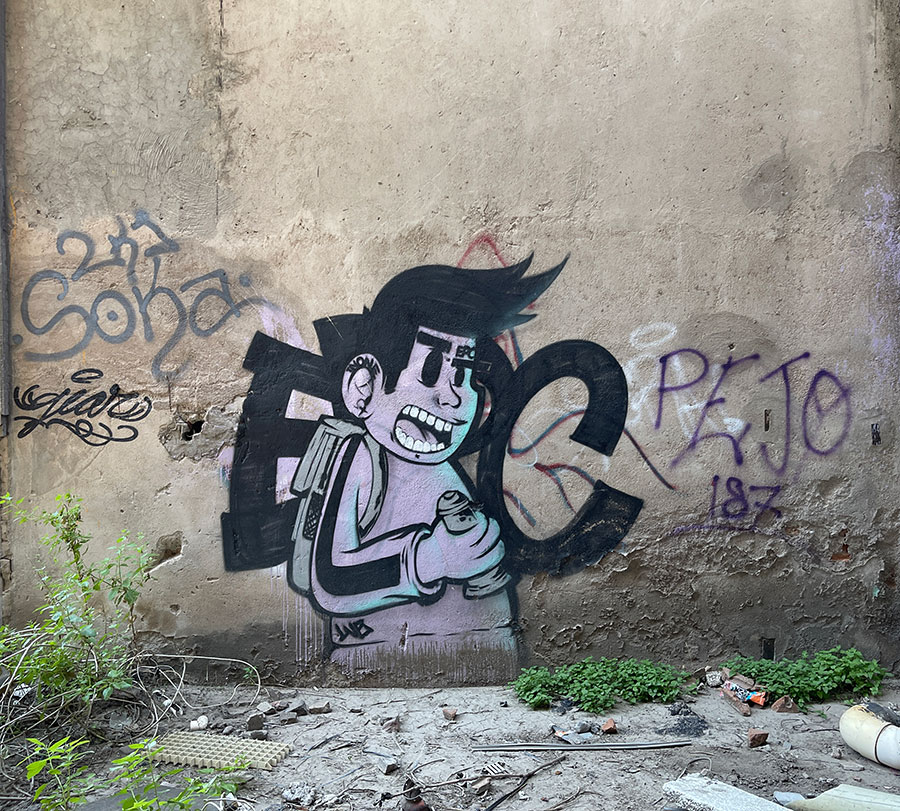
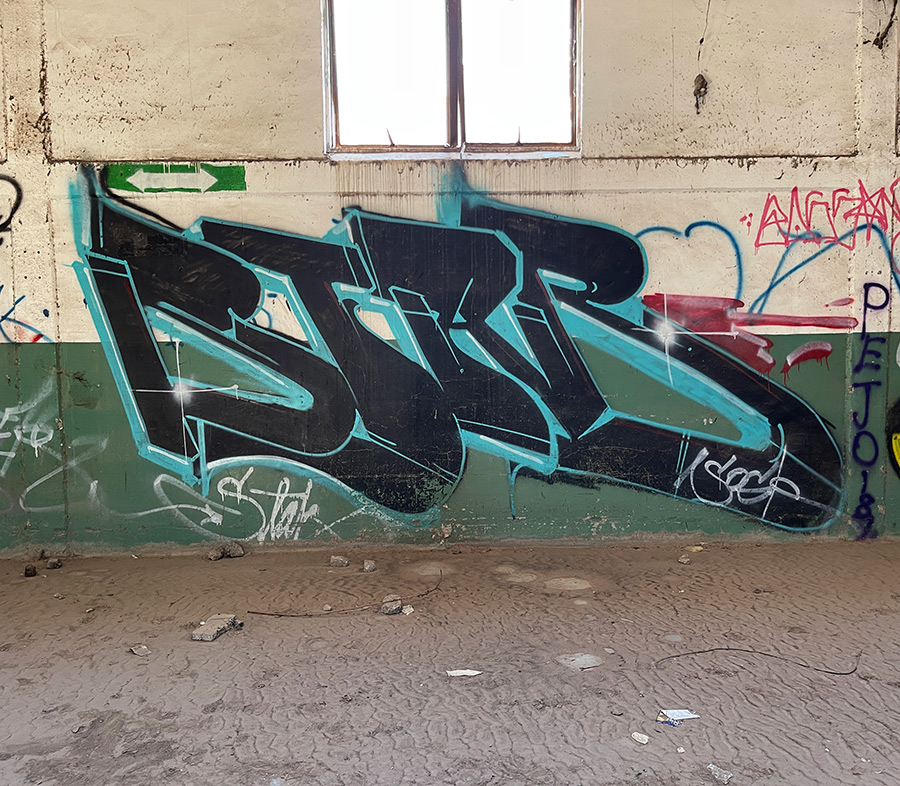
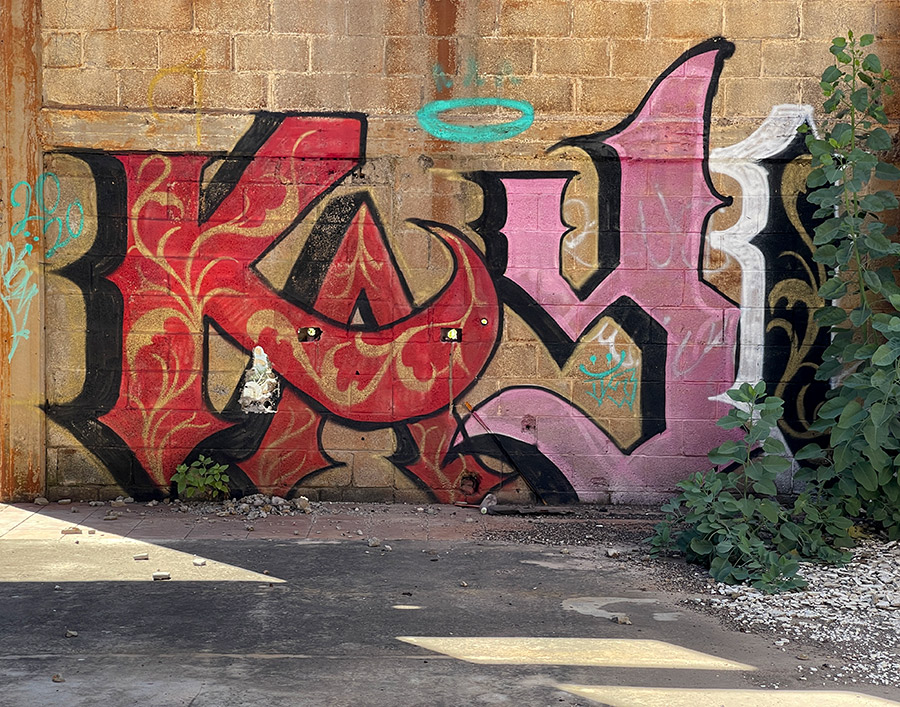
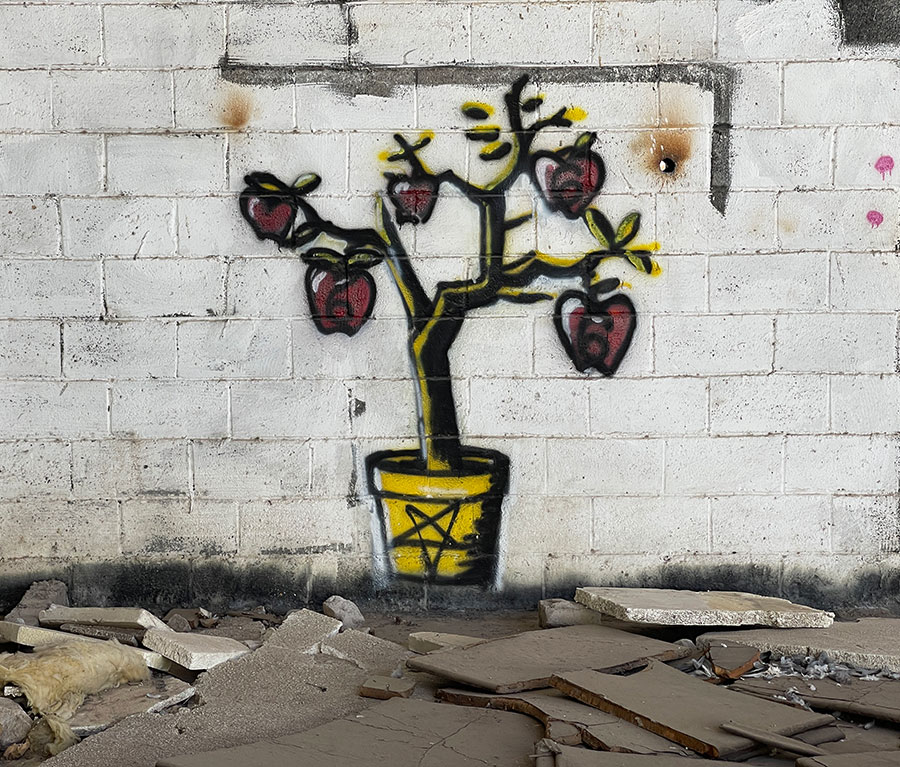
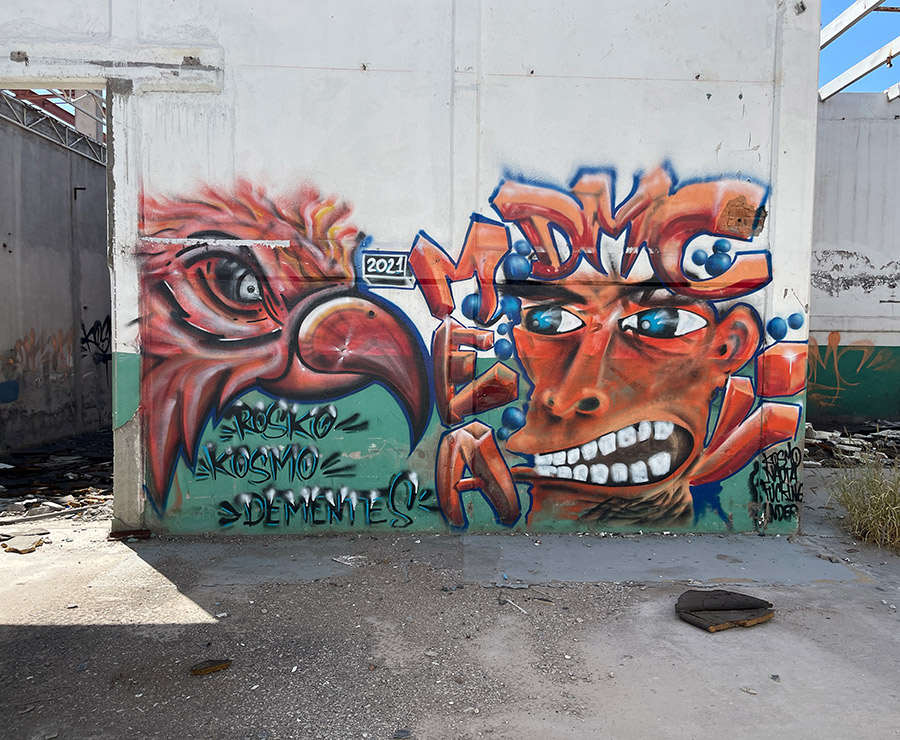
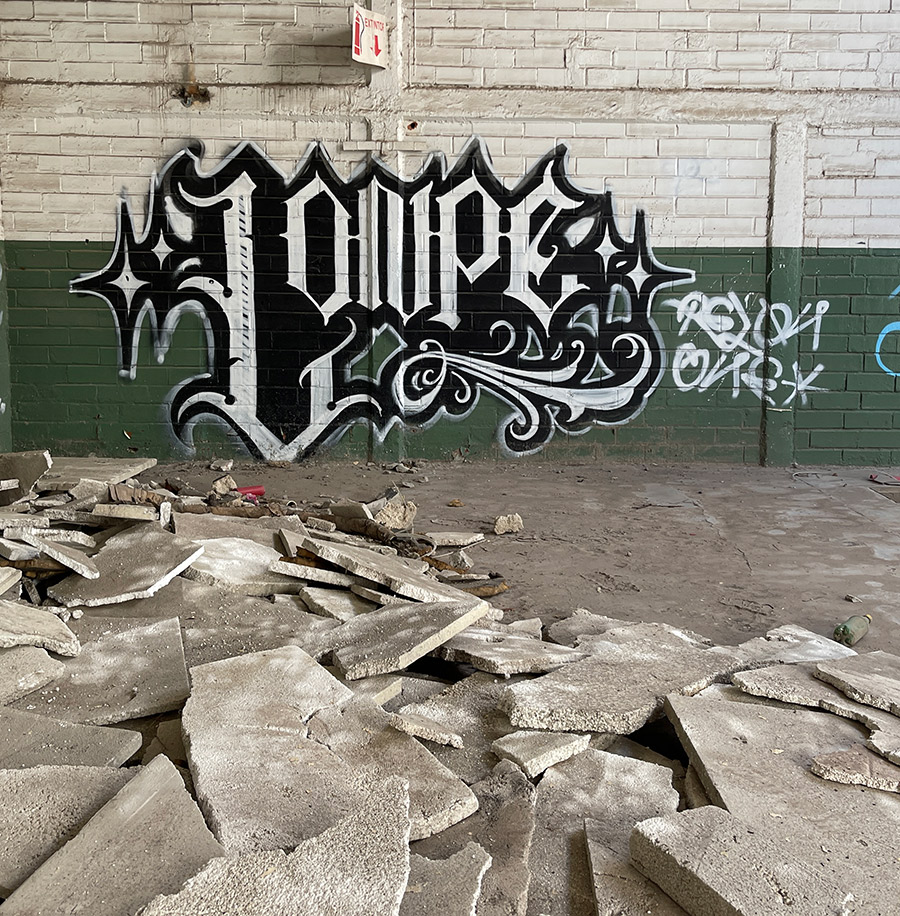
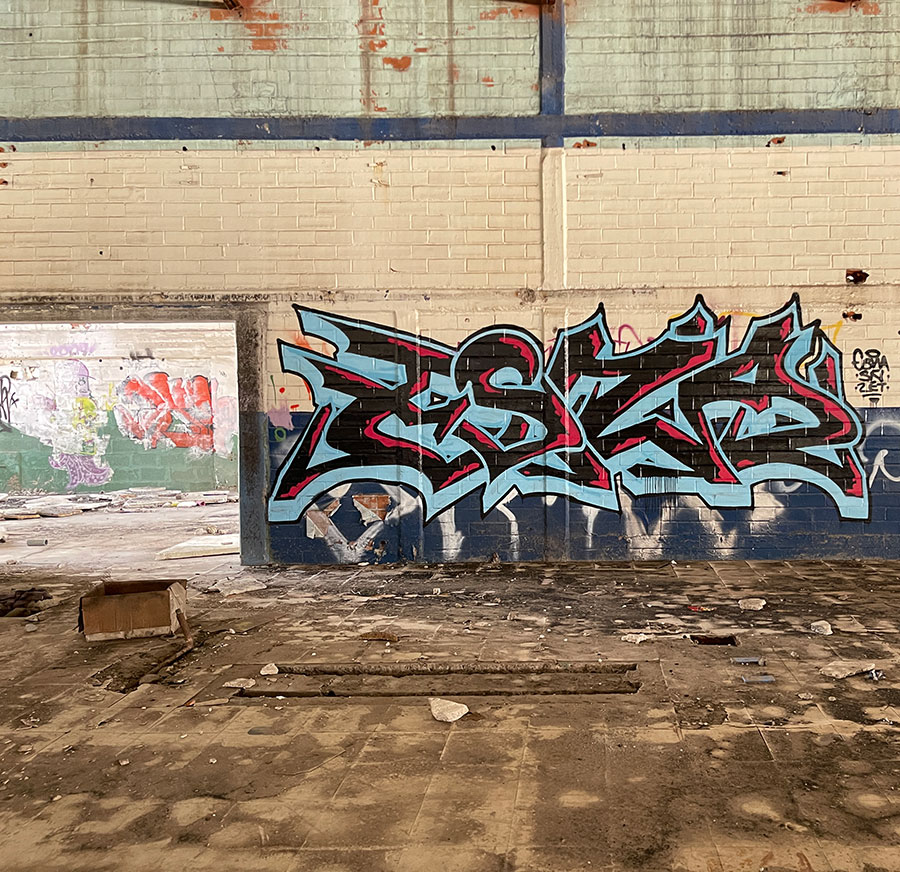
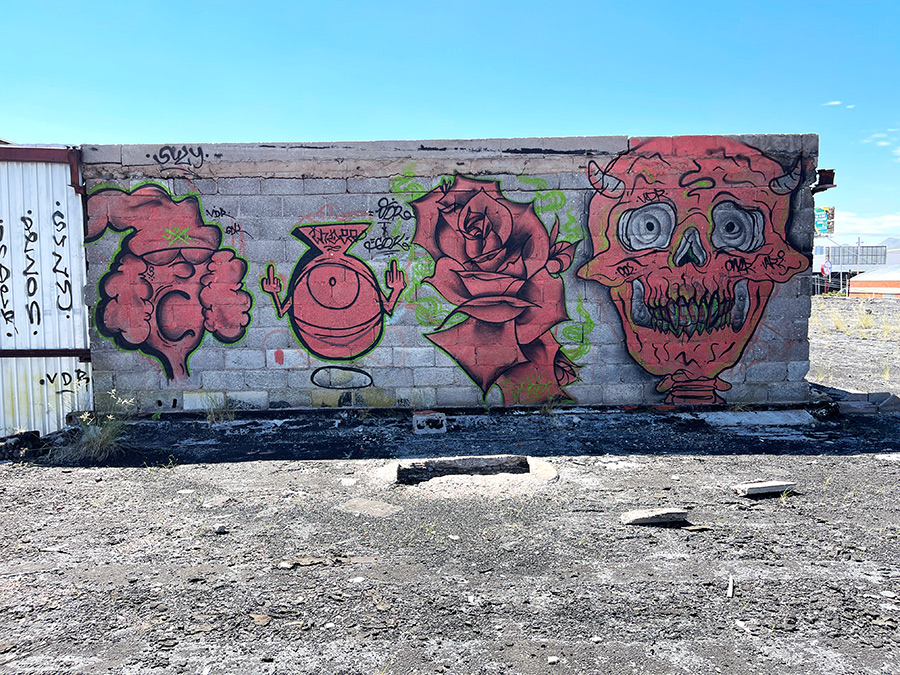
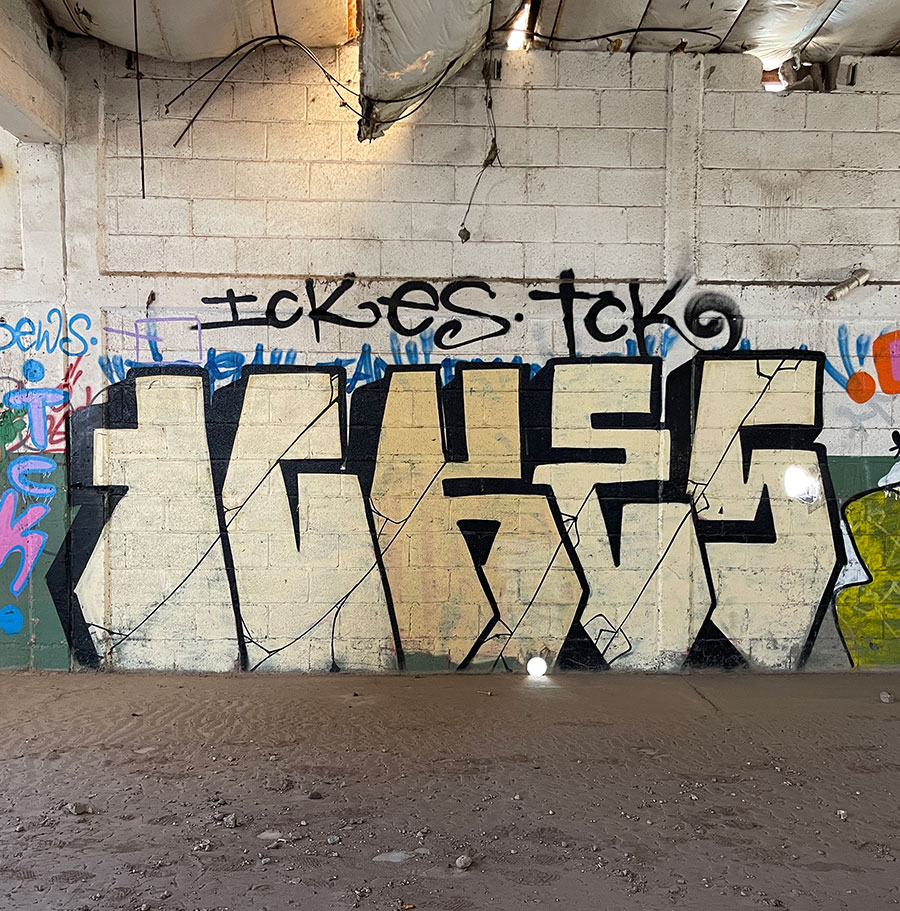
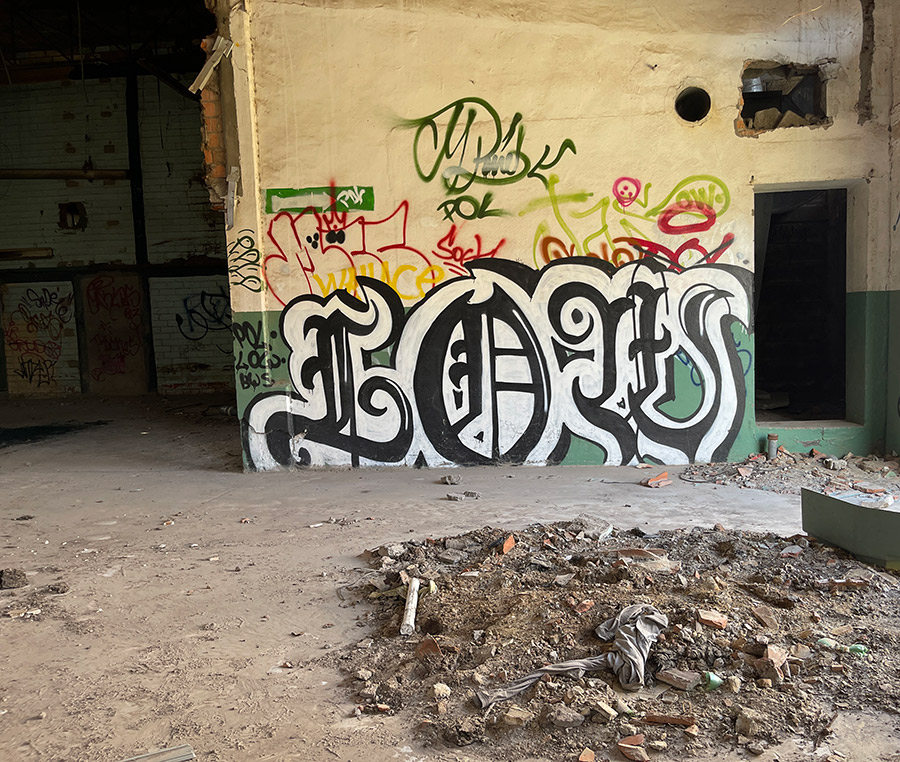
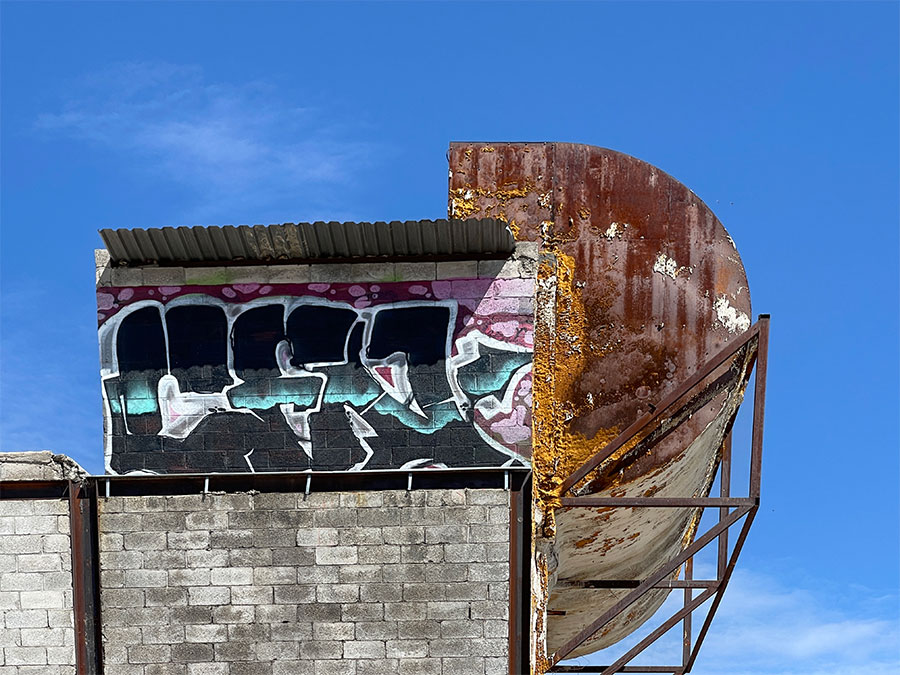
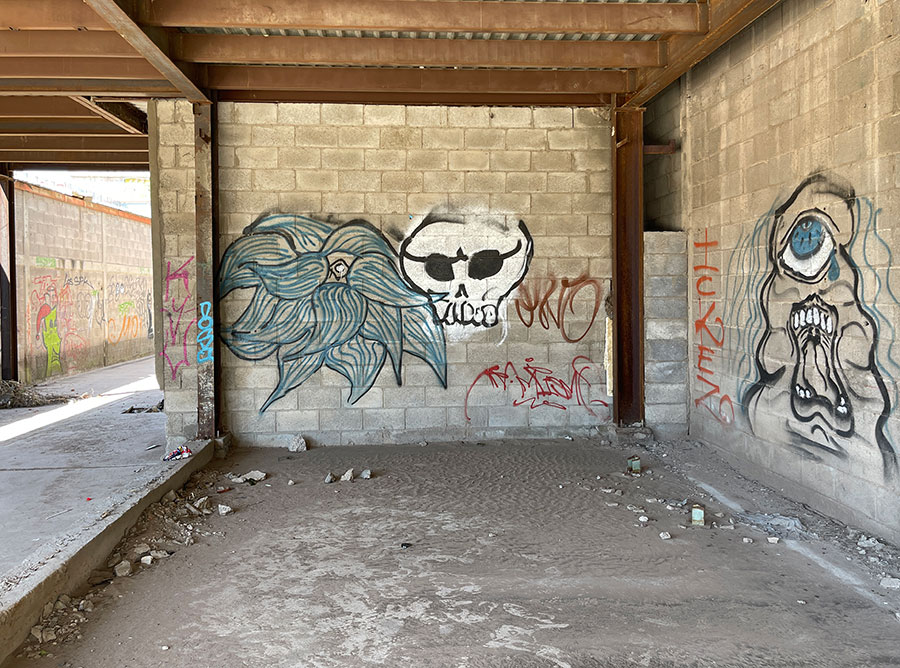
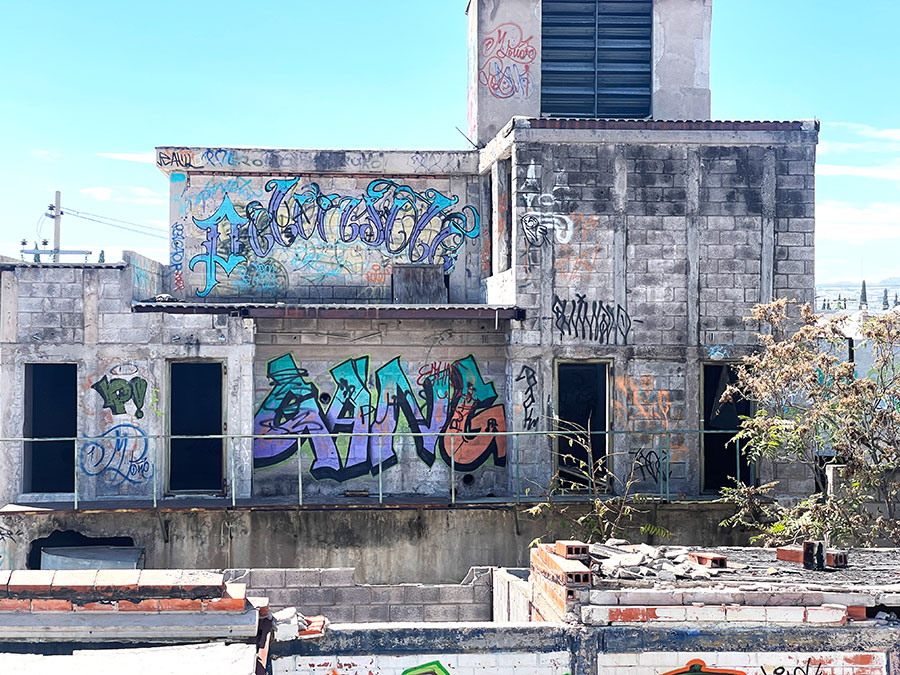
Meanwhile in sunny northern Mexico in the heart of the desert city called Chihuahua, our editor of photography, Jaime Rojo, found a bounty of new stuff in an abandoned factory. He also met a lot of new friends (see this weeks final image.) Que Estilo!
Here’s our weekly interview with the street, this week featuring: TCK Crew, Gang, CEN, Grer, Lords, Ickes, Skiee, Esza, Loupe, Rosko, Kosmo, Dementes, KAY, EPC, TCK MEA, and Suly.
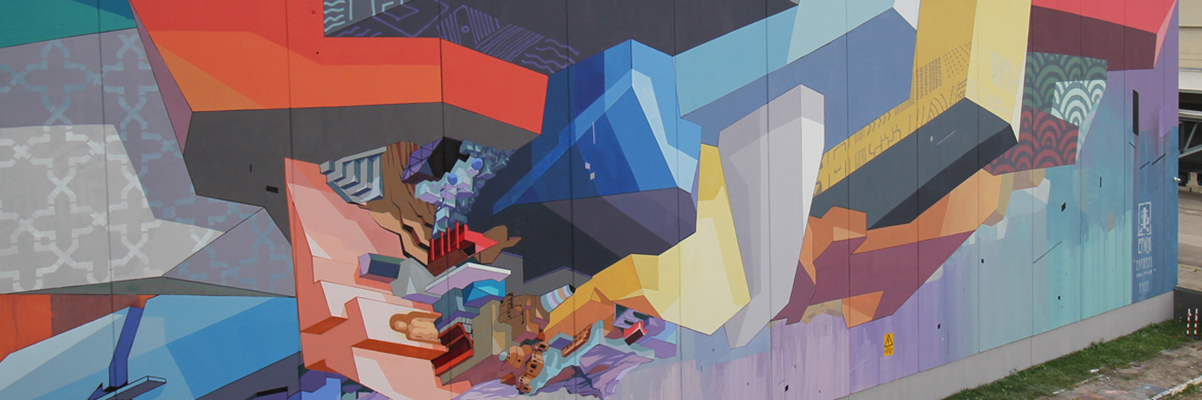
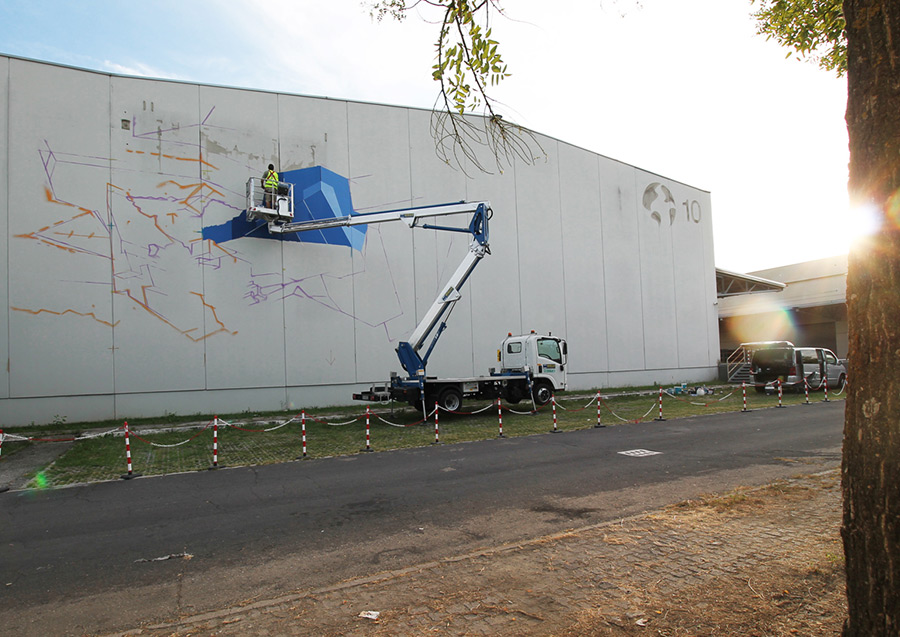
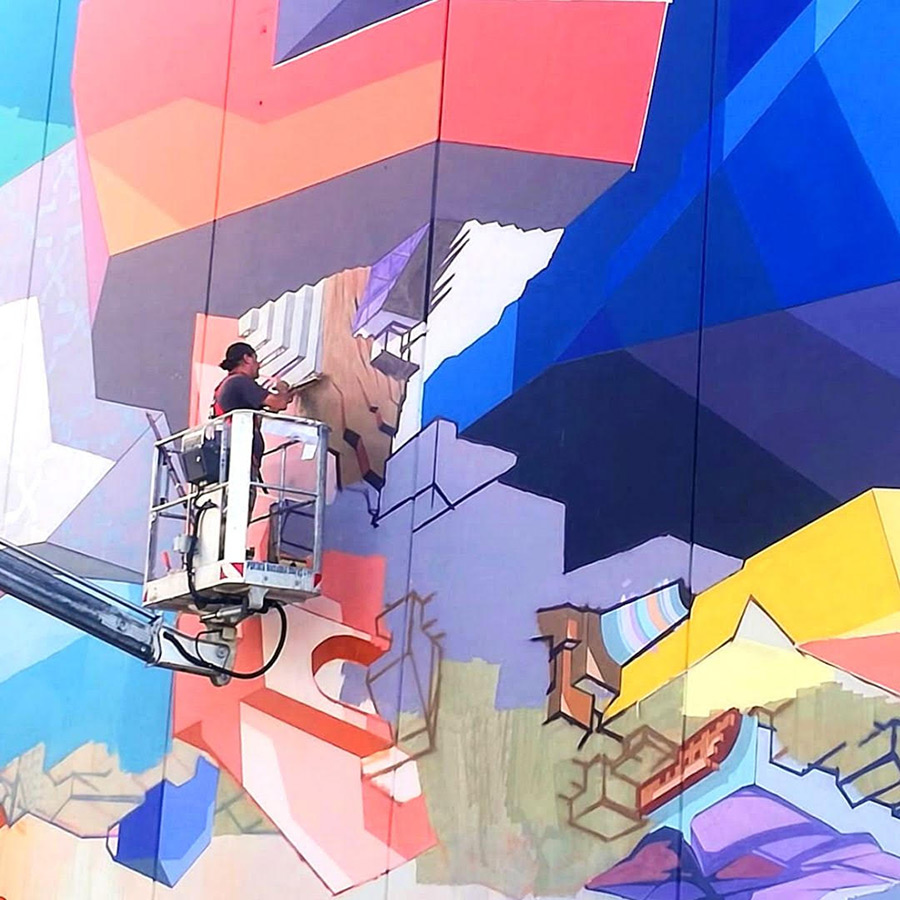
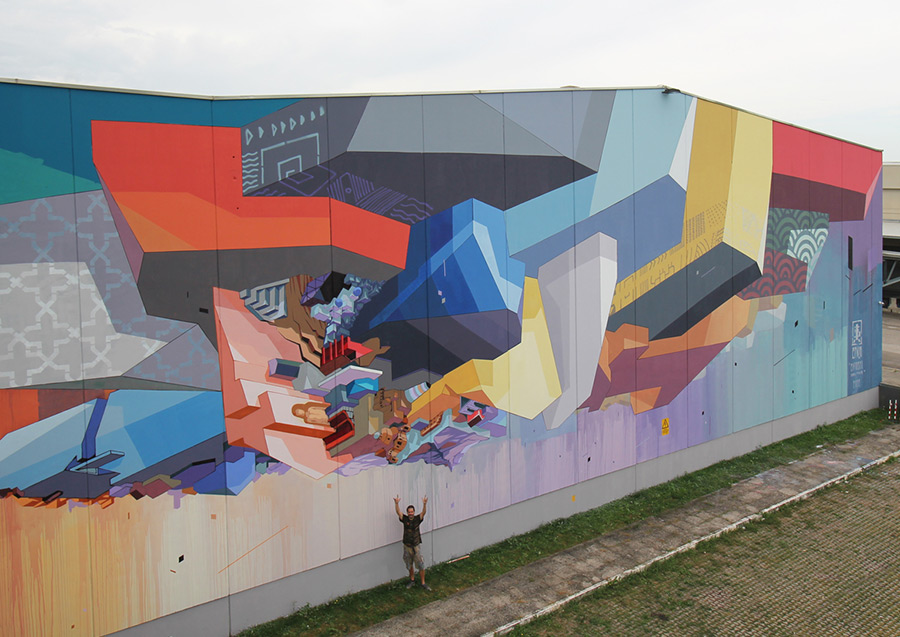
One may be able to think and create abstractly, and there is something to admire in that fact. Translating your singular, refracted vision into a 400-square meter mural in a way that supercharges the architecture, the immediate built environment, and the minds of passersby – that requires serious muscle, self-discipline, and a deep commitment.
The Turin-based illustrator and muralist came to Bologna for the local Park Life project – a multi-faceted arts and culture network of festivals geared toward the Millenial and Gen Z demographic – and decided that his theme would be “Carosel” (carousel). In it, he appears to be referencing his own bemused observation of arts, science, pop, and humanities culture from the perspective of an artist who has done a substantial quantity of traveling over these past years.
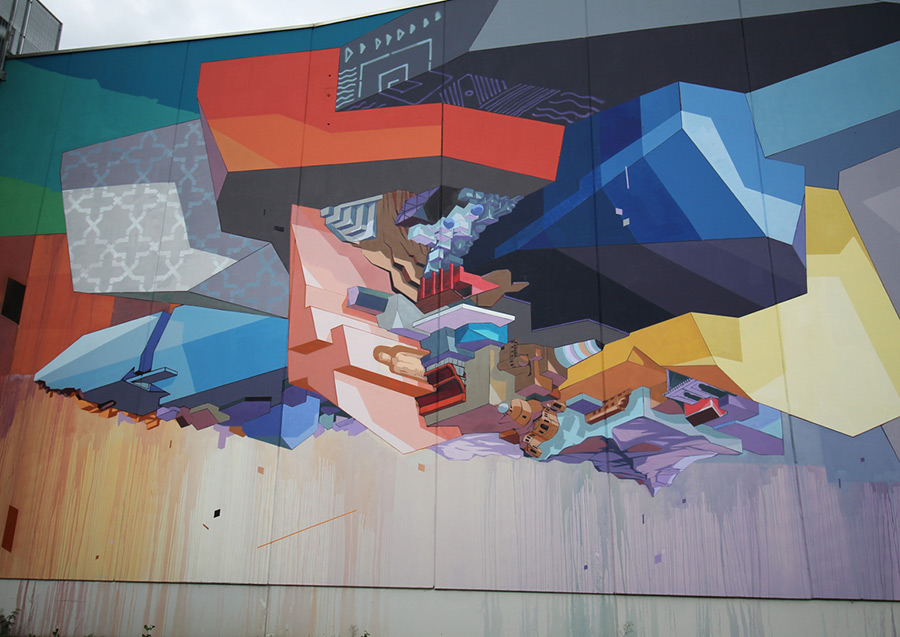
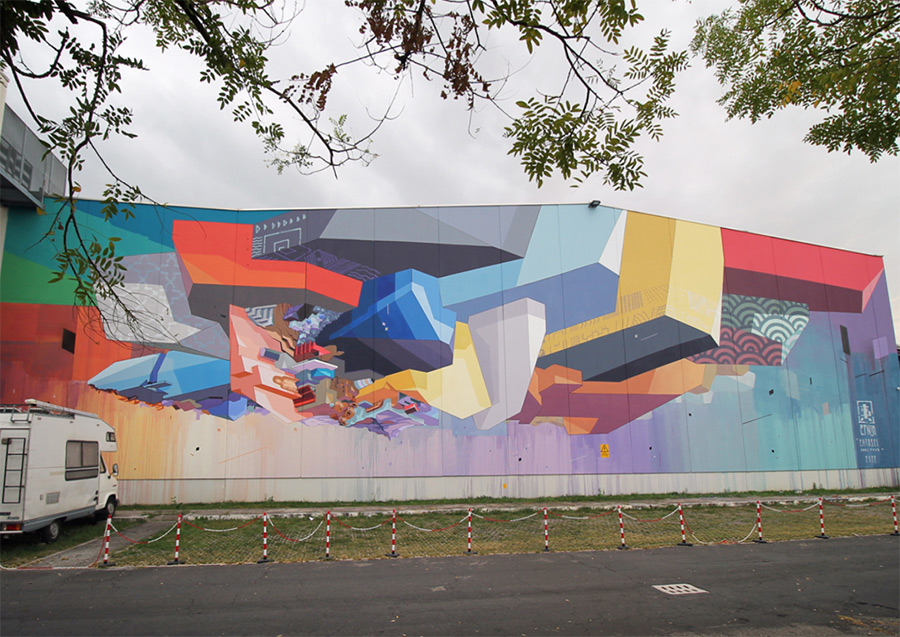
“Carosel presents a large floating urban agglomeration with intersected architectural volumes that want to give the idea of abstract landscapes but at the same time recall some existing cities,” he tells us. This interpretive lens allows us to read his visual diary if you will.
It also is meant to speak to the diverse audience who comprise the Bologna metropolitan area of about a million people that is home to the world’s oldest university. Of great significance to Etnik’s “Carosel”, it also is home to many immigrant groups and 150 nationalities.
“Bologna is inhabited by people of different ethnic backgrounds, and therefore the artist’s game includes proposing multi-ethnic architecture, textures, and details,” he says. During his creative process, Etnik tells us that he hopes to engage with the viewer emotionally through his intermixing of elements, references, and considered tonality.
“The wall is immersive thanks to the grandeur of the central block that invites the viewer into the façade, making him feel part of it.”
Our weekly focus on the moving image and art in the streets. And other oddities.
Now screening: 1. INDIGENO – Torino 2022 / Via Il Cerchio E Le Gocce 2. Procez – Berlin Metro Graffiti via Spray Daily 3. The End of the Great Pacific Garbage Patch / The Ocean Cleanup
BSA Special Feature: INDIGENO – Torino 2022 / Via Il Cerchio E Le Gocce
Oh the self-possessed, funky style and ease that the Italians have as they stroll through this video with a dirty soul guitar twang and a punchy drum track laying the backdrop for them. With each of this year’s inaugural INDIGENO Festival artists in Torino giving a brief narrative about their work, the camera pulls, sweeps, floats, zooms and shudders with equal amounts of smoothness and swagger. Hopefully, the mural art lives up to the dramatic presentation. It does.
INDIGENO – Torino 2022 / Via Il Cerchio E Le Gocce
Procez – Berlin Metro Graffiti via Spray Daily
A video postcard from Berlin and their signature yellow public metro trains, each festooned by a different writer against a dark party bass beat. The interspersals of comedic bits of video make it human, or, in the case of two pigeons going at it on a train platform in broad daylight, animal.
The End of the Great Pacific Garbage Patch / The Ocean Cleanup
Let this mark the beginning of the end for the Great Pacific Garbage Patch… Yes, there is the 3rd World War well underway, but we can still focus on positive solutions to human-made problems. Can you?
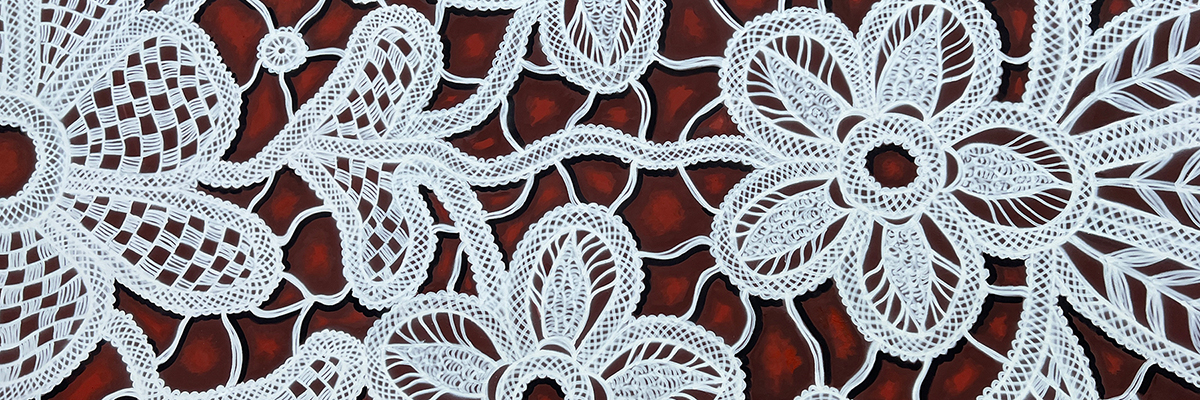
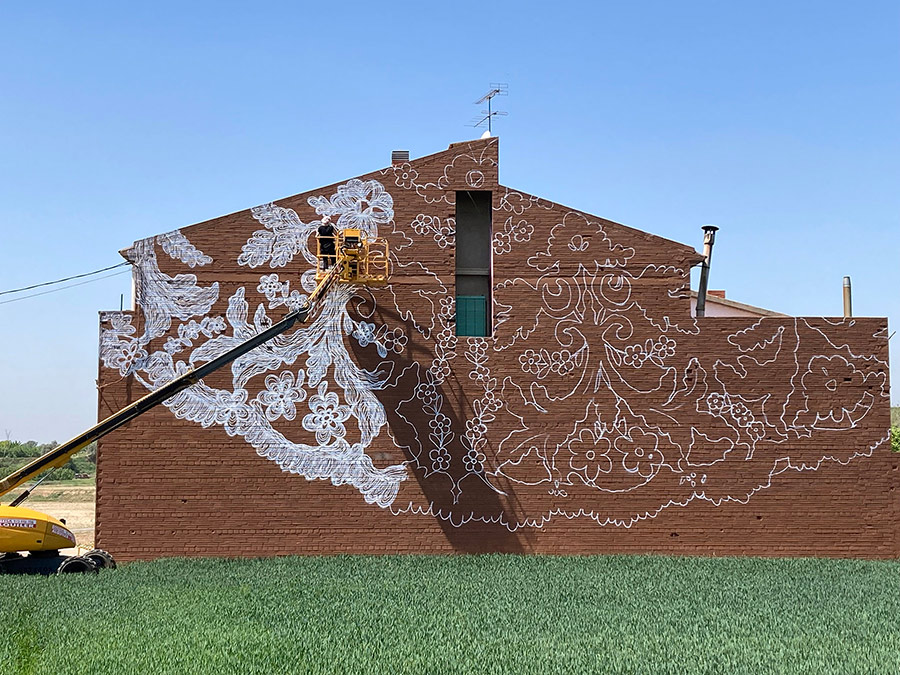
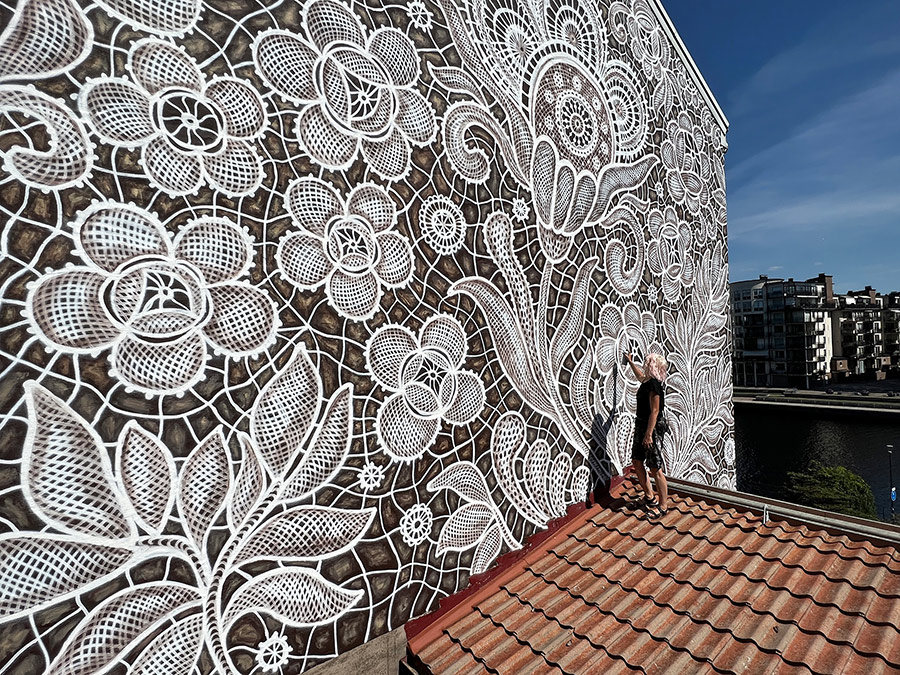
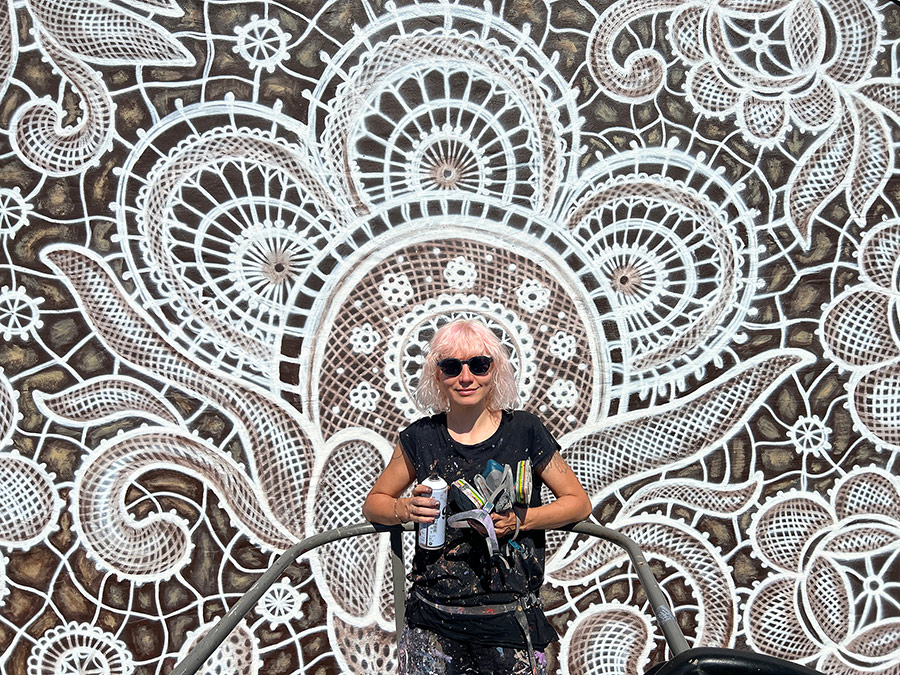
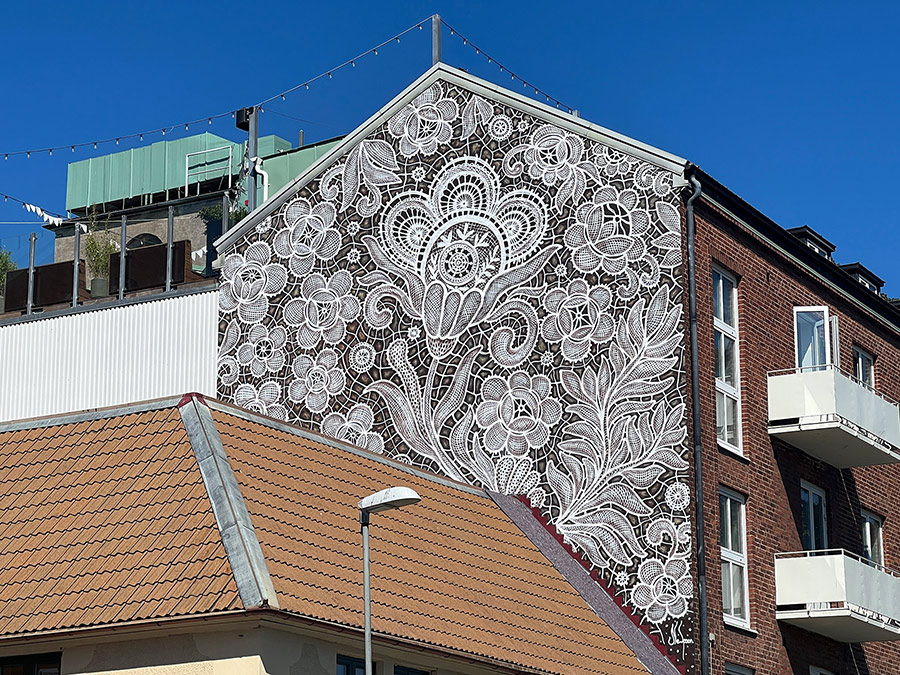
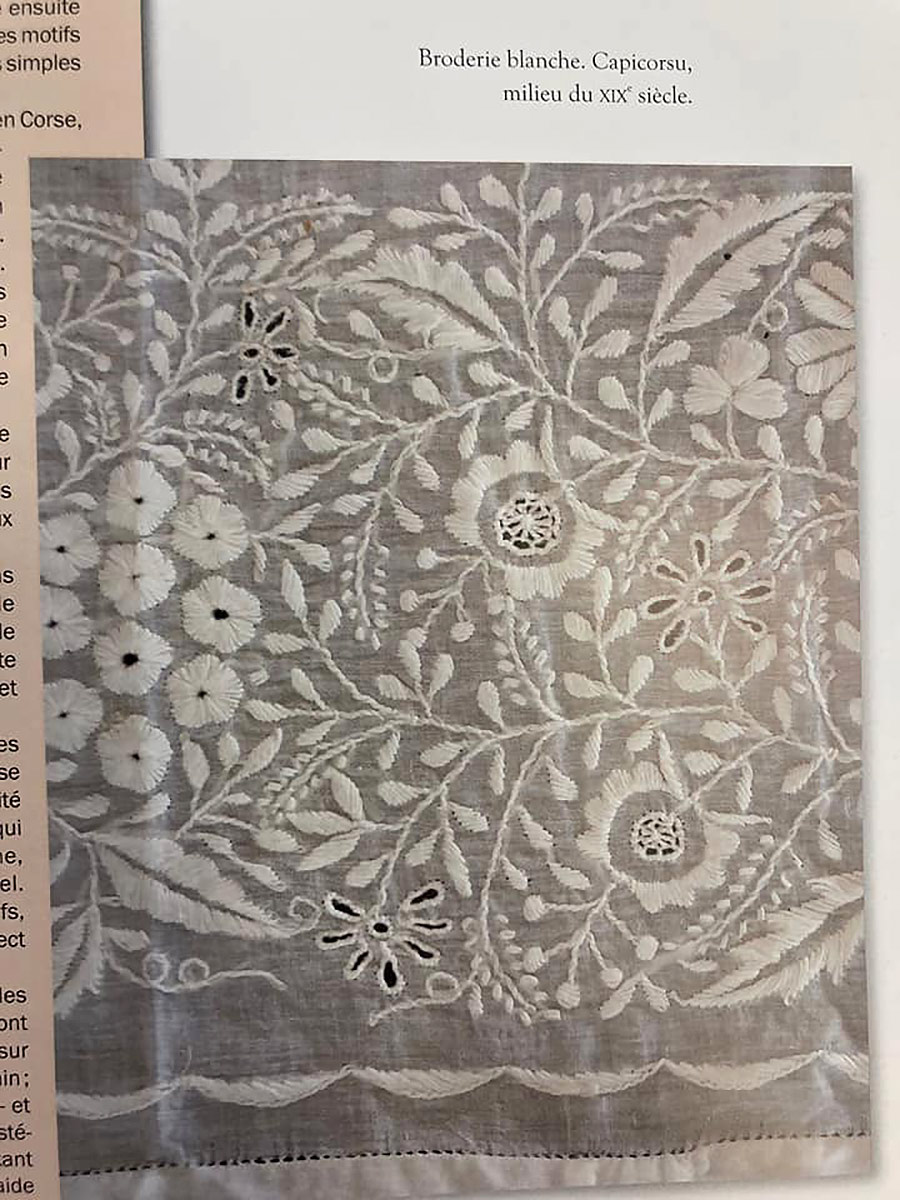
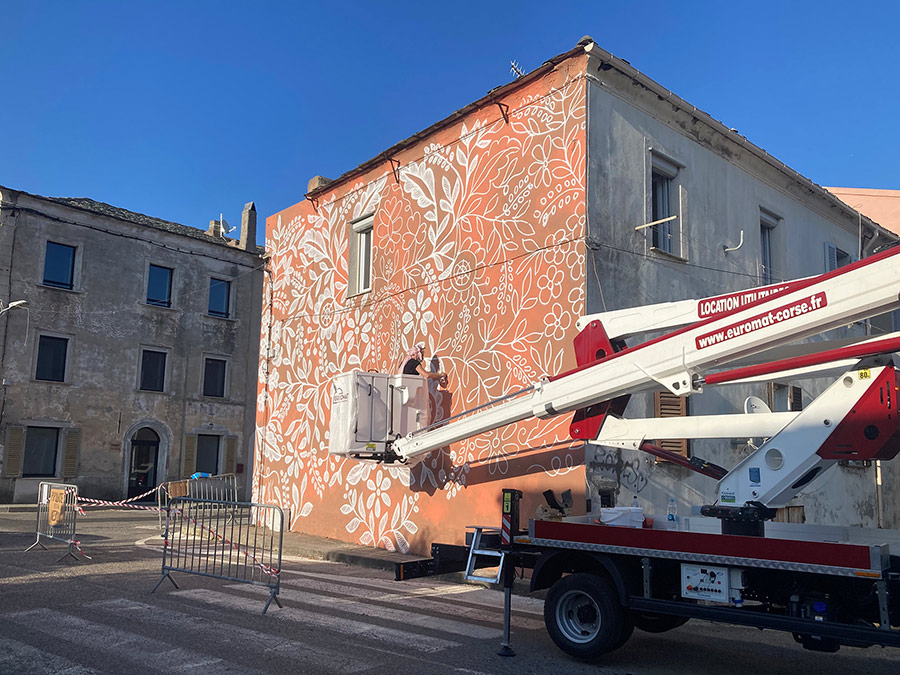
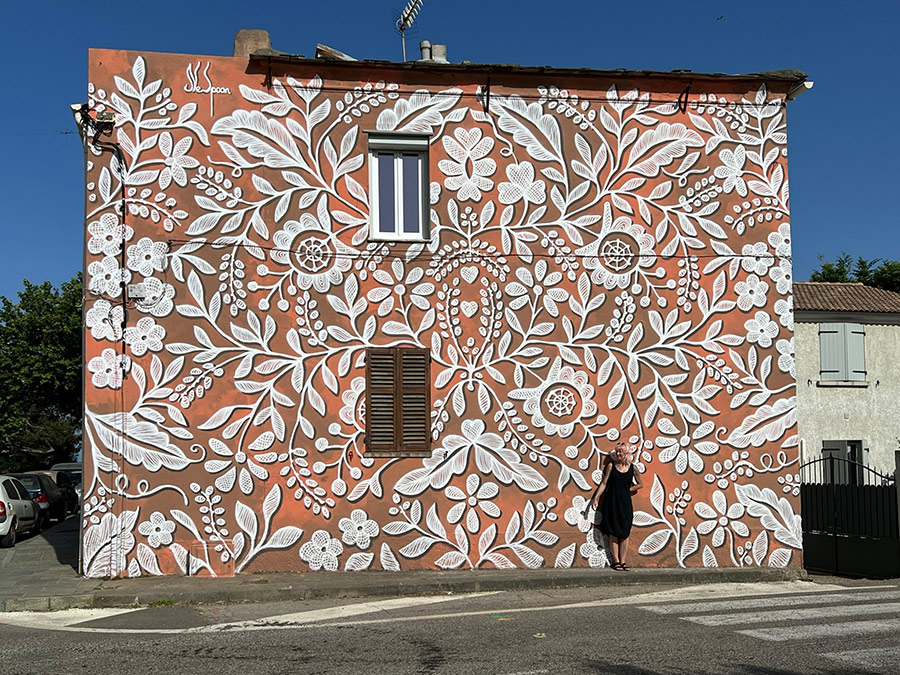
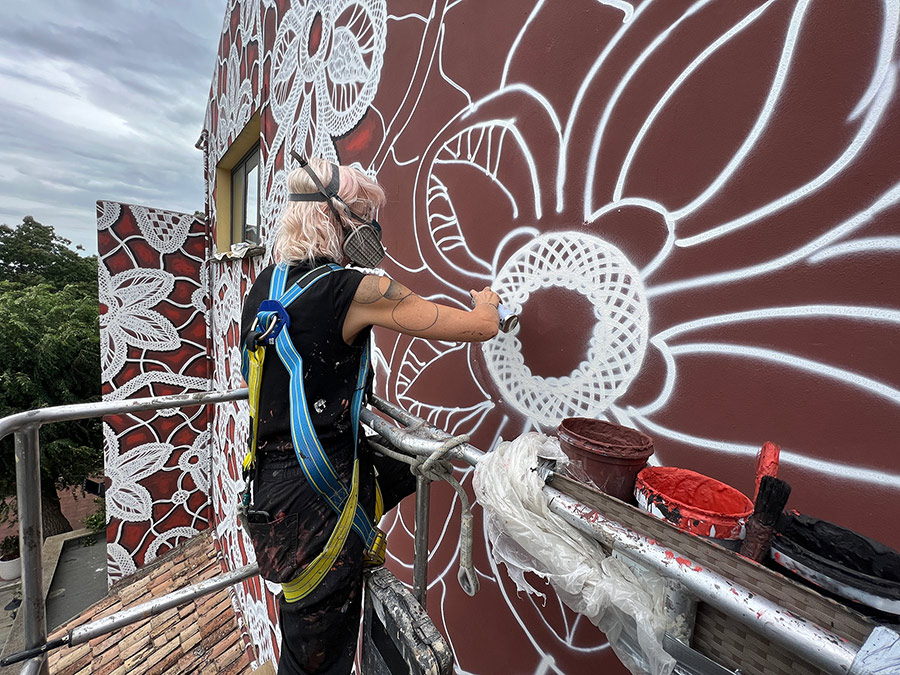
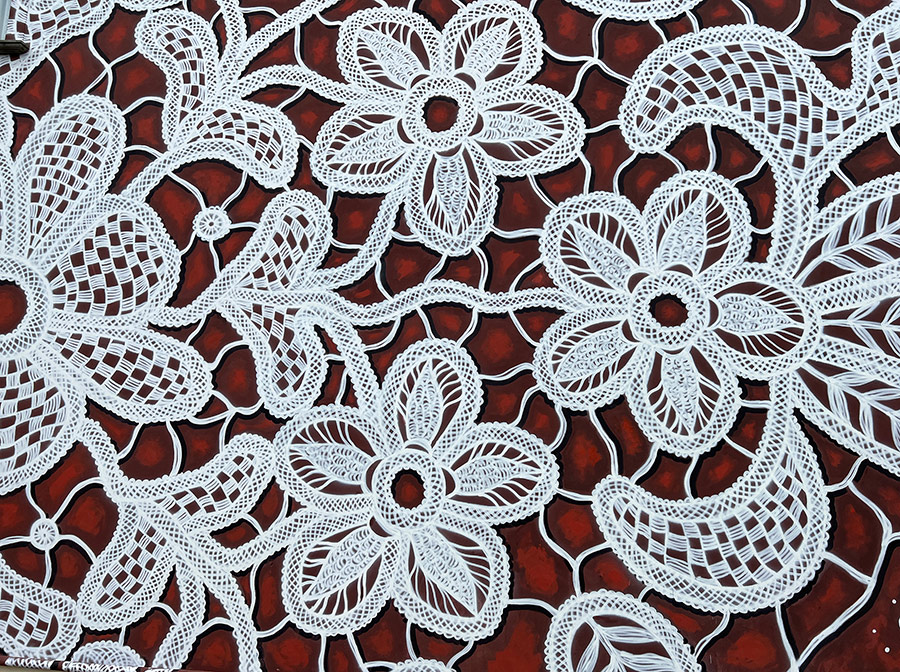
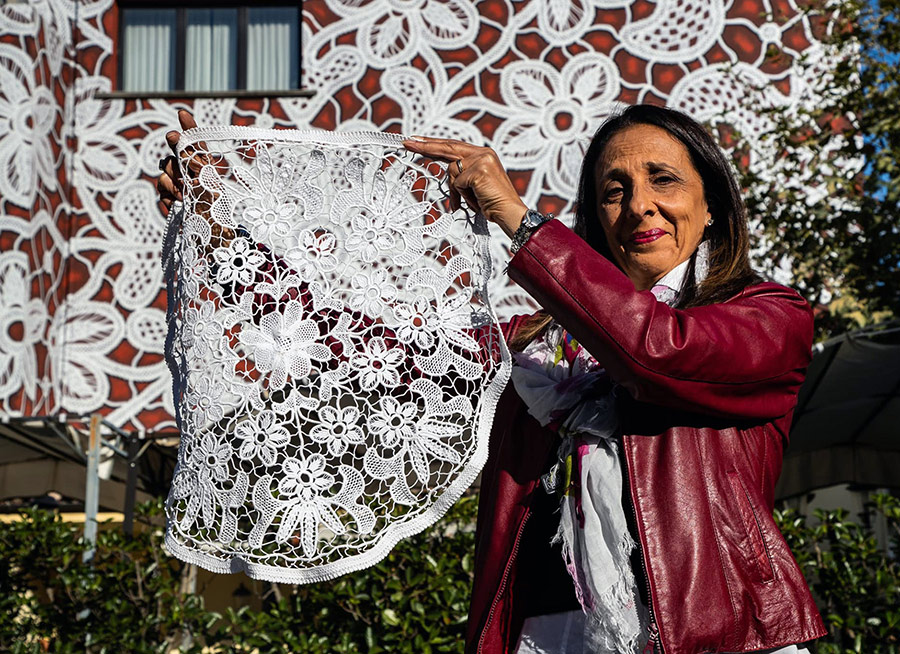
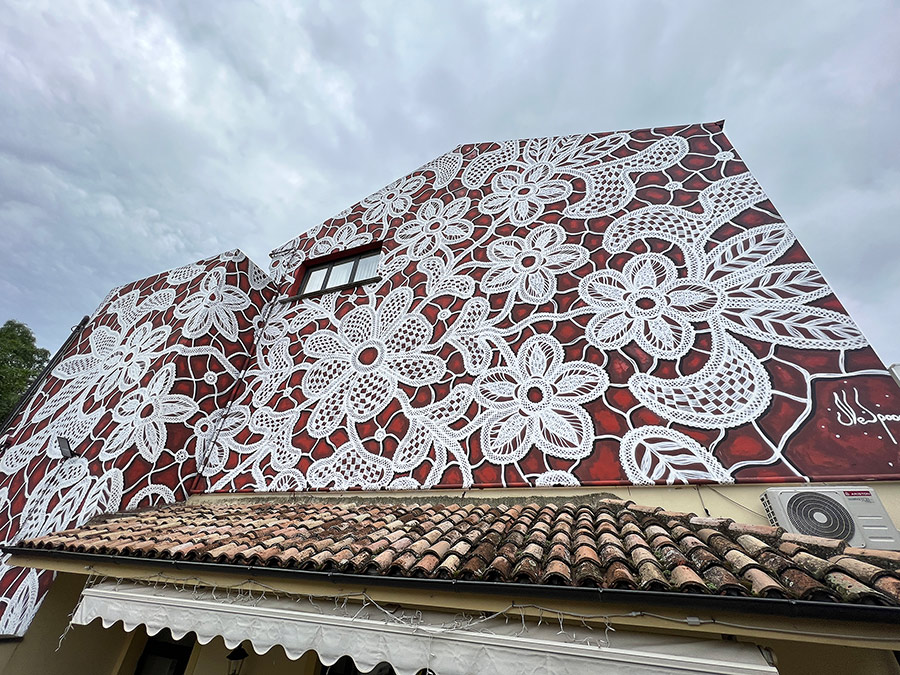
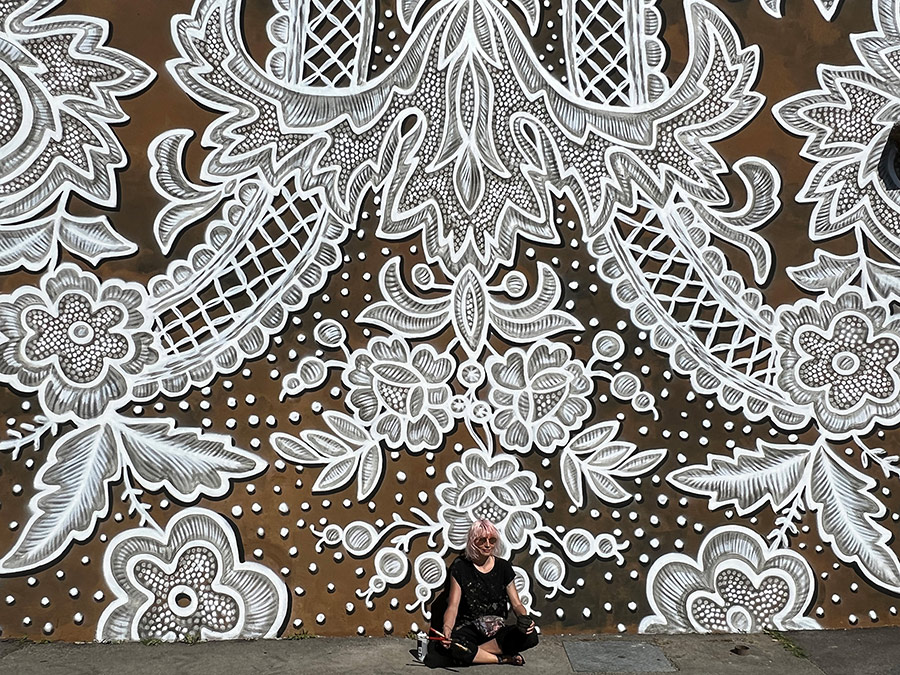
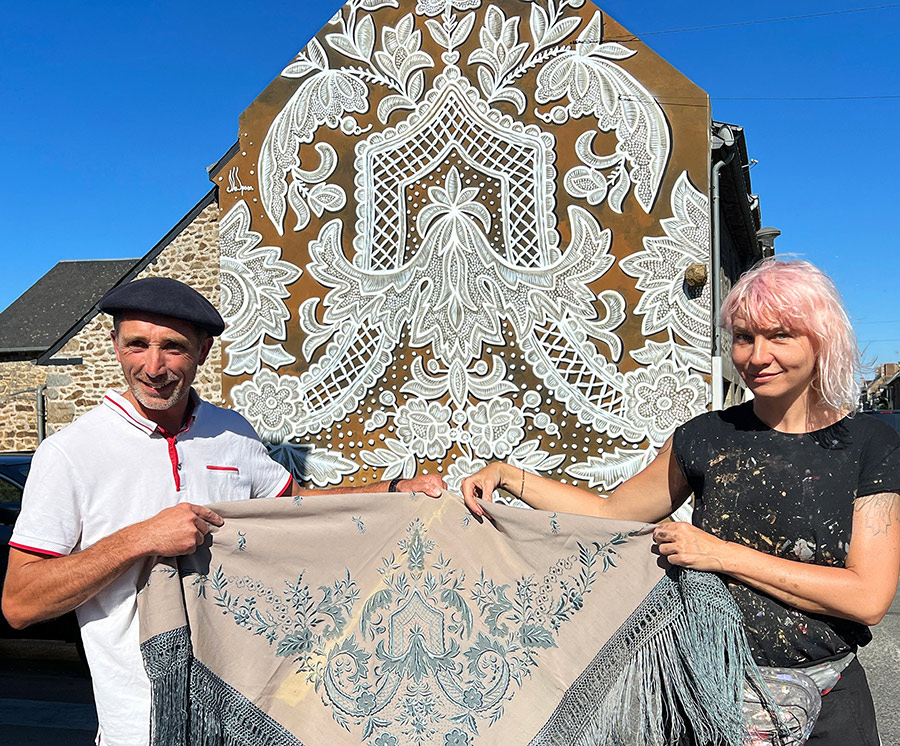
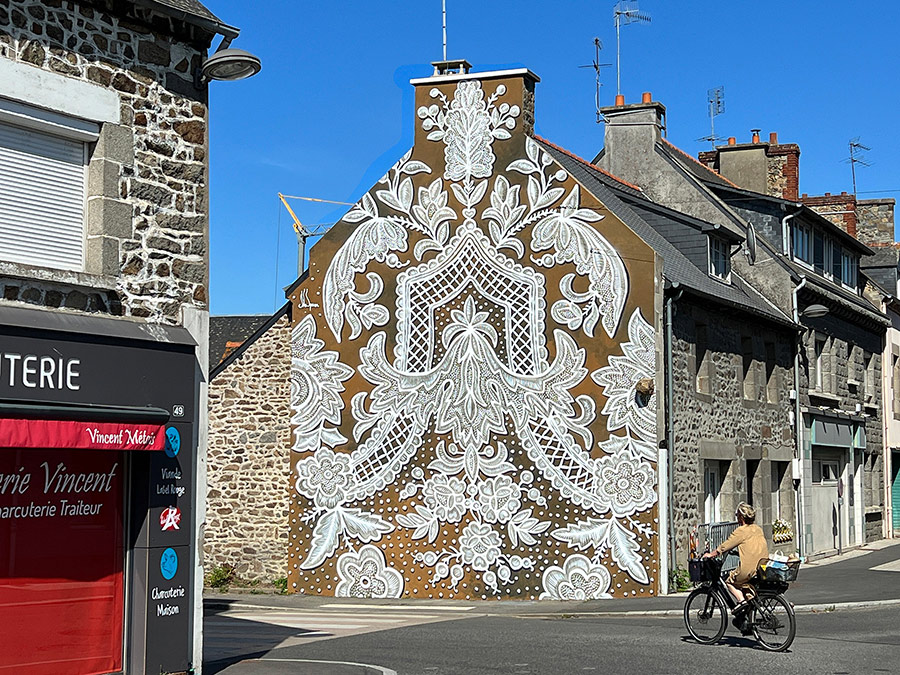
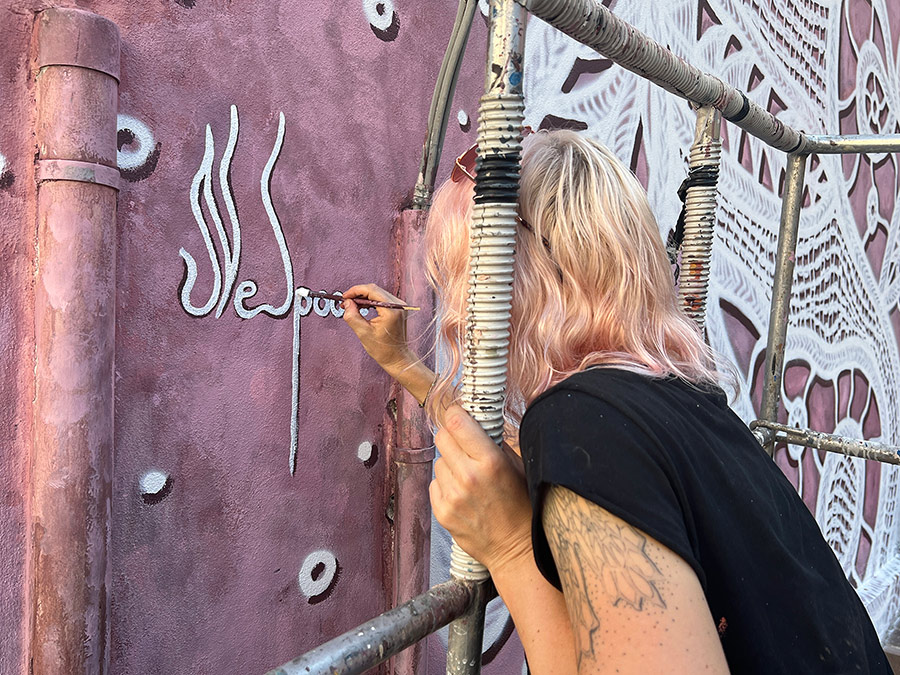
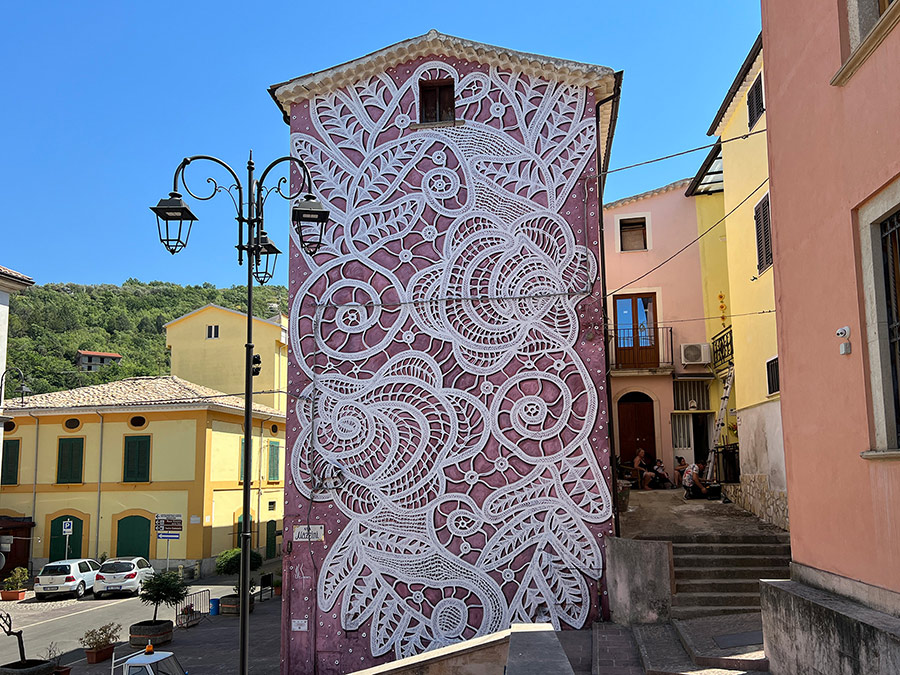
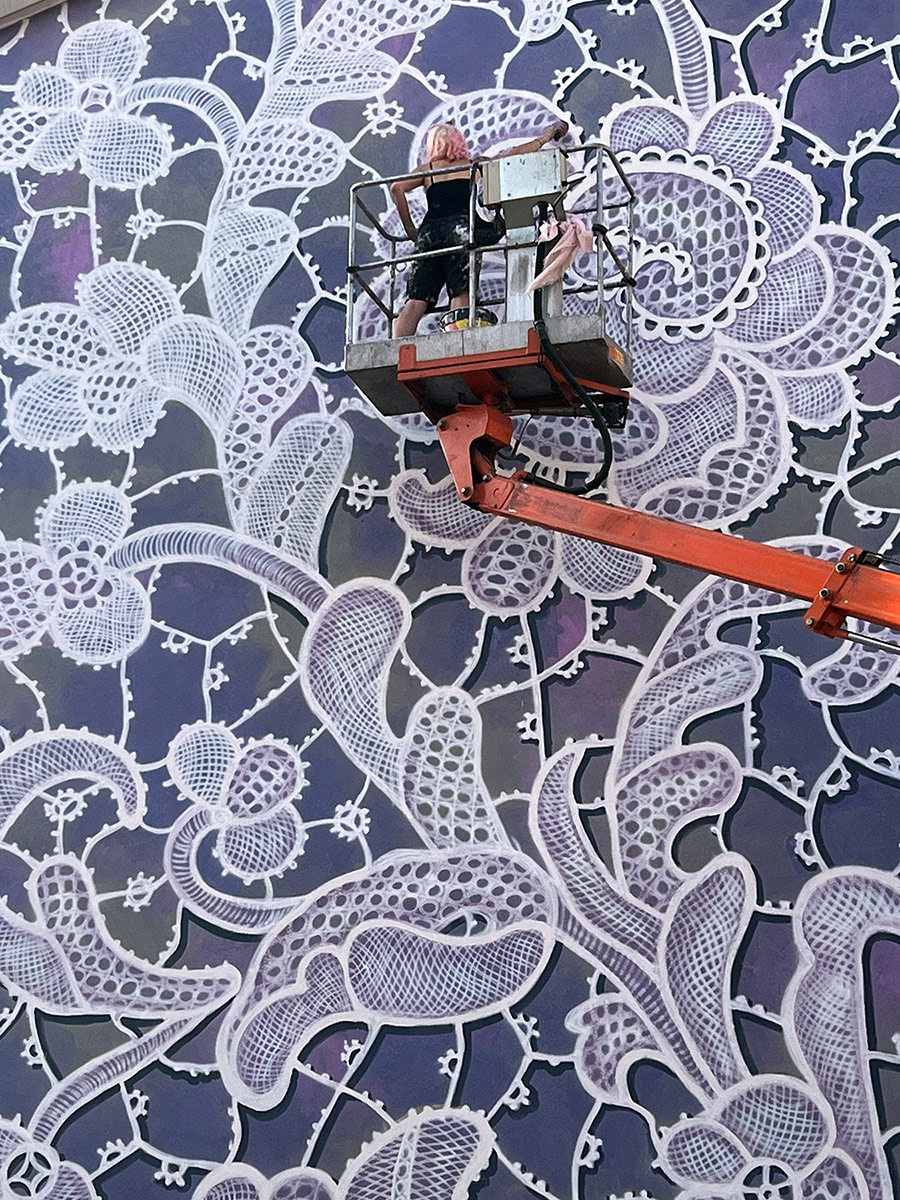
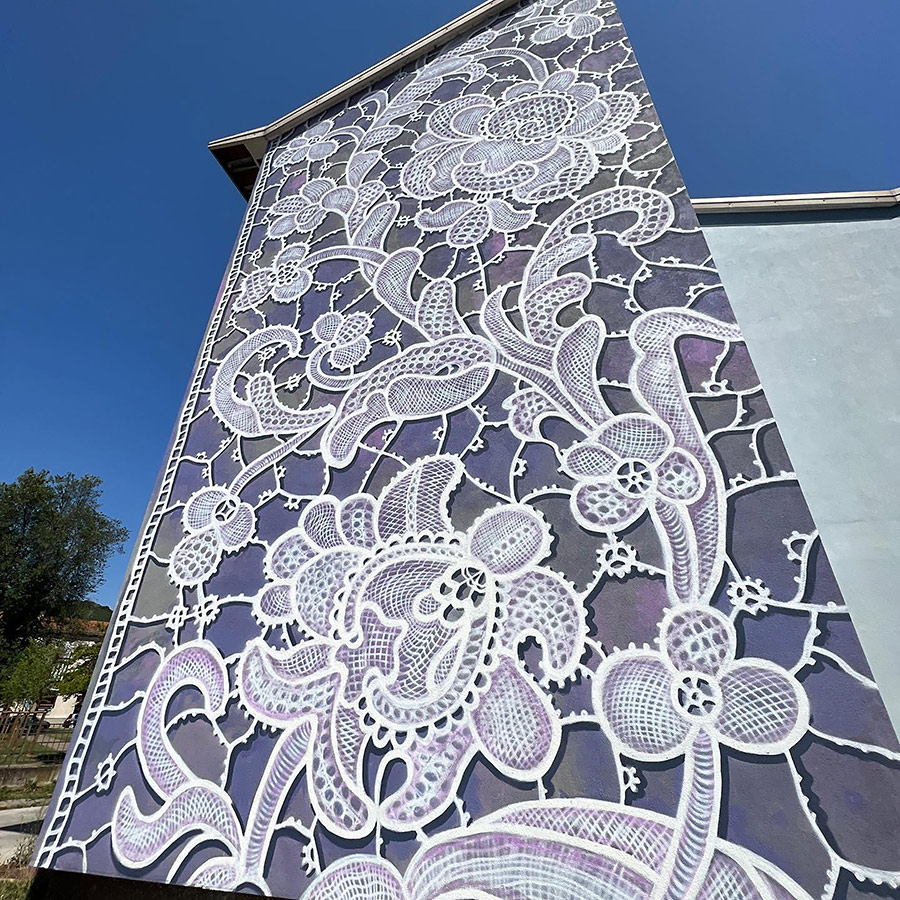
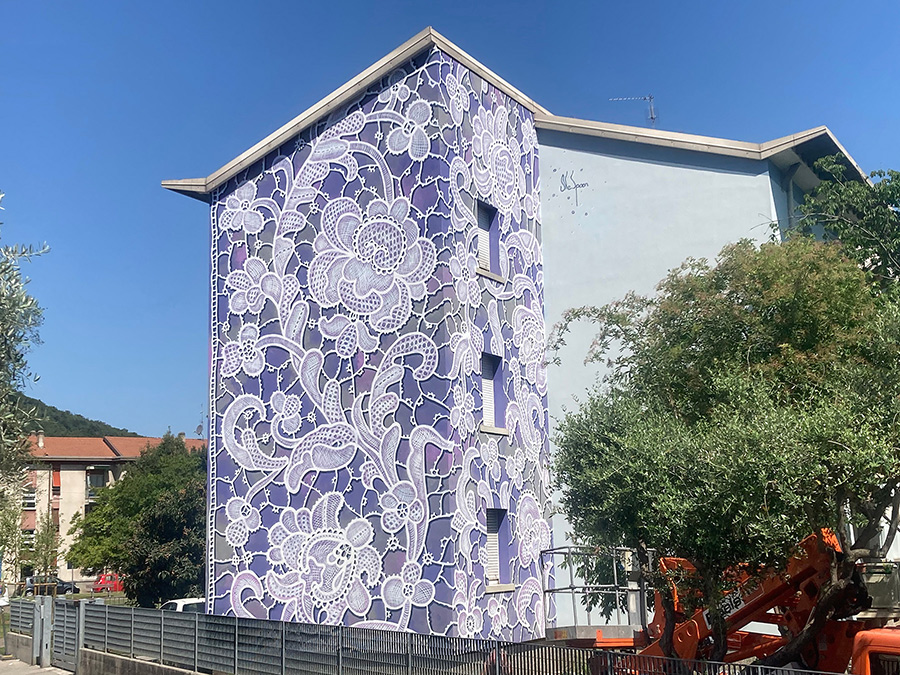
When it comes to local lace and architecture, Nespoon has you covered.
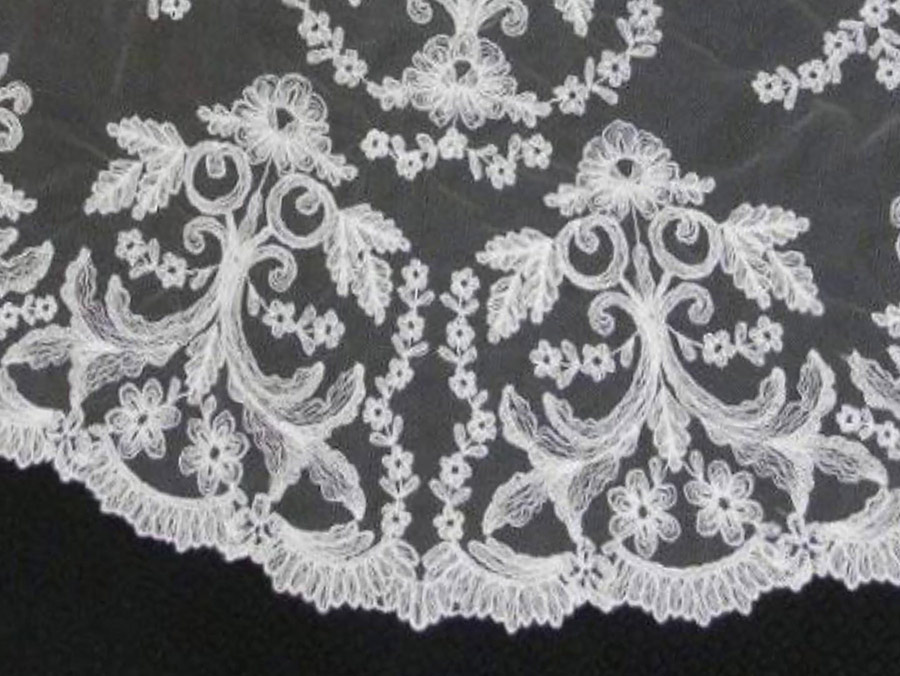
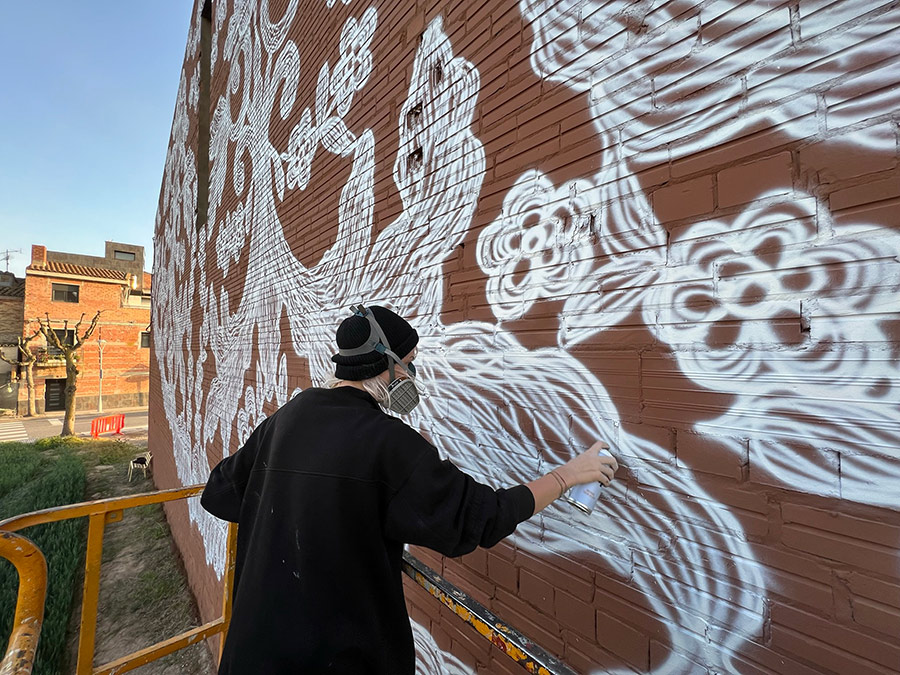
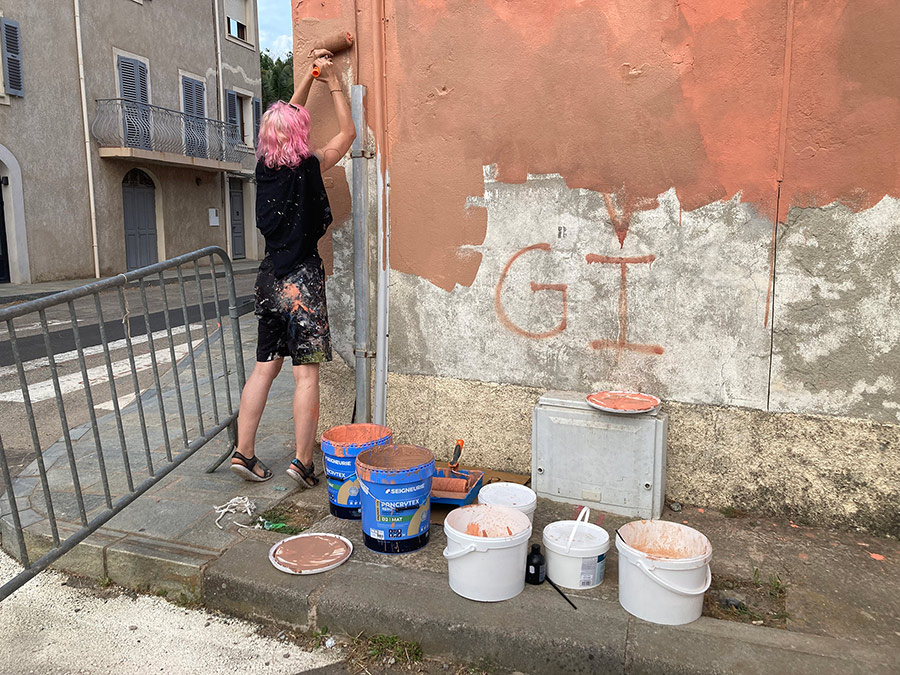
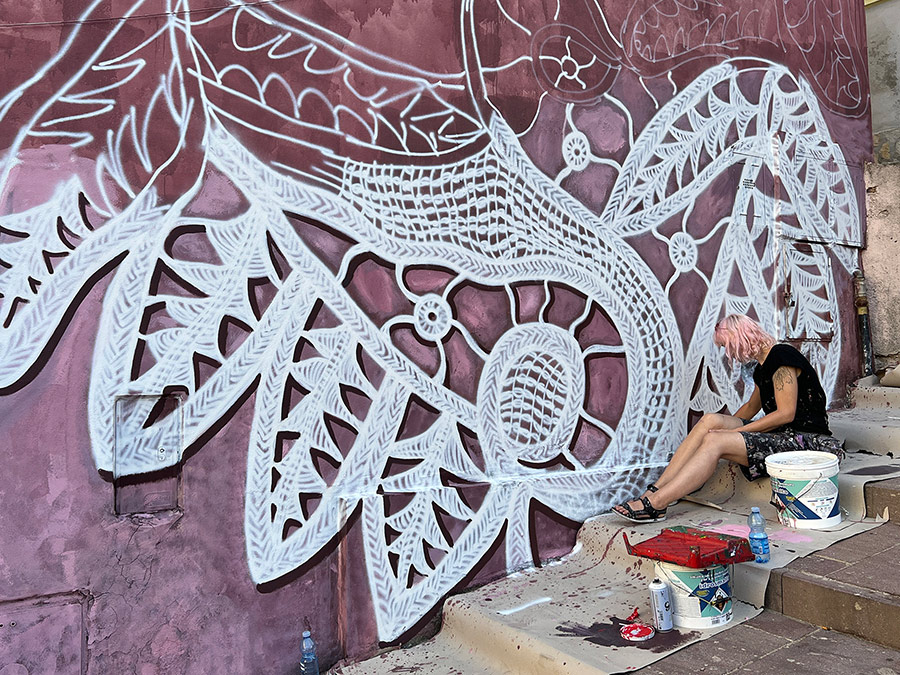
The Polish street artist has had a very productive year, traveling to Spain, Italy, Sweden, and France – always in pursuit of historical examples of this time-honored and exquisite yet dying art. By enlarging the patterns of people’s needlework – some of it quite honored and revered – she re-lights the candle of interest for the contemporary topography of the city. As one woman’s mission, the sometimes forgotten craft is shared here with a modern audience – the original patterns and designs often created by generations before this.
Today we have the honor and pleasure of sharing many of the 10 murals she painted in several countries in the first nine months of the year – along with her descriptive texts to accompany the works.
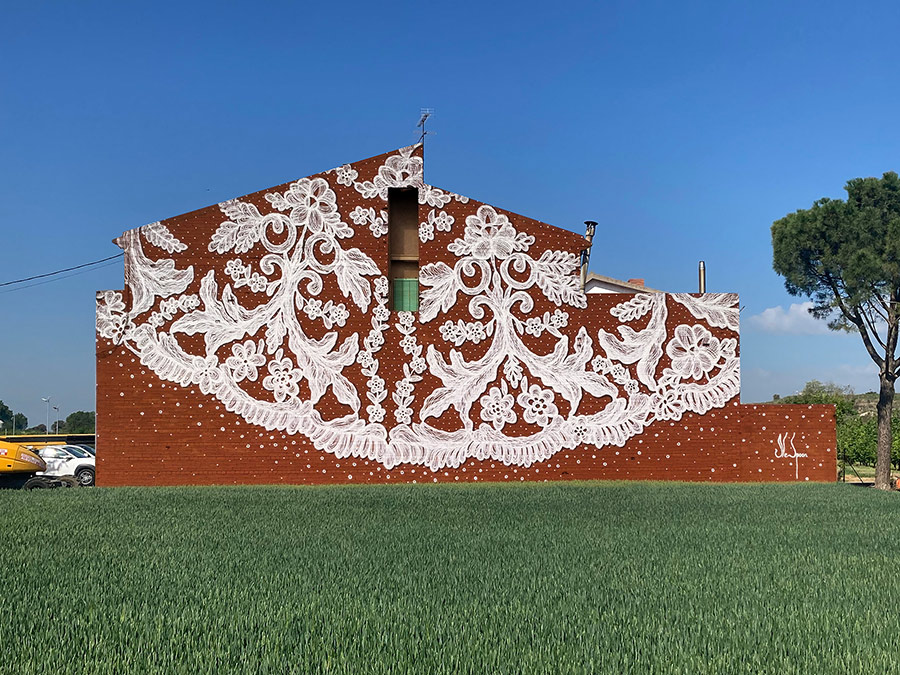
“I always paint my murals as in-situ works. Wherever I am, I always research local lace-making traditions. In many cities, lace-making factories operated, in the countryside they were traditional, female lace-making circles. I often find interesting exhibits at the local historical museum. Sometimes I just visit the apartments of seniors living nearby, I always find some lace. Based on such patterns, I prepare a mural design,” says Nespoon.
“In Spain, in Penelles, I painted for the Gargar Festival, near Barcelona. I designed the mural on the basis of a traditional 19th-century ‘mantilla’, a veil used by women there for liturgical purposes, such as weddings and funerals.”
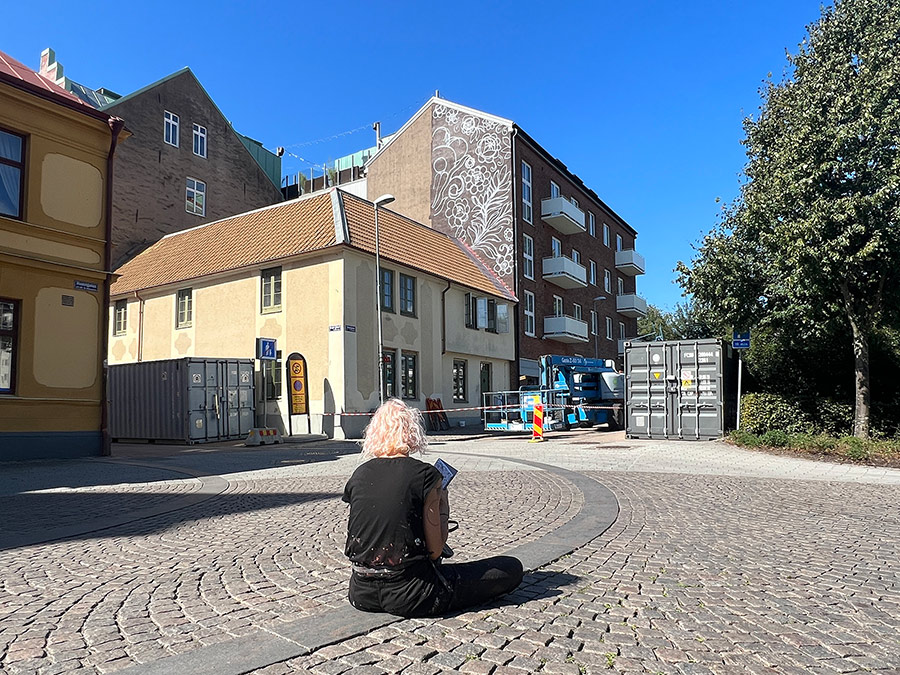
“I came to Halmstad, Sweden, at the invitation of the city council. Swedish lace is very simple, so I decided to approach the design issues differently. I created the pattern of the mural spontaneously by sketching it directly on the wall with my free hand. There was no historical reference here.”
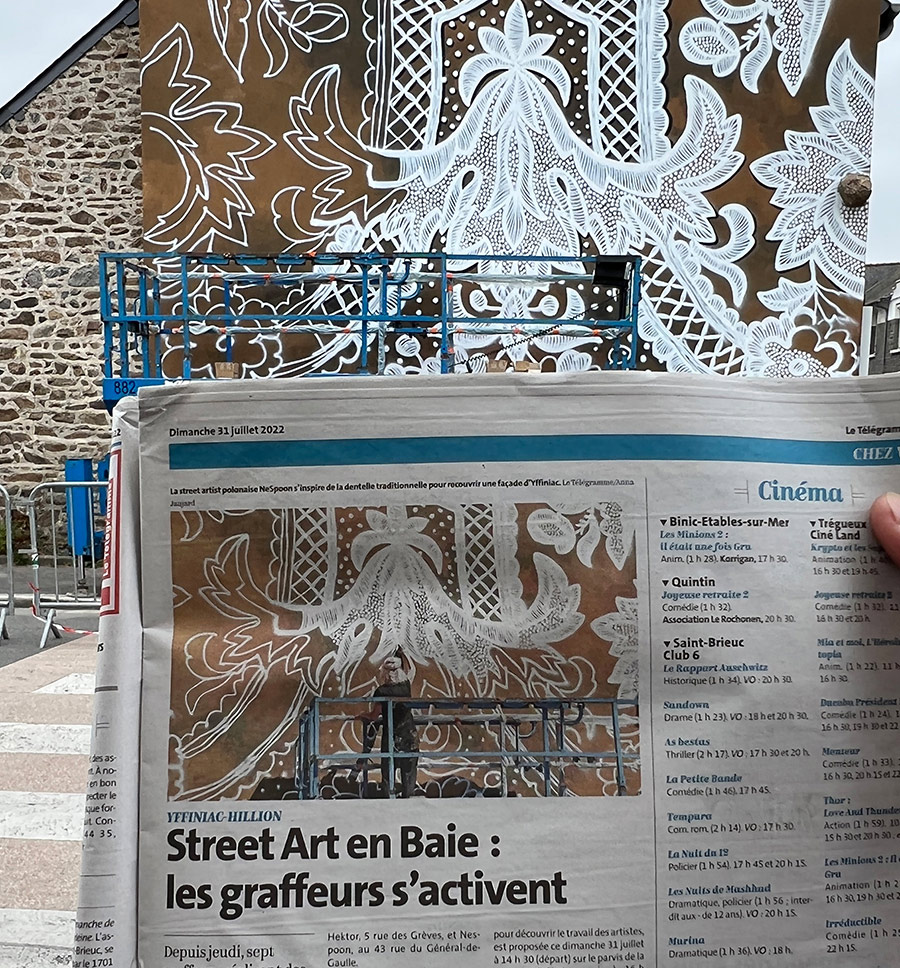
“In Yffiniac, in Brittany, France, in a private historical museum, I found a magnificent Breton ceremonial shawl from the end of the 19th century. A fragment of the pattern became the basis of my design. I painted for the Street Arte en Baie Festival.”
“I found similar inspiration in another Italian city, Stigliano. A woman living near where I worked showed me the lace made by her mother. There I painted for appARTEngo artepublica, the local association.”
“In Mendicino, in the south of Italy, I painted for the Gulìa Urbana Festival. My inspiration was the tablecloth I found in the house of a woman living nearby.”
“Brescia is an Italian city near Venice. It was in Venice that the first handbook for lace making, Le Pompe, was printed in the 16th century. The mural I painted for the LINK Urban Art Festival was based on Venetian lace from the island of Burano.”
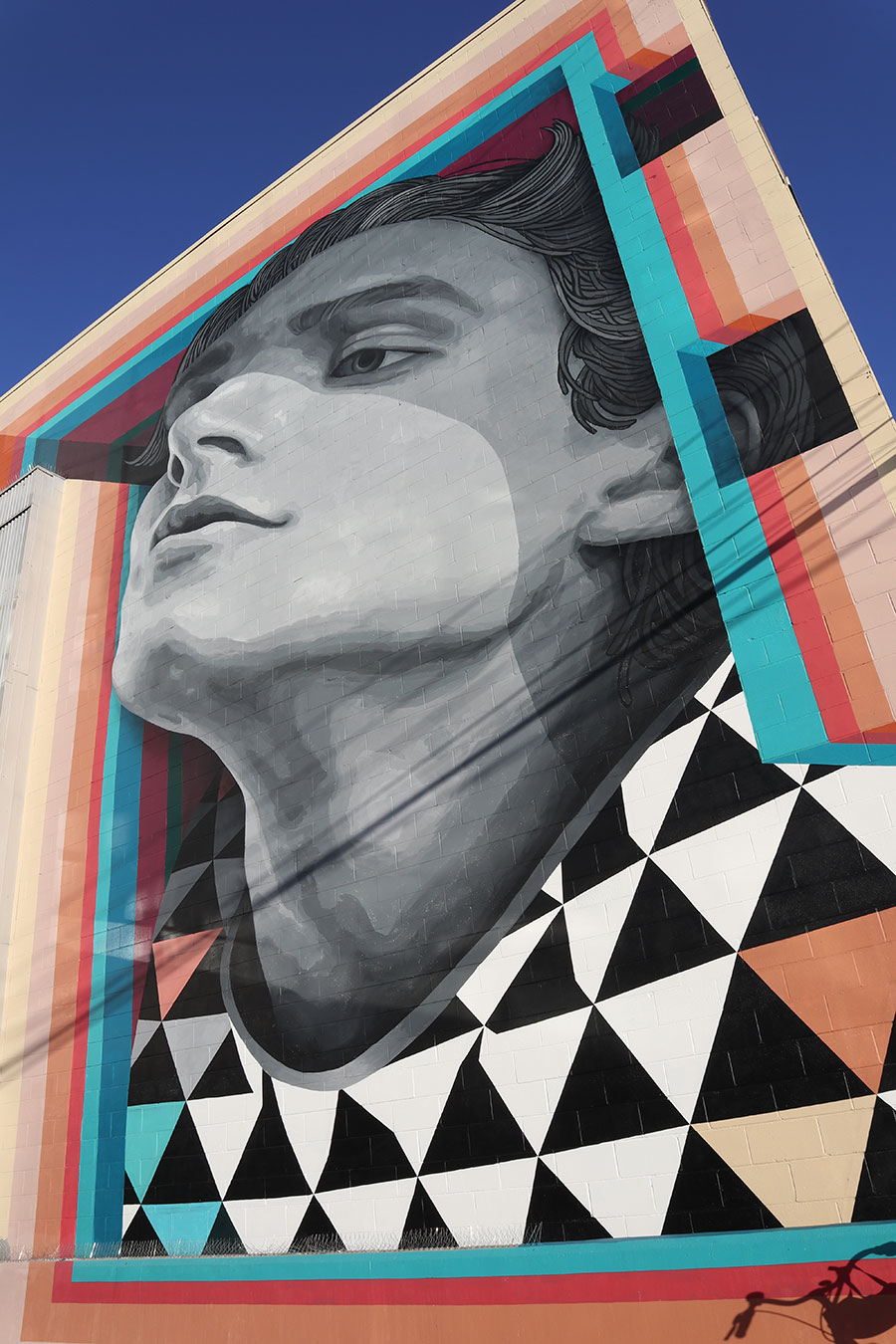
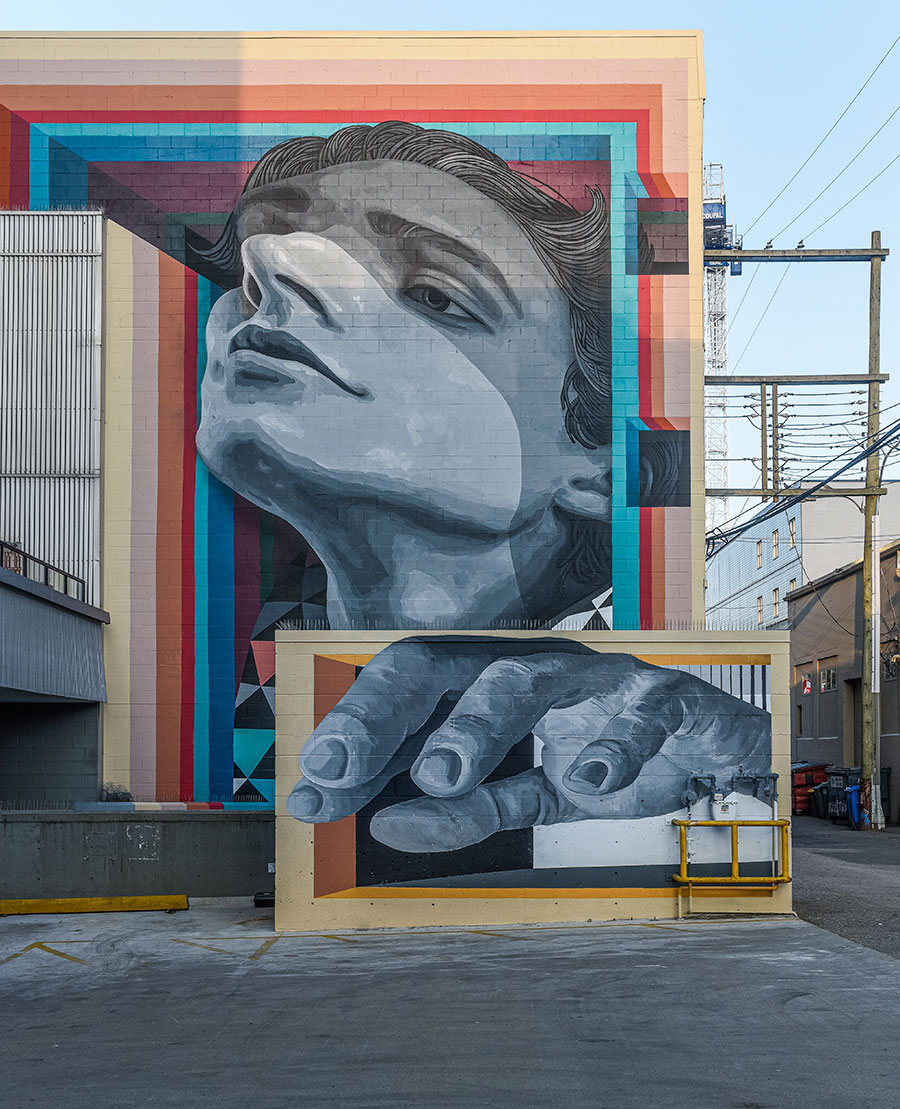
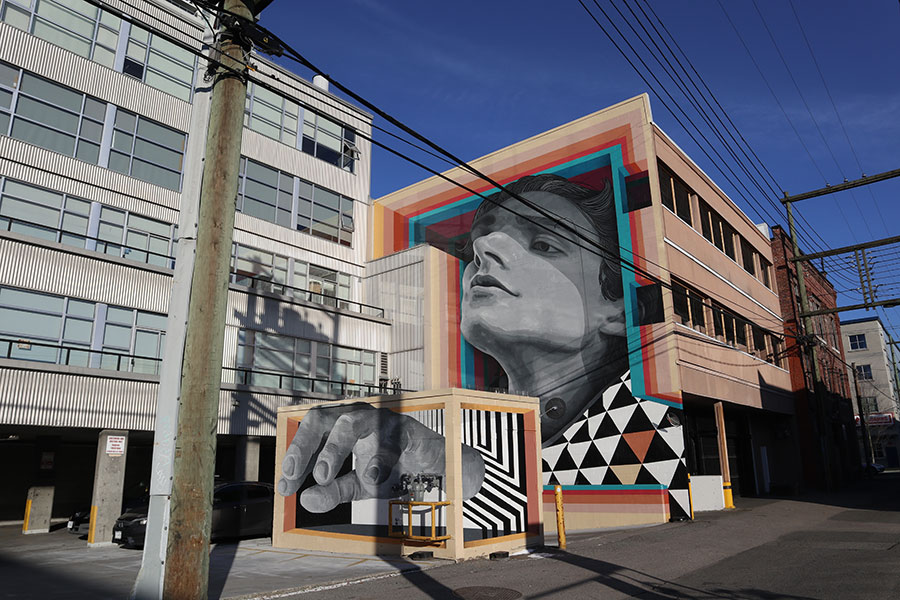
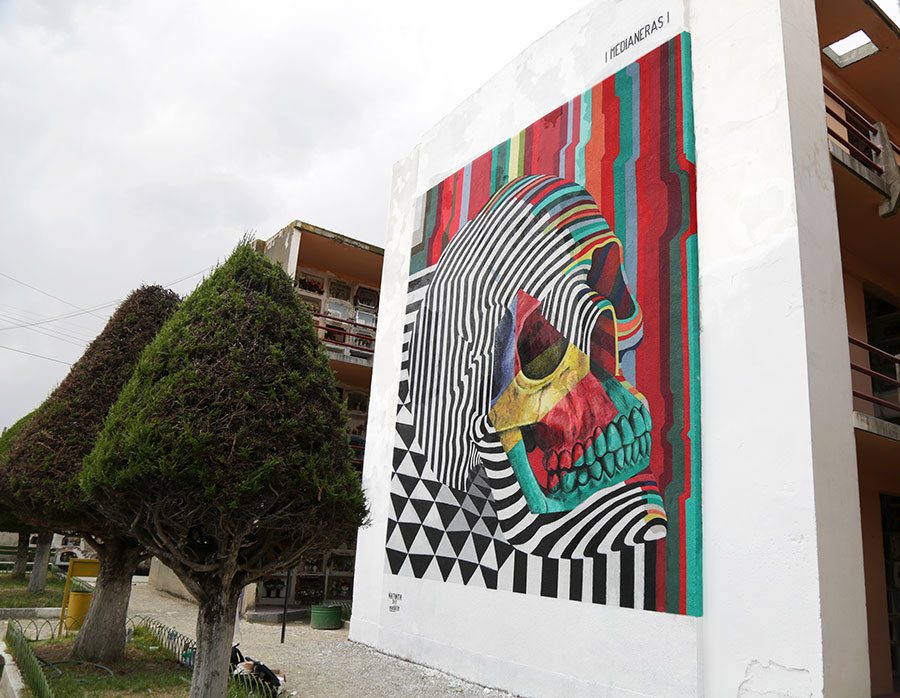
We continue today with our interview with Analí Chanquia and Vanesa Galdeano, who together are known professionally as MEDIANERAS. Today we talk about what it is like to travel the world painting, how they address concepts of gender in their work, street artists’ responsibilities to society, and how Social Media has affected their practice
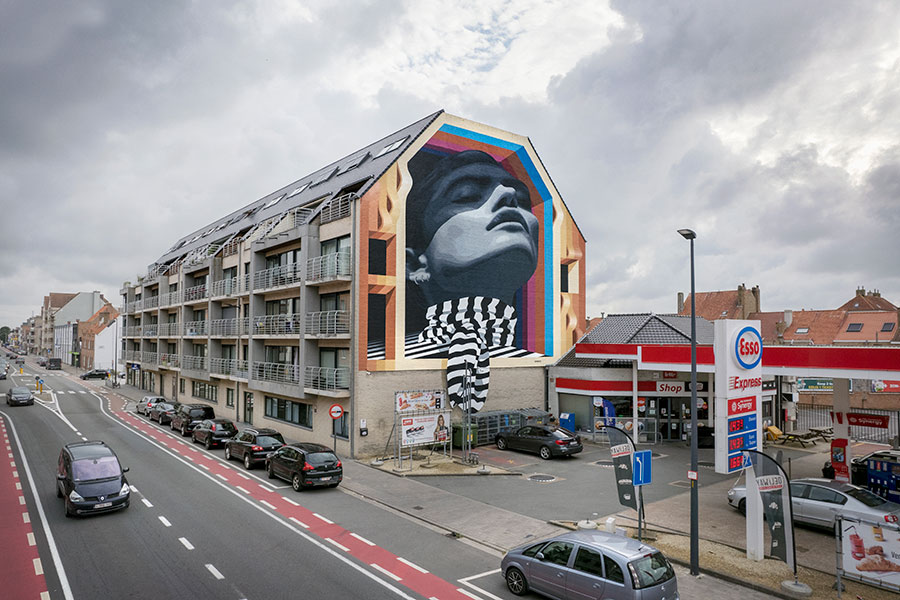
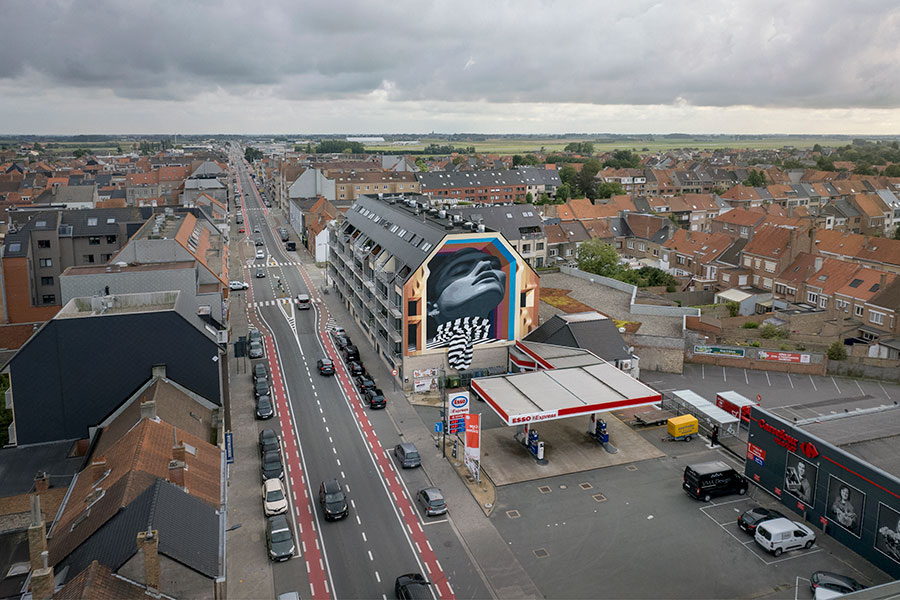
Medianeras. The Crystal Ship Festival. Ostende, Belgium. (photo courtesy of the artists)
BSA:Your work together has given you the opportunity to travel around the world participating in international street art festivals in numerous cities. What is the benefit of the existence of street art festivals to the artists and to the public? Is there a benefit?
Medianeras: International street art festivals have contributed to making street art mainstream. We do not criticize this fact, but we conceive it as a natural evolution of the activity. In our case, urban art festivals have allowed us to carry out our work in different cities and travel the world. Above all, they benefited us by providing us with the necessary infrastructure to carry out murals of murals in large dimensions in places that we would not have reached otherwise.
Medianeras. The Crystal Ship Festival. Ostende, Belgium. (photo courtesy of the artists)
BSA: Can you recall a specific experience when painting in a foreign city/country that made a deep impression on you, big enough that influenced your work and made you transform or change or modify your art in any way?
Medianeras: Each experience, each trip, and each new project is always a new challenge and therefore implies growth both in our work and in us as people. We have been growing with the activity, and we believe that it has changed us.
BSA: Since you began painting together have you seen any movement from institutions and organizations that favor including more female artists in their lineup? Was it difficult for you at the beginning of Medianeras to get work outside Argentina? Did moving to Barcelona make things easier for you in terms of getting commissions in Europe?
Medianeras. The Crystal Ship Festival. Ostende, Belgium. (photo courtesy of the artists)
Medianeras: Yes, we have witnessed how the number of female artists in street art festivals has increased over the years. We believe that there have always been many women who paint in the streets, but it has been in recent years that recognition and visibility of some more have been given. We are now somewhat appreciated for our work, but it’s been a difficult road for us. So many talented women have been painting on the street forever, but many of them did not have the visibility they deserved until a few years ago. Larger walls have gone primarily to men. We believe that this has to do with the prejudice toward women in stubbornly patriarchal societies. This situation has been changing in recent years, and now we are meeting more and more women who have been given an opportunity to grow with their works of art and the space to communicate their own vision.
Before moving to the city of Barcelona, we traveled every year to Europe and other countries to carry out our work. Although the geographical location was a bit far from some destinations and this meant longer and more expensive trips, we have always been able to do it despite the difficulties.
Moving to Barcelona facilitated access to commissioned works simply because it was closer.
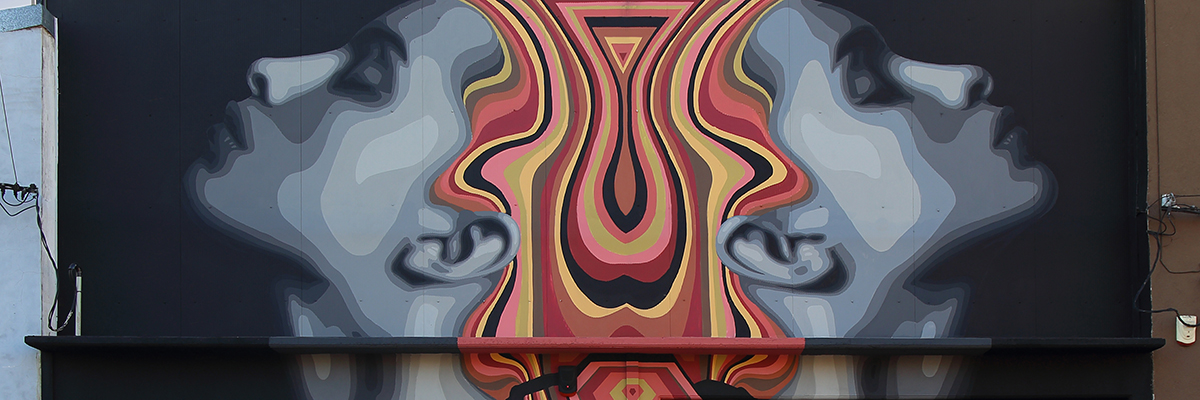
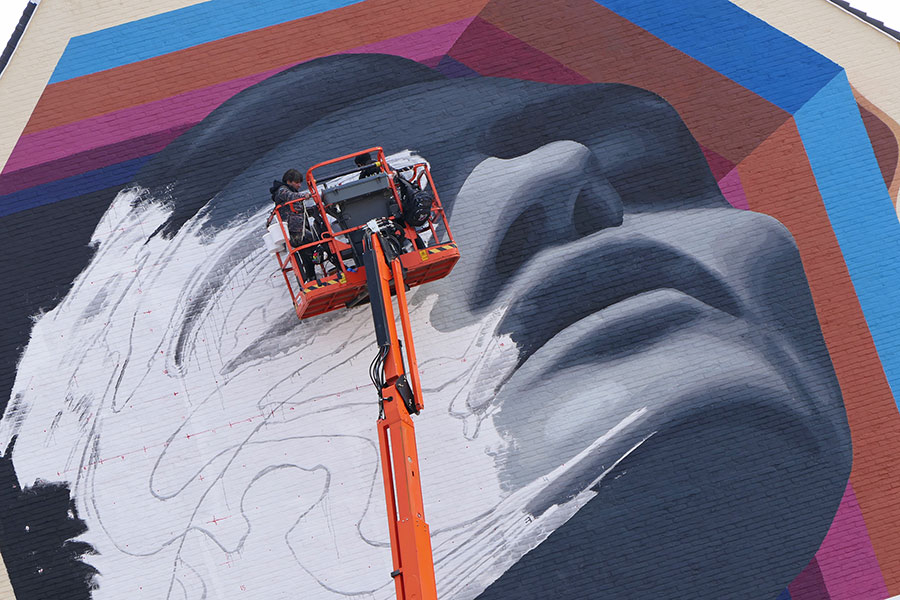
BSA: In some of your paintings we experience a visual illusion of your characters coming from inside the building’s walls. You create an environment where the forms are in movement but also the characters strike a defiant pose. Is this a way in which you are challenging the public to interact with your work?
Medianeras: Yes, these characters are empowered and are in a challenging pose for a matter of scale since they are always bigger than the viewer and look at them from above. Conceptually, the representation of these characters is due to an intention to express an intention.
Medianeras. The Crystal Ship Festival. Ostende, Belgium. (photo courtesy of the artists)
BSA: You create portraits, sometimes with an abstract quality to them. Who are your subjects? Do you know the men and women depicted in your work? How do you choose them?
Medianeras: We don’t know the characters that we represent because they are created digitally. Basically what we do is distort or change the faces so that they look strange. Many times we mix faces from different photographs and in turn, divide them into color planes of different darkness.
We want our works to convey the message of a broad concept of gender. We believe that once the rigorous distinction between men and women comes to an end, we will see the development of freer social relations and generations of people who are less concerned with what they should be and more attentive to what they could be.
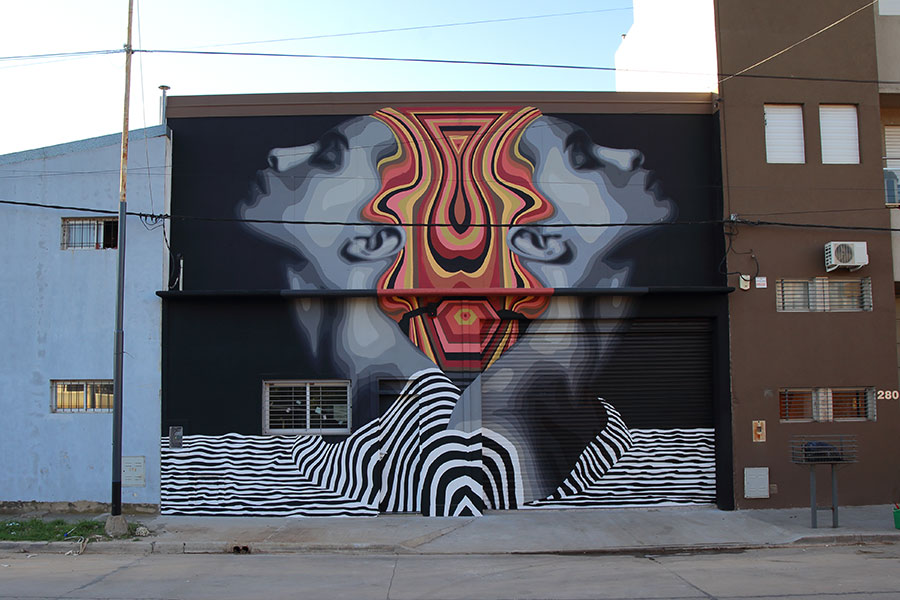
Medianeras. Villa Constitucion, Argentina. (photo courtesy of the artists)
BSA: Do you think artists have a social responsibility to address the problems affecting our society today with their art?
Medianeras: Not necessarily. Each artist decides whether or not they want to work to address these social problems. All individuals whether they are artists or not have certain social responsibilities when living in societies. Urban art is important as a tool for the appropriation of public space. It is also political action. It is very important for the communities to express themselves in their streets since these are the places that we inhabit as societies.
The objective that we have always shared was the need to make public art, whether it’s a mural, urban intervention, or mosaic because we believe that there is where it lies the right place for our work.
We consider that public art is the most honest way to create our artworks and that anyone has access to them. We are not interested in making art for an elite that understands or appreciates it or that handles certain codes. It is art for everyone. Medianeras was born with a shared desire to move and create our work in different places and for different communities.
The important thing about urban art is that it expands this offer, making it accessible to everyone and democratizing access to culture. The main goal is to live the experience of creating public work, of engaging a community. That’s what we’re looking for and what fully gratifies us.
Medianeras. Villa Constitucion, Argentina. (photo courtesy of the artists)
BSA: Do you think that Social Media has influenced the artistic output of street artists? Do you think that street artists have slightly changed their work in favor of a more welcoming and larger Social Media presence?
Medianeras: Yes, definitely. We believe that artists think about social media when making artworks since many times social media are a medium to show the work. Perhaps the media and the way you show your work is as important as the work itself. Many of these are created for these networks,
In general, we believe that the digital world has permeated the world of art and has changed the way artists work. We also believe that these modifications are not limited to the world of art but to the societies of the world in general.
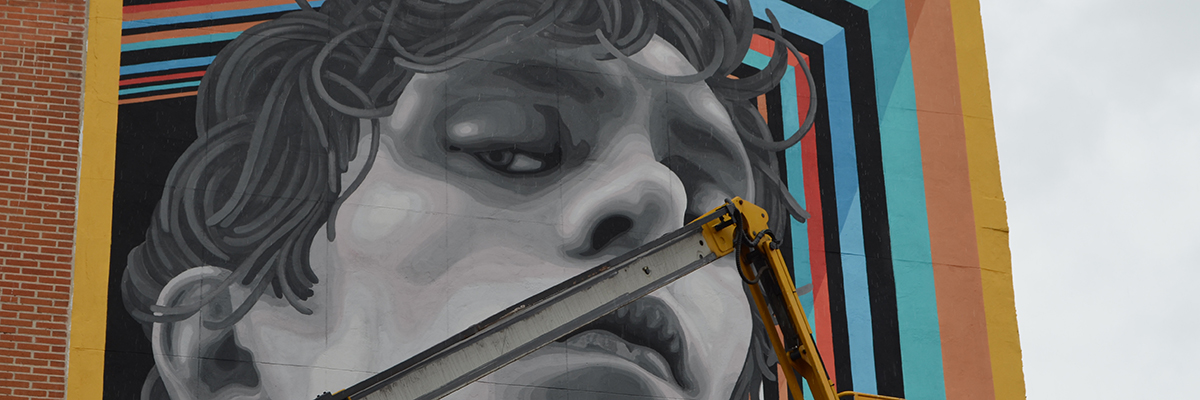
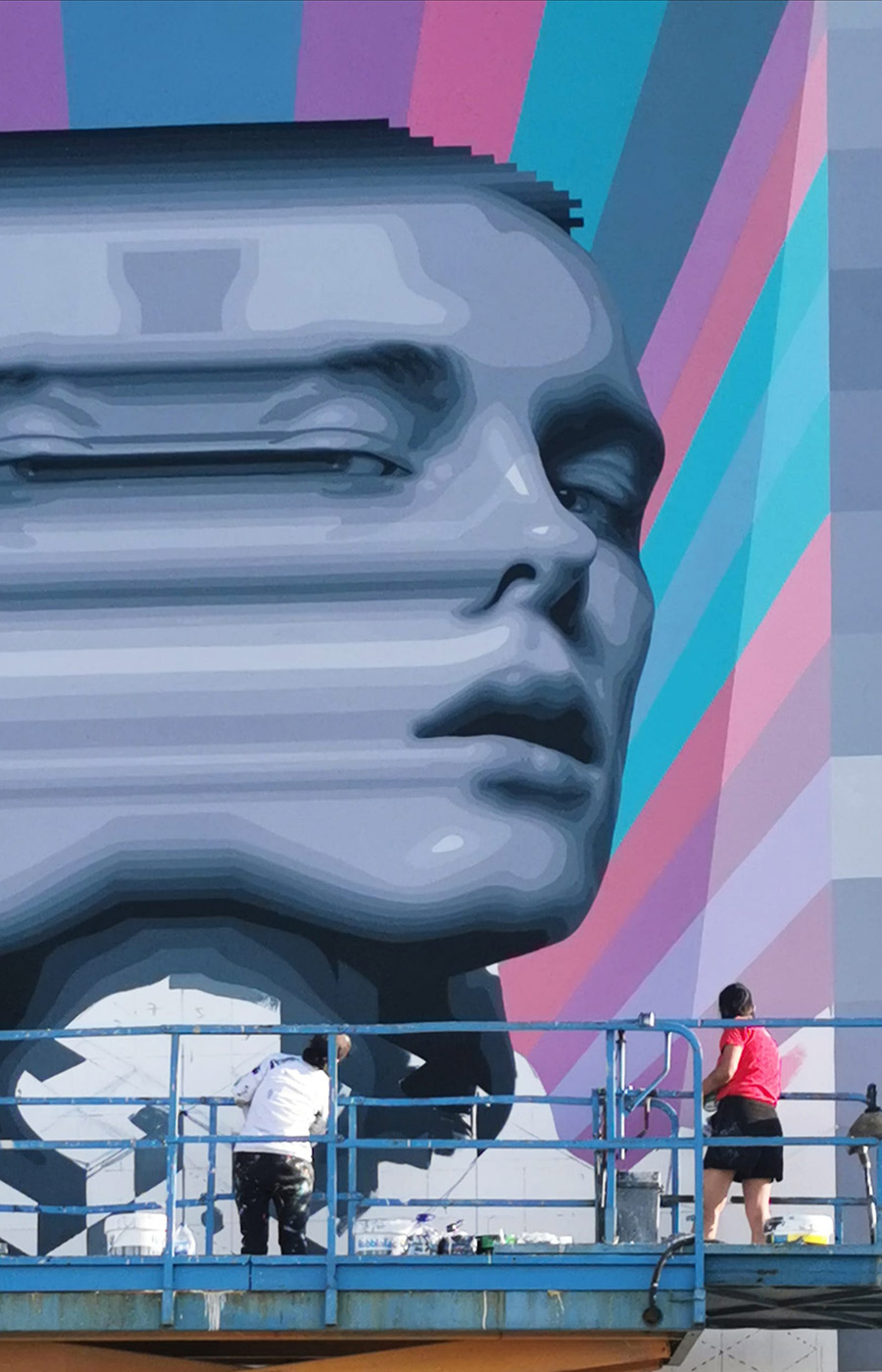
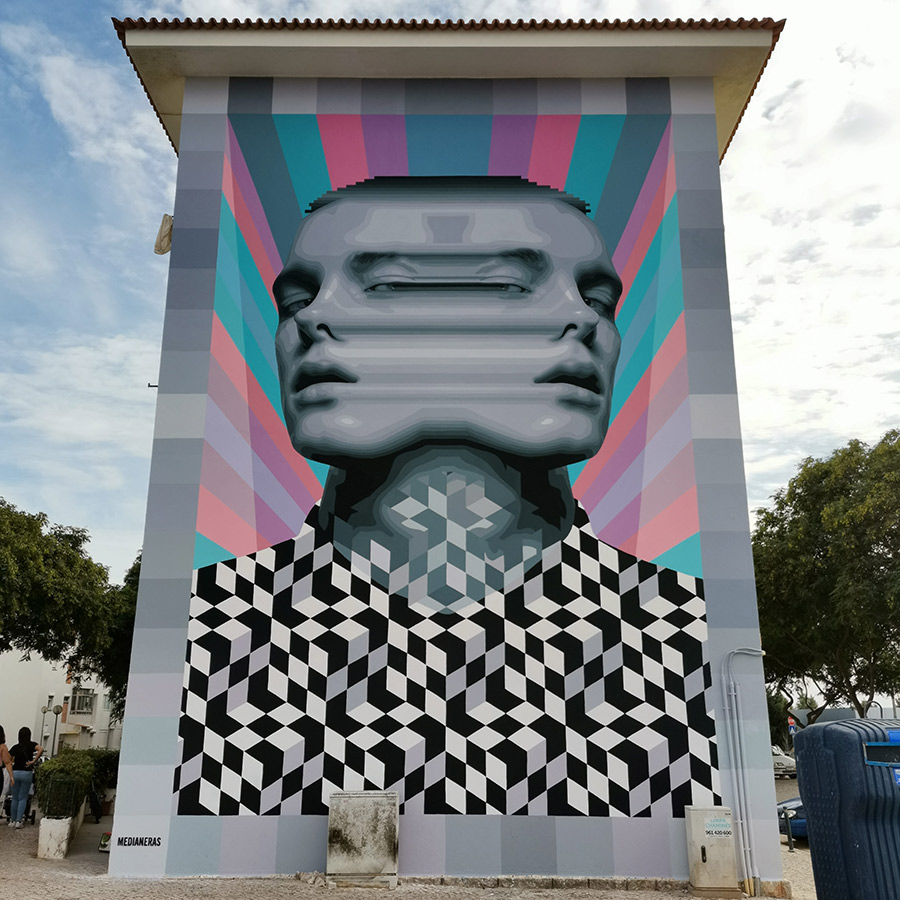
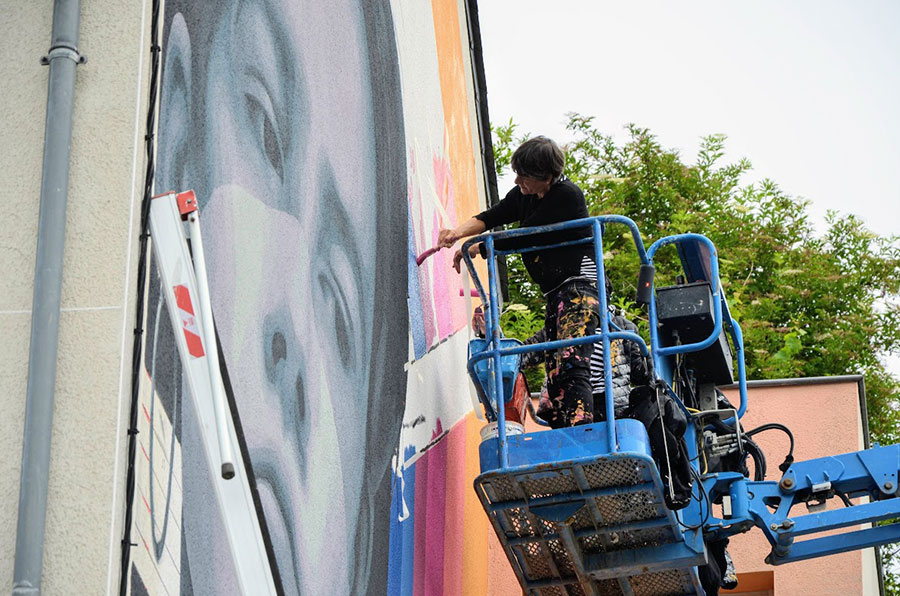
Today we speak with Analí Chanquia and Vanesa Galdeano, who are known professionally together as MEDIANERAS. They are originally from Argentina but presently they live in Barcelona; together they have been traveling around the world together for 10 years creating murals. They work as a couple developing a vocabulary of kinetic graphics and androgynous, anamorphosed portraits that are jarring, slickly virtual, and somehow transcendent. Each is of this moment in the environment it is painted, yet reminds us that we are entering a different age of interaction that is not necessarily physical. It is electric, accessible, and oddly, spiritual.
Medianeras. Cascais, Portugal. (photo courtesy of the artists)
BSA:How many years have you been painting together and where and how did you begin?
Medianeras: We have been painting together for about 10 years. Both Vane and I (Anali) were already dedicated to making works of urban art before founding MEDIANERAS. Vanesa is an architect and has directed a mosaic workshop in the city of Rosario since 2009, a workshop with which they carried out collective mosaic interventions around the city. More than 15 interventions can be found; some are murals others are urban furniture cladding, such as stairs or public benches. In my case, I painted my first mural at the age of 18, but I began to dedicate myself more specifically to urban painting around the year 2011 when I did my Fine Arts thesis. This was a theoretical-practical project called “artist looks for a wall “, which consisted of making murals on walls that the neighbors offered me when they found this stencil that I left as a signature on each work.
We met in 2012 at a mosaic street workshop in the city of Rosario. Vanesa, who at that time was directing the workshop, contacted several graffiti artists to make a collective artwork of mixed techniques. That’s how we met; we began a life of love, travel, and art together. Until today we continue to grow together and enjoy together what we like the most.
Medianeras. Cascais, Portugal. (photo courtesy of the artists)
BSA: Medianeras is your artistic name. Could you please tell us about it? How did you arrive at naming yourselves “Medianeras”
Medianeras: We are a couple in both life and art, and thus our day-to-day existence and our projects capture our mutual growth. We called our duo Medianeras because we cherish the concept and idea of sharing. In Spanish, this means ‘lateral walls,’ which are those shared by neighbors. There’s a difference between walls whose function is to separate spaces, and lateral ones, which, conversely, join them. We maintain that public art, aside from making cities more attractive, proclaims the idea of a place shared by all the individuals who pass through it. We teamed up with the idea of conceiving and creating public art together. At present we are dedicating ourselves to mural painting, but we have also worked on collective mosaic interventions in public spaces.
Medianeras. Morlaix, France. (photo courtesy of the artists)
BSA: Please tell us about your process for creating a mural from the idea to the sketch to the art on the wall.
Medianeras: The creative process is quite long. The idea that we are going to paint takes us more time than the days of painting the mural. We study the place a lot, the points of view, the architecture, and the surroundings; we take into account the culture of the place and the history. We draw the designs digitally, based on the photographs of the wall and its proportions and features.
The ideas to create the projects come mainly from certain characteristics of the town or city, the context, the proportions of the wall – width – height – unevenness – and the possible points of view. We mainly represent portraits, and we try not to necessarily define the gender of who we represent, giving rise to the viewer’s perspectives. The murals that we create considerably modify the urban space. In the case of the paintings that we make, they open a kind of window to artistic representation. However, it is important to remember that despite the fact that these murals are visually imposed, they are still ephemeral interventions in painting, linked to possible changes in the weather or any other.
Medianeras. Morlaix, France. (photo courtesy of the artists)
BSA: Please tell us about your background in art and what you were doing independently before you formed Medianeras.
Medianeras: As a child, I (Anali) loved creating things, drawing, and inventing new objects. I attended different art workshops and studied at the University of Arts in the city of Rosario. While I was studying, I made several murals, and in the last years of my career, I was already doing all the artwork on the street. I also studied digital design, a fact that allowed me to handle 3d tools and have a solid idea about space representation.
Vanesa studied architecture and also fine arts. She always had a predilection for urbanism in general but began to carry out collective urban interventions through a mosaic workshop that she directed after finishing architecture
We are both from Argentina. We grew up in a city named Rosario which is located near the Paraná river. Our country, located in South America, is incredible and beautiful as well as uncertain, unstable, and unpredictable. This makes its inhabitants constantly adapt to different types of changes, whether these changes are economic, political, social, or otherwise. In my opinion, in general, it makes Argentine citizens quite creative in the face of different types of difficulties. We are a society that is accustomed to improvising and adapting quickly.
In relation to our activity, Street art is characterized by appearing in all its forms in various parts of the city in a somewhat uncontrolled and deregulated way. The techniques that are used are those that are at hand depending on the stage that the country goes through. For example, the colors and spray brands that can be found in Rosario are very limited, and that makes the artists or graffiti artists use only the colors that they can find or even mix between the same cans of spray they have. In turn, the high costs of spray paint often lead to the choice of cheaper paints, often acrylic paints or even a mixture of several.
In Argentina, there are fewer formalities to intervene in the public space, and this has resulted in a somewhat more spontaneous, less regulated, more experimental urban art, perhaps even more sloppy. However many times we lack the necessary materials or budgets to make murals of large formats.
Although it is an activity that is penalized, we could venture that as there are problems of another kind, more urgent and important, urban art remains somewhat more out of the main focus. In this sense, we appreciate that freedom of expression is not expressly controlled, often allowing experimentation and growth of various artists on the street. We grew up in this context, where through dialogue with neighbors in our beginnings we were able to carry out our works. It can be said that we learned to paint on the street itself.
There was always something that called both of us to create public art. We even met each other working on the Street. The objective that we always shared was to make street art for everyone, whether in mural format, urban intervention, or mosaic because we believe that it is the right place for MEDIANERAS. We consider that public art is the most honest way to create our artworks and that anyone has access to them. It is art for everyone. Medianeras was born with a shared desire to move and create our artworks in different places and for everybody.
Medianeras. Morlaix, France. (photo courtesy of the artists)
BSA: The moment you paint on a wall on a building you’re immediately transforming the building and how the building is perceived by the people on the ground. How do the possibility of doing an intervention on any given building inform the theme and the execution of your work?
Medianeras: Our murals center on the representation of gender in its vast diversity. Although the works vary according to where they are located and how they are viewed, one of their standard features is faces whose gender is not necessarily distinct. Our theme corresponds closely to our way of thinking about gender. Throughout our education, we are taught what a man does and what a woman ought to do. However, in both our case as well as that of a broad range of human beings, gender is something that can change and be unable to adapt to this binary imposition. We want our works to convey the message of a broad concept of gender. We believe that once the rigorous distinction between men and women comes to an end, we will see the development of freer social relations and generations of people who are less concerned with what they should be and more attentive to what they could be.
In other words, we believe that by breaking these rigid and constrictive molds, we can overcome certain forms of discrimination, as well as roles imposed on us from the outside. Our works reflect individuals, poetically and visually transformed, who often struggle to break out of the molds in which they find themselves.
These molds are the architectures where they are found. That is why we like to make holes in the spaces, like breaking down the walls.
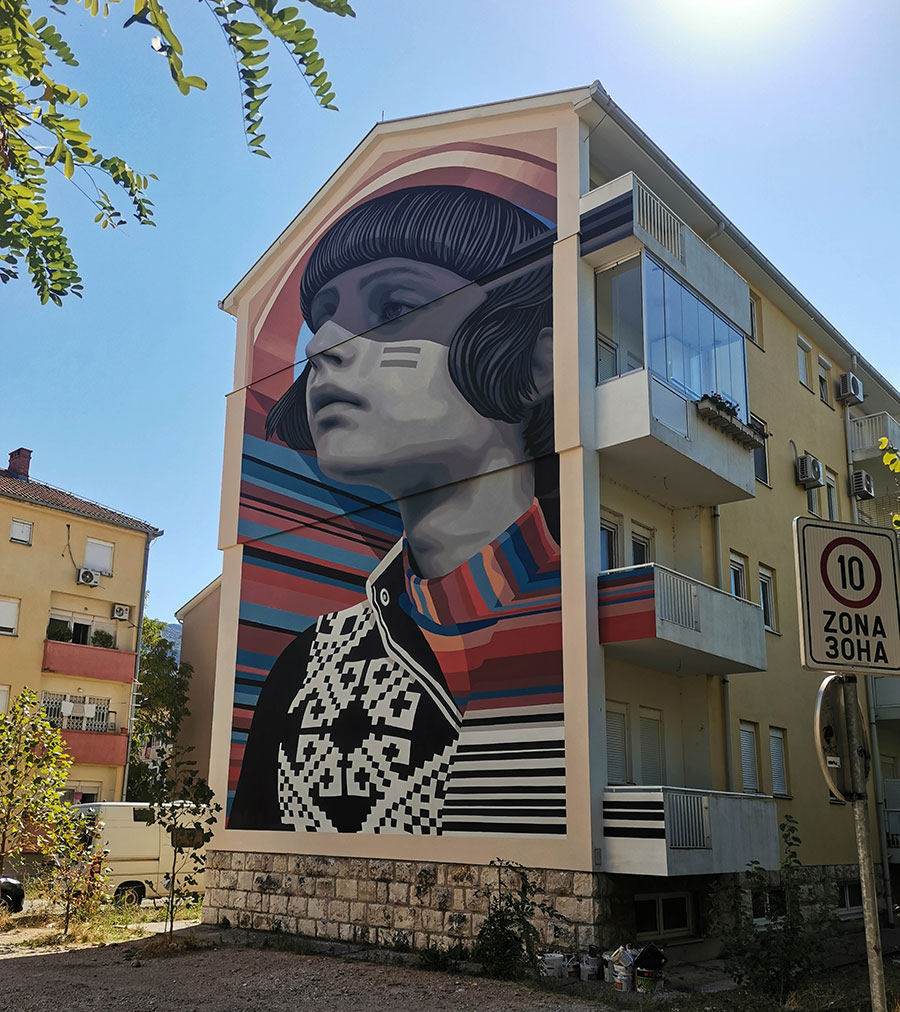
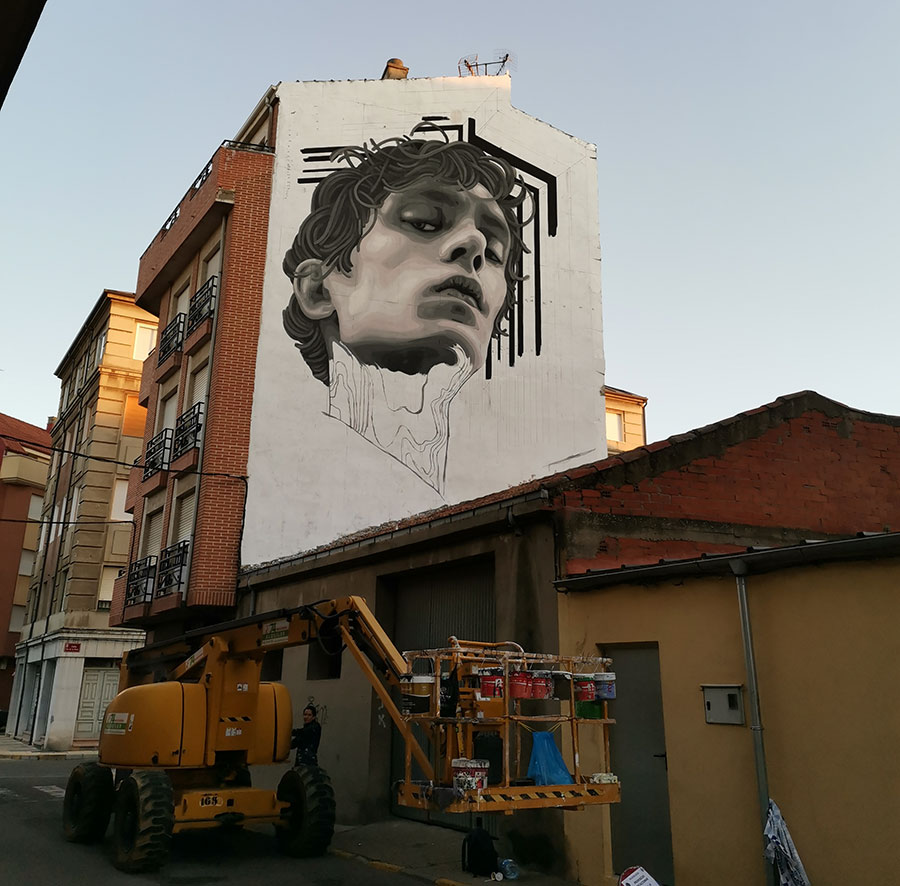
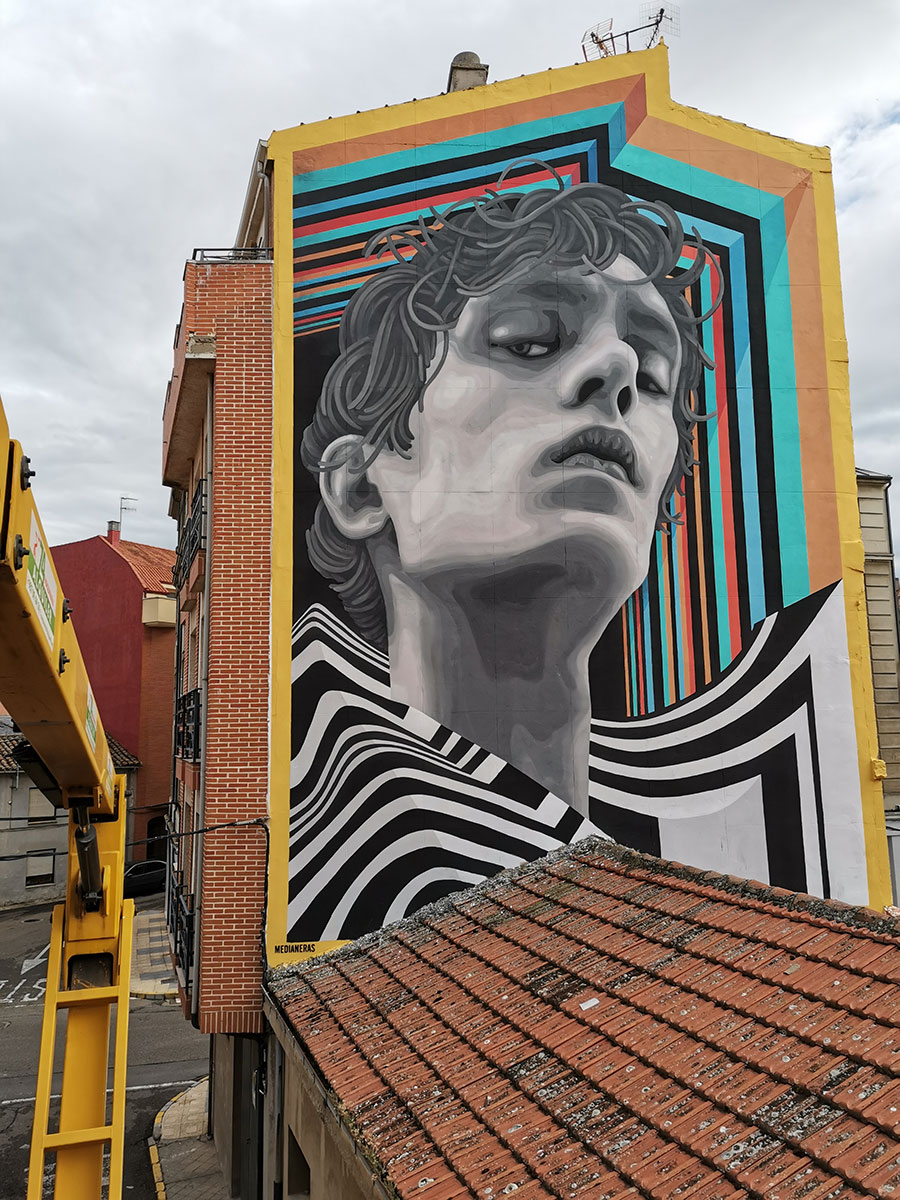
Medianeras. La Bañeza, Spain. (photo courtesy of the artists)
BSA: How do you view context when doing a mural? The context here includes not only the architectural structure that you are using as canvas but also the neighborhood where the said structure is located, as well as the city and indeed the country.
Medianeras: Before starting a design we try to inform ourselves as much as we can about society and the place such as the wall where we are going to paint the mural. In this research, we investigate the customs and characteristics of the culture and its history. We also make a virtual tour of the areas where the wall is located through google maps. This tool allows us to obtain some possible perspectives of the place. With a set of data that includes colors of the environment, the architecture of the place, or even stories, among many others, we create a sketch that is adjusted specifically for that particular surface (wall). That sketch can only be represented on that site since we think about it in relation to the architecture and the points of view from which it will be observed. Through our representations of diverse individuals, we convey an idea of inclusion and conviction about the ideals we stand for.
Medianeras. La Bañeza, Spain. (photo courtesy of the artists)
BSA: You are not afraid of color and geometry in your work. Your murals have almost a tri-dimensional depth, is this technique informed by your previous experiences in art making or was it born out from merging your talents together?
Medianeras: Both. We have enough knowledge to be able to bring to painting what we projected in the initial idea. Through the years, we have combined our styles in such a way as to arrive at what we currently do. Each project is a new challenge to integrate portraits into architectures, which are different in each case. We believe that we can achieve great complexities in the representation of depth thanks to the unification of our knowledge, both geometry and color and drawing.
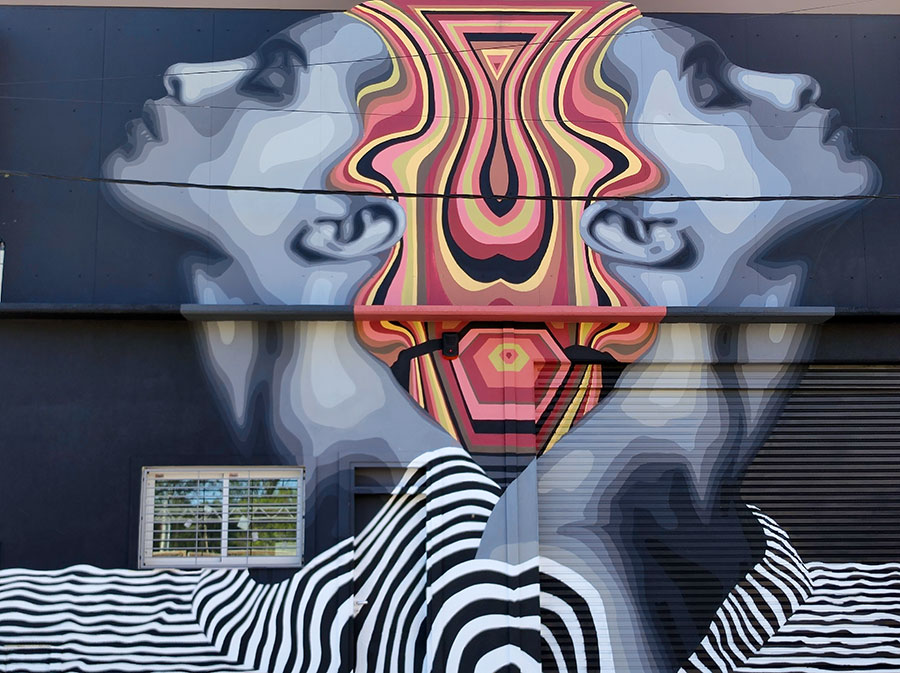
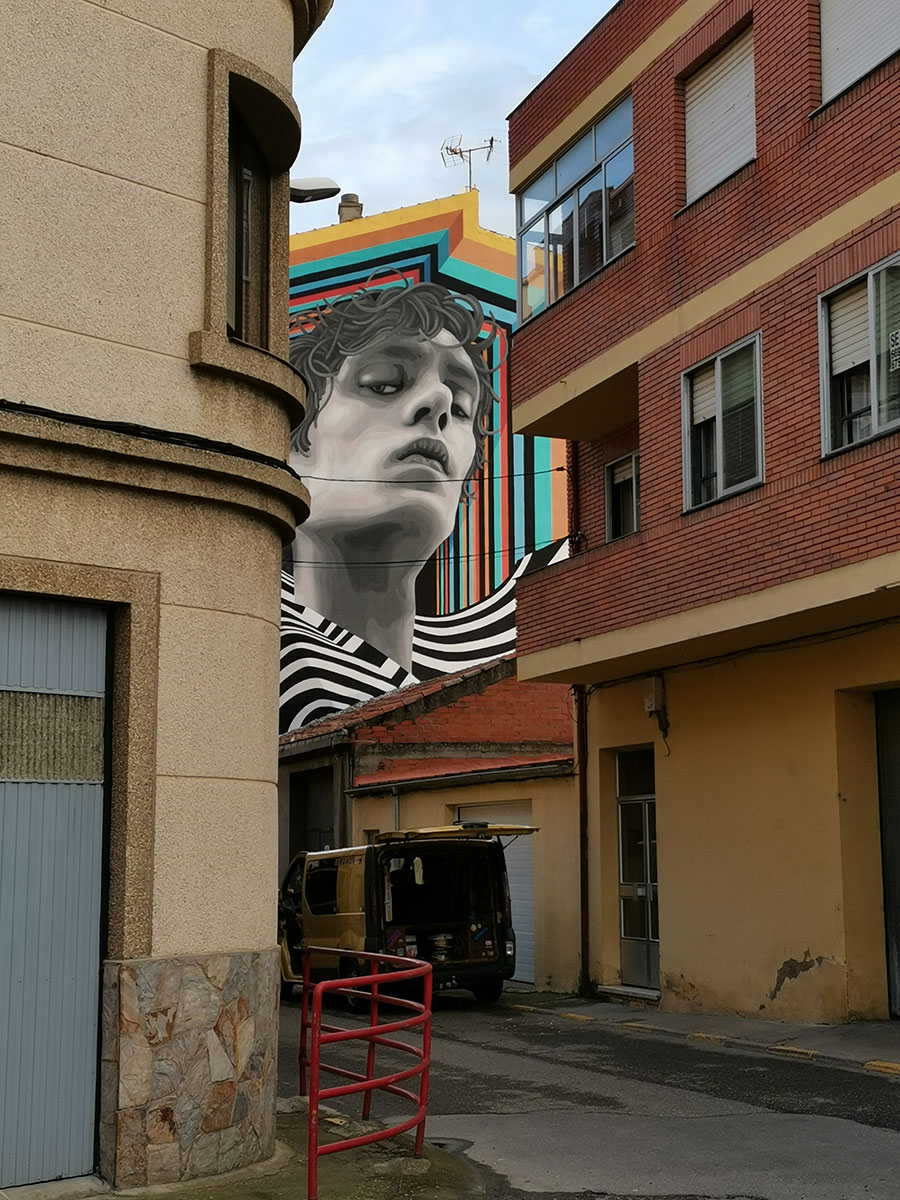
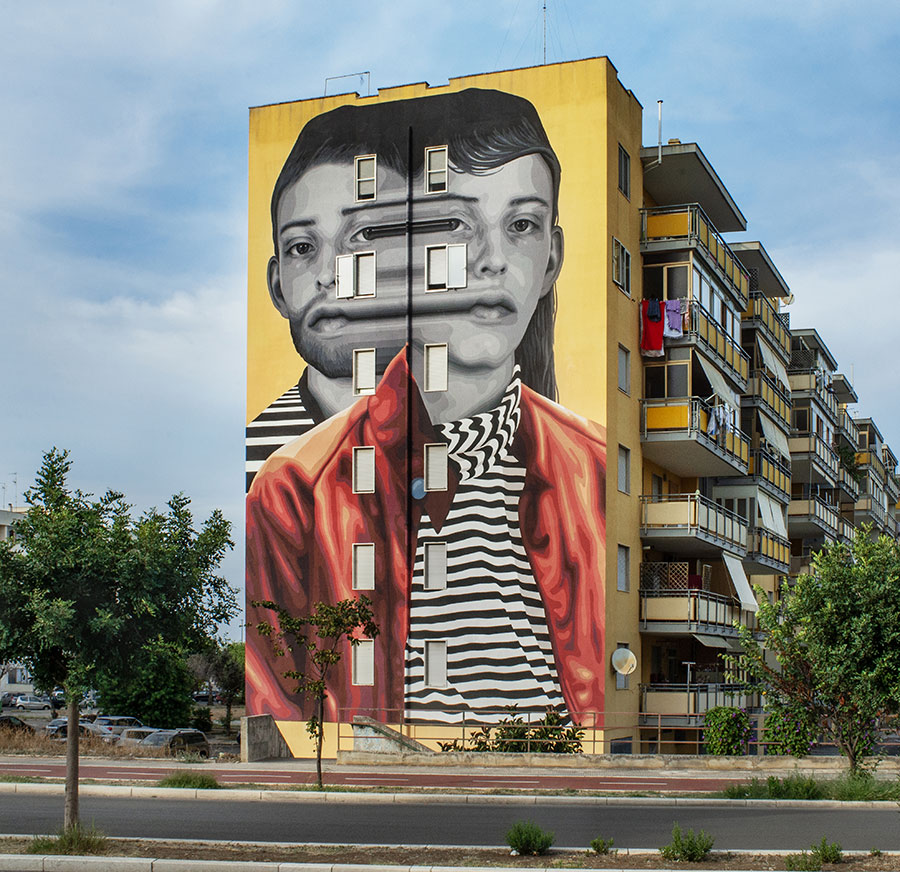
We like to use the technique of anamorphosis. From one angle, one sees images of faces while, from another, one sees the distortion of these faces—the images reveal that they are illusions, something we believe is real, but that is not necessarily so. This is why we study the area around as well as the points of view from which the wall will be perceived: the image is conditioned both by the wall on which it will be displayed and the environment it is in.
Medianeras. La Bañeza, Spain. (photo courtesy of the artists)Medianeras. La Bañeza, Spain. (photo courtesy of the artists)Medianeras. Lecce, Italy. (photo courtesy of the artists)
 BROOKLYN STREET ART LOVES YOU MORE EVERY DAY